From Corporate to Mompreneur: Grow Your 6-Figure Business
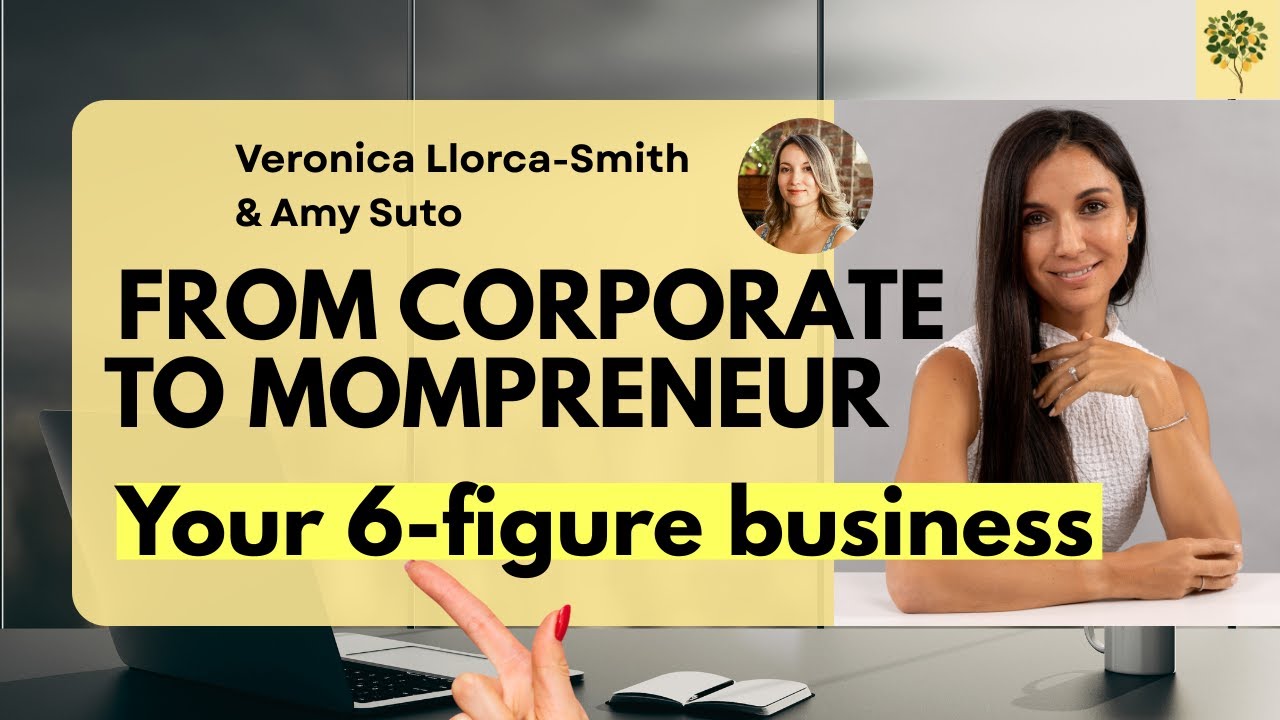
In a live Substack interview, host Amy welcomes Veronica Llorca‑Smith, founder of The Lemon Tree Mindset, a global community of over 10,000 creators. Veronica explains how the removal of traditional gatekeepers lets anyone publish, coach, or speak without a publisher or office space, and defines “creative power” as the ability to reach thousands using free tools. She contrasts mindset and strategy, noting that many creators over‑emphasise one side; she argues that sustainable solopreneurship requires both creative instinct and operational systems. Drawing on her 15‑year corporate career at Apple and Estée Lauder, she describes the identity shift from corporate titles to a mom‑entrepreneur, emphasizing humility, self‑trust, and aligning work with personal lifestyle. Veronica shares how she grew her Substack to 13 000 subscribers, but stresses depth over volume—only about 10 % actively engage, and true fans drive revenue and community collaboration. She outlines a two‑platform strategy: LinkedIn for B2B speaking and Substack for creator‑focused content, avoiding platform overload. Her “octopus” content strategy repurposes a single core idea into books, newsletters, webinars, keynotes, and courses, extending its lifespan. Corporate experience gives her an “unfair advantage” in speaking the language of business clients. Collaboration—guest posts, joint webinars, masterminds—is highlighted as a catalyst for growth. Monetization is framed as a logical outcome of delivering real value; she discusses pricing, boundaries, and the gendered pressure to work for free. As a mompreneur, she works in flexible “stolen moments,” averaging 5‑6 hours a day, prioritising early‑morning focus and exercise as ideation time. Finally, she reflects on how her definition of success shifted from external validation and numbers to a lifestyle that allows time with family, sport, and personal fulfillment. The conversation ends with a giveaway, upcoming events, and a reminder to support creators through reviews and subscriptions.
Chapters
Welcome everybody. We are on, if you're new to the livestream today, we're on hour 10 of the Write for Money and Power book launch livestream with amazing special guests. And I'm so excited to be joined by Veronica LLorca-Smith. Veronica is the founder of the Lemon Tree Mindset, a Substack bestseller and global creative community with over 10,000 writers and creators across more than 165 countries. She's a published author, including a book with Penguin Random House, a speaker, a coach, A builder of creative ecosystems that help people turn their ideas into sustainable businesses and meaningful lives. I was really grateful to be on one of her live streams a while back, and I'm just so excited to have you, Veronica, back on.
So excited!
Oh, hold on, Veronica. I think that your, your sound is cutting out a little bit. I'm having trouble hearing you.
Okay. Maybe the, uh, the audience can tell us as well.
Cool. I think you're coming back on, but you're like coming in and out. Are you using headphones? And people in the audience, if you can let us know if you can hear.
Let me know if you can hear me. That would be great. I'll talk so that you can actually see if you can, if you can hear me. But yes, very excited to talk about writing, uh, growing a writing and speaking business.
Amazing. Awesome. You're back. Perfect. Sometimes Substack Live, I feel like it's just like buggy as we found out in the past. Um, so one thing that I want to say is that you built the Lemon Tree Mindset into a global creative community. Um, when it comes to the way that you built that creative community, what does creative power mean to you? And what does that phrase mean to you when you're empowering your community and bringing them together at the Lemon Tree Mindset?
Sure. So thinking like more broadly about the What I think about creating nowadays is that we don't have gatekeepers anymore. And I think that people like you are publishing a book. It's amazing, by the way. So excited that people can see it. And I know that you self-published the book. My case, everybody thought it was a big book that I published like 3 years ago. I self-published it without any gatekeepers. Without any publisher. But same thing, no matter what you want to do today, what I think is amazing is that there are no barriers between you and your potential audience or clients or speakers or readers. And the same applies to a coaching business. Like I grew a coaching business without having to have a physical space. You can grow a 6-figure business, or in your case, even 7-figure business. I'm not there yet without having an injection of capital. From investors. You can grow this community without having to have like an actual publisher because you are the publisher. And so that's what I tell my communities. When you have an idea, when you have a vision, today we have so many tools, many of them free, that empower us to make that vision come to life. And that's what to me creative power means, is being empowered to create and reach thousands and hundreds of thousands of people. And that's exciting.
It's very exciting and I love what you've done with your community. And one of the things that you talk about is mindset and strategy of two sides of the same coin. Why do you think so many creatives either focus on one and neglect the other, especially when it comes to mindset?
Yes, very interesting. So the Lemon Tree Mindset has that name for a reason. And for me, just to give a little bit of background, I come from the corporate world and I started this venture when I was unemployed, I was already 40. And so I had to work a lot on my mindset. And so that's why I realized that so many of our limiting beliefs are here, right? Like they're, they're not external factors. A lot of it comes from within. And if we don't address those barriers that come from within, it's going to be very difficult to move forward because you're going, we're going to have things like imposter syndrome or fears or Thinking that we're going to be judged and criticized. And that mindset is so important for anything that you want to do in life. In my case, I'm a triathlete as well. And so a lot about mindset because 50% of what we do is always the mindset. I did a half marathon 2 days ago. And honestly, I wanted to quit so many times and there's so much between sports and, uh, and the creative world. And so I do think that the market is really important, but to answer your question, like why we tend to lean towards one or the other is because we all have our preferences. We all are wired a bit of a different way. Some people are more creative and they use the right part of the brain, which is more about creativity and instinct and all of that. Some people are more wired the other way, numbers and logic and reason. And I think it's really important because they feed each other really well. And whereas in the corporate world, you can choose what you are because you're probably going to have someone. If you're the creative, you're going to have the operational person, the head of operations. When you're a solopreneur, you don't have that luxury. And so that means that you have to constantly develop both parts of the brain. Many people are extremely creative, but then they get lost with processes. And so that means that you're probably going to burn out at some point because it means that you're just relying on doing more and creating and that part without really operationalizing what you do. On the flip side, I also know people who are extremely good with processes and systems, but then it feels a little bit inauthentic. It's like, okay, you're fantastic at using AI, but what about connecting with people? What about sharing your story? What about bringing that more personal element to what you create? And so that's where I think it's really, important to balance both. So this is a question for the audience. Are you more of the creative and the person who is driven by instinct and nature, or are you more the logic, the reasonable person? And so what do you need to do to balance both? In my case, I definitely try to keep a little bit of a balance. If it was up to me, I would just be writing and writing and writing, right? But at the same time, sustainability is very important. And so that means that I have to think terms of scaling and systems and how I can make the most of my day, especially as a mompreneur. I have 8 hours a day, so I really have to be very, very streamlined and effective in the way that I operate.
No, I love that. And I also love this emphasis. First of all, every time I open up my Substack Notes account, I see a picture of you holding a medal and I'm like, Veronica ran another race. That's crazy. And so congrats on doing a half marathon recently. And I know that you said that you're training for an Ironman next in China, which is So cool. And I think that I love this idea. I think a lot of us writers especially can get really in our heads, and I've found especially that getting in our bodies can help a lot more too. And I love that, that highlight. Um, I want to highlight one thing that you said about leaving the corporate world. And I know a lot of people who are watching this are maybe thinking about that transition of starting to be more focused on their creative career. What did the reinvention of leaving the corporate world teach you about confidence and self-trust?
So honestly, it, it made me very humble because when you're in the corporate world for many years, and in my case, I had been there for more than 15 years. I had big titles. I had big companies on my resume like Apple or Estée Lauder, so Fortune 500. And so the trap in the corporate world is that you tend to associate yourself and your identity with the company. I worked for, and it was very comfortable for me to say, oh, I'm Veronica from Apple. Oh, wow. What an amazing company. And so you kind of create this illusion that you're a bit of an expert of that company. And that works if you are in that world. I was paid by headhunters all the time. I had people connecting with me on LinkedIn just because it was so cool that I had worked for Apple. And then when I left the corporate Well, it was really the aha moment, this realization that working at Apple, it was just a title. Working at Estée Lauder, it was just a title. You are not a job title. And I think that's something that when you are in that world, you have a little bit of tunnel vision because you're very much reduced to where you are in the ladder. And so that's a little bit about the shift of, oh wow, I really have to create my thing. So that was very humbling, but at the same time, it was very empowering to say, hey, I can build my own thing and I can build my own brand. And so I think for me, the confidence came more in trusting my own vision, trusting my own voice and saying, actually, you don't have to have a big company in the resume to make an impact. And in fact, there was one day that for me was a bit of a big moment, even though it was something very small. I always used to put on my resumes on, on LinkedIn, on my bio, or even on my Substack that I was an ex-Apple or an ex-Estée Lauder because I felt that, that it gave me that credibility. And there was one day that I said, I don't need this anymore. And also, I do a lot of public speaking. I always mention my corporate background because that credibility helped to share my story and know where I'm coming from. But I felt that that was no longer who I was and there was no need for me Lead with that first. And so today, for me, it's much more important to say that I'm a mompreneur than to say that I work at Apple. Yes, that was my previous job. It was a job. Who I am as a mompreneur, that's my identity. Being an author, having published books, that's who I am. And so I went from, this is what I do in the corporate world, to this is who I am. And back to the point of confidence, I think you gain that confidence when you're really in alignment with your identity. with who you are or who you want to become, even if you're not there yet. So that's, that's the big shift that, uh, going from corporate to solopreneur meant in my life.
It's beautiful. And I think that a lot of us struggle with trying to figure out, because we're always told we need to have social proof, we need to prove that we are worthy. But I love this idea of creating an identity that feels really authentic and, and kind of understanding how as a creative to give yourself permission to To be really authentic and not necessarily cling to titles that served you in the past, but maybe you're transitioning into a different kind of world. And one thing that I love about what you've built is that the Lemon Tree Mindset, your Substack, has an incredible community and it's at the heart of everything that you've built. What do you think most people misunderstand about what it actually takes to grow a strong community, a creative community here on Substack and also beyond?
I think the big thing that we talk about now, because numbers, it's something tangible, it's that everybody understands. And so we tend to go much more about volume than we go about depth. And sure, there is value in having followers and having these big, but to me, this effort to be able to, it was not so much about the numbers, but it was really about talking to the right people to grow your community. And what I mean by this is let's talk about numbers so that we make it much more tangible. Today I have a little bit over 13,000 subscribers. That sounds like a huge number, maybe for some, definitely for me when I started from zero almost 3 years ago. And the reality is that out of these 13,000, only around 10% is really me when I check the open rate, for example, when I check engagement and that it really is the epicenter of everything that you're going to create. Yeah. If you have all these numbers of people who might be reading, slightly interested, but when you're able to really build your tribe, that's when you can go at a much deeper level because those subscribers, some of them might become paid subscribers, but some of them want, but they might be interested in your book. They might be tuning in. I saw so many known names today when I joined this live session. They, I, last year, for example, I published 4 digital courses, 3 in English, 1 in Spanish. I would say that 70% of the students were actually from my community.
Check.
want more and we like follow for follow and recommend for recommend. It's like, how about you focus on the 5 or 10 or 100 people that are already in front of you that are really interested and you try to go deeper? And that's what I do with my members. Like I have a chat where we all collaborate. I collaborate on average, I would say 5 to 6 times with members from my community. And so I think, uh, What we're doing today is a good partnership, a good example of a partnership and how you can go deeper. This is the second time that Amy and I are actually doing a session like that. I invite people to write, um, my premium members to write guest posts in my community. I have co-authored books. That's what I think by going deeper. And so misunderstanding that we have to go very broad and there's a risk there if you don't go deep that you're a lot of noise. And the beauty of a subsite is that because it's our group, we're actually able to define the terms of what we want that— I do webinar masterminds. I have a mastermind coming next week. And so look at what you currently have. And the question I have for you is, how can you go deeper with the members who are already there, with the people who are I love that.
And I think that this almost speaks to an essay that I love. It's actually 2 essays, Kevin Kelly's 1,000 True Fans, and then his revised essay, which is like 10,000 True Fans. I think those are the numbers if I have them correctly, but his whole idea behind this is just like this famous internet essay about you don't need a million people to love your writing. You actually, that number's a lot smaller if you can find those true fans. And so Veronica, I love what you've been echoing about focusing on the people in your community because The true number that a lot of us creatives actually need to make a living or to hit a, a number that sustains our creative work is actually a lot lower if we're really investing in quality over quantity and quality of relationships with the people who subscribe to us. And I think that that's really a lovely sentiment. One thing I wanna talk about, which you mentioned, is that you are doing so many really cool things. You are publishing multiple books, you've launched digital products and built a coaching business and a speaking business alongside your Substack. So how do you decide where to focus your energy without burning out as a creative, Ah, so many people are multifaceted.
That's a question that we all try to tackle. And while I haven't found the perfect recipe, what I have found is that clarity helps a lot. 2 years ago, and not even 2 years ago, I used to be spread out in different platforms. I had Instagram and LinkedIn and Medium and so on. And at one point I realized that I really needed to be focused and streamlined. And, uh, I quit most of the platforms and I realized that what I needed was really be where my clients or my potential clients are. And so my strategy today is super simple. I'm on LinkedIn and that's where I grow my B2B business as a speaker. Why? Because my ideal clients are there. As a speaker, the people who book me are not the people who are watching the live today. It's going to be be heads of human resources, it's going to be chief of people, it's going to be departments of learning and development. And so those people are going to be on LinkedIn. And so my content there really, I talk about being a public speaker. I talk about how I can help them build effective teams. I talk about my experience in leadership. And so that's my B2B strategy, which is very much on LinkedIn. And then on Substack is where I put my creator hat on, and it's all about creativity and developing your digital ecosystem and being an author and doing live sessions. And I talk to a very different group of people who are people like you and I who are trying to grow our own digital business, who are trying to turn their creativity into a lifestyle. And so to me, these 2 channels where I have like these 2 groups of people has really helped me. to grow in a way that is much more strategic without a lot of noise, without a lot of platforms. So I think that, so that's number one. You don't have to spread yourself too thin. You just have to be where your clients are. And the second thing in terms of where do you spend your energy, I have found that the idea of sustainability super important as a solo prepper because we're by ourselves and we all have all these different things that we have to juggle. I'm a mom, some other people might look after their parents. And so trying to create this idea of an ecosystem where the different pieces are connected makes much more sense and prevents you from burning out. So for example, let me give you a few examples that we can talk about what I mean by creating an ecosystem. So I started my journey with this, with the elementary mindset, a very simple book that I self-published on Amazon, and that was almost 3 years ago. And then I realized, well, I have a lot of content here. I could turn this into a newsletter. That's how my Substack was born. It wasn't the other way around. So I first published a book and then turned that into my community, into a newsletter with the same name, The Lemon Tree Mindset. I do the same with, for example, my courses. When, for example, book now, The Anti-Procrastinator. I'm challenging myself. How can I make the most of it? If you already have content, we all have so much content out there that dies unfortunately after 24 or 48 hours. And so what I'm asking myself is, how can I make the most of things that I have already created so that they have a longer life, they have more longevity? And so that might mean that, for example, a book can become a keynote or it can become a webinar. In fact, I actually have a session for corporates that is called the same name, The Anti-Procrastinator, but of course with a different spin is how can you improve your time management in the workplace? So I'm talking to a bit of a different audience, but this is what I'm really very, very focused on is how can I use what I have? And it's a little bit the octopus strategy, like giving it multiple legs, multiple tentacles so that I can turn it into different products. different services. I can cater for different publics, whether it's corporate or whether it's, uh, it's B2C, it's consumer. So that's something that I think really helps is trying to not only creating more, but really trying to give a longer life to what you already have.
I love that. And I love this idea of what you painted of the octopus, which is maybe a core belief or perspective or set of experiences you have. And then from there, weaving out these different products into the world, whether it's a book or a Substack and things like that. And I think a lot of creators don't think about how can I have like an idea or a concept or a set of teachings and how can I put it in different packaging? Because so many people learn in different ways, whether some people learn by reading a book or being on a live or something like that. And so I think by having the teachings that you have and the knowledge that you're sharing live in different formats is really powerful because it allows people to consume it in different ways. And I think that that's, that's, that's really a kind of like a unique thing that, um, I really love. So in the chat, uh, Kyle asked, um, what corporate skills turned out to be unfair advantages as a solopreneur? Ooh, I like this. And if you have lemons in your fridge right now, what are you most likely to do with them?
Okay. That's a good question. Some of the, well, to be honest, one skill that I didn't even know that was a skill, I took it for granted. When you've been in the corporate world for many years, I realized without knowing that I knew exactly how the companies think, what matters to them, what language they use. When I'm going to pitch, for example, for the webinar, I know what the head of HR is looking for. They want to increase employee engagement. They want to increase retention. They want to make sure that there's a better sense of belonging in the team. If you're talking to the head of sales, it's all going to be about pipeline management and efficiency. And so when you know what your audience wants and when you understand their language, it's much easier to make an impact. So I would say that It's just like a language. My mother tongue is Spanish. And so when you speak that common language, whether we're talking about the business language or any language, you're much more likely to really understand your audience. Now, I think that's a big topic in selling webinars, workshops. One of the things they always ask you is, so what is the outline? Program, of course. And then what are the key takeaways? The key takeaways, you really want to speak their language and make sure that that really is in alignment with what the company is trying to achieve. So if I'm going to sell a webinar on communication, it's not just, oh, improve your communication skills, become a better negotiator, have tough conversations with ease, make sure that you have an executive presence when you're presenting in front of investors. So I think that has been an unfair advantage, knowing a language that people don't. And the second thing about lemons, I don't think I have lemons today in the fridge, but what I would say is this, I don't have them in the fridge, but I have them on my life every single day because I do face rejection every single day, whether it's people who are ghosting me or proposals that get rejected or customers that just ghost you, especially in the corporate world. And all of that, I find that is a knowledge that is very precious. And so instead of only talking about, oh, look how amazing this and these and all these, sharing those lemons with your community, honestly, it makes you so approachable. It makes people really relate. One of my most popular articles recently was my book launch flop in Singapore. And so instead of saying, look how amazing my book launch was, it wasn't. It was a really bad experience. I didn't even have books because the publisher never And so I openly share how sometimes things don't go as planned. Sometimes you are going to have lemons. And that's why I go back to my lemon tree mindset. When life gives you lemons, use the seeds to plant your own lemon tree. So if you have those lemons in the fridge or somewhere else, don't just disregard them. Say, hey, there's someone who could actually learn from this experience or simply relate and say, hey, I've been there. I was an author too. I did a book launch. It was a disaster. I'm actually happy that I'm not alone in a way.
Yeah. And I think that that's so, so courageous of you because I think a lot of us feel pressured by social media or the comparison game to be like, life is great. Everything is going amazing. I, nothing is going wrong. Like, don't look over there. And I love the courage that you have to, to pull back the curtain and show with authenticity what's going on. And I think that that's something that is really courageous. So kudos to you. And then in the chat, Andy says, what do you wish you would have learned sooner or would have been more helpful when you first began?
Ah, very interesting. I honestly think what I'm doing today, as an example, I wish I had done more of these collaborations earlier on. When I started, when most of us start, we have this idea that we have to figure everything out by ourselves, that we have to do everything solo. And so my first year was honestly that kind of trying to go to different corners, trying to understand what I was doing. And then the moment that I started collaborating with other people, the impact was just amazing because whatever it is that you're going to partner on, maybe you speak on someone else's podcast and all of a sudden you have this exposure to new people, or perhaps you invite someone to your community and that person is probably going to also be promoting what you're doing together. And all of a sudden you have again, a new group of people that you're reaching to. And you feel less alone. So when I did, I wish that I had done more of these, whether it's guest posts, uh, uh, joint webinars, live sessions, because it just really helps you go faster and get farther. And in running, in sports, we say that together we run farther. And I think it's true. It's the same in sports. I'm able to go farther if I'm with people, if I'm surrounded. And going with the people who are a couple of steps ahead of you. That really gives you motivation and it gives you inspiration, but also helping people who are behind you. It kind of empowers you to say, hey, I have a bit of a responsibility as well to, to help people who are on this journey and they've trusted me to, to help them. So I think collaborating with others is something that we can never do enough of.
That's beautiful. And I, and I second that completely. I think that it's so, this is such a great supportive community on Substack with a lot of us publications trying to help and support each other and other creatives in different fields and share what we've learned. And I think that that's such a special space. One thing that I know a lot of creatives have trouble with, writers, creatives of any kind, is that especially when us creators are trying to figure out how to monetize our work, a lot of people struggle with this feeling like they're selling out, which I know is like a feeling that can feel like a society pressure of like, oh, don't sell out for your art. But how do you reframe money and monetization for the people that you work with in your community?
I really struggled with that and it's something that I'm still overcoming. I know that, uh, most creators also struggle with that, especially women. We tend to feel that we have to give so much. And, uh, just to give more context on that, as women in particular, we're very often asked to do things for free. You have no idea how many companies ask me to speak in their event for free because they'd like to give me exposure or it's going to be an amazing opportunity because they're a big company? And unfortunately, many people say yes. And so we lower the bar. And so for me, one of the things that was a bit of a shift moment was to kind of go a little bit deeper about the topic of monetization and think to myself, do I want to deliver value to my community? Do I really want to make an impact? Do I want to create something that can benefit them, that can help them with the transformation? And if the answer is yes, and if I'm truly convinced in my heart that I am delivering value, then I think monetization is a logical sequence, a logical result of that, because people pay for what has value. So if I feel the conversation with my clients is valuable, then the decision should be made, because otherwise, when you don't value yourself, Other people are not going to value it. And it makes sense. But when things don't have value, people are not going to value them. Coaching sessions, for example, with the price of subscriptions. Luckily, Substack has a minimum of $5 per month because otherwise many people like me would have tried to put $3. I don't think this is valuable enough. And so I think we first have to do this work of mindset of really believing, hey, what I'm offering has value. It doesn't matter if it's art, if it's a service, if it's a product, if something has value, then I think it's legitimate. And I think we should put a price because that helps us as a community of creators. And so I very often tell people it's okay to do a print, but don't feel that you have to. I do work, for example, for charity, for SEO, and I do it because I want to. I work with Chambers of Commerce as a speaker. I do that for free because they give me incredible exposure. I just, I'm going to have an event next month with the French Chamber of Commerce because they're going to open their doors to me. And that gives me a lot of exposure. Now, when someone tells me, can I pick your brain? Do you have 2 minutes to I'm like, well, I can't explain this in 2 minutes. I think I can help you with this, or maybe I can't, but if I think that I can help you with this, then these are your options. You can have my free content here. You can become a subscriber and join my webinars, or I would love to help you on a one-to-one because I think that I can help you with a strategy, which is my area of expertise. And so monetization and confidence to me comes hand in hand and being able to say, That you charge a certain price and be comfortable with that without feeling that we're selling, without feeling that you're pushing anything. But I've become much more like, because these are my boundaries. When you're saying yes to something, you're saying no to something else. And so being very mindful and respecting your own time, your own value, your own prices. So that has been my, my journey. And I know that this is also very important for you. In fact, if you want to show your book, I know that is about power through writing.
Yeah, no. And I think that like one thing that like, and I agree with like second to everything you said, like, absolutely. I think that like one of the things that I talk about a lot in the book and, and I think that like us creatives have kind of figured out is this idea of not only just creating value for people, but like framing it as, especially for freelancers, like if you're, you solve a problem for somebody, that problem is worth something, and to understand that your work is worth something because you're solving problems. And in the chat, Gunnar said, impact makes the real difference with intrinsic motivation. And I think that when we're making an impact and we're intrinsically motivated to, sometimes it can be hard to put a dollar sign on it and being like, well, I just wanna do this because I love it, and like, this is really enjoyable, but we still have to kind of show up and say, hey, we solve problems. And in the chat, Shivam says, well said, we need to trust oneself. And Ashley says, hello, Veronica and Amy, great to Nice to see you guys live. Nice to see you, Ashley. Um, and Ashley says collapsed. Um, yes, I think that that's all really great. One thing that I want to say that I am super excited for, you, Veronica, very kindly are giving away a paid subscription to the Lemon Tree Mindset, one in English and one in Spanish, and they're both annual subscriptions. It's very kind of you to give those away to somebody watching live right now. And so for the live audience, the question that you can drop in the chat to be entered into the giveaway is what's one small action you're taking right now to turn your creativity into a lifestyle? And then after I finish asking Veronica some more questions, we'll go and read through your responses and she'll pick a winner or 2. Um, and so again, what's one small action you're taking right now to turn your creativity into a lifestyle? Um, and then in the chat, we'll move on to the next question and give you guys some time to type your answers. Mary Beth Kaplan in the chat says, as a mom, what does your general work week look like? How many hours do you dedicate to your, to your work?
Um, Mary, I love this question because I actually wrote about it this morning on Notes on Substack. I actually wrote a note about being a mompreneur at the Mompreneur Guild. And to be honest, the first thing is that I have to be very happy that as a mompreneur, my kids are still quite young. I can't afford to have a super firm schedule. So I have to be super flexible. And I always joke that My business grows during stolen moments. The kids just left. I was just, go now, because I have to jump on the live. It's to say that I'm very flexible and I deliberately avoid having a set schedule because I don't want to feel that I left the corporate world because of, I wanted flexibility to not have that flexibility. So it's not like I have a super fixed schedule of this is what I do every single day. And now that actually gives me a peace of mind and it reminds me of why I decided to become a mompreneur in the first place. To give an average of what I think I do, because as I said, stolen moments is a little bit hard to, uh, to clock in and clock out. I would say that maybe 5 hours, 6 hours some days. If my kid is sick, then I'm not able to do anything and I just become a mom. I'm no longer a mompreneur. Uh, so, so that's why back to my point before about building an ecosystem is so important. Doing things that can really have a ripple effect, the octopus strategy, right? Of doing one thing that, uh, that can have more, more legs. So that's a bit of it. I wake up very early also because I'm an early bird. I exercise, I prioritize exercise. I find that when I'm running, that's actually my ideation process for, for my work. So also I've changed, I've reframed the idea of what work really means. Sometimes you actually have your better ideas when you're walking. It's not considered working, but as creators, everything that has value to us is, is part of work, right? And so, I focus less on the actual hours and thinking, how can I make the most of these little moments that I have here and there to maybe create a post, to have a few ideas? I think most of my articles are on my phone notes in those stolen moments. So, yes, I would say that on average, maybe I try to do around 5 hours a day. And I do keep the first hours in the morning when it's very quiet before the kids wake up to do really my creative thinking. I try not to schedule calls or, or things like that, or clients, for example, in the morning so that I can really focus when I'm at my prime. So if you're a prime person, think what it is that requires the highest level of focus and concentration. And so I pair those with those quiet moments and that, that works for me. But honestly, I also have the mompreneur guilt of thinking, oh, I need to do more of my business and I need to do more things for my kids. And sometimes they're like, mom, you're always typing. I know that, uh, I have to check with you. It's like, you're an entrepreneur and you feel a bit guilty, you feel a bit behind. Please don't. Some days we only have 30%, to be honest. And when we give that 30%, it is 100% to say, hey, well done. You're doing what you can with what you have today.
Amazing. I think that's great. So I have one last question for you, and I'm going to give everybody one last chance to finish typing your responses in the chat. I've already been seeing some really great ones. So for those of you who want to enter the giveaway, Veronica is kindly giving away an annual subscription to The Lemon Tree Mindset, both in English And in Spanish, if we have any Spanish viewers with us today. And so in the chat, you can put one sentence. What's one small action you're taking right now to turn your creativity into a lifestyle? And Veronica, in just a moment after this last question, we'll pick a winner. And thanks, Veronica, for, for contributing.
And, and so great.
Yeah. And then, so the last question that I have for you, Veronica, before you can go and pick a winner from the chat is looking back, what's one belief you had about success or creativity that completely changed once you started building your own business?
So I honestly think that before it was more about external validation in a way, or numbers and so on. And now I think that success is really about the lifestyle that whatever it is that you're doing allows you to live. There's no point to me, there's no sense in having all this money accumulating in the bank account, If you're not able to play cards with your kids in the evening, which is what I did last night with my family. For me, I wouldn't be successful if I wasn't able to train for the half Ironman that I just signed now to do in a few months, because that's what makes me happy. Sports is my happy place. And so I went from this external validation, oh, you have a card or title. The other day I went to an event. I didn't even have a business card because it's not something that I I didn't think about anymore. But when people tell me, hey, that allows me to travel the world, to do cool things, to exercise, which is something that I'm passionate about. I started doing races with my kids. For me, this is really the big thing about success, that it's something that's so personal and so different for every one of us that you don't need anyone to define what success looks like for you. And I think that was the biggest shift that I had is that no one can tell you if you're successful or not. The mirror at night, you know, or in the morning when you wake up, you wake up refreshed. You, you want to join this live session with Amy. You're, you're going to exercise after this. That's when I know, okay, I'm building something good. I think this is what success looks like or feels like.
That's beautiful and a perfect note for us to end on. And so I'm going to give Veronica a second to look through, scroll through the chat and go ahead and pick a winner or 2 for the The giveaway. And while Veronica, you're doing that, I'll just do some quick announcements for the rest of the day. For those of you who don't know, this is the Write for Money and Power livestream launch party. I'm talking to amazing guests like Veronica. It is hour 10 out of 12. I'm going live again in like 20 minutes just to give like a midday update and taking a little bit of a break, and then we'll be back with a romance, a debut romance offer— author. at 6 PM Pacific time, and then our last interview of the day with founder Kyle Cortens and my partner today at 7 PM Pacific time. So those are the last interviews. So really lovely lineup of people, and it's been really amazing and so great to have conversations with people like Veronica that are truly building cool communities today. I know there's like, the chat is blowing up, Veronica, so I'll give you however much time you need to pick the winner. And thanks, Gunner. I appreciate you. Uh, I appreciate everybody who's left reviews on Amazon. As Veronica knows, also leaving reviews on Amazon for The Lemon Tree Mindset, for Bread for Money and Power, it is helpful for us authors because it helps us beat the algorithms and have our work discovered by new readers. So if you guys have a moment in time, and if you haven't left an Amazon review for Veronica's books, for my books, um, it helps a lot if you, if you want to leave a review because it really does help for us authors.
I have a winner.
Ooh, who is the winner?
So, Mary, finding creative circles, sitting with other creatives, and finding help my flow happen. Mary, you are the type of person that I love to have in my community, so you just won an annual subscription to the Lemon Tree Mindset.
Amazing. Congrats, Mary. If you could, Mary, if you could DM, uh, Veronica your email address, that would be great. Um, and thanks, Liz. Thanks for everyone who's been joining. Veronica, do you want to share a little bit about anything else that people should know about your community events that you have coming up, where to find you online and all that good stuff?
Uh, yes, absolutely. So I always have lots of things happening. I'm going to make it very short. Of course, you can find me at The Lemon Tree Mindset. Next week I have 2 events. One is free and one is for my premium members. So talking about collaboration, one is actually with someone who is on this live session, who is Gonard. We are going to have a webinar. On the LinkedIn Substack flywheel and how to create this ecosystem between these two platforms. So that is happening next week, depending on where you are. I don't want to say the date. For me in Hong Kong is the 19th of January, and I'm going to have a mastermind on collaboration as well on the 19th if you're in the US, 20th if you're in Asia Pacific, on how to collaborate, how to do live sessions with others, how to pitch your collaboration, how to make that You know where to find collaborators, what is working in 2026 in subsectors and beyond. So if you're a premium member, you're absolutely welcome to join Mindset.
Amazing. Everyone, if you haven't already, then you need to go and subscribe to Veronica at the Lemon Tree Mindset. Truly beautiful community and publication. And Veronica, thank you so much for joining us live today. Really appreciate you taking the time.
Thank you. Have a great day or night.
Thanks, everybody.
More from Veronica



How Much Speakers Charge And Where To Find Paid Gigs [Public Speaking Bootcamp]







