In this solo presentation, Veronica LLorca‑Smith (The Lemon Tree Mindset) shares the exact roadmap she used to turn public speaking into her primary income stream within three years. She begins by emphasizing that the first step is simply to start speaking, and outlines an agenda that covers (1) creating speaking opportunities, (2) optimizing a LinkedIn profile and content strategy, (3) investing in a professional speaker infrastructure, (4) designing paid offers, and (5) building a portfolio to pitch clients. Veronica details low‑cost, high‑impact tactics for generating speaking gigs: partnering with existing creators on podcasts, LinkedIn Live, webinars, and Substack live sessions; collaborating with individuals and organizations such as chambers of commerce, conferences, summit panels, industry networks, and charities. She highlights the strategic value of seasonal hooks like International Women’s Day and niche awareness days, and explains how to approach events first as a participant to build relationships before pitching. The talk then shifts to LinkedIn as the primary B2B lead source, offering concrete advice on profile positioning, content cadence, and using LinkedIn Live for visibility. Next, she outlines the essential “speaker infrastructure” – professional headshots, a speaker one‑pager, a website, and a media kit – that signals credibility. Finally, she describes how to package speaking services into clear offers, assemble a portfolio of recordings and testimonials, and use that portfolio to convert leads into paid engagements. Throughout, Veronica intersperses personal anecdotes from speaking in India, Hong Kong, and upcoming events in Malaysia, reinforcing the practicality of each step.
Chapters
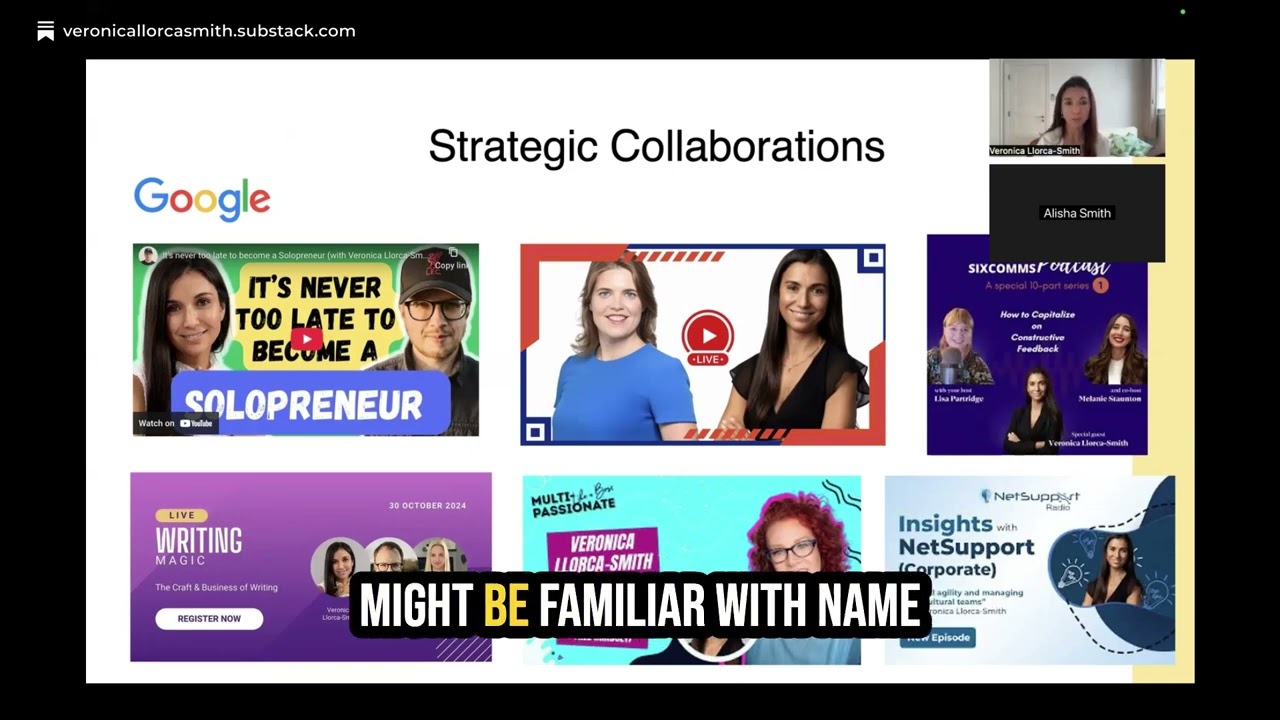
Hi everyone, this is Veronica from The Lemon Tree Mindset, and I'm very excited to talk to you today about becoming a paid speaker. My own journey as a speaker started 3 years ago when I started speaking on podcasts and live sessions and so on, and today is actually my main income stream. And not only that, it also allows me to travel overseas. I was actually in India last week in a big event. I will fly later in April to Malaysia to speak in a summit. So it's been incredibly rewarding professionally, but also as a person for my own development. And today I want to share everything that I've learned in these 3 years to help you become a speaker and especially a paid speaker. So let's get started. And this is the agenda for today. So the first thing is how to create speaking opportunities, because if you want to become a paid speaker, the first step is to become a speaker. Second is how to optimize your LinkedIn profile and your content strategy on LinkedIn, because to be honest, it is the platform for speakers. It's by excellence the B2B platform, and that's where your leads are going to be. That's where my leads come from. Then we're going to talk about how to invest in a smart speaker infrastructure. So what you need, what is the basic that you need to be seen as a professional speaker, and then from there, how to create a professional offer and how to build a strong portfolio so that you can pitch to clients and grow your business. So the very first thing is to start creating speaking opportunities, and let's start going very small, and then from there we can, we can go bigger and we can scale. But the first thing is to find any type of opportunity where you can start speaking in public. These are many of the examples that I have from 3 years ago when I started. I had no idea what I was doing, and I was just figuring things out. So what are some of the opportunities that you can create? And most of you are already active in one or multiple platforms, and it's very smart to start where you already are. Chances are there are already people in your community, peers, other creators who have perhaps podcasts, they might have shows, they might have a book club, whatever that might be. What you see here on the screen is really partnership with other people like myself who already have their own show, who like to interview people. And so the first step is, instead of just trying to go out and big and reach out to companies, start flexing the muscles, start finding opportunities to speak where you are, whether it's podcasts, whether it's live sessions, and so on. If you don't know where to get started, you can actually participate in my chat at the Lemon Tree Mindset, once a week or so I have an open collaboration day where I invite people to pitch their ideas. So if you want to speak in a podcast on a particular topic, you can try to sell your idea, pitch your topic, and take it from there. Personally, I do a lot of live sessions with people in my community. So if you're one of my premium members and you would like to do perhaps a live session, or you even have your own podcast, I would be super happy to collaborate. Here are other examples, and this is not just about Substack. In fact, it really applies to any platform where, as you see here, I have examples of LinkedIn Live, for example, which is a platform where I'm very active, and that works very well to raise awareness, to give your content longevity because the recording stays in the platform for longer. I also host my own webinars, and again, this is all public speaking. It gives you mileage, it gives you footage, it gives you credibility. So start within your own ecosystem first. Going live is another great tool, whether you do it with someone else or whether you do it by yourself, and it also gives you a lot of confidence, it gives you a lot of experience that will be very helpful once you go into the big stage. And everything you see here on the right are live sessions that I've done during this past 12 months or so with other creators on Substack. So there are so many possibilities out there, and I would say that that's The low-hanging fruit is starting to partner with people, with individuals, creators who are already in your community. So try to find partners that you can do this type of collaborations with. In my case, here are some of the examples. Some of you might be familiar with names like Christina Godd or David McElroy. So these are people with whom I have started to have strategic collaborations, not just public speaking, but it might be also guest post, doing a joint webinar, and, and so on. So try to be strategic about who would be a good collaborator with you, who is perhaps in your field or in a field where there is overlapping. For example, if you talk about women empowerment, you might want to talk to someone who is talking about women health. So try to think bigger, and instead of thinking about competitors, really think about collaborators. Partnering not only with individuals, which is great, but trying to take it a step further and partnering with organizations. Now, at this point, I'm not talking about paid engagement. That will come with your time, but we have to do our homework first. And what do I mean by organizations? Here are just some examples, and there are so many types of organizations that you can partner with. My favorites are, first of all, Chambers of Commerce. This is an event here on the left that I participated in last week here in Hong Kong for the French Chamber of Commerce, and it was a masterclass for entrepreneurs. Now, I didn't get paid to speak in this event. However, they have a network and a database of over 10,000 members, so that gives me a lot of exposure for free. So it's definitely a win-win, and it also gives you credibility when you partner with chambers because they have authority themselves and they're very well known in the business community. So depending on where you are, you can take a look, do a search and look at chambers that are in your city. There are events as well that you can participate in. And what I would recommend here is the one that you see here at the bottom left. This is the big Inclusive Leadership Summit in Hong Kong. So that's my topic. When I talk about public speaking, my areas are leadership and communication. And so I'm always looking, I have the radar on to identify what are some events, conferences, summits. Many of them are actually online, especially in my region because it's easier for me. I'm in Hong Kong, so I usually look at Asia Pacific. And these events, they're honestly always looking at panelists, speakers, and so on. What I do recommend, and this was my approach, is first go as a participant. Try to get a sense of what they're looking for, what the event looks like. If you can, try to introduce yourself to the organizer so that you start creating that relationship, and then from there you can pitch your idea. This is a very, very big forum, but you have much smaller events in your community that you can definitely pitch to, especially of course in your field. So if you are a small entrepreneur, so you might want to talk to SME associations, for example. If you're in leadership, like in my case, you might want to look at big leadership forums and symposiums and, and things like that. Then you have panels as well, panels that tend to be more intimate. The one that you have here in the middle is one panel that I spoke at last year for the European Chamber of Commerce, and it was actually during International Women's Day. March is a huge month for public speaking for women speakers, and the reason why is because of International Women's Day. Most organizations, if they want to do something for International Women's Day, it might be an internal celebration, it might be speakers of events. So for March is always my biggest month in terms of number of events and in terms of monetization because of that reason. It's a very good opportunity for public speaking. Now, I said that this speaks to everyone because International Women's Day just happens to be coming up now in March, but you also have days that are, for example, for cultural agility or day that relates to mental health, which is huge for men. So you can try to time your offer into what's happening in the market. Then networks are also very powerful, which is what you see here on the right. So this is Entrepreneurs Community, and they have one chapter or one section that is dedicated to solopreneurs, and they invited me together with another solopreneur to talk about how to grow opportunities as you build your own brand. So again, I recommend that you do a search on what are some networks that relate to your field. It might be associations, it might be business communities. There are so many out there, and they are a great opportunity for you to have more visibility and even having potential leads, because people attending those events are likely to become your readers, your followers, your subscribers, and potentially even your clients. And the bottom one, this is one of my favorites. It's actually partnering with charities and nonprofit organizations. And no matter what you do, no matter what skill you have, no matter what experience you have, I guarantee you that you can use that and leverage that to add value to underprivileged communities. And that's fantastic because on the one hand, you're helping a group of people who are underprivileged, but on the other hand, you also get exposure. So the example that you see here at the bottom is one of my favorites, where I spoke for a nonprofit that focuses on giving education and resources and empowerment to women, young women from underdeveloped communities in South Asia as well as Africa. It was a wonderful experience. I spoke to over 60 women. They were so engaged. They had so many questions, and I talked about how to use an athlete's mindset to build a better world for every child. So these women, they don't have a lot of access to education. They don't have a lot of resources. So be able to contribute in that way while at the same time also building my brand and doing something that I'm passionate about is something that is truly, truly rewarding. So what does that look like for you? You can look at charities and topics that you're passionate about. For me, it's often about women, it's about children, but it might be people with a disability, for example, or it might be for the elderly. So you can think of your skills and how you could put them in service of the community, and it really becomes a win-win. So this is what I mean by