Why you keep getting stuck: The Chain of Reaction
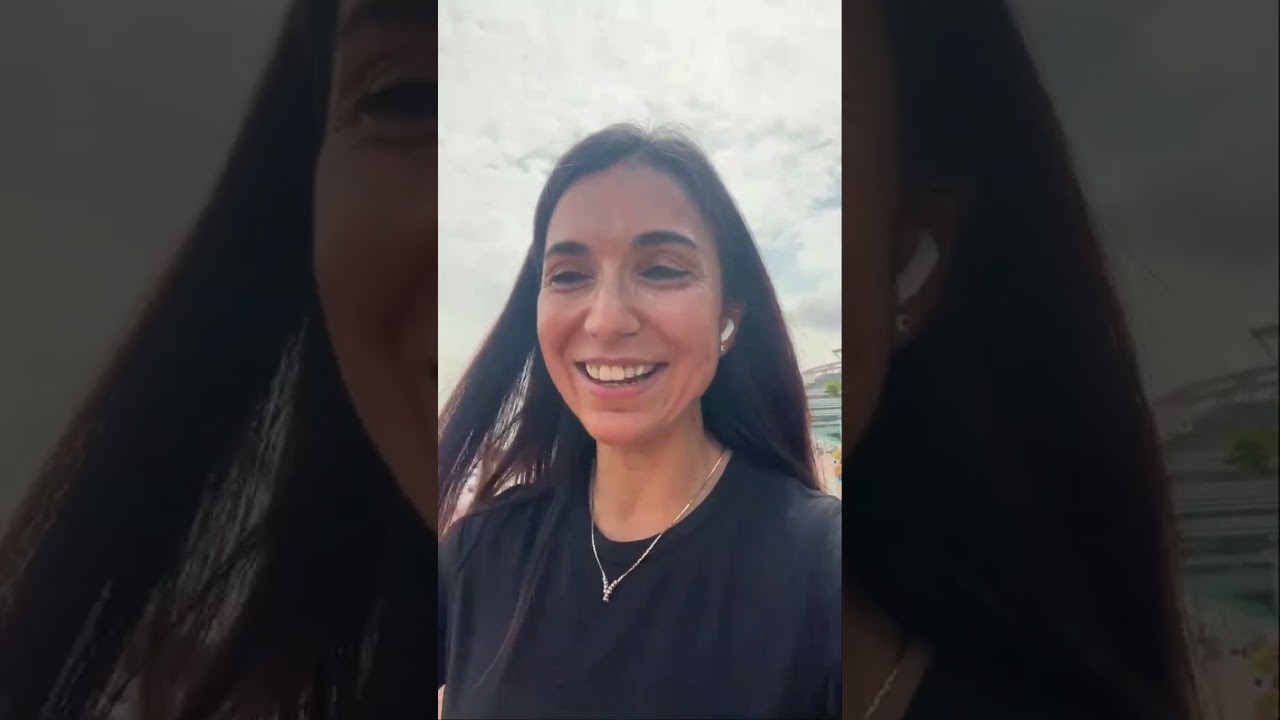
Veronica LLorca‑Smith breaks down her four‑part "Chain of Reaction" framework: Identity, Vision, Action, and Rewards. She uses stories from public speaking, triathlon training, and writing to show where people get stuck and how focusing on daily wins instead of just KPIs helps you move forward.
Chapters
This is one new chapter of the Walk and Talk sessions. Hi, Maria! With Veronica from The Elementary Mindset. And I started doing these sessions a couple of weeks ago to keep it a little bit more spontaneous, a little bit more natural. As you see here, there's no script, there's no teleprompter, just me talking to you guys. And I really encourage you to try new things as well and to get out of your comfort zone. It really helps you grow regardless of how many people show or don't show up. I always say that you have to show up for yourself first, and eventually the room will fill up. So today's topic is The Anti-Procrastinator, and it's really about how to get unstuck. And the reason why I picked this session is because I just launched my course, The Anti-Procrastinator, which is actually based on my book with Penguin Random House that I published last year with the same name. And for a whole year, I've been promoting the book. I've been going to literary festivals in India, Hong Kong, Singapore. And now that it's come to the 1-year anniversary, I wanted to do something different because at the end of the day, a book, it feels a little bit passive. And I wanted to do something that is a little bit more active, that is a little bit more actionable so that you can really get unstuck and make things happen and build habits that last. And so I'm gonna tell you a little bit about one of the frameworks that I developed that I'm very passionate about because I believe in it. It's what has helped me get unstuck myself, achieve many things, whether it's learning languages, whether it's exercising and doing Ironman, whether it's growing 2 publications. I also have the Spanish one. And it's called the chain of reaction. And it's a concept, but I'm going to give you examples and I'm going to ask you questions so that you can use it yourself to get unstuck. Because honestly, we all do at a certain point. And so it's good to have tools out there that you can use when you get to that point. So what is a chain of reaction? It has 4 elements, and feel free to take a piece of paper if you want to write it down, but I'll try to explain it as best as I can. So the first thing is your identity, and I don't mean who you are today, but I mean your aspirational identity. When you think about the future, when you think in a year's time, what would Veronica 2.0 look like? What would Maria 2.0 look like? And so it's really that aspirational version of yourself. It could be, I want to be a published author. I want to have a successful business. I want to be a fit person, whatever that might be. But I want you to think about that projection and what that could look like in the future. That's the first step, identity. The second one is the vision. So once you have that clear identity, is how does that project into a specific vision? And the question is, what does success look like to you? Because success is something that's very personal, right? And if you said, oh, my identity is I want to be a fit person, For you, it might be something. For me, it's all about sports and endurance and doing races and fun activities with my daughter. So that question is very, very personal, but you have to be able to answer, to see your podium, your finish line. What does that success look like? Then it's of course the 3rd pillar, which is action. Taking action, no matter how small, but what are these little things that can help you build towards that vision and towards that identity? For example, doing a live session today that is helping me become a better speaker, become, have a better community. So small actions, it might be walking. I'm just doing a walk right now. It's not, uh, it's not huge, but it's those little things that add up over time. And then the 4th pillar is rewards. Now, I didn't say results, and I said rewards on purpose. By the way, we're gonna turn around here because I want to show you the beautiful Victoria Harbour in Hong Kong, which is where I live. And so the 4th piece is rewards. And I specifically did not say results because so often we focus on the numbers and the KPIs, especially for those of us who come from the corporate world. We have this obsession that if the numbers are not there, then we're not successful. And it's not like that. So very important to think about rewards, but also qualitative wins. It could be the reward. Maybe you haven't hit that number on the scale, but you're feeling more energetic and you're feeling happier. happier because you're exercising or you're walking every day, or perhaps you haven't hit the numbers that you wanted in your community, but you're starting to have great collaboration. So all of this is what I mean by rewards. So now we have the 4 elements, right, in our chain of reaction. And just to summarize so that it's very clear, we have identity, vision, action, and rewards. And yet people keep getting stuck. I get stuck myself. For my book, I interviewed friends, family, relatives, clients, and I realized after all these conversations that everyone had their chain of reaction, but they were getting stuck somewhere, not necessarily in the same, in the same spot. But I'm going to do this exercise with you, and maybe you can just do a self-reflection or you can share it with me. I'm going to tell you why and where you might be getting stuck. So first, let's go back to the identity, to whatever you say that is going to be your version 2.0. The problem there is not that people don't know what they want to be, it's that people don't really believe it. And we have huge limiting beliefs. And I'm actually gonna give you a personal example. When I started my journey as a public speaker, although my identity was, I want to be a well-known public speaker, I didn't truly believe it myself. And the problem with that, when you don't truly believe that you can live out of your creativity, that you can have a successful business, that you can be a consolidated speaker, is that your mind is gonna start making you behave in ways that are sabotaging you. How? In my case, for example, I didn't dare to charge a high price because I didn't believe my identity. I didn't dare to say no because I thought, well, I'm not at that level yet. I'm not that good yet. So I used to take a lot of pro bono work. And then one day that shifted. I had a big, uh, one of these Big 4 consulting firms that contacted me and asked me to join a panel. And when I said if they had it, I asked them if they had a budget for it, they said no, but it's going to be great exposure for you. And indeed, it would have been great exposure, but I realized that it was actually going against my own beliefs. It was actually sabotaging my identity. If you give it for free, unless it's a charity, which I do all the time and I love it, but if you're giving your time for free for money who actually make a profit, to me, I was sabotaging my own efforts. So with this example, I hope that you can be very honest with yourself and asking this question: are you truly believing in that identity that you said before, or you thought about before, that you want to create? Because if you're not, if you're saying, oh, I just have a small business, that's what you're projecting. If you're saying, oh, I'm not really a writer, that's what you're projecting. And so how you think, but also how you speak about yourself, about your vision, about what you're creating, is so important because it's either going to Lift you up or it's gonna keep you unstuck where you are. So number 1 is removing all these limiting beliefs that you have around your identity. Number 2 is the vision. The vision, if you remember, I asked you the question of what does success look like? And again, most people know what success looks like for them. I want to have a 6-figure business. I want to be a fit person. I want to Have a Substack bestseller, whatever that might be. The problem here and where many people get stuck is that they only think about the vision as the final step, as a final outcome, but they don't do it in realistic timeframes. So I have many people in my community, founding members who I coach, who come to me and the first question that they ask me is, how can I monetize? And so if we go straight into the last piece of the puzzle, which might be in this case, monetization, we are actually missing all the building blocks. The other day, one member in my community said, and I loved it, he said, oh, Veronica, my dream is by 2027, I think he said, I want to sell 1 million books. And I thought, you know what? Good on you for being so brave and courageous because no one says these things. And I thought it was awesome. But at the same time, it's great to dream big, but it's also great to start small. And so when you're thinking about that vision, How do you build up towards that? I'm gonna give you another personal example related to sports. I'm a big triathlon fan. I've been doing triathlon for over 10 years, but when I started, I didn't even know how to swim. And one of my dreams, so my vision as an amateur triathlete was to do an Ironman, which is probably the most difficult endurance event that there is out there. You swim for almost 4K, you cycle for 190K, and then you do a full marathon after all of this, and it's back to back. You have a limit of Almost 18 hours to finish it. Pretty crazy goal, right? But that's what I wanted to do. That was my vision. However, I didn't just go and sign up straight and went from zero to do a full Ironman. I started working on the building blocks of my vision. First, I joined a triathlon club, and then I trained, and then I joined a sprint triathlon, which is very short, and then I went for a longer distance, and then I went for the half Ironman. And then after 2 years, I signed up for the bloody thing, the Ironman in Australia, and I did it. I finished it in 12 hours and 41 minutes. But what I tell people is that the real time was 2 years, 12 hours and 41 minutes, because that's how long it takes to chase a vision and to chase a dream. So my question for you is, are you setting those building blocks? And are you doing so in a way that is realistic? Because otherwise, there's gonna be a big mismatch between the big goal that is here and where you are today. So work on the building blocks and make sure that that finish line, you break it down into small pieces along the way. So to my friend who wants to sell the 1 million book, okay, so then let's talk about how you're gonna build a newsletter of millions because you're gonna need to start there. And what are you going to do today to start growing your community? So that's about The vision. And then we move to the third piece, which is the action. And a lot of people tell me, but Veronica, I'm actually doing all the right things. I'm eating healthy, I'm exercising, I'm writing every week, even more than once a week. What's happening? And I'm gonna tell you what's happening. Consistency has been glorified. Everybody tells you if you're consistent, you're gonna get results. Yes and no, because if you're consistent doing the same thing again and again, your improvement is going to be marginal. It's not going to be incremental because you're just doing the same thing again and again. And here I'm going to give you 2 examples again. So the first one is about writing. When I started writing, I followed the advice that you see everywhere: write every day and be consistent and people will come. And they didn't. And at one point I realized I need help. I'm going to have blind spots that I'm not able to see. That's why they are called blind spots. And I hired a mentor from Australia, a writing mentor who helped me with my book. And the first thing that she told me is, Veronica, you have a great story, but your book needs a lot of work. It was the worst thing that happened to my ego, but the best thing that happened to my writing career, because for 6 months I had someone who was telling me, Don't just be consistent, be better and work on the things that you're not good at. And honestly, it really helped me. And I went from marginal growth to incremental growth. And I don't just say it, that book, The Flight Home, got my first publisher deal. The following year, I got a book deal with Penguin. And I'm not gonna say that it's all because I had a mentor, but it's also because I had a mentor and because I wasn't just consistently doing the flex again and again. I actually had someone who was telling me what I had to do better. This happens in sports all the time. Going every day for a 40-minute run is nice, but if you want to see results, you're gonna have to work on your strength. You're gonna have to work on your mobility. I joined a swim coach because my swim was horrible. It's still pretty bad, but it's a bit better because she was able to tell me what I had to improve in my technique. So it's not only about taking action, but it's making sure that you take action that is really helping you improve and that you do that consistently. But it's not one or the other, it's the quality and the quantity together. And so that takes us to the final one, which is the rewards. And I think this is what people struggle with the most. It's very demoralizing when you are writing a newsletter, for example, and after 3 or 4 months, you don't see the results. You don't see the growth, you don't see the monetization, you don't see the book sales. Whatever that might be. And that's why I really want to encourage you to change the mindset. And instead of thinking about results, which is something that is very dry and is something that we carry from the corporate world, KPIs and year-on-year growth and all these things, which matters, but it's also what is the little win that you're going to find every single day? And the win, it might be, I have more energy because I'm exercising more, even if I'm not seeing the results yet. Or it might be, I feel more connected because I have a small community, but it's very connected and we have conversations and we have discussions and masterminds. So don't focus only on the quantitative aspect of the result of the outcome, but also on the qualitative piece, which is maybe you feel with more purpose because you're writing every day, whereas before you didn't. And so having a combination between both and having a healthy balance between, yes, the growth is important because ultimately that's how we can monetize whatever we want to do, but also the qualitative things that you can't measure on a bloody dashboard is something that you know in your heart, that you know in your soul. And what happens then if instead of focusing on the dashboard that went down today, you actually focus on the little wins that you're collecting every day? Those little wins, those little motivational cookies, they're gonna keep filling your jar, and they're gonna keep helping you keep that chain of reaction going, because you're telling yourself, actually, I'm working towards the fitter person that I want to be. I'm working towards a successful entrepreneur that I aspire to be. I'm working towards whatever your goal might be. And so that's how the chain of reaction works, and that's how personally, I get stuck and many people get stuck. So I hope this concept of the chain of reaction helps, but more so how you apply it in practice. And I hope that the questions that I asked you today help you reflect on something or unlock something that you have to just go a little bit deeper and see what is down there. If you want to know more, I just launched my course. I would love for you to have a look and see if it's something for you. Fun fact, because it's a course for procrastinators, most of the students are procrastinating to join. I won't take it personally, so you have until the end of the month to enjoy the, the early bird. Great to see so many of you today. And a final look at Hong Kong, which is a beautiful morning here. And I wish you a great weekend. Thank you for joining me. Thank you.
More from Veronica



How Much Speakers Charge And Where To Find Paid Gigs [Public Speaking Bootcamp]







