Failure as a Tool - Vinod Khosla, Founder of Khosla Ventures
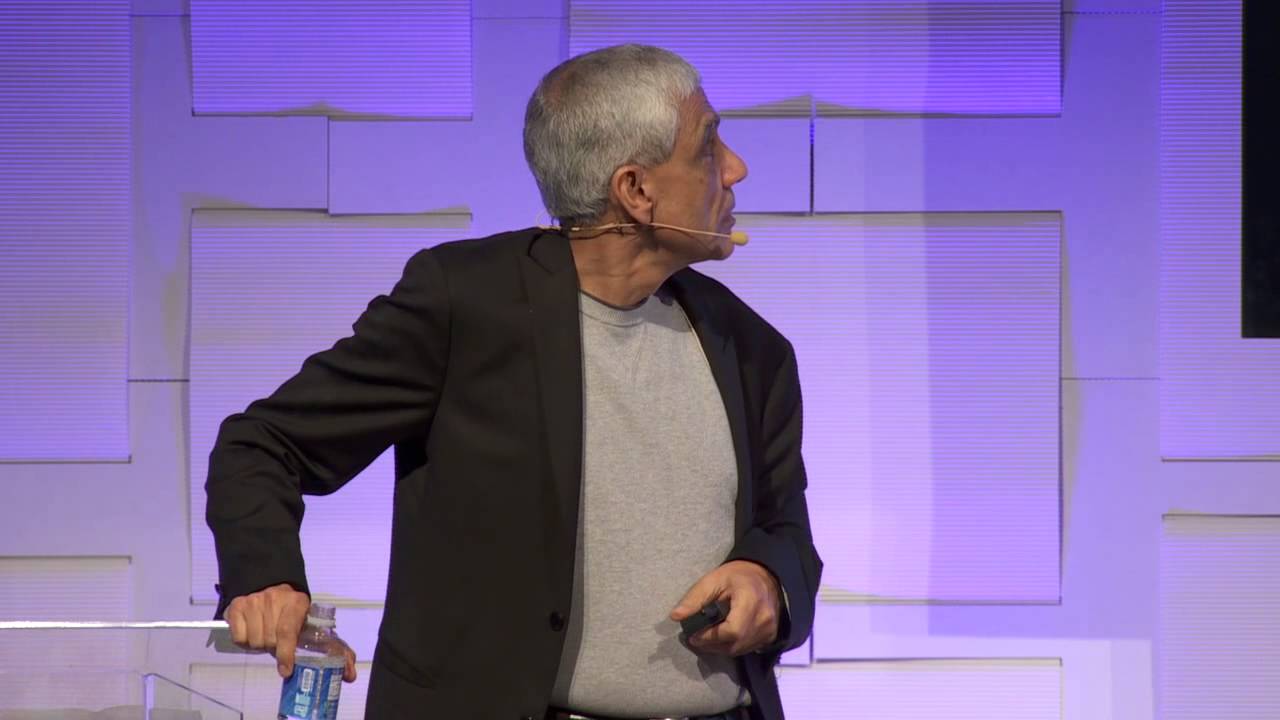
In this keynote, Vinod Khosla argues that failure is not a desirable outcome but an essential, controllable tool for startups. He stresses that entrepreneurs must adopt a culture of small, low‑cost experiments to discover risks and opportunities early, preserving option value and reducing the magnitude of later failures. Drawing on historical anecdotes—from the Wright brothers and Edison to Sun Microsystems, Cisco, iNetra, and Nutanix—Khosla illustrates how unreasonable founders who are obstinate about their vision yet flexible in tactics can achieve breakthroughs. He critiques rigid five‑year plans, over‑optimistic expert opinions, and the tendency to optimize for speed or stability alone, advocating instead for “flexi‑planning,” low burn‑rate, and a risk‑curve mindset. Practical guidance includes allocating a small portion of capital to waste on experiments, treating experts’ advice as biased data, managing burn rate to stay flexible, and balancing optimism with paranoia. The talk concludes with a call to “do epic shit,” to persist, and to treat failure as a necessary, disciplined part of the innovation process.
Chapters
I'm gonna start where we started the conference. How many people remember Regina's first slide? And what did it say? What would you do if you knew you could not fail? Yes, it's a great way. I didn't know she was going to use that slide But I'm mostly gonna be the bookend for that. I've never understood why they do podiums where you can't put a bottle of water anywhere on the podium. So many other people have covered, in fact, some of the slides you've seen before from other people. I had no idea they were planning on using it, but it ties down so many of the themes. And since I'm last, I guess I get plenty of time. It says I'm minus 8 minutes already. That's nice. I'll keep you through lunch. I have 80-some slides. I do, honest to God. You can't talk about failure simply. No, but you know, Kandi brought it to the right place. The Valley is an undirected place. When you see whether it's China's model of directed investment, which seems powerful, or the Russian planned economy of Fortune 500 companies, 5-year plans, that does not work. And I'm going to talk, talk about why and maybe how to use failure as a tool. It may be the single most important tool we have. This just came out Friday in the Wall Street Journal. Speaks to this issue. On the other side are all the cynics. People like Bob Perry that Kandi talked about, who will tell you all the things that won't happen, why nobody would need a PC. In fact, when I was starting Sun, there was a quote from Ken Olsen, the CEO of Digital Equipment Corporation, that said something similar, like nobody needs a computer of their own. That was great for us. And I think he was right. Nobody needs a computer, they need 100 different computers. They're all around us. But if you're cynical, you can always convince yourself things can't be done. This is one of my favorite tweets. Give you some of my favorite quotes. And it's amazing the diversity of people who've said the same thing. Robert F. Kennedy, Martin Luther King. Unless you're socially maladjusted, unless you do something odd and different, you're not going to do anything important. For those of you who have kids, I have a talk on our website I gave at Cherisha School that I'd highly recommend. My first 6 slides went something like, "Don't listen to your teachers." "Disobey your parents." "Color outside the lines." Literally, each was a slide. And— And then Rao, who's here, his son, who was 9 years old, I think, raised his hand and said, "My mom's always trying to get me to improve my handwriting because I got a C in handwriting. Should I practice it?" And I said, "Not if you have something more important to do." This sort of— I wasn't very popular. But the kids all loved it. But I actually feel it's a really important way to raise your kids. And so I— this— and I'll come back to this. But Martin Luther King is right. If everybody stuck to being proper and well-behaved— and I may be the only parent who at the age of 5 was throwing food at my kids because they were sitting there too properly. It's honest to God true. And actually, my daughter had a 24th— I just remembered— 24th birthday party a few weeks ago. And she said, Dad, my friends think— these are all 20-something-year-old kids— you're really cool because I actually threw some food across the table. And they thought that was pretty cool. So if you want to be cool— Human progress depends on unreasonable people trying to do unreasonable things. I fundamentally believe in the power of unreasonable people. If people won't accept the status quo, will not compromise, and will try things. But end with premature guts and confidence. And this is really important because if I knew all the problems we'd run into when we started Sun, any rational person would have convinced me not to do it. And because I didn't know, it allowed me to get started. And I'll come back to— These things are self-evident, but it's amazing how many people ignore them. The other thing is, when you're trying these things, it's not easy, it's not comfortable. It is uncomfortable because you're trying to do things that others don't believe can be done. And you are scared. If you're smart, you're scared. About all the things. There is no courage if you're not afraid. And so keep that in mind as you vacillate, think about, panic sometimes. And Pierre asked me to move this up from way back in my slide deck to right in front. It is true Failure is allowable, but it's not desirable. And you have to have a reason to fail. You should have goals why you might try something that could fail. Failure is in good company. I don't know how many people know Einstein was considered dumb. He actually didn't learn to talk until he was 4. He didn't learn to read till he was 7. The Wright brothers— and Regina had this quote from Lord Kelvin that said, "Heavier-than-air flying machines are impossible." He was the president of the Royal Society. I actually had that slide. I took it out, that quote. Experts have all these opinions. A few years later, and through lots and lots of innovations, the Wright brothers kept building one fail on each failure to come up with the first flying machine. Edison went through 10,000 iterations of the light bulb. And his view was, I have not failed, I just found 10,000 things that won't work. Or 10,000 ways things— this won't work. Michael Jordan was the other guy who— there's some beautiful Michael Jordan quotes on failure. I'd recommend reading his quotes. I didn't know how many to include. But he says, I've failed over and over and over again in my life, and that is why I succeed. I'm not afraid to try the game-winning shot that I might miss and embarrass myself with? Think about it. Personally, I feel like having done this for as long as I have, I have a bigger library of failures and ways to fail than almost anybody I know. Worked with more entrepreneurial companies, and I hope I'm smart enough not to— make the same mistake over and over again, just discover new ways to make mistakes. To me, no failure means no risk means nothing new. It's that simple. This is why failure is important. And so I say, if you're not failing, if you're exactly on plan, exactly on schedule, you are not stretching. So I basically said when we started Sun, if I knew everything that could fail or that I didn't know, I would not have started it. Jumping into some things that you believe in, something you have passion for, without a parachute is great because necessity, not safety, is the mother of invention. It is amazing how often you see an impossible task, and when you keep banging your head on the wall because your company is going to fail if you don't solve this problem, it gets solved. Many of you may have noticed how many of your breakthroughs happen the week before the board meeting. It's amazing how— but necessity is the mother of invention. So let me go through some facts. Those 5-year business plans Steve Blank talked about— is Steve still in the room? No, he's not. They create, they are really the illusion of knowing. Don't have a clue. And so Stop pretending. Now, that's not to say don't make plans, because frankly, to me, plans do two things. They tell me the quality of your thinking and the things you've thought about and the things you know you need to worry about. But the most important thing is what we don't know, we don't know. Those are the things we can only understand by being in full body contact with our problem. This quote was used earlier. This was his quote about pre-fight fight plans that people have. And I also had a quote that Steve Blank used this morning. All of us know this. Most people doing business plans pretend This is not true. It is way more true. And that's why Steve said, get out there and engage. The other thing I want to say is failure is not fun. So don't, you know, we romanticize failure, but my goal isn't to do that. I'm essentially saying it's an undesirable necessity. Because we can't completely know. It's never easy. It's not a party. And we should recognize that. But I will say, as our problems get bigger, that freedom to fail is extremely liberating. When I Finished graduate school, I was talking to my first VCs about my first company called Daisy Systems. And I said, this is great because I don't own anything. And I said, it's a great deal. If we win, we win. If we lose, you lose. Because all I had to lose was my student loans. I had nothing else to lose. It's very liberating. And while others were worrying about careers, I said, "Hey, since I have nothing to lose and I can bet with other people's money, it's a great deal." And I hadn't seen— I didn't even know this was possible. But think about Apple. Apple's board brought Steve Jobs back in a failing company. Imagine if they were doing well, if they had something to protect, if they would have let Steve experiment the way he did with whole new ideas that no analyst or expert believed in. Think also for the fa— of the fact that Steve failed a couple of times. He succeeded sometimes. DreamWorks kinds of experiments. NeXT didn't really work. But he got the opportunity. I'll come back to this. The other thing is failed strategies or failed tactics are different things. People confuse the two. Many people said, well, Friendster didn't work, so social networking must not be right. Oh, lots of people did MP3 players, so it's not— it's a bad market. The difference between the iPod and other MP3 players, and there was probably dozens of them including the Microsoft Zune, was the way they approached it with the tactics. Tactics was what was different. Here's the other thing people don't realize. If there's 10 things that are important to your success, you control 3 of them. Your competitors control 3. There were so many things DEC could have done to completely destroy Sun, no matter how well we executed. And then some of it is just luck. You run into the right person, the right idea, the right timing. I was on the board of PictureTel, the first video conferencing company, and developing the market was such a bear. It was so hard. And then the Iraq War happened, and suddenly video conferencing took off. We had nothing to do with it. We didn't start the war, but we sure took advantage of it. So keep this in mind. And that leads to this issue of persistence. But let me— this is the first time I'm going through this deck, so I thought I had a different slide next. So why fail? You really want to test things, hypotheses, explorations, better findings, careful validations. Take every possible risk or opportunity you can find and in isolation, try and test it. But that's a price point, whether it's a product feature, whether it's a market risk, it's a competitive risk. That's what Lean Startup movement is about. It isn't about— and I'll— well, let me wait till I get to that. The goal is to find out as much as possible on as little money as possible. That is why failure is allowable. It's to reduce the magnitude of the failure later when you've done a business plan execution based on your assumptions and you run into that first contact with customers or that first, first punch that Mike Tyson talked about. And what's the startup's goal? It's about buying insurance. It's creating, protecting against downsides. It's risk reduction. But more than anything, it is about creating option value. There are things that just take off. I am almost certain, whether, um, he agrees or not, Mark Zuckerberg didn't imagine Facebook the way it was. He had an option. He took those options. He did the explorations. He followed the ones that worked. You know, Pinterest is a very successful site. And Ben Silberman told me once, and there's a video of this on YouTube, he went through 300 iterations of that product before it took off. This is also my favorite. Most people are limited by what they're willing to try. Not what they're capable of. I think Regina in some ways talked about this issue. So just try epic shit. It is worth doing. So in a startup's life, you don't have strong operating history. You don't have static environments, you can't plan. You can't even manage the way you normally manage. You can have a rigorous schedule and hold people to it, but if they're working on the wrong thing, it doesn't matter. So Getting to some dos and don'ts. This is absolutely key in the culture of a company. It may be the single most important thing that I see missing in well-executing environments. But Stan— Stanley McChrystal said, just because you allow failure, Don't let people feel like they're failures. And then be really intelligent about what you're going to fail on, which means what are you going to try and what you're going to experiment with. There's a— and you probably can't see it, these slides will be available— there's a blog post by Brad Feld, who I tried to have come here. The title of the blog post is called "Small Experiments Often," as opposed to pretending you have a plan and you have the illusion of knowing what you're building. So I think some of the people in this room have heard me say, what are you going to waste money on? In fact, Nutanix, when it raised too much money, I said, okay to raise the money, but tell me where you're going to take 20% of the excess money and waste it on experiments. Experiments that have small downside, you can lose 1x your money, but have 10x upside in opening up new markets. You can't do it with 100% of your cash balance. And this Brad Feld post talks about this. You know, when Square recently raised a couple of hundred million dollars, I said to Jack, I said, "Jack, okay to raise that much money, but you gotta define—" And I gave exactly the same advice to John Herring at Lookout, who just raised a lot of money. "Tell me 10 things in which you can waste $5 million each." where the $5 million is the downside, but $500 million on your market cap is the upside. What experiments can you run? But the same is true if you have $100,000 to waste. You can run 10 $10,000 experiments. It is not a consequence of being large or having lots of money. At every level, It's a very good blog post. This is obvious. It's amazing how often people don't examine their failures. You want to get into your failures. What failed? Why should I try this experiment again coming at it from 5-degree different angle? The other thing is when things fail, we want to rationalize. And then we go talk to others. And I especially hate hearing from people who have no experience with trying things in the field. None of that first punch, that first contact with customers. Board members will have opinions about, I told you so. The price was too high. The price was too low. Whatever. Whose opinion you trust on what topic. And some people trust everything somebody says. Some people trust everything everybody says. Some people trust everything some supposed expert says. I'll come back to that. Be critical about whose opinion you take. And on what topic, and ask the question, why are they qualified to answer this question? And I'll come back to if an expert is qualified, how you take their opinion. Most startups should plan not to execute a plan, but plan to build a plan. I'll come back to this. Many of you have heard this analogy from me. Think of being in one of these British roundabouts. There's 6 roads you can take. You can take the road you think you want to take and go down it, but you will only get to where that road is leading. It's okay, especially when your burn rate is really, really low, to go around in circles trying to scope out these roads. Not enough people do that, especially since most board members and VCs want you to start executing on a plan. Exploration is okay. In fact, exploration from my point of view is desirable as long as you're spending tiny amounts of money, your burn rate is small, and wasting time— I talked about wasting money— wasting time isn't a bad thing depending upon your market. If you're in a race to something, you have to take a different approach. None of this is all It is not always applicable. It is often applicable. You can see why I advise kids the way I do. Waste money, waste time, not the advice you're most likely to get. So you can discover a road worth taking, as opposed to the road you thought was the right turnoff and you went down that and executed really well and ended up in an uninteresting place. Don't plan, flexi-plan. And create this culture of experimentation. For those of you who remember the talk Scott Cook gave, his talk was titled Culture of Experimentation. He's trying to change the culture in a large company like Intuit to stop planning and doing a lot of experimentation. I think it's a really important phrase. There are people who make this— develop a culture of make no errors, plan well, execute well. I'd rather you develop plans to recover really rapidly, to evolve and iterate, as opposed to develop. And again, I want to emphasize, It's not one or the other, but these are biases. It's not black and white. These are biases of where I find people are leaning the wrong way. You want to focus early on, on learning, learning as much as possible about all the risks and all the opportunities and all the solutions and problems in your market. With a bias that every plan you do leads to rapid recovery. While you're failing, before you fail, before you try experiments, ask lots of questions. So goals of failure. I've talked about this. Let me go a little bit deeper. You notice I'm on slide 41. Validate each element of your vision. Last year we handed out The Lean Startup book by Eric Ries. That covers this in some detail. This is the first goal of a startup. Find out what to build. Be in contact with that customer. That's what Steve Blank talked about. Number of times I've seen startups build the wrong thing on budget and on schedule and inconsequentially. The second goal is to test the strategy and assumptions, which are again different from what to build. And then execution does become important. It's not unimportant. And I don't wanna leave anybody with the message— companies go through these phases and some of these phases run in parallel. On some things you have to execute on budget and schedule and, um, uh, be very, very tight while in parallel on other things you're experimenting. The key goal, in my view, is optimal or maximal learning from each dollar you spend on a risk, on an experiment. That should be your early goal. This is also something people forget. I've never had a person come in and say, "Here's our liabilities and here's our strategy for our liabilities." I've never had a person come, "Here's our competitors' strengths and here's how we're going to avoid them." Think about it. They're just as important as, "Here's my strengths and here's how we're going to leverage them." This is like baseball. The Giants winning or the Dodgers losing a game, exactly the same thing. These are obvious. I can literally talk to this slide for an hour. This is sort of this collection of failures I have in my library. All the ways I've screwed up. So I talked about circling the roundup. This also refers to a very good blog post by somebody from IDEO Design. This is how people think of business plans. Some talk about standard sequential pivots. And Eric Ries talks about them. This article actually talks about this approach. Highly recommend you read this blog. It's all about testing all these experiments. There are good failures and bad failures. Accepting failure or allowing failure is not an excuse to be casual. It is not an excuse to work less hard or be less diligent or less thoughtful or less purposeful. Sometimes people mistake allowing failure in a culture of experimentation to be, it's okay to be undisciplined. It's not okay to be undisciplined. And the goal every time you run an experiment— there are some things you can just execute on, yeah, but the uncertainty is where you run experiments. The goal almost always is small experiments where if they fail, you lose very little, a small amount of money, but if they succeed, they generate some large upside for you. A new market, a new segment, a new marketing strategy, a new product feature. So we've heard a lot about The Lean Startup. I won't spend time on it since I'm sort of running out of time. But we talked a lot about it before. You have to test your vision and then steer and then accelerate. But nothing before its time. People also forget the minimum viable product includes a V in it. And they excuse it for a minimum product. These are judgment calls. You remember what Edison— oh, I have a great Edison quote coming up. You can give up too easily. I've seen people do it. Your whole startup process should be geared to accelerating this learning loop. Otherwise, you might spend a lot of money doing the wrong thing. How do you do that? That's a seminar by itself. Maybe next year we can do that. Even if it's slower to your product vision, or at least the illusion you have of your product vision. And at least 2 people in this room in the last month or 2 have had meetings with me where I said, oh yeah, I said, You're doing this, you're not worrying about XYZ. They said, well, we have money. In both cases, the answer was, we have money through 2014. I said, because you have money doesn't mean now isn't a time to panic. There is a time when panic is the appropriate response, and you shouldn't be too boneheaded about recognizing that moment. If your vision's wrong, having 18 months of cash isn't going to help you. Discovering what's right as quickly as possible or doing something different is important. But you have to have the courage of your convictions because everybody outside believes what you're doing can't be done or shouldn't be done or nobody needs it. You heard that from Airbnb. Nobody wanted or thought you needed that product. So this balance between the courage of your convictions on these scary decisions. And that's why I say to people, be obstinate about your vision, be flexible about your tactics. I also find people who are in the startup business, and this is almost a religious belief, because they want to make money. Always pivot too quickly, always quit too quickly. People who have passion about their vision stick with it longer, sometimes too long, but I'd rather stick too long than too short. And so missionary founders just tend to do better if you believe no matter what you do, your plan's not gonna play out as orchestrated and you'll run into problems. If you don't have belief system, religious belief in what you're doing, you'll give up. And you have to have both optimism and paranoia. If you aren't optimistic, you're not going to attempt things. If you're not paranoid, you're not going to be scared enough to discover your problems. So you do have to be schizophrenic. No two ways about it. Both are absolutely essential. You can talk yourself out of anything important by being pessimistic. Go back to my tweet about the cynics. Experimenting frugally is possible. If you break down an experiment and always say, now, how could, how could I test this thing with half the money or one-tenth the money? It's often possible. But people have this view of developing a product and the product vision that they're executing on where they'll spend $1 million, where they could have tested something for $10,000 and then take 6 months or taking 3, 6 days. Not enough people focus on lowering the cost of experimentation. So this is a chart from iNetra. I only got this in a review very recently. We funded them 10 months ago. 231 product iterations. There are 50-some approximately hardware iterate— distinct hardware iterations of the product. They've done in this short period of time because the cost of experimentation has been reduced by their startup process. This is what I mean, gear your startup process to accelerate learning. That's a classic example of that. Also, when you're looking outside, people who have nothing to lose, nothing to gain by your success, will generally give you politeness. They won't tell you what they really think. Seek critique. Many of you feel uncomfortable because I'm brutally honest, but it's what you want. We tend to go away from people who criticize us or critique us. And sometimes people don't do it well enough. I often mix critique with criticizing, or at least it comes across. And for that, I apologize. But it's because I'm passionate about surfacing things you should test or worry about. And I've talked about that. You want to walk down the risk curve, not up the expense curve. The number of times I see plans— this is our spend plan for the next 2 years when we raised our funding— and people keep going down that plan. Without worrying about what the risk curve looks like. If risk shows up, um, something slips, they don't adjust their plan. What you want to do is walk down that yellow line of risk. And at every inflection point of risk, think about increasing your burn rate. The lower your burn, the more flexibility you'll have in taking more time to eliminate these risks. And start with the biggest risks, not the order in which you need to do product development. Something that might come much later, you might want to test earlier because it's the biggest risk. Because if it fails, or if it takes 3 times longer, as often happens, You've done it when your burn rate is lower and it's much easier. Also, the fact is, and remember I talked about normal management processes don't work. If anybody here taken a course in F1 racing, they teach you when approaching a curve, That you accelerate or you brake as late as possible, brake as hard as possible at the last possible moment so you don't skid out of the turn. As you make the turn, you accelerate as fast as possible. That's how what I believe startups should be run. And those curves are the risk curves that I talked about earlier. While building an upside plan, build an if-then survival plan. Upsides don't always happen. You have to survive to build an upside. So I'll come back to that with point. This is something people forget. Or not all hard things are valuable, but most of the hard things— there's an occasional Snapchat or Instagram, and there are exceptions, but most valuable things are hard. If they weren't hard, somebody else would have done them. And the harder they are, the bigger the comparative lead you build by solving those problems. Persistence is really important. Remember I said you control 3 things, your competitors control 3, and then 3 things are just— 3 or 4 things are just luck. If you don't give yourself time to get lucky by being persistent, and this is where burn rate management is so important. Give yourself a chance to be lucky, the right things to happen. People also optimize too much. I actually think the most important thing for startups, and frankly, I believe about society, about anything, is not to optimize for flexibility, but for, for X or Y, like throughput in a database. But to optimize for flexibility. It's what lets you make those adjustments, those changes. If you believe you can't plan, then you have to optimize for flexibility and make explicit trade-offs in favor of flexibility and the ability to change as you run into problems. This is another good article, Lessons from a Failed Startup. I won't spend too much time on it since I'm out of time. There is a trade-off between speed and stability. Each is different and appropriate at a different time. Preserve option value. The number of times I see people say, okay, we agreed on this, we are doing this, That means let's license this off. Well, keep it, let it hang around for a bit in case you have to pivot. Also, knowing things isn't enough. The gap between knowing and doing is a mile wide, and you won't really know what you're doing till you actually do it. This is again, this idea of 'Few plans survive first contact with the customer.' Very good blog. Also, we hear a lot about lean startups. Apple wasn't a lean startup. Lean isn't always possible. If you're building a satellite system, there are some things you have to do. You can do lots of experiments, But in the end, there are some things that just take more time, more money. And a lot of the hard things take money, persistence, time, patience, a lot of things that go against some of the things I've talked about, startup culture. So there is an appropriate strategy for every startup and they can be different. This is one of my favorite quotes. I guess I have a few. "Success represents the 1% of your work which results from the 99% that is called failure." This was the Edison quote I was talking about. It took him more than 10,000 iterations to come up with the light bulb. Many of you, and last year we talked about base camp, get to a survival place before you sort of build the grand vision. I like to say, get to base camp where you have enough stability, as a business, then you're actually in contact with customers before you plan your ascent to the peak. But get your base camp not in a random place, but close enough to the vision so you can actually use it to scope out the plan and learn. That learning is very important. I promised a comment on experts. We talked about— Dan Gardner talked about experts last year. Their average accuracy is the same as dart-throwing monkeys. This was the result of a 20-year study across 28,000 experiments, uh, forecasts by experts. Remember when I said I'll come back to how you treat experts? Treat their opinions, especially the ones who are not directly in contact with problems on the ground, not actually doing things, as good learnings, which are mostly biases. Many biases are good and you should use them that way. Add it to your risk matrix. An expert's opinion is important. It's not to be ignored, but it isn't to be believed either. Talked about that. Vinod Khosla. So I personally believe, and I talked about when I got started, I had nothing to lose but my student loans. That attitude, my willingness to fail, is what I fundamentally believe gives me the opportunity to succeed. I know a lot of people who are a lot smarter, but a lot more conservative. They don't want to take risks. They don't want to try things. Lots of people much better than me in most of the things I do. I don't mind failing, and I've been critiqued sometimes for saying I don't mind a 90% probability of failure in a startup. But most people like the fact when I say, but if there's a 10% chance of changing the world, That's pretty good odds. I find what's important to optimize for your risk is down small. But what you work at, try, should be worth succeeding at. Most investors, and that's why I hate calling myself an investor. In fact, I never have. Reduce the probability of failure to the point where the consequences of success are inconsequential. Goes back to doing epic shit. So let me give you one example, and then I'm going to try and finish up with a few very fast quotes. 1996, January, I'm working with Pradeep Sindhu. So what should we do? Decide the world and the internet should be TCP/IP, the Internet Protocol. IP stands for Internet Protocol. Talk to a dozen customers. They all said, we'll never use this product. So I called Cisco's CTO and they said they'd never build a public TCP/IP router above OC-12, which is like your home service now. They said every customer is asking for a technology called ATM. And me and Pradeep agonized over this and finally said, let's just do it. And we did. And the internet grew so far— fast. And we got lucky. And we found one guy, a guy called Mike Hodel, at a small company called UUNET, small internet provider. So Cisco focused on what AT&T and Pacific Bell and others were telling them. We focused on what the market need was saying. If the internet was going to grow, this company's— I haven't checked market caps recently, is $15 or $20 billion. But what's scary is if he hadn't attempted it, most likely the internet would be an ATM network. It just gives me the shivers to think what would have happened because Cisco wasn't going to develop it. Lucent and Alcatel didn't have programs. The hottest startup was a company called NewBridge. And this is where the courage of your convictions becomes really, really important. I didn't even tell my partners at Kleiner what feedback we were getting from customers. They say, "You crazy?" Because nobody wanted it. But we believed they needed it. And we had conviction around their need. And so we built it. And they came. And the same is true at Sun. People tried to convince me. By the way, I was telling you, AT&T, 1996, AT&T said they would never use that product. 5 years later, AT&T was essentially going out of business. People forget, 5 years later it was sold for a song to Singular Wireless. In fact, only the brand really survived. This massive company disappeared in 5 years. The same thing happened at Sun. Everybody tried to convince me the best thing for Sun to do was build graphics terminal for DEC VAXes. We started in February of 1982. In 1987, DEC got sold to another startup, Compaq. It was the number 2 computer company in the world. So I can go through all these examples. There are just so many. Epic shit is worth doing. What would you do if you weren't afraid to fail? Or if you were sure you would succeed? And in fact, you can look at the history of innovation. Where did it come from? Did it ever come from a big company? GM should have owned the electric car. So try and fail, but please don't fail to try. My other Michael Jordan quote: So let me stop there. I, in the interest of time, won't take questions. So this quote was a quote I put in 1982 on a slide deck I did. Though we did overheads back then, not slide decks. And it was on a movie, my first day of learning how to hang glide. And this movie was dedicated to those who dare to dream the dreams and are foolish enough to try and make them true. The accident rate for hang gliders was really, really high back then. And I said, this is what entrepreneurship is about. So please go at it. Thank you.
More from Vinod




EXCLUSIVE: Vinod Khosla warns AI will upend jobs and healthcare sooner than expected | GSIF 2026




Vinod Khosla: AI Tutors, Doctors & Farmer Experts For 1.5B Indians | AI Summit 2026

India AI Impact Summit: Vinod Khosla on Why 2047 Could Free Every Indian from Survival Work


‘There Will Be A Lot Fewer Jobs In 20 Years…’: Billionaire Entrepreneur Vinod Khosla On Impact Of AI