Vinod Khosla, MBA '80: Failure does not matter. Success matters.
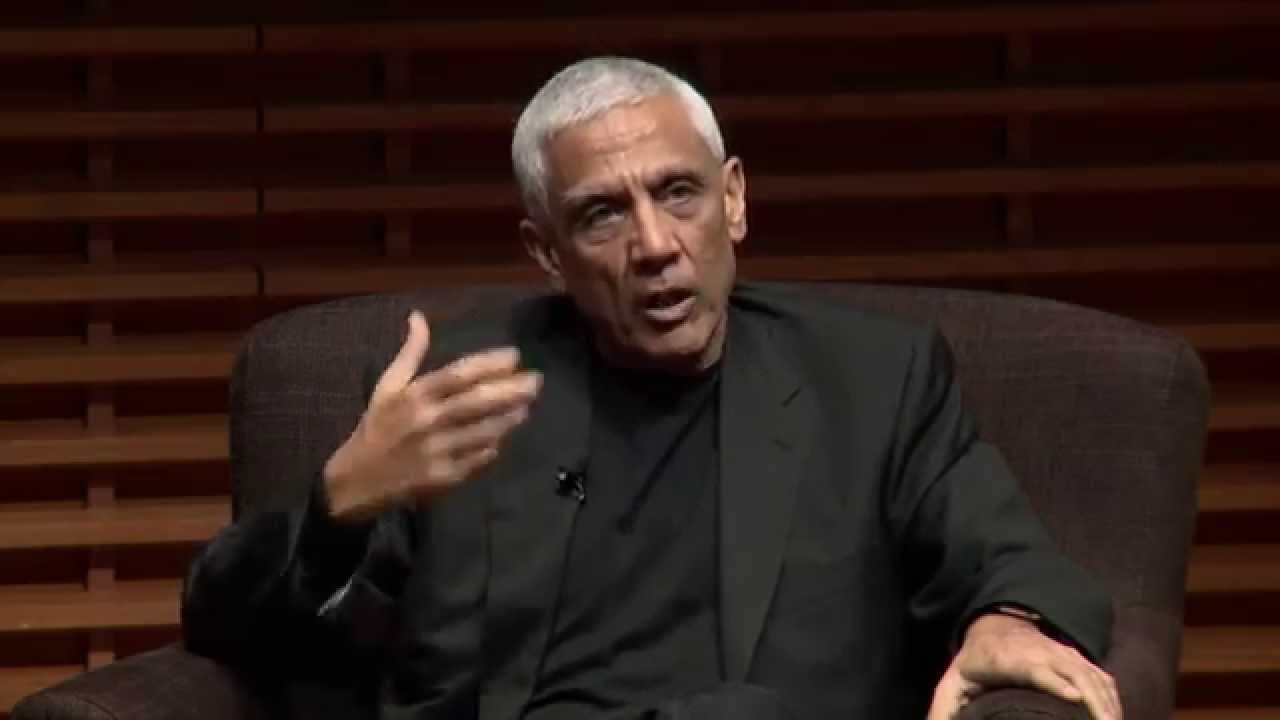
Vinod Khosla argues failure is irrelevant; only success matters. He rejects listening to customers and expert forecasts, favors 90% failure odds for 10% massive upside, and insists venture capitalists need operational experience to advise founders. Build an internal compass and work at the edges where transformative change happens.
Chapters
Hello everybody.
Vinod, thank you for being here today. Welcome back to the GSB.
It's always fun to be here. It's a lot nicer than when I was here.
Yes, I've been hearing that quite a bit today, given the previous class are here. I'm thrilled to be having this conversation. I was told that you schedule your time in 15-minute slots, so we are taking up 4 of those slots right now. So I'll get right to it. I have a few questions here focusing on 3 things: your leadership and management journey, your thoughts on investing in entrepreneurship, and then a few questions on your personal life and legacy. After that, we'll take a few questions from audience and from Twitter. As Dean Salona mentioned, You were the founder and the first CEO at Sun Microsystems. About a year after you had started, you found out that Sun Microsystems was going to be shut out from a key sale. When you heard this, you got on a flight, got to the customer's lobby, and made phone calls refusing to leave until you met with the team. Where does this perseverance and conviction come from?
Well, um, So I have a philosophy in life. Whatever I believe, I should make happen. It's that simple. And if a customer is making a mistake— the customer isn't always right, trust me. And if you want to do great products, don't listen to your customers, by the way. Lots of bad lessons in business school. I used to give a talk in the '80s on why not to listen to your customers, and maybe somebody will ask me a question. That story is in fact true. There was a signed contract with a competitor. I stayed in the lobby all day. At 6 o'clock in the evening, and I'd taken a red-eye out, and I parked in lobby. I met with the CEO of the company mostly because he wanted me to go away. By 9 o'clock, I'd convinced him to meet me in Chicago with his team the next day because he didn't want to be seen negotiating with us. The following morning, the day after, at 5 AM, we signed our handwritten contract because I wouldn't let him leave. This was the CEO of a big East Coast company, Computervision. So we signed our handwritten contract, and life was good. The point is, if you actually believe something, you try your best to make it happen. It doesn't always happen, but it happens most of the time. Most of the business school entry story is also true. I actually learned that somebody had dropped out. That's why I showed up. And one of the nice ladies in the business school office put me in her living room to her husband's chagrin. She was real nice to me. But things do work out if you persist. Not always, but I like to say failure does not matter. It's success that matters. And nobody remembers what you failed at. So everybody remembers Sun. Does anybody know a company I started before Sun that McNeely and I started together? Any hands?
Well, I do, but I've been researching you for a while now.
What do you think the company is?
Was it DataDump?
Yes, there was a company called DataDump we started and got funded 3 months before Sun. Didn't work out. We started both roughly together. But my point is, people don't remember your failures. And I like to say my willingness to fail is what gives me the ability to succeed. I find most people are so afraid of failing, they don't try and do the things that would be important enough to do. Anything worth doing is hard.
And so— You've spoken in the past about the importance of failure, or the lack of it. You started your first company at age 20 in Delhi. Which did not work out as expected.
Well, I didn't actually get started. They told me it'd be 7 years to get a phone line.
How did you react to that?
Honest to goodness. You know, I was 19 or 20 and they told me it would be a 7-year waiting list to get a landline. I sort of picked up and went to Carnegie Mellon.
How was that like, the move to the US?
You know, look, it was easy. I wanted to be in Silicon Valley. I knew I'd get here. I had no way to pay for it, so I had to figure out how to get somebody to pay for it. In the end, the biomedical engineering department at CMU agreed to pay for it, so I went there. And I was very interested in biomedical engineering. So I did that and then applied immediately to Stanford, and you've heard the rest of the story. They turned me down a couple of times, but— you know, the funny thing is, with enough persistence, most things that seem impossible become possible. I'm always amazed at how often you can turn things around, and people take no for an answer too easily. You know, it's whether you're trying to achieve a goal like get into business school, or my green card was the same way. I left the job that had sponsored me, but I still got my green card even though no lawyer would take me. I became my own lawyer. Got my green card without working for— while I was at business school. And I did it perfectly legally. My strategy there was, If I couldn't convince immigration, I'd confuse them, and I did. And they gave me my green card.
Well, Vinod, I just want to ask you, what are some of the perhaps the early influences that made you this way, this high perseverance, high conviction person?
Well, I was sort of always this way. I didn't grow up in this environment. Nobody around— my dad was in the Indian Army since he was 16, so he joined the ranks of the Indian Army. And when he was 16, got shipped off to Egypt to fight for the British. And so I grew up in a very different environment. But I always had this view that if I determined something was right, I was going to make it happen. And this comes to— since one of the focuses of this lecture is leadership, I am amazed at how few people have a belief system. What do they actually believe in?
I—
and yeah, it's okay to offend you guys. 90% of you will do what's expected of you as opposed to what you want to do. And, you know, I even, when I come to an event like this, say, why am I here? Why would I even bother to take an hour of my valuable time? No, it's true. I have to have a purpose. My goal is very simple. If I can convert one of you— there's probably 400, 500 people here— if I can convert one of you to follow your belief and have the guts to follow your belief, I'll have— I'll think of the hour as well spent. But so I will say, what am I trying to do and why? I don't speak because somebody, you know, will write nice things about it. I always sort of have a purpose, but I have a belief system. And most people, even successful companies— and I have a big beef with Fortune 500 CEOs I can talk about— there's very little leadership there. Don't have an internal compass of what they believe in. It's what do others expect. You know, when I graduated, I went into entrepreneurship. Nobody went into entrepreneurship out of the business school, and people said, why wouldn't you work for Goldman or McKinsey? I said, why would you? Like, I couldn't fathom why you would want to do that job, right? I still can't, by the way. For those of you going to those places, and I'm sure there's plenty, I'm probably not the right person to talk to you. I frankly don't even care to talk to you. All of you others, I think there's something wrong with anybody who fundamentally wants to go work for one of the consultants or the investment banks today. They don't understand how the world is going to work in the future. But my point again is, have a belief system, follow that compass. And I'm overstating it a bit, so there may be some hope for those of you going there, but it's only a little bit of an exaggeration. Let me go back to this issue of Fortune 500 CEOs. I've talked to many over the years. If a New York Times writer writes an article, they want to change their strategy, they want to respond. How silly is that, that some English major who's never had a business job can determine the strategy of a Fortune 500 company? Why? Because they care about what's written, not what their belief system is. Do you know what Elon Musk would say to that writer? Go get a real job. Right? What Jeff Bezos would say, that's leadership, having a belief system, knowing what's driving you to do what you do, not you fitting in to do career enhancement or making it look good to somebody else, whether it's to your friends or to your boss or to shareholders. And frankly, you look at all All the companies that are languishing in the Valley, the older companies, they generally don't have a belief system. They're generally trying to meet some quarterly target without saying, here's how we will be different, and here's how we'll do it. Apple did languish for 10, 15 years, and then Steve Jobs came in with a point of view and created the most valuable company in the world. He did irrational things. If you go back to January of 2007, January 1st, everybody was saying nobody wants a phone without a keyboard. Nobody wants a phone that costs $699. I can go on with the litany. Those were all English majors writing articles. I have this beef against English majors. Not all English majors are bad, but the majority of them at Stanford are undirected and don't have a goal or a purpose.
Sorry.
And that's not to say among them there isn't 20% that are really good. They just didn't get the right guidance and ended up in the wrong place. I like purposeful education. Anyway, sorry, back to you.
No, absolutely. This is, this actually is an interesting—
I make up better questions than usually.
Well, that's a challenge for you guys, #GSBVFTT. But I want to ask you about this. You are known for being, for the lack of a better word, somewhat blunt. Well, your website says, "We prefer brutal honesty to hypocritical politeness." What are the trade-offs in doing this?
Well, there's lots of trade-offs, but I'm again very clear. You know, it started off earlier in my life. I was very successful. Even before I started Sun, I started a company like Daisy that made me more money, which was only $1 million back then, or a little more than that, than my dad had made in his career cumulatively. So I was in a whole different place. And I said, the one thing I'll do is not do what others want me to do, or be polite, which generally means dishonest. There's a great book by Sam Harris, who's a professor over on the other side, about lying. I recommend everybody read Sam Harris's book on lying and why we all lie too much and too often. We put this sort of slogan, "I prefer brutal honesty to hypocritical politeness," on our website because it's a real disservice to people. You don't have to be offensive to be honest. When I don't like somebody, I can get offensive too. But generally, you can be constructive and very honest. And I prefer that brutal honesty because it serves a purpose. The receiver can do something about it if it's a constructive criticism. If you get hypocritical politeness, you might lose a lot. So again, it's about having enough confidence to say the other person will eventually appreciate it. And that slogan came after I was working on a company with another major venture firm, and I didn't believe their plan would work. They had $45, $50 million in the bank account, so everybody was comfortable, too comfortable in my view. I talked to the founders why it wouldn't work, what my concerns were. The other VCs agreed with me. In the board meeting said all these polite things. You know, so 40 engineers wasted 3 or 4 years of their life because nobody was willing to tell them the honest truth about what they really thought. I— and I swore I would never let anybody waste their life. At least give them the best advice I had to give and tell them I may be wrong, but I'm not gonna say something I don't believe in. I just won't. And that's extremely valuable to the other thing. But to be honest, look, there are situations you keep— it offends people, and I offend people often. But it helps them if they're really introspective. Right? I just had a candidate from Harvard Business School come in and interview for a job. And half an hour into the meeting, I said, you know, you're not a match for us. Here's what I would do. And I spent the next half hour— I literally said to her, if I'm going to waste the next half hour of my life talking to you, I'm going to give you my best advice on what to do about your career. Which I did. She didn't love it. She sent me a nice note a week later, but it's very valuable. But the real fact, the honest truth about why I like that is once I was in a position I didn't need a job, nobody could fire me. I've actually never worked for anybody, so it's actually sort of nice. I felt it was an indulgence or a luxury I could enjoy. Some people, if they make— get that financial freedom, might buy a yacht. I bought myself the freedom of brutal honesty. And it's an indulgence. I get to do things others may not be in a position to do. There is a downside for others, but I think generally constructive honesty and constructive criticism than hypocritical politeness will serve other people well. That founder, by the way, in that company called me 4 years later after this company— this company got sold for $3 million, 3.5, 4 years later. Sad story. And he called me a year after that, said, I only want to work with you on my next venture. Because I wish somebody had told me.
You mentioned— you talked briefly about venture capital as it stands now earlier. I just want to come back to that. Specifically, how does it compare to 1982 when you were starting Sun Microsystems? What are the major differences you see?
It's a lot more popular now. It's a lot more accepted. It's a lot more accepted to do startups. So For those of you who are so inclined, it's much easier to take that route. It wasn't back then, so the risk of going the entrepreneurial route was much higher. If you went entrepreneurial and it didn't work out, you couldn't get a job at GE, right? Much harder. Today, if you've done a startup, GE would love to have you even if it failed. In fact, would prefer you over somebody who spent 2 years at GE. Not 100% true, but generally it's the learning experience of a startup, whether it's successful or unsuccessful, is recognized as extremely valuable. And the cultural training of that is something everybody's striving for. I'm amazed at the people who come through Silicon Valley. It feels like a tour stop, like Fisherman's Wharf used to be. Every Fortune 500 CEO coming here, holding board meetings here because they want to learn the culture. And I think that becomes a real career enhancement for those of you who do that. Now I'm not a big fan of planning careers. I'm much more about driving for the things you want to do and go do them.
And that's about entrepreneurship. What about venture capital? I mean, for instance, you very famously said in a TechCrunch interview, 95% venture capital is at no value and 70% at negative value.
All my venture capital friends love that statement. But I tell them that, you know, there was a major firm I called somebody there and said, this guy's destroying this company, right? It happens all the time. One is, look, uh, venture capital has become a big business. Uh, it didn't used to be back then. It was a specialty art form. There was a few firms and most of them— Sequoia was started with Don Valentine. If you know Don, he was an operator. Kleiner was started by Tom Perkins and Eugene Kleiner. Tom ran a division of HP, and before that he was a technologist. These guys, and, and I'm not one for looking back and being romantic about these, but this issue is important. These guys earned the right to advise an entrepreneur. That means they had gone through the battles. They had the experience when a unique situation came up and an entrepreneur wanted advice, they actually had been through the firing line to viscerally understand how to give them advice. Most VCs have not earned the right to advise an entrepreneur, yet they feel free to in their ignorance. And I believe you should have gone through a startup or at least some significant experiences, and there are good exceptions to this rule, to really advise entrepreneurs on how to build a company. And most VCs haven't done that, so they give stupid advice. You know, if you got out of business school and joined a VC firm and grew up and eventually became a partner, you haven't learned what it's like to be in a startup. So in our firm, we have a rule. You can join, you join for 3 to 4 years, then you have to leave, actually work in a startup before you come back and actually can get— I'll give you the responsibility to advise entrepreneurs. People get frustrated because their peers in other venture firms are sitting on boards and advising entrepreneurs, but You know, that's exercising authority as opposed to exercising influence because you have credibility with the entrepreneur. Most of the time I don't go on boards. I just advise entrepreneurs and frankly being on a board is irrelevant.
On that topic, you have a very unique strategy among VCs. You've said, I'm only interested in technologies that have a 90% chance of failure. But if they do succeed, would change the infrastructure of society in a radical way. How did you come to adopt this particular strategy?
Well, so that's not exactly accurate because we don't mind low-risk technologies. We invest in that too. But what I want to say is venture capital, if you think about it, isn't— is not an IRR business. You take any of the big successes— Google, Facebook, Twitter— you can't predict them. You know, camera like GoPro, can you predict the market cap? You can't. And you can do spreadsheets, so we don't allow any IRR calculations in our firm. Nobody does them, nobody looks at them. In making investments, we never calculate an IRR. Because calculating an IRR, in my view, is creating the illusion of knowing, which big companies are very good at. You tweak some assumption. I did enough business plans to know I can make the business plan do whatever I want, or the spreadsheet. You know, reality is different. I don't even think you can plan startups. So business plans are largely irrelevant other than in surfacing the key issues the entrepreneur is thinking about. How thorough is their thinking? What's the quality of their thinking? That's the only thing I use a business plan for. Then what you're doing, you're really doing option value investing if you want a financial term. If you lose, you lose 1 times your money. If you win, you win 10 times your money. Your downside is limited to your investment. So whenever we make an investment, I assume we lost it, and then there's only upside. Right? As soon as you write it off in your mind, there's only upside. So that's how I view the world. And then you try and take the higher risk. And there's VCs who won't invest with us because they feel like we, we take too much risk, which is fine. There's room for every style of VC firm. Uh, ours is different. It's about taking higher risks and higher upside. 90% chance of failure is not a problem if there's a 10% chance of 100 times your money. It was the only thing that worked, then you're in pretty good shape. And, and, and that's not the only good strategy. Private equity does very well running spreadsheets and that. I just have no interest in spreadsheets. And we're not good at it. So we know what we do. What's bad is when people who come from that world want to do this kind of investing. There can't be a mismatch of your personality with the investing type. But all those are good scenarios. And some of them are even better scenarios for IRR than what we do.
Sorry. You mentioned in your— you mentioned right now about getting other VCs to invest with you. And throughout your investing career, you've had a strong streak of going against conventional wisdom. NextGen, Juniper. I'm curious, how do you get others to buy into your convictions?
Sometimes they do after the fact. Sometimes they don't. Sometimes they actually don't know any better. So they're confused, which is good. All those happen. Look, there's lots of really good VCs around, right? But there's order of magnitude more bad VCs around.
It's—
so there's probably half a dozen people I respect in the VC business, and probably the vast majority I don't know personally, so I won't judge them. But of all the people I know in the VC business, 90% really add no value, and I truly believe 70% of them reduce the potential of a company.
I could, I could keep asking you questions on investing, but I really want to—
but here's the thing, right? 90% chance of failure. Yeah, you have to have the courage to fail that because most likely you're going to, to get that option at a very large play. Well, uh, and, and that's a particular segment of the venture capital business or the investing business. It's not every segment. Capital preservation is important in other segments. It's just boring to me. It's much more exciting to be on a roller coaster where the highs are high and the lows are low. So risk-taking is absolutely essential. Now, as career advice to all of you, Most— you can make money and good status and all that in regular big companies. There's very little really interesting stuff you can do in big companies. It comes shockingly— it's shocking to people, but who reinvented retail? It wasn't Walmart. It was Amazon. Who reinvented media? It wasn't NBC. It was YouTube. Who reinvented space? It wasn't Lockheed, it was SpaceX. I was hard pressed to think of one thing that had come out of a large company in the last 20, 30 years that was materially changing the landscape. And the reason is very simple. And this is all interesting things have happened at the edges of the system. They don't happen in the solid core. And all that you have to do where things are fuzzy, unclear, uncertain. If there's a market forecast, it's not at the edge of the system. If some analyst has a report, it's not worth going into that area. Rob, I have a whole thing about endless, we can get there.
Let's actually talk about it.
Okay, so ask me after I finish this. Sure. In the edges where things are uncertain is where all the evolution is and where interesting changes in business or society happen. And unless you're there and learning fast from being there and not being too arrogant to believe you know what's going to happen, you're not going to be in that learning edge of the wave where new things are happening. And as career advice, I say— and that's where failure happens often. You want failure to be small. And success to be very large, which is the characteristic of option value. You lose your option price, but you get option value if it's successful. That all happens at the edge. In automotive, I— as soon as there was a CEO— in fact, I've had 3 CEOs from the 10 largest auto companies come by in the last 6 months. And I said, I wouldn't worry about building a better car. Almost certainly 10 years from now, a Volkswagen or a Toyota will be a financing entity, not a car-making entity. There will not be the notion of marketing to consumers. The auto industry as we know it, I think, will disappear. Disappear in the sense of IBM mainframes are still around. They're still a business. They're relatively static. They're filling an old need. But almost certainly the number of cars produced 10 years from now will be less than half of what is produced today for sale to consumers. Now, long— we don't have enough time to go into why I believe that. Almost certainly, and I'm serious about this, I gave a talk at the Stanford Med School and I said, if I wanted to be a good doctor in 15, 20 years, I wouldn't go to the med school. If I wanted to be a good doctor, I would go to the math department. Almost certainly, every single thing they're learning about medicine will be obsolete in 15 years. So you can join Medtronic or GE Medical and do incremental things, or you can try to learn at the edges where your probability of failure is much high, but the consequences of success are really consequential. And most people in their life, in their business, reduce risk to the point where the probability of success goes higher, but the consequences of success are inconsequential, as opposed to reducing the probability of success and increasing the consequences of success. Which is sort of my life philosophy. Trust me, it's a lot more fun than spending 30 years at Goldman. I like Goldman.
You know, that's a fascinating worldview, but I really want to get a question.
So let me go back to—
Okay.
I just have streams of thought, but you did ask me to talk about—
The analysts and the experts.
Yeah, the experts. Professor Tetlock, when he was at Berkeley, did research on expert opinion. All the analysts you read, all the McKinsey reports, and by the way, Bain and BCG, no different. And he followed all their forecasts for 20 years, 28,000 individual forecasts from 250 experts. Where when the forecast was made, he classified what would be a success, what would be a failure. And the book is called Expert Political Judgment. So all these great studies, the 10-year studies McKinsey did for millions of dollars for AT&T on what would happen to the cell phone business— that's a fun story— across 28 1,000 individual forecasts in 84,000 possible scenarios, the average accuracy of the best experts, whether it was Henry Kissinger, Tom Friedman, McKinsey, your favorite, favorite economic forecaster, the average accuracy was about the same, to use his words, as dart-throwing monkeys. So if you want to run your life on these forecasts and create the illusion of knowing, great. Go do it. You'll follow a path that others will reinforce because you can give them a Dataquest study or a Bain forecast. Or you can discover the edges where things are happening and changing. Know that you don't know. And really change the world. Now, again, bringing back to leadership, it's about having a point of view. It's about having an internal compass. This is a great point in your life to actually decide which one of those. Do you have a belief system, or are you going to do what others tell you to do? Whether it's written up in the New York Times, which somebody wrote up who doesn't understand the context, whether it's a McKinsey report or a GE forecast or a Goldman analyst, or you're going to do what you believe in. And unfortunately, very few of you will do that. I hope I convert some of you to believing in yourself. And the good news is I actually believe 5% of the people is all that's needed to be even remotely innovative to change society. I once looked at all social changes, not just business. And I looked at a decade and I said, for people born between 1940 and 1950, or 1950, of all the people born on this planet, if you take the 10 ma— 100 major areas, and defined, could you find 100 people in each of those areas from that decade, that generation, who affected change? It didn't matter whether it was music, arts, research in social sciences, technology invention, business. You can't find 100 areas, and you cannot find 100 people that stand out in each of these areas in any given decade. So less than 10,000 people born this decade will influence all of what society does, think, happen. I'd like to say you should try and be one of those people. And none of those people will follow any analyst forecast. They will have an internal compass. They'll have some self-confidence and a belief system, and they'll make change happen. I'm very passionate about this, because frankly, it only takes a few people to change the direction of any industry or social trend.
Vinod, I think this might be a good time to open up the floor to questions from the audience. So we have Caroline and Ryan on either side with mics. Please keep your hands raised so that one of them can spot you. You can also tweet your questions using #gsbvftt, and Michelle here will ask your question. Actually, let's start with a question from Twitter.
And I want to apologize, I have to leave soon after this, but my email address is vk@koslaventures.com. If we don't get to your question, please feel free to send it.
Thank you, Vinod.
And I'll spend as much time answering it as as much time as you spent thoughtfully asking the question. That's my rule on email. I try and judge how thoughtful was somebody in sending the email. Yes, sorry.
All right, there's a lot of very thoughtful questions on Twitter regarding your belief system. Can you talk about what exactly is your core belief system and how do you foster that in your team and your company?
You know, so I decided very early I wanted to work on interesting things. It's not well known, but I started the first programming class at any IIT. In 1971, we formed a hobby club of 4 people to learn programming. And that was the first instance I know of a programming class at any IIT. A few years later, I got interested in biomedical engineering. And I was 16 when I started the programming club at IIT Delhi. A few years later, we started the biomedical engineering program, which was— we just convinced one professor to work with us, and there was 3 or 4 of us. And so I had this habit of saying, what do I want to do and how to make it happen? But the core belief system I have is I want to work on interesting things. I don't want to get bored. And it applies to what I'm doing today. What I've learned since is it's nice to do that, but it's even more rewarding to do interesting things that have a great impact. And so I measure impact a lot. We are probably the only VC firm that in the first slide deck, fundraising slide deck, We said we care about our ambition, which is IRR, but we care as much or more about our ambition— our mission, which is to make a positive change. And I've told my LPs, if you get a lower rate of return but higher impact, we'll probably pick that because I'm much more interested in that than feeding some pension fund a slightly higher rate of return as long as I cross the bar. It's very clear to me. So it was cool stuff and interesting stuff early. I didn't have perspective when I was in my 20s. And over time, I said it's much more fun to work on things that make a difference. And so I only do that. We had an investment— and somebody will tweet this, and I'll get in trouble. We were looking at an investment in a company called Teespring, which is doing extremely well. And the partner who's doing that, and I said, You want to invest in Teespring or t-shirts, great. Don't expect me to spend any time. I'm not interested in t-shirts. I'd rather work on a healthcare solution. And so it's— again, I want to emphasize, this is a luxury I've earned. So all of you don't have that luxury, and you're not in the same place. And I recognize when other people aren't in the same place. I also never cared what people thought, so I had that luxury very early on in my life, mostly through my attitude, which was much more belligerent when I was young. But now I can honestly say, we built a new building a few years ago, and I said, you know, as long as health permits, I've enjoyed this so much. And the area I'm working on keeps changing every few years because the nature of venture capital and technology. I'm going to do this for the rest of my life, but only do things that actually make a positive difference. But they also— anytime you make a difference, you make money. And I think when you make money as a consequence of trying to build interesting companies, you make much more of an impact than if you do it as a transaction, buy-sell kind of thing. In fact, if I get a plan, business plan that talks about exit in the first couple of pages, I almost never read the rest of it.
It's a good tip. Right.
Can you hear me?
Yeah.
So I'm Alina and I actually work for a healthcare startup, but I have a pointed question about you. I'm very impressed by the confidence you exhibit and obviously you have reasons to be that confident.
Some people call it arrogance.
My question is, did you, when you were a kid, did you get support from your family that made you as confident as you are right now?
You know, first, it's hard to remember. I always did my thing. I always did things most kids didn't do. And my parents always, sort of, I guess support is probably the right word. Indian families are very different. You never did things your parents really opposed, but I tended to do some of that. But I always had great dialogue with my parents, and they actually sort of accepted me very early doing, going out of the bounds. For those of you interested in my attitude, and those of you who may have kids, I was asked to give a talk at Harker School here in Saratoga. So I gave a talk to the high school kids, and I did a presentation. My first slide was something like, why you should only color outside the lines. My second slide was about why you should disregard your teachers. My third one was why you should disobey parents. And yeah, it was sort of funny, and the kids loved it. But I'm dead serious about it. I'm dead serious about it. I actually think inculcating an attitude of exploration not confirmation to a bound— set of bounds set by others is what creates this internal compass and belief system and confidence in yourself. Again, I say 90% of you will do what's expected. You know, after this, you'll be motivated and then go back and say, oh, that Goldman job, it pays more.
Hi.
MBA 1. Thanks for your speech. Just on the analyst thing that you mentioned, the VC field now, as compared to in the past, has become a lot more crowded. And there's talk of a tech bubble here. In your opinion, are we in the middle of a bubble? And if so, when do you foresee it bursting?
Thanks.
I don't— I know that I don't know the answer. I also know anybody who tells you they know the answer is probably stupid.
So yeah, thanks, thanks for your talk. Pablo Fuentes, NBA 10. So I think your brand of swashbuckling is particularly effective if you show some vulnerability. So I'm going to be your buddy. Vinod Khosla, and allow you to tell us a story about a time when you got crushed by somebody's brutal honesty and what you did with that.
So look, it would take an hour to talk about all my mistakes. I actually— let me put it this way. In the last 15 years, there's only once in my life I've called somebody and say, I'd like to speak at this conference. And that wasn't a popular conference. It was a small thing in a hotel room in San Francisco, and it was called FailureCon, where everybody who had failed came. And I wanted to speak to this issue of failure. Um, there are so many stupid things. You know, the iPad is so popular. We tried to do it, probably one of my large mistakes in the late '80s. And I can go into details and I'll cut it short. What I would say is I'm never embarrassed about my failures. And so if you search on the web for my failures, you'll find lots of them and you'll find me talking about them. It's important. Because given my philosophy, where I screw up doesn't matter because it's a long list. In fact, it's a longer list than my successes. But like I started with, nobody remembers the data dump here. Everybody remembers Sun, right? The number of venture companies where I made stupid mistakes— I'll tell you one of my Big failures. So if you go back to Sun, 1980s, Sun's logo or, or motto under the logo was the network is the computer. And these couple of people started this software program that did routing of IP packets or network traffic. That happened to be the beginning of Cisco. Now, when you say the network is the computer and make these arrogant marketing lines and you forget that routing is the key element, and Cisco was born as an application on Sun and we didn't see it. And I said to myself, duh, how stupid was I not to see it when it was happening? Even when I saw the application. A router was an application on a Sun machine. We missed the largest opportunity Sun could have. I can find 100 such examples. The point is, try and fail, but don't fail to try. My— a couple of other favorite quotes along those lines since we're coming to the end of our time. Robert F. Kennedy said, only those who fail greatly can succeed greatly. The classic example of that is Elon Musk.
Right?
He said, forget this bullshit about supplying batteries to GM. They're just too slow to make change happen. You know, I was talking about retailing. Amazon, not Walmart. YouTube, not NBC. Think about GM or Tesla. GM spent way more money than Tesla did. NASA and Lockheed spent way more money than SpaceX did. I can go on and on. Every major change. So failure— try and fail, but don't fail to try. Nassim Taleb, in his book Antifragile, which I recommend everybody read if they're setting off on a career as a personal philosophy, Mine happens to coincide, and I'm not talking about Black Swan, but his book called Antifragile. I always love ending with a good book recommendation. I think that's important. So I'm just not embarrassed about my stupid mistakes. I mean, I think that's the difference.
Vinod Khosla.
I don't know if I answered your question. When did I get crushed? By brutal honesty. I mean, I've offended plenty of people. And that show, I won't go into the details because a public company, two public companies are involved, but I was on a panel with the CEO of this public company and I basically told them how stupid they were and then There was payback in an indirect way, and that really hurt this other company, and it literally killed, almost killed the company. Unfortunately, because they're public companies, I won't go into details. So that's an example where brutal honesty really hurt me. I can think of lots of examples. Look, there's plenty of people in the VC business that don't like me because I tell them they're sort of worthless. I do. But again, it's an indulgence on my part. The really good people, I don't say that to. If I don't know somebody enough, I won't say that to them. But if I do know for sure, I do make sure I tell them. More importantly, I tell the entrepreneurs what I think, and they often tell the VC. It's part of life.
Vinod, I want to make sure we have time for one more question. Actually, a quick announcement before that. Friends of Ronak from the class of 2010 are welcome to join his family backstage after the event ends to share stories and reminisce. So this question has become sort of a view from the top tradition, and every applicant to Stanford GSB is asked this question on their application. However, you were not asked this question in 1978 because this question didn't exist in 1978. It started in 2000s. So here's your chance to answer this question. What matters most to you and why?
You know, I think it's sort of, and I won't phrase this in a do-gooder kind of way, and I don't mean it that way. I just find it's cool to disrupt things for the better. And so when I say impact, I sort of feel like I'm being a troll on various industries. And so luxury I've earned because I don't need to pay my mortgage. And so I like taking on new things. You know, it's sort of like enough people are mad at me for saying we don't need doctors. I actually don't believe we do. So, but we need a different kind of doctor to do a different kind of thing. And I wouldn't go to Stanford Med School to get the best doctors. I'd go to UCLA Film School because the human element of care is important, and acting becomes important. And that's where most of our doctors will come from in 15 years for the human element of care. And people hate it, doctors hate it when I say, to get the most of the human element of care, you need the most humane humans. And those aren't the high IQ people who got into Stanford Med School. Reality. But what I would say is, knowing I can make a difference in industries where things are positive is very rewarding. And let me end on the note that I actually like working on things that my 4 kids would be proud of me working on. And there's this question that all of you will face of work-life balance. So let me end on that note. Working on cool things excites me, keeps me motivated. I like to say, You grow old when you retire, not— you don't retire when you grow old. And as long as you're stimulated and excited in whatever your passion is, and it can be what I do, it could be I want to train a whale. I find that a really hard task. It's a difficult challenge by itself. Maybe it's not hugely impactful for society, but I actually love that example of if I got passionate about that and did that, and it's a really hard thing to do, it'd be exciting to go pursue it. So I like hard challenges. I like difficult things. I like working against the odds. And that brings out my competitive spirit. And now I happen to constrain it to areas where I think I can have a positive impact, but not so much in a do-gooder thing. It's a luxury I can indulge in and makes my kids feel better.
So let me—
end there. Through all of the '90s when my kids were young, I had one rule. This 15-minute thing, managing my time, came from the following. I realized it was easy for all of us to say things and then mean them and not stay true to them. The most important, family. Everybody says the right words. They don't live by them. So what I decided I'd do is get a monthly report of every category of time I spent time on. It could be working with entrepreneurs, evaluating new companies, being polite, talking to journalists, being polite because somebody said, hey, my son wants to talk, have a conversation. I classified my time into 20 categories. One of the most critical lines in that was the number of times I had dinner with my kids at home. And I set an impossible goal of 25 times a month. And it took me a year or so, but eventually I met it. But more importantly, every month I had a report on whether I did or didn't. I do believe work-life balance is possible.. You just have to be extremely disciplined about it. I no longer went to the pub, right, or the O. I no longer did baseball games with friends. I only did it with my kids or son. I decided what my priorities were explicitly and then measured it to meet the requirements. I highly recommend You come up with your own priorities and measure them. Thank you all very much.
Thank you, Vinod.
More from Vinod




EXCLUSIVE: Vinod Khosla warns AI will upend jobs and healthcare sooner than expected | GSIF 2026




Vinod Khosla: AI Tutors, Doctors & Farmer Experts For 1.5B Indians | AI Summit 2026

India AI Impact Summit: Vinod Khosla on Why 2047 Could Free Every Indian from Survival Work


‘There Will Be A Lot Fewer Jobs In 20 Years…’: Billionaire Entrepreneur Vinod Khosla On Impact Of AI