Vinod Khosla - MIT 100k BPC 2011
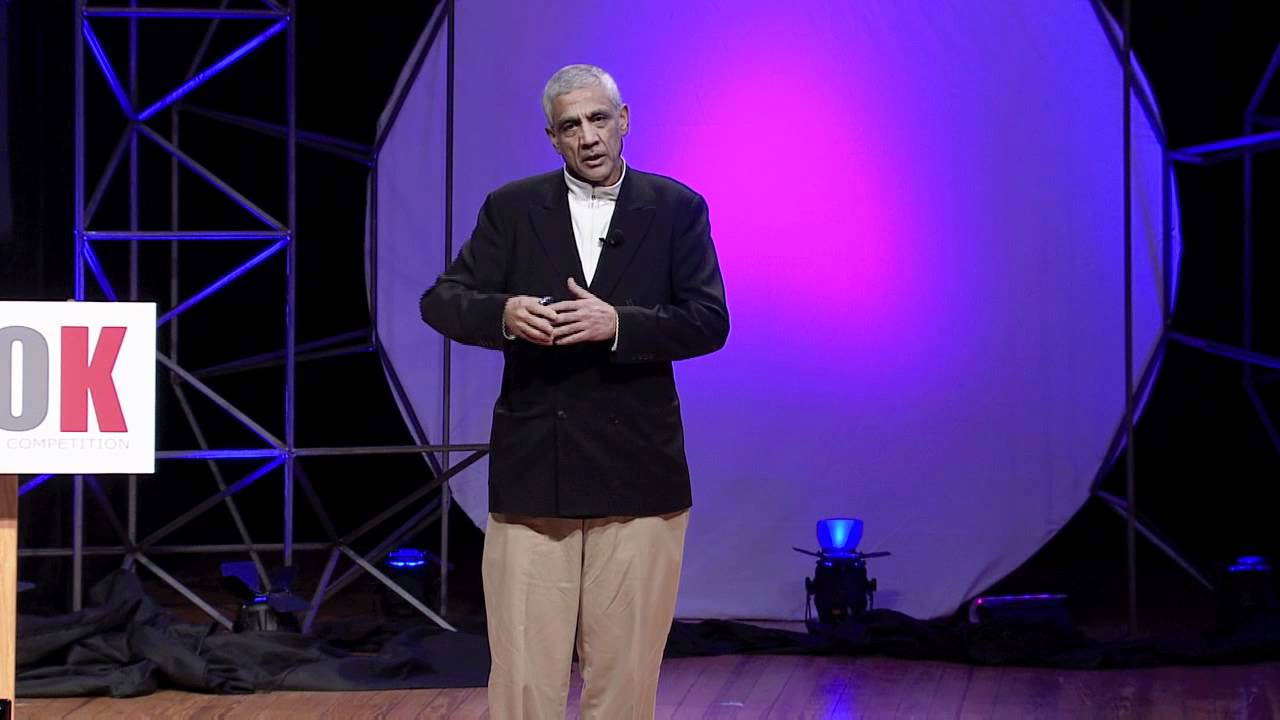
Vinod Khosla tells MIT entrepreneurs that closing the resource gap between rich and poor requires bold, unreasonable bets, not expert predictions or government subsidies. He dismisses expert forecasts as guesses, argues that talent and religious belief in your mission matter most, and says infrastructure in energy, agriculture, and water will be reinvented within 15 years through market-driven economics.
Chapters
I'll tell you why I'm really excited, because we're very fortunate to have Mr. Vinod Khosla with us here this evening. Vinod has come all the way from California to be with us, and as I'm sure many of you know, Vinod is one of the greatest entrepreneurs and venture capitalists of our time. Since co-founding Sun Microsystems in 1982, he has gone on to inspire to mentor, and invest in numerous technology startups all over the globe. He continues to support entrepreneurs through Khosla Ventures, which is a venture capital firm he founded in 2004 and now has over $1 billion under management. Ladies and gentlemen, please join me in giving Mr. Khosla a warm and boisterous MIT welcome. Vinod Khosla.
Boy, it's exciting to be here. Exciting to see so many people interested in entrepreneurship. It's hard to imagine another place where we could fill a room with this many entrepreneurs or people interested in entrepreneurship. I'm gonna talk about my religious belief, but let me start with a problem. The problem we have, we have it for this planet, it's not just about energy, it's about everything, is about 500 million people on the planet enjoy a rich lifestyle. In fact, 5 billion people want a rich lifestyle and will get a rich lifestyle. Somebody start this clock, I can keep track of time that way. I tend to talk too much, so I hopefully will leave some time for questions. But when you look at 5 billion people wanting the lifestyle of the richest 500 million people, the math doesn't add up. There aren't enough resources on this planet to, to solve this problem. That needs entrepreneurs. It needs one of my favorite phrases, which is it needs the power of ideas fueled by entrepreneurial energy. It is the only thing in my view, that can solve that problem, that can bridge that gap. The optimistic side of me says, in fact, it will happen. The flip side of entrepreneurial energy is all the experts you know. And I believe what we can achieve is a function of what we think we can achieve, not any other physical limitation. So let me start by convincing all of you, and I won't spend too much time on the web, I have a whole talk on this whole topic. The first thing you have to discard is every expert opinion you have. Anything that experts say, especially anybody over 50, and I'm over 50, is impossible, it's most likely possible. So let me start with one statistic. Professor Tetlock, a UC Berkeley professor, did a study. He followed 250 experts in every area, the guys you see on CNBC, in politics, in economics, everywhere else. He followed them for 20 years across 80,000 forecasts. The average statistical accuracy of their forecast was about the same as dart-throwing monkeys. I won't dwell on that. I'd love to talk about that, but I probably don't have enough time. I've talked about this notion of discarding what others tell you can't be done. And I think it's one of the most important things we have to do to solve this gap problem I talked about. So let me talk about failure. It's one of my favorite topics. I love to fail. In fact, I like to say my willingness to fail is the only thing that gives me an ability to succeed. So let me start with a few of my favorite quotes. I won't repeat them, you can read them. "There is no such thing as easy. If it was easy, somebody would have done it." And if it's hard and you're smart, you better be afraid of doing it. But that doesn't mean you don't do it. And 99% of the people on this planet just won't attempt hard things. As I tell all my kids, I have 4 of them, try hard things and try new things. It's a great principle to live by. Most people fail by failing to try. A few of us entrepreneurs don't, and that's what gives us this ability to do great things. Most importantly, we should never get defeated. Every time I fail at something, the press loves to write about it, and I ignore it. Because failure does not matter. In fact, most attempts at entrepreneurship even are really, in my view, failures for the following reason. Most investors I run into don't like to lose their money. Most entrepreneurs don't want their companies to fail. What do they do? They reduce the risk of failure. Reducing the risk of failure is the same as making sure that when you succeed, you don't do anything material. Think about it. I like to say I don't mind failing, But if I do succeed, it better be worth succeeding. And most attempts at new things don't meet that metric. So I came across this quote when I was learning hang gliding in 1980 or so. And the end part was, Dedicated to dream the dreams. Those who dream the dreams. The movie was dedicated to those who dream the dreams and are foolish enough to try and make them come true. Now without an element of foolishness, foolhardiness, unreasonableness, you are not going to attempt unreasonable things. If you only attempt reasonable things, you'll only do what most people do. So by definition, we need to try foolish things. We need to try the things that nobody else knows are important. And many of you are working on things, and when you tell other people, what you're doing, they nod and are polite, mostly hypocritical politeness. But whether others know or don't know what you're working on is important, entrepreneurial work and entrepreneurial culture is almost always really, really critical. In fact, it may be the only thing that can transform society. So don't be afraid to work on these things. And with persistence. What do I mean by that? Yes, I was successful at Sun Microsystems. You've heard that. But in fact, long before Sun, I'd attempted this before. When I was growing up in India, At one point I had to go get milk every day. It was frustrating. Without a refrigerator, you have to go get milk every day. So I decided I'd start a company. I was in my teens to go make soy milk. I didn't even get off the ground because when I called, they told me it'd be 7 years before you could get a phone line. 7 years to get a phone line. But that didn't deter me. I also at that point decided that instead of being defeated, I'd go where the entrepreneurs are. I decided I'd go to Silicon Valley. I went to Carnegie Mellon because they funded me. I had no way to fund myself. I got my degree in biomedical engineering, my master's, and then applied to Stanford. To the business school there, and they turned me down. And I was a real pain in the ass. I was very persistent. And after about 30 conversations, the director of admissions tells me politely, "You don't have enough work experience. Go work for a couple of years and then "Then you can apply again." And I said, "Okay, I'll get 2 years of experience." I, at Carnegie, took 2 full-time jobs, so I'd do 2 years of experience in 1 year. And I applied again, and he turned me down again. And I had this argument with him, and I finally convinced him I had 2 years of work experience, and to get rid of me, and get rid of my phone calls, he put me on the waitlist at Stanford Business School. So I talked my way onto the waitlist at Stanford Business School because I wanted to get my MBA and I wanted to start a company in Silicon Valley. Well, turns out I kept talking to him and I didn't get off the waitlist. April turned to May to June to July. I talked to him every week. But I also started talking to everybody in the admissions office, and I had a whole bunch of friends there. Come Labor Day, I started at the business school at Carnegie Mellon. Stanford didn't start till end of September. But I kept calling Stanford. Come Monday or Tuesday, around the 20-something of September, when the week before Stanford started, I called them and I said, "I've been at it for 2 years. I think I'm coming." Turns out I'd heard that one student had dropped out of the class. And with all my friends in the admissions office, I probably knew more about what was going on than he, the admissions director, did. Two days, I think the Wednesday of the week before classes started, Friday was the introduction. He said, I called him again and I said, "Hey, classes start next week. You need to sort of send me my admission letter." Turns out he did. After I told him I was coming. I'd already paid my fees, so I had a zero bank balance. But I showed up on Friday morning at Stanford. I can go on. I started another company in Silicon Valley called Daisy Systems. It was quite successful. But most people don't know about 90 days before I started Sun, me and Scott McNealy started another company called The Data Dump, which was an abysmal failure. My point is persistence is the essence of partnership— entrepreneurship. It's also selling your heart out. It's selling to customers, but selling to people who don't know why they should join you because you have no money to pay them. It's convincing people to put in labor. It's convincing suppliers to pay attention to you. You're always selling your heart out with guts and a degree of arrogance that's mostly unwarranted. But remember I said you can't be reasonable and be entrepreneurial. Unreasonable behavior, almost irrational behavior, is the essence of entrepreneurship. Let me tell you another belief of mine. You know, in many ways these experts I talked about, are right in one thing. You present a business plan to an investor, they call some experts, they do the due diligence, and they tell the investor, "Here's the 3 things that won't work." And they're mostly right. They are mostly right because those problems are real problems. And unless you were a little bit foolish, If you were sensible as an entrepreneur and did all your homework, you would have known those problems. But here's the key. Once you're in it, these unknown unknowns, as I call them, unknown to you, they may be known to experts, hit you in the face. And you say, "Oh, shit. Why didn't I think of this?" But you now jumped out of the plane with full confidence and your parachute isn't working. In fact, that's when that old conventional wisdom, necessity is the mother of invention, comes in. It's amazing how many creative solutions to those problems show up when the only other alternative to solving the problem is being— is dying. So getting yourself in a position when necessity is the mother of invention is in fact a very good thing. And guts and premature confidence are in fact essential ingredients of that. And of course, willingness to fail. You know, the thing is, if you fail, you just get up and do something new. In fact, I remember vividly, I grew up in India and nobody wanted to invest in venture. When I came to Silicon Valley, it didn't take very long to get funding for our first business plan. I said, this is a great deal. If we fail, if we lose, you, the venture capitalist, loses. If we win, we win. If we lose, you lose. Now, when can you get a better deal than that? Because there was only one thing I had to lose, which was my student loans. That's all I had. So it's also important to do this with irreverence. Attitude is an absolute essential part of entrepreneurship. When experts tell you what can't be done, that bravado, that in-your-face, absolutely essential. I tried to teach my kids to do this, and even when they were 5 or 6 years old, I'd occasionally sit at the dinner table, pick up some food, and throw it at them. Now, this is almost the opposite of what normally happens. But, you know, Martin Luther King said, And this is honestly a quote from him. Human salvation, that big problem I talked about, human salvation lies in the hands of the creatively maladjusted. If you're reverent, you live by the rules, you follow the experts, you follow sensible things, and you will do nothing important. In this context, uncertainty doesn't matter. If it's somebody else's money, why do you care? I know I'm on the other side, but I actually think it's a very healthy attitude that you're trying to— you're trying to fulfill your mission. Your passion. And let me just say, when people do, are entrepreneurs just to make money, they don't have a religious belief system. They don't have the passion. What happens when they run into those problems I talked about earlier? They bail. If you're passionate about what you're trying to do as an entrepreneur, you don't bail. You take those problems, And you bang your head against the wall till you break through the wall. And that's why that kind of religious belief in what you're doing is so important. Big goals are important. Big hairy audacious goals. A BHAG. Because unless you have one, you will be in the domain of successful and irrelevant. I'd much rather fail, but if I succeed, be doing something material. This is why your point of view is so important. What do I mean by that? What do you believe you're trying to do? And unless you're religious about it, unless you have a view of the world and of life or of some narrow area. It could be solving a medical problem with a new device. It could be solving an energy problem or why everybody should be on Facebook. Unless you have a religious point of view and confidence, audacious, probably premature confidence in that view, it's very hard to be successful. As an entrepreneur. You also have to be— you also have to dare to be great. I'll tell you one little story. One of the most successful investments we made was a small company called Ceren. We had just started to sell product We were doing fairly well. We had half a million of revenue in 1997. Cisco came and said, "We'd like to buy this company for $300 million." Having invested $3 or $4 million for half the company, that'd be a pretty good investment. And yeah, we had one other investor. And I said, "No deal." because I believed in what we were trying to do. April came along and somebody called me from Cisco and said, "We'd like to offer $700 million." And we at that point with subsequent investments owned about 35, 40% of the company. And I said, "No deal." August came along, I won't go into the details of the story, but they offered $7 billion. We did take the deal. People matter. You know, I was in my 20s when we started Sun, and when I look at the first 20 people we collected, and I mean collected, because they weren't for particular jobs. I love working with talent. In fact, one of my favorite quotes on culture comes from Reed Hastings, the founder of Netflix. He said, "A great workplace isn't in a great espresso machine or sushi for lunch. It's having stunning colleagues." That's great workplace. If you look at the first 20 people in Sun, they probably started 25, 30 companies. Now, I didn't know that in my 20s. I just knew I liked really smart, great people. And whether they were relevant to what we were trying to do or not, if somebody was really smart, we hired them. People matter. People matter a lot, and I could go on for a long time about people. Your perspective— in the interest of time, I'm gonna move a little more quickly. Like I said, I like to talk and I can keep talking. Your perspective is also important. You know, it's how you view the world. A few years ago, I visited my father's home in a village in India. This was 2002 or something. I took my kids along. We were fortunate enough, we flew there in my private plane, not something I was ever used to. Before I came to this country, I'd never been on a plane in 1976. And in year 2001 or 2002, with my daughters along and my son, the house my father had lived in had no electricity, and no running water. And my daughter said to me, she said, "In one generation you can go from this to flying here in a private plane. Almost anything must be possible." And to all entrepreneurs I say almost anything is possible. That's what perspective is important. About whether your soy milk thing fails, whether Data Dam fails. It's not about being defeated. Let me give you the hopeful side of things. As surely as in 1985, the CEO of DEC, a local company here, said, "Why would anybody need a PC in every home?" DEC is no more. And I remember saying, "No, nobody needs a PC in every home, they just need 100 of them." And it's coming true because my watch has a PC in it. Your washing machine has a PC. In 1990, I was at a dinner with business school classmates of mine in New York and I got ribbed all evening in the evening, this was only 1990, for having my email address on my business card. If you said to somebody even grandma will soon use email, you would have been laughed out of the room. You get the idea. 1995, nobody believed the internet was relevant. Every large media company was talking about interactive TV. Video on demand or movies on demand was their view of the interactive world. I could go on about these stories. You know, in 2000, cell phones weren't imagined to be what they are. Think about the following. January 1st, 2007, the iPhone did not exist. We can't imagine a world without iPhone. Just before that, Facebook didn't exist. And 3 years ago, nobody had heard the name Twitter. So my point is almost every 5 years some massive transformation, and this is a few of the examples. Happens. And this says to me something very, very important that I put in the face of all experts I meet. I like insulting experts, so, huh. Here's the thing. Improbable is not unimportant. And that's important to understand. Most people believe the next best solar cell will be an incremental silicon improvement. In fact, I postulate that almost everything that's an extrapolation of the past will be a loser. The only winner will be some improbable, and you don't know which improbable because they've taken a 3 sigma or a 6 sigma bet. And almost always the world transforms through the— a series of improbables. So what do you do? You take more shots on goal. That's the way to change the world. So let me finish It's not working very well. That's my reason for optimism. But let me finish by saying, know your goals. Why are you doing this? And it's not always about building a successful company or changing the world. It's perfectly okay to look for fortunes, not having to balance your checkbook, or fame, never having to carry the American Express card, or family business, never having to say you're sorry, you're the boss, or your passion for a vision, or just to work with friends. They are all okay objectives for entrepreneurs. But please be clear what you're trying to do and what your goals are. So I'm gonna, in the interest of time, stop there. I referred to this idea of people trying to make money and being entrepreneurs. That's okay, but be clear what the difference is. The weather forecast for the world of entrepreneurship is the rate of change will accelerate. So let me finish by saying, to predict the future, invent it. Alan Kay said that a long time ago about computing. I think it's true of every part of the world. Let me open it up to questions. I'll take as many questions as the organizers will let me take. Can we turn the house lights up a little bit? Yes, great. Yes. Where do I see next great opportunity? Everywhere. Think about this. You know, the pharmaceutical companies— and I was at Kleiner Perkins when Genentech was growing up— said genetic engineering is not important to pharma. Not one pharma company had it. The story I didn't tell you is in 1995, I got 9 of the 10 largest newspaper owners in the US together in a room to explain what the internet might do. All of them thought the internet was important, but none of them thought the internet would be that relevant to their business. That's media. Pharma. In 1995, In 1996, when we were starting Juniper, every major telecommunications carrier in this country told me they would never adapt internet protocols for their public network. We did— went ahead and started Juniper anyway. But all the customer feedback was, don't do it. I called Cisco's chief technology officer and told me, for— get a little technical— Cisco would never do an IP router above OC12. About the service coming into my home now. So whether you're talking about telecommunications, and people told me it's a 100-year-old infrastructure with trillions of dollars invested. Sounds like energy today. That's what you hear. Every area is open to innovation. In fact, I've gotten interested in an area that everybody tells me is not open to innovation, which is agriculture and food production. We've already made 4 or 5 investments in that area, all technology-based. Think of a more unlikely area for entrepreneurship. Another question?
Yeah. How did you get your—
I'll go up there next. Sorry. It's okay.
Thank you.
How did you get your best ideas? I steal them. You know, here's the thing. Lots of people have good ideas. Lots of people put them out. Most ideas I have came from somebody else. The difference is when you start believing in the idea enough to do something about it. So actualizing an idea is in fact far more important. There's way more ideas than people who can actualize them. Yes, there was a question back there. Hi. I've had the pleasure of hearing you before and remember you saying you didn't think it was necessary to have public subsidies in the—
in particular in the energy field.
I wonder, could you say a little bit about the role of government and public investment subsidy or expenditures in terms of promoting and supporting innovation? Yes. My view is most of the world doesn't have subsidies. Many of you may have heard me say, in energy, the only price that matters is the chindiya price. The price at which people in India and China, and by that I mean Africa and Brazil and the rest of the developing world, People will buy something because it makes sense to them. That means unsubsidized market competitiveness. Almost every investment— there's maybe one exception we've made— meets that criteria. That's not to say policy can't help, but I'm not counting on the policymakers to help. If there's gridlock, that's fine. We'll get there anyway. It'll take a little longer. It'll take a little more money. It'll take a lot more patience. But we will get there no matter what. If you have subsidized markets, you can use it to get started earlier. You can accelerate your growth. You can get down the learning curve. So policy helps. Whether it's subsidies or mandates, but by and large, they're not necessary. They may help, they may accelerate, which they do. Good policy always helps, but in the end, if you can make the economics work, you'll win every single time. Let me tell you, I am absolutely convinced, without a shadow of doubt, that within 15 years all of the infrastructure of society will be reinvented. Now that's a bold statement, but let me give you some examples. We have two engines projects. Navistar just announced that adapt a completely different engine architecture, probably the only new engine architecture any major person has adapted in 50 years.
Engines.
Fuels, I think that's a solved problem. Biofuels are gonna be cheaper than oil and oil will have a hard time keeping up. We're working on glass. We're working on cement. We're working on bioplastics. We're working on water. We're working on energy production. On cleaning up coal, on geothermal. We're working on mechanical efficiency, electrical efficiency. So let me give you an example. If lighting takes 75% less energy, and I think that's a solved problem, even the economics of that, I believe, will be solved in the next year or two. We're working on air conditioning and heating, and if it takes 75% less energy, all the energy used in buildings will go away. Funny things will happen. Suddenly even insulating your home won't make any sense because it's so efficient to produce light or cooling or heating. The rules will change. And when you reinvent all that, and hopefully agriculture is 10 times more efficient, which everybody tells me can't be done,, but we're trying anyway. Remember that bit about foolishness? Absolutely key. We will reinvent the structure of society. We will have 5 billion people capable of living the life that 500 million people, rich people, do today. Other hands? Yes, there's a hand. I don't see many hands in the back, but maybe I'm not— go ahead.
Hi, Vinod. I understand your opinions about experts in the industries, but can you address a point about entrepreneurship? If you look at some of the successful firms created, they tend to be entrepreneurial mind, new innovation, but there's always a balance with them couple of seasoned executives, just as like John Shirley for Microsoft, Eric Schmidt at Google. Do you think that balancing act with more seasoned experience helps?
Yeah, so the question is this idea of entrepreneurs versus seasoned executive management and this battle that every startup goes through. I had to give a similar talk, a different one to the CEOs at our conference. We just finished our CEO conference last night in California. And the last slide I put up, and you can Google this, was Cat in the Hat balancing about 16 things, Dr. Seuss, on his plate. That is what entrepreneurial life is like. That's the reality. Both are essential. Good process, good management kills innovation. Without good execution, innovation doesn't get anywhere. So you almost have to be schizofrenic. Best is when you can build the right team. But if I had to pick just entrepreneur or just the, good manager, I'd pick the entrepreneur every single time. Other questions? Yes. And somebody please tell me when I should stop. Last question. Okay. Um, so I will blame her. I wanted to know your views on higher valuation of Internet companies, like, obviously some are very big, but even smaller are like exorbitant, $10 billion, $50 billion gaming companies and all mobile. I'm the wrong person to ask. The question is my view of valuations. As much as people think I'm an investor, if you look at our website, it's all about venture assistance, not venture capital. I'm proud to say that probably the last 7,500 investments I've made, which is the entire life of our fund, I have never computed an IRR, not once. Because if you're trying to do something compelling and you do it, the financials will take care of itself. If you start focusing on just valuations and things will lead you to the wrong results. Thank you, everybody.
More from Vinod




EXCLUSIVE: Vinod Khosla warns AI will upend jobs and healthcare sooner than expected | GSIF 2026




Vinod Khosla: AI Tutors, Doctors & Farmer Experts For 1.5B Indians | AI Summit 2026

India AI Impact Summit: Vinod Khosla on Why 2047 Could Free Every Indian from Survival Work


‘There Will Be A Lot Fewer Jobs In 20 Years…’: Billionaire Entrepreneur Vinod Khosla On Impact Of AI