Week 1: Vinod Khosla, Investing in AI in Healthcare
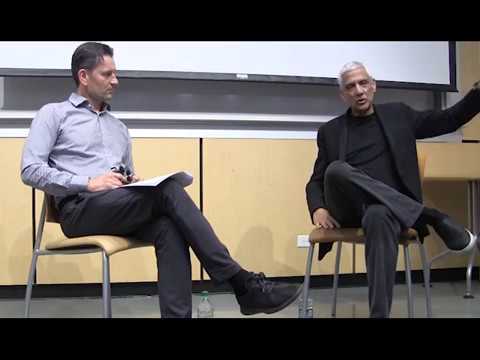
In this moderated talk, Vinod Khosla recounts how a personal experience with divergent orthopedic opinions after a ski injury sparked his belief that medicine lacks a rigorous scientific foundation and that AI can provide consistent, data‑driven care. He argues that the traditional doctor‑patient ratio is unsolvable at scale, so the future must replace many human decisions with algorithms. Khosla outlines his thesis that AI will reinvent virtually every medical specialty, from primary‑care chatbots (Cure.AI) that aim to pass a Turing test for text‑based consultations, to AI‑driven imaging triage (Viz.ai), retinal screening, wearable‑derived biomarkers (e.g., an Apple Watch band that predicts blood potassium), and massive multi‑omics panels that generate tens of thousands of biomarkers. He critiques the regulatory focus on FDA approval and CPT billing, emphasizing that true value creation should precede reimbursement. His investment philosophy advises against including healthcare experts on founding teams, citing historical disruption in other industries driven by outsiders. Khosla highlights concrete examples—AI oncology, mental‑health monitoring (Ginger.io), network‑science drug response prediction (Cypher), AI‑enabled ultrasound (VeLabs), and AI‑guided drug discovery (Deep Genomics). He also discusses the challenges of prevention, nutrition, and aging research, noting the need for quantifiable biomarkers. Throughout, he stresses that the hardest hurdle is assembling the right interdisciplinary team and data, not the technical feasibility of AI in medicine.
Chapters
—years.
Did you start investing in healthcare early on? Can you tell us a little bit about how you got into investing into healthcare?
Okay. Can people hear me? Yeah. Okay. I'll skip the mic then. I do speak loud and a lot. So, it was actually in December of 2011. I was on a 2-week skiing vacation in Deer Valley and December 24th, I tore my ACL. I immediately went, got an MRI, and I called this orthopedist and said, "What should I do based on this MRI?" And they gave me a recommendation. Just to be sure, I called a second one, and he gave me a second recommendation that was very different from the first one. And then I said, so these two disagree, let me call a third one. And Park City, Utah, home of the US ski team, there's plenty of orthopedists, orthopedic surgeons, and I got a third opinion which was completely different of the same MRI. I said, this is silly, the treatment you get depends on the doctor you get, not on what you have. Now think about how illogical this is. These are some of the best-known surgeons in orthopedics because they all work on the US ski team. I was at the same time looking at a very, very different problem. My wife works on an organization called ck12.org, which is a nonprofit education thing globally.— and I said I should do something nonprofit on the philanthropic side of what we do globally also, and I was looking at healthcare. And I asked myself the following question. So when I ski, I ski for— in the mornings and then I write is sort of my usual protocol for what— 2 or 3 hours of intense skiing and then 6 hours of writing is sort of my usual, and research is what my usual ski vacation looks like. And I was looking at the following problem: if you wanted the same doctor-patient ratio in a place like India as you have in the US, could you achieve it if you had infinite resources, which nobody does? And I asked myself the question, how many medical schools would you have to open? How many professors would you have to train to teach at those medical schools? How would you do that? And how many years after that? It was decades when you'd reach parity on a simple metric, number of doc— physicians per 1,000 population. And I realized that even if you had infinite resources in the next 30, 40 years, you couldn't possibly provide level of healthcare as measured by the number of physicians per 1,000 population. So I was working on one problem, writing about one, skiing, and then I had this happen. And I said, I've been thinking about the wrong problem, which is we don't need humans to do medicine. If 3 doctors give me 3 different diagnosis, 2 out of 3 are for sure wrong. It can't be that all 3. One was recommending surgery in a particular way, one was recommending no surgery. I'm like that radical. So that is when I started thinking about it, and I wrote a blog called "Do We Need Doctors?" By the way, once I wrote that, it was obvious, and I immediately wrote— and this was in TechCrunch, so you can look it up from late 2011, early 2012. Next week I wrote a blog called, uh, "Do We Need Teachers?" Because it's the same problem. How do you assess a student, know what they know and don't know, and then how do you guide them with the right prescription for how they learn or whatever they need?
Yeah, your comments are very pertinent. This is actually a real problem here even in the US where we're going to have a shortage of doctors with the number of octogenarians that are out there?
Well, it's worse than that for reasons I won't go into. I was helping somebody last night at midnight at Stanford Emergency, and they had a cerebral angio— blood map of the brain, if you might— and a spinal tap, and they sent a neurologist, and I said all my analysis showed, though I'm not a doctor, that we needed an MRI. Neurologist decided we needed a CT, and I said, how you gonna answer this question X and Y? And the neurologist said, well, we'll do a CT angio and add more radiation to the test. I said, I don't want— so midnight last night, I'm arguing about the right decision. I called the attendant— attending physician. This is just like down the block. And he came, he agreed with my diagnosis, said, obviously we should do an MRI. So for the simple a thing as this, two people are disagreeing. And I asked myself last night, what about people who can't ask these questions? And I wish I had an AI diagnostician on my cell phone, not a human whose prescription depends on their personal biases, which is almost all of medicine. So that's how I got into healthcare investing, and that's where I was last night, wishing I had a better doctor. An AI solution, perhaps? Yes. Or only an AI solution.
No, you set the stage perfectly. You really highlight the real problems with healthcare today. Most physicians act as artisans and don't always necessarily follow guidelines.
Look, this problem is so much worse than people realize. Here we are with high-quality medical practice today, and I don't mean to criticize medical practice. I was glad I was at Stanford and not at some village in India. Last night, right? So, every decade you look for the last 100 years, medicine has gotten better. But what we have had— so, I will not argue that every year we learn more and more and do better and better. It is pretty damn good. But we've had a practice that keeps improving. We've never had a science of medicine. And I sort of said, and I wrote a piece for those of you interested about 3 years ago, 2016, called 20% Doctor Included. You can Google it. It's a 100-page document with lots of references, like 300 references, like a paper. It's boring. I can't even stand to read it, but it has a lot of detail on what I mean. How bad medicine is, where we need to go, and all the intermediate steps in getting there. So I definitely, for those of you interested, recommend that. But the following is true. We should have consistent medicine. A decade ago when my father had cancer, you know, I called all my contacts at Stanford. And they said, huh, do you want an aggressive oncologist or a lifestyle oncologist? Now, again, so here's somebody really influential asking me the treatment I get for my father will depend on the physician he gets, not on what's right for him, and frankly, the choices he wants to make. If he wants to trade off lifestyle versus more aggressive therapy, take a lower shot at a longer life or a higher shot at a better life for the remaining part of his life, those are choices the patient should make. The patient, not the doctor, should be CEO of their health and make these trade-offs based on their personal preferences. And doctors tend to play God. So there is lots of reasons, there's lots of opportunity in this space.
Absolutely, so my question was going to be, has your thesis changed since 2012? Sounds like it hasn't. So that's good, that's solid.
Last year I convinced my son to start, do a new startup. It's called Cure.AI, and it's building a primary care AI physician. That should in 5 years pass the following test. If you are texting with a patient, a physician is and the AI is, a physician watching the dialogue could not tell which was the physician and which was the AI. It's the Turing test for a text message based physician.
Is it like Babylon?
Babylon in England? Yes, I'm very familiar with Babylon. That's the long-term vision. But you want to be able to, like a human physician, have somebody send you a skin rash, send you a cut, say, do I need stitches, send you an X-ray, send you an MRI report, a blood test, be able to use all that like a human physician could. If you are texting with them.
That's perfect. That leads me perfectly into the next question. So it's actually been a huge year for the FDA and AI algorithms. They introduced their pre-certification program last year and already have several companies that have gone through this program. Viz.ai, you probably know about them. They do— they are a clinical decision support software that basically screens head scans of the brain and helps triage. They don't diagnose, but they triage CT scans to tell radiologists whether they should read them first or last, which is interesting. There's a retinal— diabetic retinopathy startup, it's Eye Diagnosis Doctor, that also received FDA approval. There's a huge announcement with the Apple Watch coming out with a Series 4 Apple Watch. They also received this fast-track FDA approval for detecting EKG rhythms from a watch. So I have two questions. First of all, do you think this is too fast or not fast enough?
Do you have any opinions about how the FDA—
have you noticed a change in tone and approach?
So let me answer four questions, not two. I'll make up two of them. So the FDA is trying to help. They have a hard problem. If anything goes wrong, they will get blamed. If things go right, they don't get credit. So they have an odd job, and I think they're trying their best because you don't want large-scale harm to the population. So they do have an important regulatory job, and I think by and large they're doing a good job. They could do it much better in today's age, and if you have— if we have time, we can come back and talk about it. But And so I do think that it's doing a pretty good job and things like my Apple Watch with a LifeCore band actually can predict a lot of things that would need a cardiologist to do. So, and I think they've generally been pretty helpful and in areas where a diagnosis or something can't harm somebody, they've been They've been taking the right policy approach. But let me say something even more important. If you ask— and you mentioned diabetic retinopathy and a couple of others. Arnie Milstein at Stanford is probably the world's guru in healthcare quality, medical practice quality. And about once every other week, he sends me one more AI thing saying, see, everybody's coming around to this point of view that AI is the only way. And he is about as traditional medicine as— you know Arnie Milstein— as it gets. So 7 years ago when I wrote this blog called Do We Need Doctors, it was extremely controversial. Today it's not. In fact, the funny story is When I first gave a talk at Rock Health 7 years ago, 6 years ago on this, there was a Kaiser physician who stood up and railed at me, then wrote a blog that tried to skewer me. What is great is 3 years later, he actually sent me his resume. And even fairly recently came back again, said, are there positions with this AI approach to life? It's okay to be skeptical, but it is happening. It's unconditional. Anybody knowledgeable who's not a practicing physician and is not allergic to the idea acknowledges that humans will not do as well. There's another really, really promising thing that's happening in medicine. And I'll illustrate it with an example. Tom Insel, who was, I think, the head of NIH's mental health program— I forget his exact title— essentially did traditional psychiatry, which is complete schlock science. Complete schlock science. And he will tell you that. And for those of you mathematically inclined, the DSM manual, which is the Diagnostic and Services Manual for psychiatrists, for important conditions like manic depressive or bipolar, accepts a kappa, which is a regression coefficient, of 0.2. So if 3 people were diagnosing you for the same disease, they'd come up with completely different diagnoses. This is in the DSM manual. Scientific American, when the manual, recent edition of the manual came out, called them two pathetic cabbies. That was Scientific American. They tend not to use emotional words. This is how bad psychiatry is. But Tom Insel recently gave a talk, two weekends ago there was summit on brain-mind summit, and he said all the things you do, And we have a company called Ginger.io that's doing something similar in mental health. You can characterize mental health of a person with thousands of biomarkers. How they use their phone, how fast they respond to a text message, how many times an hour they're looking at their phone, whether they get out of bed or not. Your phone knows all this. If you can actually measure mental health's state, then you can start to say, does this help or hurt? And so I think there's— that's a really good example of new biomarkers. My point is, so far in medicine, we've collected data humans can use. It's a fundamental flaw with medicine. You shouldn't be collecting data that only humans can use. You should collect all the data that's relevant to a problem. So your blood test, your physician can look at 30 things, so your Quest sheet has 30 biomarkers they can check off for a blood test at Quest. Well, my partner Alex is sitting in the back there along with my chief of staff. He's doing a little company that does 30,000 biomarkers or something like that, tens of thousands. Now if you have that, you give it to a human, they wouldn't know what to do with it. But just because a human wouldn't know what to do with it doesn't mean you don't do data science on it. You can determine all kinds of interesting things that— so we got to start collecting data humans can't use because human biology is complex enough to warrant that many biomarkers.
Phenomenal point, that data is gold, and it's not just the data that we see and that we can interpret.
So the great example I give, which people never used to believe, this watch, and it has in just in the band a little device that detects EKG, but this device can determine my blood potassium level. If you're into cardiac, It's one of the more important variables. Hypokalemia causes a lot of problems, which is too much potassium in the blood. And you'd say it's impossible to say how this device without ever taking a blood sample does blood potassium. But there are data science in the signal. There's enough biomarkers for blood potassium that the FDA just granted us breakthrough device designation. For measuring blood potassium without ever going into the blood. It seems implausible, but there's so many opportunities like that. And that's why when 4 or 5 years ago I gave a talk at Stanford Med School, I said, in 15, 20 years, if you want to be a great doctor, just go to the math department, don't go to the med school.
No, phenomenal point. I think you did a great job of highlighting all the amazing possibilities possibilities. Let's take it to the next step. You're a venture capitalist. These are potentially a lot of entrepreneurs, or they are, I'm sure. Everyone's an entrepreneur here at Stanford. It's challenging, right? The ecosystem has to be ready to accept these solutions, number one. And as an entrepreneur, you can have a great tool, but if you can't implement it in the right setting, and you don't have the appropriate buyer, it's a big challenge. So I know you've done a lot of investments in healthcare. Where do you see is a great entry point? Or where do you see a lot of those?
Or— Let me answer it by saying where don't I see large opportunities. There are none. Almost all of medicine will be reinvented. So one of the exercises I did this couple of years ago when I wrote this 100-page document, I wrote an appendix that said, here's the top 25 specialties in medicine: cardiology, psychiatry, pediatrics, endocrinology. You can keep going down the list. And I said, which one of these couldn't be completely revolutionized? By AI and data science intersecting with biology. I couldn't come up with one. And that is sitting back a couple of years ago imagining how you might come up with solutions. Now I can tell you, I can only think of less than 1% of all the solutions the broader audience of 100,000 people working on this can come up with. So, when I give implausible examples like could you develop blood potassium level from a $99 device you buy on Amazon that never takes a blood sample? Almost certainly every expert will say no. The answer is almost all the time yes, unless physics forbids it. So all kinds of great innovation to be had. And for those of you who want to go deep, look at a specialty and look at my description of how you might renovate it. And I literally did it specialty by specialty because people would always argue. Now, interesting, emergency medicine, trauma medicine, you know, last night sitting next to us was this guy who was complaining he was just shot in the back. That's real life. I can't see eliminating humans from that. Or if a burn patient comes in, I mean, like, there are places humans need to intervene. But expertise almost certainly can be replicated. And much better decisions can be made than the neurologist last night was making. Almost certainly an AI oncologist— people always ask me what's my favorite example. Almost certainly we need to build an AI oncologist. I know how to do one if I had the time. So I hope one of you wants to do that. It's not even a hard problem, to be honest. The hardest problem is getting the right team together, and I know you have some questions around that, but—
Yeah, getting the right team, getting the data, right? That's challenging. Memorial Sloan Kettering just got busted for sharing the data by their own. But I won't comment on that.
I was actually involved.
So I didn't— you bring up originally, I, I I think everybody here is very, very excited about the potential, very excited about the opportunities in every field of medicine. Is it too early? Is the system ready to pay for this?
So a couple of rules. When I invest, or really, if you sort of say go after an area, one counterintuitive rule, don't get anybody in healthcare involved in helping you come up with a solution. They'll channel you back into traditional medicine. So I have a rule. I much prefer nobody from healthcare in a founding team that's going after a healthcare problem. I would only submit for that the following evidence. Every major area of innovation has happened without experts in that way. Retailing happened because of Amazon, not Walmart. No way Walmart could have innovated. Space didn't happen because of Boeing or Lockheed, it happened because of SpaceX. Cars didn't happen because of General Motors and Volkswagen, it happened because of Tesla. Media didn't happen because of CBS and Fox, it happened because of Twitter and Facebook and YouTube. So, I couldn't come up with one area where large innovation was driven by experts in the area. They know enough to take the whole venture back into traditional ways of doing things, and if you're really innovating in an area, think outside the box.
Do you— those are great comments. Do you think— the move towards value-based care away from fee-for-service, paying for heads in beds, do you think that'll help drive the implementation of AI solutions? Because in effect, they should be more efficient, they should be cheaper. I'm curious what your thoughts are. We see Amazon, Berkshire Hathaway, JP Morgan, and we see Apple with AC Wellness taking matters into their own hands.
I think they're telling you we have 5 minutes.
We have 5 minutes, we want to do questions afterwards.
Okay, let me say the following. The first thing I'd say is people pay too much attention to the FDA. The FDA applies to 5% of the global population. Keep that in mind. 95% doesn't care about the FDA. Okay? So focus on what's really, really valuable. People rely on CPT codes for billing. They don't apply in most of the world. Okay, so any— anybody starts with what's the CPT code for it, I don't— I never want to co-invest with them because they want to say how do we bill for this without first saying what's valuable about what we are doing. So you have to decide what you're trying to do. We never look at CPT codes till later. If you are fundamentally adding value, you will add the CPT codes over time. It takes longer, it takes more patients, but you focus on what you do to improve healthcare, not what you do just to make money. And I think in most of the world, that will matter.
That's great advice, great advice. We only have 5 minutes. I want to see— there are two quick things. What, um, you know, is there one AI company or one area or aspect you're most excited about? Sounds like you, you know, you see it applicable across the, the board.
Yeah, so look, AI is applicable everywhere. Let me give you a whole range of examples. So I mentioned my son's doing an AI primary care doctor. Should everybody, all 7 billion people, on the planet have a 24/7 personal doctor at about the cost of Google search? That's achievable. Should everybody have personal oncologist if they get cancer? Absolutely, with the best, latest expertise that reads the latest research and publications every month and is up to speed with it. Humans can't do that. No human, the best oncologist, can't keep up with cancer literature being published this month, and likely they won't be familiar with it for 10 years. So, um, okay, I mentioned discern. If you have 30,000 biomarkers, you need AI. If you need to read radiology charts, once we did the MRI, it took 6-8 hours before you get a radiologist. First you get a preliminary read, and you're waiting all these hours last night, then you wait again for a final read. The machine should have spit out the diagnosis, not the image. We have a great company called Bailouts that actually eliminates— by the way, it took 6 hours to get to an MRI, even though the machine was sitting there empty last night. I walked past it 10 times and said, nobody's using the damn machine, why aren't we doing an MRI? Trying to make some decisions. The technician was busy, right? And that's a reasonable problem. So what's the solution? Eliminate the damn technician. So we actually have a company doing eliminating the technician in MRI and the technician in ultrasound. If you eliminate the technician in ultrasound, you eliminate 80% of the cost of doing something like an echocardiogram. So this VeLabs eliminates the technician because it tells somebody with an hour of training how to move the probe, which is all a technician does, an ultrasound probe, and then diagnoses it. And because it's diagnosing it, it can actually improve the feedback on how to take the ultrasound. So Let me give you a completely different example. Nobody today knows how to design biologics for gene expression control. In your body are genes that need to be upregulated or downregulated. We have an AI company called Deep Genomics that's using strictly AI to say, how do you regulate each gene with AI? So that's drug discovery. With AI. So whether it's imaging, you know, mind-blowing company called Open Water, which thinks it can reduce an MRI machine to a ski cap. An MRI machine to a ski cap. That's the vision. So, and it can do fMRI, real functional imaging of the brain, better than an MRI can for peanuts. So, a couple of things I would say. All these examples dramatically improve diagnosis, whether it's of blood tests, of conditions, of taking in a cast, but they also dramatically reduce cost. And that makes all of medicine much more accessible to everybody on the planet. Now, there's lots of problems with that argument, and I address this in my 100-page paper, so— but it's really exciting to see what's possible.
That's phenomenal. That's a great way to end and move to the question and answer session. Anyone have any questions yet?
So, thank you very much. Two questions. First of all, you talk a lot about diagnostic, but my experience, if you go up and down Sunhill Road, Mostly see, especially the big one, hey, diagnostic. You know, they only want to invest in therapeutics. So obviously you're different, but what's your— how do you answer them? And second, what do you think— so two of the companies I really like are using AI for the root cause of many, many diseases, which is aging. So Spring Discovery and Obido using AI for aging, which is really exciting. What do you think about that use of AI?
So I think that's a great example. Aging is a disease, but there's no way, no easy way to measure progress in aging other than it increases the propensity to have other diseases like cardiac disease or Alzheimer's or others. Spring, that you mentioned, is a very good example of saying— so aging has the same problem I mentioned in mental health. You can't measure where somebody is. In their state of depression, then you can't say they improved or didn't improve. In aging, how do you define aging? Is there a biomarker for aging? And then if you say, if you eat this or take this drug, you see if you get younger or older. Okay, so measurements, very important. Spring, that you mentioned, is using AI for measurement of aging. Humans could define the biomarkers. I won't go into the details of what Spring is doing. We are not investors, but I love the idea of how they're approaching it. So you have to find substitute biomarkers. I think people don't like diagnostics because diagnostics means finding a CPT code you can bill. But if you built the whole solution and say, we'll do a diagnostic— like, we have a company that makes you play a game, and because of that, I can actually quantify where you are on the Alzheimer's scale of disease progression. Once you do that, you can actually look at— is just simple thing like exercise improve your condition in Alzheimer's? Or not? Nobody can actually answer that question. And if you ask a doctor, they'll say, oh, exercise more and eat better. And by the way, wrong advice, like don't take coffee. And, and that's the solution to everything. But because there's no measurement— so diagnostics are important, but as a clever entrepreneur, you don't get paid for that. But if you turn it into a full solution for aging, you'll get paid handsomely. And that's the aging problem. Aging is a wonderful area. Alkahest is doing some amazing things here, spin-out out of Stanford in aging. Spring's an interesting one. So all of these using data science as a major component of aging research. That's great.
Let's ask one more question. Go ahead.
So my concern is that it seems like we're putting all our eggs into the disease-oriented medicine. What about keeping people healthy? Why don't we just— Oh, I'm glad you brought that up. —talk about prevention? You know, we have like tons of measurements every day, and we're still waiting until somebody breaks down? So Friday night, I was at a conference, and they sat Mark Hyman next to me at dinner. So how many people know who Mark Hyman is? Vinod Khosla. Okay, so only one person, I'm surprised. Yeah, yeah, he's very popular in what's called functional medicine, how food affects what disease you have, and he would say he can cure diabetes with just food and nutrition. I generally agree that food is the most important drug you can find. Two problems with it: there's lack of precision, so you can't say this food or these things do that to you. That's missing in nutritional advice. Two, nobody can get a patent on it, so nobody can get it approved like a drug. So Broccoli isn't a very good drug because nobody can make money at it by getting a patent and running a billion-dollar study to get it approved. That's a fundamental problem in medicine. But nutrition and foods in general have huge potential if they're studied with AI and quantitatively, not this general eat vegetables.
Virta Health has been pretty successful.
Virta Health does ketogenic diets. And many, many people swear by its ability to reverse diabetes in that particular case. So Mark Hyman would say you can absolutely reverse diabetes with ketogenic diets. Dean Ornish is a huge believer in that kind of functional medicine.
Yeah, there's definitely something there. One last question.
Go ahead. Earlier you emphasized the importance of actively assessing the state of mental health. And the healthcare industry is starting to see some medical applications of psychedelics, such as MDMA treating PTSD. On a more subjective note, psychedelics also allow a pretty good amount of deep introspection. Do you see any potential in psychedelics for resource applications?
Again, I won't speculate on that. I would say there's unscientific experiments in areas like microdosing that just need more data to say what can, can't be done. It's never a cure-all like people make it out to be, but— or there is the value in it. And at what level, and then what are the negative consequences, and for what genetics. So precision medicine, I think, is a bad term, but personalized medicine is a very good term. For a person's genetics and current situation, are there drugs that work well, and how do you determine them? Let me finish with an unusual example. Because we have a company called Cypher. How many people know network science in biology? A few names going up. So a company called Cypher, a guy called Barabasi who first wrote about networks, he's just done a startup that we funded to answer a simple question. Humira is a widely prescribed drug at $50,000 a year. For the drug. It works in 50% of the people, so 50% of the time, one, you pay $50,000 and get no benefits. Worse, you don't do the alternatives that you think that can actually help you. So you use this strictly network science— it's really not biology at all— to determine if Humira will be effective for an individual. Okay, and this is published, so you can read about it. Google Barabasi's name. It's a whole new approach to medicine, which is networks and math, just like AI is in imaging and other areas and drug design, that are very, very promising. And this is why my last piece of advice to all of you is Ignore advice from traditional healthcare if you're going to do radical benefit. Focus on the benefit, and after you have that, then focus on how do you monetize it, how do you turn it into a business. It's a very different approach. Network science is very, very promising, but I've never seen medical researchers look at it before. So this was very, very promising to me. And it applies to all disease states and should be able to predict cardiac disease or vascular flows. So I was— since you're a vascular surgeon, let me end by— if this was the last question, you can ask me as many questions as you want— recommending a book called SCARE. By Jeffrey West, who's a physicist at the Santa Fe Institute, which studies complex systems. One of my favorite books I've read in the recent past. It answers the following question. First, at your heart, you have pulsatic flow. The heart is pumping blood out. At your extremities, you have linear flow, no pulsing. How do you define the vasculature? When do arteries become microarteries? When does pulsatile flow become linear flow? It is strict— it's not a biology question. He goes through the math of proving this mathematical optimization for energy. If you did a mathematical optimization, you would end up with the vascular system of a human being or any living thing. Simple as that. Strictly math, not biology. He also says the same math applies to how cities evolve. How big can cities grow? How big can trees grow? It's the same math. It's not biology. Let me stop there.
Thank you very much.
More from Vinod




EXCLUSIVE: Vinod Khosla warns AI will upend jobs and healthcare sooner than expected | GSIF 2026




Vinod Khosla: AI Tutors, Doctors & Farmer Experts For 1.5B Indians | AI Summit 2026

India AI Impact Summit: Vinod Khosla on Why 2047 Could Free Every Indian from Survival Work


‘There Will Be A Lot Fewer Jobs In 20 Years…’: Billionaire Entrepreneur Vinod Khosla On Impact Of AI