Activism - Full Episode #10: Activism in the Absence of Trust. Why wait?
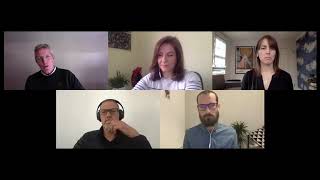
Nell Derick Debevoise, Rudi de Waale, Steve Marshall, and Rich discuss how broken trust in institutions is reshaping activism. They argue for small kinship networks and personal transformation over top-down change, and introduce the Me-We-World model as a framework for impact across six spheres of life.
Chapters
Welcome to Pass the Mic podcast with Steve Marshall, who will lead our conversation on the topic of activism. My name is Virginie Glaenzer, and I'm your host with a million questions. Pass the Mic podcast, for those who do not know, is about sharing different perspectives on a specific topic not only to help us expand our understanding of the world, but also to explore new ways of looking at it. Before we begin our conversation, let's start as we always do, with what I call a tour de table. And so have each of you tell us your name, what you do, and why you're interested in this topic. Try to be brief and keep it under a minute. So why don't we begin with Nell?
Sure, good morning.
Hello everyone.
My name is Nell Derek Debevoise, and I am the founder and CEO of a company called Inspiring Capital. We're a certified B Corp, if that means anything to folks in the audience. It's B Corp Month, so there's a lot of media coming out. If you're not familiar, I encourage you to check out that movement of business as a force for good. And as Inspiring Capital, which I started about 7 years ago, we are really trying to help what we call people live to have their all. And so we believe in this idea of individual activism as a way to live your life and ladder up to not only making the world a better place, but also finding your unique way to do that and contribute. And so we really think that this idea of enlightened self-interest of doing what is uniquely you and makes you come alive, what gives you juice and energy, is actually the best thing that you can do for the world as long as you go through that work of the enlightened self-interest enlightenment piece, right? So it's not just about self-indulgence, but if you can get in touch with what the world really needs and then line that up with what you have to give, that is a beautiful thing for everyone. So that's a little bit about background. I think the trust lens that you're kind of looking at this with, how you frame the conversation, is a really interesting one. I came across a lot of work on social capital, Robert Putnam and others, about 20 years ago in a master's thesis. And I think that that work is so important. So timely now because of massive opportunity to build trust and relationships globally, but also a real crisis of trust in a lot of places. So in crisis comes opportunity, and I'm excited to speak more about that with you all.
Great.
Thank you.
Thank you for being here. Rudi?
Hello. Good afternoon for me from Ibiza, Spain. My name is Rudi de Waale, and I work as a conscious futurist. For a company called Human Works Design. So we basically empower the game changers of tomorrow by creating learning programs for people who are interested in change. So individuals, startups, companies, and organizations. So I'm interested in this topic because I believe that, yeah, the world needs a lot more deep human connection. So, and I think any type of opportunity to talk about that and to make those connections and also to show how we can, or just discuss about the different methodologies or the different tools that are at hand of how can we make that happen, then I'm always interested. So that's why I'm here.
Very nice, exciting. Thank you.
Steve?
Thank you. So Steve Marshall, and it's good afternoon for me as well from the UK. I've been curious about how we might bring ourselves fully to bear in the world for some time, I guess. I'm mostly an academic, and in that field I'm an action researcher. So what that means is we don't study other people, we study ourselves in action with other people. So bringing change is the nature of our work, I guess, and we're interested from the action research perspective in things like democracy, mutuality, gender, social justice, you know. So there's a flavor to this change, and, um, it has a— it's a pretty tough time for people to be doing that sort of work in the world, it seems to me. Um, so that's my, uh, that's my sort of professional interest in this. Um, I'm a father, and, you know, I have friends and relatives, and I wonder, as we continue down a pretty interesting trajectory in our lives at this particular time, where all this is going to end up and what. And I don't think the answer to that question is probably particularly, you know, rosy in any way. I think we're in for some tough times. And so I'm also trying to figure out what each of us can do to have an impact in a world that is going to get very difficult for us. So that's my interest. My background is in visual methods. I grew up as a photographer, a freelance photographer in fashion and advertising editorial work, and gave that up to become— to join the military. So I'm pretty sure that as a result of that experience, coercive change never really helped anybody that much. And now I look for more generative ways to help people change their lives and hopefully the world. So that's me, I think. Thank you.
Very nice. Thank you. Excited. And finally, Rich.
Hi, thanks for having me. I notice I love talking about these things and I love sharing my opinions with the world. And also, I feel kind of unsettled and nervous, which is an unusual experience for me. It's funny. So who am I? What am I up to? I guess the relevant background that I want to bring in— well, my accent is from New Zealand. That's why my English is so weird. But I live in Italy now. I come from an activist tradition. I got really animated during the Occupy movement in 2011. Then after Occupy, found my way into the world of social enterprise, this idea that business can be used to solve social problems. A group of us started a technology platform which is called Lumio, which is about collective decision-making. Like how do you support a group to organize in a democratic way and make decisions together? So I did that for about 5 years, really pursuing this idea that the right piece of technology is really going to help change people's behavior. And after 5 years of making some degree of success on that mission, I got more interested in what else is there outside of the software, like the human relationships and the culture and the attitudes and beliefs and how do we actually where does behavior change come from and how do we support each other to grow into the best version of ourselves and so on. And so for the last, well, nearly 4 years now, I've been traveling the world with my partner and we, now we just work with any kind of group of humans, whether they're in an activist context or a business context or whatever, NGOs, and we're working with people who are trying to organize in a different way. So they're trying to organize without a traditional top-down management hierarchy. They're into self-management, or they call themselves flat or decentralized organizations. And we have been traveling and learning what goes wrong with all those groups and how do we support you to come out of those difficult behaviors and into a new harmonious way of being. So that's my interest in this conversation is I think we are in a moment of really dramatic change. It's completely unpredictable. I don't have any sense of knowing if it's going to go well or badly, but I want to support those who are organizing themselves for a more beautiful future. I want to help us be more effective. So that's my interest.
Great, wonderful. Well, thank you very much. I'm very excited by this discussion, not only because the lack of trust is having a profound effect in the marketing practice and in business in general, but also because as an individual, I have completely lost trust in leaders, or in anyone who used to have a trusted voice, like doctors, priests, my parents, as well as in any other organization for that matter. So I'm left alone, and I know that I don't know. I've been practicing trusting my gut feel for some time now, that some people call intuition, which is really the only thing left. But it's been a real challenge because I have to rely on myself more. I have to show up and make choices. Interestingly, when I do, I can sense some resilience, and at times I felt like a warrior standing strong, even though I've never considered myself as an activist. So I'm excited to discuss a new form of activism and how to stay motivated in a world where there's no trustworthy leaders. So let's begin this conversation, and perhaps Steve, who is going to lead us into that conversation, if you'd like, you could start by just telling us what is going on.
If only we knew. Well, I want to pick up on that line of yours, Virginie Glaenzer, the notion that there's nobody to turn to really anymore. The experts have, it seems, had their day, and if we look forward into shifting, complex, difficult, potentially disruptive times. Who's ever done this before on a global scale? I mean, nobody, you know. So our notions of expertise and therefore kind of hierarchical power are falling away from us, and we see this. I think one of the manifestations of this is that our politics are becoming more and more kind of bifurcated and polarized as people split. Well, I'm going to go this way or that way, and the gray areas in between, which are, you know, there's a reasonable chance that some of the good ideas are still lying there, are left behind, and you can't kind of exist in that space. I don't know what it's like in other countries, but, you know, there's a— I do know a little bit of this. I've had insight of this into the States, but in the UK now, conversations with people you don't know very well kind of circle around and it's the thing that you can't say really is, 'So do you want to be a European or not?' You know, we can't have that conversation anymore. And I guess there's similar things in politics all around the world. So we're in a place where expertise isn't really helping us anymore. We can't trust our politics. And so the question that I'm really curious about is how, or what would be the impact of becoming much more self-authoring individuals rather than signing up to something. How do we make our own way, and what does that look like? This could be entrepreneurial, it could be in small actions, it could be in various forms of activism, I guess. And that notion of what are the characteristics of an individual activist, an effective individual activist, I think is the big question that we now have to look for. So I think that's why My kind of opening offer might be, well, what do we think that effective action looks like, and how do we each do something? What would matter?
Great question. So let's just all jump in and try to answer that question. Go ahead, Rudi.
Yeah, I'm happy to jump into this following on your introduction and Steve's introduction. So we are we are all struggling with this lack of trust, which is basically the lack of trust in ourselves. So if you really think it down, so we are in this system, 400-year-old thought system, where everything has been rationalized, rationalized, everything we do is rationalized. It has given us huge abundance and created huge wealth for us, but also it has been limiting us in certain ways. So everything that keeps us human, yeah, and that's actually inherent human, is being pushed away from that. And all this now, the last few years, has been accelerated by technology. So if you look at the system we are in, yeah, most of the people have a problem with their belief system. They have a problem with assumptions, they have a problem with addictions, yeah, and even intelligent people who are not really addicted to hard drugs or whatever, we all have addictions, you know, whether it's like Netflix binge-watching, whether it's watching porn online, or just being a consumer, you know, so there's so many different types of addictions and the whole economy is based on that, so, and I think we are struggling now in this collapse of this old system is literally collapsing, and the young generation gets this totally, yeah, because they don't need to be connected because they are gathering in real physical locations, and the next level of humanity and the next level of changes is happening offline, and this is why so many people get also businesses, they cannot get grip on it, and also they get a bit restless of like what is going on because most of the media is also controlled by a certain group of people who give very polarizing messages or messages to create more polarization. But from my point of view and from my experience, most of the change is happening offline and there's a lot of change happening, I tell you that. It's just not visible yet because a lot of the people are working in smaller communities and they're not really connected yet into a global type of awareness, but the awareness is there. The change is there and the change is happening, but it's all based on like, let's first get back to the basics. How can I trust myself first? If I cannot trust myself first, I cannot trust anybody else. And this is basically what's happening. Nobody is trusting anyone any longer because we don't trust ourselves. We need to really go back to the basics, like who am I? What do I want in life? What do I dream? You know, how many people are still dreaming? Nobody's dreaming any longer. Yeah, we just wake up, we get our mobile phone, we're just entangled in this, you know, matrix of information and stuff. Yeah, that we need to do stuff, we need to work, we need to do talks, but who says that you need to work in the first place? Yeah, so I think really questioning all that is the basis of like where the next level of innovation is going to happen, and I do a lot of talks to organizations and companies, and my claim is always that everybody's talking about digital transformation, but my claim for the next level of humanity is all going to be about personal transformation. If you are not able to transform on a personal level to a different thought system, which needs to move to a more complex system of like, how do we deal with emotions? How do we deal with feelings? Not just on a thought level, because everything we do is thought level. A thought is just a thought. Yeah, it's just a thought. And you can, you know, spiral down every type of thought to something like, you know, what is it really about? How is that thought related to creating good in the world, in your own wellness, in your own, like, family, with your neighborhood and your community? And once we are able to do that in a physical world, then we can also, you know, make it happen on a larger scale. So I can just start there and then I can talk more about other things or methodologies and how we do that if you want.
I love that. It's a very optimistic view and this personal transformation, which yes, is about disrupting your own belief. What do you think, Richard or Nell?
I can jump on that question of the digital transformation and what it's got to do with everything else that's happening. My sense is that part of what's happening with when you point to the lack of trust in experts, I think part of that is about a transition that's underway from singular narratives to pluralistic narratives. So like, I'm 35, which is not that old, and when I was young, me and my family lived in a small village, We went to the same church. We watched the same news as all of them. And our village all were kind of consuming the same story, or after maybe 2 or 3 different stories to filter the world through. And then once we started to get online and really— and now I've moved away from New Zealand and I live in Europe, which is a hypermobile society where everyone is moving all the time and connecting in different places. We're getting stories from so many different sources simultaneously, and everyone has the ability to produce their own stories as well. We're no longer in this broadcast moment. We're in this interactive— everything's going in all directions. And for me, with my philosophy, I guess I prefer to live in a pluralistic society where there's lots of different ways of understanding the world and we don't really have to agree on some fundamental truth, apart from some crucial boundaries. I'd love to live in that pluralistic society, but I don't think that we are born ready for it. I don't think we're born ready for a profound kind of tolerance of extreme difference, for really different values. Like I say, I think we have to agree on some basics about, like, let's try not to hurt each other and leave the environment better than we found it. There's a few kinds of things like that, but beyond that, I don't think we're going to really have that much agreement, which means our sense of what expertise is and what kind of stories we can trust, I think, really has to diversify. And that's a big growing-up project, and we don't have a very clear roadmap of how to get there.
It's interesting that you say that pluralistic society, which means many people having their own stories, which could be conflictual, right, opposite, is not fundamentally something that we are born to deal with. I just find it interesting. I don't know what it means, but I find this statement interesting. What do you think now? What are the characteristics of the people that you work with?
So we break it down sort of the Marshall Ganz me to we to the world, right, into kind of 3 categories. And so when you sent this question around of, you know, what makes an effective individual activist, I think of the inner What are the me factors that we individually need to have? And I think of that, I couldn't agree more with that notion that Rudy talked about of the personal transformation that we're all having to go through. And so ego management is just the first step, right? I think coming to terms with our ego and what that means and how to get beyond that. I think personal belief is really critical, right? Maybe sort of an obvious one for an activist, but you have to truly believe in whatever you're doing. I think, in this world of multiple narratives, it's easy to just kind of glom onto something without having done the work of why you feel passionately about that or having a personal experience with it. You know, certainly things I think that we think of around courage, stamina, resilience. This is hard work to be doing right now and it's not going to be obvious. So I think all of that is really important and comes from a very solid self-care practice, right? We need to be in touch with what sustains us, from eating green things to sleeping to physical exercise to social, you know, all of that is sort of unsexy but really fundamental. And I think a final piece that's really important is self-efficacy of, you know, this notion from psychology that you believe that you can have a difference. Because again, in the world of today, when there's all kinds of crazy things going on, it can be easy to feel small or ineffective in the in the face of great complexity and confusion. And to Rich's point, I don't know, it is a very interesting one to think about, is plurality, pluralism innate or not? I would suggest that maybe we actually teach it out of us in our industrial complex education system. I don't know that it's not born in. I think we actually might be born better than we think, and we just work it out of ourselves. But that maybe is our next podcast topic. And then just continuing that, you know, so I talked a bit about the inner, the personal skills, moving to those outer, we part of it, of how you need to be facing other people. I think curiosity is huge here. As the world changes so fast, if you're kind of rigid and set in what you're trying to achieve, I don't think that has very wonderful results for anyone. And so carrying from that, this notion of kind of fluidity and adaptability, right, and understanding how to move with the times. And then the final level of the interpersonal, right, so not just looking external, but now as you're interacting with other people, empathy is something that, you know, is talked about a fair amount these days, and again, I think could be taught better or rewarded better in our academic and professional systems. And then this notion of coalition building, right? I think absolutely there's an amazing moment to, you know, what I talked about as have your all, and Rudy mentioned this idea of individual self-authoring, or Steve as well, which is real, but and we can't simply be individual atoms, right, in the system. We need to link and build coalitions across different which isn't always easy, right? It's very easy to kind of link arms with the people who look like you and grow up like you and have these same ideas. But to have the empathy to cross a bridge and interact with different folks and then come to a happy medium, and then to act passionately and hard for it, is a learned skill. So yeah, that's the kind of me to we to the world set of skills that we think about and see with individual activists.
Interesting. John, you started— Steve, I'm sorry, you started the discussion saying that, you know, fundamentally we are facing an issue which is the lack of trust in ourselves, and that was the result of the past legacy, the past, you know, the system, the legacy system, whether it's in education, parenting, or even in leadership in general. That, I think, makes people feel small, and I always wonder, I mean, there's a side of me that sees that each individual has so much power in every time we buy something, every time we do something, that's exactly showing off our power. But on the other side, I see people not believing that they are powerful and they feel small. So how do we— why is this happening? Why do most people think that they are more victim than recognizing that they have power and they can be, and they are already activists?
Yeah, and that's a really good question. I mean, if I think about, well, maybe Nell's version of, you know, the parameters of change, if you like, and I think this came up in Richard's stuff as well, which is, you know, that this me, we, and the world is an interesting framing. And I've heard that there's a charity that I work for that they, they would say I I, we, planet. In action research, we talk about first, second, and third person action research, and first person is basically looking inwards, what's going on here. Second person is, so how are we relating in, or how do I now relate to others, would be the question there. And third person is, so what might the wider consequence of that be? So, and I guess the, the part that's always resistant for people is the inward dive. You know, they— people want to go out there to change things rather than in here to change things. So, you know, picking up on Rudy's point earlier, the notion that we need to transform ourselves such that we can be transformational is pretty key to the way that we think about things. And I guess one of the joys for me of working with people as they go through that iteration of self-awareness, research, coming to know themselves is that they realize that there are other people out there, you know. And from my position, I think, as a doctoral supervisor— I supervise a range of doctoral, well, a number of doctoral cohorts— the same questions are basically arising, which is something like, how can I be consequential in my work? And what is— if I was— so I'm going to generalize massively, but there's something else out there that we don't understand.. And I would think that's, that's almost an holistic way of understanding the world. So our education does kind of break, break everything down, you know, fragments everything. We become rationalist and we don't get a sense of agency, or we're not encouraged to have a sense of agency in terms of empathic connection or something like that. So I think the community building part of activism or holding difference, if you like, or something like that. You know, finding people who are akin to you, kinship, I think suddenly feels like a very important and significant jump to people as they move into that phase. I was just at a meeting yesterday, and I think one of our guiding principles was we're all— so firstly, diversity. We weren't all that diverse if you were to look at us from outside of the room, but— you know, I think cognitively quite diverse. And then the question becomes, well, how are we then making kin as a group? How do we support each other? Because if you're, you know, if you're being radical, if you're being an activist, you're kind of positioning yourself on the periphery of social systems in many ways. And how can we join and support each other in that, I think, becomes a really critical question. I don't know if others have views on that.
Yeah, I can pick in on that, Steve, if you want. So first, I think the world is going also in with this technology towards everything that we are able to rationalize or copy of our, what we used to be. So because work used to be something as to deliver tasks, right? We do tasks basically at our work. So everything that's task and routine based will soon, in a couple of years, 5 to 10 years, maybe 20, will be done by robots, automation, AI, and all that. Yeah, and this is going to go faster than we think. So I think this is a great thing because mostly this is not work that we like to do. Yeah, they're just tasks. So I think technology offers us a tremendous opportunity to create a new type of humanity. Like what it is to be like entirely free, entirely dream again, entirely create a world where everything can be different. And we do a lot of workshops with children, and we believe the key of humanity is with the children. Why? Because in our old system, we tell children what to do. We tell them how the old world used to work. Yeah, while children are none of that. Yeah, children, they don't have difference of opinion, they don't have difference of race or color or whatever you are. They just want to play. They look for things and other children to play with. Yeah, children are just like, they are curious. They just are. Yeah, they are not conditioned. Yeah, the younger they are, the better. When we do workshops with children who are already in primary school, we see the difference already in their thinking, yeah. And then we do the same exercises with children on, for example, how to design your future neighborhood or your future city. We do the same exercise with children and adults, and children come up with so many different ideas. Adults, they just start looking at the other group like, how are we going to be better, how can we compete, you know. Children don't think in terms of competition,. They collaborate, yeah? So everything that is our old system, including how societies work, how everything is organized, it's literally falling apart, yeah? And it's gonna crumble, it's gonna crumble apart because the younger generations are gonna do things differently. That's my really true belief. So also we use for adults, because we believe it's all about not changing the children, They have thousands of years of DNA coding, perfect human DNA coding of how it is to be a perfect human DNA, how to live perfectly sustainable with nature. Yeah, everything is there, then we just undo it. So we believe that the adults need to unlearn and then relearn instead of telling the children what to do. Yeah, this is also the big challenge of the future. Yeah, because the education system is the slowest system system to change, yeah. It's also the slowest one or maybe the toughest one also to, for new innovation methods and all that. So we work with, for adults with a method called Socratic Design, yeah, which is based on the, whatever we do, the first thing we do is look at your individual values. What are your individual values that you live by? And then we're gonna make that in a duo, we put it in groups, so you come up with the values of the group with your 5 core values, and then we start doing Socratic dialogues. I don't know if you know the concept of Socratic dialogue. We believe it's a really good way of actually to dialogue and to bring in new ideas and to really listen to people. Previously we talked about dropping the ego, or ego is one of the biggest problems in the world. I think ego, a healthy ego is a good thing, but dropping that ego that's always afraid, that's always like working in, like looking at like somebody else as a competitor competitor, and all that works on frustration, and all the negative things that we have as a human being are usually linked to ego. So when we do Socratic dialogue, there is a moderator, and what we do is, in order to talk in that dialogue, you need to be able to repeat what the person before you said. And nobody can do this any longer. The higher the rank you're in the organization, the lower, the less they can repeat. Beat. Yeah, and this is the problem of society. We all think we have an opinion and we're all discussing in the social media, but nothing is really said. Nothing is really said, nothing is really felt. Yeah, so, and then once we have the Socratic dialogues, once everybody realizes, oh really, I need to drop my ego, I really need to listen, then you get to wonderful constructive dialogues of like what can do. And you can do this in a family, you can do it in your neighborhood, you can do it in a business, you can do it anywhere, and then we can start designing unconscious business models based on good human values, yeah, and even using technology for good. Yeah, so this is the way that we do it.
I love the Socratic dialogue. Actually, I just did a podcast on improvisation and how by the first principle of improv is to say yes and to anything that someone says. So yes requires you to listen, and means that you can bring something about yourself to continue the dialogue. It's fascinating, yeah, and that leads to listening. You are going to say something, Steve, I think.
Yeah, I was. I think processes like the one you've just described really set the frame for our activism, so we can connect and we can have good ideas, and we can start to realize some of the constraints of, you know, enlightenment thinking. But then, then I guess, and this kind of comes back to the idea of tech and AI, so tech and AI may do all the unpleasant tasks for us. The issue with that though is that we run straight into a power structure. Tech and AI are owned by people, fewer, fewer people than we might like. And so we end up, you know, I would say at the moment we're in a version of platform capitalism, you where the big money and the big power is really held by a limited number of interests. And the ideas that we can bring through hearing each other in our communities then kind of comes into this firewall of power and vested interest. So I'd be really interested to hear more of what makes a difference then once we have ideas and how do we take them forward? What are the methods that of activism that we can all do? So I can imagine that Occupy or Extinction Rebellion, you know, are going to march down the streets. Today, people are closing branches of Barclays Bank in the UK because they don't like what Barclays are up to. But that's not for everyone, you know. How do we bring a form of activism into our lives that starts to address, bring together the good ideas that we're having and this kind of firewall of power that we run into.
I'd love to speak to that. That's exactly kind of how we have come to think about this after about 7 years. We've done work with— deep work with hundreds of people over 40 to 100 hours of all kinds of backgrounds, both demographically but also functionally, industry, age, from early 20s, early career through 60-plus-plus. Kind of thinking about encore careers and legacy. And so the framework that's come out from that for us is thinking about 6 spheres of impact that we each have in our lives. And so we start sort of below the fold with this notion of self, right? And so everything I spoke to earlier of self-care on a very basic kind of biological level, as well as the more spiritual mindfulness and so forth. And then still below the fold in that more personal area, we talk about friends and family as being a massive sphere of impact, right? Whether that's raising the next generation of empathetic humans, or whether that's providing dignified aging for elders or others in the community. And then we look more above the fold externally, which I think is where people tend to be conscious of the opportunities for activism. And so first, just your job, And so as job evolves, whatever those roles are that you are explicitly contracted to do by someone for some kind of return or reward, whether that's money or otherwise, obviously there are ways to use that work that you do for impact. We separate that from the employer or the organization that you're doing that for. So perhaps you're an accountant and actually the day-to-day tasks, whether you're doing them or managing AI to do them, don't feel massively impactful, but you're doing that for an organization like Greenpeace, or you're an accountant at Citibank and you're actually able to find gender gaps in pay, right? And so, wow, what an opportunity for activism as what we might think of as kind of a boring, yawn, you know, not activist role. Third, outside of your job or your work, obviously, is community, right? And so whether that's being part of community organizing movements or on boards or as a volunteer, whatever else there might be there. That's another big sphere of impact for people. And finally, not, not, not insignificantly, we come to your money, right? And what are you buying? What are you donating to? And what are you investing in? And whether that's, you know, at the level of a billionaire and your investments or a much more humble layer of, you know, a small retirement account that most of us have and how we're screening at the very least for fossil fuels or other kind of negative things in there. So what we find is just having this kind of map for your entire life in a very holistic way is really empowering for people. I think that there is a bit of baggage just around the word activist, right? I think that's a bit alienating or feels like a high bar to some people. And so that's exactly the work that we're trying to do of just getting everyone to to see all of these things. And it's not about quitting your job and taking to the street necessarily, or joining the Peace Corps, but rather just seeing all these levers that we have literally every morning when we get up and go out onto the street, or go onto our computer and make purchases or have interactions. So that's the framework we've come to use, is that very holistic life work and finding what you can do at the different chapters in life. It may not be full-blown all 6 all the time, right? There are kind of seasons, and you make choices accordingly.
And if I could just pursue that for a second— Rich hasn't spoken for a while, I want to bring him in— but I'm curious about how people see consequentialism, impact in that, because it feels, you know, part of me says, of course, that's what I try and do. I try and live mindfully each day. I I buy my clothes from reputable places. I try and not eat too much meat. I try and, you know, manage my diet, and I try not to travel too much, and all of those kind of things. Does it make a difference? I mean, really? So I'm realizing my own kind of self-talk is, yeah, it does, Steve, you know it does, kind of, you know, but there's still the nagging doubt. I should, you know, rolling down the street at the front of a big march with a million people behind me. So I'm curious about how people understand their own consequentialism.
It's a great question. And so what we, you know, that's a common response, I think, ironically, from those of us who are doing the most and trying the hardest, we feel the least secure about it all. And so, you know, what we talk about is there's two things that have kind of come out of the work. One is just this notion of the upward spiral, right? And as you do these seemingly very trivial things, a few things happen. You tend to feel better, learn more, and actually they become less and less trivial and more significant in life. But also they ripple out to other people around you, right? And now it's not just you, it's how you kind of mention that or just model that to the other people in your— either direct that friend family or colleagues face, or perhaps more broadly in the world, and that that upward spiral really is what we need to reach a tipping point and then change on a more significant scale. And then the second framework that has emerged is this notion of impact to meaning to purpose. And so I think, you know, people come at it from all different points. For some, frankly, myself included, purpose can be quite dauntingly vague and kind of uninspiringly fuzzy in some ways. I'm much more of an action person, and so that level of impact is really satisfying to me, right, of again, whatever it might be, whether it's the gender pay audit at work or the daily mindfulness practice for 200 days running or whatever. And so thinking of simply that notion of impact, right, but then the important step being taking the time and doing the self-reflection to make meaning from that, right? So we use the example of going to the gym, which has lots of impacts, right? You have better abs.
Great.
You're meeting people. You're spending time with people you appreciate. You're de-stressing from work, right? There's all kinds of impact. But if you don't figure out what the meaning is to you, then it's not going to become a sustainable habit, right? Whereas if you ladder it up to that meaning and then even eventually to that higher-level purpose, that's when these things really get going.. Right. And so I acknowledge science of climate change. And so I'm trying to think about things in my life to contribute in a small way. That said, it's never been my sort of issue of deepest passion and coming alive. Right. And so my purpose is really about helping humans reach their best self. And so that's where I feel like I double up, triple up and really go deep. And so that's the consequence I want to be having. Whether the fact that my two-person household composts now has a massive effect on climate change, I'm not so sure, but I'm going to keep doing it, right? So those are two things, if that's helpful.
I think it's a great question. I can follow on and maybe try and weave together. It's kind of a challenge because I have a way of understanding, like, These questions of how do we be effective and how do we ensure that what we do has consequence. For me, that's an enormous question that I've given so much energy to, and I've got my way of thinking about it, and trying to package that thinking into a way that makes sense to others is maybe a challenge, but I'll try. Steve, you said kinship earlier, and I really like that word because it invites in all of these related concepts that most of us understand. So we have this whole body of language around family relationships. So I have siblings, I've got parents, I might have kids one day, I've got cousins, nephews, nieces, like there's so many words to articulate, you know, okay, there's my siblings and then there's my cousins and then there's my second cousins and then my in-laws and there's a, it's a very sophisticated language for naming the different relationships that you have and the distance between those relationships. It's like a really scientific kind of difficult challenge to try and wrap some symbols around what those actual family networks look like, and we can do that with English. But there's a— in my view, there's like a whole missing piece of English where we have words like those kinship words, but not for family, but for the change that we're trying to make in the world. I heard the framework of I, We, World, for instance, it's a common one. And I've heard this thing, okay, we can change our behaviors in our household. So that's one thing, that's at least a small group there. But then there's this missing gap between, okay, there's our household and then there's the movement with millions of people, but what are the stages in between those? What are the second cousins and the siblings once removed, half siblings, you know that? That we don't really have sophisticated ways of talking or thinking about those relationships, and to me, they're the essential part. I don't really believe that small changes— people say small changes add up or they ripple out, and I don't really believe that in my guts. I think that it's something more intentional and more coordinated than that. We can have billions of people on the planet making small changes, but if the framework we're in is a capitalist patriarchal colonized system, those small changes are probably just going to get, they're going to become fuel for the system. Like there are some bigger things going on at the same time. And so for me, the way that I feel confident in my efficacy and the way that I develop my self-care practice and the way that I'm more effective in my job or organization is because I have my siblings and my cousins and my second cousins of activism, that I have known boundaries where it's like, this person I know really has me on this issue and they hold me to account. So on the question of eating less meat, for instance, say you decide for some reason that you want to be a vegetarian, it's really hard to change your habit if you spend all your life eating meat. But if you change your habit with 5 people, some peers that you look you look to and you respect, like it's infinitely more likely that you're going to actually succeed in your goal if you're doing it with buddies. But in our language, when we talk about activism, we're really lacking the ability to talk about these intermediate groups, the ones that are more than 3 and less than 50 people. And for me, that's where most of the action is actually happening. That's where, we look at Extinction Rebellion, which has mobilized millions of people in the last year or so. There's 12 people who got together and spent a weekend together and really designed the details of that movement. There's an actual known list of people that have a long history of relationships and strategy that they've built and designed that. And now that is being animated by millions of people in a decentralized way, but there's a very specific group of people. That's really where my, I guess my hobby horse, my focus is really on these small groups. How to have that first circle of really close people who are supporting each other into their better behaviors. And then how to bring those small groups together in an effective way. And it feels like I'm in territory where there's just a whole lot of missing ideas that we're having to invent by doing it together.
Yeah.
I agree with—
can I? Yeah, sure. Yeah, I agree with Rich also that basically when you want to bring change, you have to change first, or you have to start with yourself, or be the role model yourself. Yeah, so especially in like how to live more sustainable, it's really hard, you know, it's really hard because everywhere you go you need to buy things in plastic. So for example, well, you start with yourself and your close friends or your close family. And I have seen, I became vegan like 3 years ago, and like in lots of people around us and communities around us, everywhere people start being vegan. Because of a reason. We start or we stop using plastics. So here in Ibiza, for example, lots of the communities, they only serve vegan food. Lots of the restaurants are only vegan food. Nobody uses plastic any longer. The kids, as a schoolwork, go and clean up the beaches, the plastic from the tourists that come in the summer. But they are giving the example to the tourists like, hey guys, 'Hello, why are we here to clean up your mess?' Right? So it's all about role modeling and actually show that things can be done differently. Yeah, and I think massive change always happens with like local chains, or it's always one individual, one big idea that is behind the change. And I think all this, I see it in my own network, in our own local communities, in our own own communities when we travel around, all this change is happening. The thing is, in cities it's really hard because everything is like industrialized and everything, it's like, you know, like so automatized and people are not thinking any longer. People are so tired of working when they come out of work, they don't even have the time to be conscious any longer about their own life. You know, they just go home, watch some binge Netflix, even order some food from the sofa, you know, so, and all this leads to more and more unconscious actions. So you actually— a good thing that I always say is like, go to live a bit in nature to realize your own habits, your own behaviors, and how you can change them also. Yeah, because nature is for free. Nature is always free and it's always healing. Yeah, it's out there, and Mother Nature is gonna show us time after time like what we need to do to respect her. Yeah, and even if we don't get it in the cities, it's going to happen, or then, you know, other things are going to happen, or this virus is now happening. What does it say to us as human beings? Travel less. Yeah, travel less. You know, if you don't stop traveling, I'm going to teach you how to travel less. Well, I'm talking from a spiritual sense, yeah, of course, but you know, you can theorize and rationalize how much as you want, but we need to really start living differently and it's urgent, you know, the younger generation gets that but nobody's listening to them and if you— what happens if you don't listen to a younger generation? They will bring the change themselves. So the change is going to happen anyway, I'm convinced in a couple of years or in 3 to 5 years, maybe a couple of months, you know, but in 3 to 5 years everything is going to change and it doesn't matter where you are in Europe, in US or China, I think I think all these big blocks, they also have different systemic ways of trying to do things, you know, like US is trying to hold on the capitalistic system. In Europe, we know already that we need to move towards a more humanistic version and eventually a different type of economic system. In China, they try to control, you know, they try to create like digital authoritarianism, yeah, so they all will try it in different ways, Humans are very human, you know. One of the things that I have seen most in the last few years is that it doesn't matter what job you do, everybody is burning out at a certain point. Half of the population in OECD countries is burned out. Half of the population, of the working population, yeah, it's like half of the country. And why is that? Because people are not connected to their values, people are not listening to. People don't have any time any longer to even raise their kids or have a decent conversation with their kids. Everything is just pushed from the outside world. You need to do this, you need to do that, you need to watch this, you need to do this, you need to use this. Yeah, and so the consciousness is happening somewhere else. Yeah, and this consciousness is growing and it's happening offline. This is what I'm saying, and this is also why the business world cannot like measure it. Because now everything has to be data, everything has to be measurable. But what do we learn from history? That every revolution happens somewhere where you cannot measure it.
Right, so that actually— and I love what you're saying— it seems that we're missing the right language. If the word activism doesn't make people feel excited, and we know that we need to have some sort of cause that brings people together. I recently wrote an article with a couple of people around what were the new causes that the American could actually join forces, and one was to make humans— to make business human, and the other one was all the regenerative practices. But those are very technical words, big words. I love the word activism, but as you said, now it's not everybody feels that, oh yes, this is me. So what are the other words? Can we kind of brainstorm quickly before we end this conversation? And we'll end with another tour de table, but what are the other words that you think could be meaningful to others if it was not?
I've got, I've got one that has been really successful in some communities that I've been working in that helps people stick together, but it also enables a lot of pluralism, like allows for people to bring their subjectivity. And we talk about meaningful work. And we don't define what is meaningful. Like, that's your own project, what is meaningful to you. But you can ask the question, like, is the work that I'm doing meaningful or not? Or could it be more meaningful? Are there ways that I could change my behavior so that it would lead to more meaning? And that's been quite useful. And people recognize it. And it seems to be, in my view, it's a key determining factor of if people have satisfying lives or not, is if they're working on something that's meaningful.
So you think they could say about themselves, I'm a meaningful worker?
Nice, I like it. Any other idea? Meaning maker is what we've used a lot, right? Because again, it is just a little bit more holistic and inclusive than many of us do spend most of our waking hours doing some kind of work, but there are other pieces, right? Whether that's family, friends, personal habits, and so, but I agree, again, I think in that impact to meaning to purpose. I think we talk a lot about impact and the really nitty-gritty technical, and we talk a lot about purpose and this sort of, you know, certainly in the corporate space, these sort of lofty ideals. But often we're not connecting the dots back and forth between them to that meaning piece. And so neither are sustainable. It's either kind of this nitty-gritty burden of individual action or this lofty but sort of toothless, you know, whether it's the Larry Fink or the $10 billion Bezos fund or whatever that don't actually turn into anything concrete for people.
Rudi, do you have any idea for words, terminology?
Yeah, we usually talk about game changers because we believe that, you know, it's, I think meaningful work and looking for the purpose of life, they're all very good things, but in the end, the purpose of life is to live, right? So We call them game changers because we believe, you know, the change really needs to happen on a systemic level. Yeah, so even how can you bring change if the purpose of a company is to make profit without respecting the planet or the people? Yeah, so even now we're trying to redefine that, but if you don't change that knowledge, we will not bring any change of capitalism or whatever type of capitalism you will bring. Yeah, so we really need to move to a new system and that will take some time, you know, we're in the beginning of a century, I think when we look back at this century we will see massive changes and I hope for the good, I believe strongly in humanity and I always believe that there has been massive changes brought by people who believe strongly in humanity and in the good things in life and yet there are disruptions and there will be chaos on the way for sure, because yeah, there is a lot of forces that are working on this planet and in this universe. But in the end, you know, even if you look at the movement of the youngsters and Greta Thunberg for climate change but against somebody, you know, if you are striving against something, it's coming from your education that we live in a competition-based model.
Correct.
Yeah. If we see each other as people that can collaborate and we can be empathic and compassionate about each other, we don't have to work against each other, we can create together. Yeah, so I really believe that a change needs to happen on a more systemic level, which means you need to be very courageous, you know, you need to be able to also to become a role model and walk the talk, yeah, so because it's not easy sometimes, And so for business leaders, we also talk about conscious leadership. How can you become a conscious leader? You know, because in the end it's all about how do you get this awareness of like what's going on. When I talk to many organizations, I realize that people just don't have the time to think about these more very important topics, and that is part of the problem. They are just numb with their work, and they're just numb in doing tasks and they don't think any longer, and that's exactly what the system wants, right? So now we are creating this new type of digital slavery, I call it, where people don't even think for themselves any longer. We think that we think, yeah, we even think that we can think outside of the box, but how can you think outside of the box when thinking is the box?
Yeah, that's a good one, that's, that's a great quote. What about you, Steve? Any words that you find empowering?
Sure. I mean, I empathize with the idea that activism isn't the best word. I wrote a blog post a while ago and put it onto LinkedIn. It was simply called activism, and it was utterly ignored. It seemed to me, you know, 3 people might have looked at it. You know, like tumbleweed was blowing through the corridors of LinkedIn that day. But equally, if I write about something like courage, you know, thousands of people check in or something like that. So this is important, and I Without sort of repeating some of the ones we've already heard there, I realize that a lot of my practice is— I'm not sure that this word is right either, but it's about witnessing. And so I'm really keen that people pay really close attention, and this is part of the time issue as well. Take the time to pay close attention to yourself, to what you see happening around you, and to the messages that are coming you know, in the media or whatever. It's just that, so witness, it sounds a little spiritual, I guess, and has those kind of connotations, but it's just, you know, really pay close attention. And I think if you do that, you inevitably end up seeing structures that you haven't seen before. And when you have that kind of insight, going back to the old way of thinking, you know, is really difficult.
I like the word witness. I think it gives you the responsibility, if you see something, say something. That's what the New York subway advertising campaign recently had, so I think it does work. So as a timekeeper, we are about to end this conversation, and I want to thank everyone for this insightful conversation. But I'd like to end this conversation the way it began, with a tour de table. One of the promises of this podcast is that there's too much talking and not enough doing. So let's pass the mic and tell us what what you've heard today that will inspire you to start doing something differently than the way you did it prior to this conversation, or just share your last thoughts, something that, you know, that struck a chord with you. And I'm going to start by sharing my own takeaways to give you a moment to collect your thoughts. I heard a lot of good things, and I was, you know, I started this conversation with, I'm excited by this conversation. I am. I think Steve, you were talking about, or I think it was Rudy, you talked about the future belongs to the kids, and I absolutely believe this is true. I had a podcast on authenticity, and it's amazing how if you ask a class of 5-year-olds who's the strongest, all the hands are gonna be in the air. But if you ask a class of 8, 7, 8, 9-year-olds, they're gonna be finger pointing to a particular individual. So something happens at 7 or 8 years old where the conditioning makes you forget and, you know, uncheck the box of knowing what to do. So what I've been hearing here is that— I also, I think someone said that people don't have the time to think. I actually believe it's a resistance. It's a way— it's an excuse because either they're not ready or they're just too afraid. And I really thought a lot about how this idea of activist and how I don't feel like an activist, but I do want to change. And I think all those new words are very empowering because it removes the barriers or the assumption that I had about activist. I learned that unlearning is something key, whether it's that nagging voice that criticizes, you know, your own behavior and really doesn't help you do more. So unlearning— and I could have another episode on how do you unlearn— but I also fundamentally heard And that was a big aha moment for me, that I have to make peace with this idea that the world is going to crumble. And I think that's the resistance in me and in many people, is that we don't want to believe that the world is in bad shape. We want to believe that there's going to be a savior or technology, something's going to happen. And everything's gonna be fine. And I think that story prevents me from doing anything, you know, and that's, that's why I would go to Netflix or a glass of wine, because it soothes the pain. However, if I'm brave enough to tell myself the world is going— it's not an if, it's more when. Ruby, you had, you have a very positive outlook outlook on life. And I think with those words, those new words, and this positive outlook of life in which technology can actually remove those task-driven jobs that are not interesting for more creative opportunity, for becoming a dreamer again, to me that's very powerful. And I can go with that. I can now, I can face the reality the world is crumbling right now as we speak, but the other side of the bridge is a place where I can learn from kids, I can dream again, and I can have a meaningful impact as a game changer, as a meaningful worker, as a conscious leader. And that's exciting, and I think that makes me want to cross the bridge even if it requires requires a leap of faith, but it makes me— and so this marketing agency that I started a few months ago, we're trying, we're converting it into a cooperative, right? And we don't know what it means, but we don't want the traditional leadership model. And, you know, I'm thinking about that. So anyway, I want to really thank you all for sharing your vision and perspective. So why don't we pass the mic Nell, do you want to go first and leave us with a few words or some thoughts that you have during the conversation?
Sure. I—
sorry.
Go ahead. Oh, unless Woody, if you're ready. No, no, no, no, no. I misunderstood.
Sorry. Okay. I think there's opportunity in that space between the individual action and what we're each doing. And, you know, I love, Rich, that idea of the kind of 3 to 50 person groups and what do we call that. And I think the bridge is that sort of talking about it, right, and asking the questions, listening to each other and sharing what you're doing. I think there's a lot of leverage that comes from that. And perhaps going back to our theme of the lack of trust in ourselves, first of all, and then in each other, we are hesitant to say what we're doing for lack of it not being enough, to your point, Steve, or actually having consequence or impact or not being right, you know, but actually once you, you know, we see it in our groups and just informally even with colleagues or friends, when you talk about some of this, it's really freeing for people and satisfying, I think, to say, oh yeah, I'm having, what do I do? You know, can I, am I becoming vegan? Is that just a trend? Do I look goofy or silly for kind of jumping on the bandwagon, or I really like steak on Saturday nights, or, you know, this is one of the more mundane ones, to say nothing of conversations about racism or misogyny, which can get a little juicier. But I think just being able and willing to kind of air those doubts and fears and hopes and optimistic things that we're each doing can be really powerful to build those groups of 3 to 50 folks that start laddering up and changing the game Very nice, thank you very much.
Rudi, you want to share your last thoughts?
Yes, I wanted to add also that everybody thinks that personal transformation is difficult. It is difficult, of course, because it relates to the pain that we had as a child. Most of the pain we carry is in the first 2 years of our lifetime, yeah, and we don't even know it any longer, we don't even realize it any longer, it's just stored in our memory, in our body cells somewhere, and that needs to come out somehow. And that is why the world is so much in pain, because we refuse to actually look inside and feel our own pain. So we export that pain to the outside world, and we only listen to outside influences. So it means that you need to be courageous and go through your, you know, your inside pain, of course. But once you start that process, the thing is that nothing has to be difficult. Yeah, when I talk to a lot of people, it's like everything is difficult, the task is like unsurmountable, you know. So everything starts with the joy of living, you know, the joy of life, the joy of being together. Just look at the kids, they come up, they're always curious, you know. It's like they never fail. A kid never fails because it's not in their concept. Failure is overrated. Failure is just part of a learning process of life, you know. So we need to get rid of all these negative concepts that are killing us as people and personalities and that are in the system design. And even the highest-ranked people within that same design don't even realize or don't even know about that. Yeah, this is how bad it is, you know. But if we start with ourselves in our own community and our own family, I think that is really the way to go and you can bring a lot of change. And by dreaming again and by sharing and becoming a role model, you can bring a lot of change and it's really not difficult.
It's really joyful. Very well.
It's exciting. Rich? I want to emphasize a point which I think has been floating around, but I haven't really heard it articulated super well, which is about the relational dimension of this self-development, that in my view, what makes a difference to people is— okay, in the simplest sense, English helps us out here. How do you get courage? You get courage by being encouraged. That's a two-player game. And I think the same is true for all kinds of personal development. Confront these traumas of my childhood. I see someone who comes to me with authenticity and vulnerability and they say, Rich, I'm with you. I'm going to be at your side. You can experience— you can go into those terrifying memories and I'm going to sit with you and stay with you and I'm going to hold your hand until you're through the other side. I can't do that on my own. The only way I do it on my own is I simulate a person in my head to sit with me. —like I can't, it's never for me an individual process, it's always a relational process. So I just wanted to emphasize that dimension of it, that the way that we change is seeing another human doing the thing that we want to emulate and them staying with us as we go through it.
I really believe that strongly.
I like this idea of sitting with another person. Yeah, I can totally empathize with that and what we can learn from we can learn from indigenous people because what they do, they create ceremonies, yeah, where they will sit together, you know, to go through that pain. And so ceremonies and, you know, different type of cultures and activities like that where we actually do things together. This is what we do here in Ibiza too. You know, we create like small community gatherings in the weekend, you know, in our home where we just do things together. Yeah, right. And you know, it's really that simple, right? Rituals. Yes, rituals, and create ceremonies and do things together and go through this pain to talk about it, you know. So, and there's a lot of female circles here around, and then we realized there were no men's circles to talk about men's topics, you know, because men also suffer, you know, a lot. But we all suffer because we have been raised to suffer, right?
So once we understand that, we can change it. Anyway, so with those beautiful words, I'm going to let Steve end our conversation with his last words.
Yeah, thank you. It's been a real privilege to be in your company this afternoon. I think there really is something in how we see each other, you know, how we can be seen and see each other and see ourselves, you know, in that. So possibly comes back to my question about witnessing. Maybe that's the word for me, you know, that's the contribution I can offer. I think that the other piece that I'm taking away is a client referred to this the other day. They called it the messy middle, and this would, in their words, was— they described their organization as operating well at an operational level. They were doing a great job and they could strategize. The middle bit was how do you get from one to the other, which they really struggled with. And I relate that to this idea of, you know, the very small group, 3 to the 50. That's really where I'm going to focus my questions, I think, about how do we grow this in some kind of way through kinship or mutually supporting each other, convening groups and opportunities. So those are the two things that I've taken away, and that's going to frame my questioning and inquiry for the next period, I guess.
But thank you very much. Wonderful. Well, I'd like to end by asking viewers and listeners to like this video and subscribe to our podcast and tell us what do you stand for and how do you live your own life as an activist? Leave your answers in the comments. Thank you again, everyone. For spending time on this important topic.
Thank you. Thank you. Bye. Thanks.
More from Virginie











Unlocking Fintech Success: Strategic Trends for Profitable Growth: Webinar Leadership Series