Art - Full Episode #11: What is the role of art in the well-being of an organization?
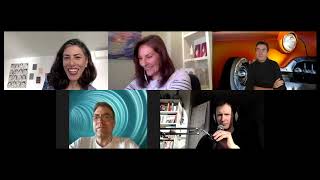
In this episode of the Pass the Mic podcast, host Virginie Glaenzer convenes a panel of four guests—John Caswell, Fatemeh Banischoaib, Andy Smolik, and Christopher—to explore how art can enhance the well‑being of organizations. The conversation begins with a tour‑de‑table where each participant shares their background and why they care about the topic. Fatemeh frames work as a "theatre for life" and argues that every person carries an inner artist whose expression is essential for renewing business models. John describes art as a catalyst that can shift senior executives’ mind‑sets and introduces the concept of "bridging leadership," the ability to hold contradictory ideas and build trust. Andy brings a systems perspective, discussing the importance of framing, legibility, and the "illegible" creative space, and contrasts objective‑driven with purpose‑driven economies, emphasizing the need to tolerate cognitive dissonance. Christopher distinguishes between theatrical (role‑playing) and dramatic (whole‑self) work, highlighting the need for safe spaces where mistakes are allowed. The panel repeatedly returns to the four pillars of well‑being—rational, emotional, spiritual, and bodily—and debates how art can nurture each. Themes of permission, labeling (e.g., "Head of Crayons"), pre‑nostalgia, and co‑creation surface as practical ways to embed artistry in daily work. The episode closes with each participant sharing personal takeaways and a poem read by Fatemeh, underscoring that the conversation itself should be an artistic act.
Chapters
Welcome to Pies de Mic podcast with Fatemi Banishub, and I apologize if I butchered your name, but Fatemi will lead our conversation on the role of art in the well-being of an organization. My name is Virginie Glaenzer, and I'm your host with a million questions. Pass the Mic podcast, for those who are new listeners, is about sharing different perspectives on a specific topic, not only to help us expand our understanding of the world, but also to explore new ways of looking at it. Before we begin our conversation, let's begin as we always do with what I call a tour de table and have each of you tell us your name, what you do, and why you're interested in this topic. Please try to be brief and keep your introduction to a minute. So let's begin with John.
Well, hello, I'm John Caswell. I run a company called Group Partners. My interest in this topic is that I help senior executives visualize their future. So it's a mixture of conversation and art, and the big prize there, of course, is that The outcome of that is a different mindset and a different behavior and a different relationship between people, which is hugely valuable, which completely is at odds with the normal lives they live. So I see art as a catalyst for making change happen and improving the lives of executives. So I'm very happy to be here, looking forward to the conversation.
Great, thank you, John. Fatemi?
Hello everyone, my name is Fatemeh Banischoaib. I define myself a business artist, as I say, and I founded a couple of years ago a creative laboratory called Renew Business where we actually bring together art and business so that we can renew the current business model. And the fundamental question I ask my clients and myself every single day: can we think transform business, the world, society, if we embrace the artist within each and every one of us. And I hope we can get a glimpse of what that looks like in this podcast today.
Great, fantastic. Thank you for being here. Andy?
Yes, Andy Smolik. I'm based here in London. I spent 5 years at Google, but I'm off involved now with a a series of startups. What I like to study are the fractal patterns that exist in life and understand more deeply how we orchestrate value in organizations. I look at organizations and cultures and nations as artificial life forms. And if you understand that the same kind of fractal patterns that, that we have also apply to those organizations, then this discussion in terms of understanding art and its role with these organizations takes on a whole different framing.
Okay, so we're mixing together art, fractals, and visual storytelling. So that's going to be an interesting discussion. Christopher?
Yeah, I have I have no idea who I am or what I do. I'm always intimidated by people who know and can answer in a minute. I guess it's another way of saying I'm a writer. And I kind of read and write and think for a living. I mean, right now what I just can't seem to get off my brain is this, this, um, this sense of how, how impoverished our awareness of reality is. Um, I mean, you, and you look at things like how the public response to coronavirus, but really so many crises that seem to just occupy our brain in society. At the root of all of them to me seems to be the kind of disconnectedness with which we go through life and conceive problems and actions and solutions. Yeah, and poverty is, I guess, the word that I keep coming back to. I just feel like our awareness is in so many ways impoverished. And so the flip side of that is looking for, so how do we enrich that? How do we grow spaces, this kind of vanishing habitat where we can be and think and act in just far richer and more complex ways? And from there, it's almost like an obvious step to say, so let's really listen and learn about what does the artistic perspective bring that we're missing.
Very nice. Well, I can't wait to get in this conversation. So a week ago, several presidents of countries around the world have declared a global health emergency due to the coronavirus, which we were just talking about. Interestingly, today we're going to be talking about the role of art in the well-being of an organization. And it seems to me that what we're experiencing on the outside is really a personal crisis. On the inside. The current business model for our organization and of our work at large looks to me like it's been designed on the premise of an assembly line. So roughly about after 150 years, it's easy to agree on the fact that we've reached a point where it's no longer working, just by looking at the reality, right? Our energy consumption is causing climate change, we're sick, unhealthy, fat, and depressed. So the way we work, as well as the way we think about work, has reached a point of no return, and it's time to think and do things differently, which is why I'm so eager to start this conversation with Fatimi, who is going to lead us into considering another way of looking at work. Because after all, why wouldn't we practice the arts in the workplace to resolve the illness affecting businesses. So if you'd like to lead us into this conversation, it's all yours.
Well, it's all us. Well, I'll start by sharing something I believe in. I actually think that work is a theater for life. So I don't think that what we observe in business, at work, is any different what we observe in society as a whole or in our personal lives at home with our families, with our communities, within our network. And one of the reasons why work or business is important to me is not because I'm obsessed about it, but because I think that business is there to help us fulfill our dreams. That's why we organize and set businesses to help us realize our dreams. And we are failing that because the model that we run to go about it, it's, it's an outdated model, it's a broken model. So there are deeper conversations that we need to engage into so that we can come into, you know, a different realization, a different awareness. A different mindset, actually, probably even larger, a different way of being, or beings, all of us, so that we can transform what we do. We cannot transform what we do with an outdated way of being. And because of that, I think that in this obsession for solutions, obsession for models, obsession for data, over-rationalization of things, more than ever, and especially due to the context of this global crisis, which is just one of many others, just faster and hit us all of a sudden with a huge impact. But we cannot claim that we don't have other crises going on at the same time. They just have a different pace. We cannot continue exploiting our mind and our reasoning And more than ever, I think we need to tap urgently into imagination, intuition, self-expression, and see how that changes what we do. And I don't think we can think about using our imagination, using our creativity, without actually doing it. And art can comes to help and to support us tapping into creativity, expressing a new language, expressing something that we have not seen yet. As artists, and each and every one of us is an artist, we just don't know, we haven't had yet the permission or given ourselves the permission to evoke it, but there is an artist in each and every one of us. When we wear the hat or use the lens of an artist, we can— we go into a place of inquiry, we go in a place of exploration of what is not visible yet, and we want to express it. We tap into creativity, we create something, we imagine a new model, a new paradigm, a new society, and we put it into expression. So I don't think we can shift the world of business. I don't think we can shift society without tapping and evoking the artist in each and every one of us so that we can engage in a different dialogue. So my question to all of us, because I need— I'm also exploring. I don't have the answers. I have tons of questions, but I don't have the answer. Would be what it means to us to be artful, to tap into our own artistry, evoke it, give permission to ourselves to express it. What that means and how would that look like if we would do it a little bit more and if we would start with ourselves. And then I'll be silent for a little bit.
I think this is a great question as far as who is allowed to do art in the first place. We have this bias right now and saying, oh, there's a creative class. And, you know, one of the organizations I work with, the Sonophilia Foundation, one of the things that that we're trying to do is break that idea, get the notion out there that creativity and for that matter critical thinking are something that only certain people get to apply.
Yeah, I'd certainly build on that. It's interesting to me how if I went into a senior executive team and said I was going to do art, I probably wouldn't be allowed in the room. Whereas if I go into the room and say, I'm going to develop a framework of critical thinking, and oh, by the way, it will be quite creative, quite artistic, different story completely. So I think one of the answers is to be smart about how we label these kinds of things in the first place. I think, Andy, that's kind of where I'm sure some of your work may have got you, is the minute you call it something, you're doomed by everybody else's definition of what they think that meant. So I think, whilst it's exactly the right way to think about it through that lens of creativity and the inner innate skill that we have to be ingenious and innovative, be careful how you call that too soon until people have got an idea of what that actually means for them right now, which is a shame, but that's a reality I think I'm dealing with all the time.
I wonder, is that reality changing? Like, I wonder if, you know, as people— I, one thing that I've certainly become aware of, sort of, yeah, in those senior executive circles is, is a growing willingness to believe that we're kind of thinking about it all the wrong way. It all needs to change somehow, you know, disruption, blah, blah, blah, blah, blah. And a kind of an increased willingness to, to play and, and, and, and, and try just different approaches to, to the work in front of them? Have you experienced that?
Definitely. Yeah, I think that's very insightful. I mean, it has changed, and it changes and changes exponentially, actually, the more that people realize that previous ways of trying to fix a problem hasn't worked. So I think, you know, the consulting model is often bashed for being it doesn't work anymore, takes too long and too expensive, which is easy to say, but undermines a lot of great work that's being done in consultancies. But the way that they language it and the way that they've got themselves branded as expensive and takes too long is a shame. So I think it has changed. I think you're right. Senior executives that are more conscious and more enlightened are looking to the creative areas to play. More comfortable with messy processes, you know, test and learn and make smart mistakes and overcome things by just trial, is definitely much more acceptable than it was 20 years ago when I set out doing this.
I wonder, um, if we are not allowing ourselves to just be an artist, and we are somehow protecting that part of ourselves that is not widely accepted. Let's put it in this way. We're not giving ourselves permission to call ourselves an artist because there is a myth around it. I mean, poverty is created is totally an artifact. It does not exist in nature. And why did we create it? For poverty, as an attempt to control creativity, as an attempt to, you know, control the artist within. So I'm wondering, and I went— my experience is a bit different, you know, I went very public being like, no, that poetry is what I bring into organization. And if you want to work with me, there's going to be poetry. I'm not even calling it critical thinking or— I'm calling it poetry because that's exactly what I do. You will get, when you work with me, a series of other things, but there is no surprise. There is no by the way. And so, and that had to start with me. That had to start with me giving myself the permission to call to name things in a very different way. So I'm wondering if there is a part of us that is still not at ease in accepting or giving ourselves permission to call ourselves artists. We don't have to be Picasso or I don't know, to, to be—
yeah, it's a powerful point. I think about 3 or 4 years ago I changed my name from, you know, CEO or whatever it was, or founder or whatever, to Head of Crayons.
Excellent.
I just became— because at that point I felt comfortable enough in my product and my experience and my case studies and my references I don't think that's true for everybody. I don't do very much. I don't do any new business calling or promotion for what I do because my work now is referral mostly. I don't think that's true for everybody. So whilst I agree with the point, people should just be proud to be an artist, right? Wouldn't that be great? It kind of affects the business model for many people.
I think there's, there's two key issues that you're hitting on, which I think are worth teasing out a bit more because I I think so many people blow right by them. And that is the framing and legibility. You hinted at the framing earlier, but it's absolutely critical that we understand most of the framing we do happens before we've even become conscious of the fact that we are framing. Right. And the opportunity to change the framing is often something that we completely miss if we jump right past that. Right. By creating a title like what you've done is you're deliberately calling attention to the framing that people have and you're challenging them to think differently about how they're framing who you are and what you do. The second piece of this is legibility, right? If you say Head of Crowns, right, is that a particularly legible pattern that people are immediately going to understand? In some ways, the reason why you're able to use this is because you have the luxury of being able to not be so legible. And in fact, all creative— in fact, if you look really at where all the new value is being created in the economy these days, it's coming out of illegible spaces that people simply can't understand and aren't prepared to understand. It springs forward on the scene and people start to realize it only after they've experienced it. And for those of us here, we have the benefit of being able to be more connected with our artistic centers and consequently less legible to the kind of the masses. While at the same time being able to be legible enough to those who will value what it is that we can offer. And this is such a difficult thing to tease out and walk someone through who has never gone through a real transformation, because the idea of framing and the idea of legibility doesn't even occur to someone until they're very, very deep on that journey.
Completely agree. I think what you're trying to do is create this kind of pre-nostalgia with people. It's very hard to do. I mean, you put it beautifully. We have the privilege, the luxury, and the platform against which to build a business to sustain us. Whereas the point here is not many people have reached that point in these illegible areas. But I completely agree with you.
What did you mean by pre-nostalgia, John?
Well, you're going to love this, but you haven't been through it yet.
Yeah.
You know, once you've got that nostalgic, beautiful feeling about something, it's not a problem. That's on the way out. On the way in, how do I get that across to you that this is going to work? I remember going into organizations and saying, you know, I'm going to come in and I'm going to draw all over your wall and you know, you're going to have benefit from that. And that was pretty much the conversation. And I was lucky that people said, okay, well, let's give it a go. But that was luck. That was not a formula that I could use. I very quickly realized I'd have to be a lot more scientific and kind of make a lot of stuff up to give them the confidence that they wouldn't be fired for, for making a decision like that. And these are the sort of practical steps you have to sort of step through.
And I agree with that. I mean, there are, there is resistance from a certain environment of, okay, give me, give me a result. Give me, give me a goal. Give me a certitude that we will get from point A to point whatever, D, which I don't think is the problem, which I think is the real problem. That somehow enslaves the artist because that's not really tangible in the sense that it's not measurable according to the established KPIs. We can— it's like, it's almost, okay, how do you give value to that? Or how do you give value to the being before the doing? So I guess what I'm saying is which is very different. So if we say that our well-being, not well-doing, well-being, it is specifically called that way for a reason, is made up of different elements in which of course there is a practical and more rational and intellectual aspect, which is the application of something else, but is also, I mean, Well-being of a human being or a well-being of an organization is also made by emotions and feelings. So how do we nurture that? How do we express that? It's also made by the well-being of a soul, the soul of a human being, the soul of an organization. And despite the fact that no one wants to hear the word soul in business setting, everybody feels very offended. Offended when you call them soulless. So they have a soul, they have a soul, otherwise no one will feel offended. And then there is another element which is the spiritual. And so the real question would be that, does art help us to express this well-being which is made up of 4 components, even actually even more, but let's limit it to these 4. So the rational, the emotional, the spiritual, and the body. And the body. Does art help us take care of that, of the well-being, the wholeness of what is an organization, what is a human being, what is society, and how? So that we don't limit the conversation only and only— I don't say that we should forget— but only and only to the rational and to the practical doing mode. Okay, let's find the solution. Give me an outcome. Give me something that I can measure. And what about the rest?
I don't want to go first, but I do have an answer.
Well, it's about the ecosystem, right? You can't, you can't possibly connect with the ecosystem in which an organization exists and adds value without getting away from the, the parts of what they do that are not necessarily legible even to the organization itself as a whole.
Right.
And the art is what allows you to make that connection, uh, and start to realize that it exists, not by explicitly trying to take people there, but by seeing what patterns you are guided to when, when you start to try to apply them, right? It naturally happens.
I, uh, if, if I can, I'm so reluctant to jump in. Do you know, you know, when you're, when you're listening hard and you're thinking hard and you have the fragment of an idea, but it's not a whole idea. Have you ever been there? So yeah. So if I could, rather than make a profound point, could I just maybe put a couple of my broken pieces on the table and maybe That's what this discussion is all about. Okay, so what I'm thinking about, I guess, is I think there are some tensions in kind of bringing art into work. Fatemeh, you talk about this kind of the human being and the human doing, and I guess the tension I'm thinking of is I've worked with some senior execs in big Fortune 50 organizations, and these people are terrifying. What I mean is that they are world-class execution engines. Give me a big problem, doesn't matter how big it is, I will turn it into a project. I will drill out, this is the resource requirements, here's the timeline, here's the budget, and I will execute it and get it done. I turn problems into projects and we deliver them. That's what we do. And so it seems to me that there's kind of almost like two levels at which art can engage in that. And one level is kind of, you know, help me solve the problem. But, but I feel like the, and this is kind of where the contradiction comes in, the tension. It seems to me that there's another level, which is, you know, the, these people, these, these world-class execution engines, they're like, you know, what problem are you trying to solve? And I feel like the artist asks a very different question, which is what world do we want to create? And I think that, I don't know, I think that could be a really uncomfortable question. You know, some, especially senior executives, like, if I don't have a problem to solve, I don't know what my value in the world is. And there's something very different, I think, about the artistic perspective. Anyway, those are the pieces that I have in my head at the moment. Can anybody assemble them?
Let me, let me have a go. That gives me a great way to make my observation on that point. Um, I recently came across a concept of science. In fact, I shared it with Virginie, which is called bridging leadership. And it was the kind of person who could hold contradictory and ambiguous concepts at the same time so that it gave people space to overcome their a particular objective or position or perspective. And it's often used in conflict negotiation. It fascinated me because it kind of leads to the word I wanted to frame this part of this discussion with, which is not so much art, but artistry. And I think that as you become more mature in these kinds of conversations, I've met those people, Chris, that you've met. I couldn't have defined them better than you did. I mean, they are just full-on, unbelievably passionate, and they have a million ways of solving it, and it's their way, and they're determined and obsessed, and you kind of need that in an organization. But they can be defeated by trust if you have the artistry and linguistic skill and creativity and craft across multiple different disciplines, this new, the illegible space that Andy described, if you can maneuver and be and have the mastery of that artistry, if I can put it like that, then I think you can bridge between the two. And I think that's what the world demands now. It's not more people who've got, you know, the ability to crunch data. It's the people that have the ability to be creative and artistic. And master the language that gives people trust to take them on a slightly different journey.
I fully agree with you, John. I think that the most important word which I share with you is bridging. Creating a bridge is not just being, you know, the artist and the business versus, so this tension as if they are separate, it's like really bridging. How do we bring them closer enough that there is an overlap and one can inform the other? So how do we learn to trust the artist within and the artistry of others as well, to trust and believe that that can inform this ability, because it's an ability to, you know, to put together a project, to solve a problem. But how one informs the other and how we build trust, not only in our own artistry, but also how do we learn how to trust the artistry of someone else? Because if we believe that there is an artist within each and every one of us, just maybe with a different level of maturity, just because some of us express it earlier and some others are still not expressing it.
I think that's right. I think you become the channel. I think the artist becomes the channel for the artist in others. And of course, being able to facilitate, you know, the kinds of conversations that we're talking about often is not to own the solution, but to give the trust and confidence in others to bring forward their solution, their creativity, their own idea. So we step out of the way and allow people to come forward with their own idea and their own creativity and their own art.
So I'd love to ask a question about— I mean, we've talked about this willingness to disrupt, you know, how it starts within an organization, the difference between well-being and doing, the various tensions that one has to hold to enable himself, herself, and others to bridge that gap. And I have one question I'd love for all of you to try to answer is how your human experience of work would change if we had what we just described— this ability, willingness, desire, bravery, structure, system. How would your own human experience at work, of work, would change? Can you describe, can you paint a picture so anyone could kind of see at play?
I see this as a really easy thing to describe. It's, you know, we live in a world right now where the gameplay is primarily objective-driven, and essentially each of those objectives, the organizations that we form are driven by those objectives, and it's Everything naturally follows. But what we need to evolve to and what I see forming is purpose-driven. And there are differences, very important differences between objectives as currency and purposes as currency. And when your currency is purpose, you have to focus on on being able to amplify the resonance where you interact with others in your ecosystem and contain the dissonance, the description that we had earlier. I, I, I, in fact, I like to call this being able to have a high tolerance for cognitive dissonance. And those who are able to have sustained Periods where you're managing very dissonant players and purposes and objectives and finding artistic ways, right? This is applying artistry. It's like creating a musical hit, right? If every musical hit was essentially just maximum resonance, all we'd be listening to on the radio would be, um, right? Because that's maximum resonance, right? What makes for a hit is contain dissonance that's in the right place at the right time and, and with a, with, with a, a regular cadence, right? And if you do this, you can create a hit. And it's really no different in terms of the way you orchestrate purposes in an organization or between organizations or across ecosystems.
Who else could paint the picture of what it would look like?
I can share what happened to me when I reclaimed back the artist. Within, which is more than painting a picture, is sharing a picture of a life experience. There was a point in which I could not actually bridge the paradoxes or the apparent paradoxes of life, of business, or what I was requested to do and how I was doing it, or the tensions within an organization. And that same tension was within me. Who had lived more than half of my life, much more than half of my life with this idea. I'm a scientist, I'm a responsible person. I solve problems. There is no problem I cannot solve. And especially running manufacturing, you solve problems day in and day out. That's all you do. But there was something more. So basically, despite the fact that it was high demanding, it required a lot of mental power and mental muscles from my side, it was very limiting because there was, yes, my powerful brain, but much more than that. So actually, my own identity was being shrinked in something that was too small for me. It took me a while to realize that what needed to be reclaimed was the artist, the poet within me. And it took a lot of strength I did not know I had to go on that journey. So first of all, to discover what being a poet and an artist actually meant for me. Then start doing art. So really making art rather than thinking of what art is, but making art, not just talking about art. And then from that place, create for myself a container, which is the company I founded later, but a container in which I actually could continue, grow, and expand and get people on board to do the same. That's how I start bridging you know, the business and art, science and art, it came through a personal experience. I could have never thought just rationally about it. Of course I could have engineered or orchestrated that, but it would have been a very different experience. And when I realized that, My entire life changed, um, because something else wanted to be expressed. So it's almost like I had access to a bigger potential I could tap into. Today I solve problems in a very different way that I would solve it before. Or I would, you know, explore things in a very different way.
And that makes perfect sense. John or Christopher, does one of you want to share how it feels to express yourself as an artist in the business world? Or does that not apply, or you haven't thought about it?
No, I have. Christopher, do you want to go first?
Sure. I mean, I paint with words rather than ink, so it's not so much that I can visualize it as, you know, for me there are important words that would describe the difference. Fatemeh, you talked about at the beginning how you like to think of work as a theater for life. And I get that, and I love that. But if I could play off of that, for me, I guess, like, a very useful word pair to think about these issues is the difference between maybe theater and drama. I find that a lot of work life is theatrical, right? Where you kind of, I put on a mask, I put on a costume, and then I perform a role according to a script. Um, I think that's how I think of, um, this kind of, you know, the industrial age legacy of the DNA of what work is. And for me, I guess bringing art into work is kind of like shifting language from theatrical to dramatic. And for me, you know, to live dramatically is to kind of bring our whole selves into into a situation. You know, it's maybe more the improvisational artist, right? Um, and so I think that, yeah, at the deepest level, I feel like that's the, that's what it would mean is, is just increasingly being able to bring our whole selves into, into work. And, you know, and, and, and nowadays it is, I think it's, it's, it's really difficult. To be your whole self. Maybe in some ways it's easier, you know, there's been a kind of relaxation of a lot of the formality and structures of work, and in some ways maybe it's harder in the sense that there may be less permission to make mistakes, you know, especially in our in our social interactions with one another. And, you know, as I think of, you know, improvisational art, there needs to be a kind of a deep willingness of everybody taking part to, yeah, forgive. You know, I mean, I feel like If the idea is to bring our whole selves, to bring artistry into work, we're going to make a lot of mistakes along the way. And so, you know, do we have a safe space where we can make those mistakes and learn from them as we evolve just new habits of interacting and interbeing? In some ways, now is a very, you know, with this magical, wonderful device, mistakes can be very costly. Um, so I, I guess I kind of got off on a tangent as I, as I am often, you know, to do.
Um, yeah, it's interesting that you mentioned the roles. Um, and I think we just had a podcast on authenticity and authenticity is about bringing your whole self, but it's also through letting go of the roles. That you've played, and that requires being vulnerable. Vulnerability. So not being afraid of being judged. You can't, you know, someone has to start, so you can't expect people to not judge you. They will judge you. But are you willing to accept the risk of your own vulnerability? So it's fascinating. John, do you feel like you're being an artist, and how does that look like in your own world?
Yeah, I feel very privileged because I'm kind of creating those safe spaces for a living and bringing art to executives. I mean, that is pretty much what I do. I think that it's a privilege on so many levels because you're able to wear so many hats and, you know, step away from being the, the ego in the room, manage people to realize their own vulnerability Give them a new language, help them understand that their vocabulary isn't helping them, defeat them with logic where required, and just let them think freely where required. So I think the answer to your question earlier was the upshot of all this is freedom, expression, empowerment. The challenge is making it stick. I'm just not there all the time, and It's not about me anyway, you know, I'm helping them visualize their future, their strategic intentions, their purpose, all the things we've been talking about. But they will quickly, if we're not careful, default back. So my biggest challenge at the moment, and why I find these kinds of conversations so important, is how can we use technologies, new tools, new methods to help people stay stuck in the new behavior that we want them to go to, to Andy's illegible areas, and stop thinking that they've got a job title and that's their function and that boundary is their role. And the world's just not like that anymore. We've got to get them out of their heads. And I think art is exactly the right answer, if not the right language necessarily all the time. But, you know, taken with the need to be braver and push and challenge more to get it out there as a concept.
Yeah, so as a timekeeper, we are about to be right at the end of this podcast. We could talk forever, but I want to thank everyone for this insightful conversation. And I'd like to end this discussion the way it began, with a tour de table. So one of the promises of this podcast is that there's too much talking and not enough doing. So let's pass the mic and tell us what you've heard today that will inspire you to start doing something differently the way you did it prior to this conversation, or anything you want to leave the viewers or listeners with. And I'll start by sharing my own takeaways to give you guys a moment to collect your thoughts. I really enjoyed this discussion. I've always thought of myself as an artist just because I I paint and I write poetry, but I've never thought of bridging or building a bridge and bringing this into the business world. And I'm actually one of those people who are a doer. I love to solve problems. I enjoy solving problems. But as I look back on this conversation, I understand that The— and I recently, I mean, I've always been a big fan of co-creation, and I think that's my way of building the bridge through co-creation, because in this co-creation process, there's a lot of uncertainty. The same way that when you start painting or writing something, you don't know where you're going to end up. And so dealing— I've learned to deal with uncertainty, which I still I'm practicing. But I think that gives me a new light of going deeper into this co-creation with my team and other people that I work with. I do want to explore more something that I've learned about pre-nostalgia. I think that's an interesting idea. And I'd be curious, I can already think of a few meetings that I'd like to have with the team as we talk about services and the way we work with customers. And I want to bring to them this— the four pillars of the well-being: emotional, spiritual, body, and rational— and see how can that translate into the work that we do, into the way that we tackle problem and see what are the system and tools that can support this. So not knowing where this will lead, I really, really enjoyed this discussion and it gives me a lot of ideas and I'm excited. This idea also of labeling, I actually want to revisit the title that I have on my LinkedIn page and see what, what other title would I feel comfortable? And I know that it starts with me. It's not about convincing clients to bring arts within the organization, but it's more me first giving myself the permission to express my art in a way that it can be understood. So, thank you so much. Okay, so, John, would you like to go first and share your own takeaways or anything that you'd like to add or leave us with?
I think it's been a very insightful conversation for me. I'm going to start practicing writing poetry in resonance, honoring the three colleagues above. It's always good to be hearing something that you've not heard for the first time, and so I I think I've had quite a few concepts that I've not heard before, which is, which is impressive. And, you know, thank you. I pass the mic.
Great. Thank you, Christopher.
Um, I guess the, the, the thought I'm going to take away and, and crunch on, um, John, when you were talking about bridging leadership and this idea of hanging in, hanging in contradiction and being able to create a space for contradiction. And what I'm thinking of is some books I've been reading on the history of 20th century philosophy and how, you know, some of the great philosophers of the 20th century, like Wittgenstein, for example, the later they went into their careers as philosophers, the more they gravitated toward poetry because they became increasingly aware that the precision of prose was actually dissolving the stuff, the subject matter that they were trying to work on. And the distinction of poetry is that it doesn't dissolve everything into precision., but it allows the expression, uh, and the hanging within, um, contradiction and ambiguity. And so I just find it so interesting that, you know, for many different walks of life and perspectives, there is, I think, at a certain level of seriousness, of concentration, one, one arrives at a similar destination. Which is that we— there is this artistic element to reality, and without the kind of artist's toolkit, we just can't— we can't engage it. So I think that's fascinating. And I apologize, I need to cut off. Sure. It's lovely to share this moment with you.
Thank you, Christopher. And we'll continue with, uh, Andy.
Thanks.
You know what I really enjoyed most about today's discussion is the reminder of how immensely productive it is to, especially when one is feeling constrained and stuck in any way, you know, even, even if the feeling is procrastination, of avoiding doing something, that there is always an opportunity to work yourself out of that feeling simply by engaging with artistry, engaging solely for the purpose of trying to get what's inside you right now out. And I think that that's underrated as a way of problem solving. We're so used to this myth of, you know, we can think rationally even though all the evidence is that what we do is we act on emotion and then we, we, we choose something that we ultimately can rationalize. Right. That's, that's where all the evidence is. And the, the idea then is, okay, if, if I feel stuck, it's because I don't feel like I can rationalize what, what I sense that I have to do, right? Therefore, it's time to spend a little bit of time artistically to, to try to contain the dissonance that I feel inside something that also has resonance that seems to make sense. And by putting that artistic effort into whatever it is that I'm struggling with, I don't have to solve that thing. I just have to produce some art that the nice side effect is that it's going to help get me unstuck.
Exactly. Very true. And we can see that, especially in this crisis that we're currently in, Humans are not rational thinkers. They're actually emotional creatures, which is why we see what we see. But yes, and then to end this conversation, I'll leave it to Fatemeh for her last words.
Well, I just realized one thing. We've been talking and rationalizing about art, and we haven't shared much of art, which is all the point. Of this discussion. So I think instead of making another rational summary of it, I'll read a poem so that we can close with some art, actually. Awesome. So I read the poem from The Poetry of Leadership, a poem called Born with Wings. I was born with wings to learn the difference between strength and softness I learned strength. To fly, I have to learn softness. So with this—
Very nice.
Wow, that's pretty deep. With this, I think I've closed what I had to say.
It's a beautiful way to closing it. So really, thank you again, and I'd like to And by asking viewers and listeners to like this video and subscribe to our podcast and tell us how they have seen art impacting their own well-being in their organization, in their work. They can leave answers to the comment below. And thank you again, everyone, for being on this discussion.
Thank you so much.
More from Virginie











Unlocking Fintech Success: Strategic Trends for Profitable Growth: Webinar Leadership Series