Authenticity - Full Episode #9: How can we use Mindfulness to pave the way for Authenticity?
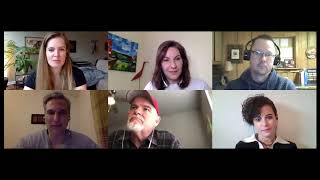
Virginie Glaenzer hosts Jim Spivey, Aaron Forrest, Melissa, Misty Gilbert, and Ashok Zaman to discuss what authenticity means and how mindfulness quiets the ego to reveal your true self. Misty shares her exit from a cult, Jim describes subconscious patterns that block authenticity, and Ashok explains how meditation practice creates the space to live without masks.
Chapters
Welcome to Pass the Mic podcast with Melissa Nadia Viviana, who will lead our conversation on the topic of authenticity. My name is Virginie Glaenzer, and I'm your host with a million questions. Pass the Mic podcast, if you're not familiar, is is about sharing different perspectives on a specific topic, not only to help us expand our understanding of the world, but also to explore new ways of looking at it. Before we start our conversation, let's begin as we always do, with a tour de table, and have each of you tell us your name, what you do, and why you're interested in this topic. Please try to be brief, and keep your introduction to about a minute. So why don't we begin with Jim?
Okay, wonderful. Well, it's a pleasure to be here and nice to meet everyone. My name is Jim Spivey. I'm a partner in a small consultancy called Mazzi Partners. Mazzi means together in Greek. Our life's work, all of our work, is about authenticity, strangely enough. Yeah, discovering and living out of our true selves is what we're about. My background is in business. I've been a CEO of a technology company. I've been an executive coach for 20 years. I've, I've done a lot of different things and most of them were out of my ego and learning how to strip that away to get to my authentic self is what I care about. So this is perfect for me and I feel really welcome and excited to be here.
Wonderful.
Well, thank you to be— thank you for being here. Aaron?
Hi, yes, I'm Aaron Forrest. I'm from Seattle, Washington, and my background is in architecture and design. I have a degree in architecture, never really followed up on it that much professionally. I got involved with a family business building log homes, and I am involved in the design and the project management of that. In fact, I'm I'm speaking to you from my office at that particular business. My story somewhat is one of not really having figured out life, uh, until, uh, just a few years ago. I really struggled and bumbled about in life, uh, feeling like I was just not accomplishing, not really, uh, being a very worthy person. Um, I just didn't feel like I, fit in or knew my life's purpose. And one day about 5 years ago, completely out of the blue, it was not something I was searching or seeking. I was hit with a spiritual awakening, which essentially is a perceptual shift outside of the ego and a new awareness as such of, well, for one, our authentic self and a better idea of the nature of reality comes outside of that too as well. So these last 5 years or so, have been one of a skyrocketing purpose and mission that I've had, uh, similar to, I think a lot of people here just to discover more about who I am, who we are, what life and reality is. And so I, I do a lot of study on the topic, uh, in general of spirituality and authenticity is real key to that. As I know we're going to find out from most of us, outside of ego is where we begin to find authenticity.
Wonderful, thank you very much for being here. Melissa?
Oh, I thought I went last.
I'm changing a little bit the turn, so you— because I do want to hear who you are and why you're here, and then I, you know, so—
Sorry, this is our third video together, so—
I know.
Not planning on speaking yet. So I'm actually a philosopher. I write philosophy, a little bit of psychology, and about society. I kind of call myself an existentialist and also a beat philosopher because I like to express that I'm outside of the institutions, that I have more of an artistic view of philosophy. Last year I went on a road trip, 8 months, 15,000 miles with my Dalmatian and just me and my Dalmatian. We actually spent a lot of time in Seattle. That's why I know that winter there is awesome, Erin. But it was very interesting for me to be on the road and get back to a little bit of a memory that I had when I grew up in Montana. I was kind of alone with the mountains and I realized for the first 7 years of my life I had developed without any interference. I had just been free to express myself So there was a reconciling of who I had become from living in a city, which I live, I live in DC, and who I used to be in that freedom. So recently authenticity, even though it was always important, has been mostly a reconciling of how do you balance being something for society and being something for yourself. So that's going to be my perspective today.
Thank you so much. Can't wait. Misty?
My name is Misty Gilbert, and I'm from Fort Worth, Texas. I was born and raised in California. I spent 37 years in a cult environment, something I was born and raised to. My mom was born and raised to a very abusive childhood, and I lived hiding behind my pain and the religion and spirituality. And so my journey of transformation since that time, the last 6 years or so, has been learning how to be authentic, how to be myself, how to own my story, how to share that with the world who is generally unable to accept and really have compassion or empathy or even relate to someone who's had the abuse that I've had. And so my journey of My life is to be a ripple effect to encourage, support, and inspire other people to be themselves. And to be yourself means you have to be authentic, which means you have to remove the mask. You have to be open, real, raw, and vulnerable. So as a transformation coach, my purpose is to help people do what I've done, which is to embrace my pain and turn my pain into power.
Beautiful. Thank you very much. And finally, Ashok, Right, my name is Ashok Zaman.
I was born and raised in Sydney, Australia. I'm currently living in Shanghai at the moment. My background, especially with regards to this conversation, is in meditation. I've worn many hats in the world. I've been a full-time journalist, an actor, and a model. I've run my own company for a little while. And teaching meditation as well. I started meditating when I was about 19, so that was in 1996. If you're good at maths, very quickly you can figure out how old I am. And I started with a year of full-time practice. So I dropped out of university at the time. I was studying psychology and I just felt as though what I was learning there lacked meaning. It lacked— it felt like it was empty, and I was looking for something more meaningful. And I'd always been interested in meditation and sort of looking at what's behind all these appearances and all the masks. So I basically dove in the deep end and went for a year full-time practice, at its peak doing like 10-12 hours a day for a few months. And needless to say, it's changed a lot of things, and it's been a major part of my life ever since then.
Very well. Well, thank you very much. That must have been quite a journey. So this topic is very dear to me. Some of you know that I have two Twitter accounts, one where I share leadership and marketing best practices, and one called True Self Wisdom, where I share my deepest thoughts while exploring, trying to understand philosophy, or going back, psychology and mindfulness. I'm glad we're having this conversation because I wrestle with this idea of authenticity, and particularly with the way we use it in our society. What I find interesting is that today, experts on the topic of authenticity tell us that it's found in two types of individuals: young children. If you ask a class under 5 who's the strongest, you will see all the hands in the air. But if you ask the same question Sessions to 7 and 8-year-old kids, you'll find finger pointing to a specific person. So the other individual is also, or the wrinkled and old people who are not afraid of giving you a piece of their mind, telling you to shut down your music, and by the way, adding that they don't like you. But here's the thing: I'm neither a child nor an old and cranky old person yet, and I still want to live my life authentically. In our society, many people use authentically to remove their mask, as some of you have already said, and finally tell others how they truly feel. But in my perspective, it has nothing to do with being authentic, because being authentic, to me at least, doesn't prevent us from being kind, open-minded, and even generous with others. Let me ask— let me add one last thing before we start our conversation. I've been thinking a lot about this topic for this conversation, and I actually in the last 10 or 20 years, and there's a part of me that thinks that authenticity has something to do more with the way I feel about myself than the way that I engage with others. And so I'm starting this conversation with an understanding that authenticity is when we have coherence with our personal truth and values, and I don't think it should change based upon context. But perhaps this comes down to a meaning issue. What does authenticity mean to each of us? Is there a difference between being authentic as a separate individual and being authentic as the source of consciousness? So let's begin this conversation, shall we? Melissa, it's all yours.
Ready? Well, uh, I don't know. I mean, every time we get on the video and there's a new group, there's a new dynamic, and there's a new, you know, you don't, you don't, when you think before you get on the video of what you want to say, you don't know who you're going to be saying it to. And now that I know who I'm going to be saying it to, I find myself wanting to change my answer. Um, I am a little bit more clinical about authenticity, which is just the way my mind works. I'm very analytical. And so when I use analytics, in my own mind, it's actually very personal because I'm a thinker. So it's a very authentic thing for me to express everything intellectually. For other people, authenticity could be more emotional or even more vulnerable. And I'm very rarely vulnerable because I'm an analyst. So when I prepared what I wanted to say, I prepared it a lot more technically, and I wanted to mention a psychoanalyst that I like called Donald Winnicott. And Donald Winnicott has just a very simple explanation for what authenticity is, and I think it's just a great starting point for the conversation. His idea is that we have a true self and a false self. He doesn't mention authenticity specifically, and he says that the true self in infants is just simply being alive and spontaneous. So in other words, an infant not having a personality, not having any mind or capacity to think, is simply spontaneously alive, and in that spontaneity is expressing something genuine and real. But he says that the infant as the infant grows older, develops a false self, which is not false in a negative term. It's more like the self that the infant is using to understand the world around them and be what the world requests or asks of them. So they get feedback from their parents, they get feedback from their siblings and their peers, and they develop a coping mechanism to deal with the world. But he says that your false self, even though it's kind of your way to manage the people around you, is actually— there's like a hierarchy. And your true self, if it's an important issue, your true self should be able to override and express what you naturally feel, which is a spontaneous feeling, a spontaneous expression. He says if you have to plan what you're going to say, it's not authentic. Because it should be something that just comes and you don't think about it first. And so he says that a lot of people get trapped in allowing their false self to override their true self instead of the other way around. So he says we have both, and you could say the false self is how you develop EQ, how you function in the world, how you learn what's expected of you at a job or what your parents want you to be. But the difference is your false self should not be the entirety of you. Because then you don't feel alive and you don't feel genuine and you don't feel whole. So even though that's a kind of technical definition for it, I thought that the word spontaneity really captured something because, you know, throughout our lives we do try to plan who to be more than we just kind of show up and wing it. And I think that just alludes to the fact that we do live in a society of expectations that are always put on us, and we develop a self that can adapt to other people's expectations, that can please other people. And that's the dance between that true self and that false self. So if anybody wants to jump in, that's just my starting point. No?
Yeah, I can, I can take that. I think Melissa, I think what you speak about is, um, with the, with the false self is really closely aligned with the concept of the ego. And I liked that you said that, uh, you and this particular author are, are speaking of the false self as not necessarily a negative connotation, which false kind of tends to have. With the, with the ego, there is a lot of discussion out there about how terrible the ego is. And I can just almost hear people now going, okay, well, here's another spiritual guy talking about railing on ego. You know, ego isn't really that bad of a thing. And that is true because it is a part of ourself that is necessary to function in this realm of time and space that we are in. But there is something that is unconscious about the ego, whereas we are, um, we are separated from a certain awareness of things. And so we develop more habitual patterns of thought and behavior in specific roles. Very often in terms of whether that be at work or with certain relationships that we have, that we often are not really who we are. We're conditioned in a certain way, and that develops perhaps even more strongly over time. And you mentioned in terms of very young children or babies, that's pretty much nonexistent. But as we develop and we go more into adolescence, then that is something that we begin to learn. We take that conditioning on from our parents and our teachers and maybe Sunday school and all those types of things. And it's, although not necessarily a negative thing in and of itself, ego can somewhat misdirect us or veil who we really are. And over time, this was part of my struggle. I mentioned that I just had no idea. I just didn't fit in. I didn't feel like I was worthy, all these types of things. I really believe came from that conditioned aspect of the ego where I couldn't see my, my authentic self at all. And once that happens, life just completely opened up for me. And, uh, so I think that would just be my 2 cents that I agree wholeheartedly with the concept of the false self. I think it aligns really closely with the ego and in, in those aspects, I think it does kind of tend to veil our authenticity. And so, um, For me, you'll hear ego a lot. That's kind of my central crux of what I study and what I research and what my experience has been. But once I was able to sort of pierce that veil, that membrane, authenticity became so much easier for me.
Jamie, go ahead, Misty.
I would contribute by saying that from my perspective, you know, as I said in my TEDx talk, my definition of authenticity is to be open, real, raw, and vulnerable. So I do feel there's an element with the spontaneity that you're talking about. If we're not vulnerable to connect to being ourselves in that moment, just who we are, we're not really being authentic. We're still wearing a mask, whether it's a false self or the ego or anything else, to truly be spontaneous and throw all weights aside, everything that is somebody else that we're trying to be, we have to be open, real, raw, and vulnerable. I do believe that we learn to adapt our mask, our personality, our likes, our dislikes, everything about how we communicate based on our environment. Even Melissa, just as you presented today stating, now that I know who my audience is, I'm not sure I want to share exactly what I came prepared for. You had in your mind how you wanted to show up, and then when you see the audience here, you're like, hmm, Maybe I want to change this, good or bad, okay? We are always looking at the environment around us and the people we're communicating with, wondering, how am I going to be perceived if I say this, let alone received? So it's two elements. We're looking at, how will you receive me if I tell you I was raped at 17? Let alone, what is your reaction going to be? Are you still going to love me? Are you still going to appreciate me? Are you going to still accept me? Or do you go like my parents, and you think, well, she was being inappropriate, she brought that situation on. You have your own story in your mind, and we're all adapting to those experiences that come from our childhood. And so I, I personally believe that we all are learning how to be authentic based on our environment, and the environment that allows us to show up and be ourselves allows us to be more authentic. And the true journey of being authentic is when we don't allow our environment to control how we respond. And we show up regardless of who's on the call, regardless who's in the room, and we be ourselves 100% and deal with the energy inside of us to communicate and relate to those around us. That's my opinion, but that's because that's what I've had to do in my journey to overcome my environment, my beliefs, my experiences, my trauma, all of it. Right.
If, uh, sorry, you, Tim, you want to go, or, uh, go right ahead.
I'll go right now.
Okay. Okay. Uh, so I just wanted to jump in on the, this dichotomy between the false self and the true self. And with what, uh, the others have shared so far, the, uh, this false self can be like, um, the roles we play in different situations. And it's like, you know, the role that you play with your family, with your partner, and the role that you play at work can be very, very different. And I think all of us can notice a kind of shift when we go from one to the other, or a conflict when they get mixed up. When you get people from work and people from your family together and they know you in different contexts. And then there's this sort of contrast, you know, this feeling of who am I if I can't play the professional character that I am at work in its entirety, or the person that I am with my mum and dad. And you often notice this with people, say, who have played a very strong role all their life. Like they really, really identify with their profession. Like let's just say a policeman, something like this, and then they retire and they no longer have that role to define who they are. And it's a bit like, well, who am I actually without any of these roles? If all those roles were to be taken away, what's left? And that sort of throws you back onto something more truthful and genuine inside, even if it's in the beginning an unknown quantity. You can't really say anything definite about what that might be or who that might be. And I think a lot of it is about, as Misty was saying, being very honest with all the things that come up when those those masks are removed and all these different things that have been hiding behind those roles start to show themselves.
Nice. Jim?
I have an interesting dilemma to share. I'd be curious if anyone else is in it. So it's known that the part of the brain that talks about a subject and the part of the brain that experiences the subject are two different things. So in other words, you have to leave the experience of the subject to talk about it. So my brain wants to talk about something. My heart wants to share the experience I'm having. And I just had the most interesting experience of authenticity. When I heard Misty show up, I said, ah, this is someone I could relate to. I'm going to speak after her. And then Misty started speaking. I started talking and Nishuk started talking. Started to talk and my ego, my false self wanted to say, I have something to say here because I had a plan and I knew how it wanted to go. And then I laid it down because in my heart I'm here to participate and to hold space for all of our brilliance. And I got to experience like inside myself being authentic as opposed to being my personality. So it's interesting. This morning I prayed and meditated about this gathering and cried and laughed most of my morning. And I was so moved by the topic because it's like I give my life to learning who I am authentically, and now to step into it in an hour with a group of people I haven't met It's like impossible. My brain wanted to explode. So I just cried. And then I said, I'm going to call a friend and I'm going to share what I'm going through. And I called my friend and I said, I'm about to enter this podcast on the topic of authenticity and I'm scared to death. And he said, tell me more. And I said, well, I'm afraid that I'm going to slip because I'm an abused child too, Misty. And in my subconscious, I am constantly trying to prove I'm worthy of being here. I don't even know that's going on when it's going on. It's going on all the time. You know, Bruce Lipton says it's going on 95 to 99% of the time. Our subconscious mind is running us and we don't even see it. So I'm realizing I'm feeling that. And then the way I deal with that is to speak a lot and speak very intelligently. And be a very winning personality. I am an Enneagram Type 2. It's probably obvious. Okay, so I want everyone to love me and to approve of me, and that's the way I'll operate. So to see those things and to lay them down and experience the joy, like joy, of being here connected with other people giving their own lives to learning and expressing fully who they are is pure joy. My voice shakes in the joy of it, which interestingly enough, I can't access until I own that wounded part of me that wants to sit here and sulk, that ego part of me that wants to prove my entitlement to be here. I lay those down and then what shows up is me. And I love him.
So there you go.
Well, this is great. I mean, I really appreciate that everybody had a chance to share what authenticity means to them, and we can see some commonality and some differences. Jim, you're leading us into the conversation about how do we cultivate, how do we step out of these roles, how do we become conscious of this background conditioning work that is happening without us knowing. I'd love to hear all of you, and maybe if you want to start, Aaron, because you've had this unique experience. But once you— so not everybody has what you've experienced. So if you can share a little bit, and then how do you go about cultivate?
Okay, right, right. So my experience is, is somewhat unique. I know a lot of people haven't had this. Again, this was something that I absolutely was not searching for. So at the time, very much into church, very much Christian theology and that type of a thing. We don't necessarily go out and look for alternative views of the world necessarily, a lot of us in that role. And so this was— I know that this was— I throwing out the word authentic, but I know that this was such an authentic, genuine experience because I didn't even know what a spiritual awakening was. I didn't even, uh, come to understand that this is what had actually occurred for several months later of just trying to research and online and trying to figure out what had happened. And in my case, it was completely spontaneous. I was going through, as I kind of hinted at, a period of, real psychological turmoil, trying to figure out who I was. A lot of depression, anxiety, uh, just hating life, hating myself. And when you begin to look at a lot of the research of the causes of spiritual awakening, this concept of suffering or psychological discord or whatever you want to call it is one of the key factors. So it made a lot of sense. But when this happened, it was a complete, and quite profound perceptual shift of who I was and how I saw the world. And so for me, it's going to be a different experience than for a lot of people out there who don't have such a jarring experience. They got to kind of feel their way into it a little bit more. And so I think that's where the role of mindfulness, maybe sort of a daily practical presence comes into play a bit more where we try to sort of, um, uh, loosen the ego's bond on us a little bit more. And one of the greatest authors on the subject, I think, is Eckhart Tolle, who is a number one worldwide bestselling author on the subject of presence. And he equates ego quite directly with the mind, especially with thoughts. And so I think that's what a lot of people of us have even now as having experienced that awakening. I still, I'm not completely beyond ego by any means. It's just now that I can sort of see it and I'm aware of it, but I still have that thought association and mind association with the ego. Because as a construct that has separated itself outside of spirit, right, it is basically in a sense pulled out of that connected union and now it's its own isolated— this is where we get the idea of separation and individuality and self. Now it has to find its own identity. And so we, we, we identify with roles, with possessions, all these— Eckhart talks about forms. And one of the primary identities is just thoughts, just the thought in the head. We equate ourselves with that, with the voice in the head, the, the mind's talk. And so I would say for somebody who hasn't had that luxury that I've had of, of the such a direct spiritual awakening, the topic of mindfulness and presence is one of the easiest, most direct ways into reaching our authentic self because we, we, we calm the ego and its association with thought and mind and all those things. Like Jim said, like needing to be, uh, needed to be a certain person or how do I think I need to be? All of that kind of begins to settle down as we begin to practice more of a mindful presence type activity.
Melissa, how did you cultivate your own authenticity? How do you do it on a regular basis? I think the travel you mentioned earlier, the fact that you've traveled, you kind of lost— because you maybe you were not attached to playing a particular role, and therefore you were less— it was easier to find your authenticity?
You know, This is gonna sound weird, but you know how there are some people who can dance naturally because it's the way they like to express themselves is their body, right? And then there are other people who they learn to dance and they learn to enjoy it and they learn to express themselves, but it's not necessarily their identity. It's just something they do purposefully. Authenticity is literally my authentic self. It's like something that comes extremely naturally to me. It always had, ever since I was 4 or 5 years old. My parents would be like, what the— why is this person talking to me like this? Why is she describing herself? I used to say, I know, at the end of everything everybody would tell me. They would say, you know, like, whatever, whatever. I know. I was a very, very well-defined person very early on. And so authenticity is kind of not something I need to work at. Rather, it's something— it's like the definition of my personality, which is, as I said, with a dancer, like there are people who can dance and they can express something. And then there are people who they couldn't not dance.
I can't stop.
But how do you know it's not a role that you've chosen? Misty was saying about authenticity has to be raw and vulnerable.
You would only ask that if you had roles, and I never did. I just never— I think it has to do with the fact that I grew up in Montana alone, and so actually by the time people started to interfere in my life, like there were messages, social messages, I moved to Utah, which is a very conformist state, when I was 12. And I made almost no friends an entire year. And then I made one friend, but she was ashamed of being my friend. So she said at recess, she said, we have to run to the other side of the playground so nobody sees me with you. And that was the kind of environment Utah was. I mean, if you weren't Mormon, you were persona non grata. But by that time, I didn't really care. And so for some reason, the expectation that I should care that people liked me was already something I was like, why, why would I care? So I guess there's kind of a proudness to the fact that I do, you know, get to be myself. And sometimes when people reject me, that's always like the point in which we're both in agreement that I'm free to be whoever I want to be because you're not even, you're not even trying to give me expectations anymore by the time I'm rejected. I will say that it has been a struggle being an adult because you have to get a job and you have to make money, and I think the capitalistic society is the biggest threat to my authenticity. It is very difficult to get paid money to be me. Like, nobody wants to hire me. Nobody wants to hire me for me. You know, nobody wants me to show up to the job interview. You know, everybody has specific roles that they want you to be. So I think that was the biggest issue for me, and that was why the road trip was very liberating, because it was one of the first times in adulthood that I had left the capitalistic system very purposefully and was just sort of free to explore, you know, that wanderlessness, you know, leaving an apartment, leaving rent, you know, having very few bills and just kind of being free to go into the mountains and camp and just be on my own. But generally speaking, Again, like authenticity is my personality. So it's like I could not separate them. I couldn't say how to be authentically Melissa. I would just say how to be, you know, and how to express me. And that's why there's a little bit, you know, in everybody's story, there's somewhat, there's a pain that I hear that I'm thinking I have never felt that. I mean, I've never explicitly suffered over authenticity, you know. So anyway, I want to give other people more time to talk because I know we're on a deadline here. So, but I just wanted to share that, you know, it's different for me than it is for other people, I think.
Ashok, I'm curious about you since you have been so much embracing mindfulness. Is that how you cultivate Your own authenticity?
I guess so. I mean, when I started meditation, I was already in a place where the world that I was living in, studying psychology and all of that, and the people that I was around, I just didn't feel feel like I could wear the mask that those places wanted me to wear. And when I went into practice, a lot of things changed. And when I went back into the world, everything was very different. The only full-time job I had was when I was a journalist in 2002 to 2002. And I remember this moment when the bosses pulled me aside and said, "We really like what you're doing, and where do you see yourself going in the company? And do you want to stay in the journalist side, the editorial, or do you want to move into the business side?" And it was at that moment that I knew that I had to quit. I just couldn't play the role. I had to follow something inside me that just— the calling was to experience truth. And it's just something that's always been with me. And that hasn't always been easy to live in the world. And it's probably partly why I've never had a full-time job since then. I've always worn many hats and tried to do things that allow me to kind of be solitary, a bit like Melissa, you know. I am kind of a very solitary person. And to practice and go deeper into this feeling of truth that comes when you practice deeply. So I think mindfulness as a technique is a very good way for introducing people to be able to, as Aaron was saying, just for a moment take a step back from all those different thoughts that people have going inside their head, which unconsciously we tend to relate to. We like to relate to our thoughts, our worries, and our fears, our anticipations of the future, all of these things. But when we take a step back, and we just be and sit in that being and allow something underneath to come out, that is a very good introduction, let's say, to feeling something more authentic inside and then being able to come from that. So that when you have to play roles, because at times, you know, it can't be avoided, you know, you're in a professional situation, you have to be the professional, you have to play, you have to do all the things that are your duties in that role, and you have to do it in such a way that other people can relate to you and you get along and all that kind of thing. And so those masks still are worn, but it's a bit like rather than being an opaque mask which hides what you're really feeling underneath, you know, something like, I don't know, I don't want to be here, or hides your insecurity, your fear, your pain, it becomes more transparent. It might be a different lens depending on the role, but that lens, that transparency becomes something that sort of allows a different quality to shine through whatever roles you're playing, something like that.
And I guess, Jim, you've been playing such a big role as a professional. How did you finally crack open yourself to become authentic, and how do you cultivate that?
Um, there's a paradox in play here that's difficult to wrestle with. And it's kind of, it kind of goes like this. Uh, what you can't see is running you. Once you can see it, you can surrender it and it's not. So we embrace, um, science's discovery that we all wear masks most of the time, most of the time, 95 to 99% of the time we are operating on automatic pilot. It's subconscious, which by definition says you can't see it. But if you stop and observe it and then can own it without judging it and then can surrender it in the form of a death and resurrection experience, which in a lot of ways, Aaron, is what I heard you describe. Okay. When you can own the patterns that are running you, you can be free of them. When you can't own it, they're running you whether you like it or not. So it's very difficult. And by the way, uh, as an Enneagram Type 2, my biggest obstacle in the path of my work is pride. So my pride doesn't want to own the things running me that I can't see. It doesn't want to do that. I have to choose to do that in the face of great resistance, great resistance from inside myself. I have to choose to do that. I'd like to share a quote with you if I can. It gives you a sense of this. Um, Aaron, I have a sense that you might be a Richard Rohr fan also. I don't know, but that's a possibility. This is a quote from Richard: "When we lose contact with our essence, the personality attempts to fill in by providing a false sense of autonomy. Once we've got our egos up and running and we have a sense of intactness and survivability, we don't want anyone, including our highest selves, messing with it." Right?
Yeah, we're going back, coming back to the dance, whether it's through the pain or the consciousness. What about you, Misty? What is your ways of cultivating that authenticity that you found, and how did you get there?
Well, for me, I relate some to what Erin talked about, the spiritual warfare of having been raised one way to believe certain things in a cult that had great religious beliefs about how a woman was supposed to show up. What she was supposed to wear, how she was supposed to act. We were one of the extremist of extremists out there as far as a flavor of everything. So how we dressed, all things we could participate in— Christmas, Easter, movies, dating— there was extreme limitations and we were in a box. So to step out of those in any form or fashion, you received condemnation, you received rejection. You received judgment, many times excommunicated from the fellowship because you went against religious beliefs. Not just my parents, but the people who were my friends, my family. So the very process of becoming authentic was to do what you began with in the beginning of our conversation and referred to. Authenticity has to stem from our core values. I'm a believer of that. So learning what are your core values. What is it that matters to you, and are you living in alignment to it internally and externally? Because if you're only doing one internally but not doing it externally, or you're doing it externally but not internally, you're going to have conflict that Erin talked about, which is going to be very, very difficult to be authentic. And even if you're one like Melissa who doesn't relate to having a painful experience and not being allowed to be authentic, not being in an environment that you're controlled and told how to live and how to show up and what a Proverbs 31 woman looks like. And whether you're of religious faith like Utah or any other state that has their own belief system, it doesn't even have to be religion. It can be other types of— we've talked about it— other types of avenues through work or other things that this is how you're supposed to dress, this is how you're supposed to look, this is the part, the role. My journey of being authentic was to look at, is this truth? Is this of value to me? Is it causing me to wear a mask, or is it allowing me to be authentic? Because truth brings freedom. So if it's not true to me, it's causing me to be insecure, it's causing me to be feeling like I have to be someone I'm not for approval, for performance, for value, for respect, instead of understanding I am worthy of all of this no matter what other people think of me. I chose not to come prepared to today's talk because I wanted an organic conversation on authenticity and be authentic in the moment. I am easily a planner. I am easily can have all my ducks in a row, kind of like Jim talked about. And Melissa said she had some thoughts. That would be easy for me to do. But part of the journey is to do the thing that fills the space scariest and feels the hardest to do, which is to remove myself from that perceived person that I've got to show up and look like I've got all my act together and have an amazing 1-hour conversation with 5 other individuals about being authentic. So to me, is what is my core value and am I living in alignment with it internally first? Because your inner world creates your outer world.? And if not, if you're seeing things in your outer world, it's a reflection of something going on internally, which usually means you are running from some type of pain or vulnerability.
That's fascinating. So I'm hearing a lot about this dance— true self, false self, ego— and how really this is about allowing or not allowing the environment to control us. And I'm thinking this is about building emotional resilience, whether it's dealing with the pain that it's actually causing, or just being able to respond to the world in an authentic way. So I'm curious, and I'd love for everyone to share, if you have something to share about how do you build emotional resilience?
I think it starts with a security in knowing. Jim today showed up being vulnerable about how he was feeling on the call. Melissa started the call with owning that she came prepared with all these things, but now that she sees all these faces, hears all these stories, she's got a different thought. And so not feeling like you have to hide behind how you initially showed up, but can be open, real, raw, and vulnerable. About it. Like, you can share openly, this is what I'm feeling, this is what I'm thinking, this is my experience, this is my opinion, this is my belief. Being real, like, not fake about it, real in the moment. I share many times that any guru you follow is going through something right now, but the most of them will not share that experience till 5 years from now when they can share it as a lesson. And that consequently makes everybody feel that in order to be a role model battle, you have to hide behind a mask about what's going on in your life right now. You can't talk about it on social media. You can't engage this in real conversation because you have to look like on a pedestal that you've got your life together. And the rawness, you know, authenticity is a buzzword right now. But to me, the rawness of being authentic, the rawness of showing up in the moment, aware, as Ashok said, mindful, Being mindful in the moment. What am I feeling? What am I thinking? What are my past experiences? What are my expectations? What are my dreams? What's affecting me to show up the way I am right now? Am I just being, or am I putting on an expectation of myself? And then the vulnerability to me is key because if you're not vulnerable, if you don't bring your heart and soul into it, you don't bring the true depths of your personality into the dance. How are you being authentic? How are you not just taking on another role of what authenticity is supposed to look like, mindfulness is supposed to look like, spiritual awakening is supposed to look like? I think it's easy for us to find a definition and cling to it because— and make that the standard instead of allowing ourselves to be ourselves fully in every environment, even if it's a perceived role. Doing those things that a lot of times aren't respected or accepted. So Ashok mentioned, like, we still always put on a role. As a role as a COO of a client's organization, as an interim COO, to be able to show up vulnerably the day that I took over and laid off half of the staff, 18 employees, and read them a poem about what it's like to be a leader and how I was scared, but I will lead by example. That's vulnerability. That's being authentic to my role in spite of what I should look like. And each of us get to choose that in relationships, in the family dynamics, in podcasts, in every working environment. To me, it's going back to what are my core values, how am I applying what I've learned, what I've experienced, what I'm feeling, what I'm thinking, and continue to be open, real, raw, and vulnerable.
Can I just say something about what you said about a spiritual leader having a face on? My dad is actually a spiritual guru, and he's written about 60, 65 books on spirituality. And he's very funny because he's, you know, he's a good, he's a good person. He's a really good person, but he is the perfect person, and he's extremely afraid of just being almost normal, almost having like an ordinary problem. And he does do exactly what you said, you know, if he processes it, he'll tell you like 5 years later that he solved the problem already, you know, but if he's processing it, he's not going to expose it or anything. And when I was growing up, I was very emotional. And that was like the antithesis of what he wanted me to be because he was very reserved. And so I was constantly expressing my pain and constantly expressing my anger. And the funny thing is we were both intellectually so alike. We thought alike, but I realized he couldn't accept me because I was so messy, you know, like he was so perfect and I was so messy. And, uh, we actually didn't speak for about 8 years. Um, I just saw him, I just saw him a couple of years ago because even though we were so in common, you know, I met his new wife and she was like, you guys are like identical. But he couldn't see it because I was too, you know, explosive, too messy. And he was so, you know, got to pretend that we've— and he also meditated at some point in Transcendental Meditation and he would do the extreme 15 hours a day type meditation and get to this perfect controlled self. And yeah, I mean, he is a good person, but sometimes it's not enough to be a good person. Sometimes you have to be a real person, which means you do have to be messy. And so it's, uh, kind of always preferred my messy journey just because I got an opportunity to, uh, instead of be idolized, just be loved and hated, you know. Certainly he doesn't— he's not hated by anybody. How could he, you know? But that's a prison in itself.
So yeah, I think you described beautifully the dance of loving and hating every side of you, and I think that's part of being authentic.
Yeah, definitely.
Can I make an observation? Just once again outing myself and joining in a way that's a love letter to all of us, by the way. In the past, like even 5 years ago, and I love that all of us seem to have gone through something pretty amazing over the last 5 or 6 years. I love that that's true. In the past, I couldn't have sat in a meeting like this without either running it or quietly judging it. Couldn't have done it. Not possible. Now, noting that thing about myself, like that always shows up, it's going to show up. I sit back and I see half a dozen people all over the world having these miraculous awakenings over the last 5 or 6 years with these incredible perspectives. I, and I think that the energy of our conversation is more powerful by multiples than any one thought. From any of us. That the energy of our sharing and this gathering— and I'm just really thankful for whatever brought it together— is the message. The energy of this is the message, and I love participating in it and not running it or judging it.
Thank you, Jim. So as a timekeeper, we're almost up to the hour, so I I want to thank everyone for this insightful conversation. And as we come to the end of the hour, I'd like to end this discussion the way it began, with a tour de table. And one of the premises of this podcast is that there's too much talking and not enough doing. So let's pass the mic and tell us what you've heard today that will inspire you to start something differently than the way you did it prior to this conversation, or anything that you want to leave the listeners or the viewers with. And I'm going to start by sharing my own takeaways to give you a moment to collect your thoughts. I've heard a lot of really insightful stories, and I'm really, like Jim, grateful for this opportunity. Two things really stand out. The first one is, love the way you described, Melissa, at the very beginning, this dance between the true self and the false self. And it was all— it brought to me a sense of peace. I've always had this sensation or understanding that I had to fight for this authenticity to come out, and even though there is a fight and it could come through pain, now that I look at the true self, the false self, I think I can reconcile the two and and kind of remove a little bit the dance, and I just acknowledge that sometimes I do wear a mask and sometimes I don't. And it's, I think, a matter of choosing the true self to be the leader and using the false self to adapt to the world. And so in looking at authenticity through that lens, kind of diminishes a little bit the struggle. So that's number one. And then I was really inspired by knowing that authenticity is about being vulnerable, and we've got— we've had some experience in that conversation. But I think a lot of, a lot of time, the reason why people, and even myself, don't go to be or allow ourselves to be vulnerable is because we're afraid of the consequence, not being liked, being judged, etc. But it might just be the price to pay. And price is a big word because I think it is more, how could I say, the experience of living authentically your life is way more satisfying on the short term and on the long term. Than wearing a mask and protecting ourselves. So I got inspired, and I think I'm okay facing the consequences of not being liked, not getting a particular client, because I'm being honest and true to my values and truth. And maybe that's what it's all about. Living is about having consequences.
So thank you. Definitely.
Yes. And Melissa, you'll be the last one on this. So Aaron, do you want to share your last thoughts or comment?
Yeah, absolutely. So I think for myself, I come at the subjects a little bit academically because I'm really— I'm trying to figure it out. And I'm trying to help others figure it out. And so, but through all of that, I think I really have this concept of the ego or the false self and the true authentic self, all that. I've got that pretty well figured out. But what I've come away from this with, I think, is that I've really missed this concept of vulnerability and spontaneity and dealing with the mess that happens in life sometimes, or, um, you know, the parts of us that we don't normally tend to address as often. And so I think that's my inspiration coming out of this. So I'm really, really thankful for this discussion because it's broadening my perspective and my horizon here a little bit. So very good, and thank you everyone.
Wonderful. Thank you, Erwin.
Misty?
I would say I want to explore some of the questions because everything I do is from the work of looking at it from both sides. So a different perspective is how I always write about in my blogs and speak on in many of my vlogs also. But like, so Melissa brought up the point of being spontaneous and how that relates to it. What happens, can you be authentic and it be planned? And then talking about vulnerability, is it possible to not be vulnerable and still have a side of authenticity? I want to explore those questions deeper in the shadow work and the light work, both in myself and with those that I work with, and those articles and books and materials that I read and speakers I follow, just to learn more about it. Wonderful.
Thank you.
Jim?
Well, one of my biggest values in life is human connection. And a sense of oneness that we are. And love is my essence. And I'm discovering real time that authenticity with myself opens the door to connection with others. And then the second thing that happened in this meeting, which is a delight, is, uh, is that connection allows you to stay open to delightful surprises. And every one of you has surprised me Like every one of you, when I first would hear you speak, I could easily make up a thing based on a few words and then listen deeper. And every person surprised me with their beauty and depth and range of experience. It's just stunning. But I noticed that it all started with being authentic with myself. And I really cherish having had that experience. This has been beautiful, and I'll take it with me all day long.
Starting with ourselves, that's very true.
Ashok? Okay, yeah, so for a while I'm sitting here wondering what I'm going to say, but two things that stood out for me. One thing that Melissa said about being real, and I think that's something that everyone has been doing in this conversation. Which is something I definitely appreciate a lot. And the other thing is that the fact that we're all together having this conversation and being real in our own way makes it a kind of practice, like we're practicing something here together, and I think there should be more of that. That's it, basically. This is a great practice to keep working on and cultivating where, you know, we sort of draw out each other's authenticity in a kind of magic, magical, alchemical kind of way.
Yeah, love this practice.
Melissa?
Okay, well, I wanted to share one last nuance. So my boyfriend is a people pleaser, and he's very, very well liked by just about 110% of the people on this planet. Um, and we used to kind of banter about who had the best EQ, um, you know, who was better with people. And one day I said to him, you know, if nobody knows who the real you is, then you're not better with people because you've completely compromised yourself for them. And I realized that one of the aspects of EQ and being able to be good with people is that you not only have to give them what they need, but you have to ask them for what you need. And you can't do either of them all the time, so you can't always need something from other people, but you always— I mean, you also can't always give to other people. And so it's kind of like this relationship that you cultivate in which you ask for your boundaries to be met at times, and then you allow other people, you know, you have a generosity that you want to make them comfortable and you want to make them feel safe. So in this case, I just wanted to say that it is very easy to be authentic for me, but it is a little bit more difficult to ask people to accept my authenticity. In other words, to put people in, like, you know, to sort of give them the chance to reject me and say to them, this is what I am, this is how I show up, could you accept it? And so sometimes I think we compromise a little bit too much. We are people pleaser not because we're inauthentic, but because it feels good to make other people happy. And I think you have to let other people also feel good for making you happy. You know, you have to let other people be generous and let other people go through that experience as well. It's kind of a reverse of everything that you do to other people, you should at some point ask them to do for you, you know. So authenticity is both, you know, it's, it's, it's being comfortable with yourself and letting other people feel comfortable with themselves, but then it's also sometimes giving people a chance to be put on the spot, and, and which I think Misty did in this video. I mean, I think you put us on the spot and you said, this is what I am, can you accept it? And all of us had to say, okay. And so we did. But I think that's important. You have to ask once in a while, can you accept me? And so I probably don't do that enough, but that's, you know, my last thoughts is I would like to try to do that more often. Very nice.
Well, thank you very much. I'd like to end by asking viewers and listeners to like this video and subscribe to our podcast, whether it's from an authentic standpoint or just to make us happy.
I'll take both.
And tell us in the comments, how do you yourself live an authentic life? So leave your answers in the comments, and thank you again everyone for showing up today in your unique and authentic way. Thank you very much.
Thank you.
Thank you. Thank you.
More from Virginie











Unlocking Fintech Success: Strategic Trends for Profitable Growth: Webinar Leadership Series