Brand Trust - Ep. 19 # How Can Business Leaders Restore Trust in the Age of Distrust?
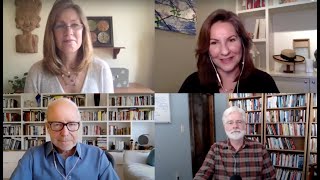
Virginie Glaenzer hosts John Hagel, Michelle Holliday, and Dan Rockwell to discuss why consumer trust in brands is collapsing and how leaders can rebuild it. They argue that efficiency-first thinking and treating customers as data sources destroy trust, and that companies must shift toward vulnerability, learning-oriented cultures, and narratives that invite customers into shared purpose. Domino's transparency and Apple's "Think Different" show what works.
Chapters
Welcome to Pass the Mic podcast, a production of Echo Oak Studio and music by Benjamin Schletz. My name is Virginie Glaenzer and I'm your host with a million questions. Today we'll be discussing brand trust. With John Eagle, Michelle Holiday, and Dan Rockwell. In this discussion, we'll try to understand how can business leaders restore trust in the age of distrust. For those tuning in for the very first time, Pass the Mic podcast is about sharing different perspectives on a specific topic, not only to help us expand our understanding of the world, but also to explore new ways of looking at it. Before we start this conversation, let's begin as we always do with a tour de table and have each of you tell us your name, what you do, and why you're interested in this topic in about a minute overall. So why don't we begin with you, Michelle?
Mm-hmm. All right. Thank you so much, Virginie, for the invitation to be part of this conversation. It's really a pleasure, and I'm also eager to see where we go with this conversation.
Conversation.
My name is Michelle Holliday. I am an author, presenter, researcher, facilitator. My work for the past 20 years has been focused both on helping people recognize that pretty much every major problem we face can be traced to the guiding story we have, the dominant guiding story that tells us everything operates like a machine. It's a mechanistic and extractive worldview. So helping people recognize that and also helping them recognize that there's another story, another worldview that's not only possible but present. And in that worldview, we recognize our organizations and communities as living systems. And we see ourselves not so much as mechanics and engineers, but as stewards and gardeners. And our most important work is to create the fertile conditions for life to be able to thrive. So I speak and write about thrivability. Yeah, I'll stop there for now.
Wonderful, and I'm glad that you're part of that conversation to bring a different side to brand trust. So thank you for being here. John?
Hi, I'm John Hagel. I've been in Silicon Valley now for 40 years. Done a lot of things out here. I've been the founder of two tech startups. I was a senior executive, for those who can remember that far back, with a company called Atari in the video game business. I was a partner with McKinsey and Company, and most recently I founded and led for 13 years a research center for Deloitte called the Center for the Edge. And I've actually just retired 2 months ago. And, uh, moving on to my next, uh, chapter, which retirement is not going out and playing golf or fishing. For me, it's an opportunity to pursue my passion. And I founded a company called Beyond Our Edge, which is going to work with people and institutions to take them out of their comfort zone, anticipate the future, and increase impact that matters for them. So it's a continuing journey for me. Throughout this, throughout my work, I've been very focused on the forces that are reshaping the global economy. And I believe that one of the ways of representing the change is we're moving from a world, a business world of transactions, to a business world of relationships., and that in that context, uh, trust is critical to building and sustaining those relationships. And, um, so I think it's a topic that should be front and center for all business people.
Absolutely. And that's why we're having this discussion. Thank you, John, for leading this conversation, and congratulations on your retirement and new venture. That's exciting. And finally, Dan.
Thank you, Virginie Glaenzer. John, congratulations. I didn't realize you had recently retired. And I'm with you, right? I mean, do what you love and what is retirement, right? I mean, it's like— so anyway, I write the Leadership Freak blog. That's mostly what I do. I work with leaders. I work with organizations. I do coaching and public speaking. I live in central Pennsylvania, but everything you need to know about me is really— it comes from— I was brought up on a dairy farm in central Maine. And so that's, you know, you are who you were when you were 13. And I was on a dairy farm doing chores and playing sports, and that's who I am.
Fascinating, interesting. We're already getting into the subject of trust, um, in a way. So thank you, Dan, for joining this conversation. A growing number of surveys around the world highlight the continuing erosion of trust in major institutions, and actually the 2019 Edelman Trust Barometer revealed that only 49% of the U.S. population trusts business as an institution. And we know how trust is one of the biggest factors in consumers' purchasing decisions, right? Brand trust drives loyalty. So why don't we begin this conversation with John by providing some context with this first question: What is really behind consumers' ability to trust? What are your thoughts?
Why? It's an important question. I'm going to expand a bit on the question, but broadly, I think, as I mentioned, as I look at the long-term forces that are reshaping the global economy, I call it the big shift. And a key element in the big shift is what I would describe as the trust paradox. I love paradox. On the one side, we all recognize the need for trust in business and in our lives. Point me out anybody who says, I don't need to trust anybody or anything. So we all recognize the importance of trust, but then, as you pointed out, Virginie Glaenzer, all the surveys are showing that trust is eroding in all of our institutions. Not just companies, by the way, governments, universities, NGOs, all of our institutions, trust is eroding around the world. And when I cite those surveys to leaders, they nod their head and they say, yeah, I've seen those surveys. The interesting thing to me is no one, or very few people, are actually asking the question why. Why is trust eroding? And then what can we do? What do we need to do to rebuild trust? And I think that's the starting point, I think, of a conversation is, so why is trust eroding? And I think there are many factors. We have a short period of time here, so I won't go into great detail. But certainly one element is in this big shift world that we're in, we are facing a world of mounting performance pressure on all of us. As individuals and as institutions. It has to do partly with intensifying competition, partly with accelerating pace of change, extreme events that come in out of nowhere— witness the current pandemic— a lot of pressure mounting on all of us. And in that kind of world, we have a natural human tendency to feel the emotion of fear. And when we're afraid, we lose ability to trust. You seem like a nice person, but I can't afford to trust you because I need to watch out for myself. I'm under huge pressure here. So I think that there's a broad emotional foundation here of what's driving erosion of trust. But then on top of that, I believe that there's another paradox, which is that the traditional approach that our institutions have used to build trust are now actually eroding trust. And so if I go into that a bit, you know, what was required to build trusted brands in the 20th century? You know, talk about the great products you have, the great people you have, the proprietary knowledge you have that nobody else has. You can trust us. To be the best. Um, the problem is, in a rapidly changing world, I think more and more of us, when we hear those words, are deeply skeptical and untrusting. You think you have it all? You have no clue how the world is changing. Get a clue. And in a rapidly changing world, my belief is trust requires expressing vulnerability. Saying, I don't know, and asking for help. And I'll just give one quick example of a company that I think did an interesting initiative in this regard. Domino's Pizza. They— this was several years ago, many years ago, actually. They did a survey and found out their customers actually didn't like their pizzas.
I remember that.
Now, the reaction of most companies would have been to hide that market research. No, Domino's went public with it and said, we discovered you don't like our pizza. What can we do to make it better? We need help. And there was this flood of suggestions and ideas, and it built trust. Here was a company that was willing to say they didn't know it all. And they needed help. And so I think it's an interesting example of the shifting nature of trust. And in one way I have of representing trust, the shift in trust is trust ultimately, I believe, consists of two things. It's a perception of skill and a perception of will. Do you have the skill that it takes to provide me with what I need? Or, and do you have the will it takes to provide me with what I need? And I think again, broad generalization, in the 20th century, trust was about skill. Do you have the skills? Increasingly, in a rapidly changing world where we're confronting things that have never been addressed before, we need to focus on will. Do you have the will that it takes to really provide me with what I need?. And I think that's what's, that's what's missing at this point. And in that context, again, just cover a number of topics, but I think that at the foundations, our institutional models today erode trust. And what I mean by that is, I'm going to generalize, but I believe all our large institutions around the world are built around a model of scalable efficiency. The key to success is to become more and more efficient at scale. And I think that, again, it created huge wealth and very successful institutions in the 20th century, but it drove an inward focus on cost. That was the key to success. Get lower cost, faster, more efficient. And I think the, um, increasingly we have a sense that the institutions that we're dealing with are inward focused. It's all about them. It's not about the people they're serving, the stakeholders that they have. And, um, so just one other comment on that is how companies are using data, institutions are using data. Broadly, again, generalization, my experience, most companies, what they do with the data they have from customers and from others is they use it to be more efficient in their operations, to drive internal efficiency, and they use the data to figure out how to more efficiently target customers and generate more revenue from customers. But it's again all about using the data for the benefit of the company versus— and I think again, we have a perception as customers increasingly that the data we're providing to the companies are not being used for our benefit, it's being used for the company's benefit.
Exactly.
Yeah. Until and unless we change that, I think trust is going to continue to erode.
Exactly.
Thank you, John. You've covered, yes, many, many, a lot of ground and many different topics. And before we move into a discussion around what organizations can do to create trust. Let's stay a little bit more longer into the first question. Michelle, what do you think? What makes or breaks our trust, staying with this topic?
So I really love everything you've shared, John, and it sort of ties in with my own thoughts as well. I think In decades past, it was enough to have quality and consistency and nice design and catchy messaging, and that could earn your trust. But I think the public is getting savvier, more media savvy. We're able to see through the manipulation. And it is when it comes from that mechanistic worldview. And then, John, as you talked about the drive for efficiency, to me that is the drive of the mechanistic worldview and extractive and reductionist. So extracting data from people for our transactional use. So when it comes from that worldview, we're starting to become savvier and see through the manipulation, and we're starting to see the problems that result in society from that kind of a linear and single-minded approach. And so the mistrust for me comes from the fundamental misalignment with life, you know, with our ability to thrive, as we perceive that companies don't have our best interests at heart or in mind, and our ability to thrive and the community's ability to thrive and the biosphere's ability to thrive. It's smart to distrust. It's a survival instinct to sense that there is a fundamental and profound misalignment with our ability to thrive. And so what, what if that breaks trust, then what makes trust to me is, is to get explicit and intentional in our alignment with life. And, and that again ties in with something you were saying, John. It goes beyond the concept of a brand, which is an abstraction. What is a brand? What are we talking about? It's something that has come to be inherently manipulative, but instead, what's called for is a conversation and the commitment, right? What do you stand for? And how are you contributing to life's ability to thrive, to the greater good? And how can that be done in an unfolding inquiry? Really, I wrote a piece about the need to shift from mission statements to mission questions. You know, that's much more inclusive and authentic, really, to explore how can we contribute to life's ability to thrive? How can we learn together in an unfolding conversation, in an unfolding story together with our customers and our community. So the last thing I'll say is that conversation and that commitment needs to be rooted in stewardship, in a spirit of stewardship. And my working definition of stewardship is the combination of reverence and responsibility. Reverence for life, for the, the potential that We can never know, but we can support, we can paradoxically feel called to respond to life's needs. So that's relevant whether it's a child, you know, we feel reverence for this precious living being that is a child. It's also true for a team of people, you know, a living team of people or a living organization or a living community that there's more there than we can ever comprehend or certainly control, and yet paradoxically we feel called to contribute and be in relationship, and that calls for creating the conditions that would allow the flow of trust and information and yes, efficiency where that makes sense, but not as the goal, not as one of the primary ends that How can we enable life to thrive?
Right, right. And yes, so trust is not just applied to brand, it goes beyond. What do you think then, what is really behind consumers' ability to trust? We talked about fear, pressure due to economic shift, and then the savviness, the fact that now we know. Is there something else? What do you think makes or breaks our trust?
What's coming to mind for me is that as long as we're prioritizing the individual and not the community, we'll be a culture of distrust. So we like to talk a lot about, you know, be yourself, I'm at the center, all of those kind of things. And as long as our belief system centers on— prioritizes, I should say— prioritizes individuals over community, we're going to distrust each other because we're in it for ourselves and we know you're in it for yourself. So the companies I think that we are trusting are the companies that are trying to be responsible toward the community as well as toward their stakeholders and stockholders and employees. But there's a broader picture. So I just feel like until we get outside of the individual self, until we get outside of that and we have a bigger view, we are doomed to distrust each other. But when we start to share, for example, in an organization, when we start to share a mission and a vision, and now we're in this together, trust starts to really mean something. But when I'm in it by myself, all I really have is distrust.
And can I just make a connection between something that John has said as well and what you're saying, Dan, that when we're prioritizing individuals, it's a scary place to be, and so fear is the natural response to rapid change. But if we are also investing in community and in those relationships and trust, then change isn't as scary. Fear isn't necessarily the primary response.
What comes to mind is our belief that authority and power is the answer. And again, I think that's very individualistic. So if I can just get enough power, I can push you into conformity. And so now really what we're looking for is conformity. So we make rules, you know, you're not allowed to say this and you have to say that. And I'm not saying that we can live in a world where there aren't rules, that's not what I'm saying. But I think relying on power and authority is a clear symptom of distrust.
So, but I can see some sort of vicious circle, you know, everyone who's working, whether you are the CEO of an organization or an employee, you are in the midst of this unprecedented time with, as you mentioned earlier, as I just mentioned earlier, you know, performance pressure. You can't remove that. It's not— the world's not going to change just because you want it. So I'm wondering, I'm wondering what can or should leaders and organizations do to create trusting customers relationship? And you start talking about, you know, communities, but how does that work? Your brand— and I know that this, the idea of a brand is a— we can talk about hours on what is a brand. And so what do you think, what should leaders and organizations do to create a trusting relationship with their customers today in today's environment? And that is an open question to anyone who wants to jump in.
I'll just quickly chime in and say I think the learning organization versus the knowing organization is much more trustworthy. So you gave the Domino's Pizza story, and you know, this is a learning organization. I look at a learner and I think I can trust you. I look at a knower and I wonder, what are you after?
Yeah, I, I would build on that. I mean, one way we have of representing the big shift is the move from a scalable efficiency institutional model to a scalable learning institutional model, where the institutions that are going to thrive in the future are those that learn faster, everyone learning faster together. And that's not just within the company, but it's with the stakeholders and the community and everybody learning faster. And that's a fundamentally different model. But in that context, I would say the mark of a strong leader in a scalable learning model, institutional model, is the leader who has the most powerful questions and who will ask for help in finding the answers, say they don't know, but it's a really important question. If we could figure this out, we could accomplish amazing things. And it starts to shift also the focus and ties back to fear. But I think we tend to, in this world of mounting pressure, we tend to focus on increasing threat. You know, we're under pressure, we're going to lose our jobs, we're going to lose our community, whatever, versus opportunity. And these questions around opportunity You know, if we could figure this out, we could accomplish things that were unimaginable in the past, but I need help. And to Dan's point, it builds that culture and orientation towards learning versus we know it all, we have all the answers.
So perhaps we need a new set of KPIs to drive this unlearning or learning culture in an organization instead of having KPIs connected to efficiency and productivity. We need to create new KPIs to be able to thrive as a learning—
kind of a danger zone as well to attach KPIs to learning because it's emergent and relational, and there's a real risk of collapsing it into something transactional and efficient. I have to tread carefully there around needing to measure and, and define in advance.
Right, and I know that KPIs in today's world are starting to have a bad connotation, but I do think that we need to know where do we want to go, how are we going to measure if what we're doing is successful, and KPIs attached to learning could be how many new projects have we started to work on.
Part of what I help the, the clients that I work with identify is what has to be true if we are to be in the, the type of relationship with our customers that we need to be if we're going to make the contribution that we aspire to make. So it's a bigger question than what, what will we measure. What has to be true? And in guiding them and exploring that, I offer the fertile conditions that are present in all thriving living systems as parameters. So we know that in every living system, there are individual parts like cells in our bodies or bees in a hive. And so how can individuals— what has to be true so that the individuals involved can make their best contributions and be nourished in the process? What has to be true so that relationships are supported and connected and trust and joy and playfulness and effectiveness are allowed to flow? That's the second characteristic. What has to be true so that there's an emergent whole? It's not just a collection of parts, but there's, there's you, you know, in your body you have individual cells, but you're more than that. So what has to be true for us to come together in shared purpose and identity that is compelling and powerful and what has to be true so that we can be enlivened by life, we can be inspired and that this initiative of ours can take on a life of its own and serve with great wisdom and inspiration. So it's kind of expanding and also offering guidance that's rooted in this intention to enable life to thrive.
I like this, huh? What has to be true? I think if there was a— this question was asked in a boardroom or in an executive meeting, it would be interesting to see what emerges. And maybe that could be a bridge to connect, you know, the, the way we've done business with KPIs driven on efficiency and productivity to another side of the bridge, which is something that we might not have the language, but something that is emerging that could lead to creating a new trust in our customers. So yes, trust is the firm belief in the reliability, you know, truth, ability, and strength of someone or something. So John, you mentioned in your introduction about The skill and the will, you know, how have we been used to building trust with customers? And now we have all those societal challenges and changes that is really adding some complexity. And I still, I wanna go back to that, to what can our shoot leaders organization do to create a new form of trust? We talked about communities. If you were the CEO of a brand, what would you do to create trust in your customers? I mean, you mentioned the, the idea of vulnerability, so it's not being afraid to share the truth of the feedback that you get from your customers, even though it may not portray the right brand image that you would like to have. What else could a CEO often, or a team, do within an organization to create trust in today's environment?
I would offer— I've written a bit about this, and it's the focus of a new book that I've just finished, but I have a very specific concept about narratives for companies. And most people use narratives and stories to mean the same thing. I I view them as very different. And for me, a narrative is about something out in the future that has not yet been achieved, not clear whether it's going to be achieved or not. And it's a call to action to the people you're speaking to, to say your choices, your actions are going to help to address this threat or opportunity. And I'll just give a quick example in building trust. Unfortunately, I think there are very few companies that actually articulate a compelling narrative that is helpful. When I talk to executives about narratives, they say, "Oh, we have a narrative. We started in a garage. We faced incredible obstacles. We overcame them and accomplished amazing things and more to come." That's their story. And it's about you, not— to me, a narrative is a call to action to people outside your company. What is the opportunity for them? Not for you, for them. And again, the example I use, it's pretty well known, but one of the few ones that I found is Apple in the early days, Apple Computer. They had a narrative that condensed into a slogan, which was Think Different. But if you unpack that narrative, it was basically we had digital technology for decades, took away our names, gave us numbers, made us cogs in a machine. Now, for the first time, there's a generation of technology where we can express our unique potential and individuality. But it's not going to be automatic. It's not going to happen by itself. You need to think different. Will you think different? And it was a call to action to people outside. They barely mentioned Apple in that messaging. It was all about you and the opportunity you have and the action you need to take. And I think part of what made it so effective, by the way, because many executives when I talk to them about this, they say, oh, we'll get our PR agency to write a narrative for us. No, I think what made it powerful for Apple was if you looked at Steve Jobs and Steve Wozniak, they lived that on a daily basis. They were thinking different every day of their lives. This wasn't just a kind of fantasy PR thing. This was their passion, the way they lived their lives. And I think it's the reason why for many people Apple became the equivalent of a religion. It spoke to something very deep inside, an aspiration that we all have.
So what you're saying is to transform the story, which is the past that brought a team together and what they've lived and shared together, into a narrative which would be a lot more meaningful and relevant to the audience or the customers. Because, and we know that, you know, people don't care about your product or your service. What they truly care about is how your product or your service make them feel about themselves. And so building that narrative that opens up some sort of action, which could be that I want to embrace the brand, I want to become the brand as a customer, it becomes my story, my narrative, or my own individual story could be a way of creating a new trust through meaningful and relevant, actionable, or ways to tell the story of a brand.
Yeah, and I think implicitly it's an admission that the company can't do it themselves. This is the company may be able to contribute. Apple could produce some technology and products that would help, but it's not going to— unless people think different, it's their need to act and the company's really focused on what's important for them as customers versus what Apple needs. And so I think it's a powerful untapped opportunity for most institutions. When we talk about mission and purpose, It's all about our mission and purpose. What about the mission and purpose of the customers or the stakeholders that you're trying to serve? And how are you going to support that?
So according to the Trust Index score built by one of the social listening platforms, the most trusted brand in 2020 are Whole Foods. I think they have 69%, according again to for that listening platform, Weight Watchers, and Trader Joe's. What are some other examples of brands or businesses that are doing a good job of building and maintaining trust?
I wonder about Harley-Davidson, and I think why they came to mind for me is it's an identity-driven sort of customer. It's an identity-driven sort of organization. If you buy a Harley-Davidson, you're a certain kind of person. And I feel like this idea of identity is important in the conversation of trust. How are we— and I don't want to speak against diversity. What I'm saying is when we're alike, how are we alike? The Harley-Davidson riders are alike. They want freedom, is important, right? A little bit of rebellion is, you know, stick it to the man kind of attitude. And I don't mean to be illegal or anything, I'm just saying there is a persona. And if a guy or a gal who walks into a Harley-Davidson shop walks in and feels powerful and feels like, I want to be this. So I think we trust in connecting, seem to be important to me. So when you connect with someone over some similarity, like shared mission or shared vision or shared narrative, and that draws me in, I feel like I have a place and I feel like I belong here. Now when I ride my motorcycle on the highway and I see another Harley-Davidson Harley-Davidson rider, I give him a nod, right? I give him a little wave. Hey, you're one of me. I'm one of you. You know, that kind of thing. And you pull into a restaurant and you see a guy with a Harley-Davidson thing on the back and, how you doing, man? Don't even know who the person is. So I feel like identity and trust need to be part of this conversation, right down to the level you were asking about. Inside teams and organizations, how well do we know each other? Right. And the story, which I so appreciate the idea that the story is about the past. How well do I know the formative stories of everybody on my team? I mean, if you don't know that I'm a dairy farm boy from central Maine, you're kind of missing a key ingredient to who I am. And I wonder if you really understand me. 'Cause that's where I come from. So knowing the form very specifically, knowing the formative stories of the people on the team and kind of their own language and what they're all about is a way to create a connection with each other and showing, obviously showing respect for that, that kind of thing. I get up early and I believe in work and that's part of my culture, right? That's part of who I am. So, you know, if I'm up early, say, hey, there's Dan, you know, there's a farm boy, he's up, he's up and milking. I'm not milking cows anymore, thank goodness. But, you know, it's still identity-based. And it seems to me like that's central to this, not central, this is an important component to what it means to really build trust inside an organization or with customers.
It's really interesting. I mean, I've been in the marketing space for many, many years, and now we're talking about developing a sense of belonging, which used to be something that we never talked about. It was potentially brought up when we were talking about employees' relationship, and, but now we're talking about customers developing a sense of belonging, which to me becomes something really exciting. Does that resonate with you too, Michelle? Because in the age of thrivability, right?
I have a framework that goes into more detail of those fertile conditions that have to be cultivated in any living system. And so it goes into more detail for an organizational context and for engaging customers. There are 3 layers to to that fertile condition. The first is contribution. Normally, this would be where we would talk about our commodity, our product, or our service. But if we start to think of it as our contribution, it invites richer reflection about what that could involve. And that's where many companies stop, and that's where we inevitably get into price war and kind of competing on features. So it's a dangerous place to stop. And so if you want more loyalty, then you add community or conversation or even co-creation. And that's where we find that sense of identity and belonging. This is for this commodity, this contribution is for people like me. And I start to feel that I belong to it and to these other people. And if you want loyalty beyond reason, then you offer a heroic cause. You stand for something. And in the case of Harley-Davidson, it's an example that I often give. Actually, I'm happy that you brought them up. It's that freedom and rebellion. And what's fascinating is that something like 40% of their customer base is lawyers and accountants. So it's people who desperately want access to that rebellion and freedom who don't normally have it. And so that is a real heroic heroic cause for them. And when you get all of those together, as Harley-Davidson does, then you get people who will tattoo your logo on their bodies. It doesn't get much more loyal than that. Yeah. And in this model, then, this framework, it's presented as a tree, and those are the— that's kind of the branches as the outreach into the community, and then the roots are the mirror image of those for employees. What is our mastery that contributes to the contribution? What is our sense of membership that's deeply connected to that community and conversation and co-creation? And what is the meaning that is totally tied in with the heroic cause? And then the trunk is how do we support and connect those so that it's one whole living ecosystem of community.
I love when we, when we talk about nature and we bring it back into a complex economical system. So I want to throw another question that I, I don't think I've shared that before, but what I find interesting is that today consumers are now belief-driven buyers, and they want, or a lot of people want, to see their brand deliver on societal challenges as well as product. So as a result, brands are now expected to take a larger role in society, and they are promoting their authenticity through brand storytelling. What do you think about this ask, this desire from consumers or customers to see their brand making, taking a stand on societal issues and actually playing a role? Should brand start to get involved in, you know, larger societal challenges?
I think so.
But it goes beyond, it's no longer about their products, right?
I have started, I started to show an image of a woman underwater holding a cup. And, and this came up first in the context of a Businesses for Social Responsibility group. And I was saying, we have this idea that our organization is somehow separate from society, you know, it's here in my cup, and, and, and that our social responsibility is to something outside of ourselves. But it's all the same water, you know, every organization is a microcosm of society. And so your social responsibility is both to this, the commons that is an organization. In some ways, it's the new commons. Where else do we get to be in creative endeavor together? And because it's all the same water, you truly do have a responsibility to contribute to the whole ocean, to the greater good. So absolutely.
The downside is that we see a lot of brands using social issues as a marketing ploy and, you know, purely to improve product sales, and that's really more my concern, which eventually does more harm than good and results in people trusting brands even less.
Yeah, unless the speeches are followed with action. I think, again, it is, in my view, part of the reason for erosion of trust is leaders are giving all these speeches, and yet where's the action? Not there. And so I think that it requires action. And I just wanted to build too, I think, on— Dan mentioned earlier this notion of prioritizing individuals versus community. I think one of the key challenges and opportunities we have today is to say this is no longer a choice. If you want to thrive as an individual, your community needs to thrive. You as an individual are only going to have certain ability to thrive unless, until and unless you connect with more and more other people who are also driven to thrive. And I think in that context, this whole notion of companies becoming more and more focused on their ability to thrive depends on the ability of their stakeholders to thrive. And again, it's rejecting that this current discussion around do you choose profits or do you choose commitment to community? No, increasingly, I believe in the future, the world, the profits are going to depend on commitment to community. If your community is not thriving, you're not going to thrive. And so anyway, I think that there's a need and opportunity to really integrate the two and focus on thriving, as Michelle certainly does, as the key outcome here is how do we achieve more and more of our potential together.
Would you agree that today people grant their trust based on two elements which are slightly different than what— how we used to build trust with organizations. The number one is competence, so delivering on promises, and then the second is ethical behavior, doing the right thing and working to improve society. Would you agree that those two distinct attributes are now what it takes for a brand to build trust? Based on what people expect.
You're kind of hitting on this idea of social involvement, causes, and those kind of things. And I think when it's authentic, it makes a lot of sense. In other words, if the cause connects to the organization's mission and vision, I believe it. If somebody in a boardroom said, you know what, we need to go because it's going to look good for us, to go, you know, support this cause, then, you know, that's just more manipulation. An example, I've done some work with Ducks Unlimited, and a wonderful organization, and they are huge in wetlands.
They—
it connects to ducks, so they're all about ducks, right? But they are preserving and protecting wetlands.. Now, when I see the connection between the cause of wetlands and the environment and Ducks Unlimited, I believe it. I believe it. And, and, you know, they're awesome people and totally authentic with their passion about ducks and their passion about the environment. And so that makes me respect them. That makes me interested in them. That makes me I'm not a duck hunter, but I still have this huge respect and admiration for the organization and for the people who are involved in this, because they seem real and authentic to me. Their cause is connected to their mission and vision, and that makes sense.
So we talked about some of the examples of brands that are doing a good job at building and maintaining trust, and this is another one of them. What are some examples of brands that have lost trust and why?
What do you think?
Call anybody out? Not an easy one, right?
Yeah. I wonder about organizations that have failed. Sears and Roebuck, for example. You know, do we, do we think about that failure not only as a failure of like business processes and competition, but as a losing trust with their customers?
Well, one brand that I'm using, I'm a customer of, but I think a lot as a best practice and a case study almost of what to do good and what not to do is Amazon. It's one of the brands that Millennium seems to appreciate, and yet there is a really interesting love-hate relationship that is appearing, and I'm wondering if this is connected to trust or a sense of distrust.
It really seems like a great example of a company that is not aligned with life. It is cancerous on society, really. I mean, it's taking over and killing off small businesses. And how it has taken over Whole Foods surely has damaged people's trust in Whole Foods. It certainly damaged mine. So I think that's one of those examples of healthy distrust. That in our own self-preservation, we're noticing this is not in alignment with life's ability to thrive, with the community's ability to thrive, even as it's awfully convenient and I use them. So we're— yeah, I think that's a good example.
And they're delivering on promise. I mean, they're, you know, when you order something, you get it on time. So they're doing the first part. Of the expectation, but it seems that they're lacking on the second part.
Right, right. And there are stories of treatment of their employees and that whole conversation, so there's a lot that is problematic in terms of trust.
Right. Very true. Well, before we wrap up this conversation, I want to thank all of you for this insightful discussion. And as we come to the end of the hour, I'd like to finish the way we began with a tour de table. The intention for this podcast is to help each of us to become the self-authoring leader of our lives through meaningful action. So let's pass the mic and share what— any last reflection, or any reflection that actually have emerged from our conversation, or any last thoughts that you feel was left unsaid that you'd like to leave us with. And I'll start by sharing my own takeaways to give you a moment to collect your thoughts. So I, first of all, I found this conversation really interesting. We can talk about brand in so many different ways. I think this discussion of connecting brand and trust is a fundamental critical issue that a lot of organizations do not want to address because it is so sensitive. It really connects to their own vulnerability. But I think there's an urgency to address brand and trust. And to me, from what I've heard, I'm going to take away this idea that it's first about letting go our story. That we're so proud of that may have created a sense of belonging within the employees when it's done well, but is certainly not relevant and meaningful to the customers. And converting and transforming those stories into a narrative that becomes an open invitation for people to capture and modify which ultimately creates a sense of belonging into the customer, into the customers, um, through what you said, uh, Michelle, contribution, community, and a heroic cause, I think, is something that I want to explore a bit more. And I'm already thinking of a few customers that I'd like to bring this topic to them. I don't know how they're going to react because it's not, you know, usually we ask marketers to do and not ask too many questions. But I think it's our role as marketers and leaders to start asking fundamental questions. And I think this second thing that I'll take with me is, in light of those KPIs that unfortunately that's all we have today in most organizations to bring people together and agree on where we want to go and how we're going to measure if what we're doing is successful, asking the question of what has to be true can actually lead— and that's really more my intuition talking— it could lead to a new set of KPIs. And KPIs are just data points, right? And those data points doesn't have to be necessarily numbers. It could also be something else, some sort of action, some sort of something that emerges. But I think it is a beautiful question to ask, and I've never heard of that, so thank you so much for this. So why don't we continue with this tour de table and have you, Michelle, any last thought, any reflection, things that have emerged during this conversation that I want to leave us with.
Wonderful conversation, and beautiful alignment and coming from different directions. So that's really nice. I guess I would share in parting, if we see organizations and communities as living systems, and if We can acknowledge that there's an urgent need for thriving, for getting aligned behind life's ability to thrive for us as individuals, for organizations and communities, for the biosphere. And really, it's a need for healing. First of all, there's a lot of talk about regeneration and regenerative agriculture, regenerative everything. It's about healing. So if we can acknowledge that, that as the kind of fundamental urgent need, then I think we need to have some pretty profound conversations and ask much bigger questions about the contribution that we want to make as an organization, whatever our group of people is. What's the contribution that we uniquely can make, given this need for healing and for reorientation around enabling life to thrive. And within that, we can ask, who do we choose to be together? You know, it's that level of profound conversation that I think is needed. And what's the nature of the conversation and the relationship with customers and community that we'll need to have if we're going to be able to make that contribution that we want to make, and what has to be true, you know, in the general sense along the way. And yeah, what are the meaningful and purposeful conversations and communications that would support that? And I think that's so much bigger than a brand. We might still call it that, but I think we're really needing to expand and the intention behind it. And I really love, John, your concept of the narrative as the call to action that calls together everyone that's touched by this endeavor, whatever it is. And the very last thing I'll say is My definition of, or kind of gauge of whether something is thrivable is, it's a riff off of Aldo Leopold, who was an environmentalist, and he had a land ethic. So I've kind of reworded it to, a thing is thrivable when it tends to enhance the beauty, integrity, and regenerative capacity of the living community it touches. John, that's sort of the, the call to action, you know. What could we do, all of us, not just the company, you know, but the community, the customers, that would enable more beauty, more integrity, more healing capacity, more thrivability?
Let's like aim for that. It's beautiful. Yes, healing. It's, it's interesting to connect brand trust now with healing. And it really means that if we are in a world of distrust, and that's the relationship that we have with brand, there has been some emotional wounds that need to be healed. So it's taking the conversation way deeper than just let's talk about brand trust and what kind of campaign can we do. So thank you for that, Michel. That was really deep. Dan, what would be your last thoughts or comment.
Right. Well, just now, you know, building trust and conflicting beliefs seems to be a real challenge, and I'm going to take that away from this conversation. I think our inability to kind of navigate different beliefs, and somehow everything becomes, you're on that side of the line and I'm on this side of the line, Seems to be a real challenge. So with that in mind, you know, this idea of trust building, I'm just going to speak to it from what I'm taking from this conversation in a very kind of tactile sort of way. It seems to me that an organization can stake out its turf. This is what we're about and this is who we are and find expressions of that in the community And I think that the issue might be— part of the issue is finding the courage to say no and to alienate certain customers or turn certain customers off because this is what we're all about. So I feel like trust and courage seem to go together. If you don't have the courage to say no, then I'm not sure I can trust you. I'm not sure your yes is really, you know, a trustable yes. I'm just talking, you know, speaking about what's coming to mind for me. So, you know, I think declaring who you are and kind of staking that turf out, and I think declaring who you are with kindness, not with defensiveness. I mean, this is what we're about. This is what our organization is about. It's not like 'Oh, you're bad because you're not about what we're about.' I think just kind of be who you are and connect with the people who embrace that sort of belief and have the courage to kindly alienate folk who might not hold to that. I mean, I mentioned Ducks Unlimited. A lot of people don't like guns, right? They're into guns.
Right.
They're into guns and they're into managing ducks and wildlife and all that. I say, I don't like that. Well, fine. But you know, so you, and to me, I feel again, I don't, I'm not a hunter, but boy, I'll tell you what, I find trust in that clarity and who they are and how they're expressing it. So I stake out your turf. And do it kindly and be willing to say no to people, and I feel like maybe I could trust you then.
Right, so finding our truth takes courage in a way, whether it's as an individual or as an organization. Thank you very much, that was another insightful snippet of it. Wonderful. John, I'm just going to let you complete this discussion and add any last thoughts or any comment you'd like.
Well, thank you. This discussion will never be complete. We've just started and a lot more to go. But I think I started my comments with the notion of mounting performance pressure in this big shift. I think there, again, is a paradox in the big shift because at the same time that it's creating mounting performance pressure, it's creating exponentially expanding opportunity. We can create far more value with far less resource, far more quickly than would have been imaginable a decade or two ago. So the opportunity is enormous. It's not just about pressure. It's about how do you harness this opportunity that's now available to us? And that's where I think the issue of trust becomes central because those who find ways to rebuild the trust, I believe, are going to be the ones that manage to, to most effectively target these opportunities. And I'll just— a couple of quick examples. One is I think there's going to be a fundamental shift in marketing. I think today we have a push-based marketing model where it's all about advertising and intercepting the customers and wherever captive audiences can be found versus pull-based marketing where you draw people to you through word of mouth because people trust you so much and you've provided so much value to them. They're spreading the words to all their friends and community, and that's going to be a very powerful way to draw more and more business to you if you can rebuild the trust. And then the other side is the whole notion of trust in data. One of the things that I wrote a book about almost 20 years ago now is that there, there are some real, very limited number of privacy fanatics who just want to be invisible and not have anybody know anything about themselves. Most of us are very willing to share information about ourselves if we believe we're going to get value in return. And so I think the opportunity here is if companies can demonstrate that they're using this data to provide more value back to you as a customer, you're going to want to provide more and more data to them. And that's privileged access to data becomes a key driver of economic value in this changing world that we're in. So trust again becomes central to all of this. And, um, I think it's, uh, Yeah, huge opportunity, and I just think we are not paying enough attention to why is trust eroding and what do we need to do to rebuild that trust.
Absolutely, and I think, as you mentioned, there are a few opportunities that a lot of CEOs should not be overlooked and push on the side just because of fear of their own vulnerability. Yes, pull-based marketing, marketing is an interesting notion, and I hope that more and more people will understand what it means. Thank you so much for spending that hour with me, and I hope that the listeners and viewers will share their comments and their own experience with, on this fantastic topic. So thank you so much.
More from Virginie











Unlocking Fintech Success: Strategic Trends for Profitable Growth: Webinar Leadership Series