Education - Ep. #22: Is Disruption the New Normal for Education?
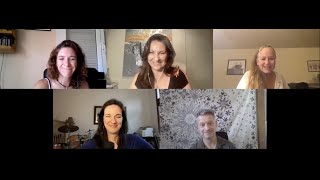
In this Pass the Mic podcast episode, host Virginie Glaenzer convenes a panel of educators, system‑thinkers, and innovators—Nora Bateson, Luz, Shauna (uSchool), and Joe Callender—to examine how the COVID‑19 pandemic exposed the fragility of the industrial‑era education model and to explore pathways toward a learning revolution. The conversation begins with personal introductions that reveal each participant’s background in systems thinking, documentary filmmaking, homeschooling consultancy, and life‑science project work. Nora frames the pandemic as a moment that broke societal rhythms and highlighted the mismatch between standardized, efficiency‑driven schooling and the complex, adaptive needs of learners. Luz describes how the pandemic halted her global documentary tour, prompting her to notice the gap between school curricula and real‑world skills, and to seek out alternative models such as Montessori, Waldorf, democratic schools, and unschooling, emphasizing curiosity, autonomy, and lifelong learning. Shauna explains how uSchool creates individualized education plans that blend public‑school standards with personalized learning styles, noting that the pandemic made non‑traditional schooling more visible and validated. Joe reflects on the limitations of predetermined curricula, arguing that they fail to provide real‑world context and that the pandemic did not shift educational priorities despite the need for new skills like uncertainty management. Throughout, participants discuss the need to unlearn entrenched industrial metaphors, to shift perception of education from a school‑centric system to a way of life, and to address parental eco‑anxiety and teacher burnout. The panel converges on three core competencies for future generations—emotional intelligence, curiosity, and adaptability—and calls for community‑driven, systems‑oriented reforms that empower learners to co‑create their education.
Chapters
Welcome to Pass the Mic podcast. It's a production of EconoX Studio and music by Benjamin Schleitz. My name is Virginie Glaenzer and I'm your host with a million questions. For those tuning in for the very first time, Pass the Mic podcast is about sharing different perspectives on a specific topic, not only to help us to expand our understanding of the world, but also to explore new ways of looking at it. Today, in our second, 22nd episode, we'll be discussing how the pandemic has disrupted our education model and the various emerging opportunities causing the world of education to experience a profound shift. So before we begin our conversation, let's do as we always do, begin with a tour de table and have each of you tell us your name, what you do, and why you're interested in this topic in about a minute.
So why don't we begin with the—
you, Nora.
Okay, thank you. First of all, it's a pleasure to be here and to be with all of you, so thank you for inviting me. I work with systems and complexity and in lots of different arenas, so in ecology and economics and education and health and art and in biology and all sorts of different sort of ways of thinking about how our perception is formed and how that perception then becomes the world that we are living in. So what the relationship is between perception and action. And so, of course, education's at the core of this. I had the extreme benefit of growing up with a systems thinker for a father, and so I had a unique experience of being a child and being exposed to— I don't even want to say these theories because they weren't theories, they were a way of life. So, so I guess I think what I'm interested in is how that experience that I had as a child is possible for others. And what it means to an education system to actually take those ideas on board and not be blocked by the impossibility of what the classroom is and has been.
Wonderful. Well, thank you for being here. I'm excited. It's your second time, and your voice really matters to me and to other people. So thank you for being here. Luz, do you want to introduce yourself?
Yeah, sure. So yeah, my name is Luz. I'm from Spain, but I was I was trained as a scientist and I have been working in that research for 5 years, but then I wasn't really fulfilled with that. And then I decided there was something I was super passionate about and that was education. I always knew that the key of all the challenges to solve the problems that we have right now in the world was education. So then I decided to, to train, to be trained as a teacher. And then is when I realized that the methodologies that they taught me to use it seems that they didn't evolve much in the last 200 years. So that kind of started a quest of what else is out there. And then I started traveling around the world interviewing different educational projects, trying to learn from the teachers and from the facilitators in all these spaces. And now I'm trying to make a documentary movie to summarize the experience. And also because there wasn't a space for the 130 interviews that we have, so then we are trying to create also a learning expedition for teachers in order for them to share in more detail all the things that we saw. So that's more or less what we have been doing now.
Fantastic. I saw the trailer of Killing Curiosity, your documentary, which is fascinating, and I can't wait to be able to see the full movie. So thank you for being here.
Thank you.
Shauna.
Good morning. Thank you so much for having me, and it's really— I'm really excited to learn from you all today. I live in Sacramento. I've been working at a charter school here, which is a non-site-based charter, so our students learn at home. This is my 17th year starting off. Very interested in education that happens outside of the classroom. We have 6 children and we've homeschooled on and off. Which has been fun. I think it's really important to listen to what the kids need, and, and that changes year to year. Also, family life is very important, ebbs and flows, and what works for families, what doesn't work at certain times. So as a homeschool mom, I found it very challenging to find opportunities for my kids that started me to meet up with my co-founder, and we started uSchool.com, which is basically a consultancy, education consultant. And we work with families and help them find the best educational opportunities and situations for their kids and for their families at that time. So kind of like a financial advisor, but for education. And our goal is to kind of work with families from preschool to career and serve as another advocate for their children and their children's learning styles in the education space. So that's what I'm working on.
Fantastic. Thank you for being here, and we will come back to your uSchool website. I have a couple of questions that I might find the time to question. To ask. And finally, Joseph.
Hi everybody, I'm Joe Callender. I'm located just outside of New York City. Not really an educator or in the education field professionally. I work in the life science industry with technology, but it's kind of through that, observing what's going on with project teams and just the ongoing symptom mitigation that goes on within these projects, and okay, what's kind of working backwards, you know, what may be leading to that? And, you know, thinking about, you know, educating people and getting them to think more about the complexity of systems as opposed to symptoms within the systems. So I'm married to a lifelong educator who just retired, so, and that's— I'm surrounded by a lot of educators, a lot of family, friends. I did teach for 2 years, but I burnt out within 2 years in public school. So it's always been an interest to go back to education and look at what we can do. And I think the last couple of years that I've been really delving into systems thinking and just feeling like that, you know, if we can create more systems when these people go to work, there's more people sitting around the boardroom table saying, hey, we need to address the system. Not the symptoms. And hopefully we can start creating that kind of talent for the future of work.
Absolutely.
Well, I think that's it.
Welcome, Joseph. And Joe, I mean, I call you Joe, Joe, for being here. And it's always important to have people that think about system versus symptom. And I know you're passionate about this. So welcome. So I think it's, it feels, at least to me, it feels safe to say that our current education system is built on the Industrial Revolution model and primarily focuses on IQ memorization and standardization in a one-size-fits-all model. The pandemic offers us a chance to reflect on established processes and methodology and really to question how we can shape the future of learning in school and in the workplace. Nelson Mandela said, "Education is the most powerful weapon which you can use to change the world." I'm not a fan of the word weapon, but he's correct about the power of education. So why don't we begin our conversation with this first big question: What might the lessons of the pandemic be for a learning revolution? And Nora, I'd like to invite you to share your thoughts on that big question.
Really big question, and the first thing that I want to say is that I think we don't know yet. I think that's really important. One of the things that I think has been a product of that industrial moment of thinking about education is this quick harvest. Okay, what do we get out of it? All right, this is an industrial question. And it comes from a moment of looking at betterment, optimization, efficiency. And the education system, of course, has been a sort of a reflection of the factory and has adopted all sorts of, um, of similar metaphors and protocols, bases One of them has even been assuming that all children learn in the same way, which they don't. So that completely started by erasing the complexity of the children themselves, erasing the complexity of their teachers and their parents and their world. It was extended all the way through. So the first thing I want to say is the The fact of us actually not knowing yet what has changed reserves a place for unseen shifts that we don't, we won't, we may not recognize them in the way they play out in terms of the education system. They may play out in terms of the way that the next generation thinks about the planet or about each other or about their parents. Now, having said that, I think there are some really interesting things that came up. I have a bunch of kids. And one of the things that appeared very quickly was that we had a kid living with us who was about to graduate high school, and her graduation got canceled. And it was as though all of a sudden, this entire protocol of the culture got dismissed And after telling this generation for the last, well, for generations actually, that this was the pinnacle of importance, that you should get good grades, your graduation is this big rite of passage. And then all of a sudden it was yanked and it was like, well, it's not that important. We can do other things. And to recognize the, actually the ripples of the way in which that message switch might actually start to switch other messages that they've been fed, I think is important. The big one, of course, is kids' relationship to technology and the Zoom classes and the, are you at home and being with family all of a sudden, which for some people was amazing because they actually got to be with their kids and there was a new kind of relationship building. People saw what their children were learning and actually maybe how wonderful it was, but mostly how inane it was. And then for families that were having more strife at home, it was much worse. So I'm not going to paint a rosy picture on that. The most important thing for me is that the rhythm was broken. That's the most important thing. The rhythm broke. We live our lives in rhythms. Heartbeats, seasons, graduations, generations, when you eat a meal, when you go to work, when it's time for vacation, when—
right?
These rhythms broke. And so if you shift a relationship to time, all the other relationships shift. And while there's a big pull to go back to how things were, and structurally it's easy to kind of step into those old patterns, There's also a lived bodily memory of a moment when those rhythms were interrupted, and that didn't exist before. Just that, the complexity that's in there when suddenly all the grown-ups were flipping out about running out of toilet paper, right? So that it was funny, but at the same time it was significant because they were recognizing supply chains. They were recognizing that the toilet paper did not actually just appear in the grocery store. And so all of a sudden there was actually more relational thinking happening. Was this a health epidemic? Was it economic? Was it cultural? Was it media? Was it technology? Is it history? Is it— right? So there's this multiple contextual process happening. So I'm going to throw all that up in the air and say the meta-messages got flipped around, and that is significant. Where it goes, I don't think we know yet.
Thank you. Yes, if we shift our relationship to time, everything else changes. I think that's a deep thought that explains a lot of things. Thank you. Luz, you've traveled the world. And made a documentary with your finding called Killing Curiosity. So what lessons of the pandemic did you find out? I'm curious.
Yeah, actually the, the whole trip stopped when the pandemic started. We were, we were actually flying to El Salvador and got deported to the US and end up in Mexico. But yeah, completely, I think that it broke the pandemic. This is what she is, what Nora said, it put a stop And that was actually super valuable because I think it gave also people time to, and the space to explore different things and question which things were going well, what wasn't going so well. And in terms of the effects of the pandemic in the life or the school class in a virtual setting, could be that many people realized that they were exposed to what kids were learning in the school, and that was kind of scary because they realized that many of the contents and the methodologies that we were still using, they were, they were, it was the same ones that we used when we were in the school. And, but however, the world had changed completely, and we live now in a world that is changing all the time. Automatization, all the different challenges that that we have to face. So I think that for me, the pandemic kind of revealed the mismatch between what we learn in the school and what children learn in the school and the real world. And that created a gap there in which now uncertainty and unpredictability, it's kind of the thing that we are living on. And it's exactly what Nora says. Now, what the patterns, the structures, the things that we were doing all the time that what, what is happening now, no, is that we live in that uncertain future. And that for me also gives some hints of what a learner or an ideal learning would look like, would be something more a lifelong learner, like we will be, it will be necessary for, for us to keep learning all our lives, and to keep in that exploration and in that self-development path. So we have to to take care of that creativity or flexibility, adaptability, and also being independent but interdependent and connected with the rest of the people that is surrounding us. So I think that, yeah, that it kind of revealed that we need to maybe not push but try to help students to be autonomous learners and be able to take their own decisions and so on, the control of their lives.
Very true, and we'll come back to what needs to be done for students to have more curiosity. But so you're saying also that this pandemic has revealed the obsolete learning, made it clear. That's interesting. Shauna, on your website, on the U School website, we can read, "The best education is the one you build wherever you are." So I'm curious, how are you able to provide parents with new models or a curriculum that goes beyond the focus on the traditional IQ memorization and standardization?
Yeah, that's a great question. That's what we've been doing for the past 16 years at our school and a lot of schools like ours. We build basically individual education plans. So our educators, we have to know every grade, every standard, every subject, every learning style, and every education philosophy. So if a parent comes to us and says, I have a 5th grader who is a kinesthetic learner who's super into dinosaurs and wants to unschool, we have to craft something together for that family. Based on the standards in our school, in our public school. That is unique to California. When I was talking to people like yourselves around the world, like, wow, this is something really amazing we have in California. Why does not everyone have this? Basically privatizing what we do at our public school for families across the world. We're working with people in Vietnam, we're working all over the country serving as education advisors. So our teachers have a very broad and very deep knowledge of all of the curricula out there to serve whatever type of kid, whatever type of learner, which is really exciting and fun. For us at our school, it wasn't very disruptive, the pandemic, It was disruptive in the way that homeschoolers are really never home and they're out in the community. They were mad that, well, I can't do my parkour classes or I can't go to drama class today. But for them and for our kids, it was like, all right, well, it wasn't as big of a traumatic tectonic shift for them as it was for the rest of the world, I think. Many schools were coming to us and saying, how the heck do you get your kids to learn at home? Like, what do you do? And so we helped them, gave them ideas and tips. We've been using Zoom for— when Zoom first came out, I don't even know when that was. So it was very easy for us to shift to virtual. But for me, I— the pandemic, I'm like, finally the world can see that this type of learning is not fringe. It's like, this is important, this is the way of the future. So for me, I'm excited that the pandemic kind of opened people's eyes to that. Um, so I spent a lot of time helping families, like, oh my gosh, what do I do? What do I do? And talking to kids, the biggest thing that I found heartbreaking was I would say, well, look, this is the time where you can learn whatever you want. What do you want to learn? And the kids are like, I don't know. And I would say, what are you excited about? What are you passionate about? I don't know. I don't know what I like. So school, it kind of kills that, like, loses, kills that curiosity. They don't even know what they like anymore. They just know they have to get good grades to get into a good college to get a good career, right? So I'm hoping that the pandemic, one of the, the outcomes of the pandemic was that kids kind of were able to take a little time and explore what they are passionate about. I don't know if every kid got to do that, but, um, but so it's a very exciting time for me, um, and I think we're close to a tipping point in education.
Yeah, and I don't know if that's, um, relevant or not, but I've learned recently that there's a new term that describes a depression that is happening to the 15 to 25 years old. It's called eco-anxiety. And it's the feeling of depression that, that is coming from what's happening in the environmental plus what is, you know, the media and this ultra social media constant bombarding. So eco-anxiety might also be— I don't know if it's the reflect— it was triggered by the pandemic, but it's certainly a wide movement, unfortunately. Thank you for sharing. So before we move to another question, I want to ask Joseph, as a system thinker who thinks a lot about system versus symptom, on one of your recent tweets, my attention was caught because you wrote, a predetermined curriculum does not expose students to enough of the real-world context and conditions that are part of every subject matter within complex system. Can you expand on that?
Yeah, I would actually relate it back to what Shawna just said. It just popped into my head. One of the things that, uh, first of all, it's kind of a model to me based on scarcity. Now here's the only— here's the set of things you need to know about this, and this is it, and you go here to get it because we're the specialists in it. So, you know, And then one other point about scarcity is that kids don't know what they like anymore or what they're passionate about. So that becomes scarce out in the world. And that's where maybe that's where you get so many people coming into work and they're just following, you know, what they were told to do from the model that's been carried over since the Industrial Revolution. So it kind of sets up this model of scarcity. For me, it sets up some artificial boundaries about this is all you need to know and the rest of it's noise, when, you know, the rest of it is probably stuff that they should know. For me, it sets up the dynamic of knowledge acquisition versus learning. So, you know, here's an expert, they have a curriculum that's been approved, you're going to sit here and you're going to listen and you're going to try to retain that versus go out in the world, you know, discover what you need and what you want to learn and, you know, constantly pivot, you know, okay, you've learned this much from this, okay, what's next? What's the next thing you're going to talk about? And then also regarding curriculum, the curriculum probably needed to change during the pandemic, right? People needed different skills. They needed more along the lines of survival and just mindset and psychology and, you know, just self-preservation. That probably didn't happen too much. It was, you know, we're still trying to push the, you know, the 5 or 6 subject matters that already exist instead of pivoting in a time of need. So I would say, yeah, then when these students get into the work world and what you end up seeing is that everything you learned in class doesn't does not apply in the real world. It's different. The context and conditions are actually different. So you could argue that that's where a lot of the symptoms come up, is people trying to deal with that incongruity there.
Right. And as Luz was mentioning, there's also the uncertainty, something that you have to— a skill that you have to acquire that we didn't, you know, necessarily need it in the past.
Thank you.
So I want to invite the group to move to another question, which is this one: How do we unlearn the inertia, triggers, and cues of our formal education? And I want to go to you, Nora, because— if that's okay with everyone— because I truly enjoyed your documentary about your father Gregory Bitson, who had a passion for learning how living things are connected. That's really what I got from the documentary. And in the movie, you say You— we have been trained to think in ways we hardly noticed. So how do we change our thinking about education to see what we're missing? Or even, as you ask yourself in the movie, how do we see the problem of linear thinking in a world made up of circles?
Well, Virginie, this is for me the key question. Because I feel like we could actually change, we could move the furniture around in the education system forever, and if the premises don't shift, it doesn't really matter what new curriculum we insert in which new schools or how there are new policies or new mandates or— it doesn't really matter because if you look at it, the education system is not really in the education system. Okay, the education system's in the culture, it's in the history, it's in the relationship between generations. It's in that thing that parents say to their kids when they're young, "When you grow up and finish school, when you go to college, when you—" like these very subtle insinuations that are actually putting the child's future, the next generation's future, on that same assembly line. I'm going to use that term from the industrial model because I think it's important. You go in, you get filled with the right materials, you get a label on you, you get delivered into the world, you know, like a little jar of jam. We're going to insert this knowledge in you and then we're going to stick you with your title and then you're going to have a place in the world. So for me, what's important here is the meta-messages of that and the thinking that goes so deep. And what, what I, I believe is one of the bigger problems is actually perceiving this as an education problem. It isn't an education problem. We have the same grid in the health industry, in the economics world. We have the same grid in terms of how we think about I mean, really, psychology, just about everything is following in the same set of logical premises. And those logical premises root right back to the factory, like you said, and into these ideas of efficiency, right? So the idea was to create more efficient citizens. That's what the damn thing is for. Right? And we— here we are calling for systems transformation, and we have to live in a new way ecologically, and we have to collaborate. The whole education system's about competition. The system produces citizens that are ready to take part in employment processes that are actually destructive to the environment we live within. I mean, in every single way, this thing is just a microcosm of all the other systemic issues And the, the heartbreaker is that it's happening to the kids where actually there is a chance. I firmly, totally, completely believe that children understand complexity far better than adults do until we train it out of them. So for me, the damage of the school system is something that I wish we were talking about more, honestly.
I—
when, when I was a little girl, my dad would walk me up to the bus stop and he would stand there and he'd cry. And I found out from my mom that he was crying because he thought they were going to ruin my mind, brainwash you. And it's so subtle, okay? And this is the thing. So I, I was listening to this speech yesterday by this guy David Olson, fabulous guy, and he was talking about how There was a time when people spoke about doing things, going to doing things in the day. I'm going to go outside and I'm going to pick peaches. I'm going to go to the store and I'm going to buy bread. I'm going to go to school and I'm going to learn things. All right. And then that changed and it became, I'm going to go outside to pick peaches. For picking peaches, because I'm going to pick peaches. I'm going to go to the store to buy bread, because we need bread. And do you see what happened there? Right prior to this linearity and goal-oriented process, which, okay, that's fine for a factory, but it's actually not fine for living systems that do not operate in that linear way. And the depth of that that embodiment, okay, we in that moment, it's like we swallowed the linear world, and it started to come out our pores. It came out of our words, it came into our children, it happened in the food, it like it just came out everywhere. And so I think for me, one of the biggest questions here around how it is that we're thinking. It's really tricky, okay? Getting out of this is no joke because all the tools that we have— tools, there it is, tools— that we have for changing our thinking are built in a world that's building, that's perpetuating industrial models. Whether we call them sustainability or not, they still are perpetuating. I mean, Sustainability movement has been on for 50 years now, and how's that going? So clearly there's a need to get out of the matrix. How do you get out of the matrix? How do you get out of the matrix? So, um, I want to, um, really recognize the history here. That's why I'm talking about it, because I think if we can start to see how perception language, education, everything changed in that moment in the middle of the 1800s. It wasn't a one-off, right? So prior to that, there were all sorts of metaphors that got played into that, the factory metaphor. Just like right now, we are actually in a brand new moment, and it's possible, but not without questioning, right? So the, the, the thing that I'm pushing hardest against is this idea that Well, the kids have to go to school because that's just what they have to do, and this is just the world we live in, and you have to be a realist, and to be a good parent you have to actually sign your kid up for the same protocols as the last 150 years slash colonialism that started before that, blindly, as though it was a benefit, right? We're doing this for your benefit. And the kids know, you know, they sit in class and I remember that feeling that the magic was just draining out of the world. Kids can see the interrelational process, they can feel it, they know it, right? One education program I was working with sat the teachers down and said, okay, your assignment to work with the kids for the next week is that you have to work with perception in a new way. So here's some fresh basil and mint. What we want you to do is draw the smell. All right, and the teachers were like, draw the smell? Put those same plants in front of a bunch of 4-year-olds with some crayons and ask them to draw the smell. Not one moment of hesitation. No problem, right? So the possibilities for new kinds of perception are sitting right there. The only thing we have is this dedication to perpetuating. I started a thing in the beginning of the pandemic where I just put this Facebook thing up. I was like, anybody want to join a conversation about teaching complexity with small children? And it was like so many people signed up and it was totally free and it was whatever, 8 sessions or something, completely unplanned, totally unstructured. Which was great because you asked how you change it, and this was probably the most important piece, is that in that moment the schools were closed, and it was the first time in my life of working with education, um, that whatever suggestions, whatever ideas got generated, they did not pivot on the existing systems. Okay, so in this moment, suddenly I was untethered. Suddenly we were talking about what's actually possible, not what's possible within the confines of the existing system. And I had no idea that I was tethering myself to those systemic structures because, I mean, really, I think I'm pretty free. But when I actually started to hear the things that I was saying and the conversations that we were having and the— I mean, it was like we had been operating in 2 degrees of a 360-degree realm of possibility, and suddenly there was 358 more degrees of vision. And it was only possible because the parents and the people I was talking to weren't thinking about the school system. It was closed.
It's almost like you have to close a door to open a new one.
It's a prerequisite of systems change that you lose faith in the existing system. I'm just gonna like drop that bomb and just say it, because once you lose faith, you stop looking for yourself inside it.
Anyone else would like to share their thought on on how to unlearn our formal education?
Yeah, for me it was very simple. It was every time I was sent away to learn something at work and I'd go learn it in that isolated context and it's like, oh, this sounds great, wonderful stuff. I'm going to bring it back to the office. You bring it back to the office, the office is still 100% the way it's always been. So there's no room to bring this new idea in. And you can, you could kind of get it in motion, but that other 98 to 100% of what already exists is eventually going to just take over and water it down. So, you know, I think what Nora shared about leaving the classroom, and it can be as much as just changing the environment, because you go into that room and that room has expectations about it, right? A classroom has expectations. Students sit, you know, the expert stands at the front, and, you know, kind of tries to get the conversation going. The expert may already have some predetermined ideas on what the class will work on. So just taking out the place is one step, you know. Maybe you can't remove all the inertia, But if you can take away a policy or procedure, or you can take away the setting and change it, or you can change the people that are doing it, that's a big one. I think one of the biggest hindrances to change is experience. You know, you look— something's not going right, you're going to look back at your experience to try to figure out how to do it. And you've probably seen me tweet this, that's doing the wrong thing more right, you know, when you do that. So I think, you know, what Nora shared about the environment, yeah, you can just start with a new setting.
I would say too, Joe, a lot of parents have that mindset of, well, I did it. I went to school and I turned out okay. So it's going to be okay for my kids. And that is just not the world we are living in. It's not going to be okay. Go ahead, Luz.
Yeah, yeah, no, I completely agree with that. It's— I think that something really important is the awareness, awareness of the limitations that this system has, because there are many. And even, even if you ignore the really bad problems, like, I don't know, maybe school dropouts or, or lack of motivation, even if you're a super good student and everything goes super well, you finish university and then You turn out that you don't really know what are your passions, what do you like, what do you want to pursue in your life, and you are completely lost. And even if you end up finding a job, still, when I, when I started working, there were so many courses to how to learn in teams, how to trust in yourself, and it's like, how didn't we learn this at school? So we even need to get reinvented. I keep learning all the time. All the time while we are in that position. So this is super essential, like the fact that we kind of separated learning from life and recluded to the school, and learning is happening all the time. And that's the beauty of that. We are in that constant learning process. So I think that when we say about the inertia, how to break up the inertia, maybe at some point really soon we might not have another option because The things are changing so fast and so drastically that we might need to adapt fast to those changes. Like, for example, as it has happened with the pandemic. So I think that creating that awareness, having those conversations more often, because sometimes we— I start those conversations and people get a little bit scared, but starting those conversations, starting to speak about how could it be and what things can we do, it makes us— once that we see the problem, it's really hard to stay blind to it. If you are a teacher and you are teaching and you're using the same methods, and then you're like, well, this actually is having these consequences, and I'm gonna try to do something different. And for that, we, we definitely need awareness and a community of people that is also supporting you in that environment, because it's hard. We tend to always imitate what we have seen. And we have been taught in that particular way. So now we have— is when, when I started teaching, I was like, I want to do it differently. And it was like, but how do I do it differently? It was so hard to think out of the box. But that's, that's where diversity coming comes in and learning the patterns comes in. It's like that, that's one of the things that happened during the trip, seeing all these people doing so many different things and and having the opportunity to be inspired by that diversity, that was magic. And then only with that inspiration is when starting to experiment and try different things can lead to a solution that might work for you in your particular context. And that way, it's not going to be a solution forever or for everyone, but in that context and for this particular situation. And keep evolving from that. Not, I reach here and this is it, but keep evolving that.
So that's a great segue to the last question, which is, how do we instill curiosity and persevere with creating new models? And I want to go to you because you travel the world in search of new educational models. So what did you find? You were just talking about diversity. Can you elaborate a little bit more about what did you find in terms of new models?
Yeah, so I started the thesis into innovative education, educational methodologies, and I started with really simple stuff like Waldorf, Montessori, but once I was traveling, it was like, oh wow, then I discovered democratic schools, self-directed education, unschooling. So it was like the full spectrum from super directed to kids trying, taking their own decisions. And it blew my mind when I saw them taking those decisions and taking control of their lives. And like the super— the thing that surprised me the most was that when they had the freedom to experience and to experiment and to take control of what they want to do, responsibility comes in. And they do it and they keep going with that decision that they have taken and remodel it and keep going. And that for me was Because one of the main challenges teaching was, oh, the kids are not motivated. Well, they are not motivated by the things I want to teach them, but they are motivated about other things. What happens if we leave that opportunity, that space to learn in the way that you consider the best for that particular thing? So the trip was just going, crushing, like what every time that I felt like there was, I couldn't learn something more, there was something else and something else. And he was like, wow, this is, and that's where diversity really blew my mind to be able also, I think that it would be super fantastic to break the hierarchy inside the school. And then the diversity of that 30 people that you have there, comes in and we start learning all from each other. And there was one, one guy that we met in India. He's teaching in, in a university called Eswarag University, and he said that the, the spark of curiosity always was alive because he was always learning from all that people that were surrounding him. And he defined like it was— it is a vibrant learning community.. And for me, it was like, wow, that learning from all those different perspectives and being open to listen and communicate, what it makes— well, it allows you to, to, to open up a little bit more your point of view and your spectrum of things. So yeah, the, the trip has been that succession that almost— because it's really hard to think, for example, in freedom when you come out from a system where everything is structured, as Nora said, you know, if we come from a system where these are the steps and these are the objectives, it's really hard to go out of that. But creating the awareness and listening to that diversity, being inspired and being humble to accept that we might not have the solution and that there might not be a solution. For everyone. I think that's probably the hardest thing to, to accept, that there's not a single solution that fits everyone, but each of us and each in each particular context have to find their own way of working and adapt to the context.
It's interesting that you said that curiosity can be nurtured by giving people the freedom to create, which eventually leads to responsibility and even more curiosity. Shauna, what, what do you think in terms of instilling curiosity and persevering with creating new models in your context?
Yeah, I love what you said, Luz. Luz, you are like modeling what kids should do, right? You have this curiosity and you went out into the world and you were learning from everyone. And just watching you, you're so passionate, right? Like how exciting that was for you and how you're, you know, that is— you're modeling what kids should be able to do, to find something that interests them and then go out in the world and discover it and discover new things, right? So yeah, we should be able to give the freedom to kids. You can't standardize education. You have to start with the child and build it out from there. So finding what interests kids, I mean, you could you could teach anything through dinosaurs. You— anything. Reading, math, science, life skills, everything. So if you can find that one thing— Pokémon, that's what my son is super into right now— find that one thing and you can teach everything from that. Um, so, but yeah, it is very hard to work outside of the system, I think, as we've all mentioned. It's really hard to break that. It's really hard for parents. Most of my job is managing parents' anxiety. Am I going to mess my kid up? No, you're not going to mess your kid up. Your kid is going to probably be better off for it, but it's, it's very frightening to step out into that wide open space when you're so used to being in this little pen. Um, so we have to not just help the kids but also help parents and families. And I think the generations, as we change— like, this generation of kids is amazing. They are not putting up with any of our crap. My kids, at least, you know, they're, they're very in tune with, uh, their health, their mental health. They're very in tune with what, um You know, school is— it stinks for them, but school works for us because it's our daycare, basically. Um, and so it's, it's tied into our working world. Um, so that has to change, but we can't— like you so eloquently say, Nora, it's like it's all interconnected, it's all connected. And so to change one thing— and Joe, you mentioned this too— You try and change one thing and it's very hard when the whole system, the whole world needs to change. But yeah, those are just my thoughts.
You mentioned parents being anxious when their kids doesn't want to fit in into the traditional system. One of my daughters, the second one who was doing anthropology in university, decided to drop out because she said, if the world is going to end in 15 years, why would I I sit in a system. Yeah, yeah, doesn't— I don't feel I'm helping. So she's taking a year off, getting a job, and doing online courses to find herself and find— really find herself. But it's been for us, it's been what's going on exactly. So we had to look into our own emotion, like, why am I reacting like that, right? Um, so it's a journey. I want to be mindful of the time. We could speak about this topic for hours. I can feel the passion, and there been some amazing insight. So I do want to thank everyone for this insightful conversation. But as we come to the end of the hour, I'd like to finish the way that we began with a tour de table and give you guys a time to go back to one of the questions or share something else. The intention for this podcast is to help each of us become the self-authoring leader of our own lives through meaning meaningful actions. So let's pass the mic and share any reflection that may have emerged from our conversation or any last thought that you feel was left unsaid that you'd like to leave us with. And I'll start by sharing my own takeaway to give you a moment to collect your thoughts. I took some notes and some thought came and I really appreciated a number of things and I can't wait to do the blog post. But I've personally been thinking a lot about education, you know, as I mentioned, with 3 daughters, 2 in college and 1 in high school, I'm thinking a lot about what is essential for them to learn in life. And I've arrived at 3 skills or knowledge, or I don't even know what those are. The first one is emotional intelligence, so they can deal with their own emotions. The second is curiosity, so they can see that differences is a good thing. And the third is the ability to adapt. So they don't get stuck in uncertainty and the constant change that we're facing. And I realized that I've lived 50 years by following the established path. And actually, once I had achieved all the dreams that I had after college, not only did I feel dissatisfied and kind of burned out, but I also realized that those dreams were not truly be mine. So I can only hope that my daughters design their own lives, and instead of becoming, as you said, Nora, a productive individual, which I've become, they can become a creative and compassionate person. That would be my hope. So let's continue the tour de table, and I'd like to invite maybe Luz to begin and share your last thoughts or anything that you feel was left unsaid? I think two things.
One is that we try— we think in education to prepare the kids for the future. But what about to prepare them for the present? Like an education that is useful now, it could be ideal. And another thing that kind of— I met Jacob. He created the Democratic School of Hadera in Israel. And he said something that it took me took a long time to actually understand. And he said that the schools are a mirror of society. So we cannot expect to live in a democratic country and have responsible citizens that take care of their environment and of the people that is surrounding them if we grow up in a system where there is a hierarchy and we are not allowed to take control of our own decisions until we are 18, and we follow orders all the time. And for me, that, that, that's the key. Like, if, if we could create an educational system, or if we can improve education, we have to also consider how we would like the world to be. And if we want people that are responsible, that are good citizens, that take care of the environment, that has to be also cultivated in the school. It cannot— we cannot let— if it's what you said, if we want to be empathetic, if we want them to develop those emotional skills, critical thinking, and autonomy, that is like ideally what an adult person will, will need to have a fulfilling life and a satisfied life, then that has to be reproduced also since we are little.
Absolutely.
Um, that there's something about this that is really important to land outside of the education system, because I think what we're actually talking about is not a school system, it's a way of life. And it's, um, it's gonna be, I think, the most difficult for the adults. I mean, let's just be honest about this, and we're put in a position now where we have to essentially teach the next generation something we frankly don't know. And so that is going to be hard because the programming of being a parent and being an adult is to be the one that's holding authority and responsibility and those advices and teachings that are going to put children on the right track. And this is deep stuff. I mean, that thing, you know, when you become a parent and you hear yourself say these things you swore you'd never say, that thing is deep. And so, you know, again, we can move the furniture around all we want, but the depth of the shift is actually at the level of of a total way of being in the world differently. And it's not going to be easy, right? So it's beautiful and it's freeing, but it's disorienting because you're— who are you? You know, your identity has shifted when you have to actually shift Right, it's not about making a chore wheel for who's going to do the dishes in the kitchen anymore. It's about another kind of communication of a noticing relational process through the whole day where it doesn't matter who's on the chore wheel. What matters is that your kids can perceive who actually needs to do the dishes, not based on the chore wheel, but by the relational process. And this, I mean, that's just a tiny little example, like the tiny little example of drawing the smell of the basil, like the out of these existing patterns is going to make you dizzy. And I questioned developmental stage theory recently on Facebook. Some of you may have seen it was quite the kerfuffle. But what I was surprised at was that actually there were a lot of people who were still really locked into that idea as being something real. Even when you point out that it comes from eugenics and it comes from industry and it comes from, you know, this need to plot your cognitive development as a naturalized Darwinian social process, people did not want to let go. 'But I'm stage 5, but I'm green, but I'm,' you know, this like need to measure yourself and measure others and that constant judging. And that thing, our children are learning to do that, not because we're teaching them, but because it's implicit in everything that we're doing. So the real education is between the generations, and it starts now, and it's in every single thing you do. Every single thing. So it's not really about the classroom. The real revolution is actually in our day-to-day, moment-to-moment intergenerational relationships. Let's not trap the next generation in our traps.
Well said. Thank you, Nora. Joe, your last thoughts or reaction?
One thing we haven't really touched on is teachers aren't happy either. They're not happy with the system. So that's another component to think about.
Yeah, I would argue, and, and they probably have the most, the most important job right now, right, of teaching the future leaders. And, uh, they're doing their best in a, in a system with that is just not meant for what it's supposed to do.
Exactly. Yeah, yeah, I'm so glad you mentioned that, Joe, because it's It's not like it's us against the school system. We are the school system in everything that we do. I think support teachers.
It goes back to the way of life thing that you mentioned.
Shauna, any last thoughts, reflection, or?
Yeah, my mind is just spinning. You know, this is— it's been wonderful to learn from you all, and, and that this is what— this is what we should be doing. This is what we should be teaching our kids to do— talk to people. I don't want to learn about systems thinking by reading a book. I want to learn about it by talking to Nora and Joe and, you know, to people that are learning it and doing it. I don't want to learn about being a doctor by reading a book. I want to talk to a doctor. And I want to, you know, just— and like you said, Luz, also, this is— this doesn't— learning isn't regulated to the classroom. It is a lifelong thing, and, um, and that's what we should be teaching our kids, like, learning doesn't stop.
On that note, I want to thank you all for taking the time today to share your perspective, your experiences, your passion for this, uh, side of our life. And we will write a blog post, we'll have video snippets and more. So everybody, people who likes to read or listen, will have the podcast as well, the audio part, um, for hopefully to let anyone who has been listening or watching this video to connect with any of your work, your individual work and continue the conversation.
Thank you so much. Thank you, everyone. Thanks, everyone. So nice to be with you.
More from Virginie











Unlocking Fintech Success: Strategic Trends for Profitable Growth: Webinar Leadership Series