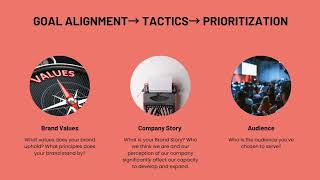
In this presentation, Virginie Glaenzer explains how to embed a brand’s mission and vision into strategic planning by first uncovering hidden biases and limits that can block success. She introduces a concise three‑question framework: (1) What are your brand values? – the principles the brand stands for, which shape tactics and prioritization; (2) What is your brand story? – the narrative that defines how the brand perceives itself and influences growth potential; (3) Who is your audience? – a deep understanding of the target market that guides execution. Glaenzer illustrates each component with real‑world examples, such as Patagonia’s environmental values driving CSR initiatives and Nokia’s shift from a diversified conglomerate to a telecom leader after redefining its story. She then applies the framework to a case study of Gamma Gamma Technology, showing how the three questions can be used to align the company’s strategic goals with its brand identity.
Chapters
So my take is slightly different. I often come into organizations and teams who already have a clear view of what they want to achieve, a little bit like in this case study. They know the revenue goals, maybe the market penetration, and before I'm able to drive success with marketing strategies and campaigns, we have to do a deep dive on the underlying or unconscious bias and limit— limits that would prevent success. So I do that by using a 3-question approach. What is your brand value? What are your brand values? What is your brand story? And who is your audience? Before we look at what it means for Gamma Gamma Technology Company, our case study, I want to add some context. So brand value. What values does your brand uphold? What principles does your brand and team stand by? To me, tactic and prioritization are shaped by our brand values. And as an example, we all know Patagonia, the brand. Well, their values are on environmental sustainability and ethical business practices. That's why the company places such a strong emphasis on corporate social responsibility and also works to promote environmental awareness and activism. So their brand values influence, if not dictate, their planning strategy. It's almost like a bridge between what you truly care about and what you manufacture. The brand story. What is your brand story? Who we think we are and our perception of our company story significantly affect our capacity to develop and expand. And as a side note, you may not be aware of this, but in the 1960s, or maybe you are, in the 1960s, Nokia was a conglomerate. Selling everything from toilet paper to car tires. It really took their owners and the executive team a new story to venture into, into telecommunication. I often meet companies who are willing to go to the next phase of growth, but they're constrained and tied up by their old story. And then the last one is audience. Who is the audience you're choosing to serve? In my experience, having a deep understanding of the audience will determine how the planning is executed and prioritized. So now going to the case study, Gamma Gamma Technology, to the next slide. Here's what it looks like for them.