Full Episode #2 - Can Philosophy heal society
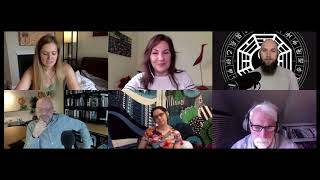
Philosophers Agnes Callard and Gordon Marino, writer Tim, podcaster Matt, and psychologist Melissa discuss whether philosophy can heal society. They debate philosophy's role in academia versus daily life, argue that narratives shape understanding more than data, and explore how personal practices like kindness and critical questioning might transform both individuals and communities.
Chapters
Welcome to Pass the Mic podcast with Melissa Nadia Viviana, who will lead our conversation on the topic of philosophy with one key question: which is: can philosophy be the magic pill to heal society? My name is Virginie Glaenzer, and I'm your host with a million questions. Let me start first by thanking all of you for joining our conversation today and by sharing your point of views and experiences with us. It's not what you get, it's what you become. This has become my personal motto in the past few years. So in addition to sharing, the purpose of this podcast is to help us expand our understanding of the world, and I hope that through our questions we will all open up our perspectives to new ideas and new ways of thinking. Before Melissa starts the conversation, let's begin with what I call a tour de table and have each of us, or actually each of you, tell us your name and why you're interested in this topic. Please try to be brief and keep it, if you can, under a minute. So why don't we begin with Agnes?
Hi, I'm Agnes Callard. Why am I interested in this topic? I spend my whole life doing philosophy, so I'm very interested in what it can do for us. I guess my first immediate response to the question, can philosophy be the magic pill to heal society, is to kind of turn it on its head and say, suppose society were healed, suppose it were healed of all of its woes, okay? And in fact, suppose it were even healed of the woe of death. So we're not even going to die, everything's perfect. What would we do? What would we do with all our time? We don't even have to work anymore. I think we would do philosophy. I think we would spend all of our time in the kind of active leisure that philosophy is, trying to understand who we are, how we relate to one another, what the meaning of human life is. So I think it may be that philosophy can heal some of society's woes, but it's even more important fact about philosophy that it's what we would do if all those woes were healed.
Thank you. Matt? Sure.
Well, first of all, thank you so much for having me, and it's such a privilege to be around such amazing people. So I'm excited to dive into this conversation. And for me, I think it's just a really great topic to explore. I think that there needs to be more conversations around world peace, around coming together, around ideas that can build a better world and a better society. So it may or may not be the magic pill, but at least we should have the conversation started to see where we can take some action and make some improvement because there's lots of places in the world that are beautiful and amazing and we're doing well and there's certainly lots of room for improvement. So the discussion is a, is a good start.
Great. Thank you, Tim.
I'm interested in philosophy because I found myself alive in this very strange, mysterious process and I don't know what it is. And I don't know what to do with it. And to know what to do with it, I kind of need to know what it is. And so ever since I've had those thoughts, which were very, very early on, um, I've spent most of my time trying to work out answers to those and other philosophical questions. So I love what Agnes said about the idea that, you know, it's that place where you'd end up. And I guess I've been very lucky to have lived my life in that place And why it matters so much, I think, is because what I see is that everything we do comes from what we think life is. And you can see that if you have a religious mindset, you may think it's this, and it will lead to certain ways of behaving. If you think it's a scientific mindset, it would be different. There's many different ways you can approach it. So what I think is that what we see is the possibilities in life and how we can deal with the problems we face are very much conditioned by the philosophies we have, and everyone has one. It's just that unless you inquire, you have the philosophy you were born into and you just think that's common sense. But once you have a sense of history and you have a sense of different ways of thinking, you realize there's a million ways of looking at what this, this, this is that we're in, this strange thing. And I can't think of anything more important or more intriguing.
Great, thank you. Gordon, would you like to tell us who you are and what you're interested in this topic?
Yes, I'm Gordon Marino. I've been teaching philosophy for about 30 years, and so I have a natural interest in it, but I have a lot of questions. I see philosophy as a search for wisdom, not knowledge, and how to live. And I think it was Seneca said that if you don't return a better person from studying philosophy every day, you're wasting your time. So I have a very practical approach to it in that sense. But I also noticed that with kind of the death of God, with the secularization of humanity, at least in the West here, there's a sense of people turning to philosophy for that something deeper. They don't want anything to do with God, but they want to keep that something deeper. I have certain skepticism about that issue. And so that's— so I might be on the skeptical side of it a little bit. But I think there's also a search for fresh vocabulary for thinking about our inner life. And as someone who works a lot in existentialism, that's what— that intrigues me a lot.
Okay, great. Well, thank you very much. So it's almost like we're already jumping into the topic. So, Melissa, what I love, the reason why I love this question, can philosophy be the magic pill to heal society, is because it actually— it says something about healing. Healing society, right? It answers, and I think we're gonna all agree that the reason why we need to heal society is because we all, most people, feel stressed, fearful, anxious, and even angry. And most will blame technology, social media, politics, business leaders, and even God. So there's no surprises that why we see an explosion of mindfulness practices and even a new interest in philosophy. I mean, after all, philosophy means the love of wisdom. So why don't you, Melissa, take us into that conversation? And feel free to start by telling a little bit more about who you are and what you're interested in that topic.
Okay, you can hear me okay, right?
Yes.
Okay, well, I started my career in psychology, actually, and I was very optimistic about being able to help people, and I found out that psychology was very dehumanizing, actually, that we're in an epidemic of dehumanizing the human because of science. So when you talk about healing society, I actually don't think that the problem is is the emotions we have or technology or anything like that. The crisis, I think, is that we have a culture that comes from all of the institutions that create our relationship with the world. So academia, for me, tells us how to feel about our relationship to the world. And the crisis is, for me, coming from materialistic science, which wants to be the only one who answers the question and doesn't have any answers to the question. So I think materialistic science and academia right now cancels out the topic, cancels it out, you know, says we can't talk about it unless we can give the answers, but we don't have any answers. So what do we do from here? So that for me, you know, the crisis actually comes from institutions, academia, starting with high school and then college. And yeah, that's, I mean, for me, I know that's kind of an unusual way to say it because a lot of people think that to heal it has to be emotional. I don't know, for me it also has to be intellectual. You have to have, there's an intellectual crisis and there's an intellectual healing that has to occur when you're allowed to understand the world. And if your understanding is wrong, it filters into everything. Your feelings, your happiness, your relationships to people, your goals and careers. I mean, what is the goal or career or the fulfillment that we aim for in our institutional culture? I mean, that shapes how we feel about ourselves, what kind of fulfillment we can get. So I started in psychology and that's actually how I became a philosopher because I said, that psychology has stopped talking about psychology, and we need to get back to the foundation of education, the foundation of knowledge, the foundation of our understanding, which is where philosophy has its role. That's what philosophy was always for from the beginning of time.
So can I ask, can I kind of restate what you said and see whether I've understood the distinction, so here's a distinction that I draw that I think is in the vicinity of what you're saying, but I'm just not sure it's the same. You might take one phenomenon, let's say take marriage or something, and you might study it from the outside. You might study it sort of empirically and be like, okay, what are the circumstances under which people get married? Who gets married to who? You know, are people trying to marry up or marry down, right? And then you could also study marriage from the inside. You could be the person getting married, and you could be like, why am I marrying this person? And those are two, gonna be two really different accounts of marriage. And there's a way in which the kind of study from the outside of something like marriage or something like anger or something like that, right? You could say, well, we're programmed to get angry, we're genetically programmed or something, but that's very alienating, very alienating way of thinking. If you're angry and you have like a reason why you're angry and there's— so there's a kind of speech from the inside out that doesn't always fit with the speech that we would give from the outside. And that there's something jarring about the fact that we theorize about ourselves in ways that, in terms and language that we don't actually feel at home in when we're articulating those experiences.
Yeah, that's, I mean, that's subjectivity versus objectivity. And that was the crux of how I started to go into philosophy, because I said that psychology is afraid of the subjective self. And it attempts to talk about humans as objective things, as objects. And that to me is setting yourself up to have a conversation in which you can never really get to the crux of human nature because you're intimidated by the subjective. You're intimidated by everything that we possess inside of ourselves, which is scary to science, actually scary to facts and data. And, you know, the scientific method cannot handle the subjective self. So with psychology, it's a little bit disappointing that we have to talk about ourselves like we're objects when we have such a rich, dynamic experience on the inside that's happening. And then it's like, well, it has to filter into this objective, factual conclusion, which robs the richness of who we are. So that was my issue with psychology, which I think is exactly what you just said to me about marriage. There's a way to talk about it from the outside, and there's a way to talk about it from the subjective experience. And for me, if you take out the subjectivity, what are you even talking about anymore?
I also was in, uh, studying clinical psychology before I went into philosophy, and my sense is that a lot of the push towards objectivity has a lot— everything to do with insurance companies and economic institutions. They, to a large extent, they're the ones that didn't want to reimburse for talk therapy and push this medical model very hard. So I think we need to look at the emergence of psychology, the present state of psychology in that context as well. I mean, because that's a— and it was very, you know, people like that. Well, they're very, they're very titled of the discussion today, the magic pill. Everyone's looking for a pill. I've had students in my class, oh, I just went through such and such, but all I need to do is titrate my medications. It's kind of, uh, where there's a pill, there's a way, uh, feeling. And that, that's been pushed very hard by, uh, economic institutions. And certainly someone like Foucault talks about that. So our vocabulary about talking— the vocabulary we talk about our inner life in is very much influenced by institutions like insurance companies, medical— the AMA, things like that. So that's— I think that's an important factor.
So I found this— and tell me if I'm understanding well, and if anyone wants to jump in— I find the comment about philosophy as the opposite— is the opposite of psychology, because psychology looks at humans as an object versus philosophy is first and foremost a subjective experience. So if it's a subjective experience, you talked, Tim, about philosophy brings answer, it makes us understand what life is. Right?
I'm not so sure about that. It depends what philosophies you're studying. If you study analytic philosophy, they certainly don't think it's a subjective experience.
Yeah, I think philosophy is what created objectivity. I mean, philosophy is the— the scientific method came from philosophers, but it did also come from Western philosophers and Western philosophy has taken a very empirical path. So I think it's unfair to say that philosophy is subjective, but I think that, I mean, you've put it in a tricky position, Virginie, because I think that when philosophy, as they say, you know, when philosophy turns into a practical science, it stops being philosophy. And so it's like, you know, our problems in science came from philosophy, but we stopped doing the method that helps us fix it. So in other words, when philosophy is philosophy, you can still change it because you're still deconstructing things. But as soon as it becomes science, it becomes more institutionalized, factual, empirical, like a paradigm. And at that point, it's harder to correct the mistakes. So I think philosophy is that place where you can still get to the core of the meaning behind anything that you believe or anything that creates your institutions.
I wonder whether it's just worth, you know, just dropping in that we're talking about science, but actually the problem which Melissa has articulated really well, it seems to me, is actually to do with the philosophy that underlies what's taken to be science. So science is, even if it's a method which is hard to actually pin down, but if it is, what's arisen around it, especially in the common sense view in the culture, not so much I think, you know, go to the cutting edge of physics and you'll find every crazy thing you can imagine, but in the cutting edge, in the culture generally, it's an idea of what it is and The thing which I find very distressing, because I spend a lot of time with scientists, is that some of the most sophisticated scientists are philosophically so naive they don't even know they've got a philosophy. They just think that's the way reality is. And you can hear that articulated, I think, by incredible minds like Stephen Hawking saying philosophy has been replaced by physics. And that captures it perfectly, that this idea that this thing has superseded the thing which goes, what's the story that's underneath this? And what would happen if we could stand back from this new dominant story? Dominant, actually, I think probably dominant only in the intellectual mainstream, not in culture generally, but there it is in academia and in education. If we could stand back and see, oh look, this is actually making a lot of assumptions which, on my view, don't hold up very well, and I think for reasons that Melissa has articulated there, there are some of the very good reasons. It's an objectivist philosophy. It thinks the object is real only, whereas for everyone else we know that subjects are also real, and there's a whole thing missing there. So my thing would be like, look, if one of the part of the pill would be that every movement on has to question where we've arrived at, and science moved us out of this kind of mythic mindset which human beings have been in for a very long time, and that was pretty good, I think, generally. And now we've got this new materialistic mindset in the, in the common view of science, which we really need to move on from. And when we do, everything will shift. I mean, personally, I'm hoping and expecting actually that philosophy, or the deep questioning of things, will create a new narrative which can bring all of these threads together in a new way. And I think we'll see a shift as big as the Scientific Revolution. Actually, at some point in the next— in this century, at least.
Yeah, I think it's useful to point out that philosophy is not a worldview. I think a lot of people mistakenly believe that philosophy is the— like the— kind of like— I know I'm going to regret saying this— kind of like the Bible. And in other words, that it tells you how to look at the world. Philosophy for me is not that way. Philosophy is a method. Of deconstructing the core foundations of what you believe. So it's like tearing, you know, taking a house and tearing it down and then checking—
That's only the negative side of it, Melissa. There's a positive side too, though, isn't there? You don't take it down to have nothing. You take it to create something better, something more substantial, something which doesn't fall over when you push it really hard. So the method is to push it really hard, isn't it?
Well, today most people would say that positive something is liberation. At least critical theorists, right? That you break it down and there's liberation. Now what happens after liberation is another— is a more open question.
Well, hopefully it's that you build the foundation better.
Yeah, you create a new understanding, which is— aren't we in the process of doing that, you know, all the time?
Well, we haven't heard from Matt yet.
Yes, good point.
What are you thinking over there?
Well, you know, on my podcast, I have 300 episodes, and it's really great because I get to listen to bright minds discuss awesome topics. So I'm always happy to listen when you guys are speaking. What it reminds me of is I've been doing a lot of study with indigenous elders, and, uh, what they were saying to me is that— I know 3 of them separately, they all have a 20,000-year history, and they all recall ancient technology. And what they've told me is that there was a time when spirituality and technology were one, and that these— when we're discussing philosophy, for me, it's like, it's the idea of ethics and principles and right living and a strong structure? What makes sense for all beings, not just the humans, not just, you know, one section of the humans, you know, everyone? How does it encompass all beings and how do we come up with a structure that works for everybody and then build on that and move forward? So I think the idea of discussing these things and coming to a place where it makes sense for all beings, and then how do we take the next step? How do we take action? So if we had a magic pill and we decided today something that was a really great idea that could encourage peace, that could encourage community and growth and health and all of the good things in the world, what would be the next step? What could we do as a community to implement that, to actually create that structure in the worlds that we live?
So I have a question for you. When you, when you want to make a change, where do you see the change coming from structurally? In other words, is it coming from the individual, the culture, the family, the government, the academic institutions, religious institutions? Where do you see the change happening?
Sorry to interrupt. So there's some noise in the background. I'm not sure. I hear some swooshing and some knocking. So I don't know, you guys, if anyone is moving too fast or—
Virginie, it's probably a good idea if everyone who isn't talking, like Matt suggested, turned off their mics. There's a little mute button in the left-hand corner and then switch it on when you're speaking.
That's another way of doing it.
Where is the mic?
Bottom left.
Yeah, I think that might be you actually, Agnes. I think when you move, there's a switch, there's a sound.
But I don't know how to— oh, there's a mute on here. Oh, I see. Okay.
You guys are a bunch of techies, man.
Well, Melissa, that's a, that's a really great question. So to give a little background on just my process is when I was a teenager, I was curious how we had war. I didn't understand that. It made no sense to me. And so I grew up a martial artist and was really curious about mind expansion, enlightenment, philosophy. I actually read one of Tim's books in my teenage years. So having him on my podcast was super exciting because he was writing a book on Zen philosophies and those principles that I was studying. So in doing that, I went down the conspiracy rabbit hole of institutions and kings and queens and where money goes and every conspiracy thing you could shake a stick at. And I don't know what the truth is and what isn't, but it does seem that there are institutions in place that have a lot of room for evolving. We'll just put it that way. And, um, so when I look at wanting to change the world and really wanting peace, and I look at the institutions that have these powers, or maybe it's millionaires, maybe it's billionaires, maybe it's someone else. The only thing that I know for sure that I can do is be peaceful in myself, is to create, uh, I really like in Buddhism where they talk about right livelihood, you know, I don't know what impact I've done, but I've steered, you know, through the podcast was the best way that I knew how, with what, what, with what I know to make a positive impact, whether it was 1 person or 10 people, but also in my day-to-day life. And I've read a lot of books on spirituality and philosophy and, and, They're all super fantastic. But the best piece of advice that I've ever gotten in the realms of spirituality was from my Native American friend. And he said, do 3 kind acts a day, go out of your way to do it and don't tell anybody. And since I spent doing that about 2 years ago, before that, I thought it was kind and compassionate. But after that inaction, the kindness and compassion of me being alive and the work that I've done and what I've pursued in an attempt of right livelihood, has made an impact in a little bit of a way. So institutionally, I don't know what we can change and influence. I know that if we can work together as communities on a set of principles that work for everybody, it's going to be the fastest route. And I think it does start with the discussions, and then a small group of people, but individually is where I think it all begins and ends, at least until you have that group of people to bring that vision and momentum forward.
So what you're saying is that to you, philosophy is an individual practice. You know, those random acts of kindness, this is a practice that you've taken from various philosophies.
Yeah. Well, because I'm a, you know, I grew up a martial artist. I think it's kind of like the two worlds, right? There's, there's the physical world and then there's the non-physical world. So when I trained in China with the Shaolin monks, One of those masters could break stone, and that was in the physical world. And how he said he could do that was through years of meditation and qigong. But also, when I was at the academy, they had dent holes in the trees. So I think that your philosophy needs to meet the road. I think that you need to test those things. And I remember speaking with Tim, um, he said, well, I recently had a daughter, and he said, for me, when I was studying philosophy and then I had to pass it on, it had to make sense for her. So, I think that when we're discussing philosophy, it's also action. We could all have a great philosophy. Let's just say I use the example that the whole world is out of shape, right? We're all 400 pounds, we all have diabetes, everybody is not doing so well. And we have this discussion, we say, "Hey, you know what? We need to start eating a little bit more of a balanced diet and we need to start exercising." Well, maybe 1% of the population does that, maybe only one of us on the panel does that, but we have to test it to move forward. We have to take these ideas and put them into action. Put the rubber to the road. And I know that Gordon is a boxer and I'm a martial artist and I did boxing too. And so we could have a philosophy about which technique would work, but then you have to go apply. So I think it's very important to discuss ideas in an open way, not in a combative way, not in a competitive way, in an open way, and then to test and to explore and then come back and share again. So then we can continually upgrade, we can question our foundations, then we can upgrade again. Together in cooperation, not in competition.
So that's a great segue to the next question, which is philosophies, and in general philosophy has existed since the beginning of civilizations, right? And today we have plenty of choices going from being, you know, choosing a particular philosophy that meets our own belief or, you know, whatever we're looking in life. Stoicism, Epicureanism, Skepticism, and then you have Existentialism, Rationalism, and Idealism, and there's plenty of others. So my questions to the group is, if we have so many choices of various philosophies, why do we need new philosophy, and why are we seeing the emerging or the emergence of new philosophers. And Tim is one of them. You're a living example of a new philosophy that you're bringing to life. So what has been unsaid, and why do we need more philosophy and philosophers?
Well, I guess the answer for me is that I have been looking around at all the good ideas I could find and collecting all the insights I could manage from East and West for 50 years, and I see an evolution happening, and I see us at the end point of that evolution. So I see myself as standing, as they say, on the shoulders of giants and trying to continue what they did, which is they took our understanding a little bit further forward and they dealt with the problems that are arising in their lives. So my personal quest is I have this experience of life, I have an experience of, of which was marked by an awakening when I was very young, which led me down a route of spirituality. But I've also studied science and psychology at university, as well as philosophy and all those things. And it's like, how does all of that sit together?? And that feels to me to be the great question that we face right now, and that's the question as it's arisen in my particular life. And so I try and articulate that, and that's forced me to go, the ways I'm finding aren't good enough. I need to completely be able to revision this. And so that's what I've done, and what I've started to find is there's a lot of people who are in a similar boat. And so I think that's what philosophers have done throughout. We— and it's not just philosophy, that's just being alive, that's the evolutionary process of life, that's the creative process that we're in. And then the dialogue we all have with what we find creates something which is communal. And if we can actually build on that in the way that Matt said, then we can actually take the world forward. And make no mistake about it, the world has gone massively forward. And we aren't, you know, the fact that we— I come back to Agnes's lovely thing right at the beginning about the luxury of being able to sit and do philosophy, and we have the luxury of this conversation because of all the people that came before us who have made the internet, who have made, you know, have created a world by questioning ideas, by not just accepting the obvious, by going, you know, what is that? And science has been a big part of that, for which I'm immensely grateful. But now, how does that objectivity fit with our human experience, like Agnes said, of love and the in and the outside, and what Melissa was saying, that we need something which is rich enough to explain all of that, and our current narrative doesn't. So for me, it's like what we need is a better story, and that story has to work, and that story has to encompass our actual experience, and then we can take that story and transform the problems in the story. We can we can transform the problems we face in existence right now and build on the successes of the past and take on the challenges that are coming up.
I do have a question for you, Tim. And I just wanted to say that I also absolutely believe that the story should encompass our experience. I think that's a really fundamental way to put it, because if the story and not really explain most of what we feel, most of what we experience, how accurate can it be? There's like, it's a simple equation. It has to make sense. It has to explain the way we feel. But I did want to ask you, because the interesting thing for me about the difference between Eastern philosophy and Western philosophy is that Eastern philosophy is actually a spiritually based philosophy, and yet it's still called philosophy. And Western philosophy is much drier, and it's the predecessor for science and mathematics and etc. So, you know, what, what I see is that right now in our culture in America, in the West, we don't have any space for spirituality. Do you think that philosophy is because you, you are a philosopher, but you're also a spiritual philosopher, and that's very much like the East. Do you think philosophy is a realm in which you can really explore questions that you just can't find a space for?
Like Gordon said, I mean, when he described what philosophy is about, I mean, I haven't been in the academic philosophy since I was studying it a long, long, long time ago. And the reason I left was I was all set up to to go into academia and do my PhD and all the rest of it. And I realized I was never ever gonna find what I was looking for in academic Western philosophy. You know, it's like I was looking for the meaning of existence. No one was interested in that. They were writing papers on a few more remarks on inverted commas or—
Some of us were just, some existentialists were interested in that question.
Yeah, so what I'd love to hear about that. What I was gonna say was, but even in the West, I think there's Anglo-American philosophy, which has gone down a different route to continental philosophy, again to Eastern philosophy. And so my own particular thing is, look, I'm not really interested in all of that. It just feels like, look, there's the love of wisdom, and that's where it came from. And that was in— the word comes obviously from Greece. It's like, that is— that if people are interested in that, so At the moment, academic philosophy, unless it's changed a lot in the last few decades, certainly when I was involved with it, it was to do with, like academic psychology, it was, I mean, philosophy was basically, its job was to prove why science was right. That's basically what it did. And for me, science was clearly wrong, not for a philosophical reason, but simply because what I was experiencing was an utterly magical existence in which amazing things happened all all the time. And science was offering me no explanation of that. So how could that be true? I knew it was true. It's true for me. It was true for just about everyone I knew. So that wasn't going to help. And then coming back to it, then like, okay, well, how can that spiritual aspect of life be married to the fact that science is talking about a reality too? So there's a whole spectrum of reality which goes from the causality of physics right the way up to the ecstasy of spirituality.
Tim, could you say a little bit more about what you mean by spirituality? Because coming from a Kierkegaardian framework, I sometimes have to take pause. People say, oh, I'm spiritual, I'm not religious. And you know, Kierkegaard said, well, that's because nobody wants to have any authority. Nobody wants to know obedience, but it's like we want the goods of religion. Some sense of deeper meaning without any of the— I don't have to answer, you know, without any of the authority, the obedience, which we find. It used to be obedience was considered a virtue. Now it's— nobody talks about it anymore.
You know, so maybe— yes, I think I'd go with that, Gordon. I want the good bits without the obedience. I think that pretty much sums it up. You know, I have no intention of obeying anyone because they're an authority. I don't want any dogma. I don't want to believe it because it's in a book. I want it to make sense for me in my experience. And what I mean by spirituality, it's a horrible word really. I don't like it because most of spirituality is bullshit in my experience. I've lived around this world, I've written books in this world, I travel, I give lectures in this world, and so much of it is nonsense. It feels like you're wading through great wadges of the stuff to me. It lacks the ability to think. So what the problem with spirituality is, it's abandoned rational thought because it thinks rational thought will lead it down the dead end of science and a dead world and everything's rational. That's of course not true. Rational thought is just believing things for a reason, and you can have all sorts of good reasons. So spirituality for me is really about the fact that what we experience is more than just this. Well, here's the essence of it, Gordon, really simply. I find myself living in two worlds, and I'm guessing you are too. In that I'm living in a world of sensation where everything is like, you know, we're in this physical world of sensation, but most of my time I'm in a world which isn't made of matter. I'm in a world of meaning, of ideas, of narratives, of experiences, and I can go off into that through various techniques and psychedelics and meditation, and there's a whole universe out there to be explored, a non-material experience, and that's what I I think spirituality has to do with.
Okay, thank you. So let me jump in because I'd love to ask Agnes and Gordon, since you two are professors of philosophy, I'm curious to know what's the purpose in teaching philosophies? Are you expecting students to gain wisdom? Is this about teaching them to have critical thinking by exposing them to various philosophies? Or is it about just learning, so a knowledge purpose that you have?
Yeah, so maybe let me start by saying something about academic philosophy. I'm an academic philosopher, and I don't see myself as trying to show why science is right. I think I am moved by questions about the meaning of life, but I'm moved by them in somewhat concrete ways. So things I'm thinking about these days. What is anger, and is there something essentially corrupt in it? Are there rules to how you break up with a romantic partner? So these are just two questions that are bugging me right now. And I think those are important questions. Asking those questions, those sorts of questions, is what I mean by looking into the meaning of life. In terms of my students, I guess I have different modes in relating to them. A lot of the time I feel like I'm the one who's trying to learn, like I have a question, right, like those questions I just asked you. And I just did an event a couple days ago called Let's Get Philosophical About Sex, and like it was me and my interlocutor were basically exploring two different approaches to sexuality, like on one of them, sexuality is roughly continuous with other activities, and we can understand it along the lines of hosting a dinner party or playing music with someone. That was sort of her perspective. And my perspective is like, it's totally weird and different, and like, the rules are different, and it's also super embarrassing in some weird way that I don't understand. Okay, and I, like, I really want to understand that. I want to understand, is sexuality fundamentally like the other things we do, or is it unlike? And that's what I was doing in that conversation. And like, I think she was interested in that same question. And I think the students are interested in that question too. And I guess what I would say, just to jump back to your original point, Virginie, about like what has been left unsaid, I think it's not so much that there are things that have been left unsaid, but that there are people who haven't spoken yet. Like, before I was born, I hadn't spoken yet. And all of us, figuring out the meaning of your life isn't something that anyone else can do for you, no matter how well they've spoken, right? And so, but what I would say is that the philosophers from the past, you know, people like the Stoics or Socrates or whoever inspires you, right? They're like really good interlocutors, right? They're like people you can talk to. Like in the 14th century, Petrarch, the humanist, was almost excommunicated for necromancy, because he was so intimately engaged with the works of like Virgil and Cicero, with these ancient authors, that the Pope was like, hey, it's kind of like you're bringing back the dead by talking to these people, right? I think that is kind of what I do is a kind of necromancy. If I think about it with Socrates and Aristotle and all these different thinkers, I'm trying to talk to them. And I don't think I can figure out these questions on my own. I think I need other people to help me do it, and students are also people that I do it with. That's how I think about it.
Awesome. Gordon, what's your perspective on that?
Well, my perspective— I'm on my last lap this year. I'm retiring after St. Olaf after this year, and I very much focus on— I'm teaching ethics right now and very much focus on getting students to think about not what they want to do, but what kind of people they want to be. Very, you know, very— so to reflect on that, my feeling is that my classes, most of these students will never take another philosophy class, you know, they'll never— and I've had occasions where I've asked students, what did you remember from the philosophy that I've encountered 10 years down the line, and ask them, what'd you remember from philosophy? They go, oh, Thales said all is water, you know. I want something to stick with them. I want to become better people as a result of it. I'm very, very upfront about that, and So I see it as an edification in that sense. And for example, one exercise we do is I ask students, what virtue do you need to work on and how are you going to do it? You know, things like that. Very practical. Very, very practical. And I'll follow up on how's that going. I mean, also I think for me, my philosophy of life is all about holding hands together and, you know, relationships, which I think certain psychological approaches today have I've left out. And so about holding hands together, walking through life, and I've been privileged to have a lot of— because I coach both football and boxing and have people in my classes who I also coach— and I found it really, really just being there on a consistent basis with people, being together on a consistent basis, how life-changing it is and how what an honor it is to be let in. I used to think of like all the coaching I did with kids in town and stuff like that as, oh, I'm such a good guy and all that stuff. And these people are letting me into their lives. How honored, what an honor it was. Of course, I used to think about I'm giving back and all this kind of nonsense, you know, paternalistic stuff. And I just realized, so the feeling very honored by students, athletes letting me into their lives and sharing our lives together. And holding hands as we walk through life. I think Thích Nhất Hạnh said it's all walking, holding hands, walking home. I found that image very powerful.
That's deep.
Thank you. Beautiful. Yeah, there's a lot of compassion that I can hear. Do you want Melissa to talk about the last question? And I don't have my phone, so I don't even know what time is it. And I'm so afraid of changing the screen. We talked very briefly about science. What's this relationship that we see in society of philosophy being against science, science being against philosophy? And yet philosophy, as you pointed out, Melissa, can help society to build the structures. So it is complementary, but yet we keep—
I personally keep hearing people opposing the two? Well, you know, there's some clarification. Obviously, when you say philosophy, there's many, many, many different philosophers under that spectrum, you know. For me, the, the process as I see it is that philosophy, as I said, is tearing down the building and checking that the foundational structure is okay. But throughout our culture in academia is what I keep referring to because it's very prevalent right now. But you had religion in the past. Any structure that we have, it's not about questioning ourselves. It's about creating, I would say, um, modus operandi, you know, like creating a way to build our society, creating a method of building society. And the problem is that a lot of people people get very comfortable and they want their society to give them a peace of mind that they're on the right path, that they have the right understanding, that they have enough knowledge to be intelligent, but not too much, you know, left unresolved. I feel that a lot of people, they need knowledge to give them security. So institutions, they tell you enough to make you feel secure. Philosophy is not that way. Philosophy, it's scary because you're telling people there's so many questions left unanswered. You're telling people your foundation, you could be, you know, feeding yourself a delusion that makes you feel safe and comfortable, but let's question that delusion. And you see that philosophy is about Socrates, you know, questioning everything. That was the foundation. But even, um, you know, deconstructing, like Wittgenstein with words and, um, you know, just taking everything back to a basic component and saying, is this actually, uh, structurally sound? There are not many people who can do that. You know, it's not, it's not comfortable to, to wake up and say, I don't know anything, or I'm not sure of anything, to be skeptical constantly. It's the opposite of security. So when I see the difference between science and philosophy, I don't actually think there's very much difference, except in the fact that science, I feel, is a little bit more comforting. It's more about building a way of looking at the world. And even though scientists are— they have the scientific method, they're trying to find knowledge, and, you know, it's not that there's anything unstructurally sound about their process. Absolutely respect their process. The problem is that when a scientist discovers something, even if there's uncertainty in it, as it filters down through people, it becomes more and more certain. So in other words, in a scientist's mind, they say, well, we're working on getting answers, we're working on getting answers. But then as it filters down, other people— I've said before on Twitter that people kept posting articles by neuroscientists where the beginning of the article would say neuroscientists are working on a question. And then the people would post the article and say neuroscientists have found the answer to the question. And I said, that's not even what the article says. You know, the article doesn't say that we found the answers, but people want to know that science is finding answers. So people are expecting science to give that security. Philosophy doesn't give that security. So it's just two very different mentalities towards knowledge. You know, do you want to deconstruct and, and sort of get back to questioning your foundational beliefs, or do you want to keep, you know, building, um, the paradigm that you live in, which a lot of people are happy to do. And there's no— there's nothing wrong with it. It's just a different way of operating in the world. I'm obviously the philosopher and I just want to question everything, but—
It seems to me that it's not so much a question of whether scientists or philosophers are more lovers of certainty, because I think scientists are always interested in the part that they don't know. I think it's more that science has an outsourcing model of of knowledge. The idea being that if a scientist figures something out, they can then give you that result. And you can have the result without doing the work, right? You don't need to think it through for yourself. So, we in some sense take ourselves to have or own the results of science, even things like evolution or something. Most of us don't really know the arguments, but we just kind of believe it. And so, we think we can outsource scientific, the process of scientific discovery and the acquisition of knowledge to scientists. And yet take the results for ourselves. And in philosophy, nobody thinks you can outsource it.
That's how I would draw the distinction. Yeah, that's a good distinction.
Yeah, absolutely. Okay, I'm gonna offer a slightly different— there might be a certain amount of outsourcing, I think. Because what strikes me is that, I mean, I'm like you, Melissa. I mean, firstly, it was just lovely hearing Agnes and Gordon describe what they do in philosophy and academia, and it'd be so beautiful. And I just admire that immensely. And like you, Melissa, I just want to question everything, but I'm aware because I go out and I'm with people a lot speaking in public and running events that some people do and some people don't. And my feeling is there is a role for— we're all different types, and I'm aware that certain types of people like to do this, and I think we have something to contribute, which is What I find myself doing with people a lot is to first of all just go straight to mystery, because you can undercut everything if you just take someone straight to the place where they know nothing. And it's not actually that hard to hit that place where the whole thing is just like, actually, ah, you know. And sooner or later everyone hits that place, whether it's when they face death or, you know, with something beautiful, that they will hit that place. I suspect most people do not just stay in that this is the way it is the whole of their lives. And then there's the opportunity to go, okay, so there's the story you have, and then what I think philosophy can offer is try this out as a better story. What do you think? And so part of what I do, I mean, I do this all day every day, I suspect like all of you. I mean, I've got right here on my other screen is what I'm working on right now on the nature of consciousness, and it's hard work to unpin my own prejudices. I'm busy unpinning all my Eastern philosophy prejudices right now and going, hang on, is that right? That's wrong, isn't it? And that's hard work, and not everyone can do that or wants to, but at the end of it, I'll come up with a handful of things which may be of value to people that I can go, hey, look, I've unpinned all of this. This might be a better story, try it out. And so I do think we can offer that, and it doesn't— you know, the whole populace doesn't have to become philosophers. I think we can we can play a role in helping people find a more meaningful narrative.
Tim, what's your criterion for deciding what a better story is?
My criteria for deciding what a better story is? Well, that's a fantastic question in itself, isn't it? But I, you know, fantastic. I would say that what I'm looking for is what I've said already, really, one that holds together and can embrace the spectrum and ambiguity of my experience of life and what I see of others' experience of life. So I'm looking for something which is more comprehensive than what I've got and which doesn't contradict itself, which complements itself into one narrative. Now, I'm not expecting to arrive at that, but I do see that as I've worked on it over the decades, it's jump forward and it's moving faster than it's ever moved right now and that's incredibly exciting. And I also see that there's a parallel, what I would call a paralogical relationship between the story and the experience because it's not one way, it's not like there's life and I tell a story about it. As I see it in different ways, my experience of it is transformed also. So the other thing I'm looking for is an understanding which opens up a deeper experience of life that may be missing before and that experience of insight where you suddenly go, oh my God, and you see it in that new way, and a whole level of congruence, but also a whole new level of experience can open up, is, is what I'm looking for.
I think, I think I have an example of actually what you're saying, which is, you know, I was thinking about psychology, and I was thinking about how if we take empirical data about the brain and we come up with a reason, for example, that you're unhappy. And I was imagining if you went to a therapist and you sat down with a therapist and the therapist said, I'm going to give you the reason you're unhappy. It's because of XYZ synapses, lack of endorphins, lack of, uh, et cetera. And, and here's all of the clinical reasons. And I wondered, would that be enough for any human being to hear that? In other words, would the explanation have any impact? And I would say probably not. And I think you particularly focus, you've said the word narrative a lot, right? Stories and narratives. And I think that the reason that humans are so different from other animals and other beings is because there's something very powerful in the fact that we and I don't even know how to put it into words, but the fact that we— the narrative is more important than the data. So in other words, in other words, even if you told a human being, this is the data that supports why you are the way you are, the human being would actually need it to be translated into a story. And in order for it to have any impact on their lives, we're not impacted by data.
We're impacted by stories. That's the meaning. We're looking for meaning. We are making a machine.
I think we need to distinguish between cause and meaning. For example, there's a neurologist who's also a psychoanalyst in South Africa that works with people with organic brain disorders. And for many years, these people, no one ever talked to them about their experience, only the causes of their, of their, their their experience, and he started to do psychoanalysis with them and talk to them, and they found it extremely comforting that someone would address the actual content of their experience as opposed to, well, this is caused by some organic function, so therefore we don't need to address meaning. But I think— so I think we really need to distinguish between meaning and cause, and sometimes they get conflated in contemporary psychiatry, right?
So as the timekeeper, and I apologize, but as the time goes by, then we could talk for I want to thank you everyone for this insightful conversation. And as we come to the end of the hour, I'd like to end the conversation the same way that it began, with a tour de table. So one of the premises of this podcast is that there's too much talking and not enough doing. So let's pass the mic and tell us what you've heard today that will inspire you to do something differently than the way you did it prior to this conversation, or any insight or interesting perspective that you, you'd like to leave others with, or for yourself. And I'm going to start by sharing my own takeaways from this conversation to give you a few minutes so you can actually think of what you'd like to say. What I'm taking away from this conversation is two things. First, I found this comment Really interesting that philosophy done right is uncomfortable, should be uncomfortable or unsettling, because this is about going into uncertainty and the unknown. This to me is something that I want to think more, and very often I like to talk and think about concept and idea, but it's not really uncomfortable. So I want I want to push myself further. So that's one. And then the other thing that I've, that I found interesting is almost an answer to the original question: can philosophy be a magic pill to heal society? And to me, the answer is yes. And the reason is philosophy, in addition to being a gateway to change society's structures, is first and foremost a tool that could, can help one to go through a personal journey. So defining what makes sense, defining what is this human experience that we're going, that we're experiencing, philosophy can help me raise those questions and can help me in my personal journey. So That would be my takeaway. Anyone willing to jump in and give their— and maybe Melissa, you'll be the last one to kind of close this conversation. So, Matt, maybe, or anyone else.
Tim, if you'd like to jump in. Yeah, I'll go.
Okay.
So, I've really enjoyed this discussion. It's always exciting to just talk about ideas that matter. I remember 3 years ago when I started the podcast, that was the only thing. I just wanted to talk about stuff that mattered. I don't care what your opinion is on it, on it is, as long as we're sharing and conversing. I think that's good. And that's the beginning. And I think a lot of what we talked about today was like material versus non-material and known versus the unknown. And we know so little about what is actually happening here. Science is showing us a little bit and that's good and that's helpful. But what philosophy does, what a new idea does, can evolve instantly. We can take that piece of information and we can apply it to our lives immediately, where an institution might take a while to adapt to that. So I think that when we begin to apply what we learn, no matter what it is, we can be that change immediately. And if it works, we can share it with somebody else. So I think that this discussion is fantastic. And what I'd like to just share with people, and I said it before, I've— I think that there's so much great information in the world on how we can make the, the world a better place. But the best thing that I've learned so far, for me, and I've meditated and done all those things, is to just to do 3 kind acts a day. Go do 3 kind acts a day, go out of your way to do it, and don't tell anybody. Don't go boasting about how great you are and how amazing you are. Just do the 3 kind acts and go about your day and just do your best and try to be kind to yourself. And that's all I have to say. But it's been a great discussion, and thank you guys for sharing all your amazing insights and for your work in the real world.
Thank you, Matt.
Uh, shall I go?
Sure, go ahead. Um, I just want to say how much I've appreciated hanging out with a few people who share my strange obsession with questioning everything, um, and, um, how refreshing it's been to hear from Agnes and Melissa and Gordon about what they're doing in the more mainstream world than I live in. And so And to hear just the authenticity of their soul come through and why and what they're doing, I think is wonderful. So I'm taking away that spirit really. And then from that and that lovely call to action and to kindness.
And to listening too.
Yeah, yeah, yeah, definitely.
You've got to put that in between before action becomes listening. Yeah, and listening means opening your heart, opening your mind, you know, I think in a lot of ways.
So beautiful, beautiful. So yeah, that's, uh, and, and to meet you all in this mystery, that's I think the root of it for me. The foundation of philosophy is mystery. It all starts there. I never give a single talk without starting with, I don't know anything, now what's my best guess? And to keep coming back to that and then start and end there. I think it was Whitehead that said it starts with— starts in the philosophy, starts and ends with wonder. That's Aristotle.
Is he taking that from Aristotle? Yeah, yeah, that's right from Aristotle.
That's straight from Aristotle.
Well, there you go. Yeah, yeah. And sometimes it's really important to come in here is when I see students who have that wonder, sometimes it's difficult for people to own their own gifts, you know. And occasionally I've learned students with that kind of wonder, and I try to tell them, you got something special. They go, what are you talking about? It comes so naturally. And I do, and that's something I've really garnered from this discussion, both the warmth and the sense of wonder, I think, and how important it is to have the right atmosphere in a philosophical discussion. I really appreciate everyone's warmth. But one of the questions I'm going to be questioning after this discussion is all these parties about question, question, question. I mean, I don't know, I'm not sure from the philosophical point of like, I suppose, yeah, I guess I'm gonna, I wonder a little bit about, suppose you have a certain foundation in life, what's, why necessarily question everything, you know, this kind of religious adherence to, we got to question, question, question, you know, I'm not, I wonder if there's another way to do philosophy. So that's one of the questions I'll be taking away from this.
That's fantastic.
Okay, well, this kind of follows up on Gordon's thought. I feel like there were two kind of moods or something, two strands in this conversation. One of them was one that I think Melissa emphasized, the kind of discomfort, the tearing down, the questioning, the challenging.
The—
that's on the one hand. And on the other hand, there was a lot of like us getting along and being really nice to each other and not really tearing much down or criticizing. And for me, this is like a deep question about the philosophical practice, which is that my view is I agree with Melissa that like philosophy is essentially about in some sense tearing down, but I actually don't think we can do that for ourselves. I think we're too— the sense in which we're trapped in wanting to be comfortable with ourselves and what we know is very, very, very deep. It's— you can't just put a philosophy hat on or like to take that off. I think you need other people, like you need other people saying, I don't understand what you mean by that. You can't say that to yourself. I think that's just a view I have. And so like we need other people. That's what I meant by saying that that's why, you know, necromancy is so important, because like some of the best people to talk to are dead. And so if we can bring them back to life, then we can talk to them. But there's, I think there's this problem about the practice of philosophy, which is that we all like liking each other, and we all like getting along, and kind of praising one another, and being nice. There's just a deep way in which philosophy isn't that. Like, if it's going to be uncomfortable, it's going to be uncomfortable in the conversation too. That's nonsense. And so, like, how does one— like, this is a legacy from the Socratic dialogues, right, where people just got really pissed off at Socrates, and they walked away, and eventually they killed him, right? How does one kind of integrate that kind of interpersonal discomfort, and instead of just patting oneself on the back for entertaining the thought, actually engage in it, which I think is a lot harder.
Hallelujah. Yeah, that's good. Well, I guess I'll finish and to respond to Agnes in closing, philosophy doesn't make you popular. I mean, I have never been under any illusion that it's a popularity contest and philosophers win it. You know, I think philosophers are definitely the bottom rung of academic luxury. You know, I think that all of the other academic schools of thought are very cooperative. You know, science itself, between biology and physics, you know, there's cooperation and philosophy gets along with nobody. But I've hosted a lot of Twitter debates that have been awful. And people, you know, my boyfriend says, you know, why are you arguing with people on Twitter all the time? And I say, that's philosophy. You know, it's not that I'm like personally arguing, but the whole point is to have things challenged. So I think with this particular group, everybody is so different. But I think everybody's also so open-minded. And the only thing that I can say is that as I've been speaking, I've looked at all of your faces as I say words like philosopher or say words like scientists. And I've wondered that, you know, even though we're all open-minded, we're still constructing some different identifying qualities behind the word scientist. You know, scientist is There's thousands of people who are scientists, and what person do we think of when we say that word? So I think there will always be this need to debate, but you need someone to show you how they're using the same words as you are, and that's what I've gotten from this. You know, for me, it didn't need to be combative, because as I was listening to everybody else describe things from their own perspective, I could see that you all defined philosopher and scientist differently than I did, which is very enlightening for me because then I start to think, well, crap, like I've been using these words thinking that everybody was on the same page as me for a very long time. So even though I love the combative Twitter and even though I have no illusions that I'm going to win the popularity contest, I still think that having, you know, a nice conversation, you can still have your illusions undone, you know. And I've had, you know, my conceptualization of philosophy has already been undone like 3 times in this conversation, you know. So it is working even if we're kind.
So very well. Well, thank you so much everyone for spending time today. I think we all think about it. Thank you so much, really appreciate it.
More from Virginie











Unlocking Fintech Success: Strategic Trends for Profitable Growth: Webinar Leadership Series