Full Episode #5: How to overcome Age Discrimination
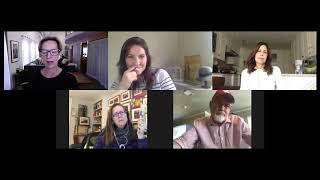
Virginie Glaenzer hosts a five-person panel including entrepreneurs, HR professionals, and coaches from different generations to discuss why age discrimination persists and how to fight it. They distinguish between leadership (force) and eldership (presence and intuition), argue older workers bring experience while younger ones bring agility, and propose practical fixes: reframe your age narrative, mentor across generations, start a business at 50-plus, or pursue legal action against discriminatory hiring.
Chapters
Welcome to Pass the Mic podcast with Roxane Darling, who will lead our conversation on the topic of age discrimination and one key question: how can we overcome age discrimination? My name is Virginie Glaenzer, and I'm your host with a million questions. Pass the Mic podcast is about sharing different perspectives on specific topics, not only to help us expand our understanding of the world, but perhaps also to explore new ways of looking at it. Before we start this conversation, let's begin as we always do with what I call the tour de table, and have each of you tell us your name, what you do, and why you're interested in this topic. Please try to be brief and keep your comment to about a minute. So why don't we begin with Donna?
Thank you, and thank you for having me join you here. So my name is Donna Koren, and I publish a website and blog called Empty Quester for empty nesters on a quest for their bold next chapter. And that's one of my passion projects that I do, and this exploration of what happens in this next chapter of 50-plus when kids have left the house and they're looking to explore for new opportunities. And separate from that, I have a business that in 2020 will be completely women-owned, women-run, and will create business opportunities for people who are looking for second careers who are in that next life stage.
Great, thank you. Linda?
Yes, my name is Linda Rossetti. Thank you so much for having me, and I'm honored to be with the rest of the crew here. I am a serial entrepreneur and an expert on transitions, right? My work in the last decade has all been about adult transitions and their impact on not only on individuals but on organizations as well. I consult one-on-one with individuals, and I work with companies who've gone through mergers and acquisitions and trying to help them kind of figure that all out. I really think that this topic is fascinating because ageism is another transition. You know, aging is a transition that we all go through, and my work and research tells me that we really misunderstand transition as a society. So, I'm excited about this conversation because I think there's an enormous amount of richness that is resident in all of us that we can bring out at any time and at any age. So I'm really excited to be here. Thank you for including me.
My pleasure. Thank you, Linda. Roxanne?
Hi, my name is Roxanne Darling. I live in Santa Fe, New Mexico. I'm 66 years old, and I too am a serial entrepreneur. I have a degree in marine biology from UC Berkeley. I was then a ballet dancer mind-body fitness pioneer. Worked for the last 20 years in a company with my life partner who's 14 years younger than me, and that is a technology company. We do marketing, web, everything, everything internet basically. And my big claim to fame, my most favorite part of my career, is I had a YouTube channel. It's actually still up. Beach Walks with Rocks, 2.5 million downloads, that we started in 2006 as a technology experiment, but connected me with millions of people around the world, and I absolutely love that.
Great, that's impressive. Thank you, Roxanne.
Jim.
My name is Jim Spivey. I live in Houston, Texas. My background has been as a business executive in technology for 20 years, an executive coach and life coach for 20 years. And now I'm in the new frontier for me. Uh, the business I'm in now is Mazzi Partners. I'm a partner with a 3-person firm and our work is about awakening and transformation starting with our own. And we have a great mentor and author that we love by the name of Peter Block, who once said, if you want to change imperialism, good luck with that. But if you do your own work and make it available for others, it could change the world. And that's my belief as it relates to an attitude towards aging, is to do my own work and then make that available where it could change the world.
Beautiful. Well said. Thank you. So before Roxane leads us in our conversation, I want to remind everyone the various generations that we're going to be talking about. So of course, we're what we call baby boomer. Those are people born between 1944 to 1964, and so today they are between 55 to 75 years old. Before that, before those people, there were the Gen X, born between 1965 to 1979, and they're currently between 40 to 54 years old. The Gen Y, also known as millennium, were born between 1980 to 1994, so they're roughly around 23 to 39 years old. And the last generation that we are not yet talking a lot, but who are most likely going to change the world, is the Gen Z, born between 1995 to 2015, and they're currently between 4 to 24 years old. So I'm personally very interested in this discussion, not only because my parents are baby boomers. I'm really a Gen X, really the late Gen X, and my three daughters are Gen Z. And when I think of baby boomers, despite the rough start of the Second World War, my reaction to the baby boomers is that this is a lucky generation. They've experienced an amazing economic growth and stability. So to me, they had an easy life. And there's even a term for that, the, you know, that describes this era, the Glorious 30, at least in France and in Europe. And yesterday I was watching the movie Rebel Without a Cause with James Dean in 1955, and it struck me that in addition to having an easy life, they also actually had their own battles where when they attempted to change society's value, which at the time was very strict. The way to behave as men and women were extremely strict, and that must have been quite a challenge. But I asked my daughters, I wanted to know what the Gen Z generation, some of their, you know, what were their thoughts, especially around the OK Boomer that we've seen on social media recently. And here's what they said. We think they're a little out of the loop sometimes, old-fashioned in regards to gender and climate change, and they're stuck in their way. They don't understand our generation. So today we're going to be talking about age discrimination, and my question really— and Roxane, you can take it the way you want as you, you know, lead us into that conversation— but my first reaction to their feedback and my own perception is that, is age discrimination something that every generation will face as they're being pushed out of the system? Or does this trend have something to do in particular with this unique generation, which is really how we phrased the entire episode? You know, how can we overcome age discrimination? Boomer or bust, will this generation break the aging mold?
Well, I think it's a great place to start because it allows me to sort of identify two different territories that I think our fellow panelists here have a lot of experience on. One is that I think the age discrimination, age differences part of the discussion is mechanical, and I don't think that will change very much because we all go through these life patterns and life experiences. And much as I get older and I wish to myself I had known X, Y, and Z when I was younger, I realize that that is part of the maturation process. And those experiences, the easy ones, the hard ones, the fun ones, the miserable ones, feed into us as a person as we mature. I think what's distinctly different, which has a good news, bad news component to it, is that because of the internet, we can talk about this much more. And so what all of the conversation and my experience points to is If you are bent towards discrimination, you will find evidence to support your point of view. If you are not bent towards discrimination, you will go the other direction. And I suspect that that's part of what you do in your work, Linda, is help people navigate that place between so-called facts and perspectives, points of view. Maybe you could speak to us for a minute about that.
Absolutely. You know, it's so interesting. I love the way this conversation has started because I came in with this assumption of, oh, we're going to talk about age. But right away, what we've talked about kind of makes me wonder, right? Because there's this confluence of structural changes going on. That have nothing to do with age, right? Technology is a major structural change, right? Now look at, we have a point-to-point conversation all over the United States right now. You know, we didn't have that 15 years ago. And it isn't just technology, right? Our social norms are changing, right? You know, we've legalized things like gay marriage. You know, all of a sudden we have Social Security benefits that can go to, you know, same-sex partners. Partners, you know, all sorts of structural changes. And so it's almost, Roxanne, this notion in my mind of there are some people who have a capability to process major changes and be okay with that regardless of their age, and there are others who don't have that capacity, right? They really, they don't have the ability to step out of their set of assumptions. And my suspicion is that what many refer to as ageism is more an ability to be successful in whatever that definition is within this confluence of major changes that are happening. We have life expectancy expanding in the last 25 years by orders of magnitude. We have technology changing the way we communicate. We have blah, blah, blah. We can go on and on. So, you know, I think that this conversation is interesting because I came to it assuming that we were going to talk about age, and I was convinced that there are real issues with age. But in the absence of somebody's ability to navigate major change, yeah, age is as good as any as an issue that's in the way. But this notion of what is required in order to make sure people have the capacity to navigate that kind of change, I think that's really an open question. My suspicion is everyone would have an opinion on that.
You know, as I was preparing for this discussion, I landed on an idea that hadn't really been clarified in my own mind, and something Jim posted on Twitter this morning sort of adds supporting evidence, which is that I think the strength of being a young person is that the brain is so fertile and actively seeking information, and thereby a younger person is a great acquirer of facts and detail and data. And as we get older, I find that that shifts into where— this is all predicated by if you're a reasonably conscious person, I should say that— as you get older, your experience becomes very important. And I actually wrote something on my personal blog about 7 years ago that despite my having a college degree in science and being a huge fan of science, um, I'm relying more and more on my intuition and personal experience to make decisions and to offer business advice even because the facts, um, can be like statistics manipulated and used to support a point of view, whereas the energy and experience, um, are much more powerful in my own life. And so, uh, Jim, that, screenshot you posted of the list, the two lists side by side of the traditional characteristics of leadership and the characteristics of eldership. In my mind, there were very positive things in both columns, so maybe you can talk. And what I saw on there on the leadership side were some of these things that relate more to the mechanics of being an aware person in your world, and especially in your profession if you're a consultant or, you know, working in a job situation, versus what an older person can acquire. I point to it like you can walk into a room and feel that something is off, and we all have this ability, and you can poll the room, and if everyone says, oh, it's okay, everything's fine, everything's fine, that causes one to distrust one's own intuition. But as I get older, I realize, no, people just don't want those facts said out loud. And so this transition from youthfulness to eldership is the ability, I think, to trust that sense. Okay, something doesn't feel right. No one wants to talk about it yet. I'm just going to keep that in mind as I participate in this meeting or whatever the situation might be. But Jim, why don't you talk to us about those characteristics of leadership and eldership from an age point of view?
And I loved what you said in response to that tweet, Roxanne, was you particularly like the fact that it's not about age, like it can happen at any age. So I— a lot of my interest in this area of our ability to define our reality inside our own minds came from watching my father die. My father died in 2003. He was in the Korean War. He worked for Bell of Pennsylvania for 40 years. He followed what was the expected path for a man during his cultural time frame. And then he retired and died soon after. So he couldn't wait till he got to this thing called retirement, which we all think is some place, some magical place where we get to finally relax. And then he went immediately into illness. But here's the part that was interesting. When my father accepted his death. 3 days before he died, he became a child, and he became a child directly connected to the divine. He became the most powerful human I had ever experienced in my life. By the way, I, I despised my father growing up because he was an abusive, angry man trapped in a paradigm, and his near-death experience cracked open his brain to a whole nother possibility. And he danced in it. And I saw that and became a student of the work of like Dr. Joe Dispenza, the work of David Hawkins about human consciousness. And we're learning that we have the capacity inside our own brains to rewire ourselves at the DNA level. We have the capacity to change reality. And to define it in a way that's more fitting with our spirit. By the way, there are movies in the culture that get lost in the, uh, in the description of romantic comedy. I don't know if anyone's seen Disney's The Kid, where Bruce Willis plays an 8-year-old, a 40-year-old, and a 70-year-old in the same movie. And all three are available to us all the time. What, what does age mean when we have access to our 8-year-old, our 40-year-old, and our 70-year-old right now. All of a sudden, the meaning of age starts to lose its impact, and we open up to unlimited possibilities that brain science and an increase in consciousness throughout the world is making available. So it's so exciting. It changes the whole conversation. And I love that you opened the door to talk about that, Roxane. It's really cool.
Great.
I'm glad you like the article.
Yeah. Yes. Well, we don't have any Gen Zers on this conversation, so I'll just take a moment to thank all of the amazing young people that are part of the climate strike globally and also the gun control movement globally. They— and I support them all the way. Donna, this seems like a natural segue into what you talk about on your blog in terms of helping people manage this transition into an older age profile. How do you go about doing that with your readers, and what are some of the topics that have been really popular with your readers?
Well, thank you. One thing that I find interesting in what Jim just said is a lot of it is one's own mindset. And I think that people very often stand in their own way, and the first hurdle comes from how we perceive ourselves as we go forward. My dad was 92, and he was a litigator, and he was still working full-on until his last year, year of his life. And so I was not raised in a household where age was, um, really focused on, and wisdom was incredibly valued. And so my father was always the wisest person in the world, and I think What I've learned in the last year is that it's really about the way you feel about yourself and then the value that you identify and you bring. So Virginie knows that this year I did a TEDx talk and I pitched my talk, which became The Newest Workforce Disruptors Are Over 50. And I pitched this to 4 organizers who were all under the age of 35. And when I came to pitch this concept to them, they said, well, "Are you going to talk about ageism?" And I told them, "Hell no, I'm not going to talk about ageism because it's a self-fulfilling prophecy. It's a lament. It's a conversation that older people have amongst one another." So, I think in that TEDx and in the work that I do, it's really about talking about how incongruous it really is to count yourself out of the conversation. In the, in your 50s, in your 60s, in your 70s. Because A, there's, you know, the way that health trends are going, we're going to be living and thriving for a very long time. And B, we have no intention of stepping away. And I think when you come with that confidence and with what you bring to the table, it's really about knowing what you bring to the table, which, as you say, is wisdom, is maturity, is actual knowledge, you know, how much knowledge we've accrued, and then you share that with the younger generation with intention. Um, these are the conversations that I'm having, um, in my blog, but it's very much happening with younger people as opposed to just happening amongst the, uh, Gen X, late Gen X, and the baby boomers. The conversation is really about getting out into the world and having those conversations with younger people. To break those mindsets.
Well, I think what I'm hearing from all of you is that one, Virginie picked people for this panel who are rebels in the ageism community, so to speak. So I'd like to just acknowledge that. And I do think to answer one of the original questions that was put on the table is How do we fight or confront ageism in the public sphere? And I think that we're doing that in this way by being older people who embrace youthful ideas and who embrace the strengths of every phase of life, knowing that one phase cannot have the assets or the deficits of another phase. And that is, you know, again, just sort of this mechanical part of life. Virginie, you mentioned your daughters, and how is it that you navigate these ageism discussions? Do you find— I don't know if your daughters will watch this or not, but do you think they're more vulnerable to ageism than you are, or vice versa? I assume you're raising them to not be that way, but they do have peer groups. Right.
So interestingly, Donna, when you say we have to have the conversation with younger, the younger generation, that's exactly what I'm doing. And actually, one of the podcasts earlier, one of my daughters, my oldest, was on that podcast, and we talked about gender identity. She's a college student, and she's part of, she's doing an internship at the Gender Equity at Bard College. So she's very well, you know, around sexual abuse and stuff like that. So I was glad that she said yes. And 2 days ago, I was having another discussion with my middle child, middle daughter, I should say, who's also in college, talking about how Gen Z was, how were they experiencing bullying online on social media. And I definitely want to have an episode to cover that, just with a number of you know, Gen Z and see how do you even manage. I think to me, so to me, the Gen X generation is a generation in transition because we had to adapt to technology. We started working without the internet, without technology, and we now look at the world, whereas my parents who are late, actually early baby boomers, through their career they never changed. So I think in the boomer or that generation, there's a big difference from someone who's 75 still working today, had to adjust, versus someone who's retired at 70 years old and just traveling and doesn't want to continue to change. So I think that's phenomenal.
My—
the reason why I was also interested in this topic is because I had a negative perception of aging. If I look at the way my grandparents So the silent generation, and a lot of them are still alive. The way they're aging, and even my parents were traveling the world, that's not what I want to do. I don't want to retire. I think there's just too many experiences in life. And, you know, sometimes you naturally will become people around you, and that just frightens me. So I'm glad that all of you guys are showing, you know, you talk about being rebel, and there might be a little bit of this inside of us. If we want to be young when we're 90 years old. So I don't know if that answers the question, but—
Well, it raises an interesting idea that I've thought about, and I like to kind of pull back the curtain a lot of times, and it's part of my own personal work to sort of talk about the pluses and the minuses. And I love how you acknowledged that you had a concern about aging. You didn't want to be one of those retirees. And in some cases, I could see how people could think of that as a discrimination. I'm somewhat the same way, and I don't attribute it— it's another— it's sort of another example. I don't attribute it to all the data that I've read that says from especially the boomer generation that when people, men especially, retire, they die much more quickly than people who do not die. And Jim, that's exactly what you were telling us about your father. But for me, I just love life, and I had a very traumatic childhood. And so I'm making up for lost time and want to stay young and vibrant. And I very intentionally cultivate friends of all ages. So that I can sort of be in that youthful space. But that's also one of the areas I see people making fun of us. Okay, boomer, you know, trying to hang out with the young people. You don't belong. My personal antidote for that is basically to laugh and ignore them and show up and make a contribution. How did the rest of you deal with that or propose to deal with that? I think I'll go first to Linda because this is really, you are pedal to the metal, rubber meeting the road in these company environments where you're dealing with some very rigid ideas about these topics.
You know, it's so interesting, you know, this notion of, you know, how is it that we build a bridge across generations? And I, Very often there was this kind of social contract in the age or the minds of those who were in the boomer age group about what work was or wasn't supposed to be. And that, you know, has really been eliminated by all sorts of things that we've already talked about. And I find that the most interesting bridges get built when there is a shared purpose, right? Whether it be a social mission or a long-term milestone that everyone is working together against. And when that exists, everyone can go to that new place, right? That social mission we're all working to. And I find when that— and sometimes that's a cultural statement of an organization. You know, we're going to be climate sustainable or carbon neutral or whatever it is. So it can be a statement, it can be a physical act that the organization or individuals do together, but when those things are present, the tone and capacity expands. And I've observed when that is absent, people retreat into familiar, and their familiar may be siloed, barriers, um, don't— I don't have the vocabulary to talk to you, all sorts of things. So You know, Roxane, I'm not sure I'm answering your question, but what I've observed in the patterns where there's incredible energy and capacity, it's where there is this bridge, and it allows people of many generations, right, not just, you know, millennium to boomer, it can be, you know, Y, X, Z, whomever else is in the room, it allows people to have a place place with a shared vocabulary, somewhat of an identity, a piece of their identity that they can share and use to leverage in new connections with people. And, you know, I guess that's what I observed. And whether it's— whether we're working in a corporate environment that's just had this, you know, nasty M&A thing that's happened, and when I say M&A, I'm meaning mergers and acquisitions, you know, that can really be disruptive. Or it's a community group. I mean, one of the most active groups I work with are homeless teenagers, right, who because of a number of things, the place that they believe they're the safest is they leave everything familiar and they go to what is completely at risk and outside, right? So I see it in all sorts of environments, but I guess that's what I would say that the common denominator is.
Right, and the common denominator is having a common denominator. So I think that's a great sticky note for all of us to put on the computer, you know, when we find ourselves in situations and there is age conflict or seemingly age-based conflict, to go to that place of finding what do we have in common. One thing I'd like to shift a little bit is I tend to be a real Pollyanna and just think of all the wonderful things and be, you know, let's just show up as we are and we will gradually influence the world and live happily ever after. But there is real age discrimination, especially against older people in hiring. And so, I'm just going to open this up to the group because I don't know you all well enough. Does anybody have anything they want to say about that? I would say, having considered going to law school for about a year in high school and then abandoning it, I support people who are filing lawsuits and taking legal action because I do think that that's a useful component in our situation. Does anybody want to add into that experience working with people who had filed lawsuits or the effectiveness of taking one path versus the other. I'm thinking Jim, maybe. Do you— does your company consult in that area, or do you go the other direction?
Yeah, we, we do. I want to honor the question. When you talked about liking the, the diagram about leadership to eldership, when you shift into a mindset of every circumstance is your teacher, okay, it changes the entire conversation. As opposed to, as a leader, you want to make things meaningful, make things happen. It's, it's in the world of force. You want to operate in a way that you make a difference by your actions, and it's cause and effect. In that world, we file lawsuits, We do the kinds of things that we do. We interview for jobs. We, we do these things that allow us to affect our circumstances. But in the world of eldership, which is where we do our work, like we help people move into this whole new area of consciousness and we do it with them. Like, so we're, we're walking together. It's about looking at every circumstance as an invitation to go deeper inside ourselves and explore what's happening in us, where when that— when we can awaken and transform in that, it changes everything outside us more than we could change it in the world of cause and effect. So eldership is about accessing power, like real power beyond our own individual personal power, whereas the world of leadership is about force, making things happen based on my rational mind and what I think will help. And having worked in that world for 40 years, uh, it hits its wall, okay, where you start to realize there's more. There's more on the other side of a bridge I can't even see. And that's where we're living right now. And, and the one thing I'd like to say, and thanks for giving me the opportunity, Roxanne, when you talked about love of life Okay, I love that you use that term. And then Linda talked about purpose. I'd like to add the word presence. When people are present to their purpose and their love of life, it changes the whole conversation. And then when you put tools and support in place, like right now, here we are as a group of people supporting each other in standing for what we truly believe.. And I think that's one of the keys to life is having tools and support to support the changes you're making inside your own mind.
You know, if I can build on that, I love the perspective where Jim is going. Um, but I want to also be sensitive to the listeners who joined, you know, who really want to talk about practical examples of age discrimination. So I want to share that for many years before doing this work, I served as a C-suite executive at Iron Mountain, which is a Fortune 500 company, and I ran HR and administration there. And it is a very real and sad outcome of our current environment that there is age discrimination in our workplaces. And a lot of times the technology reinforces that, right? Particularly how we hire, right? Because today, when people submit an application or a resume for a job, the screening tools that we use don't really recognize depth. And we can go through a lot about the details as to why. But Roxane, I wanted to just add that one, I work a lot with people who are displaced because of downsizing or outsizing after an M&A event. And the one, the simplest, most successful tool I've ever worked with with people people is when they're facing what they believe to be an age discrimination environment with a workplace issue, the best thing they can do is alter their narrative about who they are away from chronology, right? The world has taught us that we should talk about ourselves chronologically. We need to put that away as we age, and we need to anchor our narrative on value or As Jim just said, I love it. How are we present today? What is the value we can bring today? And anchor our narrative on that, not chronology. And that is the most successful tool I have seen in helping people really push back against what can be age discrimination in hiring as we look for new employment. I'm the last year of the baby boomers. I'm 64. As we look for new employment in my age and for the next 20 and 30 years, You know, that's very real, and it requires different skills. And there, we need to teach people how to do that because there's very few degrees of freedom around it.
Roxane, as we come to the end of the hour, we could, you know, spend hours, and there were so many other questions, and we might do a follow-up actually. But I'd like to end this conversation the way it began, with a tour de table. And so one of the premises of this podcast is that there's too much talking and not enough doing. And so what I'd like to offer is to pass the mic and tell us what you heard today that will inspire you to start doing something differently than the way you did it prior to this conversation, or just share something that we haven't talked about, or something that you'd like to leave the listeners and viewers with. And I'm gonna start with my own takeaways to give you guys a moment to collect your thoughts. So I heard two things that I found really intriguing and interesting. The first one is this idea of self-fulfilling prophecy, which— so age discrimination in a way is the experience that we have about age discrimination is based on the narrative and the story that we tell about who we think we are. And that's definitely, I want to revisit my own narrative. And as I shared earlier, the vision that I have for aging is based on my parents, my grandparents, et cetera. And maybe that needs to be reconsidered because after all, things have changed. So that's number one. Number two, I almost had an aha moment because as we all know, the world is getting very, overwhelming with, you know, a vast amount of information and data. And you can spend a lifetime looking for data, and that can be— that can create paralysis where, you know, you don't know, should I be doing this or that? And then you'll find the evidence based on what you believe. And if acquiring data is no longer the skill set that one needs to make sense of the world and to go about in the world, and what instead we need is this capacity and ability to process change, then the entire boomer generation has something that the young generation don't have, which is tapping into their intuition. For those, for the baby boomers who recognize that we're overwhelmed with data, that data is no longer the essential element to make the right decision because there's conflicting information, but it's actually tapping into our intuition and trusting this intuition, then I completely believe that there is within the boomer generation an amazing talent And I started this conversation recognizing that they had an easy life and they were kind of not in tune with the new generation, the climate change, and, you know, if you look at who's in power now, I'm leaving the conversation with this feeling that some of those baby boomers who are recognizing their intuition can actually change the world.
So—
oh, we're hearing an interesting noise. Oh, it's gone. So they can actually change the world. That was my last sentence, and that's my takeaway. So thank you so much for this insightful discussion. Would you like to go, Donna?
Sure.
Well, it's been really wonderful listening to everybody, and I I love the idea of presence. I love the idea of maturity. And I love the idea of reality that Linda's bringing forward. It's not that it's imagined. These are very real issues that older people face, that ageism does exist. But for me, my takeaway is that I will continue on my track, which is to continue to create opportunities for people in are in the baby boomer and Gen X age group. Because if the opportunities are— if it's challenging to find those opportunities in the corporate world, and those are in fact shrinking. And in fact, in the research that I did when I did my TED, 25% of new entrepreneurial ventures are started by people 50 and older. Then it just reinforces for me to stay on this track and to bring actual value and employment people who could use it. And then to take that environment and also use it as an opportunity to mentor younger people so that we continue to improve the conversation where they understand the relevancy of a wiser, older mentor employer where our skills can be melded, our maturity and let's say their technology. Bring it all together.
Thank you, Donna.
Jim?
First of all, it's really been an honor to sit in on this, so thank you everyone for this conversation. I love that Linda brought up narratives because our work is about helping people identify the subconscious narrative that's running their life without them knowing it. Bruce Lipton, the brain scientist, indicated that 95 to 99% of our brain activity is spent subconsciously recreating the past. That means most of the time we're being run by a narrative. We don't even know what it is. We're being run by it without us knowing how. And that buries the opportunity to understand the other narrative, which is the true self that we are, that we were born into, has always been true and always will be true. And to help people uncover the first narrative so they can remember the second is, I think, an opportunity to send the message to people, notice how you collude with your experience of ageism. You collude in the experience of it through your subconscious mind and free yourself from the agreement reality that exists in the world. Thanks for the chance to share that. I really enjoyed this.
That's very powerful. Lots of powerful words.
Linda? Yes, I am. Thank you. And I echo everyone's sentiment that this has been fantastic. It's been a great honor to talk with everyone. And I guess my close remark is that I look at today as participating, or I get to participate in this incredible social shift. And people describe it in certain ways. And I think one of the ways it's being described by one segment of the population is as ageism. And I don't know that it accurately reflects what I believe is going on, right? Certainly my experience is different. And so I think that the perspective that's been brought today with things like love of life and intuition and presence, and certainly the purpose that I've advocated, I think those are the linchpins to help people reframe how they express this period of social change. And I think it's incredibly exciting. That we're all very active in pursuing it, albeit from different angles. And, you know, I— what I've experienced in my work is that there is enormous potential that is untapped. And so the fact that we're all agitating this from different angles is only goodness. So again, I can't thank you for letting me participate, and I really enjoyed the format.
Congratulations on the work. Thank you. So Roxanne, you started the conversation. I'm going to let you and it in the way you want.
Thank you very much. You know what struck me is that what I learned from today is I have a little bit of a contrarian personality type, and I kept looking for what's the other point of view. I have this rule when I'm doing consulting and coaching where I say, let's employ the rocks 180 rule here? What if we looked at this from the opposite point of view? And one of, one of the things that hit my brain today was that ageism really affects every age group. Young people have the opposite problem that older people have. They have no experience. The job says, we want to hire you, but you don't have experience. How do I get it without getting a job first? And many older people are dismissive of younger people in countless ways. And being an inveterate optimist, I think that having all of this conversation, as heated as it can be at times, is a way of raising the collective consciousness to start understanding and appreciating what are the strengths of each age from a life development point of view and not from a discrimination point of view. And if we cannot be attached, as I think none of us are here, which has been a great positive for me. If we don't get attached to our particular situation, our particular age, our particular upbringing, then we have this ability to see what are the positives and the challenges for every age group along the way. I will admit I wasn't thinking about all this when I was a younger person. So that might be the singular takeaway that we older folks can offer and role model is to embrace all ages and not shy away from or hide the fact of our own individual ages. And so, I know that's the core of your work, it sounds like, Donna, with your Quester blog of navigating these transitions. So, that's my big takeaway that, you know, I learned that I actually, when I think ageism, I've been guilty of it myself. Towards younger people at this particular age of mine. So, consciousness raised. Thank you for bringing us all together, Virginie. That's wonderful.
Well, I'm glad that we had this conversation. I think it's, it's really at the end of the day all about compassion and not getting too caught up in our own narrative and able to see someone else's perspective. So, you know, you brought some really good points that I haven't thought about, which is just being dismissive of younger people. And usually we get what we attract, so it's maybe not surprising that we got the OK Boomer, because after all, you know, we are very criticizing the younger generation for any reason that it could be. So thank you everyone, I really appreciate this conversation.
Thank you. Thank you so much.
More from Virginie











Unlocking Fintech Success: Strategic Trends for Profitable Growth: Webinar Leadership Series