Full Episode #6: What does it mean to be an Ethical Leader?
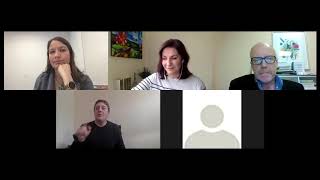
Virginie Glaenzer hosts Catherine Havasi, John Hagel, Jonathan Cook, and Mia Dan to discuss what ethical leadership means when profit and moral responsibility clash. They argue business schools never taught ethics, the public doesn't understand AI, and tech lacks diversity. Johnson & Johnson's BabyCenter shows how learning-focused models can rebuild trust.
Chapters
Welcome to Pass the Mic podcast with Jonathan Cook, who will lead our conversation on the topic of ethical leadership with some important questions: What are ethics in business, and what does it mean to be an ethical leader? My name is Virginie Glaenzer, and I'm your host with a million questions. Pass the Mic podcast is about sharing different perspectives on a specific topic, not only to expand our understanding of the world, but also to explore new ways of looking at it. Before we start this conversation, let's begin as we always do with a tour de table and have each of you tell us your name, what you do, and what you're interested in this topic. Please try to be brief and keep your introduction to about a minute. So let's begin with Catherine.
Hi, I'm Catherine Havasi. I've been working in AI for about 25 years. I'm both a researcher, where I've done a lot of work sort of pushing the research boundary forward, and an entrepreneur, where I've spun about 3 different pieces of technology out of my home university, MIT. And I'm very interested in You can't talk about AI these days without talking about ethics. And I'm very interested in how AI companies can continue to be ethical leaders moving forward.
Very nice. Thank you. John.
Hi, I'm John Hagel. I run a research center called the Center for the Edge at Deloitte. And our charter is to identify emerging business opportunities that should be on the CEO's agenda, but are not. And to do the research necessary to persuade them to put it on the agenda. Um, and I've been in Silicon Valley now for about 40 years. Um, and, uh, I'm very interested in the topic because a lot of the research that we've done suggests that we're in the early stages of a big shift that's going to transform the global economy and that it is going to drive a fundamental change in the nature of ethical leadership.
Very exciting. Thank you. Jonathan.
Yeah, my name is Jonathan Cook, and I am a researcher and consultant in commercial culture, which is not just about what the leaders decide for us, but what comes from the bottom up. I study the stories, the symbols, the myths and rituals of what people do in the marketplace. And as if we're actually still living as human beings and not as completely rational creatures, which as we begin to discuss ethics, maybe that'll be an interesting way to look at it. I know that ethics in its root can be highly rational and logical coming from the ancient Greeks. And yet we don't live that way, do we?
Exactly. That's a really already interesting question. And finally, our mystery. Our speaker, Mia.
Hi everyone, this is Mia Dan. I'm the CEO of Lighthouse3. We are a research advisory firm based in San Francisco Bay Area focused on the applications and ethics of emerging technologies. I'm also the founder of the Women in AI Ethics Initiative, which is focused on recognition of women who work in this, work on the important issues related to ethics of AI.
We—
I'm the same as John. I've been in Silicon Valley for a long time. I have a corporate background, but our work stems from the philosophy that any technology that isn't diverse or doesn't include women and diverse perspectives is inherently unethical. So we help organizations, mid to large-sized companies, integrate ethics into everything they do, especially as they adopt artificial intelligence.
Very exciting. Thank you so much. We just recently had a discussion on gender identity, so, you know, it's, it's a big topic. So I'm very excited to start this new year 2020 with a discussion on ethical leadership. And in my humble opinion, being born and raised in France, I've witnessed as I was growing up and later on working, how Americans are truly gifted with their leadership skills, with an ability to gather people around a mission and executing it with brilliance. However, in our troubled time, leadership seems to be questioned. And interestingly, after spending myself 20 years in tech, I see technology, which has supported so much of our society evolution, our economic growth is now being attacked and being a bad guy. So last week I was listening to an interview with Yuval Noah Harari and Max Turgman from the Future of Life Institute on artificial intelligence. You may have listened to that really fascinating interview. What I took away is that morality and ethics require consciousness in the sense of Being conscious is our ability to feel versus or whereas intelligence is our ability to think. So morality has to be grounded in subjective experience. But I don't want to steer the conversation to AI and consciousness, which would be a fascinating topic. So Jonathan, why don't you lead us in this discussion and set the context by answering the question, What are ethics in business and what does that mean to be an ethical leader?
Yeah, well, thank you, Virginie. I think the point that you just brought up is really important. The idea that morality and ethics are grounded in subjective experience, which is again, you know, the opposite of the philosophical tradition that so much of what we do in our society comes from. Which was the idea, you know, that with Descartes or Aristotle, that you could somehow find what's right and what's wrong by looking at the atoms of existence or of your own consciousness and very coolly and collectively dissecting it and putting it apart. And yet we haven't been able to do that. So I think when we're talking about business ethics, we need to look at the two components of that. Business and ethics, because that's where you get to the special trick. It's that makes it really even thornier than ethics in general. In business, the imperative is between profit and loss, but in ethics, the distinction that's really important is between right and wrong. And there's an obvious conflict with that, that we have all experienced. Doing the right thing often requires financial sacrifice. And making a profit often requires ethical sacrifices. And anybody who's worked in a business environment has seen these arguments in their own departments, in their own leadership. What is it that we're supposed to be doing? And what they're really arguing about is who we are. What is this company? What are we about? What are we here to do? And the trick is that there are usually multiple visions of that. You know, you can write your corporate mission statement, your purpose, and all of that, but that's just the official line. And there's always a culture within a corporation. And different people believe different things about what that culture is for. At Google, we have seen this over the last years. There have been these protests. And then the leadership is saying, what are you doing? That's not what we're about. And then, you know, the people who've been there a long time are saying, wait a minute, remember, don't be evil. At Amazon, we've seen that this last week where Jeff Bezos has said, hey, listen, you know, if you're pointing out how Amazon is not good for the environment and is contributing to climate change, we're going to have to fire you. So what does it mean to be a member of these companies? Who is running the business anyway? I mean, what we're getting down to is the question of what is the right thing in ethics? Do the right thing. What is the right thing? What is the wrong thing? And who is to say what's right and what's wrong? For whom is it right? And for whom is it wrong? Because, you know, often an ethical decision is about doing the least wrong thing, you know, for the people who really need it. It's not about being perfect. We have conflicts between multiple ethical interests, much less, you know, the interest of profit. So one of the things that we have to deal with in business ethics is that what appears to be right from one perspective can appear to be wrong from another perspective, because ethics are not something that's an inherent quality of the universe like gravity or or time, or, you know, the periodic tables. These are socially constructed things, right and wrong. So they're relative, they're subjective, and they have to do with our emotions and our habits and our traditions as much as calm calculations of justice, as if it's a simple and clear law. Even the law isn't as clear as it at first appears to be. So what makes this especially tricky is that right now we have less social consensus than we have had in the past. And part of that is just because our society is so much bigger. It's not just what's in one country. It's becoming an international thing. And we're struggling over that. You know, here in the United States, our politics show this quite clearly. Half of the American population perceives Donald Trump to be a highly immoral person, despicable, the worst president possible ethically. And the other half, you know, is really strongly in support. And they may agree that certain aspects of his behavior are unethical, but they engage in this kind of situational ethics where they're saying, you know, what he did right here wasn't the best, but there's a larger goal. Of right and wrong that we're going toward. And, you know, I think everybody in the United States has experienced how we can talk past each other in terms of ethics. And we're both talking ethically, both groups, but we aren't speaking the same language. So the same thing is happening with business in the larger society and even business to business. You know, if you got people from Amazon and people from Patagonia in the same room, they would have a really interesting discussion. I don't think that they they would resolve their differences in a week's discussions at a roundtable because they're coming from really different perspectives. You know, so the thing is that for some people in business, they've argued that profit is itself an ethical goal, especially since the 1980s. They've said that for-profit corporations have the primary obligation to get money for their shareholders, as much as they possibly can. And that is the primary goal. Everything else is secondary. Now, this year, the Business Roundtable, which is a prominent American business lobbying organization, questioned that. And they issued a press release saying that, you know, we're acknowledging that there are actually other important ethical issues and making money shouldn't be the primary ethical issue anymore. And a lot of people saw this as a very bold step, but there was a catch to it, which was that it was just a press release. Uh, there were no teeth in this statement that they issued, just a 2-page statement with a lot of signatures of, uh, chief executive officers at the end. There was no mechanism to actually enforce this new vision. And there were no specific plans to actually change the corporate behaviors of any of the signatories. And if you take a look at who some of the signatories were, well, there would have to be a lot of changes. Jeff Bezos of Amazon signed on. And we know that there are a lot of ethical questions about, for example, the way that they treat their workers or the amount of energy that they're consuming with their shipping. You know, overnight, with their undermining of small businesses. Now, we can say that there are, you know, questions about maybe in the larger scheme, all of those things are ethical and bringing us to a new society in business, and that could be true. But there are a lot of concerns that people have with Amazon. And none of that was taken into account in what the Business Roundtable said. A couple of weeks after the Business Roundtable issued its statement, there was a company which was a signatory of this statement, Blackstone. And it was discovered that they were actually engaging in business that encouraged the burning of the Amazon rainforest. And no one at the Business Roundtable who had signed this lovely document saying that we should be more ethical in business actually did anything. To stand up and say, hey, wait a minute, this isn't in accord with this embrace of higher ethics.
So as you said earlier, there's definitely obvious conflict between ethics and business. It's interesting that you said that ethics to you is situational ethics, that it's relative. It's really not what I had envisioned. Who has a different perspective or a similar perspective that wants to jump in around, you know, what is it to be an ethical leader? I'm curious.
Hi, can I?
Sure.
Hi, this is Mia. I would love to chime in. Yes. So I love everything that Jonathan just outlined. It's pretty astute summation of the current state of affairs. So the current ethics, the ethics crisis in AI is symptomatic of a more systemic issue. It didn't just come up like we've had this ethical crisis for a long time. For those of you remember the Enron crisis, we recall that business schools really didn't talk about ethics until then. It was after the global meltdown at the Enron crisis that the business schools came out with, oh, maybe we should introduce ethics as part of our business education and that the relentless pursuit of the almighty dollar may not actually be good for the general society. So you fast forward to today. I live in the San Francisco Bay Area, and I read an astounding statistic. 1 in 12,000 people in San Francisco, 1 in 12,000, is a billionaire. Billionaire with a B. And this is the same city which has the highest, like, one of the worst homelessness crisis in the state. So one has to think more thoughtfully about what are the issues that are causing these systemic inequalities, and how can we look at artificial intelligence, which is so pervasive, it's impacting all our lives. How do these show up in different places in our deployment and our implementation of artificial intelligence? And I feel that's the framework that we should be looking at, the systemic framework for ethics rather than just having it as, oh, this is related to business because it is symptomatic of what's happening in business and society for a long time.
I mean, I think Mia makes a really great point about awareness as well, which is super important here. If you think about it, you know, before Edron, they didn't teach ethics at business school, certainly until extremely recently. Ethics wasn't something that was considered in an AI curriculum either. And I think to some degree awareness is key because when founders and when folks in AI sit down and they start working on technology, there are two big issues at play. One of which is, as I think all of us have talked about, there's a real issue with diversity in AI and with diversity comes diversity of perspectives and understanding of how technology impacts people. But I think there is, to this point, a huge huge gap between understanding how deploying a piece of technology actually affects people and a huge lack of education in understanding how to look at that problem. I mean, most people who are out there in AI right now haven't had any training in this and haven't really thought about this. It's a new issue, right? And to that degree, awareness is really key. I was speaking on a different panel maybe a month or so ago at Harvard, and Someone said, well, how should we talk about regulation when we talk about AI that doesn't affect people? Like, for example, Google Maps routing. I was like, well, all AI affects people. Google Maps routing affects people. If you think about it, you know, whether or not there are more cars through your tiny neighborhood, you know, whether or not Google Maps should tell people how to avoid speed traps, all of these things are real ethical questions. And I can't think of— well, there aren't very many pieces of AI that don't affect people. And I think closing that awareness gap is really important. But on the flip side of that, there's also an education gap for everyone in the country, in the government, everywhere, about what AI is, what it can do, and what you're signing when you sign these different sort of access statements, right? I think people have a real— you know, my big— one of my big things is data and data privacy, right? And you'll probably hear more about this, but, you know, most people don't really understand what kind of information they're giving away when they use their cell phone, when they sign contracts, things like that. In the EU, out of Finland, there's been this great course called Elements of AI, and a lot of people have taken it and are really starting to learn a little bit about the ideas of AI, how it works, what the software does, and so they can make a little bit more informed choices. And I think that kind of culture of awareness is going to become very important as we sort of move forward as well.
If I could pull back a bit from AI to the broader business issue, I do want to go back to Jonathan's observations. I think the question of is business ethical to me requires a prior— answering a prior question, which is what is ethical? We talk about ethics as if everybody agrees on what's ethical and what's not ethical. No one agrees on what's ethical and not ethical. That's a highly debated topic. So before we can engage around, is it ethical, I think we need to really be clear about what do we mean by ethical? What are our beliefs? And I think in that context, I believe we— again, I mentioned a shift in the global economy. You know, I think for almost a century, in business, we had a supply-driven economy that was shaped by massive capital investment. To be in business, you had to invest a lot of money. It was very capital-intensive, large factories, and the— there was what I call the industrial bargain with customers, which is if you want affordable products, great, we will provide them to you, but they're going to be standardized mass market products. That's the only way we can make them affordable to you. We bought into that. By the way, huge progress in terms of access to things that most households never would have been able to access 50 years ago. Progress in that sense of affordability and access to products that are highly functional in our lives. The problem or the challenge was it required massive investment. And I think that's what shifted our focus in ethics to returns to shareholders. The ethical behavior was to, if you were going to get a lot of money from shareholders, you better pay them back in a responsible way. That's the ethical behavior. And the key values in ethics, I mean, again, I'm using the term broadly, were efficiency and reliability. You know, to be ethical, you had to be efficient and you had to be reliable. That was an ethical company. And, you know, as Jonathan mentioned, the 1980s, a famous economist came out with the notion that the primary goal is to provide return to shareholders. Companies were behaving that way for almost a century beforehand. He was just describing what companies were doing on a daily basis. I think the interesting thing now is we have 3 related changes in the global economy. One is that to be in business requires much less investment than ever before, much lower investment. We're in a world of accelerating change and uncertainty, and most importantly, I think, a world where customers are becoming more and more powerful. And the focus now is shifting from a supply-driven economy to a demand-driven economy. What do customers need and want? What is going to be most helpful to customers? And if we're not focused on that, we're going to end up not providing returns to shareholders. So I think it— I tend to be an optimist in this regard. I think the ethical behavior of the future— we often talk about ethics versus profits. I think in the future, ethics will be essential for-profits, and the ethics will now be different. It won't be efficiency. It won't be cost reduction. It will be learning. How do we help people to learn faster? Because in a rapidly changing world, that's one of the most important values to all of us. How do we help our customers learn faster? How do we help our employees to learn faster, our business partners to learn faster? Now, suddenly, that's where the human being comes back into the picture. And I think will shape the ethics of the future for business and be an absolute essential to provide return back to shareholders. I don't think it's be ethical or be profitable. I think it's be ethical to be profitable in the future.
So that actually leads me to— oh, someone has a double— no, I think we're good. So I heard there's a lack of education, right, which is to me extremely surprising that if it's not part of your culture and your education, you're not as a leader asking yourself what's the right thing to do. But anyway, there's a lack of education, and because Jonathan said that ethics is relative, which means that it's based on my personal belief, what do you think? Who should make the decision? And with ethics, if it— if I can't trust myself as an individual because I'm skewed due to my own belief and I haven't been taught right versus wrong. Now we have technology, which almost has a life of itself. Who's going to create ethics? Do we have to rely on lawmakers?
I think, Virginie Glaenzer, this word trust that you just mentioned is really key because actually it undermines, I'm sorry to say, the entire premise of this discussion we're having, which is getting to business leadership, because I don't think that leaders can alone set ethics, especially in this circumstance that John was just talking about, which is that we don't agree. We have disagreeing factions, disagreeing interests. I am, John, more pessimistic, unfortunately, because there are a lot of terrible examples of what's going on. But we do have pieces of social glue and education. What you were just talking about, Virginie Glaenzer, is one of them. And unfortunately, This is a great surprise given what we expected from the internet in the 1990s. Journalism was one of those traditional glues, having reliable information. If you don't have reliable shared information that you really can count on, then you can't have people making agreements about what is ethical because we don't even agree on the factual premises upon which these ethical arguments are being made. And, you know, from Boston, Katherine, I have to bring up the instance from this last year of the MIT Media Lab, I think it was, the personal food computer. It was this amazing thing. It was AI matching up with food and it was growing vegetables at amazing rates. And they would bring in journalists And they would, you know, wave their hands in the air and the NPR and the BBC and all of these, you know, really respected journalistic institutions said, wow, this is amazing. And they wrote these pieces about it. And it was an entire hoax. There was no AI. They were taking tomato plants that were grown in soil traditionally in conventional ways. And then they were brushing all the dirt off. Putting them in the silicon substrate, and then putting them in grow boxes, which is all that these boxes were. They were boxes with lights in them. It was very traditional, pre-digital hydroponics. It was a complete fraud. But something went wrong with our journalism there, in that we didn't know the difference until an insider leaked it out, until, you know, finally, after a long time, This was a total scam. This speaks to the kind of pressure we're under in business to create growth. And that warps our ethical judgments. But it also speaks to what the role of journalism is in relation to business, but specifically to AI. Because unfortunately, for a long time, I think the role of journalism that reports on business has been to promote business, not to question business. And the same thing has been there for AI. You know, there were articles I was reading last year about a dog collar that purported to use artificial intelligence to describe the emotions of your dog. Well, look, I mean, if you're honest and you have a dog, you don't always understand your dog's emotions and you live with the thing all the time. I mean, it was a ridiculous idea. And yet, you know, we promote these ideas. I would love to see more critical questioning in ethics from our journalism. But what we also need journalists to do then is to help us communicate with each other, not to come out and say, you know, hey, we're the New York Times or the Washington Post and this is the way it is. We're issuing a report, but we need to have a new way for us to share ethical perspectives and to share them with business leaders. Because I think that an ethical business leader is somebody who listens to the perspectives of others and doesn't just follow their own ethical imperatives. What's good for them. That's got to be the best kind of thing so that leader doesn't create the ethics. But helps us as a community, a worldwide community, to make ethical decisions when there's ambiguity involved. You know, what's best for the highest number of people? And maybe artificial intelligence could help with that. I would love to see it.
So two things on that, one of which is obviously I can't comment on the OpenAI situation given pending investigation, but When it comes to journalism specifically, I think it's interesting. Like, we used to have local journalism, we used to have trusted journalism. We don't have any of that anymore, and a lot of that has eroded. And if you think about it, a large number of people actually don't get their primary news source from real specific, what you would think of as journalism. And I think that becomes a problem even outside of AI. Is a whole different set of catworms, so to speak. You know, when you think about it, even last week, to give a more pressing example, you know, there were two videos that were going around that were different cuts of presidential candidates. There was no AI involved, different cuts of presidential candidates making it look like they had said different things that was not at all what they had said, and it was completely out of context, and that had gone around on Twitter. And these things happen all the time, right? And so people end up because there's no fact-checking, because that happens, people end up not being able to get the correct information. And I think something that happens even in the investor pool, when you think about things like Theranos and other sorts of things, investors and journalists are going to lack the technical ability to really go in and say, look, this is something that works, this is something that doesn't work, this is hyperbole, this is what's limitations are, you know. And then you also see, because of that gap, you see a lot of confusion about what potential is for technology. And I think that causes people to end up getting entrenched in different camps in a way that's not actually productive to discussions. And that all goes back to what I call the local news problem when I like to talk about this. And I don't have a solution for that, you know. Local news, specialized news, all of these things, the profit models aren't really working right now, and so how do we fix that situation? And I think there's a lot of people very concerned about this, and I haven't seen good solutions, so it's one of the things that makes me really worried.
Can I add to what Katherine said early on about awareness? I think a lot of, and education, I think a good starting point would be to educate people as in the way they're doing in Finland. It's making sure people have enough understanding of the technologies that they're working with to ask the right questions. Because right now, a lot of technology, AI especially, it's this black box. And that's why there have been a lot of calls for transparency. Let's see what's going in. What are the inputs? What are the outputs? Because when things go wrong, you need some level of understanding of why it went wrong. And also, who, how do you hold someone accountable if you don't even know what the issue is? So that is, I feel, the fundamental difference between traditional technologies and the business models that we've been so used to. When we come to this age of AI, a lot of these systems are so complex, and the only way we can help drive forward this conversation about ethics and have some meaningful progress is to open up some of these black boxes, have an explanation of what's going in there. But also, we need to look at another key stakeholder here. A lot of AI technologies are based on data, and who's providing that data, right? It's consumers. It's human beings who are providing the data. Who's asked them? Who's asking them, are you okay with me using your data for such and such research? So DeepMind, which is a part of Google, announced that they are able to detect cancer better than any doctor. But the question is, how were they able to do this? Like, what went into— what was the sourcing of this data? How did they come to these conclusions? And a lot of that is still not accessible. And to your example of Theranos, that's such a great example when Companies, technology companies can even fool the most successful and the smartest people with multiple degrees and such a stellar track record. Imagine the common person, the average person who has so little technical background to even do that assessment. I do feel like we all play a role. Journalists have been literally the warriors. I feel a lot of uncovering of these facts has come from journalists. So I feel like they are really the heroes of our time. But I do feel that we don't need to define what ethics is because that is always going to be complicated. It is a collective notion, and we have a legal framework that we could use as the basis for it. But let's just accept that it will keep evolving. And the way we look at it, when we did our AI ethics model, is multidimensional. So it looks at not just the technology itself, but we also look at Who does it impact? Who are the marginalized groups that are going to lose their jobs? Who is being surveilled? How is the technology being used for surveillance? And what are the measures for accountability when that technology is used to discriminate against a group of people, women, people of color? So I feel like the ethics conversation is multilayered. It's not just one thing, and ethics isn't just one-dimensional. So something we need to really start with, again, going back to educate awareness, have transparency around like how are these models being built, and then share that information. Also share the benefits with the people that you're taking that information and the data from. I think that's the component that's been missing throughout. Like, how do we share? There are technology companies, handful of technology companies, who are reaping all the benefits, How do we share that with the people who are actually fueling this AI economy with their data?
So that's one of the things—
Go ahead.
I just wanted to go back to the issue of trust because I think it's central to the business world and success in the future. And by the way, if you look at the surveys, number one, trust is eroding in all of our institutions. Institutions, not just businesses, governments, media, universities. Trust around the world is eroding in all of our institutions. Everybody knows that. They all nod their heads when they hear me talk about that. No one's asking the question, why? And what do we need to do about it? And I think it's an interesting entry point to really ask the question because it ties back. I mentioned this notion of businesses being driven by a scalable efficiency model. I believe all of our institutions have embraced a scalable efficiency model. One of the reasons we're seeing less investigative journalism is because it's not efficient. Efficiency is how quickly can you get a story out with less cost. That's efficiency. And so I think the scalable efficiency model is driving a disconnect between the ethics of the businesses or the institutions in general and the ethics that we as people are increasingly embracing. And the challenge is, how do we break that disconnect? And I believe, again, as an optimist, that this is not sustainable, that institutions will— some institutions will start to recognize the opportunity to rebuild trust by focusing on a different set of ethics, which have to do again, the way I think about it, around scalable learning. How do we help all of us to learn faster and achieve more of our potential? If we can do that, I believe we're going to get a lot of trust because everybody's going to see that we have your interests in mind, not just the business's interests. And so I think that's going to be a a big opportunity. I'll just give one quick example too. I think this is still very speculative. We're in the earliest stages of all of this, but an interesting example is what Johnson Johnson did with an online site. I don't know if you're familiar with it called BabyCenter. At least in the United States, it has millions of participants, and its target are parents with small children. Babies who are facing a huge life event that is very challenging. And they've created an environment where parents can connect with each other and get advice and help from each other. And then they bring in experts who help answer questions and provide more advice. But it's all about helping the parents to learn faster. It's gotten huge acceptance and adoption. I think that's just an early signal of the kind of opportunity if businesses really started to focus on that.
Right, yeah, the future of brands are going to go through community building. You said something earlier and I want to kind of do a little game, not a game, but you said that, you know, with the mass production in the 20th century, an ethical business was efficiency and reliability. So efficient and reliable. What are the two words that you guys would choose to say that in the 21st century 21st century an ethical business would have to comply with? Would it still be efficient and reliable? Or what would those two words be? I'm curious.
I'll take a stab at it. It's not going to be two words because rapidly evolving would be one. If you're not rapidly evolving and And then it's providing more and more value to your stakeholders, all stakeholders, not just shareholders, but— and again, I'm talking more in a business context, but whoever your stakeholders are, are you providing more and more value to them, helping them to grow? That's the ethical institution of the future.
I would say maybe that there aren't two words, right? I would say things have gotten much more complex than that, and maybe that's a dodge, but I also think you can't simplify things in the same way, you know, that you used to be able to. I think transparency is going to become very important as well, and is going to be a guiding light for a lot of this kind of decision. So that would be a word that I would add, honestly, to your description. It's just like, I think transparency needs to be on there.
Yeah. To go with transparency, I've got a couple of concepts. The first is this word trust that we've been talking about. And this is one of those words that really tickles me because of its etymology, the origin of the word. It's actually a physical metaphor because trust comes from the same root word, Indo-European, Proto-Indo-European root word, deru, which is where tree comes from. And what we know about trees is that they don't go changing their positions a lot. With the tree, you literally know where that stands. You know, you know what it's going to do. It may shed limbs, drop some leaves, some acorns, you know, every now and then. But a tree is a tree. And it's also where the word durable or endure comes from. And it's also where truth comes from. These are all branches of the same core concept. And these are things that are really important to business. You have to have trust so that you have an enduring relationship, but you also have to have a common vision of what is true. And I think, you know, Catherine has been talking about this and Mia as well. You know, it gets back to transparency in these roots with the splintered reality that we have. And so that's the second concept that I would put in here is that we need to develop cultural understandings and practices. You know, famously, we've been disrupted. I think anybody who claims to understand what's going on doesn't understand what's going on right now. And we're all experiencing that in business and as consumers. Because, you know, the thing is that corporations are incorporations of consumers' desires. Like John said at the beginning, you know, people bought into this stuff. But the trouble is that things are developing so quickly, we don't really understand the implications of what we're buying into. And I think we need to take some time to develop human cultural technologies for understanding what do we do What's the accepted cultural practice for how much time you're spending on your smartphone and which apps you're using and what's not okay behavior and, you know, how you share your data. We don't have cultural practices. We're making it up as we go along. And I believe that when we hopefully can get some time and a little bit of space to think about this, which thank you, Virginie Glaenzer, for providing this platform for doing just that. This is the kind of thing we need more of. We need more Pass the Mic, because if we get more of this pausing and thinking about the ethical implications, we can build up cultural practices and then the businesses will follow. Because when we as the people get our acts together and figure out, you know, what do we do when we hear that Facebook has been doing horrible things with our information. You know, well, right now people haven't— they're not sure what to do. And a lot of people stick with Facebook despite that. That's an ethical problem that enables Facebook to, as we've seen, it keeps on repeating and repeating, giving its data over in new unethical ways. So culture and trust, those are the two things that I think we need to focus on.
Mia, is there any other words that you would like to add to that list of what is an ethical business today? We have rapidly evolving, value-driven to all shareholders, transparency, trustworthiness, and then, or trustworthy, and then cultural. Is there anything else you'd like to add?
Yes, I feel like someone on the call already said this, but human-centered, human-centricity. I think it's a big one. We do have many stakeholders in a business, and we need to bring the focus back from maximizing value for the shareholders. I think that's, as John mentioned, and taking it back to focusing on the humans, maximizing value for human beings. And those human beings, and I don't mean the billionaires, I mean the human beings who are going to be using these products, who are going to be using consuming a lot of these outputs of these technologies that we are developing. AI obviously being the most, one of the most powerful technologies out there today.
Fantastic, great. Well, we're close to the end of the hour. So I wanna, before we end, I wanna thank everyone for this insightful conversation. And as I just said, as we come to the end of the hour, I'd like to end this discussion with the way it began with a tour de table. So one of the promises of this podcast, it's a promise and a premise of this podcast, is that there's too much talking and not enough doing. So let's pass the mic and tell us what you've heard today that will inspire you to start something differently than the way you did it prior to this conversation, or any insights that you want to leave the listeners and the viewers with. And I'm going to start by sharing my own takeaways to give you guys a moment moment to collect your thoughts. So there's two things that I heard that really triggered my synapses, my brain. The first one is— it's more a question— if we're lacking education to know what's right and wrong, and ethics is really being expressed through our culture, I think what we need is a new narrative that incorporates ethics. And I haven't heard any new narrative as a society narrative about who we are. I'm, you know, I'm an American. Is there ethics in that story? I'm a woman. Is there ethics in that story? I haven't heard that. So I want to take some time and think deeper about what is this new narrative or new story that would encompass the notion of ethics. So that's number one. It's almost like a homework. And the second one is I was asking myself, and what does it mean to be an ethical leader? And Jonathan, you said something that will stick with me and most likely guide me through my own, becoming a free leader in my own marketing agency. And it's someone who listens to others. And I think it goes, it makes sense, because if ethics are connected to our own belief, if I want to make the right choices and understand what's right and wrong, I have to go beyond my own belief. And you can only do that by listening to other people. So those are two points, and I want to really thank you from the bottom of my heart for bringing me those insights and homework. So anyone wants to jump in, or I'll just give a name.
I'll jump in. It's a very rich discussion and a lot of different dimensions to it, so hard to summarize or take away. I think it's a lot of takeaways. I think one of the things is I think that the fact that ethics is emerging as a central discussion item today is an indicator that we are in a period of great change. I mean, it was mentioned that there was no education about ethics. Well, that was because we all knew what the ethical behavior was for companies. It was taken for granted. No need to educate. It's clear. Now there's real question about what is ethical business. And I think rather than education, I would focus on exploration and discussion because I don't think we can just educate a teacher, teach us, here's the ethics that you need to pursue. We need to explore together and figure it out. And I love your comment about narrative. As you may know, I've written a lot about narrative and it's a key part of my new book. I have a very different view of what narrative is. But I think that the opportunity here is to frame what I call an opportunity-based narrative, which is a call to action that is framed around an opportunity. And broadly, to me, the opportunity-based narrative that can help all of us to explore ethics and, and be more consensus around ethics is let's come together so that we can all achieve more of of our potential. That's a huge opportunity. But we need to come together and we need to focus on achieving more and more of our potential. That's the call to action.
Beautiful. Thank you.
Honestly, for me, mine is around education and some of the things that were said about enabling learning and enabling lifelong learning is something that I've been thinking about anyway. Over the last week and a half, and is definitely something that, you know, I'm taking away.
Great, thank you. Mia, do you want to share a little bit your final thoughts or reflection or frustration, whatever you want to share?
All of the above. First of all, thank you so much for hosting this insightful discussion. It's wonderful to hear different perspectives, and I'm a big believer that diverse perspectives make the best outcome. And when it comes to artificial intelligence, I feel the more— the answers may not come from the technology world. The answers most likely will come from outside of the technology world. So the initiative that I lead, which is Women in AI Ethics, is built on the premise that we need to be including more folks, more women, more diverse perspectives who are not technical. They may be policymakers. They may be people who work on HR recruiting, people who work on the business side. It will take all of us to come together, whether it's a society, whether within a business, to come together, come up and formulate what an ideal ethical model looks like and how it can benefit not just the business but all humans who are actually going to be impacted by it. So I'm glad to be part of this conversation, and I hope to continue to participate in future.
Wonderful, thank you very much. Since you started, Jonathan, you're going to be the last one to end this conversation.
Well, you know, I've heard Catherine and Mia especially talk about the information that we need, and yet ethics is ultimately about the decisions that we make with the data that we get. And so the thing that Mia said a few minutes ago about focusing on the human is, I think, therefore what really stands out to me from this conversation. Because we can build tremendous black boxes, but ultimately, it's going to be human beings making decisions, or we'll be living in the apocalypse, and that's a separate ethical question. But let's presume we don't have that happen. Human beings are still going to be making decisions. And right now, we seem to be flooded out. I really am pleased to see that in AI and in business, people are beginning to grapple with this. Because the innovation that we need now, I think, is human, not technological. Though technological is great, it's amazing, but we need to catch up as humans with our tools. We need to be able to use them wisely. We need to be able to innovate what it means to be a human in this new world. And until we do that, we're not going to be capable of mustering the mental clarity that's required to make an ethical decision. So I want to end this by wishing for everybody in the world, and especially in business because they've got so much power, some moments of reflection to summon that clarity and more opportunities for us to gather together to question these things, to explore their ambiguities, which is why I'm so thankful to you, Virginie, and thank you for putting this together.
My pleasure. Thank you very much. We've covered a number of ideas and topics, and I hope it will be useful for ourselves and others, and I want to thank you for your time.
Thank you.
More from Virginie











Unlocking Fintech Success: Strategic Trends for Profitable Growth: Webinar Leadership Series