Full Episode #7: How Can We Become Better Leaders Through Improvisation?
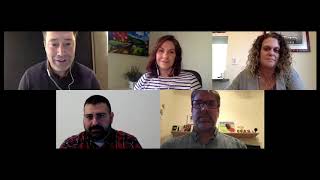
Kate DeFeo and three leaders discuss how improv principles like "yes, and" transform workplace culture. They share examples from design workshops and advertising teams, explain how active listening builds trust, and describe practical exercises that help teams move past habitual thinking patterns.
Chapters
Welcome to Pass the Mic podcast with Kate DeFeo, who will lead our conversation on the topic of improvisation with an important question: can improvisation create a more productive workplace? My name is Virginie Glaenzer, and I'm your host with a million questions. Pass the Mic podcast is about sharing different perspectives on a specific topic, not only to help us expand our understanding of the world, but also to explore new ways of looking at it. Before we start this conversation, let's begin as we always do with what I call a tour de table and have each of you tell us your name, what you do, and why you're interested in this topic. So we are going to try to keep this individual introduction to about a minute. So why don't we begin with Rob?
Hi, my name is Rod Sage. I am the head of digital strategy and programs at Fiduciary Trust Company International based here in New York City. And why I'm really passionate about improv is that oftentimes when you're a leader in the company, you get fired off with a million questions at any kind of town hall or meeting. You need to be able to respond And you also need to be able to engage your audience, especially when you're trying to affect change, and improv has really helped with those skills.
Very nice. Exciting to hear more. Jamie?
My name is Jamie Cummings. I'm a corporate improv trainer, which means I come into companies and organizations and teach them improv, you know, as often as like a team-building exercise, something like that. Sometimes just after work, once every couple of weeks for fun. I've gone into companies and done that for like months at a time. And it works on— for, you know, in a corporate setting, it works on collaboration and brainstorming and public speaking and all these things that are— it's amazing how many things that are skills that are helpful in improv scenes that are also helpful in a corporate environment.
Wonderful. OK, great. Kate?
My name is Kate DeFeo, and I'm a longtime educator, so I've always taught within the artistic world. And I started out teaching children's theater, and then I moved on to teaching teens fiction writing. And when I found long-form improv, I began performing it and then realized the strong passion I held for it and could not wait to start bringing it to as many people as I possibly could. So I currently run a small business called Faux High Improv located here in Forest Hills, Queens, where we teach adults. It's in Jackson Heights and Forest Hills right now. Teach adults long-form improv and the skills that go along with it.
Great, cool. I definitely have to try. And finally, Gabe.
Hi, my name is Gabe Capone. I'm a writer and improviser. I currently work as a creative director at an advertising agency here in New York City, and I've done improv for many years. I worked with Kate, as we talked about before. And 2-prov, and at work improv has always just been sort of a part of my day-to-day. I've always kind of made stuff up as I go, but improv helped me hone those skills. I do a lot of presentations. I have a lot of interactions with clients where I have to think on my feet, and just a lot of discussions with people internally, and improv has always been this great skill that I sort of learned through different techniques. And I just think it's a day-to-day advantage that I have when I work with other people. And I think everybody should do it at one point in time. And improv, when it's done well on stage, I always feel like it's magic. It's this sort of moment where everybody kind of is in this rhythm where they're all just agreeing and building something together. And that kind of happens day to day in lots of jobs and happens in mine.
Wonderful. Well, that's so exciting. You probably don't know that, but in a past life, I was actually an actress in France taking theater classes with a renowned French teacher, and his name— I think he's still alive— Jean Cochet, until I made different choices that led me to tech and business world and eventually in the US. So for that reason, I'm very excited to learn and listen to you four as we discuss improvisation in the workplace. To give some context before Kate leads us into this conversation, Kate and I met at a conference, and I truly enjoyed the exercises that she made us do. Surprisingly, in a very short time, we were able to make— to trust a stranger and rely on them. The exercises were just hilarious, as I remember, but also profoundly true. What Kate taught us is how to behave in an unknown environment. And I remember tweeting after the conference how losing our sense of self was a bridge to connect with someone else. So with that in mind, why don't you lead us, Kate, in that discussion? And perhaps you can start by— but it's up to you— answering a couple of questions such as, can improvisation create a more productive workplace? And how can we become better leaders through improvisation.
Wonderful. Thank you so much. So the basic— one of the basic things I just wanted to talk about briefly, just in case people don't know, the very, very most basic form of understanding improv and the theory behind it is the idea that we have to say yes, but also that we have to add ourselves, our unique perspective with and. And we're adding information. And I think why personally I feel it works so well in any life form is that we're or direction that we're in is that really, if we simply just say yes to one another and we work in a yes-positive work environment, well, that's wonderful. But if you just simply say yes and you never add any information as a leader or somebody who's working with others, it never actually goes any further. I always say that having a conversation where somebody just says yes and never adds any information from themselves, it actually stops productivity. Would you guys agree in your industries that you work in?
Hey, this is Rod. I would agree. It's basically like saying no.
Yeah.
So it's yes and, and those two words kind of go together. If it's just yes, it just means no on that stuff. If you can't keep on adding it, it means you don't have the other person with you. They're not there, they're not present. So I'd agree.
Yeah, yep, Escape, I agree too. I think the yes and, the building on things is always something that we try and foster here where I work, and in general, I think once you, once you say yes and, you give everybody an opportunity to sort of help collaborate and create something together, because the first idea out of the gate might not be that good, but there's something there. There's like a nugget there, and by saying yes and, and building on it together, we can create something that's pretty amazing, and that sort of is just a positive moving forward motion when you start saying yes and to things.
And I agree, of course, because my business is teaching exactly what you're talking about, Kate. So I'm of course on board with all this stuff.
So what you're saying, Kate, is that during a meeting or on a one-on-one interaction, let's say someone says something but you don't agree with it, your mind wants to say no and already has all the justification or the reason. What you're saying is to remember that the improvisation is about saying yes.
So do you Does that mean that you actually have to find something to which you can say yes, or you're just pretending and you go with the flow and you say, "Yes, and..." Yeah, so I think what's interesting about the "and" part of the statement really is that it gets ignored a lot, I think, in the philosophy behind what we're doing or in the business world, because I think a leader will think that they're creating a positive environment by simply agreeing. But if you just simply agree and you don't add any perspective to it, it often stops and stymies the progress of the actual conversation. It can happen in any industry and in any actual real-life conversation. And as Rod said before, it's almost the equivalent of saying no. So just because we physically agree, if you say, hey, you want to go see a movie? Yes. Well, what'd you think of the movie? It was great. And you don't add any information to it to have a discussion. It never actually furthers the conversation. And I think in any industry, in any business, if you don't have somebody who's receptive to the idea at hand and yes and it, even if they don't agree, like Gabe said right out of the gate, there might not be the best idea, but if you just immediately shut that down or just yes it and say, yeah, yeah, yeah, that sounds great. Well, it doesn't really actually develop, does it? And it's the equivalent of just sort of shutting down the idea behind what could be developed. And in Rod and Gabe's, world, I'm actually very curious, like, in what ways do you feel that improv has helped both of you in your respective industries? Because you do both do very different things, um, so I'd just love to hear a little bit about, about that from both of you.
Rod, you first.
Yes, I— and I will go first. All right, uh, so I'd liken it to a few different situations, and Kate, you, you did say It can happen in any situation, in any industry, in any conversation. And I'm just going to break that down and give some examples of that. So I have a design team and we bring people from the front office, people dealing with clients, into the design room and we say, hey, we want to design a new process. And what they bring with them is baggage. They bring with them baggage of how things are, how crappy they might be, or what is legal going to say, or what is compliance going to say, or what is risk going to say, or what the regulator is going to say, especially in a regulated environment. Very hard to add the yes and piece around that. So essentially, we have rules that I state up front, which is you can't say no. And anyone who gets no, I write their name on a board. You got to make it a little bit of fun. And that we implore yes and. So as we think about designing, we make sure that compliance and legal and risk are not in the conversation to cloud anyone's judgment. And we yes and everything. So during the design phase, if someone says something, we've gotta yes and it, and we continue to force that. So the design team, which is the leaders and myself, are pushing the folks to think out of the box. And you'll be surprised after the— it's a whole day session, and you'll be surprised after the first kind of 45 minutes to an hour, it comes very natural because they've been given permission. And I think that is what's missing a lot of time, is that permission to build and think And when you have that, you tend to have a lot more people on your side to push towards the right goal, the right client experience, or the right whatever. And it comes up another way. You can be having a performance discussion or coaching discussion with someone on your team, and the "and" piece can come into play in a little different way there. Right? If they're like, "I want more money," or "I want to do this," and you can say, "Yes, and it would be great if we focused on these items." and got you to where you needed to go so you can excel. And that's where you can have a real open, honest conversation and they know that you're on their side versus saying, no, I'm not going to give you an increase, or no, you don't deserve that promotion because these are all the bad things. And so using it even in that, in a situation where you're like, well, I don't want to— I can't yes and every time someone comes and asks for a raise or promotion, right? That you can use that as a coaching opportunity. So those are two different extremes. Around kind of the design phase or even a coaching phase. And oftentimes kind of in the middle, there are times I'll talk with clients who want to discuss features and functionality on our website, and that's a really different thing. I'm dealing with someone else's client. I want to make sure they're happy and continuing to build upon their desire and their ask about what they want to see and really getting to the heart of what questions they're trying to answer so we can do a better design within a technology or an online site. So you can see where it builds into anywhere from a performance conversation to thinking completely outside of the box on a design solution.
Oh, that's wonderful. That's great. Gabe, what do you think?
Yeah, so just to add to some things that Rod said, because I agree in the idea that once you kind of give people that permission and freedom to say yes, and, it's a bit of a relief. It's a burden saying no to things. It's a very heavy task to overanalyze things and sort of chop things down. And that can kind of outweigh really like that clear thought and objectives of what we're trying to do. So once you kind of give people that freedom, I see, you can see it in their face, this opportunity to say yes to something and build on something. So we do that a lot. And I work, the work I do in advertising is a lot of it is coming up with ideas that represent different brands. Or different strategies or different positions that we need to get across. And that is so much about everybody getting on the same page and collaborating and building together. We have the same sort of things that Rod mentioned where we have regulatory to worry about, legal. I do a lot of pharmaceutical advertising, so we have all these different things to consider. And we try and keep that off the table in the beginning parts because really what we're trying to do is the scattershot of ideas and everything is sort of valid at that time, which is great because it's like a stream of consciousness. Setup, and that's just how our organization works. And then we have general, like, projects that we have to do that address certain needs, and those, while those are a little bit more limiting and a little bit more traditional, even within the confines of that, we find ways to kind of collaborate and build and create. And so those specific projects or those bigger ideas hinge on everybody sort of getting on the same page about what it is that we're trying to do, and what it is we're trying to create, what's the goal, and what's our values for the work. And so much of that is about, yes, anding everything we can, and committing, and acting as if, and all those general improv rules that we know, because we want to create the best work possible, and that's always the goal. And our clients present stuff to us in a traditional manner because that's what they're used to. They would suggest, you know, doing something that's relatively basic or clichéd or seen before because why not, right? That's what's been done. And our job from a creative standpoint is to provide solutions that they haven't thought of before. And you can't really do that if people are saying no to things.
It's wonderful.
If I could jump in, Kate.
Please do, Jimmy. I wanted to—
You know, as far as saying no, like I'll ask my clients sometimes, you know, why do people say no to an idea? It's because, well, the idea doesn't work. But then, you know, why else do people say no? And eventually we'll get to a point where if you say yes, it's a little scary, right? Because then it's like, yes, well, now then how do we do that? And maybe it was somebody else's idea and they'll look good, or maybe it's my idea, but I'll look back because I don't know how to do it. Like, no is a way to sort of preserve the status quo. And there's all these, like, you know, in business there's all these values put on being a disruptor or thinking outside the box, because I think you can get in an environment where you're They're sending you your paycheck, you're doing things this way, let's keep it that way, and I'm safe and my job is safe. But it's scary to break out. And as Gabe was saying, you need to break outside of that, the way things are always done. But to do that, you have to say yes, and that yes is scary. So it's like an unconscious protection, I think, sometimes people say no without even knowing why they're doing it.
Oh my gosh, absolutely true. I could think of a million times, even myself, right? So I believe wholeheartedly in the philosophy, but even when you're speaking, I can think of a million times in my own life where you're absolutely right, the concept of yes is terrifying. It's like you're falling off this precipice because it's all positive, and once you say something very positive, the energy moves forward, and that is a terrifying feeling. It's not— and I think even those of us that feel this philosophy, we can have moments where we're tempted ourselves in many areas of our lives to shut something down. You're absolutely right. What a wonderful way to explain it. Express it. It's safer in a way to shut energy down because then we're in control a little bit more. When we're saying yes, we're relinquishing control and as humans I think, you know, it's a scary thing to do.
Yeah, definitely.
Yeah, and listening to you guys, my goodness, you know, what a gift you are to your industry because it's— even if we're not always perfect, because we're not, I mean there's human error in everything and as well there should be, but the improv perspective even with human error is the sense that it's a gift, isn't We take the error that comes our way and we say, "Hey, how can we use this to further our communication? How can we take that, what we would deem normally a mistake or something bad, and turn it into something positive? How do we jump on board with one another?" And I think, my goodness, isn't everybody lucky that's coming your way because you guys already believe in that. And really, I kept hearing you say things about comfort and how you're able to take a room of people and really listen to them. And these are skills, gosh, that I wish everybody would adopt, not just in their business world or in their industry, but in life in general.
So Kate, in addition to the yes and, what are other guiding principles in improvisation that we should know?
Okay, so ultimately you want to act in agreement, which is with the yes and philosophy, and you want to work together as a group. I think group cohesiveness becomes extremely important. So the idea that you're a team the second you walk in the room— and I was going to ask Jamie before, have you ever found within corporate trainings that when you walk in the room— and I'm sure, Rod and Gabe, you also find this in meetings and things of that nature as well— where you walk in the room and there's already a predisposed notion that improv is silly, improv is something that is almost cult-like in its philosophy or its nature, and there's a resistant energy to being on board as a team, that it's difficult. Yeah.
Yes, that generally it's not a whole team that feels that way. Generally, there's one or two people that feel that way, which is exactly what you're talking about. You know, this is— I'm an accountant or whatever. Why do I play— why am I playing children's games? You know, it's a fair question. But generally, the thing that's magical about it is it's fun. So if you're doing something and everyone around you is laughing and everyone around you is making eye contact and making connections, it's usually easy to sway that person to notice, well, I'm the only one that's not able to play these children's games. You know, and I'm oversimplifying, they're not all children's games, but many of them, you know, we do play sometimes children's games because there's a sense of play.
Yeah, yeah, yeah.
So generally, and generally by the end of session, everybody has had a good time and everybody at least understands one point that you've made as far as saying yes. And as far as, you know, Virginie said the tenets, like yes and is very important, but also you're teaching beginning improv students listening. And, you know, Virginie, you said someone says no because they've already thought of all the reasons why they can't do an idea. Well, that means while the person was explaining your idea to you, you weren't listening to them. You were thinking of your response. And we all do this, right? We're thinking of how we're going to answer while the person is still talking to us. And if you're doing that, you're not listening still to what they're saying. So we need to try to keep people— that habit, break that habit of coming up with your answer while the person's talking. Fully hear everything that they have to say so that maybe you don't say no to it if you've actually heard everything they've had to say. Wonderful.
Yeah, thank you for bringing that up. So true, the listening. Yes. Rod, Gabe, any thoughts on that as far as listening is concerned and what that's like for you guys in your day-to-day life?
Gabe, would you like to go first on this?
Yes, I would. Thank you very much. I hear you, Rod. Yeah, I mean, first, listening is such an imperative in improv and in work. I think what you just said, Jamie, is that this idea that people are sort of waiting for their turn to say what they need to say. So halfway through your conversation, that someone's talking to you, and halfway through it, they're already thinking about how they're going to respond to it. What they're going to say to it, and obviously they're not listening, and then you guys aren't really having a productive conversation. And that probably is aligned with the fear thing. They just want to make sure they get their thoughts out quickly, and, you know, follow the fear is such a big tenet of improv. This idea of just sort of appreciating the fact that what someone else has to say is important, you need to hear it, and then you can provide a really positive response. And there's a lot of people are saying lots of different things, and they're getting giving you all these little nuggets of information, and you're gonna miss it if you're not listening appropriately.
Yeah, Rod. Yeah, thanks, Gabe.
You're welcome.
Yes, and to add on to that, I know I love all these puns we're making, but it's because we're trained.
I know.
We understand how it works, and we understand the benefit of these types of mental shifts you've got to make in your everyday. I'm going to talk a little bit about empathy, and empathy is a huge piece, and we don't often talk about it in improv, and I think maybe we should a little bit around it. Part of listening is empathizing with who your audience is. So when I'm in front of a bunch of executives trying to get funding, let's say, for a new idea that seems harebrained, because all my group is responsible for innovation and bringing harebrained ideas in a lot of ways. To the organization, and I'm trying to get people to buy in into this, you've got to empathize with every single person in that boardroom, everyone in that seat, right, and get consensus. And one of the ways you can do that is really by listening to what their fears or concerns are. What are they— to what Jamie said, right, what are they going to say when you say something, and kind of get in front of that before they do. And one of the ways I find to do that is active listening on what they're saying, what they've said in previous meetings, how they've reacted to certain ideas, how they've interacted with you, how you've built partnerships or not built partnerships in the past, or maybe they don't even know who the heck you are around it. But getting in front of that as much as possible and using examples and stories and empathizing with real-world things that you can relate your product to. I remember Once I was doing this pitch for this document vault or document exchange with a client and talking about a product that was built in the company before I had come and how I wanted to change it. And I had to boil it down to an exercise around how people buy groceries and take groceries out of their trunk and put groceries in their refrigerator or their cupboards or wherever else like that. Because I knew everyone at the table was a parent, had kids, and went grocery shopping. That is something that's universal to every single one of us, right?
We—
not the kids are stopping it, but we all shop for groceries, whether you live in New York City and have a mini fridge, or you live in a McMansion and you have like this huge Viking fridge, right? Everyone's shopping for groceries, and how we bring groceries in, and how we bring bags and bags of groceries in. And sometimes we, you know, we pick up a gallon of milk with our pinky, we think, oh, I The picky is really strong. They can handle this gallon of milk and we're bringing this in. And I had to use examples like that to get people on board. And everyone got on board at that meeting right away because there was, there was equalness as far as I get you understand, you understand you're, you're saying it in a term that is not businesslike and you keep on adding to that story and relate and empathize with them and improv and storytelling. Has really helped with that, to kind of think of things on the fly as people ask for things and boil them down to things that all people can relate to.
That's such an awesome, awesome point. Again, the discoveries we're making even in this conversation that are coming up, and empathy is absolutely huge. I really personally believe that the best improv I see has it's ear towards empathy. I do believe that it's listening and it becomes relatable. I think if you're in the audience watching an improv set, some of the most funny sets I've ever seen were where you're really— the people are relatable instead of it just being the idea of chasing a game just for the sake of chasing a game. There's this also this angle of saying, hey, I have this depth to me that you might relate to because I'm going to tell this story. Can't even imagine how invaluable that is in your industry and in your work. What you were saying before, to have people relate to a product, have people relate to an idea, and using those storytelling gifts, I mean, that's tremendous. It's going back to the idea of comfort again for people. And you mentioned something too, and I don't mean to shift the discussion because that's also wonderful, and Gabe and Jamie, if you have some insight on The idea behind empathy, you know, also being involved in, in all of this and how this could help your various industries. I mean, that's— that could be a wonderful insight before I hop into something else you guys keep talking about. But go ahead, Gabe, do you have anything? You're kind of nodding like—
Yeah, well, I— because I completely agree. I mean, so much of that is about respecting the other person, and not only improv on stage, but like when you're working with people. You just, you have to sort of, you have to be able to invest in how people feel and think and their opinions. And you gotta, you know, be on the same page about that. You know, so much on stage when we do improv, it's about saying yes first and then you just play, right? And that's what one of the teachers had told me at one point. He's like, just say yes and then just play. And you're like, oh, well, that just makes it sound like it's so easy. But you're just investing in whatever that person has said or whatever you had said, and you guys are building that together. There isn't— someone says, okay, well, I'm, you know, I'm painting some gigantic wall, that's what I'm doing in this room. And then if you said, no, you're not, you're throwing something at it, whatever, that disagreement messes it up. You just have to invest fully. And a big part of that is being empathetic, like Rod said. You know, you have to sort of appreciate and understand where someone else is coming from. In order to create anything, I think.
Yeah, I think just to add on to that, sorry Jamie, is that oftentimes what we find funny in comedy when someone's doing stand-up or improv, and Kate, you alluded to this, but I just want to hit it a little bit more, is the everyday things that happen to all of us and really voicing that and voicing that frustration or voicing that happiness or voicing what's in your mind It's not the elaborate, right? Elaborate is sometimes hard to imagine for a lot of people, but the commonality and the funniness of just being alive in general, right? That's where you hook people into it and empathize with it.
Yeah, that's interesting because we never teach in any improv class that I've ever taken or taught, no one ever talks about, all right, this is how you're funny. So these— do these things to be funny. This is a thing you could say that might be funny. For whatever reason, it just ends up being funny anyway. You just tell people to listen to each other, build off each other's ideas. I mean, it's so much about trying to tie it back to empathy. You know, you can use these tenets in relationships. You know, I try not to be the type of teacher that's a guru and, you know, it's like, and to your husband and to your family, but you can. Do that kind of stuff. Because it's all about two people who are getting on stage in front of their friends and family that they've invited, and they have to create something together. And so they have to get on the same page. It's so hard to get on the same page. So you have to really listen. What's the other person trying to say to me? Even if they're not directly saying it, can I sense what's underneath what they're saying? And can I agree with that? And so that is empathy, right? Trying to see what's— where the other person's coming from. And yeah, so I like— I've never thought of empathy as something to teach, but it makes sense to.
Yeah, yeah, I think— oh, go ahead, Virginie.
No, I love this is where it's going because it's really to me about how do I implement it? What's the practicality of it? So can we discuss a little bit about how do you implement improv in a team, in an organization? Do you just, you know, is there just one person coming up and saying, okay, from now on these are going to be the guiding principles every time we do a meeting, whether it's a 2-people meeting or 10-people meeting, whether it's a weekly, you know, a brainstorming session or strategic meeting? Is it one person saying we're gonna use principle number 1, yes and, principle number 2, we're gonna be playing and come up with a few games, or are there skills that you can teach employees and your teammates?
I guess Rod or Gabe, as far as meetings, I'm looking to you guys mainly because with meetings I feel like for Jamie and I with teaching, not that the same things don't apply, I think they do. I think as far as teaching, it's true what Jamie was saying, it's not that we're a guru on it, but I do think that the exercises we probably choose and the lesson plans we choose in order to help in the exercises all have their tenets and their basis in the rules. So the idea after, let's say, an hour of certain exercises or ideas with people that do not know improv at all, what I'm looking for are the basic tenets to be applied that we're talking about. I might start out by introducing an exercise saying, okay, you might— this this will be the basis of what we're going to listen for, or I might just teach the exercise and then at the end say, well, what did you feel? What did you notice during the course of that exercise? What happened? And a lot of people will open up, you know, and be very eloquent in saying, well, I now understand that if I say yes to this, or if I add something to this, I'm relating to somebody. Or if you have somebody go up and do a rant and they're ranting about the subway system, Everybody in the room is actively nodding their heads the entire time. They can't wait to speak because suddenly it's become a relatable point. So I can, I can think of many, many ways in teaching, and Jamie, I'm sure you could speak to this as well, where the exercises we choose and watching people having a group do them together, by the end, is conducive for conversation and they're sharing what they're experiencing in that moment. And that's how they learn to apply. The basic tenets of improv. However, I'm not sure for Rod and Gabe in a meeting what that looks like or what that feels like for you guys.
I was once told by a boss, very smart boss once, and I kept this with me for a very long time. I think there's a common thread between teaching and being in front of meetings and guiding people, because you're guiding people regardless, is that you only have control over yourself. You only have control over yourself, and that spans a lot of the ways. You don't have control of your partner or spouse. They're going to do whatever the heck they want regardless of what you say. You don't have control of your boss. They're going to do whatever they want. You don't have control of your clients. You don't have control of your team, but you have influence on all those, and you have more influence on your team because they're your boss or, you know, your, your controlling their destiny in some way of where they want to go, then I probably— then you probably do your partner or spouse. So the—
so the—
I've always kept that with me, is I only have control over myself. So how do I influence? Well, I've got to start, right? I've got to be consistent and diligent. And when you look at performance plans on people or giving them the annual review, I always look at how consistent are you with delivering, or how consistent you are with your attitude or anything else like that. It's not just you did one project great and the rest of the year, the rest of the 11 months, you know, you're mediocre. It's consistency. So I've got to be extra consistent in the yes and part and leading and then showing others, and then they will start doing that and adopting that, and then it becomes a lot easier. So it's, to me, it's no different than in teaching. I've never been a teacher, but I've seen, uh, you do it in the sense that You have to get them there and you have to show them how to do it. And finally someone will catch on, and the next person will catch on, and the next person will catch on around it. But again, you only have control over yourself and influence over others. Gabe?
Yeah, yeah, I didn't have the same boss, but that's a good one. I like that. I wish I had him. Yeah, so it really depends for us. You know, a lot of times I'm running a lot of brainstorms and ideation sessions, as we call them. The big things are that there are no bad ideas and there is no judgment. What you do when you say that to people when they walk in the room is it kind of gives them this sort of feeling of like, you know, you see this what happens with people in the room when you're kind of coming up with ideas. They'll say, "Oh, what about, oh, hmm," and they don't say it because they've already started judging that idea. They already are worried about what someone else is going to say about that idea. They're worried that that idea is not Is that good enough? And there's sort of, there's all these questions. And I try and open it up where it's like, no one's going to question your thinking. You can say whatever you want, whatever comes to your mind. In fact, please do. And we're going to write it down. And then, you know, you go back around and you figure out if that idea has merit or if that idea can grow or if it fits with our position and strategy and all those things. But I really want people to be able to say what's on their mind. In the moment and not question themselves and not question their thinking. Because I think that happens a lot because people get scared in meetings sometimes, especially when there's people in the room that have more seniority or more experience. They're afraid if they say their idea that somehow they're going to be looked upon negatively. And that's just not for me. So I'd rather people say what they're thinking. And there's no bad ideas. At least not in the beginning. Eventually they might be bad, but in the start there's no bad ones.
And I always tell people that, like, you know, not 100% of this stuff applies to the corporate world. You know, I had a guy come up to me like a homeless person— this is in real life— and I thought he's gonna ask for money, and he asked if him and his family could come live with me. Now obviously that's not something that I can say yes to, or I mean, I'm not comfortable saying yes to it. There are things that you can't say yes to in real life and in the corporate world. But as a teacher, I'm always just hoping that everybody takes away one thing that even if it's personally to them, they find that they can use. Like, we work on so many different things in improv exercises, and one of them is a mirroring exercise where you make eye contact with a person and you act like you're a mirror image of them. And some people are very uncomfortable with that, but it works on, you know, using your body, also observing somebody else's body. Like, and in the, in Virginie Glaenzer workshop that I did that you were at, a woman in my group said, I realized that I don't like making eye contact. I'm never looking at the person. It makes me uncomfortable, and I'm always looking down, and I really need to make more eye contact. So I feel like, boom, my job is done. If that's the only thing she takes with her, you know, from my workshop, that's great and that's helpful. And I also tell my clients, everybody's working on something different. Some of these exercises you might think, oh, this is super easy, I know how to do this. And you might think, oh, I hate this, I don't like doing it. And it's to figure out, as far as follow the fear, Gabe said, what scares me, and I should go in that direction and do more of that. Because the more I head in the direction of that fear, the more I do it, it's not gonna be scary to me anymore.
So you just talked about the limits of improvisation philosophy for the business world. Can you talk a little bit about how far How far can you go? Where does it stop? Is there limits?
Well, I think for me, I'm always asking my clients, you know, because I, because I'm not an accountant. So if I'm working with accountants, I couldn't, you know, exactly tell them how everything can be applied in every situation. But I'll do an exercise and I'll be like, how does that apply to what you guys do? And I mean, oh, I was in a meeting yesterday. Oh, that reminds me of talking to a client. The client's saying no. So I'm not really sure where the line is. I think it's just a matter of like, you try, you try some of these things and see if they, you know, see if they work. And yeah.
I agree. It feels limitless to me. I mean, in the sense that if you create an environment where people feel free and I was thinking when you guys were talking about that, this idea of Gabe, you want to have everybody come in and feel comfortable. Rod, you're trying to make people feel comfortable. People being, and of course Jamie, you and I definitely want people to feel comfortable in our classes or corporate sessions. We're looking for comfort and we're living in a world where I'm not exactly sure we're told it's okay to speak freely all the time for various reasons. You know, I was thinking before, this is saying a lot of things have come up, but we were talking about traditional ideas of business and Gabe, sometimes I still think of your job as like Mad Men. You know, my relationship with the advertising world is through Don Draper, which is probably an unfair viewpoint of advertising, but you were saying before like—
I'm drinking whiskey right now.
Traditional means of industry, you know, my perspective since I don't work in the field is just that, you know, I think of ways that it must have to adapt and change to today. I mean, it's got to be a different industry. Rod, you too. I mean, you're in the financial world. Like again, these are images in my mind. I am an image.
Yeah. Yeah, I don't consider myself a boring person. I mean, Gabe and Kate, you know me, you might think differently, but the financial industry— I hope none of my colleagues are watching at the moment— but it's a boring industry. It's not fun, and especially nowadays, it's completely not fun. But you can have fun inside, right? And it's about what you do inside the company and how you make people and give them permission. And I think the other thing in corporate world, if Gabe, I don't know if you experienced this. I work for typically large corporations. My previous employer was 300,000 people. This one's about 10,000 to 11,000 people. They're huge corporations, and sometimes it can be very hierarchical. So when someone's in the room and someone higher than them is also in the room, it could be a reporting structure or not, just that person has positional power or something else like that. It hinders that comfortness, and you've got to really push it. Again, only having control of yourself and influence on others, right? So you've got to kind of put yourself out there, willing to take a few lashes here and there, and eventually people will understand and get there. It's no different than any other thing that's been tried in any type of world or any new product that came out, right? iPhones were new. Let's just go back there. People had to transition to that. And get used to that, and get used to the new way of doing things. And now you probably don't even see a rotary phone anywhere unless they're trying to make fun of millennials or something else like that in some kind of commercial. But again, you gotta be willing to take a few lashes out there. You've gotta read the room. You've gotta read the hierarchicalness of the business or lack thereof. And really, people just wanna be themselves. At the end of the day.
So what kind of culture does that create for a leader team that is willing to, you know, that listens to this discussion, say, you know what, I want to try? What kind of culture should they be having? Or can you talk about culture and this philosophy?
I was just thinking, even for myself, I know this— I was thinking while we were talking about comfort level, you know. So with improv, because I try to say that everybody should walk in a room and we're going to try not to offend and not to be offended, right? Which is a really hard thing to say, but the truth is that things will come out. If we're telling people to be free, we're telling them to take a chance on being free, but then there's a risk involved for people that actually speak, and maybe something will come out that's uncomfortable. Unfiltered, right? And we're saying, well, that's a good thing, right? We're like, oh good, we're getting to the unfiltered thought. But there's a lot of things— this is why I was saying it can be kind of tricky, because if something comes out that maybe feels wrong or inappropriate, or depending on what other people's standards of wrong and inappropriate are, then we run into somewhat difficult territory with the idea of freedom. And I don't know, I was just thinking about that again with this sense of traditional culture and now and what we're to do, and are we supposed to— you were asking before, is it limitless? I mean, I guess there are limits, and the culture that's created is what you hope for is comfort, but you hope to be able to address anything that might come up. I mean, I've had incidents in my class where somebody will say something and someone will come up to me later and say, that didn't feel right for me. And now they're uncomfortable, but this other person's comfortable. And it's, you know, it's interesting. I don't know if you guys feel that way. Can you have a meeting where, because you're bearing your soul, you're in Rod, you were saying you're willing to take, you're like, well, I'll take some lashes to put my comfort. I want to be comfortable. If I'm comfortable, does it create the culture of comfort in the room? And when is it, you know, what's, what are the limits there with that?
I mean, I'll tell you this, when I got hired at this company, it's a very suit and tie place. I negotiated that I never had to wear a suit and tie unless I'm going to be in front of a client or unless the board is in town, I'm presenting to the board, right? Those important things. So I wear, you know, let's say khakis and a button-down shirt, very different than anyone else. And I can get away with it because I work in digital. Guess what? Everyone has started to dress down a little bit.
Interesting. Yeah, that's interesting.
And the company did adopt a dress for your day as well. So people are getting more relaxed as a result. And that's just a little tiny kind of piece of it, right, is understanding what you want and what you want your image to be and go forward. And I will say, if you put yourself out on the line and people start to adopt that, and you start to lead, you'll have a lot more coming to flock to you. And that really opens the gate. You have an open position where people say, I want to work on that person's team. I want it. I want to have that type of experience at work. Right. And, and that's, that's another benefit. So is it limitless? I'm sure there's some things as you bump up to regulatory rules or things like that around that, but it's no different. And I go back to kind of performance review for some reason. But if someone is consistently delivering, consistently outperforming, and they mess up once, you're way more, more accepted to letting that brush off, right? So if you're constantly fostering that and you start to build that culture, if you've got to say no or got to hit the yes and reverse that for some reason, people understand it's for some other reason. It's not that you don't want to or don't need to or you don't have the desire to. Again, it's consistent behavior. And people look at— think about how dogs are trained. And I don't think, you know, we're animals just like anyone, just like any other animal there. But dogs are trained to not pee and poop in the house by consistently making sure they go outside. They have a consistent schedule. They're consistently disciplined, they're consistently rewarded, they're consistently given treats as they go do those right things, and then they learn that behavior, and then it's on autopilot. And we are no different than that from a behavioral standpoint.
As someone who is potty training a toddler right now, I can fully agree with that statement.
I just got done training a puppy, so I get it.
That's where I come from.
It's interesting, Kate, that you said earlier that, and you repeated it over and over, that you were looking for comfort.
Yeah.
Before, you know, creating a comforting environment so people could express. As an attendee, when I did this workshop, JB and you, I was very uncomfortable, and I thought you actually did that on purpose. To me, improvisation is uncomfortable. As a practitioner, you keep insisting on the fact that you are actually creating a comfort zone.
Yeah, I'd like to speak to that. I think it's the idea of being comfortable with being uncomfortable. There's a lot of oxymorons with this stuff, right? But, you know, like you said, how does it apply to a company? Like, I've not worked for a big corporation, but I can tell you what it's like to be on an improv team because Kate and I both perform as well. It sounds like Gabe has performed as well, and maybe Rod as well. If you're on an improv team and you've been together for a while and you're a good improv team and everybody's following these principles and supporting each other, there's a trust that builds that's very strong. You know you can trust these people because you're going out in front of an audience and nobody knows exactly what they're doing, but you have to do it together. And it can feel a bit like a family, and that's because everybody has gotten comfortable with being uncomfortable or with taking risks. You have to— so Virginie, you probably walked into this workshop, it's like, I'm going to be doing a lot of stuff and taking a lot of risks and stuff I'm not familiar with. That is uncomfortable. But the more you can take risks and push yourself to follow the fear and, and this is going to scare me, but I know it's something that's helpful to do. The more you can walk out in front of an audience. And I'm still a little bit scared when I walk out in front of an audience and I don't know what's going to happen, but I'm comfortable with that. It's hard to describe, but I'm comfortable with doing that because to me it's exciting. And it's fun to face the unknown, especially if you're facing it with people that are all on the same page. And you're like, they're going to help me face the unknown tonight.
That's very true.
Yeah, and— Yeah, sorry.
Oh, go ahead, Kate. Sorry. I was just going to say that I remember a particular phrase that like on improv teams, and Kate, when you and I were working together and then also in sketch, backstage everybody would always say to each other, I got your back. They would say that before we ran up on stage. And I remember that phrase, and I would say it to somebody, and just feeling incredibly comforted with the fact that like, I'm going to go out there and like, improv is not a lonely endeavor. You know, stand-up is more that way, where you're sort of up there on your own and you're preparing. But improv, you're in this group together. And knowing that you can take risks and chances and do things, and that the people that are up there with you, whether it's on stage or it's in an office or a company, whatever it might be, Knowing that people got your back is an incredible relief to be able to just go out there and try things and do things and be yourself. I've always sort of remembered that phrase, and for maybe 10 years of like doing improv and sketch, that was with every group that I was on, people, someone would say that, and we would say to each other, and I just found that to be so rewarding and comforting.
Very nice. Well, so as the timekeeper, we're about to come to the end of the hour. So first of all, I want to thank you everyone for this insightful conversation. We can speak for hours and we're just scratching the surface, right? But I'd like to end this discussion the way it began, with a tour de table. One of the promises of this podcast is that there's too much talking and not enough doing. So let's pass the mic and tell us what you've heard today that will inspire you to start doing something differently than the way you did it prior to this conversation. And this might actually more apply to me than you as practitioner, but you may want to share anything that you want to leave the group with, or any person, you know, if you want to share also things around how do you push yourself to go beyond your comfort zone as a practitioner of improvisation. I'd be curious to to know what it means for you. And I'm going to start by sharing my own takeaways to give you a moment to collect your thoughts. So this conversation was just amazing. Number one, I'm a big and firm believer that improvisation is an amazing philosophy and practice that actually can impact dramatically a culture of an organization because it creates a more meaningful place. You know, we've talked about empathy and listening, I think it just creates more meaningful relationship. So that's number one. I came in this discussion thinking I want to learn more about improvisation because I have a team of 8. I have a couple of interns, and I want to teach them skills. But really, my aha moment was during the conversation when I heard a couple of you say that it actually starts with your personal agency. And so it actually starts with me. So I want to train myself, and I'm gonna try with my husband, kids, I'm gonna try with my neighbors and have this almost new habit. And I know it takes time to say, and yes, and. So big thank you for that. I also do want to somehow incorporate some exercises when I do a brainstorming session with a client or strategic meeting. So I'm going to do a little bit of research, and I hope that we can share in a follow-up best practices or tools or maybe exercises that you would recommend a company to kind of get themselves familiar. But so that's my takeaway. So thank you so much. Why don't we begin with Gabe, if you want to share your last thoughts?
Sure.
Yeah, first, yeah, I want to bring Jamie and Kate into my office and have them teach a workshop here. It's because I think it'd be be really great to have them here. I've done those kind of things here, but I think it's nice to have somebody from the outside, and especially two people that I respect, to be involved because I think we need to implement those kind of things here. That's one thing that I've learned just from talking to all of you, and Rod mentioned empathy specifically. And, you know, we do a lot of active listening, but I want to do more of it. And it's really— I want to encourage the people I work with to do more of that and be empathetic to the other person that opinions and thoughts. And it doesn't happen consistently, and I'd like to make it, make it so that it isn't just coming from me, but everybody's sort of getting on the same page and behaving in that same manner. Because I do think if you do that consistently, the work, the people you work with, and the actual work, the outcome of that, the results are only going to be positive and good. So I thank all you guys for kind of reminding me of that fact that listening and being respectful and empathetic is such an important pillar at any place that you work.
Absolutely. Rod?
I'll add on to what Gabe has said. I think for me, a relatively new group, and I'm trying to get them to think differently, and that's where the kind of some of the stuff I said kind of came from, comes from. And for me, it's, I got to now pass it down in a way. I can't be the only one constantly pushing it. And I've got to have others to kind of push and lead on their own. So part of that is, is kind of letting go a little bit of that in a different way, if that makes any type of sense. And instilling and making sure people know that it's now your time to take this over, right? Not that I'm done, right? I've got other fish to fry here, but now it's your time to take what you've learned and how it's helped you and pass it on in a way.
Beautiful. Letting go, big topic. Jamie?
I really like this idea again of empathy. Like, I had not thought of teaching that. Like I said, I've always thought more of like communicate clearly, understand each other, get on the same page, but I think empathy He sort of takes it a little bit deeper. It involves some emotion, I think, like what is the other person feeling? Why are they saying this? And again, I keep saying I'm trying not to be a guru. I'm starting to think maybe I might be a guru because I think that Mr. Rogers is having a bit of a comeback. And my son, I try to get my son to watch Mr. Rogers and there's a documentary and there's a Tom Hanks movie. And I think that's because in our society right now and on the news, it's very divisive and people can't hear each other. And I think people are missing empathy, and they're remembering what it was like when they were children to be taught that and to experience that. So I really want to try to incorporate that idea into what I'm teaching, and maybe people can take it out into the world.
Beautiful, wonderful. And since you began, Kate, I'm gonna let you end this conversation.
Yeah, I'm gonna piggyback on what Jamie just said. I mean, in thinking about what you guys were highlighting, highlighting through the conversation, it also was empathy that just stood out. It was using that actual word, and I agree with Jamie, I don't know if we actually sit down and think about that point coming across, but how we could take it and add that angle into our teaching, the idea that we should be relating to one another on this human level. I often do hope that a lot of these exercises go out and that people use them in ways to connect. And similarly, I'd like to continue to follow my own fear. And listening to you guys, I— there are lots of things I'm fearful of. I was anxious before getting on this conversation. And a lot of times for me, I think in starting my own business, it was a huge leap of being absolutely terrified to say, well, what happens if I just throw out a class and see what happens? I want to continue on that path. I mean, it's been tremendous to follow my anxiety and hope that even if it— I kept saying, what would be failure for me? And that there is no such thing at this point. It's doing all of these experiences, whether this podcast or teaching or whatever it might be. I'm learning so much by listening to everybody who's coming in contact with me. I can't tell you enough how important it was was to listen to each of your stories about your days and what you'd like to do. And similar to Jamie and being a mother, I'd like to, you know, hope to teach my children these important rules as well. And Virginie, I know that's another conversation we were talking about having is improvisation as a parent and what it could do with relationships and also intimacy and partners. So it's something to tie into and think about further.
That would be a wonderful discussion. And when we talk about empathy We're having another episode on social media and Gen Z, and I think this is really going to be around having empathy for them in various ways. So I'm just thinking about that. Great, wonderful. Well, thank you so much. And I also would like to end by asking viewers and listeners to like this video and subscribe to our podcast and actually tell us, what do you think? Can improvisation create a more productive workplace? So you can leave your answers in the comment. And again, thank you so much everyone for your time. I really appreciate it.
Thank you.
Thank you.
Thank you.
More from Virginie











Unlocking Fintech Success: Strategic Trends for Profitable Growth: Webinar Leadership Series