Full Episode #8: Generation-Z and Social Media: The good, the bad and the ugly.
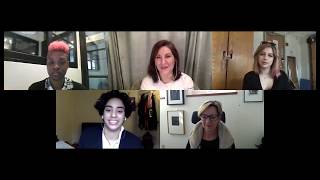
Virginie Glaenzer hosts four Gen-Z panelists discussing how social media shapes their lives. They debate the pressure to present a perfect image versus authenticity, share stories of cyberbullying that caused PTSD-like symptoms, and discuss coping strategies like blocking and taking breaks. The group wonders whether social media will shift toward smaller private communities or continue pushing public exposure.
Chapters
Welcome to Pass the Mic podcast with Roxanne Darling, who will lead our conversation today on an important topic, which is Generation Z and social media, or with social media. The Good, the Bad, and the Ugly. My name is Virginie Glaenzer, and I'm your host with a million questions. Pass the Mic podcast is about sharing different perspectives on a specific topic, not only to help us expand our understanding of the world, but also to explore new ways of looking at it. Before we start this conversation, we're gonna begin, as we always do, with what I call a tour de table, and you're gonna have, each of us, a chance to tell us your name, what you do, and why you're interested in this topic. Let's try to be brief and keep it under a minute. So why don't we begin with Alyssa?
Hi guys, my name is Alyssa Caro and I am a student, a senior at Berkeley College, the School of Business. I'm getting my bachelor's degree in general business and I'm currently interning for Virginie at Acorn Oak as a social media intern. I've been getting more and more interested in social media recently just because it's such a big part of everyone's life and now you can like make a career out of working on it. So I find it very interesting how you blend that kind of life and work together now. So I'm really excited to be on the podcast.
Great, well thank you so much for being here. Alex?
Hi, my name is Alex Glaenzer and I am currently a student at the University of Rhode Island. I am undeclared, so I still don't have my career path set, but I have worked with Virginie in the past with marketing and social media. And I think that this topic is really interesting to me because I grew up in the generation that by the time you reached the age of 12 or 13, everyone had Snapchat and Instagram, and it became a very big part of our lives. So I think that it's going to be really interesting to talk about everyone's perspective and the good and the bad of it, because I personally think that there's a lot of bad and not too much good. But thank you for having me on here.
My pleasure. It's already interesting. Can't wait. Roxanne?
Well, I love that we have a skeptic because I find it's very boring when there's panels and everybody agrees with each other. So that's good. I am on my 7th or 8th career, so I've done a lot of different things in my life. I was very active in social media starting back in 2005, and I gave a lot of talks to the business community. I was very excited about social media, this holistic ability to connect with anyone in the world on our shared interest was very exciting to me. I've flipped almost 180 degrees now because I I frankly was one of the naive optimists who didn't realize how social media could be turned against us as humans and as communities. But I still am holding out that we're sort of in the training wheels stage and that people will mature a little bit and learn how to use the tools a little more effectively. So I'm a business owner and also an artist.
Very nice. Thank you for leading that conversation. And before we begin, Dominique.
Hi, my name is Dominique Thomas and I am a senior at Berkeley College. I'm currently interning at Acorn Oak. I am a social media intern along with Alicia. And why I chose this topic— this topic is interesting to me because social media has grown from since I was 10. I remember 10, 9, I created a Facebook page. And then from there, everything, I just have ended up having, you know, Instagram, social, Snapchat, just all these other platforms that you can communicate with others. And I'm just really excited to speak on the good and the bad and how social media has impacted all of our lives. So thank you for having me.
My pleasure. So I shared with you what happened to me a few weeks ago on Twitter when I questioned a tweet that the way that Thomas Calloway was treated facing up to a year in jail. And as a reminder, Thomas Calloway is the man who slapped the butt of a news anchor while on a race. The morning when I woke up, I had 700 replies to one tweet. And for those like me who have less than 1,000 followers on Twitter, it never ever happens. 80% of the responses were negative, threatening, or just mean. I felt attacked. I panicked. I was actually afraid that someone posted, would post something negative, a negative review on Google on my business. And I remember during the day I could feel my heartbeat, my sweaty hands. It was exactly the same symptom than before going on stage. Until I remember that I didn't know any of those people. And I could clearly see that there was a lot of bots and trolls. Only in the afternoon did I finally realize that this was the illusion of the social game. So when I ask you, Alex, Alicia, and Dominique, if this ever happened to you, all of you started telling me that, yeah, I've had people who I know posted something negative about me. I was just blown away. And so I decided that we needed to bring forth this topic to better understand your experience in social media as a generation, as Alex pointed out, who grew up with it. And how do you actually deal with this? So Roxane, why don't you lead us into this discussion, which I'm really forward to listening to your inputs and insights.
Great, great. Well, I want to start by saying Virginie Glaenzer, you have photos, portraits, and you and I do.
So I was looking at everybody before we started today, and I appreciate that.
So let's start off with the positive. I'd like to go sort of positive, dark side, end on a positive note. So why don't each of you sort of talk to us about your favorite social media channel or channels and what it is you like about them, what it is you get personally from them. And why don't we start with you, Dominique?
So my favorite social media platform currently right now is Instagram. It's good for businesses and you get to interact with other people. Majority of the time, I mean, you wouldn't use a business profile for Snapchat. I mean, sometimes other businesses use it, but it wouldn't be really, really useful. So I believe that Instagram is a way of like interacting with people. You can—
So do you work on collecting followers?
I don't know if your Wi-Fi is so good. You're being— you're breaking up, Roxanne.
I did hear that. I'm trying to shut down every possible thing I can here on my computer. I apologize.
That's okay. So what was the question that you asked Dominique?
Oh, I was asking Dominique, part 2, how important is it to have a lot of followers? Do you spend time trying to gain followers or more time interacting with the people that you follow and follow you?
I believe that interacting with another person is more important. You, you build a relationship with your followers, so just, just by having likes wouldn't really mean anything to me. That's, you know, personally what I think. I feel like interacting with your followers, you will actually gain a follower, and that follower would be remained as a follower instead of just having each other just, you know, be friends, like, and then, you know, no interaction.
I think that's a good strategy and a really good long-term strategy, and I wish other people were more like that.
How about you?
Which channels do you like and what do you get out of them?
Who, me?
Me.
Okay, sorry. My favorite is Instagram. Also, just because it kind of allows for a creative outlet. I know that when I post on Instagram, whether or not it's for my business or if it's for my personal reasons, I put like the best content forward. I like to take nice photos, edit them, and like make them look good. And I know a lot of people don't like that about Instagram because it gives this idea that you live a perfect life and everything. But I like that you can put some TLC into something and make something beautiful. Like, I'm not trying to portray that I have a perfect life and all of that. I'm putting forward moments that I'm proud of and also the business aspect of it. Instagram is a great platform for building a brand. Like, I'm currently doing that right now too, experimenting with it. And it's like a lot of fun. It's a fun way to cultivate a business.
I think the, you know, it's something I debate a lot because I tend to be a very positive person too, and there's this slippery slope between being an optimist, being positive, wanting to share good news that can cross over into that my life is perfect, I never talk about anything bad. So I think that's one of the interesting challenges that we're all learning about with social media is How do I be authentic without just being Debbie Downer all the time, inviting people to say, oh, I'm sorry, what's going on? And, you know, kind of going down that rabbit hole of negativity. Yeah. Yeah. Alex, what about you?
So I, my personal opinion was that I really grew up on Instagram and social media and Snapchat in a way where to a certain point in high school, it became, in my view, very toxic. It didn't seem like a healthy platform that I could share a photo of a bird that I saw or really feel confident in a selfie I wanted to post because everyone necessarily, in my opinion, was either doing it for followers, for likes, to show their lifestyle and how glamorous it was, and it didn't seem as authentic to me as I wanted it to be. So I would say that my favorite platform would be Facebook because I think that that's where I am connected to my family. That's where people post more of their authentic selves rather than Instagram and Snapchat, but only purely based off of what I have experienced and what I have seen. I just, I still am trying to detox myself over that, that phase I had in high school where it was all Instagram-based and all Snapchat-based. And I think that I still need more time to recover from everything before I go back into it and really take social media for what it was meant to be for.
Roxane, what I find really, if you don't mind, what I find really interesting is that Instagram to me is like a photo album. So of course you're gonna put the best picture. You're not gonna put a picture where you— without good lighting. And so when you compare Instagram to a photo album, photo album, you put literally the best picture. The challenge I think with social media is that people see it. So there's almost like a message. The photo album is private, it's in your home, no one else. And sometimes you take it, you, you know, you, you browse through it and it becomes an emotional connection. But social media, for some reason, because it's a window open to the world and it completely changes and it puts a lot of pressure because people are taking your personal photo album and starting to judge it. And so it's a bit messed up, actually.
Yeah, I think that could also be interpreted as like bragging, like you putting forward these moments and it's like, oh, you have so many nice moments, you're just pushing them on everyone. But it's just you sharing your moments.
Why would you share bad moments?
Exactly. Yeah.
And so why do we have this expectation that social media should be authentic?
Well, I think that comes from PR, which was completely inauthentic. You know, the whole industry of PR was, you know, since we're talking a little bit of business here and our Gen Z panelists are following business tracks, you know, public relations was to cover over all of the problems and the negative news and only put out a very curated message about a person or business. And we're in a time where people can see through that fakery, and they do want honesty. They want to know who they're dealing with. Which I think is a legitimate request.
So I'm—
You're cutting off again. That's too bad.
We're missing—
Roxane, can you say that again? Because you're cutting off again.
So sorry.
That's okay. It happens. Unscripted. That's part of the game we're in.
The internet would be very good here. So regarding Facebook, I've deleted it because of the political problems and the fact that I don't think they're an honest company. Do those of you that use Facebook, is that a concern for you, Facebook as a business and the way they run their business? Or do you focus on what you personally benefit from?
I personally feel like Facebook doesn't really give the accurate information. Like, you know, social media, nobody look at newspapers anymore. And, you know, and nobody look up— well, some people read, you know, articles online, but because we have that social media platform, the links of articles are being on— are on Facebook, and we look to Facebook for our news, our weather. Now we don't look at the apps anymore. So I feel like certain articles, I don't click on them because I don't know if they're actually accurate. I don't know if the news they're giving us or delivering to us are actually the facts or stating the facts. So I don't look to Facebook for anything. I just usually use it for personal usage and then just log off.
I want to add anything.
Um, I feel as though Facebook— I've kind of accepted that if you're on Facebook, they have all of your information. Like, they're tracking everything always. But no matter what, Google's doing the same thing. Um, the people who run Twitter are doing the same thing. Anything on the internet, your information is being tracked. So I do just like to use Facebook because it's another social media that I can keep in contact with my family and my friends that are no longer physically near me. But I am aware that the company is probably doing shady things with our information, selling it. I mean, it came out recently that Zuckerberg was selling information without the consent of users and stuff. So unfortunately, in this age that we live in, our lives are on the internet and our information is essentially public domain. So I kind of just, I know that that's happening, but I like to stay in contact with my family, so it's okay.
Okay, good.
Well, let's move on to the next question.
Roxanne, before we go, so Alex was saying, I mean, I'm curious about— Alex was saying that she uses Facebook and a lot less Snapchat and Instagram. Why is that?
Why I use Facebook less than Snapchat and Instagram?
More, more. Didn't you say that you used it more?
Well, I would say that once a day I might check Instagram and Snapchat, but I— that's probably it. It's probably for 5, 10 minutes. But I just think that Facebook, while obviously your information is out there and there are all these rumors coming out about what Facebook is behind, I think that it's really the only way for me to be authentically connected to my extended family in France, for example, because I don't have any of their Instagram information or Snapchat. So I think that using that to just see what my family's up to or see how my friend in college is doing, I think that it's a less judgmental platform, I would say, than Snapchat and Instagram. I think that it definitely kind of takes the edge off a little bit compared to the other social media apps, maybe because it's been around longer, maybe because You can also type while posting. It's not just a post you have to send. And I think that it's just a little bit easier to use as well as the other websites that I've used.
So that's a great segue to talk about, you know, she talked about taking the edge off. Do you want to go into that discussion about the bad and the ugly?
Yes, go ahead.
Oh, okay. So I was going to—
let me interrupt and ask one question. So I had some trauma in my childhood, and so I'm very familiar with PTSD and the lingering effects of it. And many things I've read, I think people are experiencing that on social media. That— I don't know if that's too extreme or not, a way to think about it, but certainly not in some cases.
PTSD, remind me what it stands for.
Post-traumatic stress disorder.
Okay.
It's a post-traumatic— I'm getting an internet notice here— post-traumatic stress disorder. It was originally diagnosed for Vietnam vets who came back from the war. Were having flashbacks and emotional issues, being very sensitive. And so we're finding now that any kind of attack like what you experienced, Virginie Glaenzer, can set people up to be nervous and sort of on guard, which affects how we communicate with each other. Am I getting through?
Right. Yes. So how, how, Alex, and maybe we can do like a roundtable where everyone shares what was the worst experience that you've got, you guys have experienced on social media across all the platforms.
So Snapchat, I wouldn't say would be as bad as Instagram. I think that Snapchat is a little bit more personal because you typically Snapchat-specific people, so you wouldn't have to talk to everyone. You wouldn't have to talk to someone that you don't want to. It's really just more of you communicating with individual people that you don't have their phone number. So that one I more had an issue with being self-conscious and taking photos of myself. But Instagram, I did have a lot of instances in high school where someone would make an Instagram page just to talk bad about me. I've had people post photos of me and like start commenting, and then you would see everyone that you knew would comment, and then you'd have to go to school the next day. It did get pretty hard, and I'm trying not to cry.
Don't cry.
Yeah, but so how do you— I mean, how do you deal with this?
Do you go to a school, an adult I mean, with the Instagram, it's a little harder to go to someone on the outside of it because after a while it is just everyone being online. And, you know, it's harder to target someone when they don't really have a username that, you know, you can find. And even when you do know who it is, confronting it is a little bit harder than it seems because it is It's harder to— it's easier to say something online than it is to the person, and to the person, person to person. So essentially, when you do know who is saying what about you, you don't necessarily want to go and be like, why did you do this? Because it's just a conversation that essentially could make you feel worse. It'll give you more anxiety. It's, it's just— it's social media itself can help people target you, and I think that That's what really affected me the most and is the reason why I have become more of a self-conscious person. I don't post as much. Um, I can feel a little bit uncomfortable when I'm meeting people. So I think that there is some PTSD with social media that I've experienced, but obviously I can't take it to an extreme extent because I know there's so much worse things that happen to people, and social media is really something that we shouldn't be like crying about and all this. So it's a shame that it had to be, in my opinion, social media had to be something that became negative at such a quick time when it just came out.
So yeah, thank you for sharing. What about you, Dominique?
For me, I usually just have a carefree attitude, so I usually just try not to let a lot of things bother me, but I know I remember one incident on Instagram. I posted a picture and I guess somebody made a terrible comment on it. I believe they was talking about my hair or referring to anything I believe I had on. And they personally tagged somebody else on the, under the comment and basically involved all her friends into that one comment. So we basically got into an altercation on social media over one specific comment. And I mean, this was during high school for me. So the next day going to school, you know, I saw the same girl that posted the same horrible comment on Instagram and looked to her. And it was crazy because there was no interaction in person. So a lot of people, you know, have their voice, their opinions, and how they feel on Instagram or, you know, social— all social media platforms. But when it comes on to person-to-person interaction, then, you know, everyone's quiet. There's nobody talking. There's nobody saying anything. They're just face, you know, face expressions. And then, you know, you just go about your day. So it kind of felt a little weird to me because I personally wanted, you know, interaction. Like, I wanted to know why, what was the problem, is basically what I wanted to find out. But it was, I guess, she just probably wanted to shine on Instagram, and I just didn't take it anyway. I just moved forward after that because it didn't really make sense to, you know, take it to the next level.
Right, that makes sense.
Yeah.
Do any of you have friends who are doing therapy to help build this resiliency in the— in your personhood from, you know, as a result of having been attacked on social media?
Um, I personally remember one of my friends being bullied on social media. Um, this is, uh, back in elementary school, and, um, it was actually the start of Facebook. Um, I remember we also had MySpace, but MySpace died out because of Facebook coming in, so Facebook was the start of it, and they posted up a horrible picture of her and basically made a joke about it, and then the joke turned viral because we all had— we all were friends on Facebook. And she came to school the next day and basically said that she wanted to kill herself. And from there, I told her, it's like, you know, you should talk to somebody because this is, you know, very, very unhealthy. And we at least talked to, you know, somebody in the school. So they can actually like, you know, help her out. And, you know, we talked to her mom and just to know that they're aware of, you know, what's going on within the school and how she's coping with the bullying, because that's, that's horrible. That's something that, that's something that nobody should deal with during their childhood.
Alicia, anything, any experience that you want to share?
Personally, not myself, just because I was a little late to the game with social media. I didn't get on Instagram Instagram until I was like 15, 14 or 15, and Snapchat, the same thing. But I've seen on other social media platforms like Tumblr and stuff. Tumblr has this feature where people can comment on other people's profiles anonymously, which is a dangerous feature. It's like you can either show your name or you can do it anonymously. And a lot of people that I follow on those platforms, I've seen receiving anonymous hate and stuff. And it's relentless too. And sometimes these people know you and they'll be writing like personal things about like this anonymous person will be writing personal hate, like personalized hate. And it's like, who is this person? And the fact that I think that like the anonymous aspect adds to it because people, when they're, when you don't know their name, they'll say anything. Like there's no repercussions because nobody knows who you are. And I think that cyberbullying is very damaging, and I see how it could cause like PTSD-type symptoms just because we are on our phones all day, every day. We're surrounded by it. You open your phone, you have notifications, and you can't escape it. So if you're just constantly receiving hate, I could see how that could definitely cause some like PTSD-type symptoms.
I'd love to talk about, so what? What's next? Not what's next in the future, which I'd love to ask you guys this question, but how do you respond? What are the mechanisms, the tools, the— how do you deal with someone who's did a, you know, post something negative? When this incident happened to me, I remember at first I started to engage. I really believe that people were not agreeing with me. And I started to engage, but I saw a lot of trolls and people without— with anonymous profile. And that created a fire. But I couldn't— so I could— on Twitter you can block people, you can report them based on, you know, if it's not according to the conduit of best practices. What can— what did you do and what can you do to make this negative event stop? And how do you prevent from happening again?
Well, I think that personally for me, I think that trying to get back into Instagram and Snapchat for the good uses of it, communicating with people that I want to communicate with, showing my life to the people that matter to me. I think that what's really important is to first off take yourself away from whoever's saying what to you. It's obviously an issue that they have with just posting it on social media and they're unable to say it to you. Or most of the time it's barely about you and they're just taking out their emotions on someone else. So I think that removing yourself from that person is always the first step, whether it's to block, to delete, to whatever you need to do. I think that definitely telling your friends that you're going through something or you're hurt or something has happened to you. Will always help because you'll see the people closest to you who know you as a person tell you that whatever was said online doesn't matter. And essentially it's just someone looking for attention. And the third thing I would say would be to keep your social media to the ones that you want to have access to it. I think that nowadays a lot of people, they want to be famous, they want to get the most followers, they want whatever it is. And so they'll let anyone follow them. They'll continue continuously let people that they aren't that close with follow them. And I think that yes, you may do that. That is one path to take with it. But I think that if you want to keep yourself at a fully authentic and like realist version of yourself on Instagram, I personally just have my close friends on it and my family. And I think that honestly that that has already helped me so much more because I know that these people not only see me online, but they know me as a person and have met me. So I think that social media, with the bad of it, the good is that you're connected to your family, you're connected to your friends, and it helps you get closer with people and, you know, see how they're doing in their life while you do the same. I think that it's just really, you need to be with your intimate relationships.
Brilliant, brilliant.
So I would like to ask the panel, I know a lot more young people who have private accounts on Instagram. Do you think that's a trend that maybe at some point most of us as individuals will be private and—
Ah, your internet is not working well and we're missing so much. Yes, is the private account, is that the trend? Is that the next big thing? But before we go into the next, which I think it's related to the question, the topic around how do you handle, what are, what do you do to overcome being bullied, helping someone who is being bullied, or just avoiding that it happens to you? I'd love to learn how Dominique and Alicia are thinking about this.
Dominique, you want to go first?
Oh, sure. I was waiting on you.
How—
well, I don't know how other people handle social media. I believe everybody just handles it in their own way and finds what's fit for them. Me personally, I just learned not to just take things personal, or there's moments where I just take a social media break, meaning that I don't use any social media platforms for either a week 2 weeks to a month. Sometimes you just need that break away from just being social. You know, a lot of people just don't know how to handle certain things, and especially now that social media is that huge platform, a lot of people don't communicate face to face, or we don't communicate from phone to phone. All we do is text or, you know, use a whole screen just to communicate. So just to take that break from social media sometimes can be very, very helpful on just improving yourself or just making yourself feel better so you're not just stick to pleasing other people based off of the screen or a profile. So that's pretty much what I feel like that's fit for me. And if anybody, you know, have any type of negative comments or anything, I usually just block them.
Yeah, I definitely agree with the whole blocking them. Like I said, I'm not too— I'm not too active to the point on social media where I'm getting hate. But if I were to be receiving it, I would block whoever is sending it. And honestly, I try not to invest myself so much in my social media that it can— like, I'm on it all the time, more than I am in my waking life. I have things that I like to do. Instead of being on social media, like, I'll go out and hang out with my friends and keep myself busy in my waking life, and then I'll go back to social media when something is cool and I want to post it. I don't want to keep my entire life and my existence on social media, um, because that kind of creates like an obligation towards it, and it gives it this type of importance or priority over what you're doing every day. And when you have that type of priority, getting that hate, getting those messages, what people are saying, it impacts you more because it's more important than what the people you're around in real life are saying about you.
Right, makes sense.
So I think it's important to keep them separate.
So let's go back to Roxanne's question around what's next, and what's next is how do you see social media in the future? How do you want to use it? Roxanne said, is this— is the future about having private accounts? So from this big open windows, we're actually going to shut the window and have, you know, smaller community of people that we know on a personal level. How do you— how do you see social media evolving?
That's a good question.
Or how do you want to use it? If you take all the best moments, everything that it actually brought you.
A trend that a lot of social medias are rolling out now is like the memory feature where it saves like photos and videos that you take and it puts a timestamp on it and then like a year later or 2 years later, that memory will resurface and you can share it. I love that feature because my life has changed so much within the past 4 years that I'll get a video from 2 years ago and it's like, who are the people in this video? That's crazy. My life's so different. So I think that as social media progresses, that feature will become more prominent, like the whole memory concept and maybe looking towards the past. Um, And I think that it might just become a little bit more close-knit. People might start keeping their stuff more private just because of the whole big corporation selling your information ordeal. So I think people might kind of tone it down and not want everything out in the open.
Alex?
Yeah, this is an interesting question.
I've never really thought about you—
was that delayed?
Yes, yes, go ahead.
Um, I've never really thought about this question of where is it gonna go. Um, I— because I, even myself having a little sister, with social media I get anxious, you know. She gets a lot of comments, so I sometimes will look through them, be like, is everything okay, you know? I would hope that people would start to become more private because I think that that would make it more of a close-knit social media type platform. But I would— knowing our society and the way that things have risen, I feel like I would doubt that that would really happen. I think that people are just going to want to be public and keep trying to get fame and get more friends and, you know, more popular. And I'm not sure that it will change within the next few years. I think that that's something that society as a whole needs to get over, the idea of being somebody, being a big famous person. I think that it's more of life should be more about who you are, who you meet, the things you do for yourself that make you happy, and not necessarily the things you do to show off to everyone. So as much as I would love for it to get more private and more personal, I think that that is a little bit unrealistic in my perspective. I think that it's not to that point yet with social media, but I can only hope that it will go the other way, you know.
Very nice. Yeah. So any last— do you want to add something, Dominique, to this Alex, question about what the future— how do you want, how do you see social media in the future, or what would you want it to be?
I personally agree with Alex just because of the community that I'm in. I believe that a lot of people are just using social media for fame or to gain, you know, the exposure. You know, there's a lot of like In our generation, I believe there's a lot of entrepreneurship field. A lot of people are basically going into the entrepreneur field. So being more private, I feel like wouldn't really benefit them because they need that exposure in order to branch out their brands and just the— I don't— I don't feel like everybody would be, you know, private. I feel like the public— I feel like I'll see more public going on to the, you know, further lines of social media.
Right, right. That's very true. So before— well, first of all, I want to thank everyone for this insightful conversation. And as we come to the end of the hour, I'd like to end this discussion the way it began, with a tour de table. So one of the promise of this podcast is that there's too much talking and not enough doing. So let's pass the mic and tell us what you heard today that will inspire you to start doing something differently than the way you did it prior to this conversation. Or you can share anything that you want to leave others with. So anything you'd like to share. And I'm going to start by sharing my own takeaways to give you a moment to collect your thoughts. So this conversation was really interesting, and I— what I'm hearing and recognizing is that this personal desire of mine to use social media to create smaller communities of like-minded people so I don't create this risk of exposing myself and being threatened is also— it seems to be that it's also something that your generation seems to want, creating a smaller group of individuals, whether it's people who are physically far away that I know, my family, or just people who are like-minded. So that's one thing that I'm hearing. The second thing that I'm hearing is that the future of work is evolving. And as you said, Dominique, a lot of people going into entrepreneurship and launching their own business, in which case you do need to have this openness to the world to tell the world what you're doing and hoping to make a sustainable business. And that might be a conflict. So unless we resolve that conflict, perhaps by thinking that the business doesn't have to be worldwide, but it could serve a smaller community, in which case, what you would do is also create a small community for your prospect and customers. So that might be one way to figure things out. But there are a lot of questions that still remain open. So that would be my takeaway. So why don't we begin, and Roxanne, you'll be the last one to end. And I can't read what you were saying because this is— I have notes. Yes, I saw that. Why don't we begin with Dominique? Why don't we, you know, share your last thoughts?
My takeaway from the podcast would be that I learned that people are very, very crucial on social media. People usually, people don't care, you know, what they post. I guess everybody just want to get their opinions out. So I feel like we need to be, you know, more crucial We should be more cautious and understand that, you know, everybody has feelings. Everybody feels a type of way what you post and what type of content you post. So I feel like we should, you know, be aware of the things that are being posted on social media, the comments that are written on social media. And of course, everybody feels a type of way about, you know, their likes. So I definitely feel like that should be taken into content. Got it.
Thank you very much. Alicia?
My major takeaway is definitely that just because I have had an experience with social media that doesn't mean it's—
Hold on, Alicia. Hold on, hold on. I think you're breaking up. Let's start again.
Oh no.
Yeah, I don't know. Today, this morning, it's like all over the place. So what's happening? Why don't we come back to you and go— hold on, why don't we come back to you after, and Alex, if you want to share your last few words.
Okay.
So I think this has been a really interesting conversation, besides me a little bit tearing up in the beginning. But I think that that clearly shows that it really affects people, social media, in ways that not a lot of people see. Because social media takes away the interpersonalness that people get when they meet face to face. It takes away a lot of emotions that you would consider when you look at someone and their Instagram account. So I think that after this conversation, I think that I will probably not be using Instagram as much just like before, but I think that I will slowly start to get back into it. And make my Instagram more personal to me and my close-knit community, just because I wouldn't want to cut myself off from my community just because I had bad experiences in the past with people I barely knew. So I think that it's something I still want to give a chance because I know social media can be for good, and I know that it can bring people closer together. It's just kind of a rock I have to overcome before I really take that step and try it again, I guess.
Wonderful. Thank you very much, Alex, for sharing these deep thoughts. Roxanne, and because I still see Alicia's video not that clear, so until her— the internet gets more stable, Roxanne, do you want to share a little bit your thoughts on this conversation?
I'm very Inspired by everyone because the thread I see is how each of you are building resiliency. And I think that is a life skill that will benefit not only the person building it, but it builds our community. When our individuals are more aware, more resilient, not so vulnerable, to the trolls, it makes the situation better for all of us. So I thank you.
Wonderful. Thank you. That was a real— resilience, I think, is an amazing skill.
I think it grows a thicker coat of skin, you know. It teaches you how to really take some things and know it's not personal, know it's not about you. It's just something that someone wants to say and get attention for, and it's something that you have to yourself overcome, and people become stronger because of it. So I think that that's completely true.
I totally agree.
That is— I agree. Can you guys hear me?
Yes.
Hear me better?
Okay.
So my major takeaway from today is that my experience personally with social media is vastly different than other people's. Other people have not had positive experiences with social media, and other people have probably had even better. So it's just my perspective isn't necessarily the right one, and just because I use social media a certain way, other people use it differently. So maybe I'm just more aware now after having this discussion, and I think it was pretty eye-opening.
Very nice. Well, thank you again, everyone. I'd like to end by asking viewers and listeners to like the video and to subscribe to our podcast. And tell, you know, and tell us what do you think as a Generation Z individual, what are your good, bad, and ugly experiences with social media? Leave your answers in the comments. And again, thank you so much everyone.
Thank you. Thank you. Thank you.
More from Virginie











Unlocking Fintech Success: Strategic Trends for Profitable Growth: Webinar Leadership Series