Leadership - Ep. #13: Leading from our hearts while navigating uncertainty.
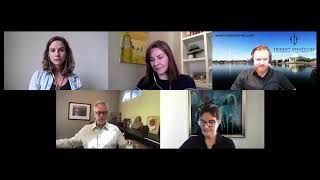
In this Pass the Mic episode, host Virginie Glaenzer brings together Mark Corley (author of Lead from the Heart), former CEO Runa Báujes, organizational self‑management coach Lisa, and Trident Strategies founder Patrick to explore what it means to lead from the heart during the COVID‑19 crisis. Mark argues that leadership has been dominated by mind‑only, fear‑based models and that the pandemic is a tipping point that forces leaders to balance mind and heart. Runa introduces the concept of conscious leadership becoming mainstream, cites the “caring gene” (only ~30 % of people naturally prioritize others), and shares her work with the Coventina Foundation and Holochain as an alternative, peer‑to‑peer economic platform. Lisa frames heart‑leadership as a shift from industrial‑hand, to knowledge‑head, to heart‑centered paradigms, drawing on Aboriginal elders, sacred leadership, and the need for safe learning communities to surface blind spots. Patrick emphasizes that human connection is the ultimate technology and recounts personal anecdotes about Jeff Bezos, Warren Buffett, and Colin Powell to illustrate how even the most profit‑driven firms may be pressured toward empathy. The panel discusses concrete examples – Amazon’s warehouse conditions, Walmart’s evolving labor practices, Salesforce’s purpose‑driven culture, and Buurtzorg’s decentralized health model – as evidence that organizations that embed empathy outperform those that do not. They also link organizational change to education reform, suggesting that autonomous, socially‑oriented schools model the future of work. Throughout, the guests stress that change will be painful, require personal inner work, and must be bottom‑up, but that individual leaders can create ripple effects by embodying heart‑centered practices now. The episode ends with each participant sharing personal take‑aways and a call to listeners to practice heart‑leadership and comment on the podcast.
Chapters
Welcome to Pass the Mic podcast with Mark Corley, who will lead our conversation on how can leaders lead from their heart while navigating uncertainty. My name is Virginie Glaenzer, and I'm your host with a million questions. Pass the Mic podcast is about sharing different perspectives on a specific topic, not only to help us expand our understanding of the world, but also to explore new ways of looking at it. So before we start our conversation, let's begin as we always do with what I call a tour de table, and have each of you tell us your name, what you do, and why you're interested in this topic. Try to be brief and keep it about under a minute. So why don't we begin with Runa?
Yes, my name is Runa Báujes. I'm a former CEO and entrepreneur from Iceland. Since I have been in the U.S., I have focused on leadership development and wellness, particularly growing conscious leaders and also introducing new business models like the conscious capitalism model. And presently I'm involved in a project as a trustee council for a project called Coventina Foundation. It's a foundation that is going to be supporting and nurturing an ecosystem of startups that are creating the apps for our new economy on an open-source platform called Holochain, which is actually an alternative to blockchain.
Holochain, very interesting. Thank you so much for being here. Mark?
Good morning. I think we're going to dig into this topic deeply. So I think my principal message is that I wrote a book called Lead from the Heart: Transformational Leadership for the 21st Century 9 years ago. And the interesting response to it was that education embraced it immediately and business resisted it immediately. And that traditionally is because we think that we need the smartest, the brainiest people for leadership, and we never bring the heart into leadership. And so never the twain shall meet. And the idea of leading from the heart has been so, like, resisted because of our traditional values and beliefs about how we're supposed to get the best productivity out of people that it's now, in my belief, the greatest gift that we've had, that I feel I've had, is the pandemic. Because as Chef Andres has said recently, you know, if this whole experience hasn't given you empathy, nothing will. And so it's opening up hearts. I mean that literally and figuratively. And so my argument is that we need to have this balance between the mind and heart. And historically, it's always been all mind and no heart.. And so it's not lead all with the heart because that'll bring us just as much difficulty as where we're at today. But if we balance it out and we genuinely care about people, the incredible balance of that is that organizations and human beings end up thriving together. And this is the piece that, you know, I've been the Pied Piper for, for almost a decade now. And I'm feeling like we're at this moment where I mean, I'm looking forward to exploring this with you guys, but I really truly believe that this is the moment. This is the tipping point that I've been waiting for and hoping for for a really long time.
Well, super excited for you to be here. I can't believe you wrote this book 10 years ago. I can't wait to dive into this conversation.
Lisa. Yeah, so I guess where I'm coming from with this topic is I, first of all, I have my own podcast called Leadamorphosis, which feels kind of apt. For this conversation. And so I'm having lots of conversations with people all around the world about how leadership needs to shift. You know, what's the paradigm shift that's needed in leadership and organizations? And how can we do that inner work as well as the work that needs to happen in our structures and systems and processes? So that's kind of a big thread of my learning. And other than that, I am an organizational self-management coach. So I spend my time working with teams and organizations that want to work without managers. And so that's an interesting notion as well. Like, what does leadership look like when there are no bosses? How do we create cultures that are leaderful and a different kind of leadership, which is kind of dynamic hierarchies and, you know, much more Yeah, a lot of it is about wholeness and leading from the heart, which is, you know, this topic that we're starting with as well. So, and then finally, I spend my time leading trainings, leadership trainings with people around the world with tough leadership training, which again is like, what are the mindset and skill set and ways of being pieces that we need to develop and practice together in a safe space? In order to really level up in terms of our leadership for what's needed in the world now.
Got it. Thank you so much for being here. Excited to have you here. And finally, Patrick, if you want to introduce yourself.
Sure, Virginie. Thank you so much for having me. It's great to join you guys. Amazing group here. So I'm the founder of Trident Strategies. We are a leadership firm based out of Virginia, primarily serving Virginia, Maryland, and D.C. We do business development executive leadership consulting and tactical advisory. I am absolutely beyond fascinated with the lack of leadership in our modern corporations. Everything about it has a dramatic impact on how they operate and how effective they are. And it's mind-boggling how something like a pandemic was the tipping point, like everyone's saying, for that realization to kind of come into place. So I'm really looking forward to exploring what I've seen in DC out of companies here and learning from you guys in terms of how you are helping to fix it in your different pods and with your different clients. So it's an honor to be here, and I thank you very much, Virginie, for putting it together.
Great.
Well, thank you so much, Patrick, for being here. So early January, I remember that we hosted an episode on ethical leadership, and artificial intelligence with Jonathan Cook. And I remember how excited I was to start 2020 with this topic. And because being originally from France, I grew up with this idea, which I still believe to this day, that Americans or true business leaders really gifted with leadership skills from the ability to gather people around a mission to launching and executing project with brilliance. I also pointed out an interview from Yuval Noah Harari and Max Tegmark from the Future of Life Institute discussing artificial intelligence. And I took away from their conversation that morality and ethics have to be grounded in subjective experience, but more importantly, require consciousness. And consciousness as in the sense of our ability to feel. So today's topic might not be that far from ethics and consciousness since we're going to discuss how leaders can lead from their heart while navigating uncertainty. And as we— some of you have mentioned it— we are witnessing the devastating impact that the coronavirus has on people. We are also seeing it literally killing businesses. And yet it exposes the weakness of our system. And we're seeing new values emerging, which I call solidarity through corporate responsibility. But today we do have the data that shows that companies that look beyond shareholders' interests and aim to do well and do good at the same time, and integrate that specific purpose into their corporate culture, outperform their peers, grow faster, and deliver higher results. So Marc, why don't you lead us into this conversation, and perhaps you could start by just sharing your own understanding of what does it mean to lead from our heart?
Well, you know, I wanna tap into what you just said. Two words that stuck out for me was consciousness and feeling. And our consciousness is that historically, And this is, in other words, historically we have had this consciousness and it continues to this day that people really don't want to work and that the best way to get productivity out of them is to make them work harder. So whether we do that through fear, whether we do that through micromanagement, whether we do that through some form of intimidation, close attention to what they're doing all day long, we create that, or in the expectation, you know what I find? We think things are getting better because of the tipping point that we're talking about. And yet we're seeing that people are working 3 hours a day longer working from home than they were before because managers haven't established any boundaries. They're basically thinking, I can get people when I need them. I know where they are. And so, you know, we really haven't improved from this consciousness which says that the best way to drive performance out of human beings is to push them, challenge them, intimidate them, managing them with fear, all those kinds of things. So on the other side of this is that we human beings are hardwired to thrive on positive emotions. Positive feelings and emotions is what not only makes us thrive as people, but it actually translates into whether or not we're happy in our jobs and whether we're engaged and whether we're committed and loyal. And so you have this juxtaposition of this old mindset that says, I've got to force people to get their work done, where people or human beings are on the other side saying, if you'll just love me, if you'll just like trust me and teach me and coach me and encourage me and recognize me and give me a steady dose of positive emotions, I will outperform anything that you could possibly do to make me get there. And so the consciousness says, I'm not willing to trust that. And people are over here saying, if you don't trust this, I'm not going to stick around with you. I think that's the real tipping point right now is that, you know, unfortunately, we've got 30 million people in America alone that are unemployed and they're not going to go back to the seats when the music starts again. They're not going to go back to the chairs that they were in. Many of them are going to go to different companies. They're going to have to go back and make a living. But once we get back to a normal life where people have choice, I truly believe that people are going to choose to work in organizations where there are caring managers. And that is what's going to happen is that I used to believe ignorantly when the book came out, I was convinced that CEOs who read this, read the science, were going to say, oh my God, we've got to change. Like, you know, we have the path here. And they didn't. Because their consciousness was like, no, I can't do that. I was successful not being this way. So we're going to continue to lead the organizations in this way. But what I've learned is that, you know, through sort of a painful discovery, is that it's the bottom up. It's our employees who are saying, I cannot do this anymore. And so I think, you know, interestingly, we have a little bit of extra time now. Now, some people would argue, I got my kids at home. I'm having to teach them. I'm having to make sure that they're doing their homework. Doing homework and working with their students. And I thought my boss is asking me for work and, you know, I can't go to the grocery store and I gotta wear a mask everywhere and on and on and on it goes. And it's, you know, it's sort of oppressive. But the truth is that people do have more time to reflect on what their lives are and whether they're on the right path and whether they are, you know, getting their needs met, you know, sort of like the spiritual, you know, recognition of am I good or not good? And I think that truly is what's going to drive the CEOs of organizations if they haven't made this shift. I truly believe that's what's going to make it happen. They're going to have enough outcry from people saying, you just can't continue to manage me the way you've been managing me and think that that's a way to keep me or attract people like me.
So it's interesting that you're saying that because it makes me— I remember millennials were known for not accepting what other previous generations have accepted in the workplace. What do you think, Lisa? What does it mean to you to lead from the heart?
Yeah, I'm happy to answer as the millennial in the conversation, I guess. I think I was thinking as you were speaking, Mark, that I think the first time I started to think about this was back in 2014 at a conference where I saw a London Business School professor called Julian Birkinshaw giving a talk. And he was sort of showing how, going back to the Industrial Revolution, we've had kind of 3 phases of leadership in terms of the mindset and the assumptions we make. And the first was in the industrial era, you could summarize it as hands, that we needed people to operate machines. We just needed bodies. And if you could get human power, that was how you succeeded in the industrial era. And because it was pretty menial work, then you needed to crack the whip and you needed to micromanage people because otherwise they wouldn't do this work. It wasn't very purposeful. And then the next phase was like, you could call it head, where we had the information knowledge era, where as a leader, if you had if you had knowledge, if you were smart, if you had information as a company, as an organization, that was like your capital. That was the way to be competitive. And then he said that the kind of emerging paradigm or what we're leading into now is heart, is like nowadays with uncertainty and things, the pace of change being faster and all of that stuff, it's increasingly important to have leaders who are emotionally intelligent and leaders who can have conviction. Having all the knowledge in the world is not going to help you navigate complexity and uncertainty, because there's no possible way of knowing what the best decision is. So I think this heart, leading with heart piece, is really, really relevant. And I think for me, what's interesting as well is, in a way, it's going back to pre-industrial, maybe even ancient ideas of leadership. And I interviewed someone the other day, Jenara Garingaring is her name, and she's an Aboriginal woman who studied, compared Robert Kegan's work around adult development and kind of vertical development, and compared and contrasted it with Aboriginal eldership culture. And the kind of utmost pinnacle of leadership or consciousness is something that Robert Keegan calls sacred leadership. And in eldership sort of culture, in Aboriginal culture, which is like 60,000 years old, the principles of what makes a good leader— and leaders are chosen, they're not enforced, they're sort of selected by the group— are qualities like humility, being able to resolve and transform conflicts with other people, You know, so they're very much leading from the heart qualities instead of knowledge or being the expert or being able to make the right decision or being responsible.
So I think it's really interesting, this shift that we're seeing, and curious that in a way it's like going back to perhaps our pre-industrial roots and trying to get back to the essence of who we are as humans and kind of stripping away The idea of, you know, the word heart is, you know, it has a charge to it that is either positive to people who have an enlightened view of what it could mean and what the implications are as you're describing. And then it also has the never ever ever do we do that kind of an attitude, you know. So, and that's the one that's much more powerful where people instinctively just go, you don't do it, you don't get close to people, they get soft around the middle, they take advantage of you. It wastes too much time and there's a million different answers to it. So I actually had a woman that I paid thousands and thousands of dollars to tell me to never ever use the expression lead from the heart again. She said, you know, this is just us 5 people talking here. So she goes, I paid her $10,000 and she said, I've read your book and I want to give you your strategy because I came out of nowhere. I'd come out of corporate America. Nobody knew who I was. And so She just said, you know, your strategy is to build a brand and get people to know you. You will fucking fail if you continue to use the experience of the language, lead from the heart. She goes, you know, say— I'm not kidding, you know, and it was painful to hear. My first question was, did you cash the check? Because, you know, I paid for this advice.
But I'm sure that she must have had some reason to back up this decision.
She did.
Maybe your audience, because you said it earlier, your audience originally are executives. Male who didn't want to hear what you had to say.
I think she was telegraphing to me, the world is going to be punishing you for a long time here. We're not ready for this. But I want to go back to what you said, because so in other words, if you take it from the progression of the ideas launched and then people reject it because it's so foreign to what we know and so foreign to what we think we're good at. So if you think you're good at manipulating people or managing with fear, you're not going to want to go into this because it's puts you into weakness. So the word heart, with all that charge to it, has made me reluctant to say something that you did, which is this is sacred information. There is a spiritual aspect to this. In other words, our human hearts are feeling, sensing organs, and they guide us. And if we work for a boss who manipulates us or doesn't give us trust in an environment where we feel psychologically safe and supported and valued, all those kinds of things, we have the message inside going, this isn't right and this isn't making me happy. And so you look at the human species, we survived through collaboration and cooperation. We didn't compete within each other, you know, and try to steal from each other and take. We, we shared, we gave to one another and make sure that each one survived. So I think that has to be on a global scale the message that comes from where we are today, which is we're all connected. And then if we are connected and we look out for each other rather than try to steal from each other or compete with each other, we're going to do far better. That's still a very big argument to overcome with a lot of people's minds.
It's almost like there's the pre-COVID and the post-COVID. Runa, how do you understand leading from the heart?
Well, I first want to say to Mark, I totally understand you having spent 10 years trying to get the message of your book out. We often say in the conscious leadership movement that mindfulness was a woo-woo thing to talk about 10 years ago. Today mindfulness is mainstream, and we are waiting for the tipping point of conscious leadership which is leading from the heart, to become mainstream. And I literally think that this pandemic is going to help us because it's coming from, from the root, as you say, from the people. But I also think this is such a big jolt for so many leaders. It's so big, the challenges that they are dealing with, not only at their home front, but also in their companies and with all the people's lives, that I would be surprised if if not some of them, would really start to connect to their own heart and start to realize that there is a leadership, like an outward leadership, but there is also something we can call inward leadership. And this forced pause that we are invited into now, I think, is an opportunity to go inward and start to explore our own inner guidance and our own inner guidance system. And in shamanism that I was trained in, we very much focus on what we call the council ways, which is the circular leadership. And the center of the circle of the medicine wheel is wholeness. And wholeness is when we integrate heart, mind, and gut. And I literally think that what Lisa is saying, that that's the stage we are coming into. We are bringing the ancient wisdom and principles back. Back in and I think many people are craving it and more and more people are craving it because they understand, they feel, they feel the truth of it when they start experimenting with meditating or experimenting with identifying their feelings. So I think that this virus is actually an ally and a gift to us, to consciousness. I think it's maybe consciousness playing a trick on us in terms of waking us up to what we need to do as humanity in order to, to be, to be able to follow evolution. Because evolution is going to go on. The question is, are we going to wake up enough to, to be a part of it, or are we going to stay asleep and just vanish?
Runa, do you think that we created this, the virus? In other words, is this a manifestation of where we are and where we need to go? Is that what you were alluding to?
Well, maybe I haven't thought of we collectively creating it, but then again, if we create our own reality and in collaboration with spirit, maybe we were having a meeting and talking about, okay, what can we do to wake up as many humans as possible? What we have been doing, like bringing out great people like Mark with his book and talks and all of that, then yeah, some people are hearing it, but it's not enough, it's not coming to the tipping point. So what can we do to tip it over? So I see it coming through science, I see it coming through people in leadership, I see it coming through the arts, that it's really about raising consciousness. That's at the end of the day, raising consciousness which will evolve our values and our worldviews.
Something else that you said that struck me. So after I wrote the check, after she cashed it and then gave me her lovely message, I was rather depressed, to be honest with you, because I didn't know how long it was going to be. But what she was preparing me for was the world isn't really ready for this and you're going to take a lot of punches. And if you want to call it, what did she say, killer engagement, you'd be safer. And that just wasn't authentic. And so I had to hold on to what I was, you know, I had to make a conscious decision. Am I going to continue to use? I just paid for this advice. Am I going to take it or not? And obviously I chose to take it and take it in the literal sense too. But I had dinner. Coincidentally, my wife's sister was the personal executive assistant to Spencer Johnson. Spencer Johnson is really a genius guy. He just passed away. He wrote Who Moved My Cheese? and The One Minute Manager, the parable. That's really his creation. And so we were talking about this idea and I was sort of reluctant to talk to this guy who sold 100 million copies of his book and trying to tell him that I just got this really bad news. And he goes, you know why this is going to succeed, Mark? Because it's truth. And that pierced me because it's like, it is truth and you just have to ride this out. So, you know, when you said that, Runa, it just completely resonated with me because I think you're right. I think people are ultimately going to realize that this is true. This is a much more effective way. I hope I'm still alive to see it happen because it's such a slow process.
And one can only hope, but I also see a lot of resistance. Not everyone is on that personal transformation journey, and it's hard to know. I'd be interested to know what are the data, how many people are actually taking this opportunity to not stop about, am I going to pay my mortgage, can I still afford the college, and really more about what do I want to be, to have a good life, what do I need?
We may need to see this I don't know that you can evolve everyone who's in a leadership role today. In other words, some people just don't have the wiring to be the caring, supportive manager that we need. And so if you change the model— so this is sort of a weird example, but if you have had a pizza restaurant for 50 years or 100 years and you suddenly see that people are not eating pizza, but they're eating chicken, Well, if you go to the guy who's been spinning pizzas and swirling them in his one finger and you say to him, hey, we need you to start to learn chicken. Some people are going to go, well, I'm a pizza guy, so I don't really want to do that. Or they're going to say, I don't know if I can get there, but I'll try. The first group, you probably won't ever get them there. So I think you're going to see some disruption if we buy into the idea that this is the model. This is what we want. Some people are going to have to leave leadership roles and management roles. In order for the right people to get into them. And Gallup has actually shown, this is a surprising number, that really only 30% of the world's population has that caring gene. And so— 30%, you said? 30% of all human beings. What I mean by the caring gene is this idea that the success and joy and happiness and well-being of other people is of interest to me too. It's not just about me. So if I'm a manager and I'm really only caring about my career, my recognition, my pay, my opportunities, then I'm really not going to be an advocate. So you're not going to be the right person for leadership going forward. So I think we're going to have to make some hard decisions. Once you make the decision that we're going to go from pizza to chicken, then you have to teach people how to make chicken. And you need to coach them and support them and make them feel safe in learning how to make chicken. But if they continue to resist making chicken, you're going to have to say, this isn't really for you. That's going to have to be a tough outcome from this.
And that totally makes sense. What do you think, Patrick? Do you think— what's your experience with leaders and leading from the heart? What does it mean, and how do you see people embracing that?
So I guess the secret maybe to our entire conversation, and maybe it's something that, you know, Elon Musk and all these other guys who are doing some amazing, amazing things haven't gotten around to figuring out, is that The last and greatest technology left on our planet is the human technology. And that's something that, you know, you see people trying to search for it. You see throughout time people have gotten into meditation, whatever searching they've tried to do. There could be religion. It could be any kind of system that supports trying to discover what the purpose of our existence is, right? And so when I think of leadership and leading from the heart, it really comes down to treating ourselves as the ultimate technology, which, which in turn, you know, you— we have Bluetooth, we have all these different ways to connect with our technologies and our phones and Wi-Fi, but how are we enabling ourselves to do that with other humans, right? We have Zoom here, but I feel a connection to everyone here on this call uniquely. So I do. It's kind of strange that I'm saying that, but I do feel because of the light wave mindsets that are going on. And Mark, you cover it great in your book about looking into the actual science behind what the heart is doing when it's trying to go through adversity or when it's trying to learn or when it's trying to perform its function of caring for other people. Um, so I really enjoyed you actually digging into HeartMath and looking at all those different things. My personal experience, I went to the Better Brain Center, I got the HeartMath thing. I did a full diagnostics on, what was going on inside. And then I went to meditation centers. And so what I found is that after taking diagnostics of my internals and diving deep into meditation, transcendental, whatever it may be, my performance in the business sector, it was mind-blowing. It was really cool. People are responding now to when I made improvements, but then years and years ago where I thought, you know, it was all about me or I was more selfish. Um, but as you go further along and you open up your aperture, um, you know, the heart has this limitless ability to connect. And so when it comes to leadership, that's, that's the bottom line is connecting with the ultimate technology. And people can feel that even though we're disconnected, people can still feel that. So that's kind of my, my personal experience, what it means to lead from the heart. And Mark, I feel like I'm cheating. I have the answers to the test here today.
So awesome. Thank you. I cheated. I want— this is like a really important question for everybody here. So you, you mentioned Elon Musk, and I want to throw in with him Jeff Bezos. And let's face it, Jeff Bezos is obviously the richest guy on the planet, or maybe number 2, but obviously brilliant and, you know, hugely successful in building an extraordinary organization. Um, but what you can say— we, we have enough letters on the board to solve the puzzle. And this is not a person who cares about other human beings on any level. I'm comfortable in saying in terms of really caring about the people that work there, there is enough evidence that it's actually the opposite. So you just saw yesterday one of their top engineers leave because these employees are saying, you want us to come to work and you want us to kill ourselves at our job. But you're not protecting ourselves, you're not protecting us, you're not giving us the support that we need. People have rather inhumane treatment in those warehouses. It's almost as if he's already made the mindset that these are all robots. And so this is a real problem. But the question is, how do you reconcile that Elon Musk, who's another clear genius, how is it that they could be so successful? By really not caring about people. And I lean more into Jeff Bezos than I do on Elon Musk because I'm more familiar with what they do in Amazon. But does it sort of scare you that you can get away with it even today, that you can be that successful and not care about people, not really have any heart in the organization?
He's being finger-pointing right now. Go ahead.
It scares me. It scares me. And he is in a position of power. Because of his wealth and his position. And that comes to one of my projects, which is I founded a project called the True Power Institute, which is about how can we redistribute power. And for me, Bezos is an example of someone who is abusing his power or misusing his power. He has an amazing platform to do good in the world. And I don't— I think he's doing the opposite. Yes, he is serving us. I am guilty of ordering through Amazon and getting my stuff to my doorstep. But the way he treats his people and has for a long time is not the way I want to see the leaders of the future. And I am hoping that other leaders will come in and show a different picture, like Marc Benioff from Salesforce, which is— who is the opposite. That we will get enough of people like that. I even read an article yesterday, the CEO of Bank of America, of all places, and the CEO of Xerox, they are doing major things to activate their connections and their resources to do positive things for humankind that has nothing to do with the bottom line. And the more examples we see like that, which is opposite to what happened to leaders after 2008, where they all put the money into their pocket. I think we are now shifting to what we used to do before, which is more coming from an ethical place of thinking about the collective. At least that's my hope. It might be naive, but I am an optimist and I want to contribute to optimism. And I just keep on hammering on it because I believe, Mark, if we just continue with our mantra, in the end we will reach the tipping point. Maybe not in our lifetime, but at least we know we have contributed to it, so we can die peacefully.
Yeah, that's funny. I don't want to die before this happens. I think that would be a very sad ending, to be honest with you. Patrick, what were you gonna say?
No, I was just— it's, uh, you've got 15 years on this whole technology run, right? You know, since Facebook and all those other technology platforms have risen, we've been in this instance of separation or forced separation or technological separation in a, in a drop of a time, in a very small amount of time, right? And so we're looking to solve, uh, you know, millions of years worth of problems in a shorter period of time because our technology has compounded that problem. So, I mean, my, you know, when I think of, if you talk about Jeff Bezos or certain kinds of companies that exist today, it's a product-based company that largely caters to third-party resellers that never get to meet their customers in person. They don't ever have to talk to them, they don't have to like have a video conference with them. There is zero connectivity. I click, I order, and someone from somewhere across the country spent their, you know, their time and their effort and their wonderful energy making something for me and it comes to my doorstep. And so, it takes— the business is largely humanless as it is. So maybe we get to the point of automation where those kinds of companies are not as risk for part— worse leadership dynamics, but for the vast majority of the rest of the companies that deal with more of the people, that's where we're going to have to focus. So hopefully you make product companies more product and automation oriented, and our human companies can return to a more human place and we can focus on there because some of those other companies, it may be too late and we may need to make robots operate in those environments more than we would in the hemodynamic. But as far as I know, everyone here on this call and the rest of the humans that are on the planet, we're not going anywhere for a long period of time, I hope. So we need to make the most of it. So, God, you know, inshallah.
I want to say that a part of my passion at the moment is working with this Coventina Foundation Institute because what these people are doing are creating an alternative to the system that we have, to the infrastructure, financial infrastructure, and to companies like Amazon and Facebook. And that to me excites me to no end if we could have same or better services without having the middle person like Facebook or Amazon or Apple. So that's why I'm putting part of my energy and effort into that, because on a soul level for me, that feeds me like nothing else, because if I can be a part of fostering that, I really feel that that is the biggest impact that I can have. You're talking about Holochain? I call— yeah, Holochain is one product, one technology out of a whole whole technology stack that we will have in Corentina Foundation. And we just started with these two. One, the other one is, is Holo, which is cloud computing hosting service that is allowing us, the individuals, to host our own services and host each other and getting paid for it. So if you have extra power or storage that you are not using and I need it, I can buy that from you and you pay me for it. Right, shared distribution. There's no middle person. So that's how I'm hoping we can outsmart Bezos and guys like that.
But if Amazon is— but let me ask you this, if Amazon and those type of data-driven or system-driven organizations who are lacking human touch have been able to produce companies without any empathy and are abusing people, how can that change if we're just changing the system? Well, instead of adding human touch.
Well, I think that comes down to the bottom-up that Mark talked about. It comes down to the individual people taking their power back. We need to step into our power and not buy into that we have to buy from Bezos. Where else can we buy? And if there are young entrepreneurs that are building different systems that are built on the collective intelligence and equality and justice, where we can all benefit, it's built on abundance. Mentality, why wouldn't we direct our business to that? I mean, that's what I would do. So it's going to be difficult to both educate people about it and have them move over, but I'm hoping that they will. So it's really, really important to help people to understand that they have more power than they think they have.
So in a way, you're saying that the intention from which we start, and, you know, accompany a system, is the essential element.
Yeah, exactly. So it's starting from human-centric, peer-to-peer, and it's all these technologies I'm talking about are all built on the patterns of nature, on the consciousness of nature.
I mean, you're really implying that this is very unsustainable, and so, you know, Patrick is pointing out I mean, Amazon is only a 20-year-old company, so, you know, and they've grown from being a bookseller to now selling everything. And, you know, almost happened overnight. They sort of figured out the model before anybody else did. They exploited it very well. And so we're sort of watching them take our money and deliver services in incredible time. And so we're sort of in awe of what they're able to do for us. The parallel to that is Walmart. So their founder, interestingly enough, was this hugely caring guy, Sam Walton. And after he died, they went to the antithesis of leading from the heart, one of the most exploitative models possible, where they literally paid people as little as possible, squeezed as much of that out of them as possible, kept them from getting promotions so that they wouldn't get overtime or health benefits. And so they did this in order to to do what the Amazon model is, which is to give us the cheapest prices, which is what we all like. Right. We all want to spend the least to get the best thing. And so we sort of looked away as human beings. But what happened when the economy was thriving up until COVID is that people finally were doing the bottom-up, fed-up, I can't live off of the wages that you're paying me. I can't survive in the way you're treating me. And because people have options, options, even for a dollar more an hour, sadly, they chose it. And so all of a sudden you're seeing Walmart sort of evolve. Now, are they going to be the model for lead from the heart? No, they got like this amount of heart, but it's much more than they've ever had before. And so now they're paying people more money. They're giving people more opportunities to learn and grow. There's actually much more of a developmental culture there than it's ever been. Feel like they're learning more. I think the world is going to force again the Amazons of the world to change because people just simply aren't going to stand for it. At some point they're going to rise up. So Lisa, what do you think?
Yeah, I think, I think about a parallel of education as well, which I think, you know, if you think about organizations and leadership and how that needs to change, I think there's a parallel shift that needs to happen in our education systems, and it's kind of a side project of mine that I'm passionate about researching alternative schools and educational models. And it seems like the educational institution or system, it's really hard to change from the inside, but it seems like if you can, if we can see enough of these examples of what's possible, what alternatives are possible, There are so many great examples of alternative schools working in a really good way now, where it's a parallel to what we're talking about, where children, students, and young people are given so much more autonomy, like learning is much more self-directed, it's much more social instead of competitive, and the kind of industrial model. And I think the same is maybe true of organizations. If you look at the examples like Patagonia, and not standing for the tax cuts that were made and giving that money instead to worthy causes. Or if you look at world leaders like Jacinda Ardern in New Zealand, who are doing things differently, there are starting to be these examples of people saying, well, we're going to do it a different way. And my hope is that if enough of those examples happen and we help to tell those stories and lift those up, that it will start to make the current system obsolete, right? That's the hope that I'm hoping for. And whether that happens even in my lifetime or not is up for debate. Margaret Wheatley told me that Peter Senge said it's going to take 300 years before we really see a big shift. So we won't be dead, Bruna. Maybe. Yeah, I think it's still like Rudina said, I think it's still worth doing this work, right? Even if we don't see the full impacts of it.
I'm far more optimistic in the sense that, you know, I don't think it's going to take 300 years. I think we have this magnificent opportunity with what we're living through right now to really reassess and go back and say we want to do things differently. That's kind of what I'm— that's the message. I'm communicating, and I'm hoping that that's what people are coming to naturally. One of the things you said, Lisa, that I think is really astute is that we think it's going to come from— like, we want the change in business. That's where we think the need is, right? But then you have education over here making their own changes. So if you are even influenced at all, like you have children, and you go to school, and you learn, we're going to be teaching your children differently. We're going to be more autonomous, and it's going to be more social. And you hear that. That influences you when you go back to work to think, well, wow, that's interesting. So all of a sudden it's coming from a lot of different places. It's not just coming from our world, or we'll call it business. And so the more people that are talking about this, the more people that are actually demonstrating that there's a different way and challenging the way things are being done, we're all being affected by that. So that's what gives me this optimism that other people, other industries are gonna be the catalyst for people to go, "I gotta make some changes myself here. I gotta embrace this." Patrick, you're shaking your head yes.
Well, this is funny. I just had one footnote that might be interesting. So as we talk about Jeff Bezos and the kind of company he's built and how he's trying to expand his influence and get involved in every market that he could possibly get involved in, this is a 10-second story. I was having dinner at an overpriced restaurant here in DC. And I looked at the private dining room and there's a lot of security outside. And it's a place where people don't like disrupt other people of importance or whatever. Jeff Bezos walks out of the dining room. And I'm like, okay, cool. That's really awesome. And I'm like, I wonder who he's having dinner with. This would be really fascinating to find out why they have this special dining room. And then out behind him comes Warren Buffett. And I was like, all right. "Two of the richest people around in the world, this is kinda cool. Can I go make an introduction?" I was like, "Yeah, there's a lot of security around Bezos. Warren Buffett, I can't even begin a conversation with him." But Colin Powell walked out last. And Colin Powell used to work with my grandpa a lot back in the military. And so I went up to him and I approached him and we caught up for a few minutes. And I was like, "What are you guys getting involved in?" And he was talking about how Bezos was building getting into the healthcare market. And so as a footnote to our conversation about Bezos and, and getting, leading from the heart and finding out how we can put the human back into it, I think there's a bit of irony in, in someone who, with, that has had a problem with putting heart into their Amazon company, trying to get into healthcare, which requires the most heart you could possibly ever imagine. So I know it's out there in the media a little bit. They've talked about what his intentions were, but I found that absolutely fascinating, you know, that they were getting into that market and the types of people they were bringing together to address it. So we'll see what happens, but it's a footnote to the, to the conversation here.
So it's interesting. Fantastic experience and clever of you to find a way in, you know. But I mean, your sense of it when you got done talking to Colin Powell— I, we, I had— I never met him, but he spoke at our organization a few years ago, and so I've seen him. I get a sense of his energy and so forth. Did you leave there thinking that Bezos is gonna take a different mindset, heart set, if you will, into healthcare, or is he just gonna run it as a commodity?
I think if he has someone like Colin Powell who's involved, you may get a lot more, you may have a better chance at effectively leading towards the human element, because that guy has a really impressive way of dealing with people. I can just tell from like, you know, I found letters between my grandfather and him and the kind of stuff they used to say back and forth to each other was very cool. And you know people's heart when you can kind of see those kinds of things. And so I do think there's a chance with the right people around you, which is one of the most important things about leadership is your tribe, the people you bring into your circle and how that influences your behavior and your decisions. So yeah, I think there's a chance, Mark.
I think there's a chance for it. That's a really great point because Warren Buffett, what I know of him is that when he takes over companies, he doesn't go in there and wipe out the management and then start, you know, where are the owners now? We're going to tell you how to do things. He says, I buy the companies because I trusted management, right? I don't want to go in there and tell them what to do. They already know how to run this company. That's why I want to buy it. So it's just a different attitude than I would imagine a Jeff Bezos would be. So, um, very cool experience.
I have a I'd love to ask you guys a question about— and so interestingly, thank you for sharing that story, Patrick. The question is, can peer pressure influence leaders and someone like Bezos? That's going to be an interesting story that will unfold in the next few years. But what do you think individual leaders can do to, in addition to their personal journey, what can they do to arrive at that place? Place where they can lead from the heart?
Well, I'm happy to go first here. I think it all starts with that inner journey. I think they cannot lead from the heart unless they have taken the journey, inward journey, and connected to their heart and maybe to something bigger than themselves. And I think that's really the invitation we have now is to integrate our inner world with the outer world. And unfortunately, often it takes some catastrophic event on a personal level for people to take that journey. Very few people do it free-willingly, even under pressure from friends or colleagues. But if they lose a partner, if they lose their health, if they or lose a loved one or go into bankruptcy or something major happens to them that they need to heal from, it forces them to start looking at things in a different way because the emotions that they go through during that time is so intense that they will start looking for tools and helpers to help them to heal themselves. And I think that to me is is the biggest tool. And then when leaders have started to feel that from the inside, the radiation of the heart just flows out. So it's not that they have to do anything to lead from the heart. It is they have embodied their heart leadership. So it, you know, they have to learn the principles first and they have to do the practice, but eventually with time and with enough practice, it becomes embodied where they are leading from compassion and empathy and from their heart, totally effortlessly.
Lisa, you're shaking your head.
Yeah, I nod a lot in general. It's how I listen. But I think a sort of hunch that I have, and I'm biased of course because I'm a trainer and a coach, but the hunch that I have is that we all have these blind spots in terms of leadership. You know, however conscious we think we are, I think that we need others to help us see those blind spots. And my sense is that we need to go on, you know, and how it's triggered, as you say, Rune, there's lots of different ways, and often it's through adversity that we kind of begin these journeys. But I think of it like, you know, these spaces like a dojo or some kind of space where we can learn together and get lots of feedback and lots of coaching and support and, you know, people holding a mirror up to us And it's often like, you know, Frederic Laloux, who wrote Reinventing Organizations, he talks about growth pain and that, you know, to go on this journey to becoming a more conscious leader involves growth pain. And like, I think all things in life that we learn, when they're real lessons that really change who we are, they're often painful. And I think that's, you know, like when you train in the gym, when your muscles ache, you know that you're developing something, right? So my sense is that we, we need to find these different learning communities where we can practice together and learn together and support each other. And that's not just, you know, patting each other on the back, but really challenging each other. And without that, you know, I really think if we want to shift leadership in our organizations it's not enough to change our structures and processes. We really need to do this hard work of really interrogating ourselves and developing new muscles, which are totally different muscles to the industrial kind of paradigm that we've been talking about. Those things, in a way, are going to get in the way for you to lead from the heart. And that's going to be scary and painful, and that's okay. I think we need to to be compassionate about that. It's not our fault. This is the sort of thing we've been conditioned into. But if we can practice together a new way of being, a new way of leading, that I think is, in my view, at least from what I've experienced so far, the only way really that we can shift.
It makes me— it reminds me years ago, a woman that I was working for was actually pretty enlightened. And she brought in this guy to do a meditation session. And it was just— he was just coming in to do like a 15— it wasn't even that long. It was like a 15-minute meditation. And then he was going to leave. And then we were going to get on to our meeting. And I'll never forget this one guy who was, you know, my peers. He just sat in the back of the room like, hell no, am I going to do any of this? You know, it was like, I'm going to be hypnotized, you know. There's some weirdness going on here. And so, you know, you have to get over that low hurdle first, which is, you know, that it's okay to go through that journey. Your idea about pain, if anybody's ever gone through the journey you're talking about, and I certainly have, if somebody were to tell me how painful it was to go through that process, I probably wouldn't have done it. Actually, somebody said that to me once, you know, she goes, would you have done it had you known? I go, hell no., you know, so, you know, I mean, seriously, because it was really, you know, the dark night of the soul, the whole thing. I had a lot to heal nevertheless, but I think truly human beings, we all do. We all had some sort of experience in our life that set us back and, you know, sort of keeps us from growing and, and having that safe environment. I almost think, you know, as a trainer, it'd be a fantastic business for you to, you know, start, which is to take leaders outside of their environments and give them a place where they can learn about themselves and actually, you know, do that kind of work. Write your obituary, write your values, identify who you really want to be. Tell me your life story, write your life story down and figure out what it was that's influencing you to have gotten where you are. That's a very, that's a very difficult stretch of activities. But If we can do that for leaders and get them to the other side of it and then put them back in the workplace, then they're already profoundly and permanently changed. If we expect workplaces to do this, you're right, it's going to be 300 years before we're actually going to see it. So that's really good.
Patrick? I'm sorry.
Yeah.
Virginie, what were you going to say? Well, because we're getting up to the end of the hour, we're going to have to end this conversation, and we're gonna end it the way it begins. So we still have a little bit of time to share, but first of all, I want to thank everyone for this insightful conversation. One of the premises of this podcast is that there's too much talking and not enough doing. So why don't we pass the mic and share what you've heard today that will inspire you to do something differently than the way you did it prior to this conversation, or anything that you felt was left unsaid, any last thoughts. And to give you a moment to collect your thoughts, I'm going to share my own takeaway. I first of all found this conversation really exciting because I'm on my personal journey and I'm looking for ways to disrupt my own belief. When we discussed about the number of people who are in that personal journey transformation versus the rest of them, it reminds me of Crossing the Chasm from Moore, this understanding that there are different types of groups, and perhaps we might still be in the early age, not as early as 10 years ago, but we might still be in that phase where there are so-called early adopters of this personal transformation, and Hopefully people like Jeff Bezos will feel some pain coming from peer pressure to change his own view, not from his choices, but because of peer pressure. The two things that I am taking away from this conversation, the first one is when Mark, you started sharing about your own experience in rejection. And then Lisa, you talked about growth pain. And I think as a leader, once you recognize and accept that there is going to be growth, there's going to be pain, it's a little bit liberating actually. And as the opposite of you, Marc, if I go back to my last 10 years and look at the various moments that were painful, I wouldn't— I would want to go through them because of what they brought me. It was worth it. So that's number one, you know, reminding myself that with leadership comes some sort of pain, whether it's through rejection, not being afraid of standing strong on your values and not being liked by others. So that's one. And then this idea of the sacred leadership, whether it's connected to mindfulness or not, and this, this idea that leaders are chosen, um, definitely rings a bell on many levels. I love that idea. I want to dive into it. I feel that it brings a lot of humility as I'm starting my own company, being a co-founder in, in an organization, and it, it makes you want to do you know, go beyond, not to get something for you, but almost being chosen as a leader has, you know, it has to come from other people. And it's not because you're starting something and that you put on your resume leader, CEO, etc., that you are a leader. You have to be chosen. I think it brings a depth and different understanding. So thank you so much. For this, this learning. So Mark, you'll be the last one to end this conversation with your thoughts or understanding. So why don't we begin with Runa? Any last words or things that were unsaid or understanding?
Yes, I would want to come back to words that Lisa said and where she was reminding us that it's not about only about business and leadership, it's also about education and all other systems. And what I would like to take away is invitation to me and to everyone else to create a new narrative around the future that we want to live in and we want to hand over to our children and to our grandchildren and to the next 7 generations. What is that narrative? What Who is in that narrative? What is in that narrative? How are we living? How are we interacting? How are we loving each other? And I want to do even more of taking on being the messenger for that story. Like Lisa said, we need to— the more of us that bring that story out, that new narrative out, the more chance we have of reaching more people to create that tipping point. That's what I would maybe end this on.
Thank you very much. To reaching mass market, yes, and really transforming society as a whole. Patrick, what would be your own takeaways?
To all my fellow leadership and heart astronauts out there with our space commander Virginie here, I think the biggest takeaway for me would be to emphasize very keenly Runa's dynamic that through great trials and tribulation comes tremendous growth, tremendous growth, right? And in a unique way, we could probably take Lisa's very astute point that leaders are chosen, which is kind of something we've forgotten, you know? We really have forgotten that dynamic. I can put up as much marketing as I want and say I'm a leader and say I'm a CEO and say I'm XYZ and We're in a society of self-labeling, right, and not as much earning as it could be. So through tremendous adversity, which is what I think everyone's going through right now, we're going to be taking a step back, we're going to be developing ourselves, and we're going to see, hopefully, a lot of leaders choose themselves, and in so that will inspire other people to improve their leadership ability as well. So, you know, I loved everyone's points, but those two resonated with me really really strongly. And thanks again, Virginie, for including me.
I appreciate it. My pleasure. Society of self-labeling— how profound and true and harsh it is for all of us who've been playing that game. Thank you, Patrick.
Lisa, why don't you share your last thoughts or understanding?
Yeah, it's—
I'm so spoiled for choice because there's been so many rich sharings in this conversation. But I think building on what you shared there, Patrick, about leaders being chosen, I saw once this image of the difference between an org chart with the sort of hierarchical boxes, and then they actually mapped influence in the organization, like who did people go to when they wanted help or when they wanted to get something done, and it was a totally different person at the heart of that compared to who was at the top of the org chart. So I think it's really interesting, this idea of creating systems where leaders can emerge and be chosen, and where we can nourish other leaders. I think that's the ultimate task of leadership, is to help develop more leaders. And yeah, I'm sort of walking away, I think, with this troubled feeling about the Jeff Bezos and the the Elon Musks of the world. And I really hope that Jeff is inspired by some of the great examples in health and social care at the moment, like Buurtzorg in the Netherlands, where they're reinventing what it looks like, because they have to, because this sector is crumbling in these old systems. It's not working. And there's a few great examples of organizations totally decentralizing their systems and being so much more human, both in terms of employees but in terms of patients and people they care for, you know, human person-centered care. So I really hope that he takes inspiration from that and that Colin kind of helps us there. And so I'd love to be optimistic. And yeah, thank you so much for inviting me into this conversation.
And being optimistic is, you know, that's one thing that we actually have that might be a difference.
Thank you so much, Mark. Virginie, I want to start by saying thank you for organizing this and bringing us all together. You did a really wonderful job. You did a lot of work behind the scenes, and I just want to make sure everybody knows that you are the thought leader that put all this together.
So thank you very much.
You're too kind. Thank you. I mean, and, you know, I think just final thoughts on this is that we talk about pain, we talk about the painful growth that one has to go through. I mean, we, we learn from our successes, but truthfully, I think we learn from our failures. We learn from our setbacks more, right? Because they motivate us more. We don't like that pain. So we want to make sure we don't do that again. And so we learn lessons. And so in a very different way, this notion of how do you get people to open their hearts and become more balanced, that's all we're looking for, just balanced.. And I think this pandemic is, is really giving, not just giving people the time, but this is a painful experience. You know, my gym was closed and I'm that guy who's there at 5:30 in the morning, right? So they closed the gym and I think, okay, what am I going to do? So I start walking on the beach. Well, guess what? They closed the beach. Well, I'm there at 5 o'clock. It's dark. Nobody can see me. So I went down and I started walking and it was, it was like this sacred time for myself. And then all of a sudden, one day I got there and they were like, police men, border patrol cars on the boardwalk. And I'm like, oh man, you're taking my joy away. And we can't go see our families and we can't go to restaurants and we can't see our colleagues. This is pain. This is grief. All those negative emotions that people are going through is forcing people to think about, man, when this is over, what am I hoping for? What do I want? And I'm just hoping that we don't have your training program, Lisa, that I'm handing off to you. If we don't have that formally, that this is nevertheless— this experience is going to give people that opportunity to be there. And then the final thing I would say is that after this woman told me that this was a mistake and you should never say lead from the heart, that this moment in time gives me the real recognition that I'm not alone. That we're all like-minded and hearted here, that this evolution is way underway. You can understand why I would think otherwise. But to know that there's so much discussion about this is really encouraging because that's what it's going to take. It's going to ripple. And the final thing I would say is just that don't wait to be led this way. If you're waiting for your organization to shift, it may never shift. The way to do it is to lead your people in the way that you know is best and the way that you would want to be managed. And your example alone is what's going to change within your organization. Just like you were talking about, Lisa, about who are the influencers. Once you build a reputation of being that caring and supportive manager, people are going to want to come to work for you. They're going to want to be part of your team. And so even if the guy at the top or the person at the top isn't on board or senior management thinks this is crazy, you can create the ripple in your own organization simply by leading from the heart and your own instincts, and your people will thank you for doing it.
That's, that's beautiful, beautifully said, Mark. And I think what really your message is that it's on our shoulders now as leaders to, or not to, even if you're not leaders, to step up and become our own self-authoring leaders. So thank you so much. I'd like to end by asking viewers and listeners to this video to subscribe if they'd like to our podcast on on YouTube and other channels that they're listening on, and tell us what does that mean for you to lead from your heart. You can leave your answers in the comment section, and again, thank you so much everyone for taking the time.
Thank you everyone.
Patrick, thank you. Thank you. Nice meeting you.
More from Virginie











Unlocking Fintech Success: Strategic Trends for Profitable Growth: Webinar Leadership Series