Leadership Singularity - Season Two Ep.25 Extract: How was the co-creation experience?
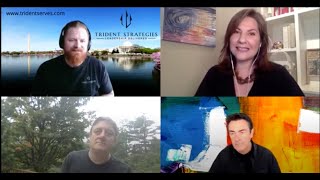
Virginie Glaenzer talks with co-authors John, Jonathan, and Patrick about writing a book together during the pandemic. They describe the process as improv and Lego-building, and credit the lack of ego and trust for letting them work openly across distance. The hardest part was losing spontaneous hallway conversations.
Chapters
Let's begin part 1 around the experience of co-creation. How would you describe your co-creation experience, John?
Wow. Well, you know, my biggest surprise of it was how real-world it felt. I think we've all become very fatigued by this experience of being on a screen and having to translate, whereas— and we've all been on hundreds of them, I know now, so not much of a surprise— but this one surprised me because it felt like we really were together in a room somehow. I don't know how we did that. I think it was probably down to the quality of the topic and the conversation and the intelligence and experience of the people on this call today. It was a thoroughly enjoyable journey for me. I would say this, wouldn't I, convening groups and facilitating senior teams, but the quality of the facilitator is critical. As Jonathan says, you know, his holding up a mirror and diving into the inside, getting people to really challenge themselves about what it is that they learn fresh every day. I think that was a good analog for what I just said. It's kind of your instigation and your convening and holding the safe space was really important to me. And during the course of the book, we talked a little bit about bridging leadership, you know, the ability of someone to actually hold competing views. Again, to Jonathan's point about ambiguity, you know, there's, there's a lot of ambiguity. That's what we're dealing with, and we have to become comfortable with that. And we did in this experience. Distance just seemed to disappear, as it has now. It's like we've We're back together and we're having the same conversations but from a much more meaningful level each time we meet. And that's what happens when you have a conversation in an organization if you get it right. I think honesty, this authenticity, the truth, not being afraid to say, look, I just don't agree. I find that always really the most healthiest thing. I know I was quite controversial at the very beginning and say, look, I just don't think that's the right thing. And you said the same. And between us, we all got to a much better place. It was fun. That was just fantastic. I don't think there's anywhere near enough of that truth and that safeness that should exist in an organization where we should be able to say that. And it's, it's, it's not the case, unfortunately. So I felt very good about the co-creation. I thought it was a great example and definition of co-creation, and I think that allowed for learning, new disposal, emergence, freshness, you know, all the things that we've woven into the book. So I enjoyed it hugely.
Great. How about you, Jonathan? How would you describe your co-creation experience?
I think it was like a back alley improv session. In the best sense. And that could go wrong, but I mean, in the best sense, it was as if, and I think we've all been to these meetings, you're in one of those meetings where there are people from lots of different organizations coming in and, uh, things go wrong in the meeting and it gets kind of crazy. Um, and everyone is thinking that but you're not able to say anything in that moment because, you know, you've got to honor the client agreement and all that. Uh, but then you go down the elevator and you walk out onto the sidewalk outside of that office building and you happen to see a couple of the people who were there in that meeting in the other corners and you each exchange a look and you know what that look means. It means what the heck just happened there. And even though you haven't really had a direct one-to-one conversation with those people before, there's something that happens where you all say, yeah, that was really messed up. I'm glad I wasn't the only one thinking that. And I feel like we're coming out of a business experience, which, you know, there are a lot of things that are messed up, but then the question is, what do you do with that? You know, because you could just have a gripe session where you go to a bar and you, drink a little too much, and you just complain about how everyone's messed up. But it isn't that the people are messed up, it's that the process is messed up. And instead, what we've done is to go into that back alley afterwards and, you know, get out our instruments, and we started to play together. And we're not all coming exactly from the same position, but what we hear are themes, like musical themes. Coming from Patrick, coming from John, coming from you, Virginie Glaenzer. And what I've enjoyed about this is the ability of each person to pick up on that theme and then go and then play with it and develop it and say, oh, this could become that. And somehow we're all following to make it a tune and not a raucous thing that everyone wishes would stop. So that's been, um, uh, something that I think is due to Virginie's gentle orchestration behind the scenes. That's a special skill that you have.
Thank you. I like the back alley metaphor. I think it feels very true. Yeah. What about you, Patrick? What was your experience? How would you describe it?
So to build on the back alley analogy, Virginie went into the back alley and dumped out a bucket of Legos and said, you guys, you guys make something and I am not going to judge you on what you create, no matter how ridiculous it may end up. And very surprisingly, and almost kind of concurrently not surprisingly, everything that you guys are saying, the feelings, this is kind of an— this is why it's cool to have this conversation, because what John and John have kind of described is exactly what I'm thinking. Ironically enough. And, you know, in terms of the diversity of opinions, but a similar theme that makes for something you can listen to, as opposed to you want to turn off the radio and never hear this band again. And that's a very, that's an interesting concept. It's an alignment that you don't always find when you get on a Zoom call. You don't always find when you get into a business meeting or you get into a call. Sometimes you have phone calls with people, program managers or whoever it may be, or a certain client, and you're listening and there's no way that person is going to click with you. There's no chance in hell that you can even get on the same level. That awkward silence on the phone, that period of just kind of not understanding or an unwillingness to communicate. I didn't find any of those roadblocks in that communication. In this communication process, it was very free, it was very easy, and it was unscripted, which I think is the most important piece of it. You don't have Virginie coming in, the dictator of the leadership singularity, describing exactly how she wants her army to move. She wants to build a place that's free and clear of any kind of conflict. And in doing so, it allowed everyone to bring forward their experiences. And we, you know, every, every little group has its, has its, uh, very valuable inputs, and that made for something really cool. Um, and so I found that to be very, very productive. And you guys are all very, very extremely good writers, um, and very good at expressing, um, the ethos that you each have. And so when I was kind of reading through it, the co-creation experience kind of felt more like a Scientific America book where we didn't necessarily come with every single fact in sight, every single source, but the diversity of each input was— it was very cool and different and coalescing at the same time. So I really enjoyed that process. Virginie, what about you? What did you— how did you feel about this co-creation process?
So to me, co-creation often feels like sitting down with someone that you meet for the first time and you start drawing It's a bit unsettling. And as I was reflecting on this feeling of being, you know, unsettling, I think it's because you have to leave your ego at the door. Whatever is going to emerge will not be yours, and in other words, you won't be able to claim it as your own. So that part is a little bit unsettling, especially in the world where we're supposed to be efficient and productive. It really almost goes against. And then co-creation also to me is the ultimate experience of dealing with uncertainty. And because our mind cannot clutch to the possible outcome, because until the end you actually don't know what's going to happen. And in a way, it's very relaxing once you accept the idea that you don't know. And you're okay with it, the experience becomes really enjoyable. There's a lot less pressure. So that, that was my experience of co-creation. And I think we're— we've been extremely lucky. I've been very lucky to meet you guys really randomly or serendipitously on various— by various ways. So we talked about what was the experience. Now let's look at what was the most difficult part of this group collaboration. Let's just say it. So John, what was the various challenges that you may have felt?
This question was pretty challenging actually. When I saw this question, I think maybe because I come at challenges as a positive thing, I find difficulty probably a good thing. You know, I like it when things are difficult. So nothing was that difficult.
For me.
It was more, I think, probably establishing a sense of where is everybody else coming from. I think I wanted to see the book as a whole, and I was challenged on that, that it didn't necessarily need to be a whole. You know, there could be different voices in that, in there, which I think taught me— it was like almost like another challenge for me to overcome. So I took it in the way that it presented itself. So I struggled to answer this, and I think I sort of laughingly said to myself, well, when it ended, that was the most difficult part, because I don't want it to end. And then the only other observation I have is that I think I probably struggled to get the idea that we've all shared here into a book, and I felt that There's so much to say about this topic because to me it covers everything about business. It's, it's, it's the future. And of course we don't have a crystal ball and the world is such a chaotic mess that I think we've got a long way to go. And whilst I love the product and love everyone's voices, I think we've only just begun. So maybe that was a difficulty for me that it doesn't really class as a difficult part of the collaboration. So I kind of But I leave it there.
Right. You're very open to challenges, and to you it's something positive.
Yeah, it's something positive. Yeah, I kind of— I think that's what we're feeding off. I think that's the grit that creates the pearl for me. I love it when things don't go well.
What about you, Jonathan? What was your most difficult part of this?
Well, I'm just thinking, if John likes it when things don't go well, This has got to be the best year possible for you. Because, you know, when I talked about this being like improv before, it's like improv, but there's a dog pulling on your leg at the same time. And, you know, and your wife is trying to call you. And I mean, this year has been, I think, the biggest challenge. And, you know, with all of the things that that means. This year has been a real bugger for me. And so that was really hard maintaining this while 2020 threw a lot of curveballs at me. But, you know, in terms of the process, I do disagree with John in terms of, you meeting in person and the asynchrony of it all. It's tricky to build a rhythm when you're not able to meet with someone. And I think, you know, physically is what I mean, because when you're working with someone physically, you can bump into them in the hall in that magical moment when an idea is three-quarters of the way developed. And you're not quite ready to present it or even talk about it, but yet you do. And because of that spontaneousness, there's an ability to develop things in a way that you don't when you're sitting in your own space alone, kind of only encapsulated in yourself. And that's one of the things I really miss about 2019 is the ability to be in contact with people and not fear death. So for me, I view that as a difficulty, John, and not merely a challenge, but, you know, tomato, tomato.
That makes sense. What about you, Patrick? What was your challenging experience?
You know, I kind of paired off of Jonathan's dynamic in a way that I would have rather had John be in a room with us painting on the walls and describing how how he wanted to go. That's phase one is the in-person thing, which, uh, I don't care what— what, you know, 2020 is an especially unique year in that we missed humans in general. We are a species that likes to get together, sit around a fire, and figure out how we're going to escape the animals. And so, um, from that perspective, getting in person would have been, um, uh, it would have maybe augmented the experience, but it's very cool that we did it despite that problem with everything else going on. To even put something together, honestly, that is not, that isn't the pinnacle priority for each of our lives. The pinnacle priority for 2020 was to stay alive, right? Wear a mask and don't catch COVID That was our mantra, right? But despite that challenge, and despite not being able to get together, we still put something very cool together, which I thought was awesome. The other piece that was difficult was was the rigidity side of me, which is the program management side that says, give me an end date for when we're gonna complete this, and then milestones along the way. Virginie, you taught me about flexibility, which is something that's not my strength. I mean, I can be creative, but I can't be as flexible. And so you were like, we're just going with the flow, man. And I was like, I love this boat, we're going. I can dig it. And so getting used to that kind of flexibility along the way was what really allowed this to actually happen. So I thought that was very cool. Virginie, what was your most difficult part of the process? Leading it, basically.
So I'm actually a little bit like John. I don't recall any big difficulties in the work itself or even the collaboration, but it was more subtle. So for example, asking questions, you know, we started with questions. It's always difficult because my mind craves the answers, and I want to rush to the solution. So in that sense, it's challenging. It's also difficult because those questions ultimately disrupt the way we think and lead to new habits, and that's difficult. So I do relate to this improv with the dog almost biting at, you know, trying to protect yourself from the dog. Of course, there was idea that we did not pursue. We wrote stuff we did not use, and that didn't really bother me. I did miss, however, Jonathan's input when you had to skip a few meetings. But I guess that's part of the co-creation process. It's like you don't control, it's improv. You can't control, you know. So that was my difficult challenge. Now before we move into the second part of leadership and marketing per se, let's end the first segment on what was the most enjoyable element of this shared creation experience. And some of— I think, John, you already mentioned a few things, but let's just do one quick round on the most— what was the most enjoyable element of this shared creation experience? John?
I think I'd have to go to the lack of ego and this whole, as we've just done on this call again, you know, the sheer joy of having different views that kind of get us somewhere and are progressed to an outcome and result, which is what you hope for in any kind of collaboration. So I think we can only do that without ego, and we can only do that by accepting that we just don't know everything, and it just refreshes me every time we get to a situation like this where it's not an ideal world and the world is not certain either. So if we can't be comfortable with uncertainty and change, then, you know, we're not really fit for the future, frankly, because that's what's coming down the track. So I love the lack of ego and the fact that, you know, we turn up on these calls like we've done again, and it was as if we were just here yesterday. So I love that. And just to Jonathan's point about, you know, being together, that's my world. I mean, I draw analog, I'm not a digital person, you know, I miss being in a room drawing collaboratively, and I completely agree with your point. It's hard to recreate that in this kind of environment, but I think we did a damn good job of doing it, so I really enjoyed that.
Great.
Jonathan? What I enjoyed was the trust, which is rare. I think the trust in the open-endedness of it.
Yeah.
That it's going to be okay. It's going to turn out all right. And so we don't have to be worried, even if we don't quite know where we're going at the moment. That's a special kind of group dynamic that can be easily killed with the wrong circumstances, the wrong environment. And this has been an environment where that trust has been kept alive despite all of those difficulties.
Patrick?
So for me, who did we create this, this book for, this series of ideas for? We created it for other humans. That's the whole point of this, was to improve the human experience. So the most enjoyable aspect was getting glimpses into each one of your guys' personalities and lives that I hope at some point in the future we get to actually physically meet as humans do, um, so we can have more interaction. But getting a glimpse into someone's personal life Getting a glimpse into their ethos and who they really are is a really cool piece of the process of putting out a product. Because typically you put together a product and you don't give a damn about people along the way. This teaches you to understand that there is a human soul and a creative spirit on the other side of those words and the other side of that video that everyone is kind of forgetting as we've been going along here in the social media age. And this only spurs me to hopefully try to be like, I can't wait to see you guys when we can get together at some point. I don't care if it's 20 years from now, I don't care if it's 5 years from now, it would be of value. So for me, it's about connecting to the human spirit that's on the other side of this digital chasm. So that was the most enjoyable part. What about for you, Virginie?
It's funny that you say that because when I looked at or thought about the question, there was two things that came up. And the first thing is exactly that. It's we started this collaboration with one-on-one interviews. We decided that we would tackle questions on a one-on-one and be recorded. So two people went on Zoom, recorded, and I really love this process because it was a way for me to— it was intimate. It was a way of getting into your own mind and really trying to understand how do you think. So I really enjoyed this first step and process. And then the other thing that I really enjoyed when we came up with the idea of to add illustration in the book to improve the reader's experience. And when John said, let's disrupt the way we do it. Instead of doing, you know, illustration to support the words or the text, let's go beyond. That was a very fun puzzle to play with. That was hard. I liked that.
More from Virginie











Unlocking Fintech Success: Strategic Trends for Profitable Growth: Webinar Leadership Series