Leadership Singularity - Season Two Episode #1
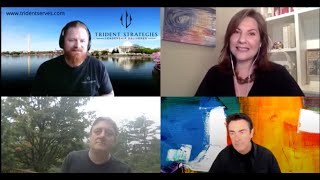
In this inaugural episode of Season 2 of the Pass the Mic podcast, host Virginie Glaenzer brings together three co‑authors—John Caswell (visual facilitator and consultant), Jonathan Cook (researcher on commercial culture), and Patrick Novak (defense‑contracting strategist)—to discuss how they, as four strangers from disparate professional backgrounds, co‑wrote the book The Leadership Singularity during the early months of the COVID‑19 pandemic. The conversation begins with each participant’s personal and professional background, establishing the diversity of perspectives that underpins the collaboration. They then explore the co‑creation process, describing how virtual meetings felt surprisingly “real‑world,” the importance of trust, the role of improvisation, and the challenges of working asynchronously without physical presence. The group reflects on the most difficult aspects (e.g., aligning voices, managing uncertainty, missing in‑person cues) and the most enjoyable moments (e.g., low‑ego collaboration, shared curiosity, glimpses into each other’s lives). The discussion shifts to a critique of contemporary marketing and leadership, highlighting a loss of trust, the spread of misinformation, the disconnect between commercial success and ethical responsibility, and the need for truth‑centered, sustainable practices. Each speaker shares an “aha” moment that reinforced the book’s central premise: that a singular, emergent framework—combining purpose, intention, service, impact, work process, and beauty—can reshape business. Virginie outlines three key takeaways: the process is still emerging, a new business‑model framework replaces linear thinking, and creating something beautiful reframes competition. Finally, participants consider what they would change (most say nothing) and how the experience has altered their current work, leading to more co‑creation, mindfulness projects, and a focus on ecosystem‑based, human‑centred leadership. The episode ends with an invitation to read the free book and continue the conversation.
Chapters
Welcome to Pass the Mic podcast, a production of Aikon Orca Studio and music by Benjamin Schletz. My name is Virginie Glaenzer and I'm your host with a million questions. Today's episode is the first episode from our new season 2. In our first season with 19 episodes, we gathered 4 to 6 people to tackle one question in an attempt to challenge the status quo and our own belief on various topics. We talked about communities, mindfulness, rituals, trust, regenerative practices, and much more. Our new and second season is called A New Age of Conscious Leaders, and we're going to be looking at entrepreneurs and managers who are disrupting their own belief to make a difference in the world. This first episode is going to be, however, a little different from all the others because in addition to being the host and asking questions, I'm also going to be a participant answering those same questions. So today we're talking about how 4 strangers wrote a book during a pandemic called The Leadership Singularity. Before we begin this conversation, let me tell you the backstory. It started just weeks prior to the worldwide COVID-19 virus, around mid-February. One of my tweets got a comment that led me and my colleague to write a a blog post. And one thing led to another. 4 strangers from completely different backgrounds started talking together. These strangers are John Caswell in UK, London, I think.
Yes.
Jonathan Cook, upstate New York, right?
Yes.
And Patrick Novak in Washington, and myself in New York City. Now, each of us believed that there was something important missing from the debate that had been raging in the past few years about how humanity and society need to shift to avoid catastrophes like climate change, extremism, and increased inequality. And rather than adding to the noise with our concerns and our fears, we wanted to come up with solutions. And although a book is a great medium for discussion, each of us are walking the walk and talking the talk in our respective jobs. Finally, this co-creation experiment required us to step outside our comfort zone since we did not know each other. And that's what we'll discuss today: how we felt about this co-creation experience, what was the most difficult part and the most enjoyable, of this group collaboration. What was our aha moment in writing the book? And finally, what idea are we taking away with us related to marketing and leadership? So let's begin as we always do. I'm really excited to listen and hear your experience. And what I'm going to ask you to do briefly is to, let's start by introducing yourself by sharing what you do, and your background so we can have our listeners and viewers understand how our minds were very different. So why don't we begin with John?
Well, it's great to be here and thank you for inviting me on this journey. And absolutely, I, I, I'm the product of 3 very brutal life experiences. I think that's the best way to describe me. I did a fine art degree in Cambridge in England, which convinced me not to become a fine artist. I went, I then went into a startup that became a big corporation, which convinced me never to be in big business. And then I decided to create my own creative business, which convinced me that to be creative, I'd need to leave the creative business. So these sort of brick walls that I hit based on my passion just taught me to be open, expecting anything, but I knew I'd have to learn. And so what did I learn? I learned that organizations can be very self-serving about the kinds of issues that they try and solve. So the management consultancies, the ad agencies, because I was successful in this business, I had command of large amounts of money, they would ask me only the questions that served them to be able to deliver what they were going to deliver anyway. I'm being very general about that, but that was a big lesson for me. And right about the same time, I realized that I didn't know how to issue a brief, and we didn't know what we were doing as a business. So it struck me that not enough time was spent thinking So it put me to task thinking, how can we improve to get leadership and people generally to think more? I discovered that by being visual, by literally drawing the conversation in front of them, a few things would happen. They'd either say, "No, that's not what I meant," but it is what I said, or, "What you've drawn visually absolutely represents what we all say far more than the language that we were using," and that struck me as really interesting. Um, and so to cut a very long story short, that's what I do for a living. I kind of turn up, challenge people to think differently using visualization, and get them to think much more seriously about what it is that they're saying, and try and get them to position what they meant to say whilst elevating them to a higher purpose. And I kind of— it's a very sort of rich answer to the question of what I do, but basically I turn up and draw on walls and color in for a living.
Well, you know, what else could you want to do? That's awesome. It looks awesome from the outside, at least. Thank you. Jonathan?
Wow, John, I really identify quite a bit with what you said, in spirit, though of course we didn't have the same career path. Um, visualization has been an idea that has been, uh, one of the fundamentals of my career. I've been working, doing research into commercial culture, usually for a lot of corporate clients, uh, for half a— well, a quarter of a century. I'm describing myself as old as I feel. I'm working on that. So, you know, one of the methods that I use in interviewing is to get people to visualize their past consumer experiences. But the thing is, we don't have flashbulb memories. So these visualizations are always flawed. They're always wrong because actually every night when we go to to sleep, we reshape our memories. We tweak them a little bit. So when I'm asking people to go back to moments of their past and revisualize them in their minds, I'm asking them to tell me something that's not true. And so you could say that my career is based on getting people to tell me things that are not true and yet feel true. And I think that the last few years have really taught us that that's the world that we're all living in. And it's one of the flaws that's out there with reliance on data, which is factual and yet somehow not true.
Yeah.
Um, so, um, the thing is that there's insight in the mistakes that we make because those mistakes are not random. Uh, they are constructed according to our emotional framework. And that's the thing that drives us forward. And so what I do for my clients is to take that insight and then help them to find a way to tell a story that works with that, that sense of truth, um, whether or not the facts line up with it, because that's the world that we're actually living in. It's a tricky world. It's ambiguous, but that's where we are.
There's insight in the mistake that we make. That's, That's brilliant.
Yeah.
Well, welcome and thank you. Um, Patrick, yes, tell us about your background.
Thank you, Virginie Glaenzer, for having me. I really appreciate it. Um, so I'm the founder of Trident Strategies. We're based out of Virginia and we serve, uh, the Washington, D.C., uh, defense contracting community primarily in business development, executive leadership, and tactical advisory. A little background about me, grew up in a military family, spent a little bit of time in the military, and then not surprisingly came back to Washington, D.C. to participate in that same military and government contracting support system. In doing that, I was exposed to every type of CEO and leader you could ever possibly imagine. You can presume that from my background, there's a lot of rigidity that I was exposed to. Fortunately, that creates for quite the, um, creative explosion on the other side of that. So I'm compelled to find really creative strategies to get past the leadership problems that I witnessed and that were plaguing a lot of our companies, that were plaguing our industries. People getting in their own way through ego, people not communicating correctly, all the different leadership challenges that we face and addressed in this book were things that, you know, I feel very blessed to have had the opportunity to kind of put an input with. But they were all things I was exposed to. And largely, I think that having this conversation and trying to focus on fixing the problems in a new social media-soaked leadership environment, we can hopefully make a change because I think everything's catching up to the speed of data. The speed of leadership hasn't matched the speed of information. So we're trying to build a bridge with that, and that's kind of what I do in a nutshell. I help companies kind of build that bridge. And Virginie, can you tell us a little bit about your background?
Sure. Already we can see that there's 3 people completely from different backgrounds, which makes it— this journey to me was really fantastic. So briefly, I'm a digital strategist. My colleague tells me that I'm a Sensemaker, not sure what it means, but, and I'm a storyteller at Acorn Oak. We're a cooperative community powered by women of experience who helps organizations with sales and marketing while being on a mission to place as many women as we can in leadership roles. In terms of background, I went to a French business school. I started my career in sales in the technology industry. I'm originally from Paris. I moved to San Francisco in the Bay Area in 1998, and I co-founded a couple of tech startups. 17 years later, I moved to New York City. I became VP of marketing for a few organizations, and I found myself starting a third startup in the retail space this time. When I'm not working, I paint a little bit, I write poetry a little bit, not well, but I enjoy it. And I'm definitely interested in new forms of organization structures. I'm also interested in philosophy, psychology, and mindfulness, which I try to educate myself and practice in my personal life and professional life. So 4 different completely backgrounds, right? And I think that's also key of this success. So let's begin part 1 around the experience of co-creation. How would you describe your co-creation experience, John?
Wow, well, you know, my biggest surprise of it was how real-world it felt. I think we've all become very fatigued by this experience of being on a screen and having to translate, whereas and we've all been on hundreds of them, I know now, so not much of a surprise, but this one surprised me because it felt like we really were together in a room somehow. I don't know how we did that. I think it was probably down to the quality of the topic and the conversation and the intelligence and experience of the people on this call today. It was a thoroughly enjoyable journey for me. I would say this, wouldn't I, convening groups and facilitating senior teams, but the quality of the facilitator is critical. As Jonathan says, you know, his holding up a mirror and diving into the inside and getting people to really challenge themselves about what it is that they learn fresh every day. I think that was a good analog for what I just said. It's kind of your instigation and your convening and holding the safe space was really important to me. And during the course of the book, we talked a little bit about bridging leadership, you know, the ability of someone to actually hold competing views. Again, to Jonathan's point about ambiguity, you know, there's, there's a lot of ambiguity. That's what we're dealing with, and we have to become comfortable with that. And we did in this experience. Distance just seemed to disappear, as it has now. It's like we've, we're back together, and, you know, we're, we're having the same conversations, but from a much more meaningful level each time we meet. And that's what happens when you have a conversation in an organization if you get it right. I think, um, honesty, this authenticity, the truth, not being afraid to say, look, I just don't agree. I find that always really the most healthiest thing. I know I was quite controversial at the very beginning and say, look, I just don't think that's the right thing. And you said the same. And between us, we all got to a much better place. It was fun. That was just fantastic. I don't think there's anywhere near enough of that truth and that safeness that should exist in an organization where we should be able to say that. And it's, it's, it's not the case, unfortunately. So I felt very good about the co-creation. I thought it was a great example and definition of co-creation, and I think that allowed for learning, new, disposal, emergence, freshness, you know, all the things that we we've woven into the book. So I enjoyed it hugely.
Great. How about you, Jonathan? How would you describe your co-creation experience?
I think it was like a back alley improv session in the best sense. And that could go wrong, but I mean, in the best sense, it was as if, and I think we've all been to these meetings, you're in one of those meetings where there are people from lots of different organizations coming in. And, uh, things go wrong in the meeting and it gets kind of crazy. Um, and everyone is thinking that, but you're not able to say anything in that moment because, you know, you've got to honor the client agreement and all that. Uh, but then you go down the elevator and you walk out onto the sidewalk outside of that office building and you happen to see a couple of the people who were there in that meeting and the other corners., and you each exchange a look and you know what that look means. It means what the heck just happened there. And even though you haven't really had a direct one-to-one conversation with those people before, there's something that happens where you all say, yeah, that was really messed up. I'm glad I wasn't the only one thinking that. And I feel like we're coming out of a business experience, which, you know, there are a lot of things that are messed up. But then the question is, what do you do with that? You know, because you could just have a gripe session where you go to a bar and you drink a little too much and you just complain about how everyone's messed up. But it isn't that the people are messed up, it's that the process is messed up. And instead what we've done is to go into that back alley afterwards and, you know, get out our instruments and we started to play together. And we're not all coming exactly from the same position, but what we hear are themes, like musical themes, coming from Patrick, coming from Joan, coming from you, Virginie. And what I've enjoyed about this is the ability of each person to pick up on that theme and then go, and then play with it and develop it and say, oh, this could become that. And somehow we're all following to make it a tune and not a raucous thing that everyone wishes would stop. So that's been something that I think is due to Virginie's gentle orchestration behind the scenes. That's a special skill that you have.
Thank you. I like the back alley metaphor. I think it feels very true. Yeah. What about you, Patrick? What was your experience? How would you describe it?
So to build on the back alley analogy, Virginie went into the back alley and dumped out a bucket of Legos and said, you guys, you guys make something and I am not going to judge you on what you create, no matter how ridiculous it may end up. And very surprisingly, and almost kind of concurrently not surprisingly, everything that you guys are saying, the feelings— this is kind of an— this is why it's cool to have this conversation, because what John and John have kind of described is exactly what I'm thinking. Ironically enough. And, you know, in terms of the diversity of opinions but a similar theme that makes for something you can listen to, as opposed to you want to turn off the radio and never hear this band again. And that's a very— that's an interesting concept. It's an alignment that you don't always find when you get on a Zoom call. You don't always find when you get into a business meeting or you get into a call. Sometimes you have phone calls with people, program managers or whoever it may be, or a certain client, and you're listening and there's no way that person is going to click with you. There's no chance in hell that you can even get on the same level, that awkward silence on the phone, that period of just kind of not understanding or an unwillingness to communicate. I didn't find any of those roadblocks in that communication. In this communication process, it was very free, it was very easy, and it was unscripted, which I think is the most important piece of it. You don't have Virginie coming in, the dictator of the leadership singularity, describing exactly how she wants her army to move. She wants to build a place that's free and clear of any kind of conflict. And in doing so, it allowed everyone to bring forward their experiences. And we, you know, every, every little group has its, has its, uh, very valuable inputs. And that made for something really cool. Um, and so I found that to be very, very productive. And you guys are all very, very extremely good writers, um, and very good at expressing the ethos that you each have. And so when I was kind of reading through it, the co-creation experience kind of felt more like a Scientific America book where we didn't necessarily come with every single fact in sight, every single source, but the diversity of each input was, um, it was, it was very cool and different and coalescing at the same time. So I really enjoyed that process. Virginie, what about you? What did you, how did you feel about this co-creation process?
So to me, co-creation often feels like sitting down with someone that you meet for the first time and you start drawing. It's a bit unsettling. And as I was reflecting on this feeling of being, you know, unsettling, I think it's because you have to leave your ego at the door. Whatever is going to emerge will not be yours, and in other words, you won't be able to claim it as your own. So that part is a little bit, especially in the world where we're supposed to be efficient and productive, it really almost goes against. And then co-creation also to me is the ultimate experience of dealing with uncertainty. And because our mind cannot clutch to the possible outcome, because until the end you actually don't know what's going to happen. And in a way, it's very relaxing. Once you accept the idea that you don't know and you're okay with it, the experience becomes really enjoyable. There's a lot less pressure. So that, that was my experience of co-creation. And I think we're— we've been extremely lucky. I've been very lucky to meet you guys really randomly or serendipitously on various, by various ways. So we talked about what was the experience. Now let's look at what was the most difficult part of this group collaboration. Let's just say it. So John, what was the various challenges that you may have felt?
This question was pretty challenging actually, when I saw this question. I think maybe because I come at challenges as a positive thing. I find difficulty probably a good thing, you know, I like it when things are difficult, so nothing was that difficult for me. It was more, I think, probably establishing a sense of where is everybody else coming from. I think I wanted to see the book as a whole and I was challenged on that, that it didn't necessarily need to be a whole, you know, there could be different voices in there, which I think taught me, it was like almost like another challenge for me to overcome. So I took it in the way that it presented itself. So I struggled to answer this, and I think I sort of laughingly said to myself, well, when it ended, that was the most difficult part. Because I don't want it to end. And then the only other observation I have is that I think I probably struggled to get the idea that we've all shared here into a book. And I felt that there's so much to say about this topic because to me it covers everything about business. It's, it's, it's the future. And of course we don't have a crystal ball and the world is such a chaotic mess that I think we've got a long way to go. And whilst I love the product and love everyone's voices, I think we've only just begun. So maybe that was a difficulty for me that it doesn't really class as a difficult part of the collaboration. So I kind of— but I leave it there.
And right, yeah, you're very open to challenges, and to you it's something positive.
Yeah, so it's something positive. Yeah, I kind of— I think that's That's what we're feeding off. I think that's the grit that creates the pearl for me. I love it when things don't go well.
What about you, Jonathan? What was your most difficult part of this whole thing?
Well, I'm just thinking, if John likes it when things don't go well, this has got to be the best year possible for you. Because, you know, when I talked about this being like improv before, it's like improv, but there's a dog pulling on your leg at the same time. And, you know, and your wife is trying to call you. And I mean, this year has been, I think, the biggest challenge. And, you know, with all of the things that that means. This year has been a real bugger for me. And so that was really hard maintaining this while 2020 threw a lot of curveballs at me. But, you know, in terms of the process, I do disagree with John in terms of meeting in person and the asynchrony of it all. It's tricky to build a rhythm when you're not able to meet with someone. And I think, you know, physically is what I mean, because when you're working with someone physically, you can bump into them in the hall in that magical moment when an idea is three-quarters of the way developed and you're not quite ready to present it or even talk about it, but yet you do. And because of that spontaneousness, um, there's an ability to develop things in a way that you don't when you're sitting in your own space alone, kind of only encapsulated in yourself. And that's one of the things I really miss about 2019 is the ability to be in contact with people and not fear death. So for me, I view that as a difficulty, John, and not merely a challenge, but, you know, tomato, tomato.
That makes sense. What about you, Patrick? What was your challenging experience?
You know, I kind of paired off of Jonathan's dynamic in a way that I would have rather had John be in a room with us painting on the walls and describing how he wanted to go. That's phase one is the in-person thing, which I don't care what, you know, 2020 is an especially unique year in that we miss humans in general. We are a species that likes to get together, sit around a fire, and figure out how we're going to escape the animals. And so, from that perspective, getting in person would have been— it would have maybe augmented the experience, but it's very cool that we did it despite that problem with everything else going on. To even put something together, honestly, that is not— that isn't the pinnacle priority for each of our lives. The pinnacle priority for 2020 was to stay alive, right? Don't wear a mask and don't catch COVID That was our— That was our mantra, right? But despite that challenge and despite not being able to get together, we still put something very cool together, which I thought was awesome. The other piece that was difficult was the rigidity side of me, which is the program management side that says, give me an end date for when we're going to complete this and then milestones along the way. Virginie, you taught me about flexibility, which is something that's not my strength. I mean, I can be creative, but I can't be as flexible. And so you were like, We're just going with the flow, man. And I was like, I love this boat, we're going. I can dig it. And so getting used to that kind of flexibility along the way was what really allowed this to actually happen. So I thought that was very cool. Virginie, what was your most difficult part of the process? Leading it, basically.
So I'm actually a little bit like John. I don't recall any big difficulties in the work itself or even the collaboration. But it was more subtle. So for example, asking questions, you know, we started with questions. It's always difficult because my mind craves the answers and I want to rush to the solution. So in that sense, it's challenging. It's also difficult because those questions ultimately disrupt the way we think and lead to new habits, and that's difficult. So I do relate to this improv with the dog almost biting at, you know, trying to protect yourself from the dog. Of course, there was idea that we did not pursue. We wrote stuff we did not use, and that didn't really bother me. I did miss, however, Jonathan's input when you had to skip a few meetings. But I guess that's part of the co-creation process. It's like you don't control, it's improv. You can't control, you know. So that was my difficult challenge. Now before we move into the second part of leadership and marketing per se, let's end the first segment on what was the most enjoyable element of this shared creation experience. And some of— I think, John, you already mentioned a few things, but let's just do one quick round on the most— what was the most enjoyable element of this shared creation experience?
John? I think I'd have to go to the lack of ego and this whole— as we've just done on this call again, you know, the sheer joy of having different views that kind of get us somewhere and are progressed to an outcome and result, which is what you hope for in any kind of collaboration. So I think We can only do that without ego, and we can only do that by accepting that we just don't know everything. And it just refreshes me every time we get to a situation like this where it's not an ideal world and the world is not certain either. So if we can't be comfortable with uncertainty and change, then, you know, we're not really fit for the future, frankly, because that's what's coming down the track. So I love the lack of ego and the fact that you know, we turn up on these calls like we've done again, and it was as if we were just here yesterday. So I love that. And just to Jonathan's point about, you know, being together, that's my world. I mean, I draw analog. I'm not a digital person. You know, I miss being in a room drawing collaboratively, and I completely agree with your point. It's hard to recreate that in this kind of environment, but I think we did a damn good job of doing it. So I really enjoyed that.
Yeah.
Great. What I enjoyed was the trust, which is rare. I think the trust in the open-endedness of it.
Yeah.
That it's going to be okay. It's going to turn out all right. And so we don't have to be worried, even if we don't know, quite know where we're going at the moment. That's a special kind of group dynamic that can be easily killed with the wrong circumstances, the wrong environment. And this has been an environment where that trust has been kept alive despite all of those difficulties.
Patrick? So for me, Who did we create this book for, this series of ideas for? We created it for other humans. That's the whole point of this was to improve the human experience. So the most enjoyable aspect was getting glimpses into each one of your guys' personalities and lives that I hope at some point in the future we get to actually physically meet as humans do so we can have more interaction., but getting a glimpse into someone's personal life, getting a glimpse into their ethos and who they really are is a really cool piece of the process of putting out a product. Because typically you put together a product and you don't give a damn about people along the way. This teaches you to understand that there is a human soul and a creative spirit on the other side of those words and the other side of that video that everyone is kind of forgetting as we've been going along here in the social media age.. And this only spurs me to hopefully try to be like, I can't wait to see you guys when we can get together at some point. I don't care if it's 20 years from now. I don't care if it's 5 years from now. It would be of value. So for me, it's about connecting to the human spirit that's on the other side of this digital chasm. So that was the most enjoyable part. What about for you, Virginie?
It's funny that you say that because when I looked at or thought about the question, there was two things that came up. And the first thing is exactly that. It's, we started this collaboration with one-on-one interviews. We decided that we would tackle questions on a one-on-one and be recorded. So two people went on Zoom, recorded, and I really love this process because it was a way for me to, it was intimate. It was a way of getting into your own mind and really trying to understand how do you think? So I really enjoyed this first step and process. And then the other thing that I really enjoyed when we came up with the idea of add— to add illustration in the book to improve the reader's experience, and when John said, let's disrupt the way we do it. Instead of doing, you know, illustration to support the words or the text, Let's go beyond. That was a very fun puzzle to play with. That was hard. I liked that. So let's move to part 2 of this conversation, which is going to look at challenging the status quo on the leadership and marketing. So this is more around the content itself and those ideas that we talked a little bit about. So Why don't we begin with, in your view, what's wrong in marketing or leadership these days?
John?
Yeah, I should probably preface this with the fact that it's going to be quite a general statement that marketing is in trouble. And I think marketing people, particularly depending on the flavor of the marketing person, you know, can get very protective about their craft. And I don't mean to be personal about it, but marketing, I think I learned a phrase a long time ago that marketing is too important to be left to marketing people. And to me, that's not to suggest that marketing people aren't smart people, good people, well-intentioned people, but the brand of the word has lost so much cachet and so much importance. And I think that's true of a lot of the words that are used in business. So it's unfair to pick out marketing, but marketing is such a critical one because in the digital age, you know, what else is there, frankly? If you can't get the product and the service and the message and the business across to your audience, you do not have a business. So it's that critical. And I think that the problem has been over the last few decades, probably since I've been in the marketing industry anyway, and remember, I ran an ad agency for 20 years, so I really know what it's like to be on the other side. Marketing did never earn its place at the table. So in simple terms, marketing is just much more important than often it's given the credit for. Hence where I think we got to in this book. And I think if we want things to change at a planetary level and take societies out of where they're at right now and turn them into something something much more rewarding for everybody and have that humanity back into it, then marketing has to step up and try and explain this purpose, this message, this direction for every business. And I firmly believe, you know, we're going to get on to leadership, but, you know, the business has to take marketing to its bosom. It has to be the hub for getting messages across. I just feel, I fear for the fact that leaders have not been trained in marketing and marketing has not become, not stepped up to being a leading attribute. So that's where I come from. And I think I could go on for ages about how they've wrapped themselves in mysterious language and they've relied on methodology that is too slow or too difficult for everybody to understand. They've not They've not opened their kimono to make it the force that it should be. I think that's where I go with it. But we'll come back. This is a really important discussion, I think. There's a lot wrong and there's a lot right. I love it. I think it's the most important thing, don't get me wrong. But I just fear for what the brand has become, unfortunately.
What about you, Jonathan? What's wrong with marketing?
Or, and leadership these days. Well, okay, we'll start with marketing, which is a beautiful thing. Marketing is where people come together in mutual understanding and desire for what we have to offer each other. There's nothing better than that. In the abstract. It's gotten pretty far from that. And one of the most disturbing things that I've watched is that there has been a split between commercial success and trust. And if I think about one particular example of this, Facebook stands out. Nobody trusts Facebook. I'd say 95% of the people who are on Facebook do not trust it. They keep on buying it because, you know, it's hard to get away from. A whole lot of calculations come into that, but too much of marketing has come into this idea that what matters is, you know, whatever you're going to do to get people to buy something and building an established trusting relationship has gone out the window. And that has led to a lot of dangerous things, not just in business, but I think in our society in general, because it's become what you can get away with for right now. And I think one of the reasons that that's happened is one of the problems in leadership, which is that it's been divorced from the reality that's being lived by most of the people out there. We have immense economic inequality. We, instead of trying to get actually in touch with people in business that we serve, we've become reliant on abstracted data that we believe our models tell us should represent most of what we can get away with. But taking out all of that warm, you know, personal human stuff that I think is really important. The stuff that makes us feel respected, that makes us feel connected to something that's important, that's bigger than ourselves. And then, boy, the last month has really shown us the environmental devastation that comes when you have leadership that is not connected to where we actually live. Business takes place on a planet. Um, those resources, come from somewhere. The labor comes from somewhere. The energy comes from somewhere. And, you know, when we have San Francisco looking like the planet Mars, and we have the report out this week that over the last 50 years, there's been a 70% decline in wildlife populations around the world, we have a lot of alarm bells going off. So I would love to see a reconnection. But right now, I don't see that coming yet. I hope that this project is working toward that.
We can only hope, absolutely. And it starts with us.
Patrick, your thoughts? So the biggest problem with either marketing or leadership, and my background tends to flow more towards the leadership side, the exposure to marketing for me has been maybe more along a direct sales route with a government customer. So my experience in marketing is not as deep as as you guys experience, which is great to have that in place. Maybe one day the word marketing may change to truth because that's what everyone is seeking from marketing. People are sick of being informed of something that just isn't true. We always love playing with our teams that we prefer. We always love using an educated bias to I love soccer, so I want to hear more about soccer. But what we've seen is a perversion of marketing into a pay-for-play dynamic that doesn't help anybody. It doesn't bring the truth out in every conversation. It fits into an algorithm that only feeds into a more negative mindset across society, which unfortunately, the younger you are, the more susceptible you are. The group here is a little more hardened to it. We've been through several cycles of marketing and over the ages we've seen how, ah, that doesn't work, this doesn't work, and we can push past it, we can push through it, we can see through what isn't true. But for the younger generations that are exposed to marketing now, it doesn't really serve a very good purpose as it relates to manipulation. The other side of the coin, the leadership side, the side that's responsible for creating that message, has a tremendous responsibility. And if leadership operates in a way that isn't true, just like Jonathan said, if truth isn't the basis for the leadership's actions, everything else falls apart. Why is that a threat? Because here's the problem. The gorgeous piece of the social media dynamic, or the gorgeous piece of some parts of marketing, is that a lot of truth can rise. There are elements of truth, and there's elements of exposure. So now leadership's actions can be much more transparent in a way that wasn't before. That can be used for good or bad, but in some ways that does help raise awareness as to what leadership is up to. So problems for leadership to overcome is really to help cultivate that truth and message and support that marketing. If you're going to sell a product, you're going to sell an idea, it needs to be done in a more truthful way because the transparency is almost kind of pushing the truth. So whatever kind of a leader you are, whatever intention you have, you're kind of, you know, there will be some manipulation against you, but there will be some truth against you as well. And you have to be, you need to be ahead of that and be, it's a, it's a greater call for integrity. And so integrity and truth are kind of the two major pieces of the puzzle that I find to be the most problematic. And I hope that as we go along, those things, those two dynamics will increase. What about you, Virginie? What's the biggest, biggest problems with leadership and/or, and/or marketing that you're kind of seeing right now?
So it's really something that I struggle with, maybe because I've been in that, you know, marketing as a marketer. I'm a marketer, I've led teams, I work with leaders. Unfortunately, and it might be, it might sound rough, but to me marketing and leadership has arrived to a form of cancer. You know, when you look at fast fashion, squeezing every dollar out of customers using malpractices or not clear messaging and consuming the planet. You know, it's like cancer, it spreads wildly, eats itself. And I think when the purpose of marketing and leadership is to create behaviors that no longer benefit the customers and the environment, that's, that's when it becomes a disease. And unfortunately, everything that I've learned in my business school years ago, and being molded by spending 17 years in Silicon Valley, is no longer working. So I think that, you know, the book Leadership Singularity for me was, is a salvation. And we'll talk more about what is it that gives us hopes, but I'm right And right now I really see those two practices really under their worst behavior. And it doesn't mean that there's not leaders or marketers that are doing awesome jobs that are helping. Thank God they are. But if you look at the overall situation, I think we're responsible for where we are today. So not an easy, not an easy thing to go through when you look at yourself in the mirror. So let's move from these depressing thoughts and feelings into the next question. What was your aha moment in writing this book? I'm curious to know. John, if you want to begin.
I think whilst we started this book just prior to there being the plague pandemic. The aha moment was how many more people there are that have the like minds of what we just discussed. I think we've talked in this last little section about how important it is for the accountability of business to pick up the mantle of leadership, and whether it's marketing or leadership, you know, we've brought those two things together in the book as being so singular as to be connected completely if we're to pull this off. But the responsibility and accountability of leaders has never been more important. And I think if we did— if we had our biggest wish was answered, it would be that the book would be that kind of wake-up call for all leaders in every business to be accountable and responsible for the things we've just been talking about, frankly. And whether it's an aha moment moment in writing the book. I think it was reassuring and, oh, I'm, you know, we are really having that conversation. It's critically important that, and there is a movement, there are people out there, there are networks that think like this. The mood is right, perhaps the timing is right, perhaps the point about Facebook being the end, you know, we're all, you know, I came off Facebook a long time ago, but I'm finding fewer and fewer people that are coming off. So something's more and more people that are coming off, sorry. So I think the timing is right, the tectonic plates are shifting, and if we don't seize this moment, shame on us. So the aha moment is perhaps we've got a little wedge in there now, and the book is another little wedge in there, and hopefully there are 100 books like this that come out. And that was my aha moment, and also how important copy editors are.
Very true. Yeah. I want to pick up on what you just said about the tectonic moment. I think that's, um, a good metaphor for where we are. Uh, and tectonic places are terrifying. Those are the places where we have earthquakes and volcanoes. Um, And I feel like we're all like one of those villages that's been living on this beautiful island, coral reefs around it, the whole thing, you know, lovely, lovely with a big mountain in the middle of the island that we'd forgot was a volcano. And I think seeing the destruction and the fear, this has been the big aha. We've seen death. We've seen death of individuals and we've seen death of businesses. And you see these businesses that have been around for so long, you think they're always going to be there and then they die. Uh, that's shattering, but it's, I think, a good kind of shattering. Because it teaches us that nothing is permanent. And if nothing is permanent, maybe in business we can stop talking about, you know, having lasting dominance, you know, and we're going to be the best. We're going to, you know, absolutely, you know, control the marketplace and all of the competition is going to scatter away from us and we're going to disrupt everything. It's going to be great. And then we're going to be in charge. Um, you know, none of us has control of disruption, not the disruptors, not anybody. And if we are going to have this impermanence, if we are all going to die and our businesses are going to fail eventually, the question becomes, how we want to be in business in the time that we have. And having this moment, this liminal moment, this threshold tectonic moment that John is referring to gives us the opportunity to change things because right now all of the rules are suspended. There are no rules because nobody really knows what's gonna happen next. There's no textbook for this. I mean, except for our book, of course. It will become a textbook for this. But no, this is seriously the time when new textbooks, new rules, new ways of being can be formed. And that, I think, is the great opportunity here if we seize it.
It's very well said.
Yeah. Patrick. I would like to apologize to our audience for, for Jonathan revealing the name of our second book, Disrupting the Disruptors. I'd like you guys to just kind of skip past that last part there because he's completely given away our marketing scheme. The biggest aha moment for me really was the whole reason for starting Trident Strategies. Very personally, in my experience, was that I watched how a single point of leadership failure, you know, at one instance can affect an entire ecosystem and affect hundreds of employees, can affect business, can affect customers, can affect the families of their employees. Bad decisions in leadership Affect everybody. They just do. That's why we call them leaders. That's in our other podcasts that we had. What was the terminology that we had from one of our guests, Virginie Glaenzer? It was, um, leaders are chosen, right? And today, uh, too many leaders would like to be self-anointed, self-appointed. And the problem with that is you, you can have a lot of kings, but you won't have any kingdoms. And people need structure in which to operate. And, uh, for me, the aha moment in, in seeing each of your guys' individual independent unscripted approaches to the problems in leadership and marketing kind of allowed me to realize, damn, I guess, I guess, I guess we are onto something. I guess I am onto something as it relates to the general consensus. Not that everyone believes the same thing, but a lot of people today, no matter where you live or what you believe, are asking and they're, they're desperate and they're starving for better leadership. Right? So for me, that was the aha moment. What about you, Virginie?
What was your aha moment? So one of my aha moments that I can recall clearly was when we started asking ourselves, how did we arrive here? And I think it's in chapter 2, maybe chapter 3, when we started to list all the enemies, all the reasons why we were struggling, struggling as marketers, and as leader, you know, what was not working, the real barriers in, you know, things that we've experienced. But my aha moment came when we realized, or I realized through this discussion, that we did this. You know, we're naming the enemy until I realized, hold on, we are the enemy, our own enemy in a sense. That to me was like Wow. And I think one of the quotes that I really appreciate in the book is one from someone that I had never heard of, Gilbert Chesterton, who's an English writer and philosopher. And he's also, I think, known for being the Prince of Paradox. And the quote is, it isn't that they cannot find the solution It is that they cannot see the problem. And I was like, okay, now I see the problem. And when you, Patrick, talk about inward leadership, you know, instead of claiming I'm a leader but being recognized by others that you are a true leader who is chosen because of your humility and your desire to solve conflict, it's a very different premise from the leadership that we have today, which is based on an ability to kill others and dominate others. So that was, that was a big aha moment for me.
And to your point, Virginie, you were a great leader for this entire effort. So we— I really appreciate you and everything that you did for the group. That was very— it was very cool watching you work.
I appreciate it. Thank you, you're feeding my ego, but thank you. So let's be now a little bit more practical for those who may wonder, but what is this book all about? So let me ask you this: what idea are you taking away with you related to marketing and leadership? John, if you want to begin.
I can't remember how we stumbled into it now, but we came up with the title of the book, which was, I think, a good moment for us all in that, you know, this whole idea of singularity now has become quite well understood. I think the idea that by bringing together the power of communication and the promise and the joy of story to embrace consumers and audiences all over the world at scale by having that weaponry, if I can call it that, at the disposal of leaders who are not there for their own self-aggrandizement, whatever it is, you know the word, aggrandizement. What a great idea, what a phenomenal and powerful thing that is. And I think coming from the branding world, we have to be we have to use the same technique to get that out there. The kind of slogan, the word, the phrase leadership singularity kind of summed it up for me. And that was something that I, I just want to now, with the energy that I have from working with you guys, to go and find people who disagree with that, just to make it better, just to really challenge ourselves that we've not missed anything in there. And this gave me the kind of privilege, I think, of using some of my slightly clumsy language with people who've got more eloquence around other bits of the puzzle than me. And I know from experience that if I can take that out to, to a broader audience and test that idea, I do think we're onto something. I genuinely do. And I think it's an itch we which we've been trying to scratch in several ways for many, many years. And this timing has given us the opportunity to come out of it with a mechanism that could make a hell of a difference. I think, um, you know, I thank my co-authors for teaching me some new language, which is desperately needed. We all live in our bubbles and we, we are who we circulate and collaborate with. And this was an amazing privilege to be able to break out of that.
Jonathan, any idea? Yeah, John is absolutely right about that. Um, I think the idea that is represented in this book is what we four have experienced, is that we're like elements in a compound. And we become something that none of us could have done individually. Every business is like that. And, you know, maybe a leader is carbon in that compound and happens to connect a lot of the other atoms together, but that compound is not going to work without the connections of all of those elements. Um, and it creates, this lovely new order of complexity where beautiful things can happen. John talks about story. And as he says that, it occurs to me that the best part of a story is where things don't happen in the way that you thought they were going to, whether you're the reader or the character. That's the point at which you realize things don't have to be the way that they were. And for a consumer, that's the moment when they realize they want to buy this thing. That they thought, oh, it's just another ad. It's just another message. It's just someone trying to sell me something. You know, all of those techniques are clumsy. But when you can reach someone with a story, you show them that they can be more than what they were. But not just by following the same pattern. And you make them want to change. And if this is a singularity moment, I think that what we've done here in the selection of that, um, the acceptance of that, um, kind of moment that we've had this year, which has been really challenging. Is that the singularity is not something we're going to engineer as digital geniuses. You know, like Ray Kurzweil has said, oh, we're just gonna design amazing chips and machine learning, and then there's gonna be a singularity. It's gonna change everything. 2020 teaches us that what's gonna happen is that bad stuff is gonna go down and we're gonna scramble around like confused monkeys and not know what to do. And the leadership that comes and makes that singularity matter is the one, one of those monkeys who sits back and says, what's happening? And listens and pays attention to the patterns and then says, okay, so here's what we need to do. And I think Virginie, you have been one of those leaders and I'm glad to be on your team of monkeys. Monkeys.
Yeah.
For this, you know, but The thing is this, that we're not in control 100% of the time, 50%. Business is about play and we need to let the play be play and play with it and be in play. And that's the only way we're going to stay on our feet.
Beautiful. What about you, Patrick? What are the ideas that you're taking away related to marketing and leadership?
Um, probably the biggest takeaway is AI. As it relates to actual intelligence, which is what we need to return to. We have to escape the AI tech answer because it doesn't provide the answer for every human problem. As much as we like to think it augments or helps or sends our rockets to space, it doesn't help make for a better human experience always. It doesn't always have the best interest. Technology does not have the best interest of our existence. And that's the biggest challenge. So the biggest takeaway is that through this process of 4 different cultural backgrounds was a coalescing, a singularity, a unity under a banner of understanding that we have to improve the human condition as it relates to how we message our products and our economies, which drives forward progress, right? We have to make money. We have to have systems that support that sustainably, as Virginie very clearly did apply in the book there. And for me, it's about returning to better conversations with human beings, as opposed to exchanging 140 characters to figure out who appreciates which kind of plant better than the other. And so for me, it really comes down to, I'm in this for the human thing, I always will be. I'll ditch all the digital and I'll move to that island with that volcano if I have to. Um, you know, but, um, but when it comes down to it, uh, it really is about the actual intelligence over the artificial intelligence. And I think we can start to recreate that and forcing ourselves to put together ideas in a concrete way for a book that may sell one copy or a million copies. It doesn't matter. The exercise that we took upon ourselves is going to impact our customers, our families, and our people around us no matter what. So it's a learning experience, and that's all that matters really from everything we do is we learn.
So what about you, Virginie? So I'm taking away 3 things, at least that I'm aware of. And like with any book, I think when you let it sit for a while and then take it again, I think new things can come up. But for now, there's 3 things that are clear and crisp in my mind. The first one is it's an emerging process. Even though we are coming up in the book with solution and idea, we're still building it. This new age of conscious leaders, of trusted marketing. We're building it. We still don't know. And I think to me it creates, it leaves a space for something new to emerge. And I, it's almost like giving myself a chance to come up with something new. So it's an emerging process. That would be number one. And then I'm definitely taking away the, the new framework of business model that we came up with because the old one that I've been used and comfortable in using and practicing, whereas, you know, we usually ask what's the product, what are the market you're targeting, how much investment you need, what are the go-to-market strategies— this linear thinking has worked for many organizations, and a lot of people still practicing this as a way to introduce new product on the market. The new business model framework that we came up with is, to me, requires you to think deeper, and I'm going to share it. It's: what purpose, what intentions, who do we serve, what is the impact, and how do we work. And actually, there's one more How do we make it beautiful? I think this new business model, this new framework has been, I've already started to use it for the company I work for and then for some of my clients and it's, it does something. There's, and I'm hoping that, you know, and I'm talking as a marketer, as an entrepreneur myself. It brings me home in a way. It's not easy, and I'm not saying it's easy. Those are really important questions that allows you and requires to dive and really look inward just with some of those questions. And then the third thing that I'm taking away is this idea of creating something beautiful. I've definitely been inspired by many of my conversations with Jonathan and and of course you guys, but the idea of creating something beautiful, I think that fundamentally changes the way that marketing and leadership have conceived business. You know, we've always built organizations on the premise of efficiency, productivity, return on investment, which is also based on the idea of competition and scarcity. And by applying this new filter, this idea of creating something beautiful, we can see something different. And, you know, for example, people that we would consider competitors are no longer competitors. So that to me is very exciting. It almost feels like having a new purpose. So that's something I'm taking away.
Isn't it amazing how with a framework like that you can ask very different questions, and by asking those different questions you end up in a very different place. If you ask the question of a business, how can we make this beautiful? You know, it's a very, very interesting question and a very interesting framing that businesses just do not ask themselves. And frameworks that are different and challenging like that are really important, I think.
Well done, well said. And perhaps because it's tapping into a different mind, not the thinking mind, the rationalized mind, but the creative mind. And, you know, it's this part of us that is connected to the artist in us. Yeah, exactly.
Yeah.
So let's end this conversation, which was really fascinating to me. And we had our last working session a few weeks ago, and we were all sad about, you know, that might be the end. And this is going to be the end, but Who knows, maybe we'll start something else. So why don't we end this discussion with that last question, which is actually two questions in one, kind of a wrap-up this conversation. If you had to repeat this experience all over again, is there anything that you would change? Number one. And then since this experience, what changed in your work? Or in the way that you work? So two questions: if you had to repeat this experience over again, is there anything that you would change? And since this experience, what changed in your work?
I wonder how many people listening to this, watching this, will remember Edith Piaf in 1960 who sang the song 'Je ne regrette rien.' I think as I've said a number of times on this call, it's the learning that's the most powerful thing for me. The fact that we get something wrong and we change something and it's difficult and you get told no, or you, you know, you, people disagree with you. That's the beauty of it for me. I wouldn't change a thing. And I think we've done plenty of that.
I think, um, it's, you know, it's, it's all in the book really.
This is the sort of stuff that people have to become comfortable with dealing with ambiguity, uncertainty, messes, chaos, creativity, asking better questions and different questions through, you know, why would we possibly want to change that? So no, I wouldn't change anything. I'd be, I'd be back in a heartbeat on a different topic. Um, I think that what I've taken away and what's changed in my work is the language and the lessons I've learned from, from new all. I think, you know, Jonathan taught me a lot about when we had our one-to-one about the flow and the, you know, the water flowing through and the challenge of being authentic and trust. And there's so much new language in there for me that was astonishing. I think we've said, Virginie, how wonderful, you know, you convened and orchestrated us and the joy, Patrick, we've had of challenging ourselves to think differently on every topic. I think I'm going to take heed and comfort from the fact that there are others out there who are just as crazy as we are. And, you know, I've loved that whole thing. So that's, that's me.
Jonathan, this crazy is incurable. That's the thing. We're not going to get better. We're not going to get sane and well. Um, and so let's work with that. And, um, I guess this process, as well as the book itself, is teaching me to take a little bit of an extra moment, which doesn't have to be a great delay, but just a little moment, to be in less of a hurry to declare that I know what is happening and what has to happen as a consequence for that. And that is the moment where I think beauty comes in, not because we have it all planned down to the last pixel of the image, but because of natural, human processes when people get together, which is what a company is. You know, things happen like fermentation. And if you give it a little bit of time, that plain old milk can become something wonderfully cheesy, or, you know, a great wine can come from grapes that you just let sit out on the table for a little bit too long. And I think that that kind of perspective goes back to what Patrick talked about in terms of ecosystems. Ecosystems are not fragile machines. And one of those phrases that we talked about earlier, you know, the idea that there's so many phrases that we throw away now and they've lost their meaning. Business ecosystems is one of those. You know, but if we really understand what an ecosystem is, then we have to value many different kinds of leadership that are out there. And one of the most important things that a leader can do is to wait and to see how a situation develops and sometimes to let other people come up with the great ideas. And I think that we've built a beautiful little ecosystem here. And I'm hoping that as people read the book, they're going to become part of that ecosystem and feed into it, because every ecosystem becomes more powerful and more rich the more diverse it becomes. It's not about top-down monocultural control. It's about having a system that takes the energy from one place and shares it around as part of that flow.
That John was talking about. So for me, if there's anything I would change, I can't say there's anything I would change because this effort was the change, right? This effort was a piece of the change. It was a, is a part of the process and is not finished. It's merely, it exists in the middle of, uh, of our experience, um, and it is a, it is a testament and it's a marker to what we want to achieve. So As it relates to this, maybe I wish I could have written more. Each of us could probably add another 3 or 4 chapters if we wanted to. And, you know, we always want to contribute more, and that's a good sign that we feel passionate about what we're doing. So there's an endless level of creativity and commitment that go into this idea, which says that it's important that we are trying to change something. And that means we need to change something in ourselves to help influence change around and to other people. So I would not change anything that we really did there. The takeaway for me in terms of how I would treat my work is that you guys exposed me to an idea of a greater social environmental sustainability, which is something that we don't consider in my industry and federal IT contracting and defense contracting. Where people are building weapons and bombs and things of destruction, people's first thought isn't, how do I sustain this either ecologically or even economically or from a leadership perspective? This, this, the, the, uh, the Beltway Bandits here in DC, it's a, it's a very Type A, uh, eat your own children kind of environment, and that's incredibly destructive. And you guys have given me a beautiful perspective to help try to inject a little bit of that human element, a little bit of that sustainable element back into the— back into what's going on here. And we're seeing the changes that are happening across some of my clients. So you guys have given me a brighter light to lead as I engage with my clients as it relates to how you're going to keep this kind of dynamic going, how are you going to continue to treat your workforce in the right way, and how you're going to continue to message truthfully and with integrity and in a way in which not only your mission lasts but more importantly your customers' missions last. So those are my, that's as it relates to me in terms of what I would change or not change and what that brings to my current work. What about you Virginie? What would you change during the process and how has it influenced you?
So I think I definitely I'm aligned with what you all said, that I wouldn't change anything. And the reason is because it's an improv exercise, so you actually don't have any control. So there's nothing that I could have changed because it was an improv. So that would be number one. And then how it changed my work, I actually, since then, I've been getting a lot more into co-creation project. You know, recently I started to work with a musician, and we've created a new form of media composed of spoken words and music called sensemaking. It's super fun. I'm engaged in a small group creating a sort of mindfulness game in which we teach, or we want to help people express their true self. Again, not sure if anything's gonna come out and that's okay. And then in my day job, I'm definitely taking this idea of, you know, focusing on creating something beautiful for and with my client and with my teammates and looking at how this creation impacts others' lives. So I think co-creation has become a pillar in the way that I work which was not the case before. It was, it was just not. So whether it's COVID, whether it's this opportunity, I think it might be a mix of things where I'm starting to recognize that communities and business ecosystem are the new foundation of the life that I want to build. Because I think in communities you find people people that are like-minded, you have a chance to have a more meaningful impact on a more local basis. And, you know, it just brings you home. So that's, that's what changed in my work. So that was the last question. Thank you so much for taking the time to share, and it really felt almost like a working session where we could just share, and I didn't take any notes, so that may be the only difference. I'm hoping that this conversation can inspire people to take a look at the book, which is free on all our websites, and of course they can buy on Amazon or gift it to someone that they care about or they think are willing and open to disrupt a little bit their own belief and own practice. And we'll see where that takes us. So thank you very much.
More from Virginie











Unlocking Fintech Success: Strategic Trends for Profitable Growth: Webinar Leadership Series