New Forms of Education. Ep. #23: What New forms of Education are emerging?
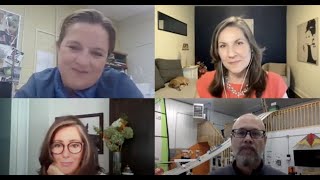
Virginie Glaenzer talks with three education innovators about alternatives to traditional schooling. Kristin Simonson runs Sage Creek Prairie School, which combines science with forest-school experiences. Max Noble created TMAX R&D, a maker space where students access high-tech tools based on responsibility, not grades. Heather McTaggart's Unschooling School lets families define what their child learns and how.
Chapters
Welcome to Pass the Mic podcast. This is a production of Econoques Studio and music is made by Benjamin Schleds. My name is Virginie Glaenzer and I'm your host with a million questions. Today we'll be discussing some of the new emerging forms of education with Kristin Simonson, Max Noble and Heather McTaggart, and I hope I haven't butchered your name as I always do. In this discussion, we'll talk about what is essential to learn in life and what behaviors do we learn in school traditionally aside from academic content. We'll also learn about the panelists' new education programs that are better suited for students in a disrupted world. And for those who are tuning in for the very first time, Pass the Mic podcast is about sharing different perspectives on a specific topic, not only to help us expand our understanding of the world, but also to explore new ways of looking at it. Before we start this conversation, let's begin as we always do with a tour de table. I'm going to ask each of you to tell us your name, what you do, and why you're interested or passionate in this topic in about a minute. So why don't we begin with you, Kristin?
Hey, um, my name is Kristen Simonson. I am a high school science teacher in Saskatchewan, Canada, so right in the middle in the prairie provinces. I've been a teacher in the public system for— this is year 23, so I've taught everything from biology, chemistry, general science, physics, and then Sort of over the last decade, I've specialized in just in biology and environmental science. With that, I've always been part of an outdoor education program. Most of the time that's been an extracurricular program. So we take high school kids outside, we do camping and hiking. We've been to some fairly phenomenal spots over the last a little while. We've been to watch the salmon run in British Columbia, we've been up to see the polar bears at the Arctic, and we've done all sorts of backcountry really neat experiences in some of the more remote places in Saskatchewan. As far as who I am, I have a family. I've got 17-year-old twins, and we live on a native prairie acreage right outside of a little town called Swift Current. We try and do all things about permaculture and sustainable living. We've got livestock, and so we do lots of rangeland management and water quality assessments, and that's kind of just a huge part of my life. So it— all these topics tend to spill over from one category to the other. It's how we live, it's how I teach, and, and then it's how I came up with the idea of our, our business, our kind of our enterprise too, which is the Sage Creek School.
Very cool. Well, can't wait to hear more about your program later during this conversation. Thank you for being here. Max, would you like to introduce yourself? Sure.
So my name is Max Noble. I am an evil genius. Okay, I help minions become masterminds. I've been doing this for about 8,000 hours now. I've logged over 8 facilities throughout Asia. I have worked with kindergartens all the way up to university and also advised government on how to adapt to the changing world. So yeah, that's me. Done. Next.
Done. Next. And where does your passion come from?
Um, it comes from wanting to change the world, right? I don't like the way the world is and I want to change it. And I found out very quickly that adults don't have the ability to change in their lifetime unless they're forced into it. So starting with the next generations is far more productive and they have far more potential.
Very true. Thank you very much for being here. I can't wait to hear more about your program as well. And finally, Heather.
Thank you, Virginie Glaenzer. My name is Heather McTaggart, and I'm currently living in Toronto, Canada, and working here as well, although mostly virtually. I have been in the education space for over 20 years. I started a nonprofit called Classroom Connections in 1997 because I felt that the education system was not serving kids, and it was a lot of the same— excuse my French— garbage that it was when I was a kid, and hardly anything had changed. And so I started on a journey to try to make adjustments to that. Doesn't mean there aren't amazing teachers like Kristen sitting right here and people trying to do the right things for kids all the time, but the system itself is in the way of that. And so I have been working on different approaches to try to do something about that, and the latest, which we'll probably talk a little bit more about later, is something called unschooling school. It's not a school, it's the idea that we could unschool our current schools and use the resources and the staff and the facilities in a way that actually serves kids.
Fantastic. Great, thank you for being here. So in a previous discussion in episode 22, another group talked about how disruption is the new normal for our education system. And one thing that I took away from that discussion is that there is a diversity of educational programs available out there, yet people don't know that they have options. Some of the most asked questions from parents are What are my legal rights? And what are my children's rights when it comes to education? So before we talk about those new emerging forms of education, let's reflect for a moment on this first question: What is essential to learn in life? And I invite any of you to just jump in.
I used to have a list, which is the ability to think, communicate, collaborate, solve problems, and make decisions. And I would add to that, and to understand who you are. So that, you know, if you can do those things, then you usually develop a pretty good understanding of yourself. But that's, to me, that's got to be integral to the whole thing, is that it's a problem. What we need is kids that are, who understand who they are and what they want to be in this world.
Very true. Kristen?
Um, well, I think, I mean, I think for me that, uh, I have a biology degree before I have an education degree, and I think that the, I mean, watching how the scientific method plays into what Heather just said, like, you know, to come up with an idea and to test it and to critically think and to challenge and to try and prove it, and then, I mean, all of those things are great, and yet I don't see a lot of that focused on in our education systems right now. And then, as far as what's essential, that means that there's a loss of connection. And so, for anyone to connect with themselves, with the world, with the issues that are in the world, with others, like Heather said, with communication. I just feel like that is the most— if I had to pick one thing, it would— that's what it would be. It would be connection.
One thing that I want to make clear here for everybody listening, when we talk about the system, we're not talking about the teachers, we're not talking about the students, we're not talking about the administrators, we're not talking about anybody. The system, the structure, how we do it, That's what we're against here. Okay, I make that clear. As far as skills go, everyone has their natural skills and talent they're born with. The education system kills those the more you go through, and they only recognize two skills: the ability to write information down on a test under time and athletic ability. That's it. There are so many other important skills in life like we've talked about already. And so that's the big issue here. And as far as one skill goes, there are— there is no one skill, right? But every kid needs to adapt to the world regardless of where they are on the planet. Adaptation is the key, right? You have to survive. That's what I always focus on.
It's interesting how both you and Heather was not sharing about knowing oneself, which is developing those natural skills. So what are the behaviors that we learn in school traditionally? Aside, of course, good ones or the bad ones?
Yeah, there's a huge list of bad ones. Anybody want to go?
Yeah, here's the main things that you learn at school: sit down, shut up, and do what you're told.
Conformity.
Still the same, conformity, exactly.
Is there any—
I mean, I teach, I teach kids that are at the end of their public school, so I mean, I teach a lot of senior students in grade 12, and I do a lot of reflection, a lot of critical thought, and how surprised they are when someone is actually curious about what their belief is or why they think what they think because they've been told what to think for so long that it's almost— they're almost shocked. That shocks me. I, I just can't believe that we have all these young people that have all these amazing ideas and beliefs and we actually don't care if they don't match what the goal of the class or the goal of the program is, then That's always shocking to me, I think.
Virginie Glaenzer, can I just add, I think, Kristin, it's so important to hear you say that because it's not that there aren't lots of great teachers. It's not that there aren't really great initiatives and ideas and let's do deep learning and let's have child-centered and let's pay attention to mental health. We do and have all those things. But the end result is exactly what you just said. I mean, here they're getting to grade, you know, probably 11 or 12 with you, and it's the first time anybody's ever said, well, what do you think? You know, what's already in your head? It's about giving somebody else's answer, and that it's shocking and sad that that is really still where we are. But I think sometimes educators that know this doesn't make sense, it's good to have that voice to say, you know what, we're still doing this. It's not that different from when you were a kid, you know, because otherwise people tend to think, oh, you know, it's so much better. And I certainly didn't see that when my kids were in school, and I certainly don't see that with my nieces now.
So if school is supposed or should move away from this sit down, shut up and listen conformity to a place where an environment where people, where kids could discover their natural skills and express themselves and discover who they are, how does the teacher react? I mean, how do they adapt in a system that focuses on the first one?
That is the essential question right there, right? And the answer is the education system is too large. It's a juggernaut of an organization, and it cannot change rapid enough to keep up with the changing world, period.
So does that mean—
go ahead. Oh, sorry. I mean, I think the role of a teacher is also changing. I think that's maybe making for some of the uncomfortable moments that I'll maybe address later when I talk about our program. But I have seen my role change from the person who stands at the front of the class and dictates, even though I do still do that sometimes, to someone who facilitates more. And so to take a bit of a back approach, and I don't know if that's a reduction of ego, or if that's a little bit, maybe I'm older now with more experience, and so flexibility isn't as much of an issue. I can be extremely flexible, and I'm not worried about classroom management disintegrating or— and I mean, I also do a lot of teaching outside, so you take the walls away and you've taken a lot of the structure, the physical rows, columns, box structure away, and it just gets a lot easier to facilitate than it does to dictate. And I think, I mean, we tend to focus on that so much in education, the dictate. I'm going to dictate notes. I'm going to dictate the lesson. I'm going to dictate what you need to find out as an experiment. And we maybe need to back off that a little bit and facilitate instead and say, what can you find? What can you learn? What did you come up with? That's a teeter-totter that needs to maybe tip the other way for a while.
That's right. That's what Kristen is saying. That's what we need to do. But it is so difficult to do inside of the structure. Right, there's so many expectations that it's just locked and you can't move without getting restricted by somebody or something.
I can see a parallel between the business world and the educational world where this— around the idea of leadership. In the business world, we're currently questioning the style of leaders that have been trained for many, many years, including in my generation, where we were told To be a good leader, you have to tell people what to do because they don't know or they expect, and you have to maximize and make them extremely productive. But now leaders are being questioned and it's like, no, you have to lead from the heart. You have to have empathy and compassion. You become a guide in other people's journey. And in order to become a guide, you have to remove yourself and you're no longer the hero of that story. You become a supportive character. On other people's journey. So I guess the teacher who used to have this main center stage role have to kind of step down and put the student on the stage and listen to what do we need, what do you need. But when the, the structure and the curriculum doesn't change and the expectation around grades, then that's when you have to break the mold as a teacher, I would suppose, the same way that leaders or challenge, you know, the ones who are stepping up or doing things that no one— and they have to convince their peers and their, you know, who they report to that we have to change the way we do things.
One thing that I just heard the other day, I'm sure some of you might have heard this already, a thing called adult privilege. Have you heard that before? Yeah, I just heard the other day, and this is huge, right? As adults, we think we have the privilege to coerce children. That's huge, right? We don't, but we do it, and the school system is okay with it. Kids crying, don't want to go to school, we force them. Yeah, right? It's a terrible thing.
Where do you think it comes from?
It's absolutely assumed, Max. You're, you're right. I mean, it's, it's, it's a great term to start throwing around because we're throwing it around in so many other contexts, but it really hits the nail on the head because we think just because we're older, you know, we as in adults writ large, that we get to tell the younger people what to do. Even though, you know, several thousand years ago, 500 years ago, that's not how kids were brought up. You know, kids ran around with kids of other ages and they figured it out. The parents weren't helping them over the them all the time telling them what to do. You know, they were learning with each other, you know, running around.
And as an extension of that, then when you do have kids that do challenge and do use critical thought and do question the adults in their world, they're removed from the situation because they're too scary and they're too negative and they're going to really influence how a class functions and works, and it's like, but that is what we're trying to do, like the critical thought, the— and I mean, it's kind of humorous when you start to think about it, but like I always say to my grade 11s and 12s, I'm like, science was built on the bad apples, like the ones that did not conform to what everyone else was thinking, or we never would have moved ahead as a society with knowledge and wisdom. And I mean, it's crazy to think about it.
And it's not just science, it's that with everything. It's, you know, people that question the norms and the status quo that create new ways of doing things. And yet we seem to want to say, you know, as Ken Robinson said, there's one right answer and it's in the back of the book. And that is just very old school.
So I tend to collect those kids, right? The kids who don't listen to no are often the most successful people in life, right? And so I attract those kids in TMAX R&D. All the troublemakers, all the ones who are ambitious, all the ones who want to drop out of school and do what they want to do, that's where they come to get the education they need here.
So let's move to each of your programs. Thank you for the, the, the What do you call it? The opportunity. Segue. I was looking for that word, for the segue. So Max, why don't you begin and tell us, first of all, how— tell us the making of this program. How did you arrive at this program?
I'm a problem solver. I love solving problems. I obsess about them until I get solutions and really good solutions. I don't settle with, you know, this will work. I always want to innovate and make it better. And that's what I've done most of my life. I've helped companies innovate their products, their processes, and then other half of my time I am showing kids how to innovate and how to develop their own skill sets. I started this looking at the top 13 problems in the education system and I developed solutions for all of them. But I quickly realized that my solutions could not be done in the education system.
I'm like, what?
Right?
The system was so structured, the solutions would not work in them. So that's when I said, okay, we have to do this outside of the education system with the freedom to do it. And then that's how I started developing it.
So describe a little bit your, um, program.
Oh, it's so different from the education system. For example, uh, to get in education systems, typically you need to be— have the grades to get in. Not here. Our benchmark is responsibility. Okay, if you can prove and you can behave responsibly in this facility, you're welcome to use it. And the more responsible you behave, the more access you get to high-tech tools, equipment, and whatever you want. So it's very different, the education system.
Okay, and so, um, can you describe just a little bit What's the, the program itself?
Uh, there, it's very open, right? It's up to the kids. We run programs, uh, events, we run classes, but the idea is we just want to get kids— it's called TMAX R&D, Talent Maximization Research and Development, right? The old education system, it doesn't look at talent, it just stamps everybody with one stamp. We're all thinking the same. Here's your curriculum. Don't think anything else. Here, it's the opposite. What do we do? How do we help kids maximize their own abilities, their own natural talents to be successful in life?
So you have locations where you bring a set of things, and it's really around the making of projects?
We have walls of materials. Right, so the community donates stuff and kids are free to use all this stuff to create whatever they want. And then we've got high-tech tools that allow them to leverage technology, right, to be successful in life, as opposed to just doing what they're told.
And why don't you think, why don't you think that this could be included in, like, an after-school program in the education system?
Because it's so different. Teachers can't handle it. Like, the best facilitators that I get are old students, right? Students naturally become facilitators, but teachers don't have the ability to leave kids alone. They cannot sit back and let them fail, right? It's impossible. They just have to be a teacher.
Interesting.
There's a great book on that topic called Get Out of the Way and Let Kids Learn by a guy named Carl Rust, and that's exactly what he talks about. It's that art of stepping back and being a facilitator and a support like you were speaking about, Virginie, and not being the one with all the answers.
And what's the next step in the development of your program, Max?
The next step, uh, just looking for another facility. The next facility. Yeah, that's the next step. Uh, and like I said, it's the education system wants you to go to university. They want you to take on a lot of debt. They want to try to pay that debt off the rest of your life, right? TMAX is the opposite. Kids in their teenage years can start making money. They can use their creative talents. They can post things online. They can create passive income. Right, they can be in their beds and all of a sudden, cha-ching, their bank account, cha-ching, another download, right? And that money just grows all throughout their life. Totally different from the universities, right? But the academic world has nothing like it on their radar. They're like, no, you must get this degree, you know.
If the purpose— if one of the purpose of your program is to help kids build things that are sustainable and that can provide some sort of living or, you know, expenses, you could partner with the fintech companies.
Fintech? No, thanks.
No.
Financial system is a corrupt mess. I would stay out of that.
And I understand why, although my daughter, who's 16, was, you know, complaining about going to school, and I was like, well, if you don't want to go, then I can homeschool you. She's You know, and she said, why don't— am I not being trained on finance, you know, being given finance literacy or things that will be how to do my taxes? So something to think about. Christian, can you share a little bit about how you came up with your program, which I think is called the Sage Creek Prairie School?
Yeah, it's been, you know, it's been quite a few years in the making now that I think about it. We're very new. I mean, we just, we were supposed to sort of start last year, and then with COVID we just thought that maybe we wouldn't, we would just wait because we were new and we didn't really want to be trying to do new things where the world was so uncertain, or more uncertain than it is now. So I guess I was looking— I've always been looking at education with an outdoor lens because I've always done outdoor education with education. You see the differences between kids that are out of the structured classroom and what kinds of things they can do. And so I'll give you an example. The education world calls them soft skills. Skills like— and I don't think they're soft at all— things like resilience, independence, risk-taking. But we, we don't have any way to measure those in a formal education system. We measure knowledge. We measure how well you do on a test, how well you achieve an outcome. And I started looking at these kids that were a mishmash of academic ability and what they were capable of when I took them out of the, out of the system and started thinking about, I want to pair the two of them together. So that was kind of my first approach was give me formal school classes and let me do them outside. And that kind of didn't really fly very well. Nobody, nobody seemed to really want to to bite on that. And so I've been just kind of trying to bridge the gap between a formal school curriculum, which science and environmental science, which is what I do, and then also the outdoors and how to put them together. And I ended up going to an international conference, the Child and Nature Conference, about 5 years ago, and it was almost like a light went off because I was introduced to the concept of forest schools. And sorry, my announcements are going. The idea that, that there are going to be— that there are— sorry, this is—
these schools always disrupting things.
Sells and bells, sells and bells.
The idea that child-centered education has nothing to do with what we're doing in an actual formal school, that child-centered education is pretty much exactly what Max just said. Like, it is, here is your child and everyone is different and what they think is important important and what they want to learn is what is where they take the direction of this. And this has been established in Scandinavia for decades. This is not a new concept, but here it is like I had never seen anything like it and I thought that is, that is what I want right there. I want to be able to take a group of kids and I mean most 4 schools are little. Kids. They're, they're pre-kinder, 2, 3, 7, 8. And so I automatically started thinking about, well, what can I do with high school kids? And I'm going to kind of just revert to something that Max said, and it's really hard to get kids that are older to think a different way because they've been so conditioned by the system to come up with a certain direction that when you start to throw them out into different circumstances, they almost panic a little bit. And they do come around. Like, I mean, I've done enough of this now that you do see some differences. So what I approached sort of our public education system was, let me have kids for 5 classes a day. Let me take them outside. We're going to do some child centered learning. They're going to decide what's important. We're going to tackle some of the big scientific issues like climate change. I'm not giving them notes. We're going to go out in the field. We're going to find things, turn it into community projects. And that got shut down pretty much instantly. I've actually proposed this 3 different times now. And I guess, I mean, at some point you just get tired of trying to of trying to fight, I guess, against it. So I am still in public education, and I do still kind of try and rock the system from the inside, but I also designed my own program that's on the outside now. And so now I'm not bound by any of the same curriculum and formal outcomes and assessments, and I have to say that in the middle of a pandemic when things are are super stressful in education land, that this is my happy place right now. I mean, I've got lots of— I think we've had about 100 students go— 100 kids, they're not students— 100 kids go through ages 2 and up, all through public school age. And we've also been doing some things for adults just that are just opportunities to connect with nature and learn some skills, and I facilitate. I don't stand in front of them and dictate. Oftentimes it's little snippets of information, how to use a knife, how to identify a plant, and then we go do it. It's been very rewarding, and we haven't been at this for very long, but I just, it kind of is mind-blowing how different it is.
And these classes run after school or on the weekend?
We've done both. Right now we've kind of split it up into sort of sessions. So we did sessions over the summer, and with forest school, the idea is that you have kids in the space repeatedly so that they start to form a connection to the things that are there and they gain confidence and they take more risks while they're there. So we had sessions that were repetitive. So I think we had 2-week sessions in the summer. And now because I am back in the formal school system, we're after schools and weekends, the times that I, that I'm not here.
So, and I appreciate how you on purpose use different words instead of saying I'm a teacher, I'm a facilitator, or these these are not students but kids. I think words carry meaning, and if we want to change people's behavior, we have to use a different type of language, a different set of words, because otherwise we go right back to what we think it means. So interesting.
I use minions.
I know, I wanted to ask— I'll ask you that after. Actually, let me ask you this before we go into Heather's unschooling project. So tell us more about where does that come from, this—
That's from Sir Ken Robinson.
Okay.
He humorously pointed out in his talk the sad reality. No one wants to hear what an educator has to say other than other educators, right? Because we were all brought up in the system, we're sick of hearing teachers preach at us, we don't want to hear another one as adults. So when I go somewhere, I say, I say, hey, I'm not educated. I don't tell anybody that, right? I say I'm an evil genius, right? I turn minions into masterminds, and damn, do they want to listen, right? And that's when I pitch and I take a crack at the education system.
It tells a different story. It prepares, it unleashes the curiosity.
That's right, exactly.
Yeah, that's brilliant. Wonderful. Well, that's something that any teacher could actually use in their class with the curriculum, is to change the words to create some sparks. Wonderful. So Heather, can you tell us a little bit more about this unschooling project? How did you arrive and what is it?
Okay, well, so as I said, I've been in the education arena for over 20 years trying to change things, and I'm so glad, Max, that you pointed out that, you know, this is about This is about the system, the structures of the system. It's not about the people in the system. It's not even about the intent. The intent is kind of good. It's just gotten too focused on the predetermined results. So I am definitely not anti, in fact, I am very pro-public school. And I think that right now we're just, we've got the wrong end of the stick and we need to change that around. So what unschooling school is about is the idea that the system belongs to the learners. It belongs to the kids, and it belongs to the families and the parents. We pay for public education. We are the boss. The system, the teachers, the administrators, they're actually not the boss. They work for us. And the idea of unschooling school is let's remember this. Let's remember that it's our system and we should be able to have it fit each individual child. So we all know, and we've probably had, and I certainly have, kids who we say they don't fit the system. And what do we say to them? Well, it's just the way it is. Tough it up, learn to play the game, and you'll survive. Why do we say— I said it myself, and I look back and I so wish that I'd kind of figured this out, you know, 10, 15 20 years ago, because we shouldn't have to do that. We should say, sorry, system, teacher, administrator, whoever, this is what my child needs, and these are the things they're going to participate in, and these are the things that they're going to say no thank you to. If they're not wanting to be with what the class is doing and they can go do something else, they're not going to cause a fuss or, you know, set fire to the gym. They're just going to go and do something else, like maybe they want to stay in the library, or maybe they want to spend more time in the gym, or maybe they want to go work while they're in school and only come to school for 2 or 3 classes a week because this is a crazy thing that we, we fill kids', teenagers' time up with so much school that they barely have time for a part-time job. And then those opportunities are so limited when, yeah, why not be starting your own business, running your own business, figuring out, job shadow. You think you want to be a dentist? Okay, go hang out with the dentist for 3 months and see, do you really like looking in people's mouths all day long? Before they waste all that time going to university and then realizing, okay, it's not actually what I want to do. So the term that we often use is something that we think kids should be able to be designated free learners, which really means they're in charge of what they do and what they don't do. And on unschoolingschool.com, we have created all kinds of forms and sheets and tools that parents and families can use. So for example,— most people are familiar with the term that children that are designated with a learning disability can have an IEP, an individual education plan, and that means there's going to be accommodations for that child. So we've created the free learner IEP. It's not designated by an expert other than the child and the parent themselves being the expert on that kid, and so it is filled out by the family to say here's the things that I'm going to do, here's the things I'm not going to do, and here's what I'm going to do instead, and here's how my parents agree that I can come and go from school, and what all that would look like. And it looks alarmingly like an actual IEP, which we did on purpose because we're trying to say, let's take some— the tools of the schools and of the system are amazing. We've got, you know, here's Max creating this, this whole amazing structure there, but so many of those things exist in schools that we are already paying for. For, but we have to use it in such a prescribed way. And what we're saying with unschooling school is no, let's use it in a way that works for the kid. So the hope is that groups of parents, families get together and they say, you know what, we like this idea because school as it is not working for our kids. Let's go and have a meeting with the school and tell them that this is how we're going to operate. And what we hope is that they meet teachers like Kristin who go, yeah, that sounds fantastic. Okay, who wants to do this? And you know, you get to the point where you've got 10-15% of the school, so the school says, all right, we're going to give you this empty classroom, you can go there. Any teacher want to volunteer and hang out there when they're not in class? Teachers like Kristin say, me. And then you go and you hang out and you facilitate and you talk, and it's multi-ages and Kids come and go from there, and then that slowly and surely starts infecting in a positive way the rest of the school. And we've got examples of what that might look like and examples of what an individual free learner might look like at different ages on the website. And, you know, this has been a little— I would say it's been a bit slowed by COVID. It started because of COVID A group of us came together to to kind of form this. And that, I think I was telling Max the other day, that the core group of 6 educators who started Unschooling School, we combined have 229 years in the education system, not including when we were students, like actual, actual leadership time. So it's, you know, it's not just from the outside, it's people from within the systems, you know, that say this thing needs to change.
So do you go to school to promote and advocate, or do you go to parents?
Parents. I mean, we have an Unschooling School Facebook group, and we've got, I think we're at 1,300 members right now. And what we do is just share and promote these ideas, you know, and help people. I think that one of the main things that we, you know, we all, I think all the people in this space that are working to create changes We've realized that once you understand that kids are born to learn, once you understand that play is the natural way of learning, that failing is good because it's a teacher, and that humans have learned through play and through running around and mucking about for most of human existence, and that that works in schools like Sudbury Valley, Agile Learning Centres, Summerhill, and it has for 50 100 years. That once you get that and see it, you're like, oh wow, okay, that, that makes total sense. So what we're really trying to do is get that understanding of what does self-directed education mean.
It—
what does that look like and how does that even work? And once you kind of see it, we have a what we call a crash course in self-directed education on the website, and it's just a series of YouTube videos, many featuring Max's friend Ken Robinson. And my friend Peter Gray, who were both friends with each other when Ken was here. So, you know, there's just— it's getting in, helping people to get into that information and then see it, and then they're realizing, okay, you're right, you know, it's our power, we have the power, we need to stand up to the system.
So I want to ask you another question about each of your programs. What are the key differences in personality or behavior that you've noticed in children or in students or children, uh, or kids going through your program?
Um, before we get to that, I got one thing I want to say. Go ahead. There is something that the three of us know. It's a secret that very few people know in the world. Like, I'm talking 0.11% of a percent. Like, just We have been doing education backwards. It's backwards. We've been forcing it on kids. And when you reverse that around, you get kids to pull the learning towards them. Wow. The difference is like multiples better. And we know that. It's a secret. And so few people know it. It's amazing. It's surreal.
Anyway, someone else go first. We're going to get— we're going to get that secret out.
I hope so.
So, so going back, so Max, what kind of personality change and behavior change have you seen in kids going through your program?
So I designed the activities to flip their mindset. That's the key thing. Kids come from the education system and they have fixed mindset. And young kids, 7 or 8 years old, they flip from fixed to growth mindset within hours. High school kids takes probably 10 hours, 2 days, you know. University kids, it can take months. For them to get to it. But that's kind of the main thing. We got to get to growth mindset, and from there they are away. That's the key thing.
What about you, Kristen? What changes in personality or behavior have you seen in the kids that came through your program?
About a 180-degree difference from what I see in the classroom. I mean, to look at general classroom behavior. I mean, kids come in, they sit in desks. I've got large classes, you know, 30 usually in a classroom, and so there's not room to spread out. There's not really room to do different formations of desks. And as soon as you make kids do that, it's very military-like. And so they, they just automatically, they can be be visiting in the hallway, and as soon as they come in and sit in their desk, they are quiet. And, you know, it's just, it's very off-putting. And so when I take the same group outside, you can just watch the transformation. It's, they're happier, they're more verbal, they're very communicative, they, there's joy. And I don't, everyone always assumes that high school kids are like these moody creatures that don't like to do anything. And that's, that's not right. There's a lot of happiness. And I mean, there's a lot of things going on with most teenagers, too. But there's a lot of joy and a lot of fun. And they like to play just as much as little kids do. And when you take away the formal structures that kind of hold them into formal education, it is, it is mind-blowing. Listening to them. And I just, I love listening to them because it's almost like watching them become kids again. So they'll go and they'll play with something and they'll find something and somebody uses their imagination and all of a sudden they're off and they're laughing and they're in different groups and they're like, it's just so joy is the, is the big thing. Very collaborative. I find that schools are very competitive. Like even right now, kids are starting to talk about getting into universities and scholarships and things like that. And when we're outside, it's not a competition. It's, I mean, there might be some friendly little banter and whatever else, but it's, you know, let's do this together. How can we help each other? What do you need? Oh, I can do that for you. I know how to do that. There's just such a different feel that it is— I really wish that I could bring some of our upper, you know, our ministry people and our high-level administrators and bring them out and say, what do you see? Because they would see something that is totally different than a normal classroom.
Totally different. And I think that's how changes will happen. You know, 5% of the education population is going to make some changes. People like you, that's going to inspire another 20%. And after that, by looking at the positive, by looking at what we can get, once we accept that it is uncomfortable to change, then that might lead people to wanting this. Um, so this is, this is amazing.
I know that I've been sort of set aside as the, as the teacher that has fun senior science classes, which I mean, senior biology and senior chemistry, they are academic.
They're, they're very—
they're what kids need to get into the upper science programs like nursing, medicine, whatever else. But that doesn't mean that we can't play, and we do play. And that doesn't mean that a student in grade 12 is not undergoing the same rigor. And I detest that word with every ounce of my being, that my class is not as rigorous as some other class that needs to memorize all the enzymes of photosynthesis. Like, it's just, it's, it's a mindset that has to change sort of within the system and outside the system and all over the place.
And I'm sure the student, the teacher will want to have fun. I mean, if you have a bunch of teen or resistant people, you know, it takes a toll on you. So as a teacher, it's exhausting to do something that's not working. And so if you tell them you're going to have fun, oh my God, right?
Yeah.
They don't believe it. So that's what you have to show it. So we can talk forever hours of that, and I'm so glad that the the three of you are so almost complementary. It's amazing, and I'm really excited to write this blog post. So before we end, and I want to thank everyone for this insightful conversation, I took so much, so many notes. As we come to the end of this hour, I'd like to finish the discussion the way we begin with another tour de table. This, the intention for this podcast is to help each of us become the self-authoring leader of our own lives through meaningful actions. So let's pass the mic and share any reflection that may have emerged from this conversation, any last thought you want that you feel was left unsaid that you'd like to leave other teachers with, anything that you think could be heard by teachers or parents and make them want to take an action. And I'm going to start by sharing my own takeaway to give you a moment to collect your thoughts. This is kind of the summary or the, the takeaways of this conversation. So first of all, even though I have three daughters, two daughters in college and one high schooler, my interest really comes from applying this understanding, what I'm hearing, to the business world and onto myself as, as a parent and as a as a professional in my own self-development. We always think that education is for kids, but I'm a big believer that education is for everyone, and adults especially. So I really enjoyed this conversation. I took so many notes. And, you know, for example, play is a natural way of being. It's, it's a national— play is a natural way of learning, but it's also a natural way of being. And I think if we bring that back to a class or a meeting, it could literally change our lives. So that's something that I want to focus on. And then changing, using new words, uh, to open a new space. You know, we're not teacher, we're educator, or we're facilitator. Same thing, we're not leaders, we're facilitators. That changes the way that you perceive yourself and the way that other people perceive you. And that's a game changer, I think. And then really what I'm arriving is that this adult privilege that you mentioned, Max, this is about letting go our control. And it's also about redefining our sense of power. What does power mean? So I'm definitely gonna take all these nuggets and go back to my own classroom and, and try to, uh, um, to see where that brings me. So thank you. So why don't we begin the tour de table? And Heather, do you want to go first and give us anything that you'd like to leave us with?
Well, I really like what you had just said there, and I, I think that the word, you know, this idea of letting go, of letting go that we are the the adult privilege and all of that kind of thing. What you need to do that is trust. You need to trust kids. You need to trust biology. I'm pointing at Kristin. You need to trust biology. School is an incredibly recent invention, and it was designed to produce factory workers and obedient people that could read the Bible and do what they were told. That is why we have the school system we have, period. We have been learning as human beings for millions of years, or becoming human beings. And that has always been done through play and through parents and families and community, because kids were raised much more communally in previous millennia. And it's by trust. It's knowing that there is innate biology which pushes kids to want to learn. They want to figure life out. Everybody can see it as a baby. You watch a baby, you cannot stop them from learning. They get up, they fall, they are driven to walk, they get up again, even though they're hurting themselves. They just have to do it. It's like that with everything. We just need to get out of the way and be there as a support, as a guide, as a helper, as a, hey, you want this information? Parents and adults have a huge role in this. But it's as a support or a facilitator. It's not as the star. We need to trust kids that they'll figure it out. And I think the only way to do that is for the adults, teachers, parents to get educated themselves. We have put together, I mean, start with unschoolingschool.com because we have a huge section on resources. You will be amazed at where you go from there because there is so much out there on this. Like there is proof. That this is natural and that it works. But you have to be willing to go there and learn more. Even if this whole conversation is offensive to you, even best then go and start and take a look at what else is out there. 'Cause we don't need to keep talking to the converted. We need other people that are questioning us and say, you're crazy. Well, see if we're crazy. Go and take a look at some of the information that is available.
Thank you so much, Heather. I will definitely push forward your website for everyone to benefit from it. Kristen, would you like to leave us with final thoughts or any idea?
I just, I love the fact, and you mentioned it, that all of us are repeating the same thing from just a bit of a different spin. And I really like what Heather said there about, you know, the adults need to trust the kids that they can do some of these things, that they don't need to be handheld and monitored, and they don't need to be told exactly what to think. I love that. And I think sometimes as, as teachers and maybe even as parents, maybe even as society, we forget that we talk about multiple Intelligences all the time and how important they are that we have people that have kinesthetic abilities and people that have, you know, spatial abilities, and then we try and make that disappear in formal education. And I—
why?
I mean, we like all that diversity of knowledge and abilities and skill, and I just, I love the fact of having a group of young people come through and maintaining those skills and being confident in those skills that they have value. That it's not just the kids that have a 98 average that those are the ones that have value or the ones that can throw a softball at this speed that those are the ones that can have value and it's, it's so much more about the process and not about the product. And I mean, as a science person, that is the scientific method. That's where I keep coming back to. And as a business person, I mean, I can, I can see how that would apply to all that as well. I just— that is the key to it all. And if we can figure that out, man, can we do some pretty cool stuff with kids.
So trust and then diversity. Yeah. Thank you very much. That's beautiful.
Virginie, can I say one, just one thing? Kristin said something that just sparked something. And that is that part of the trust is that we, there's all these multiple intelligences, there's different ways of being smart, but we seem to be driven to make everybody well-rounded. We wanna have this well-rounded person. So name me any adult you know who's well-rounded. It doesn't exist, nor is it really good. We want people to be really great at a couple of things. Do I care if Bill Gates can play the flute? No, he's pretty good at some other stuff. Let's let him do what he wants. Like, why do we insist that everybody has to be the same on all these things? It's a weird idea.
Adult privilege.
Yeah, adult privilege.
Even though we're not. Yeah.
And then last but not least, our evil genius, Max. What are your last thoughts?
I want to touch again on what Kristin said about diversity. This is a misunderstanding in the education system. Most people don't understand this, that when it comes to problem solving, diversity will always— diversity in thought and approach will always trump intelligence and knowledge. Coach. Okay? And the education system doesn't get that. The most innovative companies in the world, 3M, you know, General Electric, whoever it is, they have labs full of experts. They all think exactly the same, but they get stuck. And all they have to do is crowdsource their problems and a plumber comes up with a solution for it. Right? And the education system doesn't understand that truly. And that's another barrier, I think, to the system. But, uh, final thoughts: if any other, uh, people like us who know this secret are out there, for God's sakes, get online, get connected with everyone else, because the only way we're going to bring this wave, this education revolution, is if we stick together and make it happen. We can't keep banging our heads against the wall by ourselves. We've got to connect and do things together.
Absolutely. Yeah, that's why communities are so powerful. When people get together, they multiply their own work. Well, thank you very much again for spending time, and I'm hoping that those who are listening or reading this blog and this video will share it and help you guys and everyone change the system and create something that really creates joy both for teachers and for kids, because we only have one life, so it matters. Thank you very much.
Thank you, it's been great.
Thank you.
More from Virginie











Unlocking Fintech Success: Strategic Trends for Profitable Growth: Webinar Leadership Series