New Leadership Models- Season 26 - Ep. 2 # What are the new emerging leadership models?
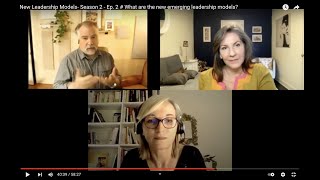
In this episode of the Pass the Mic podcast, host Virginie Glaenzer brings together leadership experts Céline Schillinger and Charles Matthews to explore how the COVID‑19 crisis has exposed the limits of traditional, top‑down leadership and sparked the emergence of new models. The conversation begins with personal introductions that reveal each guest’s background in consulting, systemic work, and men’s mentorship. The trio critiques the old paradigm of a single authority figure and frames leadership as a social‑influence process (citing Chemers) and a fractal function that operates at every scale—from individuals to nations. They survey a range of emerging models: servant leadership, conscious leadership, relational/systemic leadership, inclusive/transformational leadership, and Virginie’s own “Sherpa” model that emphasizes deep listening and guiding others. Céline outlines three systemic pathways—freedom, equality, and community—while Charles discusses inclusive leadership backed by Deloitte data and his personal journey of confronting the “man‑box” culture and embracing vulnerability. The guests share concrete strategies for mobilizing people, such as ecosystem‑wide inclusive conversations, aligning on a collective “why,” and leveraging networks and activism. Throughout, they stress the importance of inner work, humility, and collective action over individual heroics. The episode closes with reflections on reclaiming voice, adopting new habits, and the promise of small‑scale, conversation‑driven transformation.
Chapters
Welcome to Pass the Mic podcast. This is a production of Econoxx Studio and the music is by Benjamin Schleds. My name is Virginie Glaenzer and I'm your host with a million questions. Today we'll be discussing the new leadership models with Céline Schillinger and Charles Matthews. In this discussion, we'll try to understand what are the new emerging leadership models. For those tuning in for the very first time, Pass the Mic podcast is about sharing different perspectives on a specific topic, not only to help us expand our understanding of the world, but also to explore new ways of looking at it. Before we start our conversation, let's begin as we as we always do with a tour de table. And I'm going to ask each of you to tell us your name, what you do, and why you're interested in this topic in about a minute. So why don't we begin with you, Céline?
All right, thank you very much. So my name is Céline, and I have been a longtime employee. I've worked in organizations, small and big ones, around the world on various continents. And throughout this work, I've became really interested in the, in the practice of engagement, mobilization, and more generally the practice of leadership. And I've tried to understand, to understand why, uh, some of the limitations I experienced in, in work, uh, where did they come from. And that exploration led me eventually to leave the big company, set up my own, become a consultant, and soon an author. So really happy to have this discussion with you around this fascinating topic.
Thank you very much, Celine. And we'll definitely share your new upcoming book. Can't wait to read it. Charles, would you like to go next?
Sure. Yeah.
Thank you.
And Virginie, you know, just, you know, thank you for convening this. And I think this discussion and the way that you model this and the way that you gather people and share all the content and share the kind of the international— the— what am I trying to say— the intellectual property of what we're about to do is a demonstration of kind of those leadership models that we're looking for, that power is a current, not a currency. Information is a current as well. So thanks for convening this. And I'm stalling because it's sometimes hard to talk about kind of who I am and what I do. I am coming into leadership development and leadership consulting from a soul work and mentoring perspective, which is a little bit different. It's transformational coaching, yes, but coming at it from, from a depth psychology and soul work perspective that involves, you know, aspects of nature therapy, aspects of Jungian psychology, aspects of group work. And most of my work is with men. That's where my heart really lies. I've had a 35-year career in education, both in the wilderness and the classroom, and then most recently 12 years doing men's work and working with teen boys, mentoring them. I've helped lead 30 different transformational retreats for men and boys. And, you know, as Céline kind of talked about her shift away from being an employee, you know, my shift is away from working downstream with boys. It's like, you know, sort of plucking boys and men out of the, out of the river. It's like, okay, well, it's time to go upriver and find out why they keep falling in and And also, you know, because men have more privilege and power, how their— our dysfunction, especially in leadership circles, creates drama and trauma and bad outcomes for women and children who are around those men. So I run a podcast along with Mark Green called the Remaking Manhood podcast. I'm also really interested in sustainability. So my wife and I run a podcast called the Here Together podcast, where we talk about how we're going to live together sustainably and discussions around gender and gender dynamics and men's roles plays a part in that as well. And I will be putting out a book in 2022 as well called Redefining Leadership. And I'm very excited about that. And we'll be doing some, some group coaching and, and online coaching leading to a men's retreat in the fall of 2022 that I'm really excited about. And I'm really excited to talk about all this today. Thank you.
Well, that's wonderful that you're here, and thank you for the, the work that you're doing. There's a lot of healing happening these days. So for both of you, thank you for your introduction. We'll share your bio and all the links in the video and as well as in the upcoming blog post that we usually write for those who still like to read. So I think it's clear to say that our global health crisis has put our leaders to the test, and many fail not understanding the new societal values. And so as a result, the pandemic just gave many workers an opening to act on these shifting values. One of those is the way we see leadership. We used to believe that a leader was the one person having the ultimate power and authority without having to consult others. As a consequence, we've created a culture that is all about tangible results and high-performing teams, which no longer serves us because it's sacrificing our well-being and the well-being of our planet. So therefore, it is time to shift to a new leadership model, one in which employees can succeed through their work and their creativity to lead a life of meaning and dignity. That's what I'd like to begin with. So let's begin this conversation by naming perhaps and describing those new leadership models that we've heard of. What are those? Céline, would you like to share with us all the various new leadership models that you've heard or that you've saw in action before we talk about our own leadership model?
Yeah, Virginie, I'd love to come up with a definition of leadership, which is not from me, which is from Martin Chemers from his book, his 1997 book, An Integrative Theory of Leadership. And he defines leadership as such. He says leadership is a process of social influence in which one person is able to enlist the aid and support of others in the accomplishment of a common task. I really enjoy this definition as a process, as a social influence kind of thing, which I find very helpful in pushing away a little bit this, I think, toxic perception of leadership as being an entitlement, a range of superpowers or a definition of a position in a hierarchy. I think all that is toxic, is not helping us. And rethinking from this perspective as as a social, as a networked, as a collective kind of thing, to me is much more helpful. However, in many, many people's minds, leadership remains a sort of individual ability, something that puts you above others, something like of a, related to, yeah, special skills, you know, special something. And I think this is pretty harmful and pretty, it actually drives us into the wrong direction. And it's not new, but the way society has evolved and people have evolved requires very, very different, a very different approach to leadership. So I'm not yet into answering your question, Virginie, about models. I'm taking a step back a little bit and trying to paint the picture of leadership in general first. Charles, I see you nodding. What do you—
Yeah, no, I like the definition you introduced and You know, it's, you know, leadership can also be— I guess I want to say two things. Leadership is also, you know, it's a function, I think, is kind of what you're getting. It's not necessarily a role, it's a function. And it, it can serve to, you know, coordinate people toward a goal, which is part of the definition you just talked about. It can also be used to, um, to allocate power and resources. And sometimes that's where leadership in the old way went wrong, right? It held on to power. It allocated resources only to like people, only to white men in particular, only to white men of a certain educational status, whatever. But that doesn't necessarily mean that that's what leadership has to do. That's just the way it's been used. It's been used by power structures to maintain power for a few, but it can be used thoughtfully, consciously to allocate power and resources differently, I believe. And the other point I want to make is that leadership is, in my mind, is also kind of fractal. You know, there's kind of leadership of the globe, there's leadership of countries, regions, communities, organizations, teams, families, all the way down to leadership of oneself. You know, I spend a lot of time talking to other solopreneurs, and we talk about, you know, how do I lead myself and me coming I mean, from a soul work perspective, there's all these different parts of myself. There's, there's this whole jumble of parts of me that I need to provide, have an opportunity to provide leadership for as well. And I think the, the principles ought to— the principles of good leadership, of fair leadership, of, uh, interactive collaborative leadership ought to be a through line for all those fractal levels, in my opinion.
Right, right. And I Exactly. And I think leadership is, is an opportunity we all have. It's not a special capacity that a select few, there's a few people have. But by saying that, I'm also, I'm already introducing sort of a new model, new leadership model in a way. And it's a model that is very seldom leveraged or implemented in practice in organizations. It's crazy. You see a lot of people joining organizations, large organizations, with the best intentions in the world, and they are well-read and they understand the benefits of involving people, of whatever, you know, creating collective decisions, etc. But in practice, Why does it happen? It's really surprising. Everybody at some point defaults to the same old practice, same old top-down, I know better, people are lazy, they don't want to, they refuse accountability, and pushing down onto people and cascading decisions down, all these typical, very typical behaviors in organizations that I just can't stand anymore. And so, but yeah, they're still so widespread, right?
Yeah. That's the reason why I think bringing up new models can help people not only choose what they might be inspired by. So I want to give you a couple of examples of the new model of leadership that I've been hearing about or witnessing. The first one is called servant leadership, and those are not official names. These are more kind of behavior that I'm seeing. So servant leadership model, which is about being of service to others. I personally not a big fan of the word servant because it goes with master. But some people, it might resonate for some people and they'll have to define what it means to them. Another one is called the conscious leadership, which this is about, it refers to the ability of bringing one's entire self into a leadership position, so having an acute understanding of one's emotion, all our biases and worldview. So servant leadership, conscious leadership, what other name could you come up with, or have you seen as new behavior? Because yeah, talking about the old economy, the old mindset, we all unfortunately know that way too much. So this is about reinventing a new model. So what other models can you describe?
Yeah, so that's, that's a great question. And I think you could go— I mean, the list could go on and on. It could be infinite.
There's not that many that I see.
In my own book, for example, I talk about relational leadership. But is it a new model, really? I'm a bit wary of the term model because I find it really close to the idea of tools, toolkit. And I believe that toolkits are part of what's wrong with leadership, is that we're looking for tools, we're looking for models instead of thinking by ourselves and instead of thinking in context with the people that are here and, and, and getting together and, um, to, to make sense of the situation and reflect on how we want to proceed from then on. I think this is a model-less leadership in a way, which is possibly more useful and beneficial in the long term and beneficial to the collective and to, to, to collective capacity to innovate, to connect, to come up with new things than any application of any wonderful model. Because with a model— and so I don't want to, how can I say, sabotage the theme of this podcast, but I find it super interesting as a trigger to reflect on What is really, what is leadership? And do we need a model for leadership, or do we need more people thinking about themselves and connecting more in a more humane way with others to create collective value?
Yeah. So we'll, we'll talk about those values later on. I mean, right now we know that, and I agree with you, that a model is a form of practice, it's a form of tools, but it's also a set of behavior. And the behavior has to built on values. And so for one, for people who have the responsibility of a team, who believe that what they've been taught around, if you want to be a good leader, this is how you should do things, that is being questioned. So that's why I'm really interested in, okay, if you're one of those person who have, who are managing a team and you feel that there's a disconnect with what you've been told, How do you behave? Yes, you'll have to go back to your values and you'll have to adapt to the new environment, but I think it is helpful to know where you can thrive, right? So a model to me is kind of a, a seed that you'll need to nurture and, you know, help grow, but it, it could be useful in the day that we are right now. You wanted to say something, Charles?
Well, it was just, uh, Céline finished with a question and now I can't— I was going to answer that question, I can't remember what it was. But the, the, the— my understanding of kind of where leadership goes badly for people, where it goes non-relational to— and I don't know, I know we don't want to focus on the negative too much, but, um, The, the memes of leadership, especially for men, are very often around competition and dominance. And that dominance hierarchy, that dominance culture, what some, some of us call the man box culture, which is linked to dominance culture, it starts very early for most boys. And Judy Chu's research, she's, she was interviewing 4 and 5-year-olds on the playground because she kept having to go back She was talking to teenagers and like, no, you got to keep going back. So she finds that for 4 and 5-year-old boys are already making decisions about whether to join the mean boys and have some safety and belonging or to remain authentic to their relational selves and be the target of bullying and exclusion. And they're very aware that they're making that choice. And I think for a lot of men, because it happened so early for us, we've forgotten that we made that choice. So We see when men start gaslighting each other and gaslighting women like, "No, this is just how it is," even though we can see clearly that's not how it is. That top-down domination leadership doesn't actually work. That's what we've been policed into. That's the choice that we made way back where we don't remember. So we're, you talked about how often we fall back, even with best intentions, we fall back into that old style of top-down domination, command and control. I think that's because that's what we feel safe in. That's what we've been practicing for decades. That's all of the role models, almost all the role models we've been seeing for decades. And then there's this sort of, um, misogyny and sexism that gets in place where we project all of those relational capacities onto women because we had to get rid of them ourselves in order to fit in for men. And some women have had to do this too to be successful in the, you know, male-dominated corporate world. So we project all those capacities, all that relational, cooperative listening, receptivity, patience, being able to abide in mystery and unknowing. All of that we project as feminine characteristics, meaning that we don't have access to them. And now we use that same projection to hold women at bay and to keep them down. So it's this double whammy. So we don't have access to them, and women are, women are kept out from leadership.
So I'm gonna say it's interesting, and I love that conversation because we are so comfortable telling the stories of the past. We know exactly what we don't want, and we could go on forever. We could talk for an hour about the damage and what we don't want. What I'm looking for from you two is what are the emergence?
Yeah, yeah. So let me, let me just offer, let me offer some good news is that I don't think men have lost permanently those relational abilities. I don't think those relational abilities, the ability to lead, uh, collaboratively, cooperatively, it's not lost. And, you know, Céline sort of hesitated earlier to talk to say this is new. We've been leading and being in groups like in collaborative, cooperative listening ways for thousands of years. Religious orders have organized themselves this way, indigenous orders, women's movements. It's not gone from our culture. It's been on the margins all along. So it's there for us to reclaim. So maybe that's a better spin for this podcast So what do you—
which model for men do you see emerging? What are the trends? Yeah, could you put— and every time we categorize something or we give it a name, you know, it's a way of boxing it. But I think for now it's okay. Again, this is about inspiring people who have other into their responsibility, no matter what level, what area.
Yeah, I think inclusive leadership is one of the phrases that gets put around. And like, Deloitte came out with a study a few years ago that showed that inclusive organizations were 8 times more likely to reach their business goals, 6 times more likely to reach your financial goals, 4 times more innovative and creative— all of the things we desperately needed during COVID times, right? Innovation, creativity, success. So it's very clear that there's a business case for this kind of inclusive cooperative leadership. And I'm making the case that there's also a personal case for that. I mean, I know that when I, I was one of the leaders who fell back on my old, the old crap when I became, when I got promoted to almost to my level of, of incompetence, I forgot all my relational capacities for a little bit. I got some coaching and did the inner work to release my reliance on top-down behavior and reopened myself to vulnerability, to connection, to listening, to trust. And then, and, and then I had to be vulnerable to my team and said, I've been screwing up. I've been, I've been bad to you. I've been micromanaging you. I've been ignoring you. I've been withholding resources from you. I need your help to be a better leader. And so I and they rose up to meet me and help me out.
So, I mean, inclusive leadership, the, the, the way that person behave is really having deeper relationship, which means bringing their own, you know, being vulnerable. Yeah, yeah. Building a trusted relationship and having some connection. I like that. Okay.
Yeah.
Before we move to the next question, which is more personal, Céline, is there any— we talked about the inclusive leader relation, you mentioned relation leaders, I mentioned a couple of others. Any other that emerges?
Yeah, I'd love to mention system leadership or systemic leadership. I think that's To me, that's a really, really important line of thought that takes into account a broad perspective of systems and where leadership, how leadership can be impactful in a system where everything is interconnected, where consequences are unknowable, where, but there's, One thing you can be sure of is that every action has unintended consequences. And so that kind of, that line of thought is to me really important. And in my own reflection on leadership, I've tried to establish, I wouldn't call it a model because as you said, it boxes things too much. And I think it's a, a too aggressive form of simplification. But I've tried instead to offer pathways. So there's 3 pathways I am offering for anybody interested in reflecting on a better and more systemic kind of leadership. The first pathway is one of freedom. It's about injecting more freedom into the system rather than reducing freedom. Very often freedom is seen as a danger, something that brings chaos and something that has to be reduced to the minimum because an orderly system is still seen by many as the best system. And in my opinion, Considering the, the era we are in and how, how change is bombarding us, you know, from everywhere and every day, you can't look forward to an orderly system because to, to an orderly system, change is a, is a, is a problem, right? So instead, we need to create a system that is much more at ease with freedom, with liberty, with innovation, with taking initiatives. And it starts with oneself. It starts with liberating oneself from the dominant patterns, from, oh, that's how we do it here, you know, from the kind of normative and systemic culture you're in when you enter in an organization. So that's the first pathway. The second pathway is a pathway of equality. I think of current systems are dominance systems, as Charles mentioned. They are based on domination, on hoarding power to the benefit of a few, and on very unequal relationships. And this is not serving the collective. This is not serving at all the collective anymore. Maybe it worked in the past with when most of the workforce was illiterate. And you had to rely on a few experts who knew better. Now in the knowledge or even post-knowledge economy, this doesn't work anymore. So we need to create or to create leadership systems that are based on equal relationships, on relationships between equals. And to me, the great opportunity here is networks. So networks as technology technology, but also as organizational, as organizing principles. And finally, the third pathway, and I think they go together, is a pathway of community. So community building does not happen from the top. I don't think you can force or cascade a community. A community stems from joint activism in the service of a shared cause. So I think the mechanics, the, the, the, the patterns, the tools, the, the history of activism should be a source of inspiration for leadership today in order to enable this possibility of activism in the workplace in, in the service of a of a shared cause, of a truly shared cause. And all together, so of course you recognize the pattern here: freedom, equality, community. To me, it's possibly— it's not a model, but it's possibly what can help people evolve their leadership towards something that is much more collective, relational, and that is much more open to emotional connection rather than purely rational, expert, knowledge-based kind of relationship.
So you call that the systemic leadership, if you had to summarize?
Yes.
It's funny because the word systemic is interesting. Okay, that's wonderful. So as leaders ourselves, This is about walking the talk, right? We can talk about leadership or we can be one. So this next question is more personal, and I want to start with you, Charles. So which leadership model are you embracing and choosing personally, whether you have a name or not, if you can?
Yeah, yeah. This kind of— this inclusive transformational leader is, is one that I'm remembering to become. It's probably the one I was when I was 4. You know, I have this long career of leading in the wilderness, and that's the kind of leadership that worked out there as well. And, and to that, transformational inclusive leader means including all the parts of me, not just including all of the different parts of my team and their backgrounds and making sure that our hiring practices bring in people of color and, and that women are treated fairly and equitably and have opportunities for leadership, but that one of the blocks to that kind of leadership is when I don't include all the parts of me. Um, and I was just listening to a podcast with— let me check real quick here— uh, Nicholas Yanni talking about how our, our purpose, you know, sort of comes down from our spirit and our connection to the broader collective. Our ambition, kind of our ego, rises up to meet it, but our shadow also rises up up. And so the shadow is all those parts of me that I've suppressed, or the desire to be top-down, the desire to have power over, the desire to have win-lose consequences, you know, all that kind of rises up. So being a transformational inclusive leader includes recognizing those dark elements that are— those unhelpful elements, I'll put it that way— that are part of my leadership. Those fears, those anxieties, those desires to be safe, to not be vulnerable, to have power, to have more resources. All of those desires are there in me as a human being. So how can I be honest with about them and say to my team, I need your help to be a better leader, or say to my stakeholders, I messed up, or I feel fear about being vulnerable right now, but I'm going to do it anyway. I don't know how to be more inclusive of people outside of my personal experience. I don't know what to do about gender non-binary folks in the workplace. I'm confused about that, you know, whatever it is. So that's the inner work that I'm doing all the time that I'm helping other men do to recognize the old leadership memes that we're stuck with and how to free ourselves from those to remember the memes of cooperation, joy, mystery, fun, play, you know, kind of the ecology you talked about, systemic leadership or systems leadership sounds very much like ecology, how all the threads are connected and you pull on one, let's see what happens over there. So that remembering is a part of the leadership pathway that I'm working on, to use Céline's word.
Wonderful. Thank you very much for sharing, Charles. What about you, Céline? What is the leadership model that you are personally trying to embrace, nurture?
Yeah. I am very much trying to embrace this relational leadership, finding all opportunities possible to co-create, to create with others. And at the same time, I need to be really, really humble and honest. And if you saw the way I plan my holidays, for example, where everything is like super— everything is planned, you know, everything is organized, everything is— and there's little room for, for example, my husband to provide ideas because I like to, to lead, you know, things, uh, all by myself because I know it will be well organized. So there's a— and I'm aware of the, the discrepancy between what I preach and what I do sometimes. Um, so it takes, it takes efforts to, to trust, to— I wouldn't say let go I often hear this word. It's not exactly letting go because letting go feels like doing less work, you know. Oh, but it's not. It's not that. Letting go, it's— what I mean is that it takes effort. It takes additional work, in fact, to co-create and to show up in the right way, in the way that enables this co-creation, that does not instrumentalize people, for example. It does take work, you know, and work on yourself, work on self-awareness, of course. But that leads me to another idea. I feel we should not let the whole weight of system change fall onto individual shoulders. I explain, it's not up to, you know, self-development, self-awareness. All this is great, but it's not enough. And we need to work at a collective level. We need to work at a, again, systemic level in a way. Otherwise, if we just tell people, oh, you just, you know, work on yourself and things will get better. Well, maybe not. We're putting too much pressure on individuals, and I think some issues need to be solved, you know, together as collectives.
That's very true. Thank you very much for sharing. My husband and I often talk about leadership models because he leads a team of engineers working remotely, and I work with several teams from different organizations, just to make it a little bit more complicated, as a fractional CMO. CMO and as an entrepreneur myself. And my own leadership model that I'm nurturing in myself is what I call the Sherpa leadership. Sherpa as in guide. And actually, I was delighted to learn, you know, when I discovered the word Sherpa, it's a member of Himalayan people living on the borders of Nepal and Tibet, and they're known for their skill in mountaineering. So in other words, a Sherpa leader guides others where they want to go.. It's no longer about the leader. And the reason why it fits well, well with who I want to be is because it requires me to engage in deep listening. Since it's not about me going anywhere, I need to understand people underneath their words. And I like that. It really, that's inspiring to me. So thank you for sharing your own personal leadership model, what you inspire. It is, as you said, Céline, it's a collective effort, not just an— even though you have to dig deeper into yourself, there's a lot of inner work, it's also a collective effort. So here's another question that I would really love for you to answer. So for leaders, or for those who have the responsibility of a team, or responsibility for others, how do we find our true power power in order to give meaning to our lives while making our world better? What are your thoughts? And anyone can jump in.
Okay, I can start. For me, I found my true power in connecting with others in ways that were not dictated by the organization. It was about— and it started with activism, and that's why it's, it's been important in my own, you know, in my own thinking. It's because I have found through— there was this, an issue at work around which I and other colleagues self-organized. We mobilized ourselves, we engaged, and we created this grassroots movement that grew and expanded and became viral and so forth. And that's how I discovered covered the power of networks, the power of getting people together around a shared cause because they want to, not because they have to. So all this, the human dynamics of activism, of engagement. Landsberg, philosopher, a German philosopher of the 20th century, described engagement as as a personal movement that is an act of knowledge, an act of knowledge. To me, knowledge is the source of power, and knowledge is built collectively. I mean, that's what happened for me, at least. It was this getting together made us see the system in a different way. It made us see the system with new eyes, with fresh eyes, and we realized that that we could do something about the system, even small, even, you know, but there was this new gate opening that we hadn't even seen before because we had taken the system for granted. We were just, you know, going with the flow, you know, waiting to be picked for roles, being assigned, you know, on projects or whatever, or never assigned because women have less opportunities in the workplace. And at some point we self-empowered. And it was this getting together and asking ourselves, you know, questions and sharing our observations and making sense of a situation together that gave us this power. And yeah, it was amazing. It was really amazing.
What about you, Charles? How do you find your true power? In order to give meaning to your lives while making the world a better place.
Yeah, well, just, I'll identify that I'm feeling a little, a little sad right now, uh, in, in listening to Celine, um, because as a, as an introvert and as somebody who, um, I've been really risk-averse around COVID, so I haven't been spending a lot of time with people And just recognizing my own privilege as a white man, there's less of a calling, less of a direct calling for me to organize and become an activist and to create that collaborative shared power around that common goal, in particular, freedom and equality for me. And so my work has been, my personal work that has given me a lot of joy and a lot of power has been my own inner work and work with others in, in a much more, um, kind of one-to-one scale where I feel great joys when I'm working with clients or a group of clients. And there's that, um, mysterious transfer— or not even really transfer— when I sometimes, when I'm, um, working closely with somebody, whether it's a boy or a man, something new will appear between us that's not me and my ego and not him and his ego, but something brand new. And it's very mysterious. And I, and I know that I'm a part of it, but I don't take credit for it. I know that it's part of that other person, but they're not really, you know, it, it's this, it is relational and it is emergent. Um, and so when I feel really, I feel really powerful and grateful and humble all at the same time when that emergent thing happens. Um, and maybe it is really similar to what, to what you just said, Céline, about how how power and purpose and engagement all sort of arose organically. But this is, this is sort of on a smaller scale, and I take great joy. And I think that's one of the things about the sort of transformational, uh, leadership is the, is the slight separation from the outcomes and the appreciation of what can emerge through, through systems thinking, through honest sharing, through vulnerability, You know, I learn when I open my mouth and start talking, like, oh, that's what I think. So, and learning a lot just right now. So yeah, I'm not sure if I'm exactly answering the question, but I know when I feel that joy and that connection, maybe it's not really power, but I see something emerge that wasn't there before.
That's amazing. And I think scale doesn't matter because we're in a fractal.
World.
So whatever you, you, you manage to do with just one individual is, is already absolutely huge. It's absolutely huge. And I remember one of the, one of the recommendations by Peter Block, whose book I loved. I mean, I love many of his books, but this one around community, the structure of belonging, The Structure of Belonging, one of my favorite books in the world. And he says we need to let go of our large-scale, you know, dream. Fantasy. Fantasy, yes. Everything has to be large-scale and grandiose. And no, no, no, no. He says the scope of transformation is actually small. It's conversation by conversation. It's who you have in the room and who do you What do you talk about together and how do you invite others in the conversation? So it says that, yeah, the scale of transformation is actually small. That's where we should work.
Yeah.
Yeah.
I'm at my best. I'm at my best with 8 other people in the room. Interesting. That's where it's juicy and interesting to me.
Yeah. I love this discussion around the various emergent model and the ones that you've, that we've individually, or have been inspired by and want to nurture. And I want to expand the conversation a little bit by asking that last question. We've talked about model, as I just said, and this idea of power, of finding our true power as a leader, But how do we develop and implement a strategy that truly inspires and mobilized people? That's a big question. Take any angle you want.
Yeah, yeah, yeah. You know, I'm thinking about what happened locally and continues to happen locally in my small little community, that some of the business leaders and some of the nonprofit leaders were able to during COVID were able to detach themselves from their normal outcomes. A, a theater company, a local theater company, became a human, a human service agency. They knew they couldn't put on plays anymore, but they had a giant database, mostly of elderly people, because that was their patrons. So they use that database to provide services to their constituents. Instead of putting on a play, we're going to go sing a song, we're going to bring a meal, we're going to pick up their medications, and meet them where they are in their rooms. So that, that took a leader who was brave enough. And this leader, I just interviewed her yesterday. She— they set aside their capital campaign, they set aside their plans for expansion and growth that you were just mentioning. They set aside all that and turned to serve the people where they were. And I— one of the ways that emerging and transformational leadership models and servant leadership, all this kind of ball of description for it, has been successful on a small scale in my community is by recognizing what's real. We're not going to put on plays. My restaurant's not going to serve in-person meals. What are the real needs? People are hungry. People aren't getting their meds. The elderly are affected. And then mobilizing people around this new reality. And I think one of the problems with old leadership is it's dependent on the status quo. It doesn't have a lot of freedom in it, as Céline pointed out, and that's why it has not served us globally during this crisis. So a newer kind of leadership where the leaders are engaging with the real needs of the stakeholders, whether those leaders are one or many, um, and is brave enough to acknowledge reality, to acknowledge pain, to acknowledge problems, to acknowledge failures, and move from that acknowledgement into a new place is really what's necessary. And that takes inner work, it takes group work, uh, and, uh, I'm, I'm excited to see more of that emerge because apparently we're going to have more opportunities as we get more variants to the COVID we're going to have more opportunities to practice this realization and pivot.
Yeah. And yet if management or performance management systems remain unchanged in organizations, we won't go very far.
Yeah. Well, some organizations may not evolve and change, but the new ones, which are starting from a different set of values and a different set of aspirations will find new systems, whether it's accounting, whether it's legal structures, whether it's form of compensation, you name it.
Exactly. They will need to strive for coherence. They can't have a double, you know, talk about big principles on the one hand and leave the bureaucratic infrastructure unchanged on the other hand. It won't work. Agreed. And to me, starting to answer your question, Virginie, about how do we start, how do we develop and implement a strategy, I would think that a good starting point could be a conversation within a representative sample of the ecosystem. What ecosystem am I in? What ecosystem am I trying to impact? Customers, suppliers, contractors, etc. Employees of different levels, different functions. How can we have conversations as equals? How can we build networks within this ecosystem? How can we connect the system to more of itself through digital and, and a relational approach to leadership? And what do we want to achieve together? What, and not just what we want, But why? So what is driving us? What drives us as a collective? And I think that's a great starting point for a strategy, because then once you're clear about the collective why and why it matters and giving a space to everybody to being, you know, having an inclusive conversation about the why, once you have that, that, uh, you can then develop, uh, whatever you need to make it a reality.
Right, right.
Beautiful.
Yeah. Well, I want to be mindful on the time. Uh, we could talk forever, but I want to thank everyone for this insightful conversation. And as we come to the end of the hour, I'd like to finish this discussion the way it began, with another tour de table. The intention for this podcast is to help each of us become the self-authoring leader of our own lives through meaningful action. We're now— it's, it's about action. Enough talking, let's go into the doing. So let's pass the mic and share any reflection that have emerged from our conversation or any last thoughts that you feel was left unsaid that you'd like to leave us with, and I'm going to start to give a few— share some of the notes that I've taken so you have time to collect your thoughts. I really enjoy this conversation and exploring various models, even though there's always pros and cons in putting things in boxes. But I think the stage of evolution that we're in, it could be more beneficial than negative. We talked about conscious leadership, systemic relational leadership, inclusive transformational leader, a Sherpa leader, and a servant leader. I think all these different models need to be explored. I really enjoyed what you said, Céline, about the true power, where you found your true power through your voice, through activism, which is, I think, I think when we find our true voice, it is, uh, it provides a sense of power. And then I really relate to what you said, Charles, around power is a current, it's not a currency. And I think that just that changes the, the, the worldview and, and the look that we— the way we look at power. So, um, thank you very much for both of us, both of you. Um, Charles, you want to share last thoughts, anything that has emerged?
Right, well, here, you know, here we come to the solstice and the new year, so this is an opportunity for, for me and for all of us to adopt some, some new ways, some new habits. And I'm really— I wrote down Céline's 3 pathways into, into new leadership, and I'm gonna put those up on my wall. And I think, you know, inviting men in particular to join me in figuring out a way to let go and surrender of those greedy memes of top-down, power-over, win-lose ideas about our relational capacity, and to reclaim the 4- and 5-year-old, to reclaim the brown bear, to reclaim the stream, you know, all of those natural ecological metaphors of flowing and strength. And find ways to be more inclusive of your own inner parts, my own inner parts, our own inner parts, and to draw that circle of compassion and inclusivity way out beyond the self and into, you know, women, children, people of color, BIPOC folks, folks from around the world, the natural world, the trout, the fir tree, the desert cacti, and see where you land when you draw that circle. How does that change your intentions? How does that change where you want to give your power away so that it flows like a current?
Wow, that's amazing. That's amazing. And last thoughts for me. Well, I've been extremely happy to join this conversation. Not least because it made me dive into a little bit into Charles' thinking, and I'm now extremely curious for his book. I think this work around masculinity, modern masculinity, is amazingly important. It's actually critical. I realize that in my own book, I talk about inequality at some point, and I bring my own experience as a woman in the workplace and explaining that inequality in the workplace starts much before you know, when we were kids. And I hadn't thought of the exact parallel thinking that you've developed, Charles, that toxic masculinity starts also very, very early. But it's all easily understandable. And so, no, I think it's a super interesting topic. Clearly, Viking vital, absolutely vital. So, and I took note of the man box culture wording that you used. I thought that was really, really cool and really, yeah, again, super important. Another thing, Virginie, you spoke about, you used the word reclaim, reclaim our voice. I think, yes, absolutely, this is critical. And it does not only apply to the people who've been silenced. It applies to all of us because sometimes we tend to let our voice be, how can I say, we tend to speak the voice of our organization and believe it's our own. But in fact, it's not. We need to see to reclaim this little distance with the system we're in so that we can better see what part of the system we are reproducing that would deserve to be changed instead. And reclaiming our voice as reclaiming our individuality, reclaiming what makes us different from from one another. And because these are all assets, you know, we need this diversity of this rich and diverse collective rather than having yes men or yes women marching, you know, in line. That's not what organizations need today. This time is gone. So yes, yes to reclaiming our voice. Yes to taking ownership of our stories and of sharing our stories. So that's what you do, Virginie, through this podcast. That's, Charles, what you do through your book, your other interventions. That's what I started doing 10 years ago through a blog and now through a book. And so it's all about reclaiming our story and not to impose it on others, but to be fully present with the whole of ourselves, to be whole, you know, not just a tiny surface of corporate soldier, you know, that's not what we need.
Exactly, very well said. And despite the heartbreaks that the world makes you feel when you look at a number of different behaviors or events, it is, I think, a wonderful time to be alive because there's so much we can change. And I think a lot of people already ready for change. And we need that collective support. We can't change by ourselves, whether it's one individual or small group. It is essential. So thank you to both of you for the books that are— we'll definitely promote them. And thank you for taking the time to share your thoughts.
And so thanks a lot, Emilia and Virginie. Thanks a lot. That was awesome. Thank you.
More from Virginie











Unlocking Fintech Success: Strategic Trends for Profitable Growth: Webinar Leadership Series