Non-duality - Ep. #20: How Can Non-Duality Help Us Be the Self-Authoring of Our Own Lives?
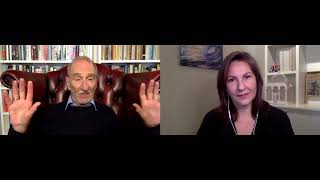
Humanistic psychologist Richard Sylvester explains non-duality as the direct seeing that the self is an illusion and separation from the world is a mental construct. He describes it as simultaneously an experience, practice, philosophy, and story. Sylvester stresses non-duality loosens desire and reduces harmful impulses, not a tool for personal gain.
Chapters
Welcome to Pass the Mic podcast, a production of Acorn Oak Studio and music by Benjamin Schlantz. My name is Virginie Glaenzer and I'm your host. With a million questions. Today we'll be discussing non-duality with Richard Silverster. In this discussion, we'll try to understand what is non-duality and how it can dramatically change our worldview. For those tuning in for the first time, Pass the Mic podcast is about sharing different perspectives on a specific topic, not only to help us expand our understanding of the world, but also to explore new ways of looking at it. This is the 20th and last episode of our first season. Throughout this season, we've disrupted our ways of thinking on many topics, and we thought that there were no better ways to end the season with an opportunity to challenge our sense of self. I personally find non-duality fascinating because It challenges our identity and our boundaries, which all our conflicts seem to come from in our personal and professional lives. Before we begin this conversation, let me introduce you to our speaker. I'm very honored to have Richard Silvester spend a little bit of time with us. He's a humanistic psychologist, therapist, and lecturer. For 30 years, he engaged with a variety of spiritual practices while training in psychotherapeutic techniques and teaching counseling. Richard is the author of 5 books. The first one is Confessions of a Seeker: Adventures in Spirituality, Therapy, and Belief, which is about your seeking years. His book about nonduality, I Hope You Die Soon, lovely title, The Book of No One, Drink Tea, Eat Cake, and Nonduality Questions, Nonduality Answers. Richard holds meetings about nonduality regularly in London, elsewhere, and online, like today. Welcome, Richard, and thank you for being here.
Good afternoon. I'm glad to be here.
So let's start at a high level by hearing your definition of nonduality, and I know you're going to tease me by telling me that you You can't define what is not, but I'll take my chances. So in your own words, what is non-duality?
Well, I could start in a— probably in 100 different ways. We could probably be here 3 days simply talking about that. So I'm just going to keep it very simple and go to one of the places we could do with that, which seems to me to be the heart of what we're talking about. I would say that what we're talking about here is the possibility of seeing that there is no self, that the self does not exist, that it's a kind of illusion. And I mean, that sounds like an extremely simple, uh, sentence composed of monosyllables, but of course it has deep, deep implications which we may get on to. But that would be my starting point, that it's seeing that, um, there is no self And because of that, I do not live in the state of separation which I have appeared to live in up to the point that non-duality is seen.
Beautiful.
So it could be— I could put it that way, that it's kind of— it's seeing the end of separation.
So for those who are not— who haven't taken this path on going into a deep dive, around non-duality and/or just discovering this topic for the first time, how would you categorize— and I know categorization is not an easy thing to do— but would you say that non-duality is an experience, a practice, a philosophy, a belief, or all of the above?
Well, it's definitely all of the above because non-duality embraces everything, absolutely everything. And I would put say at this point is that means also that it embraces the light and the dark, which can be a very, very challenging, um, fact about it, or idea about it, if you like, to many people. So it is not a philosophy, but it embraces philosophies. It's definitely not a practice, but it embraces practices. And whatever else it was that you said in that list, it's everything. It is literally, and we could come on— I believe it's you whether you want to come on to what I mean by saying this— it is literally, and I'm very much emphasizing the word literally, it is literally everything and nothing. So insofar as it is everything, it embraces all of those things, and insofar as it is nothing, we could say it embraces none of those things.
Yeah, that's when it becomes tricky. So you mentioned that it's the idea that there's no separation, that there's no self. So can you briefly define for us the mind? What is the mind and what is the self?
First of all, I'll just throw it out there. It's not an idea. I mean, it's something much, much more than an idea. The word mind I might leave aside for now and come back to it because it might confuse things at the moment. If I home in straight on the word self and on the other word separation, what I would say is that the kind of the common human experience is of separation, right? And what I mean by that, another way of putting this, is of duality. And duality means two things, just as non-duality means not two things. So what I would say is that the common human experience is that I, we, live in a world which appears to be dualistic. There appear to be two things about that world, and what those two things are, we could say, is there's the world itself and everything in it. So we could say that one thing is the world, all objects, all people, all other people, and so forth. So that's one thing. The other thing is the sense that I exist as separate from that world, but living in it and moving through it. So that's kind of— that's, if you like, the common experience, the experience of duality. I have a separate self and I move through the world and I bump up against other separate selves, and I bump up against objects, and it's all very exciting. And sometimes it's, as we know, it's all rather difficult as well. But there is that absolute sense that I am separate from everything else. If you like, I am in here and everything else is outside me, right? So if we're talking about Seeing non-duality, seeing that what I've just described is in a way a kind of appearance or a kind of illusion, that it, it isn't actually the case. What we're talking about is the possibility that my sense, my sense that I am separate from everything else can collapse. There can simply be a collapse of this sense that I am moving through a world which is not me, and there can be the realization that rather than that duality— me and everything else— there is simply oneness. There is just— the simplest way to put it is there is just whatever is happening, and that includes what appears to be me. I am simply something that appears to be happening. So there's no longer a me moving through a world that I'm separate from. I think I'll just add at this point, I mean, I don't know how strange, weird, or esoteric this may be sounding, or it may be sounding very obvious and simple to some people, um, who, uh, who listen to it. But what I would say is that for many people who live in that sense of separation, there is often a kind of nagging sense that there's something kind of not quite right, there's something wrong, there's something about that experience which is uncomfortable and doesn't really quite fit what reality might be. Um, so whether it's recognized or not, thought about or not, acknowledged or not, many of us go through life feeling this kind of sense of discomfort cut-offness, otherness, separation, whatever it is that, um, whatever word we might want to call it. And I would say, and I'll just throw this in here, I won't develop it unless you want me to, I would say at this point that that feeling of discomfort, of separation, is at the heart of all our seeking, all our spiritual paths, all our religions, And many, many of our philosophies, although not all our philosophies, as well, it's like there's a kind of basic discomfort with what we feel to be our position in the world, and somehow we want to get rid of that discomfort. And we might try to do that by following a spiritual path, by meditating, by following a religion. I mean, numerous, numerous ways. Psychotherapy— there's another route we might take to try to end that feeling of discomfort. But my suggestion is that feeling of discomfort, you know, it comes from something absolutely fundamental, just that mistaken sense that I am separate from everything which surrounds me.
Right. So the idea of oneness seems to emerge in various small communities that I've been part of, and I can see it Over the weekend, I attended, as I was telling you, the non-duality online conferences and listened to many speakers, and that triggered questions because a lot of them talked about this illusion, this idea that we're not separate, we're just one. And I wondered, if everything is an illusion and we're just one, how do you explain the pain and the challenges that some are going through that feels really real to them?
Well, firstly, let me be precise about what I mean by the word illusion. Other people may or may not use it in the same way because illusion is often taken, I think, wrongly to mean something which does not actually exist, which isn't actually real, whereas what the word illusion actually means is something which is different to how it appears to be. And so that's the first point to make. If I ever use the word illusion or say separation is an illusion, the self is an illusion, what I mean is that the reality is not how it appears to be. It is different to how it appears to be. The other part of what you said there, I think, and maybe disappointingly for you and whoever's listening to this, and perhaps disappointingly for myself as well, I feel like, you know, I won't even go there because it's a really natural question. I mean, it's an unavoidable question, but it's a question— firstly, it's a question which can only be answered with a story. You know, why— I mean, if I'm— one of the things you'll discover during this interview is my memory is remarkably bad, so I might already have got the other part of your question wrong, but so correct me if that's the case. But I would say I'll interpret your questions like, you know, why is there pain? Why is there suffering? The most natural possible question in the world. And again, this is the question which again we could say gives rise to the world's religions, many of the world's philosophies, and so forth. What I have to say about it is probably, you know, very brief and possibly staggeringly boring as well, because what I'm going to say is simply that this question Obvious though it is, fundamental though it is, can only be answered by a story, right? And it must be obvious, in fact, that there are many, many, many stories out there, um, which, um, attempt to answer that question. Or I'd say we can probably, um, put them into very few groups, actually. Um, you know, uh, there are the stories, for example, of karma. You know, why— if I'm going off track here, by the way, if this isn't about about what you actually asked me. Please bring me back. But for example, one group of stories, to answer that question, revolve around some idea or other of karma, you know, that there is suffering because we bring it about through our own action. Another idea, obviously, you know, the kind of the monotheistic religious ideas, you know, there's, there's God and there's the devil, there's good and evil, suffering may be there to test me, or it may be there for me to grow. It has that kind of purpose. I was at a meeting with a bunch of people this morning, one of whom at some point for some reason came out with that well-tried line, "There's no gain without pain." I cannot tell you how profoundly I disagree with that statement in the sense I think there is often pain without gain and there is sometimes gain without pain, but it's a very nice noble thing that many people That's another sort of story of the mind. Obviously, if you've got an entirely rationalist scientific outlook on life, then you might just say, well, suffering and pain is just the nature of— it's just the nature of reality. You know, that's, that's, you know, we could look at evolution, Darwinian ideas, survival of the fittest, all of that. Well, that's what explains suffering and pain, that in order for one animal, if you like, to live, another animal has to die. So there are unlimited answers that we could give to the question, why is there suffering and pain? The fact that there are so many answers and that so many of them are in direct conflict with each other, I think, gives us a very good clue to the fact that although it's an obvious question to ask, it's also a futile question to ask. The fact is that we know that what exists exists, and some of that we can very reasonably define as pain and suffering, and it's perfectly natural for us to look for a justification of that. And at some point, the penny might begin to drop that any answer that we find or give to these questions is just the story in the mind. So if we want a story in the mind, choose one and choose whichever we want. You know, if we want Christianity, have Christianity. If we want karma and Buddhism, have karma and Buddhism. But these are all stories, right?
Okay, so recognize— a recognition of stories leads us to justify and explain what we— the experience, this human experience. Let's dive a little more on your own experience of non-duality.
Can I add one more thing there to something you said there? I think Noticing that my beliefs and, you know, how I feel the world works, noticing that these are just stories, is one of the common characteristics of seeing non-duality, of seeing, or seeing through the reality of the self. There aren't, you know, there isn't a lot that we can say about a commonality amongst individuals where non-duality has been seen, let's say. But I think that is something that very commonly happens, that there is the realization, if you like, that these stories of meaning and purpose and stories which seek to explain suffering and so forth, they are seen through. They're suddenly revealed as that, you know, not realities except that they're stories. They're real stories, but that's all, right?
It's It's almost like removing the curtain and seeing that all there is are stories.
That's a wonderful metaphor, moving the curtain. Absolutely. Yeah, and people do describe it in that way. It's like— another very common description is like a veil simply dropping, a veil disappearing.
So, are you a religious person, or do you have any religious upbringing?
I think I might be quite an unusual person for my age because I had no religious upbringing, so I didn't have anything that I had to kick against or break away from. I had a very brief flirtation with Christianity in my late teenage years. I am certainly not a religious person. I think I'll go as far here— you may want to ignore this and not go down this path— I would say that actually I'm quite an anti-religious person. If we were having a different conversation here in which we were more interested, let's say, in society and politics and how people get along and all of that kind of thing, then I could probably become quite anti-religious.
Well, actually, we'll go there. But before we go there, how do you experience non-duality in your daily life? How does it feel? Oneness, removing the curtain, knowing about the story. So how does it feel to you?
Well, the first thing, I'm sorry to be a bit pedantic about language, but the first thing I would say is that I do not experience non-duality. And I would say nobody experiences non-duality. I kind of like, by definition, you know, I mean, even the phrase the seeing of non-duality, I feel embarrassed to use because it's a a very poor phrase, but we have— we're having a conversation, so we must use language. Um, so what I would say is, you know, the seeing of non-duality consists precisely in seeing that I, the self, does not exist. So I do not experience or see non-duality. No one experiences or sees non-duality. I think that's kind of fairly important to say that to start with. Then to pursue the question a little bit further, it's very difficult to talk about. What I could say is that something is lost. This isn't a gain of any kind. You know, there is no one who can get anything or gain anything from non-duality. If you want to get something, then it's much better to pay attention to something else. I mean, if, you know, if I want peace of mind, then maybe I'll go off and do a meditation and practice, you know, perhaps I'll practice vipassana or something. If I want a lot of money, I'll go and get a job. There is nothing to be gained from non-duality. It is absolutely a loss, you know, it's a loss of the sense of 'I.' What I could— what I can add to that is that One of the, one of the other speakers about this sometimes says, you know, well, you know, I can't describe this, but when it happens— not that it will happen for you— but when it happens for you, phone me up, right? So if I'm talking to somebody where this has been seen, very often from what they say, it is very easy to see, yeah, yeah, yeah, this has definitely been seen here, there, um, because there has been a loss of something. Uh, one of the— it's only a metaphor, but one of the, uh, ways I put this is that the, um, separate self lives in a state of contraction. They live in a kind of state of tension, uh, and tightness. And what tends to happen when this is seen is that at the very least there's a relaxation. If I was— I couldn't give a word to describe non-duality, but I could probably give a sound effect, and the sound effect would be an exhalation of breath. It would be a kind of, ah, a kind of relief and a kind of release. That would be about as close as I could get. So although there's no description whatsoever that I could give of this, Sometimes what I say is, it is at least relaxing. It is at the very least a little bit relaxing, and I mean that on, you know, a very, very kind of deep level, a relaxation of a source of tension that is held within the person, which is so deep and so subtle it's not even noticed until it's gone. So another way of putting this is that because I have lived, let's say, in a state of contraction all my life, I don't notice it because it's my normal state of being. If that state of contraction leaves me, that's the point at which I notice the difference, and I go, ah, and then I notice how tight and how tense everything was before that. Another metaphor— it's not a very good metaphor— but another metaphor I use is it's, it's as if all my life I've been wearing a tight shoe, an overtight shoe, but because I've worn it all my life, I don't notice it. It's just that, that's normal to me. But if that shoe's suddenly taken off my foot, then I feel the release. And I could say, if I'm being slightly dramatic here, I could say that when non-duality is seen then we experience a release from the pain of separation.
Okay, so let me ask you this follow-up question on the impact of your daily life. How does the falling away of me or the self affect relationships with others in your own life?
That's a, that's a big question because it could affect them in all sorts of ways. It could, it could make relationships better, or it could make relationships worse, or they could stay the same without speaking for 2 or 3 hours just about that one question, which believe me, I probably would be able to do if anybody allowed me to. Let me give just some sort of a few examples. If my relationship or my relationships are with people— with, let's say, with people who are, um, very serious spiritual seekers. Let's say I've been a member of a guru group with my beloved partner or by my closest friends, um, or a passionate Buddhist. Uh, perhaps I even, um I have meditation evenings in my home where I show videos to friends of my wonderful guru, right? If this is seen, if what we're talking about is seen, all of that for me is likely to disappear. It will be revealed as just a story, really, and it's unlikely I will be able to maintain much energy or, or interest in it any further. So if my close friends have shared this devotion with me, or if my partner has shared this devotion with me, that can cause a lot of problems. So I might find relationships breaking up as a result. And believe me, they do. I know people who have been asked to leave their long-standing meditation or Buddhist groups when this has been seen, because it's like they no longer feel able to, um, take part in the story that holds that group together. So it could be very disruptive of relationships. That certainly happens. Um, in other ways, it might make relationships a lot easier because, uh, whatever is left when this is seen is likely to be kind of more relaxed. That won't be necessarily the case, but it's likely to be more relaxed. More laid back. Well, it's obvious that if, you know, what is left in this person is more relaxed and laid back, that could very well improve relationships, you know, with other people, with close friends, with partners, and so forth. So that could also happen. And it's also equally possible that it will make no difference at all, that no one around— you know, for the one who has seen non-duality No one around them will notice anything, will notice any difference. That's also possible. But one last thing I'll throw in here is that even a growing interest in this as a topic, if you like, can be very threatening to some people. And I know people who go to non-duality talks and they cannot tell— I mean, they just go to non-duality talks, that's all. And they cannot tell their partners that's where they're going because their partners will freak out. And I, uh, I, I knew someone who came to my talks in London quite often, and I knew that whenever he came, uh, it had to be a secret from his partner. And, you know, we had a conversation once about this, and I can't remember whether I said this or whether he said this, but we both agreed that as far as his partner was concerned, it would have been better if he'd been going to a casino, a drug den, or a brothel. Any of those three things would have been better than going to non-duality talks. So there is something about this which can be perceived by the ego as very threatening indeed.
So, well, We'll talk about this as our last topic, but I want to move to another topic: our society. And thank you for the beautiful answers, I think, which was very complete. Our society seems to be evolving into a new culture with new values, and as a result, many people are quite struggling these days, feeling a sense of loss of purpose and meaning. So first of all, have you seen an increase of interest on on this topic in the past few years? And if you did, why do you think that is?
There's been a huge increase in interest over the last, I don't know, 10, 15, 20, maybe 30 years. Huge interest. I mean, part of which may simply be down to technology. The fact that, you know, with the internet and so forth, it's so much easier for these ideas to race around the world. Um, some of that interest, however, I think is illusory. And what I mean by that is that one thing that's happened is that non-duality has rather invaded the territory of a lot of what used to be called spirituality. So a lot of what is being talked about today at conferences, for example, um, you know, and in meeting rooms when we were allowed to have meetings, a lot of what is being talked about 30 years ago would have been called spirituality. It's still the same now, but it's been re-packaged and re-marketed, if you like. I mean, for example, I mean, many years ago, you know, I was a devoted follower of a guru. And in those days, um, for a few years actually already back in those days, um, there were big meetings, um, once a year which were called, um, Science and Spirituality meetings. And we got very excited one year because our guru was going to appear at this big Science and Spirituality, uh, meeting. Now, at a certain point— I couldn't give you the date because I haven't been, you know, paying that much attention— but at a certain point, these kind of big conferences, uh, became— they kind of flipped over into science and non-duality. That's a kind of an indication of the extent to which, you know, this term kind of has taken over a lot of the territory that was occupied by spirituality before. I'm not quite sure why that is, but I think it's partly because non-duality sounds, you know, a little bit more, a little bit more respectable, a little bit less flaky than spirituality. But what I would say is that a great deal of what is talked about as non-duality, I mean, from my perspective, has nothing to do with non-duality whatsoever, except in the sense that non-duality embraces everything, right?
Do you think the recent decline of trust in our society could be one of the reasons for people to search for alternative, like a new guidance system, over the last few years at least?
I don't know how to answer that question. It's obvious that there has, again, there has been a huge kind of loosening. I mean, I think the— one of the problems of the question is so big, and if you set me off, I could probably still be talking about this in 3 hours' time, and I wouldn't have actually added anything to what is already known. But it's kind of obvious that that the old religions that had people's mentalities kind of locked in a prison, that they've weakened. Not in every country, of course, but in many societies the old religions have weakened. Many people have started looking beyond them. It's quite obvious that a variety of spiritual paths which developed in other cultures, particularly in the East, you know, have— and again, sorry, air quotations— have invaded the West, sort of invaded Western culture. So there's this sort of wonderful, vast funfair of options open to me now. I mean, we wouldn't have to go far, too far back in history to discover that I, you know, I only had a choice of of, let's say, two variants of one religion, and if I picked the wrong one, I'd be burnt at the stake. So it was very, very limited choice in the 14th century, or the 16th century even. There was very little choice, whereas now it's quite obvious that there is this vast array of very colorful rides in the spiritual funfair, let's say. And many of them, you know, have a lot to offer. They're very entertaining, they're very and from a kind of therapeutic point of view, unlike, I would say, the old religions, you know, one of the benefits of the kind of vast opening of spiritual paths that's now available to us is that some of them, maybe many of them in fact, you know, are actually able to offer something practical in terms of techniques which are genuinely therapeutic, you know, which is great. Which is great. Now while that's happening, as you pointed to, you know, all the old kind of certainties about life, you know, have crumbled. God is dead, we've invented the atom bomb, Freud's come along and revealed to us our unconscious, and now— well, I don't even want to go there now with the culture wars and so— but yeah, it's pretty obvious that there is both a great disintegration, if you like, in terms of belief, attitude to life, and so forth, and ferocious political and cultural wars going on. I have no idea where all this is going to end, I have to say.
So yes, and I agree with you that religion very often will provide to people sense of purpose and a sense of free will. So briefly, and these are big topics I'm sure, but in the view of non-duality, what do you think of the idea of purpose?
Purpose? Oh, purpose is a story the mind makes up.
Okay, what about free will? Is it also just a story? And again, these are— another story is free will.
Yeah, yeah, yeah. Free will is also a wonderful, lovely, very attractive story that, if you like, the person makes up. Yes, absolutely. Yeah. And this, by the way, I mean, I mean, two of the, I mean, two of the most challenging things about non-duality— it's very, very challenging to a lot of individuals to say there is no person. There's no person, there's no you. That's a very good way to start an argument in a pub. And an even quicker way to start an argument in a pub is to deny free will, is to say there's no free will. I mean, you say that to somebody in a pub, they'll probably— if they don't punch you, they'll probably just pick up their beer glass and say, don't tell me there's no free will! Look, I just chose to pick up that that wine glass, that beer glass, to which, I mean, the obvious response is, well, I think you should go and read some of the very accessible books on the new neuroscience. But the trouble is, that might get you punched again if you're in a pub.
And I think a lot of people are well aware now, whether it's from the neuroscience or the science itself, that we meaning-making machines. And so really we're free to choose any story and, you know, convince us that this is my purpose if it makes us feel good. So thank you for this answer, which can be—
I think that phrase meaning-making machine is absolutely wonderful. I love it, I love it. But I would say, you see, I would say Well, the natural thing to say is, therefore, I am free to choose any meaning I want. You know, that's very, very postmodern and wonderful. But what I would say to that is that's another part, if you like, of the illusion. What actually happens is, you know, an idea comes up, a thought comes up, and the thought might be, you know, I am attracted to I am attracted to the meaning that the Sufis convey upon the world. So I have chosen, I have chosen that path. I have chosen the path of the Sufis because I'm attracted to that. And I would say that's just another part of the illusion, you see. I would say, well, I'd say no, no, I'm, I'm, I'm not— I haven't chosen that freely, uh, not just because free will doesn't exist, because but because I don't exist. I mean, this is far more radical than saying that free will doesn't exist. You know, we say free will doesn't exist, we are positing a person who does not have free will. What I am saying is, you know, even that is going too far. There is no person. So in a way, this— the, the question of whether the person has free will or not simply dissolves. If there is no person, there is no possibility of free will.
Okay, so the next two questions are trying to understand how you, as someone who has seen non-duality or experienced it— and put the words, you know, choose the words you want— react and come about in the world.. So the first question is this, staying with society for a moment, when we look at the outside world, it's quite easy to witness many political and economical abuses against individuals. And of course you can say, well, these are just stories, but I'm not going to go into details, but there's many laws that just favors a few, like the American Cloud Act that gives the US the right to take any private data from any organization worldwide who uses Amazon Web Services, or the lack of personal freedom of speech with the Chinese government rolling out a new law barring internet users from posting any negative online content about the country. And I could go on and on, but when one understands nonduality, how do you respond to the world? Do you put your head in the sand, or do you pick a side?
Well, firstly, of course, I mean, if I take that as a general question, you know, how does one, then of course, then, you know, individuals respond entirely individually, of course. You know, if I take it in, you know, it's addressed to me, I happen to have quite a political personality, you know. So I'm quite fascinated by some of the things that you were mentioning there and alluding to. I also would describe myself as a kind of liberal lefty. I'm not quite sure that that would mean the same in Canada and America as it means here, but it doesn't matter. So, you know, as a personality, I can get quite exercised over political and social matters. Whilst America is going through the drama of Trump— I don't know whether to call it the drama or the trauma of Trump— Britain, as you may well know, has been going through its own drama or trauma, the drama or trauma of Brexit. This is something about which, you know, I have a lot of food thoughts and deep feelings about, because that's the personality. That's the nature of the personality. There may be another personality, and they have no interest in that whatsoever.
So even though you know that the personality or the self is an illusion, you still engage?
Well, the personality isn't an illusion. There is a personality. I mean, if you— you know, the personality is an illusion only in the same sense that the water bottle is an illusion. It's real, but it's not quite what it seems. It's different to what it seems. Now I've lost—
sorry, I've lost touch. It still raises the question about, well, if you know that this, um, polarized world, this good and bad, this dualistic world is man-made and is an an illusion, and this construct is creating by default conflict, and I know about it. Isn't there a better way to engage with this conflictual world than just to pick a side?
Well, it will be engaged with— it will be engaged with however it is engaged with. You know, there'll be a character at work and that character will operate in the way it operates until it stops operating in that way and operates in a different way. You know, there's no kind of one, you know, you know, that I, I think there's a kind of, um, I think this is sort of kind of feeling that somehow there is certain— I'm not going to use the word truth— there are certain realities about the world which, if those realities are seen then somehow the, um, the, the, the individual who has seen them should somehow now kind of float on a cloud above opinion. But somehow it is a very good thing not to have opinion. Somehow, if you like, it's spiritual not to have, um, opinions. Um, I mean, a more extreme version of this, which you— I think you find sometimes in the kind of guru cults and beliefs is not only should we not have opinions, we shouldn't have preferences either. And so there's a kind of wonderful sort of spiritual level that I may be able to reach where I no longer care whether I have tea or coffee. It doesn't matter anymore because I have gone beyond all preferences. In some of the most extreme guru stories, it will no longer matter whether I have water or poison, because there will be stories about how the great enlightened one could drink poison, it wouldn't affect them. So I'm kind of pushing this to an exaggerated point in order to make a point for myself. I think again, these are just, you know, well-meaning stories of the mind, you know, well-meaning stories of the mind. I mean, it's not even a question of whether opinions are good or bad. It's simply that If opinions arise, they arise. If opinions don't arise, they don't arise. You may come across somebody who, um, let's say where this has been seen, and who seems to be remarkably free of, um, let's say opinions on political and social matters. Well, the fact may very well be, and probably will be, that as a personality they were never particularly engaged with political or social matters. You know, you come across somebody else and they may— there may be, you know, a lot of energy or enjoyment in disputing about political or social matters. One is no better than the other, one is no different to the other. They are, if you like, a way of putting this is that Feeling calm and peaceful about who the next president of America may be is simply a manifestation of oneness. Being passionately engaged in whether it's Trump or Biden is also a manifestation of oneness. Neither is better nor worse than the other. Neither is more spiritual nor more holy than the other. They are both manifestations of oneness. Being passionately engaged in whether Trump is reelected or not is oneness being passionately engaged. Floating on a cloud above all that and saying, well, I don't care— that's oneness not caring who's the next president of the United States. It's all— this is one of the most difficult things, I think, for the mind to get. It's It's kind of the clues in the word of oneness, you know, it excludes nothing. If it excluded anything, it would no longer be oneness, it would be two-ness. So oneness includes everything, including everything that we don't like, including everything we most detest. I'm not going to give a clue as to whether I like or detest Trump or Joe Biden, you know, 'But maybe I do like one and detest the other.' It doesn't matter. Both of those impulses, if you like, are oneness expressing itself. You know, in some ways this is— in some ways this is very hard and very tough, right? And one of the toughest things about it is if I consider, you know, some of the things that as a personality I might most dislike, and yet That is also oneness. It's just as much oneness as anything else.
And that's why a lot of people who are trying to describe and share their understanding of non-duality ends up saying, 'This is it.' Yeah, this is it.
Yeah, we could have cut through all of this. We could have cut through all of this. We could have made this a 30-second podcast. You could have said, well, what's non-duality? And I could have said, this is it. And then we could have finished. Yeah, but I am, as you may be gathering by now, I am quite a gabby individual, so I'm not likely to leave it at that.
But that wouldn't have been as fun and enjoyable. Perhaps that's the end of the story, which is this is about enjoying what this is. Before we move to the last topic, I want to ask you another question on the evolution of mankind. It seems that, which is connected to society and this duality, in this fight environment that we're creating within ourselves or in the world, it seems that we spend our lives trying to solve self-serving problems, which is why we're addicted to the stories of heroes and villains, and we're enabling to take a bigger perspective. So when we look at the evolution of mankind and where we've arrived today, do you think that it's in our nature to feel a sense of separateness and a sense of identity, or is it our reasoning process that took a wrong turn and conditioned us?
That's an interesting question. I would say that it is absolutely— I'd use the same phrase that you use for simplicity. I would say it is absolutely in our nature. That's not quite the way I would have maybe described it myself, but as you use that phrase, I'd say it's an inevitability. It's the way we're made, if you like, that this sense of separation will come about, this sense of feeling that therefore, you know, I am in this kind of alien thing called the world and somehow I've got to make the best of that with the joys and with the pains. And then that's where all the stories start. All the stories start from that sense of separation and my, um, my sense on some level, no matter how inchoate and how deep, you know, that this does not feel comfortable. And my sense therefore that somehow it can be— something's wrong and it can be put right. And that's where the stories start. And then you mentioned, you know, the heroes, the heroines, the hero's journey, and so forth. That's where it all starts, you know, the search for the— the search to slay the dragon, the search for the Holy Grail, whatever it is, all the adventures, you know, the innocent setting out and returning, all of that. What it's really fundamentally about is it's the search to heal wholeness, or the search to heal separateness and discover wholeness. That's absolutely at the root of every human story.
I was going to say, is this idea that our nature is to be self-centered— isn't that just another story? The story of the story, the mother of the story?
Everything is a story. I mean, we're using words, so everything we say is a story. And I think, as I've already said, non-duality is also a story. But I would say that it is non-duality that is the mother of all the other stories. Out of that come all the other stories, including the story that we've just been talking about, that a sense of separation arises and a yearning to find home. And so the hero sets out to to conquer the dragon, find the damsel, and come back home. But we're using words here, and, you know, every word is a story. Yes, every word invites a story, if you like. Yeah.
So in the introduction, I said that non-duality can dramatically change our worldview. And here's a question that I'm very excited about, which I'm keeping wide on purpose. So my question is, how can non-duality— how can a non-duality view of the world change someone's life?
Well, I'll go back to this thing, you know, that non-duality— I think I've already said non-duality is not instrumental in any way. It cannot be used in any way. I think I've referred already to Tony Parsons. I quoted him before. One of the things that he says about non-duality quite often, about the person, he says, you know, the mind, the person, the mind is a businessman. You know, the mind is always looking for a profit, is always looking for what it can get out of something. So when the mind comes across non-duality It's perfectly natural for it to go, "Ah, what can I get out of this? What improvements can I get for myself or for society or for humanity in general?" It might be quite a generous-minded, warm-hearted businessman who wants the profit to be shared amongst everybody, but this is what the mind will always look for. How can I use it? What can I use this for? One part of my answer would be that we can just forget all of that. You know, as I keep— for the third time I think I've used this word now— nonduality is not instrumental. I cannot use this in any way, in a way that kind of may be obvious in what I'm saying, because, you know, because I don't exist. You know, so I cannot use it. Having said that, we could generalize. We could look at, um, you know, quite a large number of cases where non-duality is seen, where separateness is seen through, if you like. And we could notice that there may be— only maybe— but there may be some common characteristics. And we might think, well, if those common characteristics spread around a bit, then maybe the world might be an easier place to live in. And one of those common— I think I've already referred to these, so this might be repetitious, I'm not sure— but, um, for example, one of those common characteristics tends to be, um, let's say a desire or a satisfaction with a quieter and a simpler life. So certain, um, kind of drives and ambitions might lessen and relax. There might be a lot more relaxation. I mean, in a way, I mean, there's no great mystery about this. I mean, when non-duality is seen, it's, it's like the absolute stunning beauty of something really simple might be noticed for the first time. You know, I might look at a tree in the park and for the first time really, you know, notice its stunning its stunning beauty. And so, um, the, the need or the desire for very complicated, very sophisticated ways of keeping myself away from boredom might disappear. So the person might, um, find themselves living a more relaxed and simpler— and I would therefore suggest perhaps a less destructive life. So that alone— you know, could— I don't want to say save the planet, but you do see what it is that I'm trying to say, right? Um, I mean, an awful lot of the things that we managed to do to bugger up the planet and bugger up society, um, you know, come from, uh, you know, this sense of dissatisfaction, separation, 'You know, I've got to do something about my situation. Oh, I know what I'll do. I think I'll conquer a small country, or I think I'll take over some big companies and throw widows and orphans out onto the street so I can have more profit.' I don't want to get too political here. So yeah, the impulse— I'll put it this way, I may regret saying this, I'm not sure, I haven't thought this through— the impulse to do mischief in the world may decrease when oneness is seen, right? And, um, maybe that's enough. Perhaps that's all we need to do. Maybe we don't have to do— maybe we don't actually have to do anything actively. Maybe it's enough for the impulse to do mischief to decline. Perhaps if we did less, then everything would be okay. And the one who sees this, not inevitably, but quite probably, will feel satisfied with a quieter and a more relaxed life. Quite probably. I, I, I, I have had countless people say this to me, you know, that simply they don't want to do very much, you know, a simple relaxed life is, is enough. Well, if enough people were turned on to having a simple relaxed quiet life That in itself might be enough to save the planet. Who knows? I'm not saying it will do, but it could do.
And I think I'm going with you on that idea. I said earlier that I personally find non-duality fascinating because it challenges our identity and our boundaries, which all our conflict seems to come from. And I think when you talk about oneness, I've always wondered, when we understand or experience non-duality as in oneness, do we become more loving individuals, more compassionate with ourselves and with others? Is that your own experience of people in this community and with yourself?
Again, I'm very wary of giving any generalizations, and I'm particularly wary of giving generalizations questions which kind of seem to point in the direction of sort of self-conscious virtue and goodness and morality, because I'm extremely suspicious of all of those things. But I cannot help saying yes to that question. I'm very fortunate that I live close to London, and so before, you know, the lockdown and so forth, I, you know, I I give meetings of my own in London. I sometimes go to other meetings. I mix with quite a large group of people and meet other people who are fascinated, let's say, by non-duality. And by and large, I would describe them as definitely some of the most open, warm-hearted, accepting people that I, that I meet. Absolutely. Some of them have all sorts of ideas which frankly I think of as completely mad, but that doesn't matter. They probably think I have ideas that are completely mad. That also doesn't matter. But there seems to be something extremely tolerant about this group of individuals who have become fascinated on whatever level by non-duality. It's a tolerance which I don't notice so strongly, particularly in most other groups of people that I come across, and certainly not amongst groups of people who have an interest in spirituality, religion, saving the world, you know, green issues, ecology, politics, and so forth. I often notice a very, very high level of intolerance in such groups, sometimes ironically. But there is something about this, and a little quote's come to my mind which I regretfully I can never remember who wrote this, but I think it's absolutely wonderful. The, you know, the name for non-duality from the tradition, if you like, it sort of first arose in Advaita. And this, there's this little sentence, there's something of the freedom, there's something of the breath of freedom blowing through Advaita. So there's something of the wind or the breath of freedom blowing through non-duality, and that is absolutely the case. I mean, um, just, just as in any other area of life, within non-duality there can be huge disagreements and arguments, and people can take positions and reject other people's positions. That's That's all perfectly natural. That's the human mind at work. But over and above that, I feel like there is a sense of openness and tolerance and warmth, which is— I'm just going to say it's like— I was looking for something pompous to say there, but I can't come up with anything. So I'll just say it's just lovely to be around. Right. And one of the reasons that I, you know, enjoy occasionally doing things like this, talking about it.
In the beginning, you started saying and describing non-duality as a sense, something more that was connected to a sense of loss and that there was no gain. And I'm always wondering what it means to live while being loosely attached to our identity, our sense of self. And I think I think there, as you just quoted, there is a sense of freedom, not just contentment or peace, relaxation, but also a sense of freedom. And that can lead people who are in that quest, in a way, to co-create. And that, as you mentioned, might be a door to a better world. So it's interesting. Do you feel that there is a— not necessarily gain of freedom, but there is something about freedom that we can experience when we lose ourselves, our sense of self and our identity?
Yeah, I'd slightly rephrase it, being rather pedantic, and I say, well, of course we can't experience that because we're not there. But nevertheless, yeah, there is something of, yes, something— absolutely something of freedom about this. It is in itself freeing. I mean, ultimately seeing non-duality frees us from the burden of being a person, from the burden of having a self. Yeah, absolutely. I'm making no predictions about that leading anywhere or creating anything in— what's the air quotations again? The real world, whatever that means. Wait and see. Everything's unpredictable.
I have no idea. But exactly. So thank you, Richard, for this insightful and rich conversation that I'm definitely looking forward to listening again. The intention for this podcast is to help each of us become the self-authoring leader of our own own lives through meaningful action. And so I was wondering if there are any reflections that have emerged from our conversation or any last thought that you feel was left unsaid that you would like to leave us with?
Oh, that's put me on the spot, and the answer to that is probably not. I mean, the questions were very interesting and very full, and I think, you know, what we were talking about at the end there is a very good place to leave I believe it, in fact. There is something of the breath of freedom blowing through non-duality. I think that's a very good last word.
Wonderful. Well, thank you so much for spending time with me today and for sharing your view of the world. I hope this can inspire people to challenge their sense of identity like it inspired me and give them the freedom to create and just enjoy life. As it is meant to be, at least in my view. What's the best way to connect with you for anyone who wants to learn more?
Oh, my website, I should think. www.richardsylvester.com. You know, my email address and phone number and so forth is, you know, on there. So that would be the— that would be the point of contact. Wonderful.
We'll put that in the— on the recording and on the video.
So thank you so much. Okay, thank you.
It's been fun.
More from Virginie











Unlocking Fintech Success: Strategic Trends for Profitable Growth: Webinar Leadership Series