The Power of Communities - Ep. #14: What is the real power of communities?
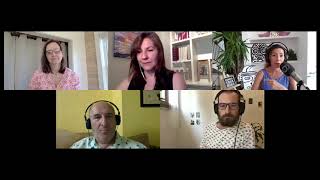
In this Pass the Mic podcast episode, host Virginie Glaenzer convenes a panel of community experts—Rachel (Community Roundtable), Michel Bauwens (P2P Foundation), Richard Bartlett (Inspiral), and guest Janai Attale (conscious business model designer)—to explore what truly powers communities and how they can reshape organizations and society. The conversation begins with personal introductions and quickly moves into how value‑driven, purpose‑aligned businesses can benefit from deep community integration, especially as younger generations seek authenticity. Rachel highlights how current accounting and legal structures treat people as liabilities, reinforcing hierarchical, domination‑based models, and calls for new financial metrics that recognize collective contribution. Michel introduces innovative accounting approaches—contributive accounting, flow accounting, and thermodynamic accounting—that aim to redistribute value, make ecological impacts visible, and break the capitalist accounting paradigm. Richard discusses the cultural conditioning that sustains domination, emphasizing the need for personal responsibility, internal emotional work, and distributed leadership that balances hierarchy with fluid, context‑dependent authority. The panel debates push versus pull dynamics in community leadership, agreeing that both are needed and that leadership should shift from command to facilitation, likened to a Sherpa or a jazz band. Practical tools and resources are shared, including Michel’s P2P Foundation wiki of 20,000 experiments and examples like the Ethos Foundation’s dual‑share model. The discussion also touches on education, generational change, and the importance of respect, curiosity, and childlike openness in co‑creating new social structures. The episode concludes with each participant reflecting on key takeaways, expressing hope for more humane, emotionally intelligent, and experimentally grounded community practices.
Chapters
Welcome to Pass the Mic podcast with Janai Attale. Hopefully I didn't butcher it, who will lead our conversation on what is the real power of communities. My name is Virginie Glaenzer and I'm your host with a million questions. Pass the Mic podcast is about sharing different perspectives on a specific topic, not only to help us expand our understanding of the world, but also to explore new ways of looking at it. So before we start our conversation, let's begin as we always do with what I call the tour de table. And I'm gonna ask each of you to tell your name, what you do, and why you're interested in this topic. Try to be brief and keep it under a minute. So why don't we begin with Rachel?
Hi, well, thank you so much for having me on this podcast, and I couldn't agree more that a wealth of perspectives on anything is very helpful. So, and it's great to meet all of you because you're all new to me. I run a company called the Community Roundtable. We do research about communities and have for the last 11 years. And so that's my interest, and the broader interest in community is, I think, community is how individuals thrive. And so I think it's a better model for how we come together and work and, and do all sorts of things.
That's wonderful. Who I am. Thank you, Rachel, for being here. Michel?
Yes, so I'm originally from Belgium. I live in Chiang Mai, Thailand most of the time. And my interest in communities is maybe not communities in general, but I've been studying in particular open source communities, so productive communities, and how that works, and then I've been extending it then to urban commons, so people who try to mutualize, you know, organic food or energy co-ops, and lately I look actually at people who make things, so like we can talk about it later, but There are in Europe 120 multi-factories where craftspeople band together. So I, you know, I look at how that works and everything, and I'm the founder of the P2P Foundation, which is specialized in these topics.
Fascinating. Thank you for being here. Canay?
Thank you, Virginie Glaenzer. So I am Turkish. I live in Ibiza, Spain. And I'm a conscious business model and cultural innovation designer, which both focuses on the individual and communal evolution. My interest in this topic is really— I was always interested in it. Since 2000, I have been building communities all around the world for my university, then for several telco operators, retail companies, then I understood actually it's vice versa. Communities exist and then organizations can serve to the values of communities. And with this pandemic and the recent events that we see all around the world, we see the importance of communities. And I am so excited to be here with these amazing panelists to dig, dig dive into this topic together.
Thank you.
Thank you so much, Janai, for leading this conversation, and I'll come back to you. And then finally, Richard.
Hi, yeah, thank you for having me. My interest in communities, it takes a few steps. So, I really like the work of Riane Eisler, who's a feminist who started publishing in the '80s and is still publishing great work now, and she talks about how relationships can basically either be in a domination mode or in a partnership mode. And I really appreciate that frame for diagnosing what's going wrong in the world. There's too much domination, not enough partnership. And so, at first, I've got an engineering background, so I was making technology for decentralized organizations, for organizations that can function without a domination hierarchy. And then I sort of appreciated the limits of technology and then we created what's essentially a management consultancy for non-hierarchical organizations. Now, my work is getting more and more into community development because at least my hypothesis for now is that the obstacle to these more partnership-oriented ways of working, it's a cultural thing more so than it is any specific technological piece or any organizational piece. It's really about the ways that we relate to each other, our values, expectations, behaviors, forms of communication, norms, rituals, language, all this sort of stuff. So it's a culture piece. Really community is the space that we cultivate culture, I think. So that's where I'm at now.
Fascinating, you're already giving me some nuggets. Community is where we cultivate culture. Thank you so much, Richard, for being here. So it's really hard to have a conversation, I don't know if you agree with this, but today without talking about the current event and the world crisis. However, it seems to me that understanding the power of communities is actually crucial to finding alternatives to our current economy and system in place. One of our episodes on activism, in which Richard, you participated, we discuss how trust is one of the few forces that holds our world together. It's almost like the glue of our society, and the lack of trust in leaders throughout the world that we're currently experiencing might be one of the reasons why we're witnessing the collapse of our old systems. During that episode on activism, we also talked about how in order to make real impactful change, individuals must find their kindred communities, not only to become accountable but also to bring changes in the world. So I'm really excited by this discussion because I'm personally part of a cooperative community powered by women of experience with a new leadership model So I'm looking for pointers and a better understanding of the structures and processes to support the blooming of communities. So let's begin this conversation, and perhaps, Jané, would you like to start by telling us, in your perspective, how can organizations benefit from communities within their current structure?
So as highlighted, we are value-driven creatures and we are social creatures as humans.
That's why we have been—
it's essential for us to bond in communities and we provide the organizing power to communities and to humanity by developing organizations. So as a conscious business model designer and cultural innovation strategist, What I have been observing over the last two decades is a huge shift in humanity that especially the youth is trusting more purpose-driven and companies who are loyal to the values of the communities, not vice versa. So the loyalty programs are leaving their ground to how can we enable the communities to stand up for their rights, to unleash their potential, to live more equal, sustainable, better, healthier lives. So what is the opportunity here is that there is this natural evolution, thanks to the increasing consciousness of humanity, but at the same time, the community-driven companies harness the power of a highly engaged, connected, and passionate ecosystem of members. Let it be their customers, let it be their employees, let it be their ambassadors, let it be their leaders. So this leads to drive adoption growth in the sense of, it depends on the metrics of growth of course, it's the human innovation and also the how we can grow the values, but also whatever you define, it lets the success to emerge. So this becomes not just like an intervention strategy, but if you start designing, thinking together with the communities, then you don't end up in communication crisis such as like today, for example, For example, many company leaders I know are thinking, how am I going to engage with what is going on in the US right now when it comes to racism? So if we can integrate communities beforehand and during all the processes honestly, trusting their values, then the adaptation evolution will be much natural, faster, and it will be a win-win situation for the communities, for the organization, and for the ecosystem itself. Also, community-driven founders are compelling storytellers who articulate a mission that a global community of members— can be customers, partners, shareholders, advocates— can organize around. Now, with the lack of trust to media and to political leaders, to even to scientists, opinion leaders, people, new generations especially, are looking up to organizational leaders, which gives a lot of responsibility to the organizational leaders not just to deliver their metrics for performance, but also take their part in the evolution of humanity and the ecosystems. There is huge shift also in the way we use technology. Now we talked about decentralization and the growing need for trust. Are we trusting more or less using technology? But what we know is by 2020, now almost 50% of humanity has access to a smartphone, which means we can have our information, we can articulate information, and when we organize it together with the communities as organizations, then it means we can have our decentralized way of communicating, articulating intelligence, decision-making, and iterating and innovating in a more sustainable, rich way. I think the most important thing, I'm also a mother of two, education is collapsing as we all know, and with this pandemic the online education became the new norm. The way organizations structure and coordinate creates cultures and new types of learning for humans. So if we can adopt decision-making, designing together from early ages onwards, and as lifelong processes, then we have also another opportunity to distribute the learning in a fairer and more democratic way all around the world, just with access to smartphones and with local richness of the stories and the practices and the rituals. I'm not going to take too much more space because I'm also interested in what the other speakers are thinking about from their domain. So shall we continue?
Sounds good. Anyone can jump in. I mean, yes, this is a big question, so why don't anyone jump in and share?
Well, I'll jump in because of what's going on in the US, because I see racism as actually really directly related to a lot of this dominance partnership. How do we relate to each other? And in the US, it's our original sin as an organization, but because we also drove the capitalist system and the way we organize to produce things, it's also embedded in a lot of the structures. And I'm, I'm an analyst by trade, and I— my background is operations, and I really think structure drives behavior. Meaning we drive unpaved roads when we have the option. We don't drive the straightest course, right? So there, there's ways you can orchestrate certain kinds of behaviors based on structures. And what is limiting us right now is accounting and legal structures that have reinforced this dominant hierarchical model. And I remember a few years ago I was talking to an accounting friend of mine and I don't know what I was doing. I was looking at balance sheets, which is not usually what I do, but I was looking at balance sheets again and I was like, where are the people on the asset side? And he was like, oh, they're not there. And I was like, what do you mean they're not there? They're just liabilities. No wonder they get laid off in the US in droves because you can't see their value. And even if you kind of mentally are like, oh yeah, they're our most important resource, if they're not in black and white in the— that accounting is how we account for our values, right? And we use money or financial mechanisms to communicate that. And so I sat with that for years and I was like, I don't— I just don't understand how that happened. And then I was digging into the 1619 Project, which is a huge project by the New York Times to explore racism in America and all the different pieces of that. And they— one of the articles was about how brutal capitalism is because of the racism. And it pointed out that amortization was an innovation in accounting to account for enslaved people's aging and lack of production capability. Right? And you sit with that for a while and you're like, that is brutal. That's brutal. Right? And so what that said to me is, oh, people used to be on the asset side of the balance sheet. And at some point they got removed because we don't own them anymore, which is a good thing. They are not considered property anymore, at least explicitly considered property anymore. But it never got replaced. And so you have that going on. And then you have the secondary thing going on, which is we're moving from a production economy to a knowledge economy, right? Everything that is standardized is going to be done by machines or algorithms or AI or something. And so what are humans left to do? We're, we're left to do the creative things.. And we're sitting in organizations where diversity is a bug, not a feature. We're trying to put everybody in a box rather than— and so diversity or differences are always an exception to be managed rather than something to be optimized. And so until we— my view is until we fix that financial accounting system, how we view that, we will struggle with this divisive relational model. And so it really drives our culture.
So I'll end there. Fascinating. That's fascinating. I learned so much already. Michel and Rich, do you want to jump in? We're talking—
I'd like to jump in because I want to say something about the accounting because I just produced a report on new forms of accounting. So to explain a bit the innovation of open source communities is that, so these are open collaborative systems. So these are really purpose-driven, mission-driven, object-oriented, as they sometimes say, communities. So they come together, not because they have to, because they all live in the same village or work in the same factory, because they want to make something together. And so what happens in these systems is that a lot of people will create common value, but only a few will be able to market that value. And so that creates immediately a problem of fairness between, you know, the collective that contributes all together and then the few people that are able to go to the market and make a living. And so one of their great inventions is called contributive accounting. I think this is really important. So what basically what they do is they create some kind of membrane around their community and they say, well, okay, well, you know, we'll have streams of money coming from the market, coming from eventually subsidies, research programs, whatever, but we will divide them differently. So in other words, they kind of create— so you have the cold currency on the outside and then the warm currency on the inside, which, you know, can then be divided in a different way. And I think this is a really important already innovation. Just to give an anecdote, I was talking to the largest cooperative, I think it's a dairy cooperative in Madison, I forgot the name, this was in 2016, Sun Valley, I think it's called. And he, you know, one of the founders was telling me that our biggest problem are the accountants because they bring a different value system inside the co-op, and before you know it, you're operating as a capitalist company and you can't tell the difference anymore. And they cannot find any accountant who doesn't have, who hasn't been formed, you know, by the business schools and the way they think. And this is very important because accounting is between us and the world. So basically it's narcissistic accounting, what comes in, what comes out, and what we can keep as an extra, whether it's, you know, profit or capital accumulation.
It's actually one of the things we did in our research this year because we had developed an ROI model around knowledge and engagement, right? And this year what we did is translate that to the individual and say, you know, the power of communities is that everyone gets more than they contribute. If, if you can share the production, meaning if that is not being locked up by somebody at the top of the hierarchy.
Yes, of course, that's where the cooperative model comes in because that's what I'm trying to get at, shared ownership.
Yeah, is those benchmarks so we can say this, so we can show the accountants and say financially, this is what this model looks like. Right. Um, so you can think about it different because I, what I see in my organizational work is that's the huge disconnect is you just can't communicate that difference. And it represents, I mean, once you communicate that difference, it represents a mindset that is like, it blows people's— like, it's very hard to shift from that competitive mindset, that zero-sum, to a more abundant, sustainable one. But anyways, I totally agree.
Yeah, I'm almost finished. I'm just going to say two more things, you know, just to complete the story about these accounting innovations. So the second thing that is being invented right now is called flow accounting. So this is called resources, events, agents. And it allows an organization, actually any individual, to see his place in the ecology, in the ecosystem. So it doesn't even have double entry anymore. So that's the second one. And the third one I just want to briefly mention is actually thermodynamic accounting, is actually to have a vision of the matter and energy flows that we are using. And the aim of this innovation is to be fair, that's the contributive aspect, to have an ecosystemic view, but also to stay within planetary boundaries. So, you know, I just want to mention that because it's very important that communities, especially when they make something together, have tools at their disposal that allow them to see what is hidden, what is in the present system invisible to the human eye, and that's the damage we do to the planet and the damage we do to other people. So it's very significant what you said about you know, people are counted as a cost, right? That's the opposite of a contribution economy, that people are actually counted as a cost. So this is, you know, I didn't know about the amortization, but I just wanted to mention that there is innovation, that these productive communities are thinking in a new way. I'm sure we'll hear from Richard because—
look up all that stuff.
Yeah, because Richard is, you know, used, maybe still is, within Spiral who was also pioneering, I think, quite a few things. So I'll— yeah, I wrapped up this part of my intervention. Thank you.
I can pick up on that. Thanks, Michel. I was just thinking about Inspiral, where we've had a community of— it fluctuates, but around 200 people doing a lot of experimentation with different forms of organization and really trying to do a kind of community that's engaged in business, and trying to do a kind of business that's engaged in community. And I take your point, Rachel, about structure, that behaviour is kind of downstream of structure in a sense, and that metaphor of the, you know, we drive on the paved roads, I mean, I think that's really helpful. And I'm hearing, Michelle, you're talking about these different innovations in accounting, and okay, I think all of those are useful pieces of the puzzle, but there's a part of me which is a bit unsettled because it's very easy to, you know, when we look at the state of the world and how it's not the way that we would like it to be, it's very easy to come to this conclusion like, oh, if we only had these other structures, then we wouldn't have a problem anymore. And you can kind of bypass your own personal responsibility in the situation by saying, oh, we just, you know, the problem is we've got these capitalist things and these kinds of accounting things that come from a really horrible old set of values which don't suit us anymore. And if we just could change that, then we'd have a different way of being. And we kind of like, it's a little bit of a, almost like a Judeo-Christian wish, you know, that we'll go to the afterlife and things will be good after some kind of threshold that we're going to cross. And my instinct is always to pull it back into the personal and into the immediate and into like, yeah, what do I actually have an influence over and what choices can I make now? And and not just me as an individual, but me in relationship and community and like what kind of new behaviors can we experiment with that might prefigure some new structures? And I guess, yeah, I'm kind of biased on this. I always find myself coming into these conversations and kind of leaning heavily one way, which is like, I'm glad that there are people experimenting with new contributive accounting and flow accounting and these sorts of things, things, the new legal structures, certainly we need those. But in my experimentation that we've done with Inspiral over the last decade or so, surely we've hit limits where we go, ah, yes, we're lacking a piece of technology, we're lacking a piece of legal structure, an accounting system is not there. But for me, when the will is there, when the commitment to some kind of shared purpose and shared vision and the willingness to experiment and to learn together, we really made a lot of progress just using spreadsheets and agreements, not having something formal that's really robust, but the willingness to try things out. So we've done a ton of experimentation with— I think one good example is thinking about how for the people within our community, which is a reasonably exclusive invite-only community, we've got some complaints about how the world works. And one of the complaints is the way that value is accounted for out in the world and that It's quite arbitrary that someone who happens to know a programming language can earn $1,000 a day and someone who is a caretaker earns almost nothing or maybe earns nothing. Their work isn't classed as something that gets a wage. And so our little adjustment to that internally, kind of like you say, the warm currency on the inside is that people who are out there in the marketplace earning a lot of money, they'll choose some fraction of their income to share with the collective. And then we do some redistribution inside of the collective where we say, well, within this boundary, our values are different. And it doesn't reflect the values of the marketplace. It reflects the local values of us here. And we'll decide how we're going to redistribute this money to each other. And those experimentation, that has been extremely fruitful. And the obstacle or the shortcoming has not been legal. It has not been technological. It's been relational. It's been about, well, how do you actually keep that communication flow open and safe? And what happens when conflict arises? And how do we do engaged decision-making without spending forever in meetings? And how do we evolve and make adjustments and still have things predictable without it being complete chaos? All of those things for me are much more around communication and relationship.
I don't think it's an either/or, Rich, though. The way I came to this is because John Stepper had this great theory or saying called the grass ceiling, right? Which is we were helping all these emergent community efforts in organizations, and they were running up against the structural barriers of the organization. And so where we are is at this tipping point of helping older structured organizations change, right? So we're not, we're not creating something new. We're trying to help people evolve. And so while my opening salvo here was about accounting, that is an insight that I've gotten after years of, okay, what's the next step in this evolution of like helping change our construct? Because I absolutely agree with you. And actually any community, I don't care what kind of community you have, has to start with experimentation because it's co-created, right? Like, you never come in and you're like, this is how our community is going to be.
So that brings me—
I didn't mean to suggest that it was that— that is, if we don't solve that, we don't solve anything. But I think it's an iterative process.
So here's a good segue to another question since we talked about structures and legal. It seems that we're all conditioned to have to believe in various values that are no longer what we want to, you know, how we want to work and the type of relationship we want to build. So what does it take to move from controlled to distributed leadership? Because it seems that someone has to start the conversation even though it's co-creative. How do we, how do we do that?
So maybe I can take from there. What Richard was bringing us back to is the personal responsibility and starting with our own thought and feeling structures, because the real control, the initial control starts there, when we start thinking some things and not letting some thoughts visit our being. And when we start having hierarchy over some beliefs than others, then we want to identify with those thoughts and we want to control the outside world to fit into our thought structure. So this is a basic human addiction which is very wide, especially among the smart people and the leaders around the world. We like repeating our thoughts. But what we can do actually is we can really start analyzing what we are thinking, what we are believing, and allow the thoughts and the emotions to come. And without the feeling, the need to judge them, can we really look at what we are thinking and feeling Because when you allow anger, for example, and it comes and visits you, and if you don't want to control or change it immediately, that anger has a lot to say to you. There is wisdom in it. And I love this conversation, and coming back to the community topic, because in the structures of, for example, accounting, or the political structures, or the media we created through technology, or the business model design as it is. They don't include human sensors, very evolved human sensors like emotions, for example, into consideration, which is the most important technology and the asset. So we need to redefine what is an asset, we need to redefine why we are doing business and why we are organizing organizations. So if I think communities has the chance to allow us, to give us the space to be human again, to allow different thoughts, emotions, stories to emerge. But how can this happen? Only when we learn, unlearn actually, and go back to real listening like children do. Because we don't listen to each other. We always think something, we always script something. If I were to listen to you right now, with nothing in mind, with no agenda, then that would, would be a real co-creation in action. And there is only now, now that we have— I used to eat fish and cheese 5 years ago, then I went vegan, but it was thanks to someone that I met in a healthy life retreat that led me to think it is possible. So being role models to each other also works. It's not just a lonely journey. We look at the mirror of each other and we believe another life is possible. When I am doing conscious business model design with leaders of companies, entrepreneurs, 2 years ago, and when I invited them to think nature as a stakeholder or futures, future generations as a stakeholder, People were like, "Oh, let us first survive and then we think about our impact or our responsibility or what we can learn from nature later." But look what happened. Now with this pandemic, although many, many things have collapsed and people are suffering, we are also, if we are smart, we can learn a lot from this. We don't need to wait for another crisis to learn, to refresh ourselves. We don't need a hero or a political leader to come and tell us what is possible. If we can be courageous enough to stop and just ask ourselves, why am I here and what are my values? And as Richard was saying, what is my impact in the community that I'm a part of today? Then there we can lead anything, any type of transformation. And I also want to say I just want to say one thing, add one thing to Rachel. The change that we want to trigger in the world is not from past to now to tomorrow, because with children and with elderly, we are actually representing all generations simultaneously. So it's like a hologram. Time is not linear. It is so important to listen and understand the resistance to the change and allow the new to have the stage to talk by giving them undivided attention, to new generations. I believe that can be a very powerful transformation starting with us, but me and you, it's also another topic, another maybe pass the mic session. What is time? What is you and me? I represent all generations, all my cultures and everything that I learned in the school system same as you. So when we come together, even 4 of us, 5 of us, we can, we can co-create a lot of things.
Yeah, that's very true. I love the fact that we're talking about emotion, and there's so many discussion around how do you deal with emotions since we haven't been taught. We've been taught to think, we haven't been taught correctly to feel, or even what does that mean to feel correctly. One of the next episodes I'm working on, and I'm so excited because it makes so much sense, is if 'Telling stories makes us human' or emotions the culprit of our addiction of our narrative. So it's fantastic. So what do you think that based on what was said, is building a community a push or a pull effort?
I'm always suspicious of that word 'or'. I really love what Chennai said about the about the emotion and what you're building on, Virginie, about this— how do we learn what to do with our feelings? I think it's really useful to imagine the self as a community, that there are a lot of different characters in here, and I can either be in this controlling mode where I'm trying to, like you say, I disallow the angry one and the fearful one and I only allow this very confident, happy one. Well, then I'm going to go and reproduce that in my relationships with others. And I'm probably doing that to myself because I picked it up in my family or in my school. And so if we want to come into a different dynamic, part of the place to practice is inside with all these different characters and say, how do we distribute leadership here? How can all of these different voices get a turn, be equal stakeholders in this body called Richard Bartlett? And then perhaps, and I'm thinking here about a there's a therapeutic modality called Internal Family Systems, which treats the internal system as a family, as all these different characters. And the whole premise behind that is that there's something parallel between the relationships we have inside of ourselves and the relationships that we have with others. So this thing of pulling or pushing, I think, I mean, a lot of the times internally it feels like pushing, you know, but then externally when I go out and meet with others, I feel like I want to pull. I want to invite them. We have this really great metaphor that I can say because I'm from New Zealand where there's a sheep metaphor. So we have in New Zealand, we've got a lot of sheep. We've got many more sheep than we do people. And the way that we manage them is we have a lot of fences and gates, and the farmer's job is to go around and open up the gates and move them, and there's a dog, and it moves the sheep, and so on. In Australia, they have a really different system because it's a much, much bigger place, and a lot of it's very dry, the way that they manage sheep is they don't need fences. They have a watering hole and they either switch the water on or switch it off and the sheep go to where the water is. And that metaphor has stuck with me for a long time about how to do community development, how to do organizational design. As much as possible, you want to be motivating people by the watering hole, not by the fence, not by the dog that's barking at them, but at the thing that they want and helping them access the thing that they want in a more coherent way, or in a way that has more positive outcomes. But then I say, I mean, that's all about pulling people in, but like I say, there's still all this pushing that's going on inside of me, the debate and the battle that I'm having.
I would say this is the joy of community and relationships though, right? I often say you can't have a healthy community if you don't have support and challenge, right? So it's not push or pull, it's both, right? And you need each of those things at different times depending on and from different people. And one relationship is not enough for any of us. Meaning whether that's internally, we have all these characters and sometimes we're fighting between two of them versus the other, right? Like we're not that simple. So we always need someone. And I do something from a management technique called pushing people off anthills, which is some people who have less experience look at a ledge and they say, oh my God, it's a cliff. But I've been on that ledge before and I know it's not a cliff. And so I, I give them enough confidence to jump because I know in hindsight they'll be like, oh, I can do that. And it, it gives them, it empowers them. Right? And so I'm kind of with you. It's not an either/or. It's part of what happens in communities is this constant negotiation of tension, right? Because everything's not either/or.
It's— It's what you're saying is it's almost being a leader within a community is almost changing the role from telling people what to do to becoming almost like a Sherpa. Where once you understand where people want to go, all you do is just show them the way, but you're ultimately bringing them where they want to go. It's no longer about you, it's about—
So, I mean, if you're ethical, yes. If you're not ethical, you're leading a cult, right? Like, you've decided what it is. If you're ethical, you get agreement and discussion from everybody about what we're all about. And then you're very transparent about what you're doing so that people can always opt in or opt out of that.
I'd like to bring in this old analogy that, I mean, it's not new, but I think it's very important to think about this. They used to say that the new management was the jazz band structure, right? So if you have like a free jazz band, there's not one leader. There is, depending on the context and the moment, you know, the trumpet will take the lead or the drummer. And so you have this fluid distributed leadership. And I think that's an important notion because we cannot be completely against hierarchy. There are skill differences, there are wisdom differences. And I think that the idea is to create an organization that is flexible so that rather than leaderlessness, you achieve leaderfulness. The, you know, the capacity according to context for the right people to be able to take the lead for the moment. And so if you look at the history of humanity until 5,000 years ago, this was pretty much how things worked. So if there was a war, and they had wars, there would be a war chief. Why? Because, you know, your life is at stake. You want a person in charge that knows how to conduct battle. You don't want to discuss, you know, with people who don't know how to do this, right? But then after the battle, the person went back to his farming gear and was just a farmer. And then the chairman was somebody who had studied and, you know, plants and from a teacher. So, and they had all these techniques that constantly redistributed, and there's some good books about it. I really like, for example, Societies Without a State from Pierre Clastres, where he shows what the Native Americans in South America were doing to constantly, you know, redistribute power concentration, and they were successful for a very, very long time. But not, you know, then it changed. And I think what has changed now, so the way I see history is we were, you know, we lived in kinship relationships, so everybody's your uncle, your aunt, you know, you live in small villages, you can talk, you can talk about everything and solve your issues through dialogue and, you know, the elders coming together. Once we got into bigger entities, you know, hierarchy simplified communication, and I think the, you know, the big anthropological revolution of networks is the capacity to create small groups that are outside of a particular territory, so we can now have small group dynamics and work together, you know, in a non-territorial scale,. And I think this is really important that we can do that. So we can, you take Linux and the average team in Linux is 4 people, right? So yes, it's big, maybe 20, 25,000 people working on it, but they actually work in small teams and that, and they trust each other. So one of the innovations in leadership, which I think is very interesting in the open source communities is that they no longer have a command leadership, but they have a control leadership. And what it means is they have maintainers and editors, and so people that actually are there to protect the integrity of the ecosystem. And there are various ways, in some they are elected, in some they kind of emerge organically, but they have these people who cannot say to anyone, you cannot do this. They cannot stop the development and the potential of any person to pursue his passion and his dreams, but they can say this is not good enough for the system because, you know, they use it to go to the moon, so, you know, you can't just have, you know, bugs in the software. So I think this is an interesting evolution of the notion of leadership because I I always also think that if you go too flat, you get different problems. For example, I won't name the name, but there's a famous co-op in Spain and, you know, they want to be totally inclusive. This means that the meetings take 7 hours, but by that time there's 3 people left in the meeting and they will take all the decisions, always the same 3 persons., right? So something that appears to be very democratic and inclusive isn't necessarily because of these dynamics, and in that case it's better actually to say that there is a leadership, there is responsibility, and there are roles, and these people have responsibility and can be, you know, they can be accountable for it, right? So it's not so easy, it's finding the right mix between the vertical, the horizontal, the diagonal, and to create complex organic systems.
I think listening to you, Michel, I'm reminded of a couple of things, which is we talk about community management a lot and we get a lot of pushback on that because people's concept of management is micromanagement, like task management, right? And we've played with the idea of community leadership But I really struggle with people conflate leadership and executive roles. And I'm like, everyone chooses in their— this moment whether they're going to lead. You know, that's an individual choice and action, not a structural role. And so for me, the management term kind of aligns with that. There are people responsible for the structural integrity, not telling people what to do, just making sure people can sort themselves out. And it's not a— it is authority of sorts, but it doesn't— in good, healthy communities, it doesn't feel like it's—
Yeah, I would like to say one thing, just very short. So there's different things that happen in organizations. So there's an individual, right? And I have my individual passions and moments of energy and things I like to do, things I don't like to do. But once you have a collective goal, especially when you have third-party agreements, you cannot only rely on the individual and his goodwill at any moment. And so what they do in open source is that anything that's like slow iterative improvement is absolutely free. People work or not, and that's the best part and the most enjoyable part of the work. But once in a while you have a contract And then you have to really be able to say, yeah, you know, this will be done in time because there's a lot of consequences if you don't. And so this is a constant navigation, I think, in these productive communities. They have to find the right balance between those two different contexts.
So I want to be—
we lost someone. We lost Chinai. I was just going to ask her.
Hopefully she'll come back. So I want to be mindful of the time, and I want to thank everyone for this insightful conversation since we're coming at the end of the hour. But we're going to end this discussion the same way that it began, with what I called again a tour de table. One of the premises of this podcast is there's too much talking and not enough doing. So the key is really to take to understand in a practical manner and then to implement that in our own lives. So why don't we pass the mic and share what you've heard today, if there's anything, what you've heard today that inspired you to do something differently than the way you did it prior to this conversation, or anything that you feel that was left unsaid. And she's back, and she should be here in a any second, or any last thoughts that you'd like to share. And I'm going to start by sharing my own takeaways so you can have a moment to collect your thoughts. Hi, Janai. So this conversation was really fascinating because when I was 15 years old— no, 16 years old— I did my first internship, and I had this vision of a big board where there were tasks and subtasks of various projects, and anyone can pick anything they wanted to do. And not only to meet other people, but to discover whether you had the skill or not. And of course, there was some system, kind of an elaborated system of, I want to do this, but I don't know how to do it. Who can mentor me and still learn? So it was a mix of learning and doing what you wanted to do. Interestingly, 30 years, 40 years later, I found myself in this marketing agency that is currently an LLC, which we're converting into a co-op. So we're building from the ground up this vision of a company where anyone can come participate in a group of 2 or 3 and do the work that any typical marketing agency would do. And so we're in that midst of— we actually would just put together a team of 3, 4 people. Actually, we've opened up and say we need to talk about not only the legal structure but also the accounting. And the model is 20% goes to the agency, the 80% is being redistributed to the woman, and then it's on their own agreement if they are working on 50/50 or 80/20, whatever the way they're engaging, because they're bringing their own skills into the work. But we want to go beyond that, and the value that the agency, not just the 20%, but 10% of those 20% will be distributed to, will be invested in the financial stocks or funds and will pay for healthcare. And we're trying to find a way, what if someone comes and just works 6 months and then leaves or get a full-time job but still want to be part of the community? So how do you account for the person still giving back and being part of the community? And it's a fascinating work. And so what I'm hearing is there are some accounting mechanisms that could support what we're trying to do. I love the fact of what Michelle, you were saying, that it actually starts with an open collaboration, is driven by the desires and by shared values. So the work that we've done previously is amazing because that was the first discussion, you know, what do we believe in, how do we conduct ourselves among us, what kind of work do we want to do, and What I'm still unsure is how to, as I started this initiative, I don't want to be the leader. I definitely don't want to tell people what to do. And so I'm trying to find, you know, this place where I do what I like to do. I start project, I work with client, I would open up, but I'm still in this, I'm in the improv. I don't know what I'm doing. I don't know where I'm going. I don't know who will come and join me. And it's really unfolding in front of my eyes. It's been 3 to 6 months. Now we're 11. And, you know, who am I to know what other people want to do? So I'm always trying to be careful if I'm starting something that I want to do, and then I'm just trying to see who wants to come. So I think this push and pull I've always wondered, is this— should I do more pulling, more pushing? And it actually— I shouldn't do anything but just being mindful of my own desires, starting my own initiative. And if there's other people who wants to go on the walk with me, then that's fantastic. But it's definitely territories that I— unknown territories, and it feels at times, and you know, it's unsettling. I don't, again, I don't know where I'm going, so I think going back to being able to deal with my own emotion of uncertainty and unknown and fear and being aware of that loud voice in my head that just is trying to control, because that's my education, that's how I became a leader, is by telling, being good at telling people what to do. But that's not the type of leadership that I want to experiment, experience anymore. So thank you so much. Can I— Janai, we lost you for a moment, and now we're in that last phase of sharing our final thoughts.
What you just said, because it's so valuable, and that you said it is not about pull and push. For me, I look at my emotions, I look at my intentions. And who am I to tell other people what to do. This is a perfect statement of highly feminine energy leadership, which is rising, and hopefully we will see more of it in the world. That being okay with the unknown, and although it doesn't feel good because we are not trained to be that way, staying in that in that feeling and also embracing that feeling. And I, I don't call it push-pull or push, I call it allowance. Allowing what wants to emerge. Because now new stories want to emerge. Now, not reaction to what is wrong, but a new world story wants to emerge. Now life wants to emerge. Now we are not limited to accounting sheets, to old business models. Now we are not, we cannot fit into educational models anymore. That's why community, like nature, is the closest resemblance that we can experience what it means to be a human without a taught agenda of the collapsing systems. So it's a great way to reimagine who we are, what is our role, how we can contribute. Just the feeling of I am not alone in feeling this anxiety, in being scared of this pandemic, in feeling that I don't know what's gonna happen to me tomorrow. I think we have been experiencing a very fast rehearsal of the new world for the last 4 months all around the world together. It is a great opportunity for us to now think together from an empty canvas. Like, it's really hard to do it. It's easy to say, hard to do it. Can we drop all the— even it needs us to drop our terminology of pull, push, leadership, management, blah blah, you know. So I always go back to children and I imagine myself explaining my question my ambiguity to them to get their opinion. I have two daughters, very smart. They are my guides, actually. They lead me in innovation. So when I am rehearsing, rephrasing my question, my ambiguity to them, I notice how much I am controlling my own thought system. So this new leadership that is emerging, that is feminine, allowing of life to emerge. I think that is a very important starting point also for new organizations to embrace the individuality, my individual taste. If I like music, I might contribute to my organization by my musical talent or taste. Thanks to everything that now we can design conscious business models, now we have technology, now we can get the opinion of so many people, now we can connect the dots. Now we can make agreements. Now we can do everything that we want. Actually, there is nothing that stops us but us and our learned thought structures. I know it might sound a little bit too optimistic. It does to many people. But what, what do we have to lose if we just give it a chance? But I want to come back to Let's consider the education system to be reinvented when we are questioning the relationship and the importance of communities for organizations, because the educational organizations, who decides for them, who facilitates for them, need to be reinvented together with the community involvement. And to me, that is the most urgent and important topic of all.
Yeah, that's a very good point. Yeah, so thank you for all those beautiful words. Why don't we begin or end this, the tour de table. So Rachel, would you like to leave us with final thoughts or anything that you've heard that sparked some attention of desire to implement?
A lot of what Michelle brought up, I'm gonna go explore because I'm thinking about that structural accounting models and how can I like that's where my head is right now. The other piece of my head is where Janai is, which is, and maybe this is, I don't think it's US-specific, but that's where I am right now. Our entire culture is driven by anxiety and fear and violence and competitiveness against each other, like, and it's not it's killing us, whether it's killing us quickly if we're Black, or it's killing us slowly if we're white and we're not articulating that. But community is the way we find joy and we all be our— we're each unique and our systems are not set up to honor that. And so we need a completely different emotional way of being while we work that is more joyful, that's calmer, that is not saturated in cortisol, if you want to get kind of physical about it. Because ultimately to me, and it has to do with the education system as well, we're saturated in competing with each other. How do we pull away from that? Because by pulling away from that, I think that's where we're going to find our future.
Love it. A new way of being emotional in the way we work. That's very powerful. Thank you so much, Rachel.
Michel? Yes. Well, first of all, I think that maybe Richard said it, or maybe I heard it before from Inspiral, but The idea that the tools are secondary, I think this is a very important idea. So you start from your values and your social code, and then you only then do you look for solutions that fit. I think that's very important. Otherwise we're into, you know, it's called techno-solutionism, that, you know, some tech will— so I can I'm with Richard's remark on that. I put two things in the chat box, one for you Virginie Glaenzer, I have a category in the wiki called post corporate and this is for things like Inspiral and other organizations that really do things differently. I'd like to give you one example to think about, this is the Ethos Foundation in the UK, and they create two kinds of shares for their members, one for the people who are actively engaged in market work, so, you know, make the organization survive financially, but then they have another share for the people who contribute in other ways that are not directly related to the market but create this common value, and every 5 years they split the value of the commercial shares into and that funds the other shares. So it's a real recognition of the non-market contributions. So I think, you know, maybe that's not the solution for you, but something of that nature I think might be interesting to look at. And I have in this section different examples. So I just want to say this, you know, there is a lot of people for the last 10, 15 years who've been innovating and experimentation. And in my wiki, I've been following this for 15 years. So if anything that you need, I think it's always worthwhile checking the wiki.p2pfoundation.net database because we have about 20,000 experiments and concepts and people and organizations that, you know, have been creating these seed forms. So it's a bit like a library for people involved in change. And you know, there are others, but it's a pretty good one. And so that's my contribution, you know, the work that I do.
Fantastic. I'll share that not only to the team at Acorn Oak, but also on the blog post that we're going to be writing about this discussion. So thank you so much. And I just learned the new word, techno-solutionism. One of those isms that I love. Thank you so much, Michelle, for your inputs.
Rich? I'm glad, Michelle, you remind us of the wiki because it is a really extraordinary, amazing resource, and I just want to honour what you've been doing there over all this time. It's really amazing and a big inspiration to me getting started, and hopefully we're contributing something useful to it as well with our experimentation. What sits with me reflecting on this conversation is this idea of, you know, there's a thread through here about conditioning and culture and children, education, childhood conditioning, these sorts of things. And so there's a part of my brain which goes, ah, yes, all we need to do is go to the next generation and raise them right. But then of course the problem is, well, who is going to do the raising? We don't have some kind of pure ready, you know, we're in this constant process of trying to help the next generation be better than the last one perhaps. And the phrase actually, a very simple one, but that Rachel said this, I can't remember if you said pushing or jumping off the anthill, but this concept of like that there is a kind of, it is a kind of leadership that you can play within a community where we are helping each other to grow in a way. It's kind of like being a teacher or kind of like being a parent. Thing of helping people see what are the obstacles to them more fully realizing their own agency and their own autonomy and giving them that encouragement in that moment and this affirmation like, "Yes, you're safe, you can do it." So, I think that's the phrase that's going to stick with me. Thanks very much everyone for spending this time with me. I feel calm and grateful to be spending time with you all.
That's wonderful. Thank you so much, Richard, for those last thoughts. I think you kind of summarized very well some of the major themes that we've discussed discussed. And then finally, Jenai, which is a beautiful name, I don't know why I'm not getting it right, Jenai, do you want to leave us with your final thoughts or anything that you feel that wasn't said?
It's all yours. Yeah, I want to add to Rich, we are all children first. Time is not linear and the child within us is still alive. If we can initiate, the word I think you want, you were mentioning, can be initiation. Initiating humanity through some challenges with the community support is missing in the modern life. And we create troubles that don't exist. We are in, in, in search of a meaning. So, if we can initiate, the purpose and witness each other's transformation today with the openness, with a childlike curiosity, love and intelligence, that is poss— that's a possibility. Not everybody is gonna jump into that, but my biggest takeaway from this whole conversation, many, but the biggest one is we are actually holding the space for each other And my biggest intention out of this event is I want to be more aware and more attentive of the beauty of what is going on around me. I am invited to this event, I learned a lot, but at the same time I witnessed your journeys, Rachel, you receiving those accounting sheets and reading that and holding that in your heart, all that slavery sheets, and going through what you are going through, witnessing that with your communities in United States on behalf of all of us. I really admire that, I really respect that, and you are doing the work there. Michel, I always admire you with more than 20,000 examples and knowing that some Some of those are really like corrupted and unfair structures, and you witnessing that and holding that in your safe space and communicated transcending them is so valuable. Thank you. And Rich, it was a great pleasure meeting you. I really admire especially young men being so open, honest, vulnerable, and witty in a sense. So it was great. And Virginie Glaenzer, I really, really adore your— maybe you don't call it that way, but woman leadership in this unknown ocean of possibilities and sailing and inviting others to your ship. To me, what comes out as a word, as a value of this event is respect. And I think when we respect what is going on, we see the magnificence of the transformation already. I want to thank all of you.
Thank you. Thank you so much, Janaye. So I'd like to end by asking viewers and listeners to like this video or subscribe to our podcast if they think that this is of interest to them, or any other channels which is distributed on. And then also tell us in the comments what is the real power of communities for you. So again, thank you very much, everyone.
Thank you.
More from Virginie











Unlocking Fintech Success: Strategic Trends for Profitable Growth: Webinar Leadership Series