Work & Love - Ep.#17: How does our work help others find, connect with or express love?
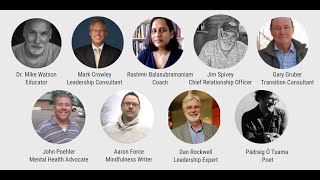
Virginie Glaenzer hosts coaches, poets, and organizational designers discussing how their work creates space for people to experience love. They share practices like designing safe environments, using the Enneagram and conversational intelligence, and leveraging social media to transmit caring energy. They argue love drives tangible business outcomes: higher engagement, innovation, and profitability.
Chapters
So in your job and in the work that you do, how does your work help others find, connect with or express love. Can you tell us more?
Sure.
And this is very intentional on my part. I love this question, and I was thrilled that it was in here because so often when we talk about subjects like love or consciousness or, or, or anything like that, we, we fail to reconnect it to the day-to-day. And I think it's important to know that that's where it lives as well. It's not something that is always outside of ourselves or reserved for the home. So regardless of what I'm doing, if I'm educating at the university, if I'm consulting from a leadership perspective, if I'm designing stores, it doesn't matter because my work, first of all, must be in service to someone else and in service to something greater than myself. So a foundational component part of my work is to create spaces in which other people can feel safe to express themselves and be seen. So it doesn't matter what topic I'm lecturing on at the university or the location of my workplace, the fact is that people want to be seen and heard. And so my intentional creation of safe spaces allows people to connect more authentically with themselves and with others, which in turn creates a pathway for them to travel inwardly to connect with their own love, self-love, and externally through shared expression with their peers or others. So what I see a lot is when I create the— when I do a good job of creating these safe spaces, is that people start to become more self-confident. They become more willing to share. They take more risks. And all of these personal changes are what we, from an organizational perspective, want people to do. We want confident people. We want people to feel safe to express and to innovate and to be able to collaborate beyond where we are so that we could always grow as a business and as a person, right? But unless they feel safe, seen, and heard, they're not going to do that. They're going to partially commit. They'll partially engage, but they're always, on the other hand, looking for security. And if they're searching for security, then they're not engaging and they're not really loving then, right? Because if I feel safe, I'm going to remove barriers within myself, and I will then be able to love myself better because I've removed these barriers that I had erected in the false sense of safety as a way to protect myself from being hurt. A lot of people construct not boundaries, but barriers in this false sense of wanting to protect themselves. So, you know, love is revealed from within. It's always existed. It's always there. So my way of doing this at work is to create a space so they can be seen and heard and feel that love for themselves.
That's beautiful. I love this question too, because I think very often when we look at the business world, we're looking through the lens of efficiency, productivity, compliance, as we were discussing prior to the recording, and when you change the lens and you add love, it's not just why do I love my job, it's how do I impact other people to find, express love. And it's, it's a whole shift, as you said, and I think creating space is such a beautiful, not only metaphor but also practical way, right, of going about your job.
Yeah, it's easy for people to wrap their head around. Yeah, so the practicality of it leads to the, you know, to the expression of it in a way that they could never even thought of. But what's nice is that, and research proves this, is that the more that we do this, it does positively impact bottom line profitability, higher levels of engagement, greater innovation, Sustainability. Like, and so if your only motivation is those traditional goals that we've emphasized in an organizational setting, well, by introducing love, you're going to do better. So like, even just from a practical standpoint, it's a win. And then there's so much greater benefit to it, of course, beyond that.
But yeah.
So this is the other side of the, you know, the other side of the question, you know, how are you experiencing love? And I don't know that I ever have thought about this. I think I felt it. I think there's a knowing inside of me that I knew what I was doing. But I will say to you that your question prompted me to think about, like, what is— how is my work affecting people? And I think they can feel the energy. I'm giving people love with the stuff that I put out. Like with my tweets, I spend a lot of time. I'm just not sending out anything just to fill the space. I'm sending out information that really expresses my message. It's my whole theme around leadership and why we need to bring more heart into it, which is caring and support and nurturing. It all sounds weak until you understand the science, which says that, as you were saying, we're emotional beings and we've push that aside for decades, and we can't because they influence us in a really profound way. So when I send out a tweet, I know that it's going to affect people. Like, I want people to be moved by the stuff that I put out there, and that's love. Like, if you're sitting in your home and you're reading it and you're having— and you're having a feeling, a sensation of, wow, like, that hit me. Then I've done my job. And I think I have, you know, you mentioned I have a podcast, and I think, I hope that people can tell how much love I put into them to make them the very best that they can be. I'm not phoning that in either. The people that I pick, the questions that I ask, the whole energy that consumes them. What I want people to feel is like there's like he's speaking truth, he's speaking authentically. I'm getting to know this person and I'm learning because of the work that that person has done with love. So I have my own personal relationships, my wife and my family, but, you know, I have like 135,000+ Twitter connections and I feel them, like I know what they're like. I have a sense of who these people are that are responding and I respond back and I have connections with them. It's not superficial. So you can actually, you know, from a social media standpoint, it's not just putting content out there. I think you can actually make a real connection with people. And when I've talked to some people, they go, I really feel like I know you. And I think, okay, then I've done my job, you know.
Interesting. So you think it's more related to the topic because that's what you talk about, bringing your heart in the workplace. That your job is helping others connect to and express?
I think people like the message. Um, you know, some people like the message, but I think there's an energy that I bring to it that is differentiated. Like people can feel that like this has become, you know, I, my book came out 9 years ago today. It was a bestseller again on Amazon. Like I woke up and looked, I couldn't even believe it. So that's telling me people are moving back into this. But in the interim, the 9-year period, there were many years, not just months, where people weren't paying any interest to this at all. They thought it was a soft and weak idea. And so I'm grateful to COVID because COVID has sort of forced, as we've been talking about, sort of a shift in consciousness. And now people are like, how do I get there? But so what that means is that there are a lot of people talking about this now. And, and they're talking about it without a whole lot of experience around it. They're talking about it intellectually, like, hey, we should be doing that. And because I've lived my whole life like this, this is how I've managed people my whole life, and I've written a book about it and spent the next 10 years researching it further and expounding it with my podcast. I'm just marinating in this, and I think that comes through. I think I convey that energy, that knowledge, the wherewithal, the authenticity and the interest of helping people. So when they get it, they're like, hey, that was really cool that he tweeted this out because now I can apply this, I can use this, I've learned from this. That's kind of— so there's a lot going on there. It's not just, you know, tweeting something out just to get it out there. And I think people can feel that.
In the work that you do, how would you say Your work helps others find, connect with, or express love. Can you tell us a little bit more?
Yeah, so how do I answer that question? So, so what I would say is, so I mean, on a very practical basis, there's, there's different aspects to my work. There's the coaching, there's some consulting, there's I quite often do group work, so there's facilitation involved, and then I love sort of helping start up new projects or new initiatives, so there's kind of a catalyzing startup component that I sometimes do as well. But what's been interesting as I reflect on when I've done some of my best work is I have been able to engage from my best self, right, or from a place beyond the personality with its focus on self-needs and how I'm doing. And what's wonderful about those moments, when I can engage from that place, is that creates possibilities with others for true co-creation. And so in my coaching work, for an example, sometimes that can create a healing field or a transformative field in which it's easier for my clients to tap into their best selves and into their highest aspirations and to start to move and grow towards that. With groups, it's similar. It's, again, if I can get into that space and work with the emergent field of the group, we're more likely to get into a place of co-creative flow, which is such a felt, palpable experience, right? I mean, there's joy in that, there's presence, there's creation, there's elevation. So, so the connection here to love is a combination of things. I think it's, it's, it's loving and trusting myself enough to get out of the way. It's loving the work enough to, to get into that state of being fully present and ready to serve from a place of, you know, a higher place of purpose and intent, loving intent, and It's also that, you know, human approximating to unconditional love, right? Where it's not about me, it's about the larger purpose of what's evolving with my clients, whether it's an individual or a group, and doing whatever is called for in that moment to support the emergence of what is wanting to emerge. And usually that's often something about ever greater and truer essence expression of the individual or the group or the possibility or the organization. And it's great, but here's the challenge: I don't do it every time, right? I'm getting better, but you know, there's still times I get caught up and bound up in the personality. And in a way, that's useful because it helps me also know where and how others get caught and stuck. But there's something profound about being able to bring that pure presence of love and higher purpose. It's extraordinarily transformative, really.
I love that. That's such a fantastic answer, and it really reminds me of the fact that when we do something and we let go of the idea of ourselves, this social identity, the stories that we have in our mind, and we just or we have this opportunity of bringing our whole self to work, and magic happens. And as you said, it's about getting out of our own way.
Yeah.
Because we're so needy and constantly looking for approval, but it's so inspiring. Wow, thank you.
You're welcome. And to be clear, I mean, I'm not there 100% of the time.
Time.
But it's interesting because it brings us back full circle to the importance of going within, right? Because when we go within and learn who we truly are, then we engage from a place of true confidence, true presence. But also, we've probably done enough to— and I say this particularly for women because we have this tendency, me anyway, and many I know, I don't know if you have it, but we tend to give and give and give and always be nurturing and caring. But but not doing the same for ourselves. And if we get depleted, we're not able to give that way. So, you know, it's— we have to invest in ourselves, knowing who we are, taking care of our needs so that we can really engage from this higher place of possibility.
The thing that I find unique and inspiring about my participation with David and Paula in this construct called Mazzi Partners is that I move out of my focus on myself. Like, it's not me plus Paula plus David, okay? Like, it's not 3 people taking turns to talk or 3 people taking turns to have ideas. We invest ourselves in building a system We're part of a system, and that system has a consciousness. And in fact, Mazzi's consciousness as a system is higher than any of our individual consciousness. Mazzi is more intelligent and more loving and more full in its understanding than any one of us. So we invest in our own work first. And we have tools to help us do our work, to learn how to surrender our personal agenda to being fed and nourished by a system designed to take good care of us. Okay? Something, by the way, as a businessman, never in my life have I looked at a business as responsible for nurturing me, caring for me. Nourishing and feeding me. But we use tools like Life Planning, which is a structured approach to understanding both the subconscious and conscious narrative that we live our lives by. We use tools like the Enneagram to shine a flashlight on the patterns in our brain that, as you know, 95 to 99% of our brain activity is subconsciously recreating the past based on memory. And it's often memories that we're not even aware that we have because it's in the subconscious. So we help expose and shine a light on what we call the 1.0 narrative, which is our patterned way of being based on childhood experiences. We shine a light on the 2.0, which is the highest truth like who God made us to be, that has always been true, always been true. We just forgot it, okay? And we use the Enneagram to shine a flashlight. We use conversational intelligence, and that is a book and field of study by Judith Glaser in New York that takes the principles of emotional intelligence, Daniel Goleman's pioneering work, and extends it into relational, you know, how we talk with each other. It's beautiful work, and this is our tool set to do our work every day. Now we invite others in who are seeking their own awakenings and transformation, who would like to walk with us, but they don't get taught by us. Like, we hold space for them. We hold space the way a chrysalis hold space for a caterpillar becoming a butterfly. We know that something's at work. If people find us, there's a resonant energy that is interested in awakening and transformation. If we try to make sound like experts to teach it, it's repellent. If we hold space and invite people on their own journey while staying focused on our work, they are served by the access to that. Because we practice every day. They get to experience 3 people who practice every day. So it helps to let them see how they can build their own system in their life to do the same. So it's very mysterious. I don't know how to quote-unquote market it. I come from a marketing background where I think in very practical ways about how to promote an idea. But our guidance, because guidance is the underlying principle we run our business by, our guidance tells us to focus internally in ourselves and each other and to allow it to attract, allow it to do the work. That is an ongoing battle inside each one of us to do that. And I trust us. We've been at it for 6 years now.. And I feel a love from Mazzi and from David and Paula like I can't even describe it. I've never worked in a place like this.
Can you imagine if most organizations had the foundation of what you've built at Mazzi Partners?
Yeah, it moves us. Like, we, we hold that vision that this is something everyone could have. And yet David and I in particular, because we've had a marketing background, David and I have to rein ourselves in because the minute we think everybody could have this, we want to go make that happen. What we believe, and I feel like you do too, as I listen to your communication, we believe that all of this is unfolding. It's not something that needs us to make it happen. We're being invited to allow it to happen with our full participation. And that's the spirit we're bringing to it. Thankfully, we have Paula, who, she's a Type 9 in the Enneagram, which is a peacemaker and also takes a holistic view of things. So she keeps our points of view balanced, keeps us on an even keel so we don't run off and do what we know how to do in our personalities.
Right, right. That's fascinating. Thank you for removing the curtain and letting us behind the scenes. It's a beautiful story, and I can only hope that other people will find you on their path.
It's interesting, we're both on Twitter, and what we notice is that people will find us and then they'll sniff around and interact for about a year, and And then they might be a little more curious where they want to lean in and actually have a conversation. And we're noticing that this dynamic has its own life, and we don't have to try to force anything.
Right, it's very true.
Well, my intention is to help them help themselves. And I often say at the beginning, there's really nothing I can do to help you. I might be able to create an atmosphere or condition where you can help yourself, where you can make the change that you want or need to make, but I have no magic. I have no formula or recipe. But together we may be able to figure out what you can do to get to where you want to be, where you may believe you aren't right now. So that's a matter of change, and you have to start looking at what you are willing to perhaps give up in order to take on something new. Um, that's one.
Question.
I have a lot more questions than I do answers, as you just discussed.
You're like me. All I have is questions. So you're almost like a Sherpa in a sense. You're holding people's hand to go where they want to go.
Yes, yes. And I'm here. I'm very much here. And, um, and some people end up not, not doing what they thought they wanted to do originally, because as we've gone through the process, they've discovered something else that they may not have expected to find along the way, along this journey of change, of learning, growth, and change. That's kind of the mantra: learn, grow, change, for me as a teacher.
And you think that learning, growing, and changing is a way of finding love, experiencing love?
I think it's a way of loving. If you love to learn, you may learn to love to grow. But so many people are resistant to change because they are kind of comfortable with the status quo. Don't rock the boat.
I love rocking the boat. Well, you're a contrarian. Do you think people don't like to rock the boat because they've been conditioned and there's a lack of habits and confidence? Or is it because it's in their nature and they're fearful and they actually don't want to rock the boat, even if they've been taught?
Yeah, I think it's about their security. They feel safe and secure where they are. So please do not disrupt that. And guess what? A lot of it's been disrupted lately. That's exactly what has happened. Now, the sad The very sad part of that is that so many million people have lost their jobs. And so many more people, you know, need help. And so that's— that kind of change. And if you see my— the little tagline on, I guess it's on Twitter, it's on my webpage for sure. That there are two kinds of change: planned and unplanned. Certainly nobody planned this virus, as far as we know.
I think when I, when I interact with people on social media, especially today, since we're inside so much and we're not able to go out as much, our connections are a lot on social media or through text, through phone or other mediums too, like podcasts or blogs and so forth. And the way that I feel like I can help others, I actually just had somebody tell me this today. He texted me, and I met him on Twitter, and he said, "You are a shining example of love and how to live with this illness." And it's— I just thought it was interesting because I knew I was going to talk to you today, and I'm like, wait, why? Like, they're telling me how I'm like this example of love and how I'm showing love to others. But my way is showing ways to improve your life so then you can actually show love. Because the thing is, I think I told you, with bipolar disorder, if it's not under control, you get extreme— you can go extreme depression down, or mania, which is up. And when you're in those moods, you can't function at all. There's no capacity to feel love. But if I can show them, or anybody, like, do these things, and if you can get your illness under control and you're in between those extremes, then you have the capacity to show love to to those around you, to your friends, your family, everybody. So I think that's, that's a way that it's kind of, I kind of show them, teach them, so then they are able to experience it themselves. And that's what my hope is anyways. That's one of the many hopes with that, because being stable is something I think anybody with a mental illness, whether you have bipolar disorder or depression or anxiety, we all, I think, strive for stability so we can live and feel those normal range of emotions. Because just real quick, with bipolar disorder, people do think it's completely a mood disorder because that's what it's called, right? Well, It impacts our functionality, our energy level, and our motivation. And when those are out of whack, then we can't experience— like you were asking me about love and how to express it— if those things are out of whack, we won't be able to do that.
You have a big impact on other people's lives. I mean, it's almost like black and white. And I think all jobs related to health have a direct impact. Well, and yet well-being is a little bit different than love. So I think in the work you do, it's not just helping people be in a— find a place of being well and functioning, but it's also realizing.
Yeah, yeah, it's the whole balance. Like getting somebody in a balanced state so you can feel the normal range of emotions. Because I told you, when, like, when you get manic, your libido goes through the roof, you feel emotions like 100 times. And somebody who doesn't have bipolar, I can explain it to them, but they will never get it unless you actually feel— well, the only thing I've been able to I can make it comparable to is getting high on a real fast-paced drug, like an illegal drug where you're just— it's going through the roof, you know? So when you have that extreme, determining what love is and showing love, you're not in a state to be able to do that at all. You know what I mean? Does that make sense?
Yeah.
Yeah.
Well, I guess you're in a way helping people who have this particular disorder to find love of life again. Yeah. Because, you know, the first love of life is actually to be able to enjoy life, to be rational and be able to make decision that has positive long-term or short-term effect.
Yes, that's, that's perfect. That's exactly it. I think you hit the nail on the head completely.
How does the work you do help others find, connect with, or even express love? Tell us a little bit more.
Yeah, okay, no, that's perfect. And so again, you know, I'm sort of ashamedly admitting that I haven't really paid a whole lot of direct attention into the concept of love until more recently. And, um, but I think probably it's still been coming through in what I do a little bit because, because my, I really believe that, that my call in life is this idea of, of educating people and inspiring people and bringing new perspectives to this, this shift in human consciousness. I believe that we are experiencing. And so Because in my opinion, that is bringing about a greater wholeness. We're finding a reconnection with spirit, with who we are, with something greater than ourselves. We, we, we have an incredible future and hope ahead of us. I know a lot of people right now see the dismal and the apocalypse and a lot of things like that. Again, I think those are just the labor pains to a really beautiful birth that's coming. And so I think as we look forward to that, we find a greater wholeness. Again, that's creation. That's something new. Transformation is, in a sense, a part of creation as a form, as a frequency of it, whatever you want to call it. And so I think with what I do, I'm really drawn to this idea of a greater wholeness, of reconnecting people to something far deeper, a more essential nature and a more essential purpose and drive that's happening in the universe. And it just so happens I'm finding out that love is a a very big part of that in terms of what we are reconnecting to. But yeah, so I would say it is, it is part and parcel. It is all through what I do. I just never really gave it a name or gave it as much thought as I do at this time. Honestly, Virginie, when you asked me to be a part of this, I jumped right on it because I knew that I had not been giving enough credence to the idea of love, and that this was going to help tip me in that direction and get me to be thinking more about it and clarifying that in my life. And I'm so glad the timing was absolutely perfect, because now it's really a new direction and a new, a new focus for me, because I think it sums everything up so perfectly. I think it is the glue that keeps everything together. Including our drive towards a more perfect future, our higher potential. So I think it's derivative of what I do.
Sure, thanks. You know, I appreciate you asking this, Virginie. Well, I coach leaders and I give presentations. As you know, that's the basic. I'm right every day and But in the coaching side of things, it's very personal. It's one-on-one, generally one-on-one. And I think, let's go back to self-love versus loving others. And when it comes to coaching leaders, helping a leader see themselves more clearly, helping a leader appreciate their talent and what they have to offer, is, I think, a way in. It fits in that self-love bucket. And I don't mean selfish love. I mean taking care of yourself, appreciating yourself, respecting what you have to give. That's what I mean. And so I was working with a leader in Las Vegas, very kind of, he was very discouraged. Matter of fact, when he contacted me, he said, Dan, I feel like I'm on the interstate highway in Texas and I've been, you know, it's very flat, very long. It's 2 AM, there are no exits. I'm just like, I'm exhausted. I'm at the end of my rope. And anyway, we did enter into a coaching engagement. I flew out a few days later and had a conversation with him. And we had dinner that evening, me, he, and his wife. And so during dinner something happened that really helps illustrate this idea of finding and then expressing love. So he started talking about his children. So he had 4 of his own children and then after his own family grew up they adopted 4 more kids which they have today. Little kids like 1st grade, 2nd grade, 3rd grade kids. So they're raising another whole family. And as he talked, he lit up, and it was the first time I really saw his energy. So I'm listening, I'm watching, and by the way, this is how you help people find love and express love. You watch their energy. And so he's just lit up. And I said to him, what is going on with you? You know, we've been kind of serious all day long, and here, you know, and He said, "I love being a dad." So I said to him, said his name, I said, "Let me ask you a question. What happens in your thinking if you take off the leader hat tomorrow morning when you go into the office and you put the dad hat on and you walk in with your father hat on? Now you can't tell other people this." You can't go like, Daddy's home, right? That's not going to work. But this is who you are. So what happens for you in your thinking when you show up, you got your dad hat on? It completely changed the way he looked at his organization and leading. And actually, when I asked him that about what would you do differently, so surprising. You might think, oh, I would be more caring. I would like this. He said, I think I would hold people more accountable. And we had a conversation about that. It was so fascinating. So here's the point. I think when we help people see who they are and respect who they are so that they can bring their best self, you know, that's that self-love side of things. And then they're better able— it's my opinion here, right? They're better able to serve others and to seek advantage for others. Help people see themselves so that— I'm going to be careful here because I get a little tired of this, you know, the self-centered life— but help people see themselves so that they're better able to serve others.
Yeah, that's powerful.
That was a great story to demonstrate how we can be service to others as leaders.
That's a great— I have to tell you, Virginie, that is the great privilege of my life. And when moments like that happen and you can't manipulate them, right? Nobody's trying to manipulate them, but all you gotta do is watch the energy. When people shrink, you say, what's happening? When people lift up, you say, what's going on for you? And they start to see themselves. Themselves more clearly, and as they find themselves, right, they see their strengths and weaknesses and can respect themselves, and then they are better able to bring their best self to others and stop trying to be what they're not, you know what I mean? That just doesn't work.
Well, why do you think that poetry helps others find, connect, or express love. What is it about poetry?
Um, what is it about poetry? It's such an interesting question. I'm so glad you asked it, because, um, there's some people who turn to poetry because they've studied it, or they might teach it, okay, and they might write it, and so they know a lot of technicalities about it. But so many other people also turn to poetry intuitively, from the spirit, because they feel the need for something that says you matter, you're not alone. People write poetry when they can't find a poem that has been written for them. When I was 16, I sat next to my friend in chemistry class in school, and he had just broken up from his girlfriend, and they had been together for 6 months, which at 16 was a very long time. And in chemistry class, he turned to the back of his book and he wrote a poem. I never read it, of course. But I could see him next to me writing this poem, and he needed to have something to express his pain and his heartbreak, and it was melodramatic. They were 16, and it felt like the end of the world, and he turned to poetry. So, so many people do. I think maybe because we're looking for a language that can have both truth and lament and promise and pain all in it there together, and poetry does that. And to hold it together inform or some kind of music. I think there can be a lullaby or balm nature that can help us there, or it can also help us to rise up, to be focused on something, some injustice that's happening. So I think we turn to poetry like we turn to all the arts for some kind of echo, for some kind of noticing, for some kind of desire that the mark-making we make, whether that's a poem we write or a hand on an ancient wall in a cave, we want to say we've been here and this is what we've experienced. And we find an echo in making that for ourselves and hope that maybe some other people, maybe just one other person, maybe a million other people, will also find some echo in that piece of making.
More from Virginie











Unlocking Fintech Success: Strategic Trends for Profitable Growth: Webinar Leadership Series