Ep #005 | The Power of Love at Work: How Monty Moran Turned Chipotle into America's Fav Restaurant
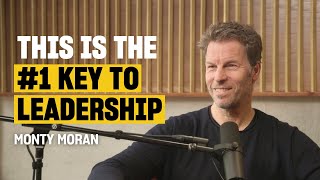
Monty Moran, former Chipotle CEO, explains how he built the company by leading with love and trust. He switched from food processors to hand-dicing onions, which improved quality, cut labor costs, and made crew members proud of their work. Moran argues that vulnerability and genuine curiosity are what connect people at work and in life.
Questions this video answers
April 16, 2023
Love is Free. Guac is Extra.
No One Is a Stranger: Discovering Love, Connection and a Brilliant Life.
Transformational Leadership (available on Mindvalley).
Replacing a large food processor with hand-dicing onions (and later hand-dicing tomatoes), improving salsa/guacamole flavor, saving labor on cleaning, and increasing crew pride.
Chapters
Every time I go on a road trip in the United States, I map my trip to ensure that during lunch, I happen to be close to a Chipotle restaurant. And the reason is because Chipotle, even though it's a franchise restaurant, is some of my favorite food to eat. I don't know what it is about Chipotle, but that restaurant is just one of my absolute favorites. Now, I'm here with a crew, with our film crew in New York, and I asked them, who here likes Chipotle? And the response I got back is, who doesn't like Chipotle? The secret, you see, isn't in the food. The secret, apparently, according to Monty Moran, the first CEO of Chipotle, is how the culture of the company, even all the way down to how the onions are chopped, has to do with the infusion of love. And this is going to be the topic of our conversation today. So if you are watching this on YouTube, on the Mindvalley podcast, we're going to be talking about the essence of love and how to create more deep and meaningful connections with every human being in your life. Now, why is this important? Because if you look at all of the data, whether it's on human longevity or it's on productivity at work, or. Or it's on happiness, strength of human connection is one of the most important things we need as a species to thrive. The Blue Zone study showed that in areas of the world where people were living over a hundred, one of the key things that caused this vitality and health was that they were living in these thriving communities. In studies by Gallup on what makes an employee stay at a company, one of the common things that employees who stay at a company for a long time and produce great profitability is this. They answer yes to the following. I have a best friend at work. And finally, there's the famous happiness studies by Ed Diener at Harvard, which shows that strength of human connection is the only thing that has a direct correlation with happiness, a 0.7 correlation. And this is why I'm so excited to have Monte Moran, the former CEO of Chipotle, who joined Chipotle as the CEO after its founding. Here is our guest today. Monty's new book is called no. 1 is a Discovering Love Connection and a Brilliant Life. Welcome to mindvalley, Monte.
Thank you so much. Great to be here with you, Vishen.
So we were having dinner last night and you intrigued us with this fascinating story of how you infused love into Chipotle and it had to do with onions. Tell us that Story.
Well, you know, the onions was just one example of a change I made that ended up having, I guess, kind of a crescendo of positive effects at the company. But. But, you know, when I started at Chipotle, I was really brought in by Steve to create an incredible culture at Chipotle, A culture where people were empowered, you know, to be at the very, very best. There was a whole bunch of ways that that happened. But the story I was telling you last night, you know, when you start out as the new president and coo, which was my first title at Chipotle before I became co, when I was president, CEO, you come into this company, you're like, what can I do? I can't. Obviously, we've got hundreds of stores by that point. I can't do it all myself. I can't go make them all clean myself. I can't go serve all the customers myself. So the only way I can work in any positive way is through people, right? Is to help all of the people who worked at Chipotle be at their very best. And, you know, the story you're referring to. I went in and tasted our salsas once and just went in and I went across the street to a competitor and tried their salsas, and their mild salsa was better. And I thought, oh, it's not. Ours isn't as good. And so I shared that with Steve, and I said, hey, our salsa is not as good. It doesn't taste great. And he was frustrated, you know, okay. And I said, come to the store right now. Let's go. And so we went into the store, and what we did is we made the salsa again in the store with the same ingredients that it was already made with, and found that when we made it, it tasted great. What was the difference? Well, the difference was that at that time at Chipotle, we were dicing our onions with a large food processor. And the way that food processor worked is essentially it. It's got a thing that pushes the onions through a grid of blades, okay. And as it pushes them through the grid of blades, it cuts them, it dices them into a quarter inch dice. Perfect. Quarter inch dice. Works every time. The problem is that even when those blades are brand new, they're not perfect. But after a week or two, as they get dull, what happens is a lot of. Since it's pushing the onion through, it actually juices the onion. It creates a lot of juice. Well, onion juice isn't tasty, okay? It doesn't taste good. It oxidizes also very Quickly. And so what happened was when we made the salsa with Steve, who is an excellent chef, you know, we used a knife to cut the onions, a sharp knife. And when you cut onions with a sharp knife, what happens is it doesn't bruise them or cut them or smash them. It just slices them. And so there's no juice that comes off the onion stays whole. Each little dice stays, has integrity. And so I said, you know what? I think we have to chop onions by hand with a knife in all the Chipotle's nationwide because we need to have our salsas be the best they can be. And not only the salsas, okay? Also, the guacamole contains the exact same onions. And I said, this is going to make all our food taste better. And there was a lot of pushback at Chipotle at that time. Operations. The operations people are like, we can't do that. You know, people can't. People can't do that. We can't train everyone in this company to cut onions. And I said, well, that's absolutely not true. You know, people are brilliant. You just have to give them the opportunity to do it. Let's try. We came up with a really good way to cut onions and created the video about that, shared the video with all the stores. So everyone knew it and said, hey, we're going to cut onions by hand from now on. Well, what happened was actually wonderful. First of all, our crew people who did it all day, every day, got excellent at dicing onions, and they got really fast at it. And they took great pride in producing wonderfully diced onions. When you produce these onions, the test that I think was really easy is when you put them through the food processor and set them on a paper towel and you do some hand diced ones with a knife and set them on a paper towel and then pull the paper towel out and lift it up. The one from the food processor, the paper towel soaked, okay. The one from the hand cut was dry. Now how does this matter? Well, when you put these onions in with, for instance, with the mild salsa, tomatoes, cilantro, salt and citrus, and you mix it all together, if the onions have juice in them, that juice gets in the citrus juice and it gives an off note to the entire salsa. But if you put the dry onions in the same recipe, the citrus juice stays citrusy, stays bright and delicious. And so our salsa is dramatically better. But not only was our salsa way better, our crews started getting got so fast at this that it actually saved time because there was no food processor to Clean. At the close of cutting onions, they just set down the knife or wipe it off, you know, clean the knife. And so it actually ended up being a labor. Labor savings. You'd think it was a huge loss. No, it was a labor savings. But in addition to being a labor savings, people in the restaurants, our crews, were incredibly proud because they weren't just cramming onions through a machine. They. They were dicing onions. They were preparing food expertly. And they felt the pride of that. That expertise. And then whenever I'd go into the stores, they'd be like, look, come here. Look at our onions. Look at the onions. And it became a thing. Come, look at the onions. And they. And they were so proud to show their incredible skill at cutting these onions that worked so well that we started dicing the tomatoes by hand as well. And. And that added another element of excellence to our food. So we were able to make the food much, much, much better by trusting our people, trusting our hourly crew members that they were excellent, that they cared, that they wanted to do a. They took it and ran with it in a way that was. Exceeded all of our wildest expectations.
And this is how Chipotle had some of the best tasting guac and best tasting salsa of all Mexican restaurants.
Yeah, it's delicious, isn't it? Here's the key takeaway. You've got to trust your people. People deserve to be trusted. We tend to underestimate people. Don't underestimate people. Everyone is brilliant. Everyone has something excellent to offer. We just need to unlock that excellence by empowering them to be at their very best. And if. When you know how to do that, okay, you can open up the whole world. It is much more powerful to be someone who knows how to make other people great than it is to be someone who just tries to be great themselves. Much more powerful.
I love that. It is much more powerful to learn how to make other people great than to try to be someone who's just great themselves.
Yes.
So let's use this as an opportunity to go into your new book. What made you write this book?
Well, when I wrote Love is Free Guaca Z Extra, the original manuscript was way too long. And people told me that my publisher said, there's actually four books here. Which one do you want to write? And so I said, let's write the leadership book. And that became Love is Free Guac. And the way I think about love and human connection is actually what's at the core of why I led the way I did. So what the second book is about is love and human connection. It's about the fact that there is no great life out there without great relationships. If you want to have a great life, you must have great relationships. And you alluded to some of that in the introduction to today's recording. And in fact, when I had a podcast with you on a couple years ago, the part of my book Love is Free that you really keyed in on was my definition of love. You noticed that I was really into that in that book, but I didn't get to talk about it too much. Well, this is the place where I talk about, really the key to a happy life. How to understand love better so that you can tap in and feel love flowing through you. How to tap into. To love better so that you can. So love can flow through you to others and from others to you. You can deepen your connections and live a much more brilliant and fulfilling and profoundly vastly deep life. And so many people are missing out on this because of things that are solvable, that we can cure, that we can change. You know, like our egos, you know, like our misinterpretation, that we think that we've got to be great. The only source of a leader's power is that other people choose to follow that leader. That's the only source of a leader's power. You might be thinking, monty, you're wrong. You can get power by being the CEO and being in charge and being able to fire people. That's not leadership. That's management. Okay? If you're using your title to get someone to do something, that's management and it's manipulation. You cannot manipulate your way to greatness, okay? You can manipulate your way to getting people to show up at 9am and leave at 5 and punch in on time and. And do a job, but you can't manipulate people into being brilliant. There's no such thing as passionate obedience. Gary Heil, my friend, said that there's no such thing as passionate obedience. So if you want something excellent in any part of your life, whether it be with your spouse, whether it be leading a company, whether it be your relationship with your friends, you need to focus first on understanding love and letting it flow through you and helping them be at their best.
So how do you allow love to flow through you?
Well, love will naturally flow anywhere where it can, but there's things that prevent love from flowing. Our unwillingness to be vulnerable, our ego, our pride, our desire for everything to be about us. You know, so if I want to look like I'm in charge. I want to look powerful, and I want to keep the power. Love is not going to flow. When a leader gives leaders power away and tries to focus on helping everyone that they're leading be at their best then which they have to do through vulnerability, then love starts to flow through them. If you have an ego that. Where you're trying to, you know, trying to get better yourself and thinking about you, you, you, and how you can be more powerful, the ego clogs up love's ability to flow. So basically, love is everywhere. Love doesn't need us, you know, and we can't create love as human beings. It's not ours to give or take, but we can tap into it. And once we tap into it, it will flow naturally through us. Just like the sun's flowing naturally through this window right now. It comes where there's room for it to come. But when you crowd it out with ego, when you crowded that with excessive pride, there isn't room for it to flow. So, you know, love goes anywhere where it's allowed. And the key is to get out of the way and to let it flow through you.
I love that I've always looked at the world from the point of view of a person of integrity. A person who's a leader has to be a great catalyst. Has to be a catalyst for change in the people around them.
Yeah, Right.
So everybody who steps into your life, you know, I believe, you know that you're doing it right. If the people who are in your life are. Are growing, they are elevating, they are rising up. When I created Mindvalley, one of the things which I committed to doing was making many of my employees stars. So, for example, for the first quarter of this past year, the biggest author on Mindvalley on our platform was not me, even though I was the original author on the platform. It was Ronan Diego, who was one of my employees who joined our company from Brazil.
Yeah.
And through taking employees and looking at their talents, saying, okay, this guy has got this incredible charisma. This guy Lorenzo has got this brilliant mind. What we do is we make them the stars.
Exactly. And vishen, that's brilliant. You know, great leaders do not create lots of followers. Great leaders create lots of leaders. Right, okay. Because great leadership empowers other people to be at their best. I have a definition of empowerment, which, you know, you've seen in the first book, which is feeling empowered is. It's a feeling first and foremost. You can't make someone feel some way, but empowerment is feeling confident. In your ability and encouraged by your circumstances, such that you feel motivated and at liberty to fully devote your talents to a purpose. That's what empowerment means.
Absolutely. Motivated and able to devote your talents to a purpose like that.
Yeah. And there's two parts that. Right there's confident in your ability and encouraged by your circumstances. Most managers are very good at causing people to be confident their ability by, for instance, training them so they know what to do. But then they'd stop there. The second part is more important, which is creating encouraging circumstances. And the question is, how do you create encouraging circumstances? Well, it's no different than you would for your son or your daughter. You know, how do you. How do you encourage them? You care about them, you love them, you are committed to them. You know them. You. You want nothing more than for them to be at their best. You want to challenge them. You don't let them just cruise along. Love isn't always gentle and soft, is it? I mean, if you have a daughter who's 13 years old and she comes home with a joint in one hand and a scotch in the other, you know, at three in the morning, you don't say, oh, sweetheart, I hope you had a nice night. You know, it's going to be a more difficult conversation. Because love means that you will not accept someone not being the best version of themselves.
And I find that it's two ways. The people in my company. So firstly, with 400 employees and a global company, I'm not friends with my employees. But inevitably, friendship arises from certain people, my core executive team, certain employees who've been with me for seven, eight years, whom I've traveled with, I've recorded podcasts with. But one thing that I asked them to do to me is to constantly make sure that I'm in top form. So most of them, people. So, for example, I don't have assistants, but I have really badass people who work with me and will tell me, vishen, you are not going on stage dressed like that or vishen, that sucked. Don't say that again. And they're saying it with love. And so the people in my company who are my closest friends, employees, actually constantly make me a better person.
But see, and that's wonderful, but you had to let them know that that was okay.
Yeah.
You had to tell them that you want to be challenged, that you believe in them and trust them to put you back on the rails.
Right.
And. And this is the key to leadership. Like I said, the only source of a leader's power is that other People choose to follow them. And the question has to arise, doesn't it? Why would they choose to follow you? Or why would they choose to follow me? Why would they choose to follow anyone? And the answer is really, is really simple. You will only choose to follow someone that A, you believe will take you to a better place. Okay. And B, that knows you, cares about you, trusts you, wants to challenge you, and wants to see you at your best. If you see that that somebody can take. Can. Has the ability to take you to a better place, has a vision for where you can go and. And trust you and cares about you and loves you. Okay. To use a scary word for the business world, people don't like to use the word love, but why not? We can get into that more. It's a very important thing to notice. Okay? But love is as important in business as it is at home. Maybe more, because it's not expected in business.
Right?
Okay. So you have to. You got to love your people. Because when you love your people, they say, hey, wait, this guy loves me. This guy can take me to a better place and is going to take me to a better place. I'm going to follow this leader.
And you're saying that love, that love is represented by the desire to elevate.
Yes, to elevate. What is love if it's not wanting to see someone else at their very best?
Yes. So I was just interviewing Gretchen Rubin, who wrote the book the Four Tendencies. And she spoke about these four tendencies, about being human. And apparently the most common tendency is what is called the obliger. Okay. So I'm an obliger. So an obliger tendency works like this. If it comes to New Year resolutions, if I need to make a commitment to someone else, like my son or daughter or a friend, I will keep that commitment. But commitments to myself I don't keep. And 40% of the population tend to be obligers. So the majority of people tend to operate.
I definitely do this.
Yeah. So when you have people around you who can hold you accountable, who are constantly uplifting you, if you happen to be an obliger, the effect is even more dramatic. Right. So I have a person in my company who is an employee, but this person is also has a role to kick my ass and make sure I am going to the gym and really pushing myself. And if this person doesn't kick my ass, I'm not working out as much as I should.
Yeah.
And how I help this person is I help this person develop a brand and a marketing model. For themselves. So they can be the best gym trainer they can be. Right. And they can get clients even outside me. And so by. Because both of us are obliges. And so by elevating him and him elevating me, we've created this incredible dynamic.
Yeah. And what you're really getting at, Vishen, and it's wonderful and it's neat that this is happening with you and your life and your company. It's wonderful. But it's not happening with enough people.
People.
And what you realize that I want everyone to realize is that that interconnectedness of human beings is fundamental to every. To every part of our lives. It's fundamental to our country operating well. It's fundamental to our globe operating well. It's fundamental to the survival of our race. This is big stuff, you know, I mean, we need to understand that we are a connected species. You know, you are doing that when you sit with your people and you realize, hey, I need you to make me take care of myself because I'm not good at it. And meanwhile, I know how to take care of you in a way that you don't know how take care of yourself. The reality is we are much better taken care of if everyone around us wants us to be at our best and if we want them to be at their best.
Right. Because many of us do not are not good at taking care of ourselves.
Yes.
But we will do it for another person.
Yeah. And it's fully when we had, for instance, at one point when I was working there and we had 75,000 employees. And I remember giving a speech at Chipotle one day saying, you know, if you have, let's say, 75,000 people and 74,999 of them are trying to help you. Okay. And you're trying. And you are one of 74,000, 999 trying to help every other person. You've got that many people on your team, but if every person is out for themselves, you've got one person on your team, you've got one person trying to help you, and probably not very skillfully. So, you know, so really what we need to understand as a society is that there's this interconnectedness that is not only necessary, it's happening already, but we need to. We need to fan the flames of it. We need to understand it. And as a country, we need to take care. We need to look at the 330 million people in the United States, for example, and this is true with every country. But I'm giving The United States as an example, because we're sitting in it now. But the three, we need to understand that the 330 million people in the United States are united and connected already. But the powers that be, the leadership is actually the one dividing them.
So what you're saying is that we are actually connected. People are connected. And you said something earlier which I want to pick up. You told me you don't believe that the world is necessarily bad. You believe that the world is good. You don't believe that there's racism. You don't believe that.
No, there is racism. Okay? But racism isn't the predominant theme. Okay? So when I went out and did my documentary called Connected A Search for Unity, which played on pbs, you know, I went out and flew around the country and met with people from all different walks of life, every kind of person you can imagine. And my goal was to, you know, it was called Connected A Search for Unity. So I went out to find out what's going on in this country, what's going on with. I just wanted to interview people and get to know them and understand them and bring forth wisdom from people whose voices would otherwise not be heard. And what I found everywhere I went, the normalized situation in this world is that people care about each other, love each other, are trying to help each other, are cooperating, want to get along, want to support one another. You know, the problem is that the media is very, very divisive because it makes money by doing so. There's a lot of clicks in division. There's a lot of clicks in. In hatred. There's clicks in a lot of negativity because it tends to cause people to be fearful and fear drives people to act. But, but the reality isn't that. The reality is that people are typically not racist. People typically love each other. People typically want to get along and understand one another, and. And that's what's really going on. And so when we start understanding the positivity that exists and we start to trust human beings to be people who want to do right, want to do good, we will lead them much differently, okay? Because if we don't believe that they're fundamentally good, instead of leading them, we feel that we have to manage them. If we don't trust the employee can that has the skill to cut an onion and will cut an onion beautif. And we'll get take pride in doing that, then we're just going to keep giving them machines that do a worse job and also disempower that employee to be excellent. Why would we want to do that? Right? Everyone loses, but conversely, everyone gains. When we trust people, we want people to be at their very best when we give of ourselves. You know, and like I said earlier, you know, the most powerful thing you can do in this whole lifetime is to help make others better. And when you do that, you get a huge feeling of satisfaction. And it will also cause you to rise into positions of leadership where you'll be able to do, to do even better job.
So here's something I've noticed. I get my news daily from Reddit News, Apple News, and then Instagram. I follow lots of news channels on Instagram. And what I notice is that when I'm reading news about the United States, living in Europe, America seems like a broken country. The news I see is about gun violence, about racism, it's about bad CEOs manipulating their employees. There's a lot of news where people are trying to tear down Elon Musk. And recently I believe Chris Lichter, who was the head of CNN, resigned and he said, the reason I'm resigning from CNN is because news media, even cnn, has evolved to be about defamation scandal and pulling people down.
And good for him because that shows a lot of integrity. Because that's absolutely true. But it's. The leadership right of the United States is failing, okay? The media is failing miserably in its job because what it's doing is it's, it's prioritizing the profit that comes from, you know, sort of clickbait over what's actually true. You know, people need to know and understand what's really true and what's true. And I'm here to tell you because I went out and did. And you can watch my documentary and you can cross examine me all you want. But what's true generally in this country is what I said earlier, that people care about each other, are trying to uplift each other, help each other. There's a lot of charity naturally happening. People are generous, people are caring. That's what people are. And if we trust them to be so and we treat them as such, they'll be even more so.
When I step into the United States, I feel that love right all the way at the airport when I'm buying a cup of coffee. So I landed at the airport, I was on transit through Atlanta, I bought a cup of coffee and the barista was like so lit up, so friendly. She's like, here's your coffee, love, you look great today. You don't experience that in many other Countries right where I live, in cold Estonia, people don't even look you in the eye. But in America, you feel that love everywhere. Yeah, but I don't see that when I'm reading the press from the United States, but I see it when I'm walking the streets in New York. People here are so absolutely loving.
Well, and I think that is, in some regard, a reverberation of our founding documents. You know, and there's a most famous line. The founding fathers of our country said we, you know, that everyone has the right, the right, you know, to life, liberty, and the pursuit of happiness. Can you imagine a founding document being written hundreds of years ago that actually says you have the right to life, liberty, and the pursuit of happiness? So it's fundamental to our country that we believe as a. As a nation, that each and every person has a right to pursue happiness. Well, how do you pursue happiness? Well, through love. And I just think it's so beautiful that that's in our founding document. You know, it's actually. It's actually part of the instructions for how we're supposed to live our lives.
But it scares me. It scares me how people are being brainwashed by the media. So I read this statistic scares me terribly. And the statistics said that 70% of Democrats say that they would not go out on a date with a Republican. 70%. Right now. Think about how judgmental that is. So I actually have. Half my friends are Republicans, half are Democrats, and I love both of them, and we can disagree on issues. I'm a big believer in climate change. I have friends, and I've dated someone who doesn't believe in climate change, and it never caused an argument. We simply were able to expand and elaborate on each other's views and learn from each other.
Yeah. And that's the normal way when you're open and caring. Right.
But it seems that the news media, if you're on the left, the news media has made you believe that people on the right are bad, are vindictive, are stupid, and people on the right are hearing the same thing about people on the left.
Yeah.
The news media in this country is horrible. Oh, it's tearing people apart.
It is. And it's trying to tear them apart, and it's still not succeeding. Despite lots of work. It's trying to tear people apart, but it's still not succeeding. Look at our dinner last night. We had what, 10 people at dinner?
Right.
I don't know who was a Democrat, I don't know who was a Republican. And I had really intimate conversations. No one cares. That's not what people care about. They care about, is your heart open to me? You know, are you capable of caring about me? You know, will you receive the love I'm trying to give you? You know, how does. Can we have a connection? Is it fun to be together? You know?
Right.
You know, when I look you in the eye, I feel like, oh, hey, you look like a nice guy, you know? Cause you are, you know, And. And.
And I think that's a really important question to ask people if you're watching this, and if you're one of those 70% of Democrats who say, you don't date a Republican. Why, like, where. Where did you get that idea that people who vote differently from you are somehow undateable or evil? And likewise, the same applies to Republicans.
And it's not even. Yeah, it's not even really true. I mean, you know, if somebody meets someone on the street, they're going to have a connection. If they. If they're open to it and if they're vulnerable and they. And they're. And they're not operating from a place of ego or fear, anyone you see, you're gonna have a connection with them. It is. The most natural state of affairs, is for two people to love one another. That's the most natural state of affairs. When you walk. When you. When you're walking down a busy street in New York City, where we are now, you know, it's true that you're not going to fall in love with every single person you see, but why not? Well, because people are focused on going somewhere, being somewhere, they're focused on something else. But if you have two people who are open to a connection and both of them are in a place where they have the moment, and for it to arise, it is natural for them to form a connection. It is natural, ultimately, for people to love one another. And that's what's going on in this country.
So we've spoke about the illusion of separation, right? The illusion that we are different, the illusion that we are divided, okay? And we've showed that a lot of that illusion is created by the media. That illusion isn't real.
It's not real.
It's not real. Now, once we understand that delusion isn't real. Monty, you're a specialist, or you write about love and the power of love. How do we amplify our love to the people around us? Whether it's in a relationship or it's through friendship, or it's through the people we work With.
I mean, it's really a matter of sort of eliminating all those barriers to love which tend to arise, okay? You know, things like fear, okay? Ego, pride, a lack of trust. You know, it's all those things that sort of get in the way of it. But if we can just allow ourselves to be open, allow ourselves to release judgment, okay? Allow ourselves to be vulnerable and to just. With anybody we come across, then if you just do that and you just see what happens, you know, if you trust that someone else is going to be a good person and you extend that trust to them by, for instance, initiating a conversation like the barista did with you. You look great today. I bet you're gonna have a great day. Nice to see you. I mean, if you say that to anybody, it tends to go, well, I've got a English cocker spaniel. Her name is Chelsea. This dog is only 33 pounds. But when we go on the trail and she comes up to another huge dog, she has this habit. She rolls over on her back and exposes her neck and puts her paws back like this and takes this extremely vulnerable position. What do you imagine the big, mean dogs do? Well, they go up and they give her a kiss on the cheek, and they get up and they're playing with each other in a moment. If people approach one another in a vulnerable way, exposing their neck, so to speak, right? Exposing themselves, no one's going to take advantage of you, okay? You know, there's this saying, you know. You know, don't stab me in the back, right? You know, the worst thing for any human being to do, it's seen as the worst thing, is to take advantage of someone by stabbing them in the back. It's looked at as, what, cowardly, isn't it? You know, or punching someone when they turn away, that's cowardly. No one wants to be a coward. And so that notion implies also that people understand that when somebody is not defending themselves, you don't want to punch them. When somebody is not defending themselves, you don't want to insult them. When somebody's not defending themselves, you want to actually approach them in a warm way, okay? So that's what I mean when I say to be vulnerable. If I come up to you walking down the street and you're in a bad mood, and you think all people are bad at that moment because you, I don't know, your girlfriend just broke up with you and did it in a nasty way, and you're in a really bad mood and you walk. And I just say to you, Hi. You might say hi grumpily at first, but if I say, hey, excuse me, can you tell me what time it is? I think I'm late for something. You know, it is your human nature. You're going to look at your watch. You're not going to say, go to hell. This watch is my watch. You know, I bought it. You have no right to know the time from me. You're not going to ever say, nobody says that. You're going to say, oh, it's 3:30. And if I say, hey, you know, thanks, hey. And if I said, oh, by the way, let's assume you're not in a huge hurry. For my example, if I say, you know, by the way, looks like you're having a hard day, are you okay? Are you okay? Even if I don't know you, I never met you in my life. If I say to you, and I don't look, let's say I don't look crazy and I don't have a knife or something, I mean, there's not saying we do. But I'm going, hey, you okay? It looks like you're having a hard day. Are you all right if I just check in with you like that? You're gonna go, oh, well. And you might say, well, I mean, actually it's been kind of a crappy day, but thanks for asking. Oh, you bet. Hey, you know, and, and if it's a circumstance where there's time, maybe it's like, hey, let's have a chat. Can I help you? But if you approach someone with an openness and a desire to be of service to them, if you approach anyone in that way, it goes well, it just does. Over and over and over it goes well. I remember when I was an insurance adjuster in Los Angeles, there's many, many years ago, I was a young guy, we wore these short sleeved button up white shirts with a necktie. Look kind of nerdy, you know, I was walking around the streets and sometimes I'd go into a neighborhood, you know, where there was, you know, a lot of people. Like one, one example, and it was in my first book, there was a bunch of guys sitting on the front porch, you know, and it was early morning, but they were loud, rap music going, they're big tough guys. And, and I actually looked at these guys and they looked at me and said, I looked up at the house and these guys said, what are you looking at? You know, when I looked up at the house and I said, actually I was just looking at the address, I'M trying to find, you know, 3604. Can you help me find that? And they were like, oh, yeah, yeah. Hey, that's just a block and a half down. Why did they say, what are you looking at? Because they thought maybe I was judging them. They thought maybe I was looking at them with judgment. And so they acted in the defensive way. But when I took their defensive comment, what are you looking at? And I said, actually, I was just looking at the address because I'm looking for it. Can you help me find it? And I asked for help. What is asking for help do? It puts me momentarily in a subordinate position. I would like your help, please. And then when someone. But when I asked their help, what happened? Immediately they transmitted from a place of aggression to a place of cooperation and desire to help.
And if you were not fully conscious, and I think that's an important lesson here, if you were not fully conscious about that, you would have judged them. You would have gone, wow, these guys are mean. These guys.
Exactly.
Yeah. So that, that happens a lot. We, we. So, for example, a lot of people dislike Elon Musk. I believe he's a good human being trying to do his best.
Yeah, he really is. Oh, and this recent stuff that people are getting mad at is he's just trying to expose the truth so people can see it.
Yeah, he's trying to do his best. I mean, he recently tweeted that he is moving to the right because he said the people on the left are hateful. And he was referring to this tendency of people, and it happens on both the right and the left, to judge without truly understanding, to poke holes, to hate, to hate on other people. And that has happened a lot. I was giving a media interview once and I was not in a good state because the night before my son was in hospital, like not sick in hospital. And this. We were in a foreign country, we were in the Middle East. My son was hospitalized, he had come out of hospital. And after this interview I actually had to go and I spent two hours by him, by his bedside. And he was a 14 year old boy. Right. But while giving the interview, I was not in a good state. I was agitated, I was nervous. Of course, I'm a parent, but the journalist judged me rather than trying to understand what was going on. At the end of the interview, she did her own take of it, saying, this guy is the most negative person I've met here. And he runs this video, this company focused on positive thought, Mindvalley. But she never bought it. To understand that I was a parent with a son who was hospitalized.
Yeah. And so when this interview, to understand that what would have transpired would have been utterly different, she could have been compassionate. So, God, I'm really sorry. That's hard. Do you need to take a minute?
Yeah. All she had to do was ask that question. Hey, are you okay? Right. I'm not blaming her. I'm not blaming her. But here's what happened. When that interview went up, 2000 comments were written saying that I was a bad person without truly trying to understand what was going on.
And this is the problem with social media. There isn't an opportunity to really understand someone. Oftentimes. You know, I mean, oftentimes there's not that opportunity. And the person. The person who taught me most about this in my life, I think that got me started on this trajectory, was a homeless man in Dairy Queen. When I was 15 years old, I worked at a Dairy Queen and the Dairy Queen. We were near had a lot of homeless people that came in, and they'd usually wrap themselves around a cup of coffee. But one day, I just saw this guy come in every day, every day, Every day. So one day I decided on my break to sit down with him and just asked him like, hey, can I join you? So I took my food out. Can I join you? And he looked at me. Sure. He said with some surprise, okay. But then I sat down and he looked up at me, and I realized I'd never seen his eyes. He had these beautiful eyes. And then I said, how are you doing? I just thought, you know, I see you come in here a lot. I thought I'd sit down with you. Then I proceeded to ask him everything you can imagine. So I see you come in here a lot, but, you know, you only get coffee now. You know, you don't like the food. I made a joke, and he's like, well, I really can't afford it. I'm homeless. I don't really have any money. Oh, why? Why are you homeless? What happened? Do you have any family? Do you have a brother or sister around that you could stay with? You know, how did that come to be? Do you have a job? No, I lost my job. Why'd you lose your job? Now all these questions might look to you to be God. That's kind of nosy for a kid who didn't even know him. The opposite was true. Because when you ask questions, okay, anytime you ask anyone a question, if it really comes from a desire to better know and understand the other person, not from a Desire to insult them. That's a problem. That's not a question. That's not a true question. That's an insult. But when you ask a question with a desire to better understand someone, it's incredibly empowering to the other person. It shows them that you care about them. It makes you subordinate to them. Because when you ask a question, you are putting them momentarily in the position as your teacher. You're a guru for a moment, you know? And so I, when I asked him all these questions, what could he see right away? He could see I was interested in him. I cared about him. I wanted to understand him better. That validated him in a way that hadn't happened for a long time for this fellow. His name was Will. And what happened was, Will, he started sitting up straight, straighter in his chair. He started answering his questions. He came alive right before my eyes. And why did he come alive? What was I giving him? I was giving him love. I was giving him the curiosity that demonstrated that I cared about him. Hey, why are you homeless? Don't you have someone you can stay with? How can things be made better for you? What can we do to solve your problem? And when you look at someone with compassion and care and desire and love, it is incredibly hard to resist. People can't resist it. And so when you go up to someone with curiosity and with this. Will taught me so many things in that getting to know him. And one thing was, questions are always welcome if they come from a place of genuine desire to understand somebody. Another thing is that curiosity is one of the most beautiful and powerful forces of love in this world. Because why would I be curious about him? Because I fundamentally wanted to see him. Well, because I was concerned that he came in and didn't. He was only drinking coffee with six creams in it and a lot of sugar to try to get his calories. It wasn't good for him. And so I started giving him half my meals every day. I started sitting down with this guy day after day after day, and he became a friend. And so did a lot of other homeless people who came into Dairy Queen. But these people taught me so much. I was so. I mean, even though I was the one taking the initiative to sit down with them and get to know them, I learned so much from them that I would never have understood.
Did anything about the way you were trusting them and speaking to them, especially Will, shift him?
Absolutely. Oh, completely. He started coming in every day. He quit cigarettes. And he bragged about, hey, I'm not smoking cigarettes. I Asked him, well, if you can't get food, but you've got cigarettes, you know, is it a money problem? And he was like, well, I mean, but I'm addicted to him. I said, yeah, but can't you maybe smoke fewer of them and wean off of those and use that money to buy something more nutritious? And as I challenged him, day after day after day, he came in, he started boasting, he started looking better, he started, he held himself better, he gave up cigarettes, he started eating more food, drinking less coffee with less sugar, and he started bragging to me about the better choices he was making for himself. So he actually became a more empowered human being through one 15 year old kid. And keep in mind, Vishen, I wasn't the CEO of anything. I didn't have any training. I didn't have, there was nothing, no prestige. I had a $2.85 an hour job, minimum wage back then. I mean, there was nothing about me, okay, that was particularly special except that I looked at him, I was concerned about him, I cared and I asked the questions. And because of that, you know, and so the lesson from that is that anybody right now, I don't care what you're. Don't wait till you have a big title to try to help somebody. Don't wait till you have a position of authority to try to do great things. The greatest thing that any one of us can do right now is simply to love other people, to demonstrate a care, concern and compassion for them. And then also as part of that trust other people. Trust that even if they look grumpy and mean, they're really not. If you approach them, you know, in a really positive way and in a way that says, hey, how you doing? You know, or if they look mean, you might be saying, hey, you look, are you kind of in a bad mood? You're kind of mean today. You know, I mean, it could be something as silly as that. But the bottom line is people so often in this, in this world, you know, try to avoid contact with each other for, for some fear, you know, that maybe it won't go well. But I think the reality is if you take a leap of faith and you bring love, patience, presence, okay, and vulnerability to a situation and from that place you inquire, you know, and are curious about someone's state of affairs, what's going to happen is you're going to develop a very deep connection very quickly. We're almost instantly there's love transpiring between you. Now, it doesn't mean you have to marry the person right away. It doesn't mean you're going to, you know, give them a ring. That's not what I mean by love. And I talk about that a lot in my book, you know, what's called no One is a Stranger? Why is the book called no One is a Stranger? Right, exactly this point. No one is a stranger except that we define them as one. No one is a stranger except that we choose to make them one because of our fear that maybe they'll want. They'll take something from us or hurt us or harm us or judge us. But if we start to trust that they won't judge us, if we are the first one to offer our vulnerability, to offer our love, to offer our presence, to offer our concern, our care and our curiosity, if we offer that to some, anyone, the tendency is very strong that they will accept that and themselves become more vulnerable. Themselves become curious, let down their guard, let down their defenses. And what arises in that space created by that interaction is love. What arises in that space is trust, warmth, connection. And that's the way we need to be living our lives, all of us in this world. And it's. And it's available to all of us right now with no degree, with no training.
Monty, thank you. That was a beautiful, beautiful, beautiful way to end this conversation.
Thank you.
So if you enjoyed this conversation, if you like how Monty's philosophy and how he views the world, check out Monty's book. The first one is called Love is Free. Guac is Extra. That's a book on leadership. You can also check out Monty's upcoming book, no One Is a Stranger Discovering Love, Connection and a Brilliant Life. And for those of you who are mindvalley members, Monty's program, his online quest with mindvalley is called Transformational Leadership, and it's available on mindvalley as part of your subscription. Transformational Leadership will guide you through a journey to become a transformational leader, meaning a leader that elevates everyone around you, just like Monty did in his Chipotle days. Monty, thank you for joining us here in mindvalley.
Thanks a lot.
Thank you for tuning in. I'll see you in the next episode of the mindvalley Show.
More from Vishen




Brown Noise for Deep Focus and Concentration (Best with Headphones) | Gabriel Loynaz



Your Appointment With the Eternal | Guided Meditation with Michael Bernard Beckwith

