Ep #006 | The Hidden World of Intuition in Fortune 500 Company Decision Making
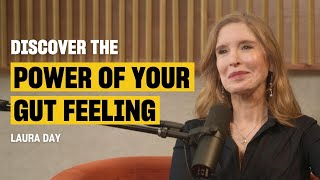
A Mindvalley Show interview (Vishen Lakhiani with guest Laura Day) exploring intuition’s role in business decision-making. The conversation covers scientific studies (Zener-card/CEO tests, Ganzfeld experiments, precognition brain studies), Laura Day’s background as an intuitive consultant, links between neurodiversity and intuitive abilities, practical corporate consulting methods, and Day’s ‘Circle’ protocol for focusing and applying intuition in organizations.
Chapters
Foreign. Welcome to the mindvalley Show. Today's topic is absolutely intriguing. I've been fascinated by this topic for a while now. And it is the idea of intuition applied to business. Many companies today hire intuitive advisors. First, before we get into the science of intuition, I know that some of you might be skeptical, but let me just state it this way. Many people who are skeptical of psychics or intuits, they are coming from a certain degree of bias. Yes, there were these psychics on TV like Ms. Cleo 30 years ago who would take money for readings that could never be proven as accurate. But if you actually look at the science, the science is really compelling. Newark College of Engineering had a professor by the name of Dr. John Mihalaski. And he did a famous study which he described in his book executive esp. And the study went like this. They tested CEOs for intuition. And what they did was simply showing the CEOs what I call Zener cards, like five different cards. And the CEOs had to guess which card was being held up. The CEO, of course, couldn't see the back of the card. Now they found that certain CEOs were able to guess the cards more correctly than chance. So chance would say you'd guess 20% of the time, right? Certain CEOs were guessing 23, 24% of the time correctly. And what was curious is that those CEOs that had a higher probability of correct guesses, coincidentally, their companies also had higher profits. Conversely, the CEOs that were guessing wrong more frequently seemed to have something along the lines of negative intuition. They should, even with raw probability, get the cards correct 20% of the time. But they were hitting 17, 18, 19%. They were actually counterintuitive and their companies, you guessed it, were making the least amount of profits. So Mia Lalaski's study was one of those many studies that showed that there is some aspect of being human that allows us to perceive information outside our five senses. Now, Laura Day is the leading expert in this field and I want to read to you what a couple of people have said about her. We're going to start with Dr. James Watson. He is a Nobel laureate and the co discoverer of DNA. And Dr. James Watson said intuition isn't mystical. It's a sort of background sense of how things should work. It's facts hidden within the brain. Intuition is logic. Laura Day guides you step by step through a systematic approach to getting in touch with this important faculty. Brad Pitt said, I believe in the gut and I believe in Laura Day. Chris Rock, referring to one of Laura's books, said her book how to Rule the World from youm Couch is perhaps the greatest book ever written. Nicole Kidman, on Laura's book the Circle said, the Circle takes fate and puts it in the hands of anyone who has the courage to dream. Jennifer Aniston, on Laura's book the Circle said, when everything goes right, you make a wish and it happens. You are living the message of the Circle. And I could go on and on and on. So I'm delighted to have with me as our guest today the Amazing Laura Day.
Thank you for that amazing intro.
Well, you deserved an amazing intro, Laura. And I just want to say I got to know you yesterday when you hosted a dinner for fellow guest of our podcasts and Mindvalley authors. And you are an absolutely gracious host.
Well, thank you. It was a lot of fun and I think in a sense that's how intuition really responds in a positive way to our business environment. People get together, they find where they match and then they apply it to the market. And that's what we did. We got together, we had a great evening, we brought people together, and I bet you 50% of those people will still be working together three years from now. Because when two intuitive get together, magic happens.
What is intuition?
So intuition is non local perception. We have the limits of what we can see, feel, hear, smell, et cetera, et cetera. Your basic perceptions. I can see you sitting in that chair. But intuition is our brain and it's every brain's ability to use those same senses, perhaps in another room, to move them in space and time. And of course, I love the Einstein quote and I always butcher these quotes, you know, a dearly held illusion. So it's your ability to move your attention. And your attention are your five senses anywhere in space and time, in terms of, for example, even feeling another person. You used guess the cards, they weren't guessing. That's called telepathy. They were intuiting. They were non locally just switching their position and looking at the other side of the card. So that's not guessing, that's intuiting. And that's called telepathy when it's in the moment, it's called precognition when it's in the future. And that would be my job and your job as well, interpreting the markets, although you might call it something different. So non local perception is intuition.
But how did you get started in this field?
I actually got started in a very odd way. It was the early 80s and there was a Lot of interest in these abilities and these extrasensory abilities. And I was watching a nerd channel. I was a math and science nerd channel. I was 21 years, and I saw something on different experiments that they were doing on perception. And I thought, oh, wait, doesn't everyone do that? Because of course, at 20, you think everyone's brain functions just like yours. It's just yours is more embarrassing than everyone else's. So I called them up and I said, you know, I can do what you're talking about. And I went in and there's a foreword in the first book from one of the original professors. And I basically walked in, and in this foreword, he says, I don't even remember this anymore, that he put a name in an envelope and I accurately saw two people gave the medical diagnosis, the prognosis, what was going on in their life, but was confused. I was going back and forth between people, and it ends up he had put his own name in the envelope, but also his best friend had the same name. So I was going back and forth. So basically after that, I was passed around to a bunch of different programs to test different kinds of extrasensory perception.
You were born with this.
Everyone's born with this. I also have severe adhd, so I have problems orienting in order to get to the studio, for example, I was anxious because this moment, this point in time, this point in space, all very hard for me to grasp, which is what not having a lot of executive function does. So everyone's brain is capable of this. However, it's actually a positive function of neurodiversity.
So you're saying that people who have neurodiverse brains might be more intuitive?
Yes, because, I mean, if you go, for example, to a dinner, all of the top traders, it is a walk through the park of a spectrum disorder. And I have often thought that it would be wonderful to teach children who you can tell their neurodiversity is going to negatively impact their lives, to teach them the skills where they're superstars, because there are those skills. I was lucky enough to just walk into that. I don't believe in luck. It was synchronistic and intuitive that I had this brain that. That couldn't memorize the circulatory system and get into medical school, but could respond to these targets, these questions, these get these pieces of information that other people couldn't. So it is a one of my favorite quotes of my own. It's terrible when we quote ourselves. Is your pathology can be your potential. I can do this to the degree I do it because of brain damage. Although I guess people don't say brain damage anymore because of brain diversity. Add really severe. I just got retested because you get to a certain age and if you break something and you're in a hospital and you don't know what year it is, people think dementia. So I just got a new neuropsychoval about eight years ago to have on hand to say, wait a sec, even at a younger age, I didn't know where I was in space and time. So please look at this. I'm not demented, you know, I'm just neurodivergent.
Yeah. And I get that because I have a neurodiverse child and I suspect I have Asperger's. And it used to be really severe when I was young, and now I've kind of trained myself out of it.
That's a special kind of brain. And that is actually, I have found, and this is just from my personal experience, I have worked with the same CEOs for now 30 years. And I have found that that ability that doesn't allow you to chit chat appropriately at a dinner party does allow you to dispassionately observe a situation, to move it around in time to experience other people's perspectives, but as data, not as emotion, the way an empath does as data. And I really related to that in you because I felt like, and I'm not going to mention what, but I felt like immediately I knew what my place was in your business world in terms of what I could help you with. And I knew what you could help me with less clearly because, of course, we're least intuitive about ourselves because we have all of that history. We don't see what we don't see.
What you described is pretty accurate about how my brain operates. So my child was diagnosed with Asperger's. And when the doctors diagnosed my child, the doctor was looking at me and he says, and by the way, I can tell, sir, you have it too. Right? But I didn't have a formal diagnosis, but I suspect I have it because my child and I are very alike. Growing up, I couldn't date. I didn't have friends. And what I did, though, is I was fascinated by intuition. I started having these psychic dreams. I would see the future and then things would happen exactly as I would see them in my dreams. And so I didn't have friends. But I did spend a lot of time pouring into spirituality books because I was fascinated by what I was experiencing in the world around me.
But what's so fabulous is now we know more, probably with your child. You know, that someone who shares your child's interest and knows how to parallel research with your child, that that is a kind of connection. And what I have found, because when I was very young, I was actually very interested in what back then wasn't called spectrum disorders. These children, really, I loved being with them. And a lot of them were nonverbal. And what I noticed was they picked up so easily on intentional telepathy. And in fact, they were so open telepathically that it was hard to find a clear channel. You know, like when your TV goes zzz. Because there's so much input. But I think that you bring up a good point, which is that kind of diversity tends to be generational. My whole family, they're wonderful mathematicians, they're in the sciences with my brother, the first chess move you made, he knew the entire board till the end of the game. I mean, he was no fun to play with. And these are all gifts of that non local attention. Of course, there are downsides. You know, I too have trouble kind of orienting myself in popular culture in that sense. I've always been an old lady who observes because I'm not here. And I think that part of my path as an individual has been to observe kind of what people do who just go out and eat and go to movies.
And the way we observe is different.
Yes.
Right. So if you happen to have a neurodiverse child or if you happen to be neurodiverse, there are some hidden superpowers that I think we're just beginning to see Elon Musk being one. Right. He's been very public about talking about his Asperger's. Now look at what Elon has done. He has seen the world of the future. He's imagined things that most human beings cannot imagine. And then he has figured out how to reverse engineer and take steps towards them, such as colonizing Mars or creating the world's most most popular electric vehicle. And I noticed something similar in my child. So I remember when my son was maybe 6 or 7 years old, we were at a dinner table and there was a bunch of adults. And he was just there as a little boy eating his pasta, his head down, he doesn't really look up, he's really quiet. And two adults were having a conversation. And someone said, I was just kidding, I was being sarcastic. And my son, without looking up, goes, actually, that was not sarcasm, that was verbal irony.
I Love that. It's so interesting because that's where I get caught up in with the spiritual community, where that everybody thinks kind of I belong there, as opposed to just the data based community, is that it is important to be precise, it is important to be literal. There is a. Not that the rest isn't beautiful imagery and art and all of that is beautiful, but the literal world, the world that creates a profit, that creates jobs, that creates function, that creates new medicines, that, you know, that precise data driven world, when it has a positive goal, is an art in its own. And I think that that is a gift. It's interesting. You were speaking about the CEOs and they were tested and the ones who had more telepathic ability had more profitable companies. But one of the things I do with companies is that most people, in fact I would say everyone who is successful is intuitive in whatever they're doing, because we all have basically access to the same skills and information. There are, however, times when life events, and it's not always life event happens on Tuesday, the effect happens on Wednesday. There are times when life events can skew not our ability to intuit, but our ability to act upon those intuitions, to evaluate them with clarity. And so those top companies may fall off that chart after a significant change or difficulty. And that is where having an outside intuitive is very functional in a company. And also training departments to read each other, to get intuitive data for each other. Because the enemy of intuition is actually knowledge. The enemy of intuition is the data that we have that may or may not be correct. I mean, we know, you know, every trader thinks he has a formula, right? And it's the reason that computers can't do our job. Yet it is so important to have the fly on the wall. And that's true of everyone. I'm a precise intuitive for somebody else. And for myself I'd ask somebody else to look at my life because I'm too biased.
So that's really interesting. So we know that there are moments in human history when intuitive ideas create new innovations. Dimitri Mendeleev, who came up with the periodic table of elements, claimed that he saw it in a dream. Elias Howe, who invented the sewing machine, he saw the design for the needle of the sewing machine in a dream. And these intuitive insights have helped so many people. But we also see it in business. We have a program on Mindvalley by Jeffrey Perlman. He was one of the Colombian American brothers who started Zumba, which is a household brand in the United States. Zumba is also at one Point, the biggest radio station in the United States. But Jeffrey, in his course, said that the bran would speak to him. The bran literally would whisper to him and speak to him what it wanted to become, and then he would just follow those instructions.
That's called in what. When I teach, and I teach physicians to do this, and it's called the symptom dialogue. So really, it's not that other people aren't getting these inspirations, it's that other people aren't effectively documenting them and implementing them, because that is the difference. You know, we all have that capacity to get those inspirations. We're getting it. You know, we, in a sense, we are all. We are all able to access all information, all reality in any point in time. And there's been so much research on that. I mean, I love physics. I think physics is the new religion. However, what we often aren't all able to do, for so many reasons, is to document our data, to observe that data, and to apply it appropriately. So if he had awakened from the dream and not written down those periodic tables, we wouldn't have them, and I would not have had to memorize them in seventh grade. So actually, I don't think I like this guy.
So what do you do when you step into a company as an intuitive?
The first thing I do is unless I'm training the company, which is different from my being a consultant, I don't see them. I don't step into the company. We have a meeting where they say, hello, I don't usually even know the name of their company, and I just allow my attention to wander. And I tell them where my attention ends up. Often it's wandering in a new project. Often it's wandering in a difficulty in their shipping department. Often it's wandering into. So I'll give them data points where they can say, oh, she's, as my son says, batshit crazy, or, oh, she's accurate. And once we've gotten over the discussion of what is this? And they see that it can generate accurate data, there's the discussion of, is this somebody you know? Do we want to really work with each other for the next however long? And once that's answered, basically, I don't research the company. I do it all by most of it by phone. And they'll call and say, okay, we're looking at this company. And they'll give me a name, and I will describe where my attention goes, and then I'll move it in time and describe where my attention is going in the future. And a Little history so they can verify that I have, that I'm perceiving it and that's how I work. And it's so unextraordinary. People think, oh, business intuitive, you know, angels and fairies must be coming down and you must be traveling in realms. No, I'm looking at things like, is there going to be a problem with these shipments or will this fabric arrive on time or, or is oil going to. You know, I think one of the big documented things I did once was predicting a drop in the price of oil. But like things, they're very basic questions. And basically the CEOs I work with are already super intuitive. I'm their stopgap. I would never predict a market for a civilian because what if I made a mistake? You know, I am working with people who already are highly intuitive and who are really using me as a second for their own intuition and knowledge, but also are using me for those moments where they may be a little off the ranch.
Right, right. And I'm so happy that people like you exist because this is a very powerful tool in business. I confess that I use this as well. However, there's a lot of skepticism behind it and I understand the skepticism, but I wish a lot of the skeptics would be a bit more open minded because there's so much science for this.
I actually find that business is not skeptical. I've been working as a medical intuitive with doctors, though never for patients because practicing medicine without a license is a felony, at least in this country. I have been working with companies for 40 years and business uses what works. What a business and health care don't like is when someone with absolutely no accreditation tells someone who is already engaging in a needed life saving therapy not to do it, or when people are postulating above their pay grade. So I think that the skepticism is well earned and is healthy and the research is great. There is a lot of research. But what really I think moves the needle is when you in a company train your own people and you see, oh wait, they're coming up with things they couldn't possibly know is the experience. Which is why all of my books are not talking about intuition. They're saying, do this, document this, look at it a week from now and you will blow your own socks off.
So what happened to me is I was working in sales in Silicon Valley and back then, so this was many years ago. It was 2002. 2002. And so we would go to the San Francisco Public Library, check out the yellow pages of the city that we were assigned to. So my city might have been, say, for example, San Antonio, Texas. And I was selling technology to law firms. So I had to check out the San Antonio, Texas yellow pages and then go through every name in the yellow pages and cold call. That was the job. It was an awful job at cold calling, but it's. But if I wasn't able to close a sale, which was 2,500 for the software, I'd get 20% of that. But a good salesman will maybe close one sale a week, right? 600 bucks a week. It was miserable. Now, I took a class with the silver method, Silva Ultramind. And this class, it's now exclusively on Mindvalley in 18 hours, trains you to tap into intuition. Now, what I learned was very interesting. I didn't have to do it at a randomized level. I remember reading a study at the University of Edinburgh. It was called the Gansfield test studies. And what they did was they would have senders and receivers. The receivers would be in a sensory deprivation chamber. So, you know, like a flotation tank. Flotation tank. Peaceful music. That would be super relaxed. And then those were the receivers. The senders were in a different room. And the senders were shown one of four images. So the images could be horses running through a stream, or it could be a tank rolling across a battlefield, or it could be Mount Everest. And then they were shown one out of four. Now, the receivers at the same time were woken up and they were shown all four images. And they had to guess what image was the sender. The sender was asked to transmit information back to the receiver just to mentally imagine. They could project the image to receiver. Now, probability would tell you that the receivers would guess 25% of the time correctly. But instead their correct guesses were 33%. Now, this is significant. This proves a billion to one that intuition is real, that there is some exchange.
The thing is, and that's based on an old a dream telepathy experiment that took place in the 50s at Mammides Medical Center. The reality is we've been researching intuition. One of my favorites now that we can see what the brain does is that the brain and you can. I forget the name of the study, but you can. On PubMed, you can bring it up. If you put in precognition science is that your brain responds to a computer image that will be generated in the future. So we now see that. But the issue really isn't. And this is what I teach people, I teach it in bootstraps just before you go there.
I want to finish that line of thought. So when I read this 25 to 33%, I asked myself, why am I cold calling the names in, in a linear fashion on the yellow pages? What if I could intuit the people who were going to buy the software? So I actually would simply move my fingers down the yellow pages, go into a relaxed state of mind. The theta level of mind is what seems to correlate with heightened intuition. And then I would feel an impulse, and that impulse would be like a gut feeling. And I would only call those names. And instantly I doubled my sales. I simply happened to be picking names that were twice as likely to close. And that is one of the most interesting applications of intuition that I think anybody could start doing immediately in their business.
What's interesting is, and going back to what you were saying before about your unique neurodiversity, or when they believe you have it, is that you felt. Now, one of the things that I do with students is that that defines already you had a visceral sense. And often your most difficult physical sense is your best intuitive sense. Some people are seers, so they would go down and perhaps they'd see the color red at each name. Some people would hear a tone, some people would smell a shift in the room. So one of the things to be aware of when you're training intuition is what sense is your front runner with intuition. And you just defined that.
So visual is clairvoyance. If you hear it, it's clairaudience. If you feel it, it's clairsentience.
And also these are all made up names. Even advanced physics, we get first through our five senses. So it's really important to be very cautious about using magically names for simple human functions. And so I don't tend to use things like clairvoyance, Clara sentience, because all clairvoyance is, is using, using your sight sense and moving that in time or moving it in space into, for example, another company's pitch. And I think it's really helpful to people to keep those senses very grounded. There is anyone with the Internet who wants to see the research. It's there. But it's also important to keep our skepticism because even a clock is right twice a day. And there are a lot of people who do a lot of things where there is no organization that certifies you. So for example, my father, grandfather and great grandfather were doctors. They had to get a degree. They had to go through an internship as intuitive, even a certificate. Who knows what that really means.
So what you're saying is we do have to be aware and cautious of charlatans. Yes.
You need to get people by referral. You need to look for accuracy, because anything done by a human being also has a factor of error within it. The other thing is, I think it's really important to look for people who are not practicing above their pay grade. So if I had taken the time to become a doctor, I could have been an intuitive doctor, and then it would have been wonderful for me to diagnose and treat patients. But I didn't. So it's only ethical for me to work, and I do on future drugs and on with doctors on their patients. It wouldn't be ethical for me to work one on one with a client on those issues. So it's really, I think, important to make sure that people are doing what they should be doing, because really, what your consultant should want for you is the best thing for you. And that isn't always an intuitive. For example, I'm not a great therapist. I don't do process with people. I can tell them what's going to happen. I can tell them if they do this, this will change an outcome. But it's the person themselves, it's the CEO themselves, that needs to let go of a position they've loved in a safe way, sell it to their company in order to create a new position. What I loved about the dinner you set up last night and what I love about what you do in the world, and it is a very intuitive thing, is to say, oh, okay. To most people, all these people are just paint splatters. They have nothing to do with each other, really. I mean, you said they're all authors, but they really weren't. Intuitively. What I know is this splatter, if you look at it from another angle, is a picture that a year from now will come together in a way that I can begin now because I'm an intuitive. And that's what you did last night. And so that's what I do for companies, and that's what I train people to do.
You actually picked up on something really interesting. So last night I organized a dinner party at Laura's house, and Laura graciously gave me her home. And I invited people intuitively. So, for example, there was a man I was following on Instagram, and I was very impressed by his post and his philosophies, and he was a young guy, Zach. And everyone else I invited had a published book. But I invited Zach because I simply feel that he needed to be there. And that was not logic. That was just intuition. I needed nothing from Zach. I just felt that this man needed to be in that room. And so when I bring people together, even for a dinner party, I'm intuitively deciding who to invite and whom not to invite. There were several other people that I chose not to invite because intuitively I felt that something would not be right if they were there.
I always say, in relationship, you have two people and then you have a third person. The third person is the relationship. And when you put groups together, and it seems to be one of your magical powers to do that, when you put groups together, that group forms a whole new entity. And in a way, that, too, especially in business, is very important. Because in business, a lot of what you're perceiving now, a lot of what you're creating in the now, needs to be able to stand on its own a year from now, two years from now, three years from now. And it takes being able to not only create the entity, but make sure that you can work with the problems that came up. Remember, they didn't deliver part of our food. We fixed it. And then to be able to create something in the moment that has value in the future. I think that that is my favorite thing about my students is when I see them doing that together in the world. You know, we are all intuitive. It is so true that when someone's at the height of their career, they are at their most intuitive, or at least have been in the time prior. But everybody really has enough intuition to be able to shift their lives. And a miracle takes a moment. It takes stepping in the path of the right person. It takes making a tiny change in some kind of pattern. It takes revealing a wish that you haven't revealed before to the right person.
So, Laura, let's talk about your protocol, the Circle, which is one of your books, the one that Jennifer Aniston spoke about. Tell us about that methodology.
So what intuition requires, because everyone's getting intuitions all of the time, what intuition requires is a focus. You know, you're getting so much information that you don't see or feel at all. So the first step is really focus. What is my focus? What is my goal? If you are a company, and one reason that intuition shines in the corporate world is that many companies, at least at specific times in their life cycle, have very clear goals. My goal is to make a profit. My goal is to create a machine that can look inside the human body without radiation and make a profit. The first thing, whether it's in business or in any area of your life, even as a society. What is our goal? What's our mantra here? Then what you do is you allow those same receptors with which you perceive the present, those five senses. Because intuition is not a sixth sense. It's an extension of those five senses in time and space in an effective way, not all over the place. That's called schizophrenia. You allow yourself to. To perceive, and it's allowing. It's not looking for, it's not visualization to perceive what's there. You and I do that very naturally in conversation with one another. We sit there. We don't know what our goal is because it's a circle you can enter at any point, but we perceive back and forth. What are the possibilities? And then what happens? The third element of the circle is how do we create new patterns? How do we create a new framework from what we now intuit, and that addresses our goal. And then there are other elements of the circle. So as you move forward, of course, the roadblocks in the world are going to come up. How do we perceive and evaluate those, and how do we functionally address them? There's also a lot of the ways companies struggle is that there is a company's subconscious. It's who they think they are, and it interferes with actually being able to perceive their market clearly or perceive themselves clearly within the market. So inner roadblocks is another element of the circle. And then, of course, coherence. So how do we act with integrity? Because integrity doesn't mean being good. Integrity means being whole. And if there is a piece of a company or a person out of integrity, what happens is if something hits that piece, all the pieces fall apart. So how do we identify all of the targets we need to hit in our life, in our career, as a company, as a market? And how do we make them work together? How do we begin the conversation? How do we have the dinner party that begins the conversation of working together? And then, of course, and I find this the hardest part of the process, as we change, a lot of things we loved become redundant. And often companies fail when who they were, their pet product, their identity. They need to make space. They need to actually, you know, hold what I call a wedding and a funeral. You know, you have to say, yes, this served me. It doesn't anymore. Let me try it. Let me wed myself to this new way. And the most important element of the circle is how do we bring ourselves into a market, into community, in a way that creates unity in a way that we are offering a service that is useful or at least desired, if not useful. I mean, people did sell pet rocks and how do we do it in a way that we are organically supported by our market. And that's really how the circle works. It's nine elements and it needs, I find, especially for very intuitive people, that there needs to be a framework because if things don't work, it's because your frame isn't working. And often, I mean, I think that's what the whole self help industry is about, is how do we find a framework that works.
Beautiful. So what would be your advice to entrepreneurs who are building something on applying their intuition?
First of all, it is really, and not on your phone, on something that is very tangible and outside of you. Write down your targets, what are your goals? And then begin now to live those goals. Because what you may find is that some of those goals are actually archaic goals. They're things you wanted, but that really aren't applicable in the market today, aren't applicable for your life today. Have that on paper then notice, because the minute you do that, notice what comes in from left field. It's interesting how intuition will use anything you'll see see the same report on a billboard 10 times. It's not that it's magically appeared there, it's that your intuition is directing your attention toward that. So notice what is redundantly and forcefully coming through and document that as well. Once you do that, what you actually have is data. It's a different kind of data, not the kind you're used to. And as you take that forward, as you act in safe ways on that data, don't sell all of your position because you've seen Cloud seven times on a billboard, but as you, in safe ways, in educated ways, act upon that data, what you do is you tell your subconscious that data is useful. Now, since the subconscious makes 87% of our decisions, that seven seconds before the conscious mind is aware of them, and that's all in studies you can research as well, it's really important that your subconscious see that it's not wasting its time on this data and that the data won't overwhelm you. A lot of what happens is that you get the data and you feel you need to act on something immediately and somewhat incautiously. That's not intuition, that's impulsivity.
I see. Beautiful. Well, thank you, Laura. Thank you, Laura. So check out Laura's book, How to Rule the World from youm Couch. And thank you, Laura.
Thank you for having me.
I'll see you in the next episode of the Mindvalley Show.
More from Vishen




Brown Noise for Deep Focus and Concentration (Best with Headphones) | Gabriel Loynaz



Your Appointment With the Eternal | Guided Meditation with Michael Bernard Beckwith

