Ep #024 | Olympic Icon Greg Louganis on The Silva Method
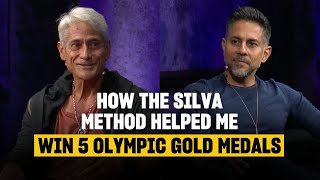
Olympic diver Greg Louganis talks with Vishen Lakhiani about winning four gold medals, hitting his head on the springboard at the 1988 Seoul Olympics and still taking gold, and how the Silva Method meditation practice shaped his resilience through adoption, abuse, and an HIV diagnosis.
Questions this video answers
Four gold medals and one silver medal.
The 1988 Seoul Olympics.
About six months before the Seoul 1988 Olympics (as stated in the interview).
Around 2017.
At Mindvalley University in Tallinn, Estonia, in 2023.
Chapters
In this episode of the mindvalley Show, I'm bringing you the American icon and diver, Greg Louganis. Greg is an anomaly. He is a man who, despite being HIV positive, went on to win an Olympic gold medal for diving.
In fact, he has four Olympic gold.
Medals and one silver medal. His story of overcoming hardship, from discrimination to hiv, to. To sexual abuse, and then going on to become an American Olympic icon is so powerful, Mario Lopez played him in a movie about his life. So I had Greg Luganis come and speak on stage at Mindvalley University in Tallinn, Estonia, in 2023. And our interview following that speech is what you're about to hear in this episode of the mindvalley Podcast. Stay tuned, because this is going to open your heart. It's going to empower you. It's going to give you new faith in yourself, and you're going to hear the incredible tale of this incredible man, Greg Luganis.
I want to make this conversation a little bit more intimate. Right?
The.
The talk that you delivered at Mindvalley is going to be available on the Mindvalley Talks YouTube channel. Hundreds of thousands of people are going to watch that. And there's so much information about you and your success. But today, I want to talk about the shit that you went through, right? Primarily that list of things being given up by your. By your birth parents, being being a gay man in a world where that can be highly unfriendly to people who are lgbtq, being raped by your partner, being diagnosed with hiv, and all of that stuff surely took a blow on you. I'd love for you to tell us about your life, Greg, and what you've been through.
Well, the biggest key of moving forward is forgiveness. Forgiveness. I mean, I have a lot of people, they don't understand, you know, well, how can you forgive your rapist? And, you know, and I've heard you say this many times, hurt people, Hurt people. You know, I learned that Jim was molested as a child by his stepfather. You know, so he was in a lot of pain. And also at that age, you don't feel like you have any control. So, you know, rape is not about a sexual act. It's about control. You know, and so, you know, learning that. And also the other thing that I learned in that process, sure, I was a victim. And then you move to Survivor, but beyond Survivor is forgiveness. It's just an event that happened, and I'm actually grateful to have had that event happen because it opens my heart to be able to be empathetic, to Somebody who's had a situation, a similar situation.
That's a pretty bold statement that you're grateful that you got raped.
Yeah, I mean, it was a violent act. It was scary, but I survived. I'm here. So it was an event that. That taught me a lot about myself, about people, you know, that I could, you know, I could forgive him, you know, because one of the meditations that I did, you know, bringing him back to his childhood, what his childhood may have been like, and. Yeah, I mean, I could forgive that.
Wow. You seem to be the king of bouncing back. You have bounced back from so many of these things. For example, in 1988, as this clip is about to show, you were at the Olympics in Seoul. You took your dive, hit your head on the diving ramp, and then you got back up.
Yeah.
And you did it again, and you won the gold medal. What is that in you?
You know, it was just a part of. It was my job. It's the way that I was trained. I mean, because I was a dancer, did acrobatics, gymnastics, all of that when we were having. Doing recitals. You know, if you. If I sprain my ankle, you wrap it up, get back, get out there, you know, so, you know, so I had practiced that so I could. The one thing in that situation, I only. Everybody says, you know, how'd you get over that? I didn't have time to get over it. I only had, like, 22 minutes for them to sew up my head and get back out there and do the next dive. And so I didn't have time to get over it. So I had to set it aside like it never happened, you know, and that was one of the things I remember so clearly is my coach, Ron o'. Brien. He said, look, you've got all these records. You don't have to get back out there. And, you know, knee jerk reaction is like, I don't want to give up without a fight.
Right.
And you got back up, and I got back up there.
Let's roll that clip.
Take a look at this. Yeah.
Yeah.
So taking off the board, I knew I was going to be close. And then I thought I was well past the board, and then all of a sudden I heard this big, hollow thud and I went crashing into the water. And I was like, what was that? And that's Dr. James Puffer sewing my head up and Dr. Ben Rubin hovering over, who were suturing up my head before the next dive. And also the other thing that was kind of a false narrative was that I bled in the pool.
Right. Because six months. Six months before this, you were diagnosed with hiv. Yeah.
Yeah. And so. But I mean, when you get an injury like that, you. You don't bleed right away.
Yeah.
So it was all the drama, the hype, you know, media. I just never corrected it, you know, so. But yeah, I mean, I, you know, I went to my coach and, you know, and I said, I don't want to give up without a fight. And so he said, look, I know that you lost all of your confidence, because when something like that happens, you lose all your confidence. Well, this was in prelims. So what happened was I'm going through prelims. Fortunately, it was prelims. I hit my head on the springboard on my reverse 2 1/2 pike. I had two more dives to get through the semifinals, and so I got through the next two dives. And then the following day, I had to repeat those dives all over again. Clean slate. And we competed. So that's how I was able to win, because after I hit my head on the board, I was, I think, in fifth place. I dropped down to fifth place, and then I thought I was out of the contest. I thought I saw zeros, and I thought, you know, I'm out of the contest. Ron. My coach, Ron o', Brien, sent somebody to check, and he said, you're in fifth place. What do you want to do? And I was like, okay, fifth place, that's still in the finals. But I did have to do those last two dives. And so I did my next dive, and it was funny because I was on the board, and I was terrified because I didn't know what was going to happen. It's going in the same direction. I don't know what I did, you know, as far as error. And so, you know, the last thought in my head was, okay, this is the Olympic Games. You can't hold back. And so I did my reverse one and a half with three and a half twists, and it was still too close. My coach said, jump it out, you know, because I had my reverse 3 1/2 after that.
Yeah. Let's take a look at the. At. What happened at the actual dive that won you the gold medal.
Of.
Of everything that you went through, of everything that you went through. What do you think was probably your biggest challenge?
You know, my biggest challenge actually was forgiving my. My birth mother, the mother who. My biological mother. I was really angry for a long time. I knew she didn't hold me, but she was also only 16, so I got to a place in my meditation work. I realized that she was only 16, and she couldn't give what she so desperately desired. And that was, you know, a hug. And so, I mean, I was just, you know, in the meditation, just weeping, crying, because I realized she was just a child.
Your birth father was Samoan, and your.
Birth mother was Swedish, Northern European. So Swedish and English and a whole mix, but I'm like, cut right in half. You know, it's a Polynesian, you know, so that's American Samoa, Tonga, New Zealand, Maori, and on my dad's side, and then Northern European on my mother's.
When did you forgive your birth mother? And how did that happen?
You know, I was doing a meditation over it. I was just. I was struggling. I was stuck. You know, I was like, what is going on? What is going on? Just asking myself, you know, what's. You know, what's. What's. What's happening? Because I know that there was, like, some anger there and frustration and, you know, and the feeling of abandonment. And so then, you know, I meditated on it. And then what came to the forefront was seeing my mother, because I did, I think, 2017, I think, is when I met my birth mother. So that's when I met her. I didn't. I didn't want to find her. I had no interest in finding her.
How did you guys.
Well, okay, so when I had my documentary back on board, it aired in. We were doing a screening in Hawaii, and my dad was there, and my half siblings, you know, were there. They've always been very supportive. And so I was there. I got wind that my biological father's last name is Lutu. So I heard that they were doing a Lutu family reunion the following year in Hawaii. And so I asked my half brother Malcolm. I said, you know, do you think it'd be okay if I came? And they go, oh, my God, if you talk about us, then we can talk about you. Because they were trying to respect my privacy. They were really very protective, right? And it was so sweet and wonderful. And so, you know, as time went on, I was like, oh, my God, I should find out if he is, in fact, my dad. And I was pretty confident. So I did ancestry.com DNA and found out that he was, in fact, my dad. But what I wasn't expecting is I got a message from this woman, said, look, I know who you are, and you came up as a leaf in my family tree. The only thing we can think of is that you might be my aunt's son. And she had a conversation with her, with her aunt, and she said. She reached back out to me, and she says, well, if you were conceived in Midway, born in San Diego, and your father's name is Fuvali Lutu, then she's my mom. So that's how I found.
Through Ancestry.com.
Yeah.
What was that like, meeting your mom?
That was hard, in a sense, because I had the best mom. I mean, I was so grateful.
Your adoptive mom.
Yeah. The mother who raised me, Frances Luganis, she was my rock. She was, you know, really my everything. And, you know, I loved her so much, and I didn't want to do anything that would disrespect her or I didn't want her to feel that I loved her any less or anything like that. But, yeah, Cindy reached out and said she'd like to meet me. She did have to have a conversation with her two children, her other children, John and Laurie. And so once she had the conversation with her, because I talked to John later. My half brother on my mother's side, he said that he remembers when he was 16, that his mother said that she had another son. And we grew up in the same area. I mean, they were in El Cajon. We were like, our paths had to have crossed, you know, because we're only three. Three years apart. And so, yeah, fascinating. But, yeah, I. I didn't want to find her, and I'm grateful. I. You know, I did, because I didn't realize how much anger I was hanging on to and resentment. And then, you know, after I met her, I, you know, I just realized in meditating on it that, you know, she was just a child and she couldn't hold me because she, you know, wanted so desperately.
Sorry, are you guys close now?
No, no, we're aware of each other. I did go to a few family functions. My niece, she got married, and I went to the wedding, and then my half brother got remarried, and I went to that wedding. It just kind of happened. But I liked. All the times that I've had conversations with my half brother have been really, really good. Cindy's in a care facility for mental. I think she has dementia or Alzheimer's.
And so you discovered this half brother, which is now part of your family?
Yeah.
That's beautiful.
Yeah. I mean, I feel closer to my paternal family. I spent Hawaii, you know, Christmas in Hawaii, you know, stayed with my. My half brother Malcolm. And it was really interesting because they. I'm a high chief. They named me High Chief Tamale. IFA Ayatomua is My chief name, high chief name. And, you know, they wanted to honor my family, and so they made me high chief. My biological father was there, and my brother was there. And it was interesting because I felt there was some tension between my brother, my half brother. There was something. And I realized in the Polynesian culture, everything is about the elder. It's about the elder. And I realized, oh, my God, I'm the elder. I mean, when I was raised, I was the baby. I know how to be the baby, you know, but I don't want to be the elder. Too much responsibility, you know? And so I went to Malcolm, and I said, malcolm, look, I know I'm older than you, but I'm looking to you as my elder, because I wasn't raised in this culture, you know? And then from that point on, it just turned. Our relationship turned around. He was like, okay, Greg, you know, this is how we're related. This is what we do. This is the family, this and that and that, you know? So he's explaining all of these things that I grew up in the Greek church.
Greg, what makes you.
I want you to tell us what.
Makes you happiest about life right now and what makes you saddest about life?
Wow. Okay. So, I mean, I get so much joy from my dogs, you know, that they are so much joy. G. My Hungarian Pumi, we're working towards potentially making world team in dog agility. And so I'm really excited about his progress. He's only two and a half, so, you know, we're both coming along, you know, because I competed in dog agility with my Jack Russells years and years ago, and I was away for 10 years, and now that I have G, I'm getting back in the swing of things, so that brings me joy. And probably what makes me the saddest is the whole issue of transgender. I don't know why. I don't know why all of a sudden I have all of these transgender friends. I mean, I did do a play in Chicago with Alexandra Billings, and she was transgender, and she's very open about her HIV status. So Larry Krame wrote Just say no. It was like the three of us, and we were comparing notes. Okay, what medications have you been on? And, you know, so kind of taking, you know, taking notes of our HIV care and then the conversations, this was the first transgender person that I've ever been exposed to. And just to hear the stories and for her to share herself and who she is, you know, it was. I just felt so blessed and so honored. And then I became friends on App Clubhouse and with Dr. Kate Stone, and she's transgender, and we just hit it off. She inspired me to go more plant based, you know, diet wise. And she says, oh, I've never rollerbladed. And she was in California. I didn't realize she was in California because she was born in England and she has this English accent. I just assumed she was in England.
And what makes you sad about this is how transgender people are misunderstood and how they're politicized.
Yeah. I mean, and all. Yeah, totally misunderstood, because we have been given this information. False information about transgender. The IOC came forward with, okay, to compete as a female, as an XY transitioned female, your testosterone level has to be such. Well, I had a conversation with Dr. Richard Schwab, who's a neuroscientist who studies sexual preference preferences and gender identity, and he explained to me how that happens, that sexual preferences and gender identity happens in, like, the first trimester of a pregnancy. And it's such a small percentage, but it's. You know, it's been so polarized and so much misinformation. And if you. You think that the ioc, all of that information is research, science based research. And it wasn't. It wasn't. And it's hurt a lot of people, you know, some transgender individuals. But when you have a belief, then it's hard to change, even if you do have the proper information. You know, it's logical that if you. With new information, that you have to change your beliefs. But beliefs are much more embedded in us than oftentimes who want to. We want to believe.
And this is why. One of the reasons why, I guess you are such an ardent LGBT activist.
Yeah, Yeah. I mean, and also, I mean, years ago, I mean, there was so much stigma surrounding hiv, so education is so important, you know, prevention, prevention, prevention, but also understanding, you know, because I've been to a lot of doctor's appointments with some young gay men who have seroconverted, and they're terrified. You know, they think it's a death sentence in their own minds, and I'll go with them to their doctor's appointment, you know, because I've been on just about every medication, so I can say, well, this is my experience with this medication, and, you know, and so that they can choose a protocol that would work for them and be proactive in their career.
What is the hardest part about living with hiv?
The hardest part? You know what? I take my meds in the morning and the evening and go about the business of Living, you know, it's just a part of who I am now. So I've come to terms with it and at peace with that.
Science has progressed to a point where. Where it's not a big issue anymore. Right. The death rate has completely plummeted. Now let's talk about your personal growth practices. I know you're an ardent meditator. I know that you've practiced the Silva method. You've also tried my meditation, the six phase. Tell us about that.
Well, it was so funny because I was going through your six phase meditation and I was like, oh my God, this is the stuff that, you know, I was doing as a kid. I didn't know that it was Jose Silva. I just had cassette tapes and a book. It must have been my dad's. I mean, I was probably 11 or 12. I was like, oh my God, this is the stuff that I've been doing. And it's so well put together and concise. I just love it.
How was creative visualization helping you as a child?
Well, I mean, I learned visualization so, so early. It was almost like reflex if I'm going into any situation. Because I also have social anxiety. I mean, I didn't have the normal socialization that other kids do. So people scare me. People scare me. And it's funny because my ex husband, if we went to a social gathering and I disappear, then he'd go to the host and say, do you have dogs? Where are they? And that's where I'd be. That's where I'd be.
And so growing up, you did a lot of different sports, right? Dancing and so on. But let's talk about the mental game. Like you mentioned your dad, you were getting access to these books and these cassette tapes and meditation from your dad. This was the Silver Method.
Yeah.
And what. Do you remember how you were using it? Because you mentioned creative visualization in your talk earlier. And Jose Silva kind of pioneered that field.
Right, right. Well, my interpretation, because, like I was. When I was three years old, that was my first performance on stage. I sang Dance with Me and did a little tap number. And so that was my interpretation. My teacher played the music and she. My instructions were to make, make the, the. The routine fluid. And she left the room, put the music on, left the room. And so my interpretation of that was, okay, imagine myself doing the routine fluid. It took four tries and I got it fluid. All the transitions, everything was there in time to the music. And then I found my teacher and I said, okay, made it fluid. And then she came Back into the studio room. And she increased the tempo so it was faster than what I was actually going to be performing. And she said, make it fluid. And the first time through, I made it fluid. And then she said, okay, you're ready. And then I had the performance that night, and it was so. It makes so much sense.
You've seen everything in your head.
Yeah, I could, you know, because a three year old's imagination is limitless.
Did you ever use this for Olympic training?
Oh, sure, I. I used it. Okay. So when I started doing the more difficult, high, higher degree of difficulty dives, back three and a half, reverse three and a half, inward three and a half, I started doing those. I knew that I had to get a lot of repetitions in before mastery. And so my coach, one training session, he just kept saying, do another one, do another one, do another one, do another one. And by the time I finished that workout, I got through the workout, I was in tears. I was just so upset because, you know, I felt like I couldn't do anything right. And my coach, Ron o', Brien, he said, no, no, no. I wanted you to do six apiece of your optional dives to get the numbers in. And I said, oh, my God, I was taking it so personally. And I said, if you want me to do six apiece of my difficult dives, my optional dives, then tell me the night before. Because what I could do is go through my mental preparation, my visualize, I can rehearse it and that number to be able to pace myself, to be able to be successful, because otherwise I was giving it my all. Giving it my all, giving it my all. And, and feeling like a failure, like I couldn't do anything right.
That's beautiful. Now, did you ever use this to overcome some of the unusual cards that life dealt you, say, for forgiveness or for healing?
Well, in my meditation, you know, like when I was forgiving my mother, realizing all she wanted to do is be held, you know, all she wanted is a hug. And that was a very visual experience in my meditation. So, yeah, I go by feeling sensation, but also visually what that looks like as well.
Yeah. There's interesting science coming out now that shows that forgiveness actually improves your athletic ability. Yeah, right. Like one. One Israeli study found that it improves endurance, and another one in, in, in Holland found that it improves your vertical jump.
Yeah.
So I wonder what it does for diving.
You know, it's just. I mean, forgiveness is key to joy. So it really. And, and I mean, talking about Jim, who raped me when I was Going through that process, and I was probably still in that mindset of Survivor. I, you know, you know, the visualization work that was so helpful is that, you know, as long as you're hanging on to a piece, a piece of Survivor, you're still hanging on to a piece of that victim, you know. And so through the sensations in my body that I was aware of, that's where I kind of discovered a lot of that stuff, you know, because the, you know, the meditation, you know, it's not only visual, you know, it's the sensations, it's the emotions. It's the emotions, you know, and it gives you the freedom to let go of that, you know, and crying, laughing, all of that is just a movement of energy.
So, Greg, what is your hope or wish for the world right now? Like, what if you could leave a.
Legacy or a message?
What would that be?
Leave a legacy? I think it's whatever it is, because that's a lofty question. It has to be rooted in kindness. I'm always asking myself before I say anything, is it kind? Because oftentimes things that come to us and before we spew it out, it's not kind. And when you practice that, sometimes I don't realize that it's happening and you side on the side of kindness. It really. It just becomes a part of who you are.
Right. I love that message.
That's actually a really beautiful thought.
Is it kind?
Yeah, you know, that and the other thing that my mother, Frances Luganis, who raised me, she always told me to make everywhere you go better because you were there. And you can do that in so many ways. Picking up a piece of trash, smiling at somebody at the grocery store. And that strikes a chord with me because I remember being in Malibu and feeling just so alone and depressed. And this woman smiled, smiled at me. She saw me and I was like, oh, my God. I mean, that totally changed my day. And the power of that, you know, or the power of touch, you know, those are powerful things that we can, you know, that we can utilize very easily and. And incorporate them in our lives as a practice.
That's a beautiful message, Greg. Greg, thank you so much for opening your heart and your soul with us over here and sharing your story. Thank you for watching this episode of the mindvalley Show. You can watch Greg's full talk on the mindvalley Talks channel. There's a link in the show notes. And if you want to discover more about the Silva method and creative visualization, the Silver Method now officially sits on Mindvalley the latest protocol from Jose Silva is now exclusively produced by Mindvalley. And because Jose Silva passed away in 1999, I am the current face of the Silva Method. You can get information that@mindvalley.com Silva mindvalley.com Silva thank you, Greg, for joining us.
Thank you, Vishen. I feel so blessed to be here and to finally meet you face to face.
Likewise. Right.
And you're such a beautiful person and I so appreciate everything you're doing.
Thank you, Greg. Yeah, thank you for joining us. Let's give it up for Greg Luganis.
By the way, many of you who watch that might be interested in actually being in the audience. So what you saw over there was Greg Luganis on stage at Mindvalley University. This is a really cool project that we do every year. So think of it as a university that is open for just three weeks. It happens in the beautiful medieval city of Tallin, Estonia. It's where I live and it's incredible here in the summer and thousands of people from all around the world descend to this city. And for three weeks, the most amazing speakers come and share their wisdom on stage. For three weeks, we have the most incredible parties, festivals. It is a full immersion, not just in learning, but in play, in fun, in music, in dance and in community. People come because you meet so many close friends. Check it out. It's@mindvalley.com you and it happens for the first three weeks of July in 2024 and every July, go to mindvalley.com you immerse yourself in this beautiful city of Tallinn, Estonia, and be part of this incredible mindvalley community and and learn from icons like Greg Louganis. Hundreds of the world's best speakers come and speak at this project because they want to add value to the community that comes together there. So check it out. Mindvalley.com you and the best part about it is if you have kids like I do, we have programs for kids. You basically learn with your children, even if they are as young as six, perhaps I'll see you there.
Sa.
More from Vishen




Brown Noise for Deep Focus and Concentration (Best with Headphones) | Gabriel Loynaz



Your Appointment With the Eternal | Guided Meditation with Michael Bernard Beckwith

