Ep #034 | How Jay Shetty Became the #1 Personality on Facebook
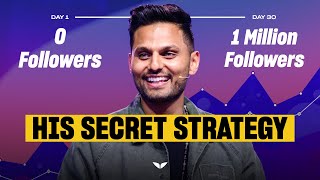
Jay Shetty went from living as a monk to becoming Facebook's top personality. He spent summers in a monastery from 18 to 22, then three years in an ashram before returning broke. His 2016 viral videos used timeless emotional stories, platform-specific lengths, and music-forward openings to build an audience that made him millions through speaking and brand deals.
Chapters
This episode that you're about to see of the Mindvalley show is an episode that in a deep way, changed my life. In fact, this episode could be the reason why we have a Mindvalley show in the first place. What you're seeing here is an interview I did with the legendary Jay Shetty back in 2018. Jay was speaking at one of our events. And what I often do at our Mindvalley events is I record interviews with many of our major speakers. Jay was an incredible speaker. You got to see this man on stage. This guy is a gem.
The most successful people in the world, healthy, wealthy, or wise, choose education over entertainment.
And it's no surprise that Jay Shetty, at that time was the most followed human being on Facebook. He had more followers than Barack Obama. The question was, how did he do it? Well, Jay Shetty is not just a former monk who turned a wisdom teacher, but. But he is an incredible storyteller, and he and his team know social media better than pretty much 99% of the people playing on social media today. This is how Jay was able to build such a massive brand to the point where today, this year, he gets to interview people such as Joe Biden, the president of the United States.
I couldn't be more honored. Thank you so much. Thank you. I'm glad you'd want to interview me. Absolutely.
So in this interview, I asked Jay to share with our audience how to get big on social media, because this gives you a reach to people who deeply care about you, your mission, and your product. Now, I mentioned that this interview with Jay changed my life. Well, I did this in June 2018, and back then, I was not really on social media. If you look back in those days, I was kind of awkward in front of the camera. I didn't know how to dress. I didn't have confidence in my ability to capture an audience. And after this interview, I actually sat down with Jay and I asked Jay, jay, well, how would I do it? I'm 40 years old. I am. I don't have your cool hair, your cool voice. I don't have your storytelling ability. And Jay said, vishen, you do it by just starting. And bit by bit by bit, you learn all of this. The beautiful thing about social media is the learning loop is fast. Every post you do, every message you get out, you learn instantly from comments from likes. And if you can pay attention to the learning and innovate, innovate, innovate. You can really go far. And now, five years later, I have over a million followers on Instagram. And my Instagram generates millions of dollars in revenue a year from people who follow me and then fall in love with my products and end up becoming a mindvalley member. So there's great utility here. This is not about becoming a social media influencer. This is about using one of the most useful tools of our time. YouTube, LinkedIn, Snapchat, TikTok, Instagram, Facebook. The ability to connect with an audience, the ability to build a following, the ability to get your message out. And if you're part of the mindvalley community, you're most likely an entrepreneur. And these abilities are going to help you go far. So enjoy this conversation with Jay Shetty. Unless you've been living under a rock for the past six months, you probably know who who this man is because his videos have gotten hundreds, almost a billion views.
2 billion.
My bad. His videos have gotten 2 billion views on Facebook and YouTube. And not only that, but Jay Shetty has become a viral sensation as a monk who provides the most beautiful poetic wisdom in the form of videos to people all across the world. But what people don't know about Jay is that Jay isn't doing this because he's some fancy marketing mind or whatever. Jay literally spent three years of his life in an ashram in India with monks. He is a living monk with just an incredible hairstyle and great fashion sense, but he is an actual monk who chose to go on video and help spread wisdom to the world. And Jay, what we want to talk about today is how you did it, because there are so many people out there who have wisdom that they want to share, who have these enlightened ideas, and they are teachers, they are healers, they are coaches, just like you once were. I'd love for you to share a little bit about your story and maybe offer some advice to them on how they could help get their message across.
Absolutely. First of all, I just want to say thank you, Vishen, for having me here. I'm so grateful and honored. Always been an admirer of your work. So it's fantastic to be able to have this conversation with you. Love the platform at mindvalley and a fest that you've created. It's been a privilege to be a part of. And yeah, Vishen's been very kind and it's been as overwhelming and humbling for me to see the success that the work has gained because it didn't come from a place of strategy, even though I do see myself as a strategic mind. It didn't start with strategy. It didn't Start with a business idea. It started and still is very much from the heart. And you asked for a bit of my story to kind of track back.
So let's go there because your story is astounding.
Thank you. Well, you're very kind. So I grew up, born and raised in London. And I, at the age of 18, was introduced to a monk who came to speak at my business school. And when he came to speak, I at that time was fascinated with entrepreneurs, CEOs, celebrities, athletes. But I'd never been blown away as much as I was when I heard this monk speak. He was speaking about the need for service, the need for sacrifice, the need for using all the skills and abilities you have for other people. And he was doing it, he was living it. He wasn't just talking about it. So I then did what I call my first AB test. I spent every summer holidays for the next four years, half of it working in investment banking, consulting firms, doing internships. So I went from bars to steakhouses, wearing fancy suits to spending the second half of every summer living as a monk in India. And so I would literally split up all my holidays from college and university in that fashion.
You were living as a monk in India for part of the summer. And how, how old were you?
I was 18 to 22. So for those four years, I did it every summer.
Now, what were you doing in India?
So I would meditate, we would help build villages, we would be a part of doing food distribution work. It would be a mix of meditation and philanthropy work.
I see.
So it was me and it wasn't. I wasn't out there for long. I'd be there for a month and my internship would be like three months. So I was using my holidays in, in that fashion. And then when it came to age 22, I decided that I'd fallen in love with the life of being a monk so much.
Because you split tested?
I split tested. Exactly. I split test. My first ever non digital split test. And it works, right? It works. And I was so convinced that the life I was getting to build as a monk was so much more meaningful and so much more fulfilling on a personal level and an impact level. And I felt there's nowhere in the world that I'm going to be able to do this, to grow myself and grow others. And I hadn't yet seen another option. So I went with the option that I had which was best. So I did that for three years, had an incredible experience, and then three years on, my teacher asked me to leave so that I could share what I'd learned. And it was almost like that kind of breakup situation where he was like, it's not you, it's me. You know, it literally felt like a divorce.
So this teacher was like the head monk?
Totally.
Who told you you had to leave the ashram to go back to the real world and teach?
Yeah, absolutely. Absolutely that. And it was, quite frankly, it felt like a divorce. It quite frankly, felt like the most frightening thing ever, because I had kind of envisioned in my life that I could be a monk for the rest of my life. This was it. And there was no going back. And I'd only been there for three years. So my family and everyone had just acclimatized to the point that I was a monk. And now all of a sudden, I was going back. So it was that awkward failure moment. You know, it's almost like everyone's like, well, why are you back? Did you fail at being a monk? Of all things to fail at? And it felt like that. It genuinely felt like a failure. It's the closest I've ever been to depression to be feeling like, wow, that just didn't go right or how I planned it to. So I come back, I have no money. I'm in debt for my degree. Luckily, I studied in London and not the US so it wasn't too bad. But it was about $25,000. I moved back in with my parents, and so I come back from India and. And I'm in debt, probably about $25,000, 18,000 pounds, roughly. And I moved back in my parents, and literally no company in the world wants to hire me because my resume reads monk for the last three years, and no one wants to hire a monk because they don't know what your transferable skills are. So I turned down corporate job offers before I left, and none of those companies would take me back. And I was thinking, well, I will need to make money. I'll need to have a normal life now. I need to figure this out. And almost by chance, what happened is I always wanted to share what I'd learned with companies as a monk. But now here I was, not as a monk externally, but all my friends now feeling really stressed out and having pressure and strain in their corporate careers and saying, jay, can you come and teach us what you learned as a monk? You seem really calm. You seem like you've got your stuff together. Can you come and share that with us? So almost by chance, I started going into these large organizations and. And sharing these messages. I'd been sharing them for years, at universities and schools and with people. As a monk, I used to teach every single day, but this was the first time I was really doing it in the corporate sense. And things were great. CEOs, executives all wanted private coaching. And this is the time when mindfulness and these things were just about on the rise. We're talking about like four or five years ago now. It's somewhat trending, but, you know, four or five years ago, these things weren't in mainstream society then. This is the big part. And that's why social media, this is where it really kicks in. I was looking at what I was getting to do and I was feeling this needs to scale, this needs to hit every person on the planet. I read a study that said more kids have access to a smartphone than a toothbrush or clean water. And when I read that, I thought, well, if they have that, then the smartphone is the only way to reach every kid on the planet. Especially with the fact that social media was free. The only problem was I yet did not have a social media account. So the truth is, until 2014, I had no social media account. I never joined Facebook. I never joined Facebook, never joined Instagram. I missed the YouTube and Instagram rise because I was a monk at that time, 2010 to 2013. And I completely missed the, I stayed off of Facebook at the time. And then I had a LinkedIn account. I had a LinkedIn account because obviously I had a pride to the corporate world. So I had a LinkedIn account, but I had no social media presence. And I was looking at this tour. I thought, this is fascinating. I, I ended up applying for a job at Accenture. And Accenture was running a program when I joined which said that the top 20 people in the new cohort, that was 1,000, would be selected based on their performance to be trained by Silicon Valley experts on social media. And so I didn't know that social media was going to be my platform. I was just fascinated by A, a challenge, B, it was people related. And I've always loved people skills. I studied behavioral science. So my fascination has always been the human mind and human behavior. So I thought to myself, I'm going to do that. So I ended up getting into the top 20, getting into the top number one, and through self study, coaching, mentorship at Accenture, became the top social media person at Accenture globally. And for those of you who know Accenture, Accenture has 400,000 people in it. So then my role, which I invented myself at the company is I trained every exec on their personal brand, their LinkedIn profile, their Twitter, their bio, often even wrote speeches and then ended up doing that for our clients as well. So I spent two years completely immersed in the analytics and data behind social media and how to effectively. What I call more than a technique and tactic is how to extrapolate someone's unique voice and create messaging around it so that they can thrive online. And that's what's different about knowing when to post and what time to post versus being able to really extrapolate and uncover someone's unique voice.
You're right. So many people think it's about the Facebook hacks, but really it's about that unique voice. And what I love about the story is if you listen carefully to what Jay is saying, he sounds like an overnight success. From what I know, your video started going viral in 2016. You got selected by Arianna Huffington to be the face of wellness for the Huffington Post. Right. And we want to come to that later because it's been relatively a short amount of time, what, two and a half years? And you're now at 10 million fans. But it's not two and a half years because you had to put in three years as a monk in India, plus those Multiple summers from 18 to 22, and you put in how many years at Accenture?
Two.
Two years at Accenture. So that's a lot of years of stuff and dedication. And that's what I wanted you guys to understand. It's not about being an overnight success. It's about putting in the hours, logging in the effort to ensure that you're going out there with a right message.
Yeah. Thank you for highlighting that, Vishen. I'm grateful that teachers like yourself and guides like yourself can highlight that for others because often it's hard to say yourself. And I've loved that rule forever. Malcolm Gladwell has the 10,000 hour rule, and I couldn't agree with it more. If you've done something for 10,000 hours, effectively, obviously by learning growth, it allows you to take that to a global stage.
And you told me something very interesting. These videos of yours, which are getting tens of millions of views, they were not scripted from a marketing point of view. They were insights you were taking down as a monk in an ashram in India years ago.
Right? Yeah. Yeah, absolutely. So I used to sit with students every night when I lived as a monk. India and Europe, we'd travel as well when we were teaching, and I would often sit with students for three years. I gave about five seminars a week as a Monk. And each of the seminars was like three hours. It wasn't called a seminar. It didn't have beautiful slides and projectors. But I would sit with students about 30 to 50, and we would try and work through their challenges and problems.
And these were students in India?
Yes.
I'm teaching in English, in Hindi.
Always in English. Yeah. I'm not. So my Hindi's not so great. It's only Bollywood level. But I'd be. And across Europe, too. So we'd go to universities in England, we'd go to universities across Scandinavia, and we'd go to universities in India, and we'd sit with students and we'd work through their challenges. So I did that for three hours, literally every day. And when you sit with someone's pain for so long, it's so easy to find patterns and to see where human behavior is letting people down and to see the challenges that come up. And so a lot of my school scripts today for videos were literally eight years ago, me as a monk, writing notes and reflections, which I then turned into videos. And it's been beautiful. And that's what I've been. My biggest focus with videos, I focused on creating timeless content. The focus on each video is you should be able to watch it in 10 years and it should still make sense. It should have that timelessness. It should not become a trend or a fad. It should not be a video that isn't eternally relevant, because I believe wisdom is timeless.
Now tell us what happened after Accenture.
Yeah, absolutely. So I got to a point where I had an incredible career at Accenture. I work very closely with them now, and they're incredible people. And I really wanted to grow to the next stage and see what I could do if I was able to use what I felt were my talents of bringing my media and my monk hat together. And I thought, I need to try this out for myself. So what happened is that at the beginning of 2016, I remember speaking to one of my videographer friends over Christmas, and we said, hey. He was just like, you know all that stuff you talk about, we need to go make some video. And I was like, yeah, let's just go out. So we went out. I believe it was New Year's Eve on New Year's Day. I think it was New Year's Day. It was New Year's Day or New Year's Eve, I can't remember, but it's New Year's Day, and it was empty on the streets of London. And the best thing was, I think it was New Year's Day because people must have been really hungover and no one was out on the streets. And we got out at like 8am and we got to shoot all across London in places I'm sure you need a permit for. But we had no permit, no plan. We literally went out to these stunning locations. So we've got the backdrop of London Bridge, we've got the backdrop of St. Paul's Cathedral. We're like sitting on a roof in London and no one's in our way because no one's on the streets. And we shoot four videos. And so 2016, I started to launch these videos. So what I was doing at that time is that I was coaching companies, I was working with individuals and. But I always had this fascination with how do you reach every person on the planet? See, the people that do a course will be few. The people that do a program will be few. If you're one of those people that's chosen to do that, that's incredible. That's amazing. I truly value people who have that desire for self growth. But you know this and I know this. We also need to meet everyone who doesn't think about self growth, which I think Mindvalley does such a great job of because it is so social, it is so entertaining, it is so fun, which allows more people to find it accessible. So, anyway, I left Accenture, started up my own. I was doing my coaching and then I was trying to launch these videos and they were doing okay on YouTube and at first I thought the views were going up and so I was really excited. But then I realized it was just because I was excitedly pressing refresh. I was refreshing my own videos and the views would go up by a few and they were doing okay.
And these original four videos, it'll be so fascinating to see them. They are on what YouTube channel?
They're on my YouTube channel. So if you type in Jay Shetty and literally go back to the earliest video, they're still there. They're still there.
Yeah.
They're not deleted.
And what happened next?
So what happened is that in three months time, it was about February, March, I was trying to put my videos out to absolutely everyone on Twitter. Actually, I want to tell you a story. Before I didn't tell this, but I want to tell you this, what happened before all of this, which, yeah, I can say this now. This is while I was at Accenture. I was pitching myself to every media company saying, I want to make videos before I made a video. And I was trying to Get a role as a video journalist or a video producer at every major company. I applied to Business Insider, Bloomberg, Huffington Post, Inc. Entrepreneur, Fast Company, and I got rejected for all of them before even an interview. So I got rejected at resume level or CV level because I had no media degree, I had no journalism degree, and I had no background in video making. And these were jobs that were like a quarter of what I made at Accenture. And I was ready to shift to a quarter of the salary to see if it worked, because I was like, if I get in, I'm sure I can work my way up. So I was applying to all these companies, and literally, I've got the emails, just rejection after rejection after rejection. Not even an interview. And I just wanted to get in front of someone. So then I found out a friend of a friend who was the chief political editor at the time at a big company. And I got in touch with him. I gave him a call. I said, hey, man, I'm so passionate. I'm ready to do this. I really believe that I can. I can do something with video and we can make a difference through these ideas I have. And he said to me, how old are you? And I said, 28. He said, you're too old. Everyone in this game is like, 21 right now. He said, everyone trying to do this is 21. You're seven years out the game. He said, oh, and are you married? I said, I'm about to get married. I was going to get married that year. And he said, well, man, you're getting married. You need to buy a house, you need to settle down. Like, forget about it. I'll give you a blog. He was like, just start a blog. I was like, okay. Then I saw Jon Snow, who's one of the most famous BBC Channel 4 correspondents in the UK. Very, very famous man. Covered some incredible things. I saw him on his bike cycling around London. So I ran after him and I said, john, literally, I'll be your apprentice. I don't want any money. Whatever it takes. I want to learn from you. Take me on. And he gave me his card and said, go get a degree in media and journalism and come back in a year. Like, go get a Masters. I was like, come on, you know, I don't have time to go get a Master's. I want this now. Then I end up at a ethnic. A BBC Ethnic minorities TV training day. A TV training day to test whether I had the skills, because I started to doubt. I was like, maybe I just don't have it. Maybe this isn't happening. And I get great feedback and everyone's just like, oh, no, you're naturally good. You should do this. It's your skill set. And so now I'm excited again and I'm like, okay, so do you have a job at the BBC? Like, is there a break I can have? And they're like, no, there's not many jobs in media at the moment. It's not a good time. And they were like, you should start a YouTube channel. And I had the biggest limiting belief, and I had it strongly. I was like, that works for like one in a million people. And I said that to them. I said, that works for people like Justin Bieber and no one else, because it did work for Justin Bieber. And they were like, just start a YouTube channel. And so I'd basically exhausted all options apart from starting a YouTube channel. I'd applied to every company on the Sun I'd networked with, with every media person that I could get through to, and none of them would give me a break. So before I started a YouTube channel, I did all of that while I was still employed by Accenture to try and get that break.
And then you started the YouTube channel with those four videos?
Yes.
When did that start taking off? Because that's two and a half years ago. That's 2016. Wow.
So she gets shown these videos at Davos. Her Exec team at HuffPost at the time was coming to London after Davos. So her team calls me up and says, hey, we've just seen your videos. We absolutely love them. We'd love to meet you. So I meet them at the HuffPost offices in the UK. Two of my good friends now, Danny Hsieh and Dan Katz, love both of them. They're like Ariana's right hand and left hand men. They're incredible and really good friends now. And I meet them and I literally sit down with them and they're like, we really like your videos. We like your content. And I'm like, yeah, you should offer me a job. And I went in there, super bold and super confident, like, I want something out of this. And they said, well, look, we're gonna share your videos on our Facebook page and we just want to see how it goes. No money involved, no job, no contract, no nothing. We're gonna take your four videos and we're gonna put them on our channels and see how it goes. So it took me a month of writing to Danny Hsieh every single day for him to actually get my videos up So I bugged Danny every day.
My God, you are persistent.
I'm persistent. I bugged him every single day. And I said, danny, you promised me that you're going to share my videos. When are you going to share my videos? Finally, after a month, we released the video. The first one goes out. It does a million views in a week. It was good. It did a million views in a week. My first ever video is called there's no Such thing as an overnight Success.
My second video, inappropriate title.
I know. That was my first video. And it's all about the most successful people in the world and how we just don't see their backstory. Then the second video was called Changing the World Starts with you. And that video did a million in 24 hours. So the first one did a million in a week. The second one, a million 24 hours. That video then did 40 million views in, like, two to three weeks. And all of a sudden, overnight, I was getting book deals offered, I was getting invited to speak on stage, I was getting a ton of messages flying through, but this was all on the HuffPost platform.
You became the face of. Of the HuffPost Wellness Channel.
Not then, not then. And then. So they tested the last two videos. So in total, that series did about 100 million views.
Amazing.
And that was Ariana going, okay. So then Ariana called me up personally and said, I feel like I invented you. You say everything that invented in the sense of I embodied all the things that she believed in, and she felt that everything that I talked about was deeply valuable to her. And then they offered me to be a senior host and producer for the HuffPost and Run HuffPost Rise, which was all about, well, being and about pushing out this message. So then we did a daily live show, which I produced and created, called Follow the Reader, where every single day I interviewed leading experts in neuroscience, psychology, philosophy, the brain, healthcare, environment, ecology, whatever it may have been. And every day for six months, I went live on Facebook every single day for an hour.
One hour live video.
One hour live video. So we interviewed everyone from Deepak Chopra to Gabby Bernstein to Russell Simmons.
And this is the rise of Jay Shetty. Yeah, Short two and a half years.
Absolutely. It was a huge thanks to Ariana bringing me over to New York.
The question, though, is, what did you find that was unique about your video? Because surely with a degree in behavioral science, there must be certain things that you notice are going on in your video that you could share as advice for other people who wanted to make their videos take off.
Yeah, absolutely. I think one of the biggest things I see is finding the element in which you perform the best. What I mean by that is some people are phenomenal on stage. They're not made to be in front of camera. Some people and clients that I work with who are influencers, some people are phenomenal. I'll give an example. Like Gary Vaynerchuk. He's so great when he's being watched. Like, he's in a conversation and you're documenting that, and his raw conversation is more exciting. And then another format you'd see him in. If Gary just talked directly to camera, it may not have the same impact. And so everyone has their unique element in which they thrive in. In front of camera. And what I see is everyone's trying to sound and act and be like other people rather than figure out. So my style that I invented was me thinking out loud, rhythmically about life. It's almost me philosophizing to myself and asking rhetorical questions. I. I rarely say you in the video. I say us and we. I'm never saying you and me. I'm completely talking about. As if I'm just thinking out loud about the biggest topics in the world, because that's how I think them through in my head. So I was able to find that style that I think allowed people something new and my biggest vision. And this is why everyone should have the feeling they want. You should know the feeling you want people to have after they watch your video. So mine was very clear from the start. My feeling was people should want to share it with their friend and say, we were just talking about this.
Oh, wow.
Right.
I noticed that about your videos. Right.
Yeah. So that was. It was always sculpted because I believe people have deep conversations in private. I believe people have meaningful conversations in private. So I wanted to create content that deeply connected with the conversations people are having.
And.
And I wanted them to feel a sense of belonging when they saw my videos, that they were not the weird person in the room who's having a deep conversation at midnight, that it was very normal that there were more people out there who felt the way they do about life.
Is that how you choose your subject matter?
Absolutely.
You ask yourself, what are people talking about in their bedrooms that isn't being voiced?
Totally. Exactly that. What are people worrying about? What are people needing? What are people dreaming about that they only share in private conversations?
And how long does it take you to script a video?
So script. My scripting process is two different styles. One style is if I'm meditating on an idea. And I feel it's just colossal in the sense that it's a big theme. So I did a video a couple of weeks ago on time. Time is a big theme in the sense that it's like a universal. Whereas something like Tinder or a breakup is a very specific thing. Time is a universal theme. If I have a theme like time, I just sit and think about that theme for like a month or two months. And what I'll do is I'll have a conversation with someone like you, Vishen, and you'll say something phenomenal about time, as you would. And I would write that down. And then I would read a scientific study and I'd write that down what it says about time. And then I'd have another conversation with a friend, and I'd write about time. I'd look back and think, what did I learn as a monk about time? And I'd write that down. So one of my creative processes is almost like a month of collecting research and thought around a subject and randomly. Not in the sense that every week I'm reading an article for it. I'm just looking for it in everything I'm doing. So I'll spend a month just thinking about time, and I'll look at that whole month from the lens of time.
And so at any given time, you probably have multiple videos going through that. That evolutionary stage.
Absolutely.
As you're adding notes to it.
Absolutely.
And then do you script it out yourself? Are you winging it when you're in front of the camera? Are you using bullets or is it memorized?
It's both. So what I'll do is I'll usually be on a plane and I'll be writing notes on my phone and just like, okay, this sounds good. This sounds good. And I'll piece it with this, and I'll piece it with that. And then what I do on the day is that I learn page by page, and then I'll freestyle it. So I'm not tied. I'm not tied to the words I say. I'm tied to people making feel it, because I'm so tied by what someone feels after a video, not what someone learns after a video.
And that's a really key point. It's about what the person feels. I like that. Now, is this a way. Is there an ideal length of video for communication on a medium like Facebook?
Absolutely. And that changes. So last year, this time, the ideal Facebook length was one minute, and now the ideal Facebook length is three minutes. So the point is that that's constantly changing with the algorithm. So you have to look out for that. So right now, if you're making one minute videos, it's just not gonna fly. You'll get very less views. Because what the algorithm is currently doing is that it's giving more preference to those who watch a video for longer. So if someone watches your one minute video for 10 seconds, it's different for someone watching your three minute video for that same amount of time. So if people are watching that video three minutes for a longer period of time, you're gonna get more views.
And I believe on Facebook a view is counted as someone who's watched the video for 10 seconds, correct?
Absolutely.
Now, is there a format so most of your videos then are three minutes?
Yes, at the moment. At the moment. And that will change.
And I believe Facebook is your primary way of getting an audience.
Absolutely.
Now, do you have your videos on Facebook and YouTube in a different style to leverage each platform's method?
Yeah, absolutely. So what I've seen with YouTube and Facebook is that the people who rose on YouTube primarily did it before 2010 even. They started very early, 2013 at the latest. I came late to the party. So when I. What I saw on YouTube is that it was so much harder to get traction because you can't share as easily on YouTube. YouTube already already had. It has its prominent people and it's quite happy there. So it's quite hard to break in. I see very few people break in on YouTube yearly, whereas Facebook is kind of at its growth curve, period. It's like at that point where you can grow and have acceleration. So this is a mistake I think people make. Now we see YouTubers on the Forbes list and we go, oh, I think I need to be a YouTuber. But what you forget is that YouTube has been making YouTube videos. A lot of my friends are successful YouTubers. They've been doing it for 10 years, whereas Facebook's at the beginning of that journey. So my recommendation to new creators is focus on Facebook and Instagram and then recreate for YouTube, ideally at a longer length. So YouTube's winning at five to seven minutes.
I see.
So if you haven't. So if I. If, for example, we're doing this interview, it's. If I was to post on Facebook, I'd get three minutes of the best, and if I was putting it on YouTube, I'd put five to seven minutes.
Seven minutes. Now, did you find that there's a particular style of starting the video and ending the video?
Yeah. So one of the things I Found recently that I've loved playing around with is that music is. And this all comes back to feeling. See, I have this belief that we don't change and transform because of science. We change because of story. Science informs, but story transforms. We see that every cigarette packet in the world tells you not to smoke. But data does not stop you from smoking. When you lose your friend to smoking, when you lose your friend to cancer, when you lose a mum or a loved one to throat cancer, whatever it may be that stops you from smoking. So these videos have to be stories to really penetrate human emotion, to really connect with people. Hence, starting a video with music allows someone to be gradually entered in and allows you to put your message forward. So what we do is we make sure that all of the videos currently start with music as opposed to voice. The second thing is that I feel that everyone wants to be in front of the camera. It's really important for creators to realize whether they do have a strength in front of the camera or whether their strength is behind. I'll give you an example. One of my friends, whenever he makes a video and he's in the video, it doesn't get a lot of views. When he directs a video and produces it, but he's not in the video, it gets millions of views. But he loves being in front of camera and he can't, like, he can't let go of that. And my advice is play to your strength, play to your elements. So never start a video with you on camera because that can always completely push an audience away. If you don't look like a demographic people want to watch. If you feel like people may shut it off or you're speaking about a topic that people may judge. I was working with the author recently. She was speaking about a very sensitive issue. Her worry was people are going to think, oh, I'm a. I'm a, you know, a good looking woman with a privileged background and if they hear me talk about this stuff, then they'll switch off. So we created that video for her completely without her facing it until the end. And that video has 8 million views. And so my point being that you've got to really think about how to start and end. And the ending is super important because you want to leave a message that people feel that they want to share. The ending has to be something people feel compelled to pass on. And so you've got to end with a piece of wisdom, advice that penetrates through the whole video and almost encapsulates the whole video so that people feel that they can share.
So can you give an example of that?
Yeah, sure. So I just, I was just on stage and I did something special which I decided only to do this morning. We did a live Jay Shetty video on stage. So we had moving imagery, we had the lights down, and I performed a short video.
And so that was filmed.
That was filmed.
Did that go on any of your social media platforms?
No, no, no, not yet. No, no. It's super special. It's just for the mind value audience. But we can figure out, we can figure out what to do with it. I ended it with this. So this whole conference is about longevity.
Yeah.
And I ended with the quote that I started my presentation with yesterday that there are two types of longevity. One is when you add years to your life, and the other is when you add life to your years. That completely summarizes my philosophy of longevity. Right. And so when a video is able to do that, at the end you're only helping someone else press share because that message resonates, it hits, it lands just as you would in a presentation or a keynote.
So in summary, you start with music. You don't show your face till around 10 or 11 seconds into the video.
Absolutely.
And you end with a key message that encapsulates the entire video. Now, do you ask people to follow you? Do you ask people to share?
Yeah, I'm very open to asking people for support. I'll give you this. This is my number one strategy that I highly recommend. If you're starting out as a creator, find out. Write down a list of everyone in the world you believe actually loves you. Right. Your mom, your dad, your friends, whoever they are. I had a list of 25 people when I first started making video that I believe really loved me. I set up a WhatsApp group with those 25 people. I asked, begged and pleaded all of those 25 people to share everything and like everything that I did. Right. True story. I still have that group today. And all those people, for the first three months, they liked every video I put out. They liked every post I put out. They shared every post I put out. And that group has gone from 25 to 250 to 2005. You know, not that physically that I have it anymore, but it's okay to ask. If, see, we're so busy supporting all the people that we don't know, we might as well support the people that we do know. And so I feel no shame if I'm. And I think this is the key. If you're expecting Your friends to share stuff. You expect anyone to share stuff. Make good quality content, produce it well. Put effort into it. Don't expect Tom to share a random video you made on your phone.
I love your message about ensuring that it's not about that. It's the emotion of the video that you're primarily concerned with. It's not really nailing the script. You kind of have a sense of the script, but it's that emotion and then wrapping up with a statement that encapsulates the entire video that makes people want to share.
Yeah, it makes it easier. So there's a beautiful quote by Albert Einstein where he said that if you can't explain something, simply you don't understand it well enough. And so that last statement, your aim is to explain the whole video in one sentence. And if you can't explain the whole video in one sentence, no one's going to know what that video was about. Right. And you're spot on. It's all about emotion.
Now, do you write that sentence on the video? Is there text involved?
No. So we use visuals far more than text on videos. I use visuals because I think visuals convey more feeling and emotion. I build many stories and many movies, movies with actors. We get people playing the roles that I'm describing because I just believe that we all see people more than words. Right. More people do audiobooks. Now imagine if we had visual books, which I'm excited about, versus just reading. So I think. And then you see the rise of Twitter. Twitter, I mean, it's a giant. But Twitter hasn't competed with usage in the same way as Facebook and Instagram because it's 10 text versus visual. And that's a complete example of human behavior. To show you that despite Twitter being an incredible network that I love, it doesn't have the same user base because more people are visual thinkers. So I think it's important for people to go as visual as possible.
That's beautiful. Stepping back here just for a quick break and an announcement. Now, if you're really enjoying this interview with Jay Shetty right now, I want to encourage you to also sign up for Mindvalley's social media site this December 8, 9 and 10 live from Amsterdam, we'll be bringing some of the greatest social media trainers on stage to teach social media. And I think you're going to have an incredible time at this summit. It's completely free. All you got to do is sign up. It's about 12 hours of the most incredible trainings on social media. And at the summit, you will also learn about Mindvalley's new Social Media Mastery which is a six month micro degree program that turns you into a social media master. Puts you in the top 1% of everyone using social media. We've brought in some of the greatest social media teachers and put together an incredible six month curriculum. The curriculum will be announced at Social Media Summit, but Social Media Summit itself is completely free. All you gotta do is follow this URL to sign up. Put in your email address and you'll get a email with the link so that you can access and watch this summit. 12 hours free training, completely on zoom. Back to the interview now. Something happened to you. You said in the last three months you got 10 million new fans. You went from around 2 million fans to what? 12? 12 million. That's insane. I've never seen that happen to anyone. I know what happened there, what caused that sudden spike.
So a few things happened last year in December. So last year I spent a lot of time, which I think is very important for people watching here. I spent a lot of time building the foundations of my business because I believe that as a creative, you have. You're torn. And studies show this. You can't be creative and logical at the same time. If you want to be effectively creative, you need to be immersed. If you want to be logical, you want to be immersed. I said to myself, for one year I'm going to take a break from what I love to build stuff so that then I can build what I love forever. So 2017, I said to myself, was the year of 2016. I built a brand by mistake, right? In the sense of mistake, in the sense that I didn't build a brand by mistake. My videos are very thematic, they look the same. But the growth I received in 2016 thanks to Arianna, HuffPost, etc. I didn't expect that. It was beautiful that it happened. That was 2016, 2017. I said to myself, I need to build a business around this because otherwise I'm just gonna be one of those guys who's making videos and doesn't know what I'm doing in my life or I'm running around saying yes to every deal that comes. And I didn't want to be one of those people. I put my strategy consulting hat on, figured out how I was going to create a lifestyle that allowed me to be creative. So I figured out how to monetize my head so that I can make content from my heart. That was always my vision. All I want to do is think, learn and teach like that's what gets me alive. So how do I create a life that allows me to do that? So 2017, I focused onto that. I made very few videos. The videos I made did well. Like, very well. I made these two relationship videos that did 100 million views total. So they did huge. And that was just 2,50 million each. And I made a couple of other videos, but I was focused on business. Then December 2017, I spent a month and I said, I'm just gonna be creative this month. I'm gonna write scripts, I'm gonna get immersed, I'm gonna focus on content. And so I spent a whole month of December just focusing on writing scripts, thinking, being creative, looking at poetry, writing again, thinking again, video ideas. And in January this year, I was in LA and we went and created all these videos. And I committed to myself that this would be the year of creation. This would be the year of video. This is the year I get to live from my heart again and focusing on giving and serving through my content. So I committed to making three videos a week, and I committed to taking it a step up. Up till this year, we'd consistently mostly used stock footage and footage that we bought and found from other places. This year I said to myself, I'm not using stock footage. We're going to shoot everything that exists in the video. We're going to take the production up to a higher level. We're going to get better angles, we're going to shoot things from multiple layers. We're going to storyboard far more. I need to feel creatively challenged. I get bored of not challenging myself. And I love flow at being your skills and your challenge meeting. So I felt that I hadn't yet challenged myself and my skills weren't growing. So I wanted that this year. And so I went out and I made these videos that I've been meditating on for a while. And in my opinion, they were some of the. They were videos that I like watching, which is a good test because you can get bored of your own stuff. There were some of the best videos I made, because they were so. One video that we launched with was called we're the Generation that Doesn't Want Relationships. And that video, I mean, it's not even the most. It has 70 million views. It's not the most we've had on a video, but it's one of my favorite videos because it's poetic, it's rhythmic, I'm totally in flow. Yeah, it's one of my favorite videos that we've made. And so the difference this year was I got to be completely creative. I think too many entrepreneurs try to do business and creation at the same time. It's never worked for me. I phase them out. I block them out. I also block create content. So I'm unique in the sense that I do not make videos weekly. I make videos in blocks. I spent a whole month at the beginning of the year making videos, and. And that meant I didn't have to make videos for the next two months.
Oh, I see. Now, I noticed you release three videos a week. Are they all of a similar type?
No, they're different. They're different. So one is what I call thematic blockbuster video, which is meant to be, like, me in my element.
With the original footage.
With the original footage, really high production, et cetera. Those are the ones that I get super excited about. Then I have one which is more vulnerable. So it's like a vlog. It's me telling a personal story, and it's me opening up. And that I started doing last year because I wanted my audience to get to know me rather than me just telling stories of others or other situations. So I do one of those a week, those vlogs, and they do extremely well. And the third one is like a follow J. So it's like, even we've been making some here where I'm walking around discussing, and it's my thoughts laid over footage of me doing daily activities. So it again, gives a more snapshot, intimate version of me because I want to get to know people.
So let's talk about the vulnerable videos. What's going on there? What are you doing in those videos? Vulnerable videos?
I'm really letting people into my mind and my challenges. So I made a video called why Meditation Made Me a Bad Person. And in that video, I talk about how when I first started meditating, actually, I felt more greedy, more angry, more envious, more lusty, and more proud than I ever have. Because what meditation really does is show you who you've become. And you know that when meditation first puts a spotlight and you're like, oh. Oh, my God. Like, I didn't realize I had all this pollution in me. And so what I'm doing in that video is opening up to the fact that I'm not perfect. I don't want people to watch my videos and go, jay's perfect. Jay has a perfect life. Jay lives perfectly. I'm okay with people recognizing it's just me. Yeah, I make mistakes. I'm human, too.
And in these videos, are you doing the Elaborate filming or is it just you facing the camera?
It's literally me with my bookshelf facing the camera.
Wow.
So the bookshelf is arranged with my favorite books in. So you have Steve Jobs biography. You've got a bit of Elon Musk in there, but yeah, it's my bookshelf and me talking to Ken.
And the Follow J videos.
Yes.
What do they look like?
The Follow J videos are imagine. So if you look at Gary Vee's Follow Gary videos, they're like that, but the compassionate version. So they're softer, they're still the light touch music. And it's my thoughts, but again, it's my thoughts in a snapshot. I may say something really good in this interview that I've never said before. And those videos captured those things.
You're filming a couple of those here at a fest. Are those already up in your.
No, no, no, no, no. They're still in production.
They'll get edited, they'll go up. That'll be fascinating for us to see.
Absolutely. I'm excited to share them with you. That's why being in this beautiful place is great for creativity.
That's really cool. So there's a variety in terms of videos that you find, but I didn't.
Start at the variety and I think that's important.
Now, which video do you find is best contributing to your fan base?
So I made this video and it's all about how everyone has their own clock in the sense that everyone's pace is different. We have been trained through education and life that especially coming from an Asian household too. You go to college, you get a degree, you get a job, you get married, you get a house like your life is painted. And I think a lot of people see linear journeys. And so that video was based to break that linear journey. So what we have in that video is, is we videoed in a real school in England. We have a British headmaster who's laying out the path for these 16 year olds of what their life looks like over the next 10, 20 years. And in that video, I step up, put my hand up and I go up to the stage and I correct the headmaster. So it's a sculpted scenario, it wasn't real, but it comes from what I believe does happen in reality, where we're told from the front of the stage what's going to happen in our life and no one ever disrupts. So in that scenario, I disrupt it and I go and tell people that everyone has their own pace and everyone has their own clock. That video today has 280 million views on one video. So it's just.
You can see it on your YouTube channel.
You can see it on Facebook. The views on Facebook. Yeah, you can see on YouTube too. You can see on YouTube too. But that, that level of views, it's a million on YouTube, but it's 280 million on Facebook. So that's been the most. Because I think that message has really resonated with people because I think too many people. Yeah. So. And you want to go to the meme bug. The meme bug. I'm curious as to what you do there. So capture captions are super important. Caption. And meme bars are super important. Meme bars are becoming less important. So there's a bit of inside info. Meme bars are going to go because too many pages use meme bars for the wrong reason, that is cuddly cats and dogs. And too many viral pages use it as a method to just get clickbait. So social media platforms are turning away from it. So unfortunately it's not going to work for anyone now. It worked for me for a while, but they're taking it away. They're not mad at creators like me, but there are a lot of creators that abuse it. So the thing that's going to win now is the caption and the thumbnail. Thumbnails and captions are critical to everything.
What's a good thumbnail?
So a good thumbnail is really. That's where you get to use text because it's hard to grab. So if you're doing comedy, then it's easy to grab someone with a funny visual. If you're doing drama and you're acting and dressing up, it's good to grab like, I mean, a fest parties would be a great thumbnail because everyone's got outfits on, etc. But if your video is about self development and learning and growth and yoga, a crazy yoga pose would be a great thumbnail.
But do you put some text next to it?
And you would put text next to it. So like text like with the craziest position ever and it says, you know, this position makes you live longer. It's a promise of what it's giving you is a good thumbnail idea.
And I notice it's also arousing some curiosity.
Correct? Yeah, correct. Like this position.
Attractive thumbnail. Now do you ever show yourself in the thumbnail?
I do it on YouTube. Less so on Facebook. So I do it on YouTube because a lot of people go to YouTube and type in Jay. Shetty So they want to watch a video with me in it. Whereas on Facebook, it's coming up in your feed. So this is human behavior. It's different on YouTube. You're searching on Facebook, you see what your friends share.
And what about the description of the video?
Yeah, the description of the video should be short and should be a caption that's leading. Usually I like to use a quote that I want the video to be shared by so often. The last quote of the video, I'll put it at the top. One of my other favorite things to do is to write a message that I feel people are that allows people to understand the video. So if the video has a really big twist at the end, my caption will always say, what's this? Till the end? But only if it has a twist. And so where this goes wrong is when you start using. Using it as a technique and you haven't built the content for it. So if you write, watch this till the end, but there's nothing new that happened at the end, you've just lost your audience.
Exactly.
So.
So you're very loyal to your audience.
Super. Like as in, yeah, go on. Sorry, go. I want people to be so one of the best things, and this happened yesterday when we were at dinner, someone came up to me and they said, jay, I already feel like I know. You know, I love that happening. Because the truth is, they do know me to a great degree. People who follow me online do know me. It is me. And that's the difference between I have a friend, you know, I won't mention who they are, but a successful actress. And when she spot more people recognize her than me because. But it's interesting when people recognize that. They'll say, I love the role you played in this. Whereas with people like us, if they recognize you, they really liked your content. That's the real you and it's you. So I feel a. There's more of a responsibility for us to be more loyal, to be more committed, to really value our audience. Because without them, we wouldn't even have a presence.
Right. And also because we're educators, and educators have a certain responsibility. Now, speaking of that, how do you learn and grow? Are you. I know, for example, there are other content creators out there, like Tai Lopez, who claim to read a book a day. Right. What is your formula like? Are you one of those hardcore, voracious readers?
Yeah, I'm a massive reader. So the funny thing is, I thought I hated reading until the age of 14 because schools only made us read Fiction books. And I realized I did not like fiction books. I still don't like fiction books. I love nonfiction. So since 14, my dad handed me, well, I started to read. Biographies and autobiographies have always been my favorite read. Since 14, I've just been a massive reader of nonfiction biographies and autobiographies. So anything by Walter Isaacson, like Einstein's biography, Steve Jobs biography, Ben Fratt does it. Just insane. So I'm a huge reader. I read a book a day from 2016 to 2017 when I was going live on Facebook. Every day, I was reading a book a day so I can teach it to my audience. So I did it for one year. I have not kept that up.
Now, I also started to notice that you're really active on Instagram.
Yes.
What are your tips for people who want to build a following on Instagram?
So Instagram's different again because it doesn't have a share function. The number one method for Instagram is it's prioritizing video. And obviously the video is one minute. So you need to be posting daily one minute video. That could be you sharing an insight. It could be you sharing a yoga asana. It could be you sharing a meditation. It could be anything. But you need to get out on video.
So it's not about the picture as it is the one minute video. Now, you're not talking about Instagram Live.
No, I'm talking about the one minute. I'm doing an Instagram post because now the platform is giving complete focus to video content.
I see.
So the algorithms. Yeah, the algorithm is giving preference to people seeing more video in their discovery.
What's more important, Instagram Live? Because I noticed you go live on Instagram, like sometimes 10 times a day.
Yes.
What's more important, Instagram Live or Instagram Live?
So it's the perfect combination between all three. You can't get away from it. To be higher up in the algorithm, you need to do Instagram post, Instagram story, and Instagram Live. You need to do all three. Not necessarily every day. You need to do the post every day. 100%. If you want to get tactical. If you want to get tactical, you need to post a new video on Facebook minimum once a week. You need to post a video on YouTube, minimum once a week. And you need to post on Instagram minimum once a day as a post.
So Facebook once a week, YouTube once a week.
I would say more, but yeah. Yeah. I don't scare anyone.
Right. And Instagram once a day now on Instagram now. Because I'm just learning Instagram myself now. On Instagram, when you say post a video, are you talking about going live on video or posting a one minute video?
Posting a one minute video. So if we took a one minute of our. Yeah, so if we took a one minute of our snip of our conversation.
Right.
That you would post the most impactful one minute.
I see.
And again, the caption going to be huge. You could say something like the biggest takeaway from my conversation with Jay.
Nice, nice. I'd love to try that later.
Yeah, yeah, exactly.
Just out of curiosity.
Yeah. And then you've shared that one minute. That was the biggest takeaway. And that is going to let people come into the content and enjoy it rather than if you tell them what it is in the caption. Why would they watch the video? Yeah, and a lot of people do that. They explain what's in the video in their caption and then everyone's like, well, why do I watch the video?
Now I noticed that you're posting your. On your Instagram stories. You're posting around 10 times a day.
Yeah, yeah, it's true. Yeah. Instagram stories I'm super active on. Because not everything should make a post.
Right.
And more people see stories. Yeah. So more people see stories. So I have, I'm currently on. And we're growing it. So we grow about 100k a day on Facebook followers, 200k a month on Instagram and 100k on YouTube a month. That's the growth rate that I'm on.
A day on Facebook.
On Facebook.
Wow. And that's because I guess on Facebook, your older videos keep getting redistributed.
Yeah, exactly.
And so how does someone go from watching that video to becoming a follower?
So they literally have to press, like. And the great thing about Facebook right now is that everyone gets a notification when I post a new video. So they can also unlike. So you also lose a lot of followers because if people don't want your content three times a week, then you lose them. But I see the percentages of gaining new followers is so much more.
Now, when you have this sort of followership, how do you monetize that?
Good question. There's multiple ways. One of the ways is the more viral you are, the more you get invited to speak at a ton of places. So speaking. When people say, I want a speaking career, my advice is go make video. Because that's really true. Yeah. Don't just beg conferences to put you on stage because we need to prove our worth. And that's the biggest lesson of my life is I had to prove my worth before people invested in me. And I think too many of us want the free step up. And I wanted that too. And I had to really learn that that's not the way it works. So speaking will come. The other great thing is that the more video you make, the current opportunities for sponsored branded content are huge. And this is true even for niche followings. I know people that have 1,000 to 10,000 followings on Insta who are making minimum 1 to 10k a month just with that following because they've figured out their niche. They, they really understand their audience. And people know that they're engaged. They're real followers. Remember, it's better to have real followers and have less of them than have fake followers and have a lot. So a lot of people buy followers either through ads or literally buy them.
And you never do that.
Always been real. And the best thing about that is when it comes to monetization, more brands want to work with you. More sponsored content. So last year National Geographic launched their Genius campaign. So they launched a TV show called Genius about Albert Einstein. And off the back of that, they launched a competition called Chasing Genius. And they reached out to me to provide all the video content for that competition. So National Geographic sponsored me to create National Geographic branded content that then touches thousands of people.
That's fascinating. Now, as we wrap up this interview, what would be some final tips for the audience?
Okay, great. My top three tips are really understand your genre. And there are only five types of video that go viral. Right. This is insight from my course that's coming up. This is like these are only five.
Types of course coming out of this.
On this. Yeah, exactly. On this. Yeah. I'm making viral videos on broadcasting happiness.
Right, Right.
Like how do you broadcast positivity, happiness, uplifting energy. So there are only five types. So there's adventure, comedy, emotion, inspiration, surprise. Adventure, comedy, emotion, inspiration, surprise. Those are the only five topics on the Internet that go viral. Adventure is like adventure junkies, people jumping off buildings, like people like doing crazy sorts of snowboarding, whatever. Humor is obvious. Comedy makes sense. Emotion is even negative. Like negative news goes viral. Emotion is emotive content. Like for example, the MeToo movement that went super viral because it's emotional inspirational content goes viral. So we obviously sit in that bucket and then finally you have surprise. That's kind of like babies and dogs and cats. They sit there. The problem is most people are making educational and informational content. Recognize none of them sit in those Genres, So that can't go viral. This is, if you want virality, this isn't for good video. So that's one step. So know your genre. The second one is, know what you're.
Saying is if we're making educational and inspirational content, we gotta, we gotta tap into surprise or emotion or inspiration.
Yeah. And people have to feel that. So that question of genres, what do you want people to feel? Are you getting them to feel adventure? Are you getting them to feel laugh, emotions? What are you getting them to feel? The second thing you want to answer is, and I have a whole system of how to figure that out, the second thing is, what is your role in the video? Are you the writer? Are you the producer? Are you the host? Right now you're the host. You're hosting an interview. I'm doing most of talking, but you're prompting me, do you flourish as a host like everyone who's watching? Is that where you flourish or do you flourish when you're the one being interviewed? So figuring out your role in the video, that's the second step. Don't play a role that you're not. So I've seen people build brands and they're not in their videos, right. They just are good at messaging and curating. That's cool too. You don't have to be the face of your video. And the third question is, what's your format? Is your format interview? Is your format? You in front of camera, is it? Is your format like Gary Vee being followed around? Is your format? You want a speedboat? What is your format? Is it an activity? Is it an interview? Is it a behind the scenes? Know your format. So if you can put those three together, you then have a framework of how to build your ideal video.
Thank you, Jay.
Thank you, man.
So hope you guys enjoyed that, that whole conversation on how to go viral and how to get your message out there to the world. And you're learning from probably one of the most legendary teachers in this deal right now, the amazing Jay Shetty.
Thank you, man. Thank you. Appreciate it, man.
If you enjoyed that interview, quick reminder, sign up for Mindvalley Social Media Summit. It's going to be happening December 8, 9, 10, 20, 23, live from Amsterdam. Simply go to the link below, sign up and you'll get a free pass to the Social Media Summit. I'm bringing in incredible speakers from a wide area of different companies that have had a great reputation for creating fan growth, for teaching people how to blow up their social media, for storytelling and what you're going to learn is just going to be incredible. I'm doing this also because I want to learn this stuff. I want to get better and better at what I do here. So, whether you're a podcaster, whether you want to build a following on Instagram, whether you want to get a product out, whether you want to get better at retargeting advertising on Meta or Instagram or TikTok, whether you. Whether you want to adopt new platforms, maybe you haven't got it on LinkedIn yet, or Snapchat or TikTok, this summit is for you. And if you're an entrepreneur, social media is one of the most important skills you need to add to your portfolio. So show up for the summit, share the information with your friends, and bring your team along.
More from Vishen




Brown Noise for Deep Focus and Concentration (Best with Headphones) | Gabriel Loynaz



Your Appointment With the Eternal | Guided Meditation with Michael Bernard Beckwith

