How To Bounce Back From Pain & Use It For Your Greatest Growth | Vishen Lakhiani
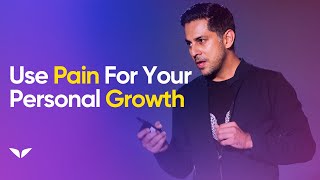
Vishen Lakhiani, founder of Mindvalley, explains how personal pain sparks transformation. After 9/11 put him on a watch list, he channeled that wound into building a company focused on global unity. He argues your deepest wounds often point to your mission.
Questions this video answers
Around 72,000 men born in Muslim countries.
2008.
54 countries.
Chapters
I'm the kid in blue. The rest, I don't have any brothers or sisters, so the rest are my cousins. So my mom was a public school teacher in Malaysia. She was actually the best English teacher in Malaysia, which is why I speak English, unlike most Malaysians with a more international accent. So I was really, really grateful to have a mom who was a public school teacher because she instilled in me the love for learning. And I did well as a student. I would go to school, I would get good grades. Having a mom as a teacher meant you could not slack on your homework. So. So good grades were really important to me. But most of what I learned in school, I later forgot. Most of what I learned in university, at the University of Michigan, I later forgot. That is learning. Learning is temporary. You can learn facts, you can learn figures, but you forget them. Transformation, on the other hand, is beyond learning. Transformation is what is missing from our education system. Transformation is, is the idea that you start seeing the world in a radically different way. Transformation is going from the beliefs of your religion or your culture or the beliefs instilled in you by your parents, and then realizing that there are other ways of viewing the world. And the unique thing about transformation is that once your mind expands, it can never again shrink to its original size. Once you understand that aging is optional, you can never again go back to the old you. Once you understand that you can succeed in life through love and compassion, you can never again go back to greed. Once you understand that love can be painful, but it's part of the journey, and it's one of the most fulfilling things a human being can experience. You never again fear relationships. And so Transformation is what MindValley is about. Transformation is what we're trying to get in schooling systems and now companies around the world. And so, thanks to this community that has been so engrossed in transformation, going through our programs on the mindvalley app, we are slowly through you guys, being pulled in different businesses and companies. A couple of mindvalley reunion students last year from Finland, Finnish students, took Jim Kwik's Quest. And we found that six months later, 80% of them saw a persistent grade increase thanks to other people in this room. We got invited to speak at Google. We just got invited to speak at Microsoft, and to bring our programs into these companies. And what we're really trying to do here is patch that gap in the education system that emphasized learning and standardized testing and certificates, rather than truly teaching us how to see the world in a unique way. So you got to understand Schools can teach you biology. By slowing down aging. Schools can teach you, they can teach you values in some way, but they can't teach you to truly tap into your spiritual core. And really, that is what we are seeking to do at this event and, and through the mindvalley system. So how do you spark transformation? The funny thing is this, right? Transformation is initiated by two things. So for most people in the world, transformation comes through cause number one, a disorienting dilemma. Which means, bam. Life comes and hits you, you go bankrupt, but through that you learn what to do to make your next business successful. You end up in hospital, but through that you learn how to take better care of your health. That is transformation through pain. But there's also transformation through. Basically means this. You start seeing the world in a new way because of the people you meet, because of the books you read, autobiographies, curated communities like this spark the second type of transformation. It's slower. It's slower, but it's a lot more beautiful. It's a lot more joyous. Now the problem though, is that both these forms of transformation don't happen at a rapid. People, they are evolving meaning schema, their visions, their worldviews evolve very, very, very slowly because they are stuck with the same community. They're stuck in that same city. So here's what it looks like when you put it together. First, the Disorienting dilemma, right? The roomy said wound is the place where the light enters. And I love that quote. The disorienting dilemma is what all of us experience in our life that forces us to grow. Rumi also said, you who cannot take a good rub, how will you ever become a polished gem? Isn't that beautiful? So the disorienting dilemma is a really, really, really powerful. So this is an extract from a book called Exponential Organizations. And it says Google recently demonstrated that its best employees were not Ivy League students, but rather young people who had experienced a big loss in their lives and had been able to transform that experience into growth. According to Google, deep personal loss has resulted in employees who are more humble and open to listening and learning. That's crazy, right? Google literally found that when you go that their employees who are the best employees are ones who have gone through some form of suffering. How many of you here can recognize that idea of suffering because you've gone through it and you've emerged from that fire as a better person. So congratulations. Turns out it's part of life and now you're eligible for Google. So the second thing is evolved meaning schema over time. So evolve, meaning schema over time, is what personal growth is about. Evolved, meaning schema over time, means that we are engaged in this process of growing and evolving ourselves. But when you put them both together, for the average person, transformation is unpredictable and slow because we have to wait for that suffering. Or it's slow because we are developing this evolved meaning schema in a slow accumulation over time. Our goal is to accelerate that, to get you guys to make that leap. That's why you're here. That's what this event is about. It's about making a rapid leap into transformation. So what I want to share with you are these two rules. But to understand these rules, we must give you a roadmap. Over the years, talking to many people, I realized that the answer actually comes from our wounding. The clue for your mission, for how you're about to go forth and fix the world, comes from your wounding. Let's go back to what Rumi said. The wound is the place where life enters. Think back to a time that you were deeply hurt. Maybe you were arrested for something you didn't do. Maybe you had an abusive partner. Maybe you had an abusive school teacher. Maybe you were treated unkindly. That wounding is often our soul's way of giving us a marker for what we are meant to do in the world. You can take that wounding and turn it into your mission. You can take what is it that hurt you and use that to fix the world. So let me give you an idea of how you would do this process. And I want to share this story with you guys. Some of you guys know this story, but for those of you who don't, it's the story of why mindvalley is mindvalley. So when I first started mindvalley, I started it in New York, and everything was going good. I'd been living in the US I was born in Malaysia. I had been living in the US for nine years. And I loved America. And I really, really, really was excited about settling here and creating a life here. And then September 11th happened. And all of us remember September 11th. I was in Berkeley at that time. We never forget the images on TV. But it was what happened after September 11 that really rocked my life. Around 18 months after September 11, I was living in New York and I was running a beautiful office space over there. And I was the director of sales for a dot com. And my dot com, the guys who ran it, they were superbly incredible, patriotic Americans. They wanted to open a beautiful office in New York. They were Based in San Fran and help boost the New York economy, help create jobs. So I was there hiring people and creating this incredible company. And then one day I show up at JFK airport and I get called aside and I'm told that I can no longer just enter the country. I've been added to what back then was called the special registration watch list. Around 72,000 men who were born in Muslim countries were added to that watch list. It didn't matter if you were Muslim or not. Not that that matters. I'm brown and I don't shave sometimes, so I could look Arab or Afghani or whatever. But what this meant is that I could no longer use certain airports. And before getting on a plane, I had to go for a two hour interrogation. Getting off a plane, I had to go through a two hour interrogation. But the worst was this. Even if I chose not to travel anywhere, every 28 days, I had to line up for four hours on this massive line, massive line outside the government office in New York. I remember it was January or February. It was freaking cold. The line was four blocks long. And I had to report to the government to be fingerprinted, to have my photograph taken and to give them my credit card so that my purchases could be tracked in case I bought fertilizer or something. So I don't blame anyone. And the immigration agents who processed me there were such wonderful men and women, but, you know, they felt helpless, too. They felt it was wrong because I was as American as they were. We would talk about Michigan football. We would, you know, talk about things. And they enjoyed speaking to someone who was so, so familiar to them. But it was painful for me. And three months after that, I decided I couldn't live in America anymore. I still loved America, but I couldn't live in the country if I was being forced, forced to live like I was on parole. And that's when I moved to Malaysia. And that's when my suffering gave me my mission. And that mission is not just education. That mission is to unify the world. Which is why Mindvalley in Kuala Lumpur now has people from 54 different countries working there. Because I want to create a world where we don't have to put people in boxes based on how they look or their skin color. And I was so pissed off at what happened. I was pissed off at the US government. Now, it only lasted five years. In 2008, President Obama ruled the whole thing unconstitutional and dismantled it. So thank you, Obama. Trump wants to bring it back, which is why, and I disagree with that I'm not going to vilify someone for having different political beliefs. But I disagree with that and I disagree with border walls and I disagree with calling asylum seekers illegals. And part of what we want to do at mindvalley is help push forth this idea of unity. Again, the suffering leads to a vision. So I want to share with you a video that we released last year when Trump announced the Muslim ban. And many of you have seen this. It's called Stand Up. And this video will help you understand why we do what we do. But we made this video because I went through suffering and I don't want my daughter growing up in the world where she would ever get labeled or ever get prevented from entering a country because of how she looks. My daughter is half white, half Indian, so she looks Middle Eastern. So I just wouldn't want her on a list. Watch this video. We are going to build the wal. I stand for love. I stand for peace. I stand for unity, education, the environment, equality. I stand for refugees. In an age of dangerous politics, don't let bullies force you to sit down to tell you you're being too political or unpatriotic when you speak your truth, to tell you you can't stand tall or that you don't belong here. Speak up, rise up, unite. And to those who dare to stand. So why do I play that video? I'm not asking you to be political. That video presented though a list of things that you could take a stand for. LBTQ rights, women's rights, refugees, unity, the environment. And remember, you don't have to build a business in that area. We're an education business. But Mindvalley, if you notice, takes a firm stand for human unity in how we hire, in how we present our events, in the fact that everything we do is global. It's human unity. So you can have your business, whether it is in auto mechanics or it's an engineering or or it's software development or it's a barbershop. But you can add a layer on it for something that you stand for. And this is one of the best ways to take your suffering and turn it into a superpower so you can rise up to self transcendence. Thank you for watching that video. I'd love to know your thoughts. So leave a comment. Sam.
More from Vishen




Brown Noise for Deep Focus and Concentration (Best with Headphones) | Gabriel Loynaz



Your Appointment With the Eternal | Guided Meditation with Michael Bernard Beckwith

