How to Deal With Difficult People at Work | Jason Campbell
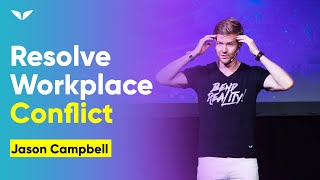
Jason Campbell shares how to handle difficult coworkers without playing the victim. Take responsibility, have private conversations focused on understanding them first, and skip the gossip. Only leave the job after you've actually tried to fix things.
Chapters
Hey everybody, this is Jason Campbell and I need to give a notice for the upcoming video. We're going to be talking about conflicts within the workplace. And it was filmed before the coronavirus crisis happened. So if you notice people walking around, we're in close proximity, nobody's wearing masks. It's because it was shot back in February. Now, that being said, I still think it'll be very important for you to leave comments and let me know. How has the workplace dynamic changed now that most of us are working remote? Do you see conflicts are easier to resolve? Is it harder to communicate? I'd be curious to know your answer because we're definitely going to talk about this in the future. Enjoy the video. It's just going to take a few seconds, guys. It's really important. And hi, this is Jason Campbell and we're talking about difficult co workers. And what I want to talk about is really something interesting because a lot of us might be in the workplace and the people we work with aren't necessarily the ideal people you want to work with. You know, there's always some little conflicts that can happen. Maybe you find yourself around a water cooler and there's that one person, you're like, ah, they're always late to meetings. Or that one person who always says they're going to do something and they never submit the work. But I'll talk about one that's even more sensitive than that is actually when you have a boss or supervisor that just seems to treat you really badly and they just seem to be abusive. And so is there a solution to this or are you just doomed in your workplace to be with these people and you gotta cope with it. What I'm hoping to share in this video is really different ways that you can deal with this. But before I actually go into defining what you can do with difficult co workers, there's a lot of different types. So I actually put up a poll so you can tell me what is the difficult type of co workers you usually have to deal with. And if you're walking, guys, just keep walking. We're just gonna keep rolling here. So I want to know what kind of coworkers that you might be dealing with issues, because the more precise you'll see that there's other people that have the same kind of co workers. And your case is not unique, it's not isolated. It's something that's very common. Relationships with other human beings is some of the most difficult things. Guys, it's okay. You can walk through. We're just going to Keep rolling. We're in a busy workplace here, so we'll just let everything happen. Working with other human beings is some of the most difficult things to do. I mean, you look at the divorce rate in marriages, it's over 50%. And those are supposed to be people that are in love for the rest of their lives. So you go into the workplace with people you didn't choose to work with, and in different environments where you're all having different expectations, different stories, different backgrounds, can conflict arise? You bet it does. And so what I want to do here is kind of shift your perspective because here is something that might be a difficult pill to swallow, but I really want to share with you, is that if you're having issues with a coworker, you're having conflicts and you're having those difficulties, it's your fault. Yeah, I have to admit it's your fault. I don't like admitting it, but when you do, there's a couple things that are going to happen. See, if you continuously blame other people for the problems you have in the workplace, you actually become a victim. And if you've studied any kind of personal growth, there's an author called Michael Beckwith who talks about the different stages of your growth and the lowest one you can be at is the victim state. That means you are powerless over your environment. And if it's in the workplace, then you actually find yourself not being able to change the circumstances that you're in. And so that's why the most effective thing you can do first is actually claim responsibility. If you know it's your fault, then you actually step into a space where you actually have power and you can actually make a change. And so if you acknowledge this, and I know your situation might be really difficult and I'd be curious to hear how you feel that it is not your fault. Definitely leave a comment and explain me your specific situation and I'll go in and answer what I think you can do to take responsibility. But here's one thing you can do regardless of the type of difficult co worker situation you have, is usually when there's disagreements, it has to do with communication. And I was having a conversation with Lisa Nichols. She's a motivational speaker. She speaks around the world about all aspects of personal life and professional life. She actually gets invited in front of Fortune 500 companies to help them communicate better and build better teams. And, and here's what she talks about. Crucial conversation. Critical, courageous conversations is the key to be able to build really strong workplace environments. Because if you are being a victim, right? And you're having these difficult coworker situations. Are you addressing that issue? Are you having strong communication and strong conversations with these people to solve it? At the root? Here's a quote that actually shocked me when I was talking to Lisa. She said, you know, if you're speaking about any difficulty you have in the workplace with someone that can't influence the outcome, that's gossip. And if you are gossiping within the workplace about the frustrations you have with people that are just not going to influence the outcome, you're basically wasting your energy, wasting your time nurturing your victim state and really finding. Trying to find empathy for your situation with people that can relate. It's often what you would call triangulation. And I remember I was having this conversation with Teal Swan. Now she's a personal growth personality on YouTube. And when I interviewed her, it was crazy because everything she was talking about, workplace conflict always came back to childhood traumas. The kind of traumas you had in your childhood will be relived within the workplace. Isn't that strange? Like if you were finding yourself that you were never getting attention, you were never getting your ideas listened to, and you look back into your childhood and you're like, wow, mom and dad never listened. Or with my friends, it seems like I was the last one. To have the right ideas in the workplace is very likely that will replicate itself. I know for me, I often under communicate. And when I would get frustrated, I would just boil in that frustration and not even go and have that conversation with the person. And you know what would happen when I did? The rage immediately would dissipate because I would actually pull them aside. And this is actually a critical step if you're going to be addressing a conflict with somebody in the workplace. If you do it in public, it's like shaming. And everybody reacts to shame in a really bad way. And it will trigger all of their baggage and their trauma. And so you want to do it privately. And if you've read the 7 Habits of the Most Highly Effective People Dr. Stephen Cuffy talks about, one of the habits is if you want to be understood, first seek to understand. And so if you're having frustrations in the work with somebody, you probably want those people to understand your frustration. But before you do that, when you pull that person aside, go with an intention of understanding them because they have their own issues that they have to deal with, deal with. And there might be a very simple explanation as to why they are treating you the way they Treat you. Perhaps they are unaware of their behavior. Perhaps they have never received the feedback of how their behavior is actually affecting you and other people in the workplace. And when you have these conversations, make sure you're not doing any kind of attack, come from your perspective and your feelings, and communicate with respect. And so, for example, I remember actually speaking with my boss, pulling them aside and say, listen, I just wanted to share feedback because I know in the previous meeting, I felt that you were a little aggressive. I felt that it didn't actually listen to the ideas that were being shared. And I even felt that I couldn't even have a chance to speak because I am the type of personality that will shut down if there's a situation of conflict. And so I want to know, was there anything up? Are you okay? And so when I go with the intention of empathy, that person immediately said, wow, I didn't realize that I came across so aggressively. And I said, you probably would want to communicate to the other team members. But I'm so happy that I got that off my chest. Just getting off my chest was something that relieved most of the pressure that I was feeling from having a difficult coworker. And from there, they weren't perfect, but they started having a bit more awareness, and I was able to have more of that confrontation. And here's something important to remember. I was reading a book called Crucial Conversations, and it's in there. It talks about those situations where stakes are high, emotions are high, and you're at opposing views with somebody else. Now, 90% of your communications you have in the workplace are not going to be crucial. They're going to be everyday type of conversations. But there's something interesting that happens in that 10% when it turns crucial is that when everybody's emotions go high, you don't start acting logically anymore. You start acting very emotionally. And people typically have two types of responses. Either they become aggressive and fighters and violent, or they become silent and passive. And so when you notice that in the other person, you know that something is happening to them emotionally, whether they're aggressive or silent. If they are aggressive, you definitely want to apply this technique, which is pull them aside and have that conversation to understand what's going on. They definitely had their safety. They did not feel psychologically safe in whatever conversation or environment that they were at. And so you're going to want to pull back and see how you can restore that safety first. And if you see that they're silent, make sure you invite them to engage more, because if they are silent, you're not getting the feedback. And then again, conflicts could come from resentment and uncommunicated issues. The most important thing here is make sure that you're not going to gossip if there's going to be some conflicts in the workplace. Have courageous conversations, crucial conversations. Make sure that there's that psychological safety. Be a part in nurturing it by having the courage to have the honest conversations with the colleagues you might have disagreements with. And you will see it will show that you are someone that is stepping above and beyond. You're trying to resolve the conflicts and if you see nothing else works, well, maybe that's the final straw, that you need to look for a different environment. But don't give up on the environment first because you need to actually take responsibility and do the changes. Because once you go through that, you'll see that you'll have a transformation in yourself and whatever issues that might be going on in your mind that makes you feel like people aren't fair to you, you might just realize that they are just that things in your mind. So have more of those conversations. I hope this was useful for you for whatever conflict that you are facing and I'd love to hear about your unique situation. I hope that you can use some of these techniques in your conflicts in the workplace. And of course I'll be reading every single one of your comments, engaging to really see what are the types of things that you're facing to see if I have a direct recommendation because I get a chance to interview experts in this field every single week and I've been able to absorb that knowledge and I definitely want to share it with you as well. If you've enjoyed this video, make sure to give it a thumbs up and I'd love for you to subscribe and we'll bring more of these ideas around the workplace as I listen to you bring these up and stay tuned because the next one is actually going to be about how to be more productive and focused in the workplace. And I know there's some definite, there's going to be some definite questions around that when distractions arise. I'll see you on the next video.
More from Vishen




Brown Noise for Deep Focus and Concentration (Best with Headphones) | Gabriel Loynaz



Your Appointment With the Eternal | Guided Meditation with Michael Bernard Beckwith

