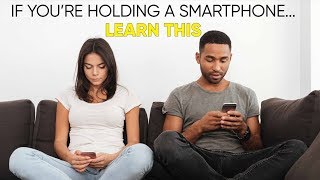
Vishen Lakhiani argues that smartphones have made rote memorization pointless. What matters now is empathy: the ability to listen across differences, resolve conflict, and translate expertise so it reaches people who think differently than you do.
Chapters
If you're holding a smartphone today, you have access to more computing power and more information than the President of the United States did 20 years ago. Education used to be a highly exclusive product. To know more than the person next to you, all you had to do was go to college or university, attend classes and lectures for years, and come out the other side with a degree, only to have everything you learn become outdated a number of years later. That's not the case anymore. The way that we learn now is shifting, and it's shifting rapidly because the playing field for acquiring knowledge has never been more level than it is right now. We no longer need workers who can retain and reproduce large amounts of information. What we need now are people who can sort through the overwhelm of information that's available to us and organize it effectively. We need a new form of intelligence to revolutionize the world going forward. And that new form of intelligence is empathy. Now, when we think of empathy, we immediately think of relationships. What it feels like to sit down in front of a spouse or a friend who understands us and have them validate our point of view. What it's like to feel the pain somebody else and take time to understand where they are coming from. What we don't think about when we think about empathy is a transformational learning tool that can alter the way we see and approach the world. But we should. Because the problem with this surplus of information that's available to us is that it mostly serves to solve small scale problems that are directly in front of us. If your phone breaks down, you can Google how to fix it. If you need a dry cleaner, you can Google where to find one. If you want to hear the thoughts from any expert or academic, you're going to find a large library of their work uploaded to YouTube. You can find anything you're looking for online at the drop of a hat. But selectively accessing information also keeps our world views small. It keeps us rooted in a singular way of understanding how the world around us operates and blinds us from the nuances that make up the greatest problems we are facing as a society. Empathy is what breaks our frame of understanding open. When we become willing to put down our biases and listen to each other, listen to the needs of groups who are in conflict, listen to the philosophies of people we disagree with, listen to the way other people experience and interact with the world on a completely different frame of existence, we have no choice but but to begin expanding our awareness. This kind of intelligence is exactly what's missing in a world that's becoming more and more divided as information becomes available to us. But it just might be the exact kind of intelligence that will save us. Because if you want to make a real impact on the world, you need a lot more than expertise or knowledge. You need understanding. You need the ability to connect with a wide variety of people on the level that they are operating at. You need to understand how to transfer what you know in a way that reaches people, that makes them feel heard and understood. It's easy to make a good impression on people who already believe what you're saying. It's easy to rally up crowds who are already passionate. What's difficult is getting down to the heart of a complex issue. What's difficult is getting two opposing groups of people to understand where the other's coming from. What's difficult is expanding your own point of view past what you want to believe and into the territory of what's real for other people. Empathy is our best hope at finding that middle ground. Empathy is what roots through glaring conflict and finds hope. Empathy is what we ought to be searching for in our thought leaders, our world leaders, ourselves. Because none of us have time to access every piece of information that's available to us all. But all of us have time to sit down and listen to a single person sitting in front of us. And it's not until we start looking at each other as teachers that the world will truly begin to change.