Modern Wisdom With Ancient Roots - Dr. Srikumar Rao
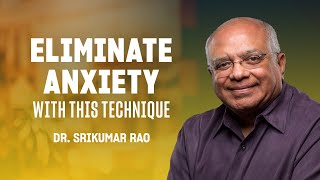
Dr. Srikumar Rao talks about translating ancient spiritual wisdom into practical mental models for modern life. He argues you don't force success, you allow it, and teaches practices like shining awareness on your thoughts to reduce stress and procrastination. His book has 60 short chapters designed as daily reflections.
Chapters
You do not force success into your life vision. You allow success to come into your life. All you do is you throw the doors open and it walks in. You don't have to struggle. You just have to realize that you don't have to struggle. And your problems are between your ears, not outside.
Welcome back to the mindvalley podcast, everyone. And our guest today is one of my favorite people to interview. He is the famous MBA professor, Professor Sri Kumar Rao. And although Sri Kumar may not be a celebrity in a traditional way in the personal growth world, I personally have cited his ideas more than pretty much anyone else. More than Tony Robbins, more than Jay Shetty, more than any other person who has had a profound impact on my life. And the reason for that is because of Sri Kumar's brilliant mind. So he has been teaching a class called Personal Mastery at MBA programs across the world. And these classes would get long lines of students lining up to join. He was famous for this. He was teaching at Kellogg, at Columbia, at London Business School. And what made Sri Kumar's lessons to MBA students so powerful was that he would bring ancient wisdom into the modern world. And this method of analyzing life, of living, of crushing it at work while being able to live peacefully in bliss with the wisdom of ancient Indian spiritual masters, to people like Rumi, to ancient Taoist beliefs, is one of the reasons why Sri Kumar has such a profound impact on my life. I've referred to him in the past as my personal Yoda. So I've told you a couple of things about him that I personally love. But let me read you a bit of his formal bio so you understand this man. He's the founder of the Rao Institute, best selling author, one of the most popular MBA lecturers in America. His courses are among the highest rated at many of the world's top business schools, including Columbia and London Business School. He not only regularly contributes to sites like Forbes Inc. And CEO, but he often consults executives from Google, IBM, Microsoft and Mo. In fact, the very first time I saw Sri Kumar Rao was a talk he gave at Google, at Google HQ. And that talk I stumbled upon in 2007 or 2008. And it blew my mind. And that is how I started following this man. I'm honored that Sri Kumar asked me to write the forward to his latest book, Modern Wisdom, Ancient Roots. And this book is the subtitle is the Mover and Shaker's Guide to Unstoppable Success. This book is a collection of beautiful, thought provoking essays that give you a new spin on life. Essays Such as end your speechless nights or the key to glorious freedom, or the terrible mistake you make every day. And each is filled with a really powerful idea that could potentially change your life. Raoul calls these ideas mental models. They are the models with which we see our world. And now let's bring on to the Mindvalley podcast, Sri Kumar Rao for his brilliant mind and wisdom.
Hey, Vishal. Glad to be here. And I got to tell you, I love Mind Valley audiences. I've spoken before at Awesomeness Fest at Mindvalley University, more than once. I just love interacting with the kinds of persons whom you attract to your platform.
Thank you. Thank you. And you have a big following in Mindvalley. I've been putting you on stage since 2010. 2010, at the very first Mindvalley Festival, a fest. You were one of the speakers. Yes. And the reason I wanted you as a speaker is because I'd seen your talk at Google and it blew my mind. So, Srikumar, tell us what of everything that you have going on in your life right now? What was the spark that made you write this new book? Modern Wisdom, Ancient Roots, the Mover and Shaker's Guide to Unstoppable Success?
I find vision that people worldwide since the pandemic are reporting that they feel more stress in their life than they ever had. And at the same time, they're always horribly time pressed. They never have time for anything. And this idea came to me, actually this begins with a story, and that's a true story. There was an emperor who did have a spiritual bent and he did want to know what life is all about. But he simply didn't have time among his royal duties. So he told his vizier, why don't you bring me something which I can digest in a couple of minutes or a few minutes every day, which will take me to higher planes of consciousness. And that struck me as a wonderful idea. So that's what this book is designed to do. There are some 60 odd chapters. They're all very short. Some of them are only two or three pages. But if you read them and if you think about the ideas presented there, they will raise your consciousness and they will transform your life.
And these ideas are sparked by ancient wisdom. Why ancient wisdom?
Because here is the secret. The reason that I've been as successful as I have is because none of the ideas are my ideas. I have borrowed from the greatest masters the world has ever known. They understood the human predicament. They came up with solutions that have been tested over millennia. And they absolutely work the problem is that they used examples and language that were appropr to the time and the geography that they were in. And intelligent persons in a modern post industrial society don't necessarily relate to that. What I have done is try and have pretty good translation. No false modesty there. I'm very good at taking those concepts, stripping them of religious, cultural, other connotations and adapting them so that people today can say, hey, this isn't philosophy. This is a practical blueprint for living life. And not just living life, but enjoying every day of it. And this is the killer. Reaching success, I never dreamed possible.
Reaching success you never dreamed possible. Okay, so you reference a lot of ancient philosophers and if I may share, for the mindvalley podcast audience that hasn't heard of you yet, I wanted to share the story I wrote in the forward of the book. Okay, and this, and this is possibly how your impact is changing the lives of MBA students. Sometimes a tiny idea you see in a person's mind can shift them. Now I'm going to read out this story because I really want the world to hear this. And this is a true conversation that you and I had. And it involves a poem from Rumi. Okay, now some of you in the mindvalley audience may have heard this. Listen to it again because there's always a different layer you get from understanding this poem. So what happened was Sri Kumar was in New York City, I was in Malaysia, and I was going through this period of crazy stress in my life. And we were getting on a call and we just had a regular business call, I believe I can't remember because this was maybe 2014, 2015. And I was thinking about getting Sri Kumar on the mindvalley platform. And as he was talking to me, he detected stress in my voice. Because that year was a frickin tough year and the stress was intense. Anyone who's an entrepreneur building a company can tell you that sometimes you go through those periods and. And he asked me to pause and he said, vishen, I'd like to read you a poem. And in my mind I'm thinking, I don't have time for a poem. It was morning in New York, but it was 11pm or so in Kuala Lumpur, Malaysia. I just wanted to get this damn business call done and go to bed. But Rao persisted. And this is the poem he read me from Rumi. When I run after what I think I want, My days are a furnace of distress and anxiety. If I sit in my own place of patience, what I need flows to me and without pain from this I understand that what I want also wants me, is looking for me and attracting me. There's a great secret in here for anyone who can grasp it. And it took me a while to understand what was going on, but that poem became sort of a mantra that changed my life. I began to understand that what I want also wants me, is looking for me and attracting me. And I understood that if I was pursuing the goals that source of the universe, or my soul, or whatever you want to call it, needs me to pursue. It's never an uphill battle. I understood that if I can sit in my own place of patience and go deep and work with myself, with my inner space, what I want came to me so much easier. Now. The gist of that poem didn't hit me immediately. It took a while. It took years, in fact. But as I mentioned in the forward to Rao's new book, Modern Ancient Roots, this poem became a mantra for me. It became a new way of me leading my life. I wrote, real success is much simpler than most of us have been led to believe. There's nothing you have to get to or be in order to have finally made it. You just need to keep growing. And so I'd like to ask you, the listener here, to reflect on the words of that poem. What does it mean to you? The beauty of Rumi is that it sometimes means so many different things to so many people. And I want to ask Rao to explain that poem and its key message to all of us.
Oh, that's a hugely powerful poem or saying or whatever you call. It's one of Rumi's teachings. And frankly, it made a huge impact on me. And I always remembered that, which is the reason. Reason when you we had that conversation, I could sense immediately the space you were in. And I knew you needed to hear that message. The only thing I was not sure about is whether you were ready to hear that message. But if you were ready and you were right, see the impact it has. The problem is we are desperate. We are frantic. We're going around doing things. Things are not working out the way that I want them to. My business is floundering. Customers are leaving. Cash flow is po. I am leading Cat. This is not what I want. All the emphasis is on what I want. I am going out to do things. I'll make things happen. I'm going to have the universe conform to my will. What a tremendous amount of struggle. And it's totally useless, unnecessary. You do not force success into your life vision. You allow success to come into your Life, all you do is you throw the doors open and it walks in. You don't have to struggle. You just have to realize that you don't have to struggle. And your problems are between your ears, not outside.
You don't have to struggle. Your problems are between your years, not outside. Rao, I'm curious to ask you about your beliefs. You once said the most important belief we could have is that we live in a benevolent universe, that the universe has our back. Do you believe that the universe is an intelligent force guiding us, protecting us, nudging us?
Absolutely.
What do you think Rumi means by what you are seeking is seeking you too.
In other words, what Rumi is saying. Okay, we have to backtrack a little bit. Okay, and backtrack. What is the purpose of life? Why are we here? And the purpose of life, vision, is to recognize that you are not who you think you are. You know, you think your vision, you're building Mind Valley. You want to reach a billion people, which is a vision I completely resonate with, which is why delighted to work with you. But in reality, what you are is pure awareness, pure consciousness, having a human experience. So everything that you think you are is actually a giant soap opera being played off on the screen of consciousness. And the moment you recognize that you are the screen, you're not the drama that's being played on the screen. The moment you recognize that you are the screen, you know you're eternal. You know you're unchanging. You know there is nothing to accomplish. The only thing to do is to enjoy the drama that is playing on the screen. And as you start enjoying the drama on the screen, here is the really funny thing. You become also the director, the script writer of the opera. Soap opera that's playing out and you can start guiding it. So you bring that back and say, playing this huge role, and in this huge role, I'm CEO of Mind Valley and I'm reaching out to touch a billion entrepreneurs. Wonderful. I don't have to struggle to make it happen. I just have to rewrite the script a little bit, throw the doors open and watch it explode. The world will still be there, mind you, but the sense of striving will not be there.
Yeah. How do you get away? So that sense of striving is what is the cause of so much stress and overwhelm. The secret to getting rid of stress and overwhelm.
The secret to that is to reflect on the idea that I just shared with you and go back to it again and again and again. The reason you don't recognize it is because your mental chatter has taken over your consciousness and your consciousness is hidden behind this stream of mental chatter that's always going on. And it's a very, very effective cloak, a disguise. It's a fog that covers it up. So the more you become conscious that you have mental chatter going on, you are not the mental chatter. In fact, the very fact that you can observe the mental chatter will tell you you're not the mental chatter because anything that you can observe is not you. So if you keep thinking about that, gradually it will dissipate. It won't happen overnight, but the benefits of it can be seen very quickly within a couple of weeks. But truly mastering that is a lifetime.
What about in situations where things actually go wrong? You are putting on an event and something happens. Right. You don't sell enough tickets and you're making a loss or a speaker falls sick and you have to find a replacement.
Sure.
I'm using that as an example because I'm proud of my events team. But I also see the, the stress that they sometimes have to go through. Putting on events.
Absolutely.
How do you be, how do you have that mental fortitude even in the realm of these things, to be free from the chaos and the stress?
You have to begin a great deal earlier. Vishen I like to describe it this way. Let's assume you get hit by a tsunami and everyone at some point in his or her life is going to get hit by a tsunami. It's a wonderful idea to be able to surf on the tsunami and say, isn't this a great experience? The problem is you can't learn to surf on a tsunami. So if you want to surf on the tsunami, you better become pretty good at learning to surf on the two foot waves. And then when the tsunami comes along, you have a reasonable chance. You can. So you're throwing a big event and you know, things come unstuck. That's the nature of things. They will come unstuck. So what you do is recognize, hey, never had any control to begin with. This happened. And somewhere out of this, some good is going to come out of it, because I'm going to make some good come out of it. But in the meantime, what are the things that I can do and must do? Can I call alternate speakers? Can I, you know, stop selling tickets and maybe give a refund early so that I don't have more expenses later or whatever it is you do. You put on your MBA type hat and say, okay, you know, crisis mode, here's what you have to do, but you've already accepted that. You know, when you're in the events business, stuff happens and therefore you psychologically accept that. And when it does in fact happen, you start doing what is necessary. And very often you may find that what you thought was a disaster was actually a wonderful thing. I'll give you an example. When Lexus was introduced to America, it was one of the biggest, most expensive new product introductions ever. And right after they introduced Lexus, within two weeks, the NHS TSA asked for a recall of all that had been sold because there was some defect that needed to be fixed. Now, that's terrible, right? Well, everybody thought so. In fact, the American car companies had readied a whole string of ads to point out that there was this disaster that happened to Lexus. They never ran those ads. That's because of the way the Lexus handled the recalls. Each person who bought a Lexus was called by a senior executive of the dealership and look, you know, we're very sorry this came up and we do have to get that fixed. You have an option. We can pick it up from your driveway, in which case you'll have it back by 8 o' clock the next morning, or you can come to our workshop or come to our dealership and we'll fix it. It'll take about 45 minutes. So some pick, pick up from the driveway, some pick, go to the dealership. But the way the dealers handled it was what counted. They did things like they washed the customer's car, they topped off the gas tank, they left a box of expensive chocolates on that. Always with the note saying, thank you for being a Lexus customer, we so appreciate your business. And after the recall, consumer satisfaction with Lexus was higher than it had been before the recall. You never really know whether what happens is a tragedy or it's a bump in the road, which could lead to great things. So when you don't know that it's going be a tragedy or it could lead to great things, why do you label it a tragedy? Simply label it this happened. And then, see, can I think of a scenario where this could actually be a good thing? And then what can I do to actually make it so any move seamlessly from the realm of despair to the realm of possibility. You have to start thinking about all this well in advance of any major, quote, bad thing unquote happening. Right.
I love that. I love that example. What do you mean by you have to think of these things well in advance? Does that mean that you have to Train your mind?
Yes.
To be open to this idea well in advance of going down that fight.
Completely, yes, you do have to train your mind. You have to constantly train your mind. In fact, in my book, and I'm going to share something with you which I don't think I have shared with a mindvalley audience before. Our mental chatter is so powerful and it's made such a mess of our mind that the only way we're able to get out of it is to pray without seizing. This is a wonderful short phrase that I got from a book called the Pilgrim's Way. I think it's a Pilgrim's Way or the Pilgrim's Journey. I forget which. I'll give you the actual citation later. But in the very first chapter of that, he says, pray without seizing. That means you constantly have to have your thought on the notion that you are pure awareness. You are not this character in the soap opera that's playing out. And when you're established there, you can actually enjoy all of the struggles that are happening to this soap opera character, truly enjoy them, instead of being dragged down into horrible places where, oh, why is this happening to me? It's possible, but you have to work at it. Vishen beautiful.
Now, Rao, for all the ideas that you share with your students, what would you say is an idea? Perhaps something from this book, modern wisdom, ancient roots that people really resonate with. Maybe something that you haven't shared yet. On the mindvalley podcast, I'll share a.
Couple with you, one I have shared before, which is bad thing scenario. I just. Just, you know, mentioned it briefly. Whenever something happens, don't label it bad. The other thing that I would like to share, and I have shared it with some Mind Valley audiences, but not all is be conscious of your awareness. Your awareness is like a flashlight. It's a tool, and you're constantly able to do things with it, and you constantly do the wrong things with it. I'll give you an example. Shine the flashlight of your awareness of the channel chair in which you're sitting. The moment I say that and you do so, you become aware of the pressure of your buttocks on the seat. You become aware of the fabric or the leather against the back of your thigh. 30 seconds ago, you weren't aware of any of that, but now you are.
Why?
Because you've shown the flashlight of your awareness on it. Typically, what we do is we shine the flashlight of our awareness on the things that are wrong in our life. More precisely on the things that we have arbitrarily decided are wrong in our lives. They may not be wrong at all, but we think they're wrong. And what about the millions of things that are pretty damn good in your life? You're healthy, you're young, you've got a world of possibility. You know, where you're going to have dinner tonight. You have food to eat. You have a bed to sleep in, a roof over your head. You take all of that for granted. Well, it's such a big deal in many parts of the world. So shine the flashlight of your awareness on the many things which are good in your life. In fact, it's my hope that everyone who's listening to this will occupy a default emotional domain of appreciation and gratitude. And the reason for that is simple. When you're in that domain, you're not angry, you're not nervous, you're not anxious, you're not fearful. The two cannot coexist.
Beautiful. Let's go with one. One of your favorite chapters from this book. I like the flashlight idea. There are many different short essays in here. I'd love for you to pick one that you think you'd love to share on our podcast today.
Oh, all right. So let me do that.
And I'd read. I've read a couple. I would love to pick one. But I want you to pick one because you know our audience so well, right? And I bet you have some new insights, some new stories that you know are going to resonate with us.
Sure. I'll begin with number 12, which is the strange disappearance of the wedding guest. Actually, it's a wedding crasher, and it's a funny story. And I encourage your listeners to buy the book and actually read that. But it talks about a wedding crasher and how he has a fine time with a wedding, and he plants thoughts in the bride's head and the groom's head, which leave them both feeling unsettled. And then when they try to find out, hey, who the hell is this guy? He disappears. And the parallel is very similar. You've got a wedding crasher in your head, and this is your mind who's constantly making you uncomfortable. Comfortable. Hey, Vishen, you know that girl you dated, she really doesn't think highly of you. In fact, she thinks you're a bore, and that's the reason she hasn't called you back. And all of a sudden, you're unsure about your ability to, you know, progress relationships with that person. Oh, you know, you want to reach a billion entrepreneurs, you're not going to do that. You only got 10 million so far. How are you ever going to get to billion? You're not capable. You don't have it in you. You're not Elon Musk or Jeff Bezos. You can't do it. So it's constantly seeding you with doubt. It's constantly seeding you with feelings of inadequacy because you listen to it. No matter how many times your mental chatters told you something which has been flat out wrong, the next time it tells you something, you believe it. But if you examine, examine what the mental chatter is and does the mind exist? And this incidentally is an extremely powerful type of inquiry that I first learned from Ramana Maharshi, who's a great Indian sage and probably the single individual who's had the greatest impact on me in my life. When you start examining the nature of mind, the mind disappears like the wedding guest. So it's both a funny story and a profound lesson.
Why Maha? Maha. Could you say that name again? I'm mispronouncing it.
Ramana Maharshi.
Ramana Maharshi. You've mentioned Ramana Maharshi in many occasions across your book. Tell us about this influence on your life and why and how this wisdom from Ramana Maharshi might relate to us.
Oh, it relates to every bit of that. Ramana Maharshi was born in a middle class Prabhu family in South India. And at the age of 17 he had an extraordinarily powerful awakening experience. He dreamt that he was dead and said, I'm dead. What happens? And he lay down on the floor and he rigidly clenched his limbs and said, okay, I'm dead, I can't move. And then what's going to happen? They're going to take this body out and they're going to burn it and the body will be no more. Well, am I the body? Who am I? Am I going to. If the body is dead, am I dead? And it passed through very, very fast in a matter of seconds. But in that brief period of time, he realized that he was pure consciousness. He was not the body. And he completely dissociated with the body. Mind, intellect, complex. He knew that he was pure awareness. Others thought that he inhabited the body. And later on in life, you know, he did say the body, but he only used it in a way different from us. And frequently he wouldn't say my body, he would say this body. They called this Ramana. But having realized it himself, he said, I am really no different from you. You are pure awareness. I am pure Awareness. So in essence, we are the same. The only difference is I am conscious of it all the time and you are not. You identify with that. Now, one of the things he stressed, which is really very powerful vision is only that is real, which always is, okay? And by that standard, vision is not real because you go to sleep at night and you dream you're Julius Caesar and you're conquering west swaths of territory and having an affair with Cleopatra. And then you go into dreamless sleep and there's nothing. There's no vision, there's no Cleopatra, there's no Julius Caesar, there's no body. You just disappear. But what exists in all of these, what exists is the knowledge that you exist. When you wake up from deep sleep, you don't have to ask someone else, hey, did I exist? You know, that awareness is the only thing which is always there. And that awareness is who you are. That is profound. Really getting to that, making it your lived experience is a lifetime's worth. But it tells you immediately that all of the things that you are troubled by is like the drama that's playing out on the screen. Enjoy it rather than getting hooked up into it and then experiencing high simulation and despair.
That's beautiful.
That is powerful teaching.
Of all the spiritual teachers that you've studied, do you have a favorite? Is there one that you feel has influenced you most? Is it perhaps Ramana? Ramana Maharshi?
It is Ramana Maharshi by far, I would say. But there are others. There's been Sri Ramakrishna, for example.
Give us an idea from Shri Ramakrishna.
Give us an idea. Sri Ramakrishna. Yeah.
Okay, let me see one of his teachings.
That's a good one. Okay, here is one of Sri Ramakrishna's favorite tales. There was a realized being and he had a disciple. And the disciple would constantly pester him, hey, I want to be enlightened like you are. How can I be enlightened? And one day, the sage took the disciple to the middle of the river and suddenly, with no warning, grabbed him and held his head underwater and kept it there. And finally the disciples struggled monumentally, was able to break loose and come up. And he was gasping for a say, why did you do that? And the sage said, when you desire to know God is as strong as you desire to have the next breath, you'll find God in front of you. And that was actually symptomatic of Ramakrishna's life himself, because he was so taken by this. Why can't I see? And he was devoted to Durga, you Know Makay. And one day he went to the temple and he grabbed the sword from the statue of Durga and said mother, you will reveal yourself to me this instant otherwise I'm going to cut off my head with your own sword. And that is the time when Durga walked out of the statue and revealed herself to him. It's a powerful inspirational one. And many things like that did happen in Ramakrishna's life because one of the things he did is said, I want to find out if all religions are true or not. And he actually practiced other religions including Islam and Christianity to say can I reach the say? And he came to the conclusion that yes he can. Beautiful.
I love these parables and these stories. So let's take a couple of questions from our live audience over here. So the first question is from Sanjay Mahatra. So Sanjay, thank you for your question. And Sanjay's question is, dear Professor Rao, is it possible to enter the enlightenment state at will anytime?
The short answer is when you are enlightened vision, you are enlightened. There is no going back. There is no going in and out. If you think that you're going in and out then you are not enlightened because once you get there there is no you left. Where are you going to go? It's like the river flows into the ocean. Vishen, Once the river flows into the ocean there is no more river. The river has become the ocean so there is no going back and forth.
I love that. I love that the river has become the ocean. Beautiful. Okay, let's go on to the next question. This is from Mindful Manasseh and he says there is no question that being a student of Dr. Rao and what I've been experiencing at a visceral level. Just, just want to share with you all of late. Many day to day life situations and questions around me that are simply dropping off. In addition, every time if I get a question in my deeper quest, almost immediately in my day's readings a quote or a passage would come up with the exact answer to that question. And there's a blissful joy and calmness truly miraculous. So thank you Manassi for sharing your experiences studying the work of Rao. Now let's go on to Hema. And Hema's question is how do we avoid serial procrastination?
The thing about serial procrastination is what is causing it? And invariably you will find that your mental chatter is causing it. Take an example, there's a stack of dirty dishes in the sink and you're tired and you say I'm not going to wash them now, I'm going to wash them tomorrow. And you know very well that when you get up in the morning, you won't more feel like washing the dishes than you do right now. But your mental chatter is going, why do you have to do the dishes? Don't do the dishes now, do it in the morning. There's that new thriller on Netflix. Why did I watch that inside instead? That's your mental chatter going anytime. You're probably procrastinating, there's your mental chatter telling you what do you have to do it? You don't have to do it now, something else can happen. And if you examine that and you pay no heed to it, and you just start by, let's say, washing one dish and then another, and very soon you'll find all the dishes have been washed. So whenever you're procrastinating, you're procrastinating because you have mental chatter. And that is driving you to a different path, a part that you recognize may not be the right one for you. So when you attack it at the root of the, of this happening, and you say, this is mental chatter, I'm observing my mental chatter. I'm not my mental chatter, you'll find that you don't procrastinate anywhere near as much as you used to.
Let's go deeper in that. Yeah, so I get that the procrastination may be mental chatter, but what if that procrastination is coming from a desire, from boredom, Boredom with what you're tasked at doing, or desire to go and do something else.
If you examine it, you will find that it's always there. Because as we talked about earlier, the only thing that's worth doing in life is recognizing your true nature. Whenever you're bored, you're bored because you're refusing to acknowledge your presence as true, pure awareness. But you think you're somebody else. And this somebody else needs to be distract. The biggest challenge that we have in our lives vision is that we are unable to spend five minutes by ourselves. Our mind is always seeking distraction outside. Look at its endemic at the slightest provocation, you take out your smartphone and, you know, get absorbed in the screen. You go home and you turn on the television, not because there's something you really want to watch, but because you want to distract your mind. Your mind does not, not want to focus on who you really are. Because when you become immersed, when you become one with who you really are, the mind dies out. And therefore the mind is always directing you outside. I'm hungry. Let me go out and grab a slice of pizza. Oh, you know when I have a drink and one drink is not enough, why not I have another drink. Think about it. Your mind is always directing you outside. Your challenge is to direct it it inside. And that's what my course is all about. That's what all my coaching is all about. Go inside, find out who is asking these questions. And that I got from Ramana Maharshi which is the reason I'm eternally grateful.
So is that what you mean? On page 193 of your book you write you cannot solve an internal problem with external action.
Absolutely correct.
You could you go deeper in that?
Yes, definitely I can.
You cannot solve an internal problem with external action.
Correct. So what happens Vishen, is what we really want is we want to be happy, we want to be fulfilled. We want to have a life of meaning. And we say I've got to go out and accomplish things. I've got to go out and run a billion dollar business. I've got to run off and make a lot of money. I want to go out and become famous. Actually Vishen, if you think about it, you don't want to run a billion dollar company. You want the feeling you will have when you're running a billion dollar company. And even that is not accurate. You want the feeling that you think you will have when you're running a billion dollar company. And the only way in your head you think that you can get that feeling is to actually run a billion dollar company. And therefore you expend all your effort in getting there wrong. It is possible to have that feeling by either way because what you are really surfacing is an inner lack in you. You don't feel you're full, you don't feel you're complete. You feel that in order to be full and complete you've got to run a billion dollar company. You're trying to solve an internal problem with external action. It never works. So does it mean if you're full and complete you can't run a billion dollar company? Absolutely not. You know we have examples like King Janaka for example who ruled the kingdom and a mighty kingdom and he was a completely realized soul. He was not running the kingdom in order to become complete from his pace of completeness. He was following his path which was running that great king. So yes, you know, if it is your nature destiny for you to run a billion dollar company, it will happen. But it will happen not. Because if you get there and do that you will be happier, more fulfilled, more complete. It will be coming from your completeness, not to ensure your completeness. Sweetness. Think about it this way. Vishen you are. It's a gorgeous day. You're completely happy. The way things are in the world. You go and take a long shower and you're so happy you burst out singing. You don't sing in order to become happy. Your singing is a spontaneous outburst from your happiness. That's how life should be. You do all the things you do do, but they. You don't do it because if you do it and succeed, you know something else will happen. You do it as an expression of your fullness, not in order to achieve fullness. Beautiful.
But what about the side effects of our jobs, about succeeding in our business? And that is the money, the wealth that we want to be able to accumulate so we can have that dream house that. That stay in that dream city, afford the luxuries we want. How do you reconcile that?
There is no reconcile reconciliation. When you accept the fact that you're full and complete as you are and you are open to riches, flowing gain. You're not making it happen, you're allowing it to happen. It will happen. And then you use it as appropriate. And invariably, if you are in that state of grace, you will use that that wisely. Remember, always vision. You are always a custodian. We think we own stuff, we don't. We are born. One day, all too soon we will die and make the most of it. You can in between. But everything you've accomplished, all the money, all the name, all the fame is going to go. It's going to be stripped off by you. You are going to die. Make your peace with that. It's not something to fight against. You won't succeed even if you fight against it anyway. If you have that consciousness always in you, if you're always aware of your death, not in a morbid sense, but you know simply as this is going to happen, then you'll find your relationship to life changes and you live life more fully. Because this moment is the only one you have. Enjoy it. Don't try to hold it. Don't grasp it. Don't cling to it.
Thank you Rao, for my final question. What was a moment from your life where these teachings impacted you? You share a lot of parables which I love. But I'm curious to know Rao as a young man. Rao, when you were growing up, what was a moment that shifted you, that transformed you? I'd love for you to share a piece of Your history.
I will. But the moment that transformed me, the transformation happened long before. Before the moment happened. And I'll tell you how I met my own guru. Shortly before I came to America. And I was young and I was going to do great things. I just got admission to the PhD program at Columbia, one of the great universities in the world. And the world was more oyster. I could do anything. And I was full of, I want to do this, I want to do that. Can you? So I went to my guru and I gave him a long list of wants I had and asked for his help and asked for his blessing. And he looked at all of that and smiled. And he told me two things which did not make a lot of sense to me at that time, but, boy, they were profound. The first thing he said is, Sri Kumar, the train is big enough and powerful enough to carry the suitcases. And you, you don't have to carry the suitcases on your head. Put them down. And the second thing he said is, I am like a leaf which has dropped from the tree. And that's all I did. Elaborate on that. And it's decades later that I recognized what he was trying to tell me when he said, I am like the leaf that stops the tree. He's saying, I have stopped having preferences, whether for me, whether one of my disciples or anybody else. The universe is perfectly orchestrated and balanced and it will do what it wants. And I am like a leaf. It's blown. And wherever it lands up is the right place for the leaf. That is a wonderful metaphor for you. Look at your own life. Everyone was listening how you're going out desperately struggling to make things happen and things happen that you don't want to happen and you resent it and you rebel against it and say, no, no, that's not it. I got to go do this. And how you. Your life is a life of struggle. Your life is a life of struggle because you don't recognize that you're a leaf that's dropped from the tree. And wherever is going is the right place for you, which is where what you talked to me earlier about is the universe friendly is so important because it was Einstein who said, the most important question you'll ever ask is, is the universe friendly? I converted that to a benevolent universe because the universe is benevolent. And you will find out that it always gives you exactly what you need. So you think, I want my event to be a tremendous success and my biggest speaker just canceled on me. What am I going to do? This is terrible. That's exactly what you needed for your learning and growth at that instant. And the moment you, you accept that the moment all the pain and fear and so on of this event malfunctioning goes away, then you start thinking, in what way is it possible? What lesson do I have to learn from this? Let me learn it fast. And this situation dissolves. And the suitcases, we're all carrying suitcases ahead. I've got to do this. I've got to reach out to this person. Yeah, you do reach out to this person. But allow things to happen. Don't force them. The train can indeed carry you and it can carry your suitcases, but you're busy carrying the suitcases on your head, thinking, I made it happen. I have to do all of these things. No, you don't let them happen. Ramana Maharishi had a great way of explaining it. You get up in the morning and there's a ton of things you do and you never think, I did them. You get up in the morning, you brush your teeth, you go to the toilet, you take a shower, you wear your clothes correct. You never think, I'm doing all of this. But then you come to work and say, this is different. This is cognitive. I have to think about whether to hire this person or not. I have to think about whether I'll spend more money on Facebook or more money on Instagram. I have to. It's not the same thing. Actually, it is the same thing. It's not the same thing as a story you're telling yourself. When you get into that state of grace, things happen. You're not doing it. I got to read another thing to you, Vishen. This is also very powerful because when you get into that state, when you have become one with the self, a great power takes you over and runs your life for you. It looks after your body. It puts you in the right place at the right time. It makes you say the right things to the people you meet. This power takes you over so completely, you no longer have any ability to decide or discriminate. The ego that thinks I must do this or I should not do that is no longer there. The self simply animates you and makes you do all the things that used to be done. So you're going through your life from fullness. You're doing all of the actions that need to be done, but you're not doing it. They're happening.
Thank you, Srikumar Rao. Appreciate you and appreciate the book. So the book is called Modern Wisdom Ancient Roots by Sri Kumar Rao. I was honored to be able to write the forward to this book and share my experiences learning from rao. It is a beautiful collection of essays that will shift you and give you new mental mental models to function in the world. You can get the book from Barnes and Nobles or on Amazon. Sri Kumar, thank you so much for joining us on this podcast today.
Entirely Vishen. I always enjoy, as I said, Mindvalley audiences and whenever I get a chance, they're the first preference for me.
That's fantastic and we appreciate you too. For all of you who enjoyed this episode, I encourage you to check out in addition to the book, Sri Kumar's program on mindvalley. It's part of mindvalley Membership. It is one of the most most watched programs on our platform. It's called the Quest for Personal Mastery and this program is a series of powerful ideas that over 30 days will change the way you show up in the world as an entrepreneur, as an executive, as a CEO. It is based on rao's popular business school program on Personal Mastery, which was truly one of the most popular MBA programs across America. So check it out. It's part of your mindvalley membership and you can access it directly on our platform. Again, it's called the Quest for Personal Mastery and Rao's new book is called Modern Wisdom Ancient Roots. Get it from Amazon. Thank you all and I'll see you in the next episode of the Mindvalley Podcast.
More from Vishen




Brown Noise for Deep Focus and Concentration (Best with Headphones) | Gabriel Loynaz



Your Appointment With the Eternal | Guided Meditation with Michael Bernard Beckwith

