The Key To Becoming Incredibly Successful In Your Business And Personal Life | Vishen Lakhiani
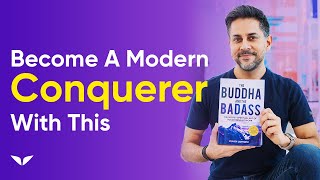
Vishen Lakhiani, founder of Mindvalley, shares how he kept his company afloat during COVID by retraining staff instead of laying them off and moving everything remote. He outlines his book The Buddha and the Badass, which teaches two core skills: trusting your intuition and bending reality to match your vision.
Chapters
My name is Vishen Lakhiani, I'm the author of the recent book the Buddha and the Badass. And I'm so delighted that Jack asked me to share insights with you guys today. So firstly I have my. I just had a new camera set up here in my studio so I have one of the big beautiful film cameras aimed at me right now. But excuse me, I have to look at the camera but also reference notes on my desktop. So still getting used to this. But I'm delighted to be here at Reboot and I simply adore Jack. A great friend, great ally. I appreciate everything he's doing down under in Australia and I wanted to do my best to support Jack and all of you who are tuning in today. So I'm going to address two questions that Jack asked me to speak about. The first is key insights from the book the Buddha and the Badass, the Secret Spiritual Art of Succeeding at Work. And also how I as a fellow entrepreneur have been dealing with, for lack of a better word, the sure absolute frickin chaos in the world today. So it was March 17th when I here in Malaysia I found out that I wouldn't be able to go to office and the entire country was going into lockdown. Now I run a company, mindvalley. We're the world's leading personal growth company at this point, I guess. And we have around 450 employees scattered around the world. About 300 employees, 150 contractors. They come from 60 countries, but over 200 of them. I'm one beautiful office here in Kuala Lumpur. And all of a sudden with two days notice, we found out that the office had to shut down. Of course the first impulse was panic and I would be lying if I said I wasn't scared. I had to conserve cash. I had to figure out if we were going to need to change our business model. A good chunk of what we did was in the event space and that was absolutely gutted. Absolutely gutted. All our big events of the year were canceled and so it was a very frightening time. Now they were three decisions I made which I think helped us get through this time and I thought I'd share them here. The first decision is, is to promise my staff that I'm going to do my best to retrain rather than lay off. So I knew my entire event division was gutted and I told the team, look, unless I absolutely have to, unless we're in an absolute crisis, everyone's job is secure and what we're going to do instead is everybody working on events we're going to retrain them for the part of the company that is actually thriving during this time, which is digital education. As people are stuck at home, more and more people are going online. That was the first one, and I think creating that sense of safety really helped. The second thing was moving rapidly to a remote friendly culture. So I got the team on tools. Two tools which I think made a massive difference. The first is called Monday.com. check it out if you haven't used it yet. And the second, absolute game changer. Airtable. Check out Airtable. Airtable lets basically everyone become almost like a software engineer. I use Air table to build new applications for my team for everything from blogging to managing social media to hiring technologists to product planning to managing hr. Airtable lets you pull together different blocks and create, literally create your own software and it dramatically changes the way you work. So Monday.com and airtable. Now, the third thing is I had to change my lifestyle. My children, I have two children, their school is also shut down. So I'm not just working from home, I'm also working from home and doing my best to be a dad. And at first that was kind of scary. But what I've realized is that I've grown to love this new approach so much. I cannot imagine going to an office more than two days a week anymore. I just love being at home. I'll confess, I'm wearing gym shorts right now as I'm doing this thing. The level of comfort, the fact that my little girl who's six years old will come into the room when I'm in the middle of a zoom call and just give me a hug or ask or show me her latest Lego creation. There's just something in there. And so what I dreaded being out of the office, being away from the team I've come to love. And, you know, I've discovered a whole new way of working. So to recap, three tips for everyone. Number one, do your best to create safety for your team. I know most companies may not have that luxury. Sometimes if you have to lay people off, I mean, that's inevitable. But always do it with care. Do it with compassion. I felt I have incredible people and I wanted to repay them for the years they've given me. So I'm opting to retrain rather than let go, even when whole divisions are completely gutted for a year and we don't know when they're going to be back. Number two, move to a remote, friendly environment. Again. Airtable and Monday.com, amazing tools for this. If you have to choose one, get on airtable first. It will change the way you work. And number three, get used to it. Figure out how to shift your lifestyle and you never know what beauty and magic you might discover. Now, about the book, the Buddha and the Badass, the Secret Spiritual Art of Succeeding at Work. Okay, so this book talks about a new way of showing up at work where you get more done in less time. You are ultra productive, but you're also able to give your best at work and truly shake and change the world. Now, the book is based on the idea that so many entrepreneurs are absolute badasses. You guys are the rebels, the misfits, the people shaking things up. In fact, ever heard that Apple ad, I believe it goes, you can criticize them, you can villainize them, but the thing you cannot do is ignore them because they create things, they change the world. Now, that ad, of course, was by the company Apple, and the founder of that company, CEO Steve Jobs, is probably the ultimate Buddha badass. I'm going to come to that in a moment. You see, the Buddha badass is the change maker. The badass is the archetype of the change maker. But the Buddha is the spiritual archetype that merges with that change maker so that you have access to traits and human abilities to that sure, badassery denies you. For example, have you ever explored the idea of using intuitive impulse to generate ideas, to see new visions for your company, new products to create? More and more CEOs in Silicon Valley are exploring not just meditation, but concepts such as neuro training, concepts such as plant medicine to source ideas. One of the most incredible entrepreneurs I know in America once said, if you're a CEO and you're not currently tapping into plant medicine like ayahuasca, you're at a competitive disadvantage. Now think about that for a moment. At the same time, think about the fact that almost the most successful CEOs in America right now, the people you read about in Wyatt magazine and so on, are embracing meditation in droves. According to Daniel Goldman, 44% of the Fortune 100 will have meditation classes for their employees. Now, where this what's happening is that it's not just meditation as a way to deal with stress. That's easy. You can learn that it's meditation as a way to access altered states to source ideas. Intuition really is what I'm talking about. So many powerful intuitive ideas can be yours. When you learn to tap into these altered states, that's the first thing. But there's A second thing. And we're going to come to that second thing because it takes a bit of a leap of faith. But let's talk about intuition, and let's go back to the most famous CEO of our time, Steve Jobs. Steve Jobs, in his famous Stanford commencement address, said, listen to your heart and intuition. They already know who you are meant to become. And he wasn't just talking in a fluffy term about listening to your heart in Steve Jobs biography by Walter Isaacson. Isaacson literally wrote this about Jobs. He believed in prana, or an intuitive way of understanding the world. He believed that there were saints and sages and mystics in India who had special abilities and that he was one of them. You see, Steve Jobs was well in line with his Buddha as well as his badass. So intuition is that first pillar, being able to create new ideas, understand where your soul wants you to be, have an intuitive impulse like a compass guiding you. But the second form of spirituality at work is a concept I call bending Reality. Now, this one is the pics a little bit. Some of you may be skeptical about this, but this is one of the most powerful ideas you can learn. Bending reality is the idea that you can use your mind to make life easy. I train and study with a lot of spiritual masters, and I remember asking a Chinese master once, what does it mean to be truly spiritual? And he said, it's really simple. Life becomes easy. Obstacles, barriers move away. When you have a goal, you move elegantly towards the goal without breaking down, without sweat, without stress. Life becomes easy. That is what bending reality is about. It's literally the idea that your mind to some degree can almost shift probability so that what you are seeking to create comes to you effortlessly. Now, let's go back to Steve Jobs, Right? Did Steve Jobs apply this? Well, interestingly enough, if you look at his book, his biography by Walter Isaacson three times in the biography, Isaacson uses the term bend reality in relation to Steve Jobs. Steve Jobs, I believe, believed in this, and you should, too. Because when you master these skills, magic happens. And I'm not exaggerating in that word, life almost seems magical. The great MBA professor Sri Kumar Rao, who was an MBA professor at Kellogg, at London Business School, at Columbia, he said, the most amazing and important belief that we can have in the world is the idea that we live in a benevolent universe, that the universe has our back, that our dreams, our wishes, our desires are a function of that universe, and that we can tap into this and we can manifest our desires in powerful ways. And the universe is Beside us. It's the concept of the benevolent universe as a mental model. And I believe that this concept, a benevolent universe, helping you bend reality is probably one of the most important things an entrepreneur can learn. So those two ideas coming together, the intuitive mind and the mind with the ability to bend reality, are key ingredients for what I believe is going to be a new era of entrepreneurial training that you're going to see emerge in the world. The Buddha and the Badass explores that, but it does so in an interesting way. We're not going to talk about. We actually don't talk about intuition or manifesting in this book. Rather, the book is nine chapters. You do not have to read them in order to. Each chapter is a practice that is designed to put you in that state. The first chapter is about identifying your seed. It's a theoretical idea that your soul chose your body for a specific reason. But most of us never really embrace why our soul chose that body. When you do, you activate magic in your life. Chapter chapter four is about five practices you can bring into your life to optimize your brain, optimize your fitness, reverse aging, and have your mind operating at such a powerful degree that you're able to think, process, and be significantly more productive than normal people. Chapter seven is about bold visions. It's about the idea that the bigger your vision, the easier it gets and you'll learn from some incredible minds from Elon Musk to Naveen Jain. Why that is so. Chapter nine is my favorite chapter. It's an identity upgrading and it says this. It's in the spiritual idea that the universe doesn't give you what you want. Rather, the universe will reflect to you who you are. And chapter nine teaches you a way to upgrade your identity so you become better and bolder and wiser and better and more majestic versions of yourself. Now when you put all of this together, it's a blueprint towards encompassing your Buddha and your badass, merging them together so that you can truly shift and change the world. In the words of Ken Wilber, the great spiritual sages of the world, from Buddha to Moses to Jesus to Padmasambaba, were not feeble minded milk toasts. They were movers and shakers who, who rattle the world with the force of their ambition. So keep that in mind. If the Buddha was alive today, if Moses was alive, if Paramahansa Yogananda was alive, if the great spiritual sages of the world were alive, I do not believe they'd be meditating in an ashram or a temple. They'd be running for office. They'd be building the next billion dollar company. They'd be the activists marching and seeking to change the world. And that is where I want you to be as well. If you're tuning in, you're probably already a badass. What I want for you is to discover your Buddha. Thank you. And thank you, Jack, for having me on this. Thank you, guys. You can learn about the Buddha and the badass. You can get the book from Amazon, but go check it out@mindvalley.com Buddha badass. I repeat, mindvalley.com. that's my company. Forward slash, Buddha, badass. Thank you all.
More from Vishen




Brown Noise for Deep Focus and Concentration (Best with Headphones) | Gabriel Loynaz



Your Appointment With the Eternal | Guided Meditation with Michael Bernard Beckwith

