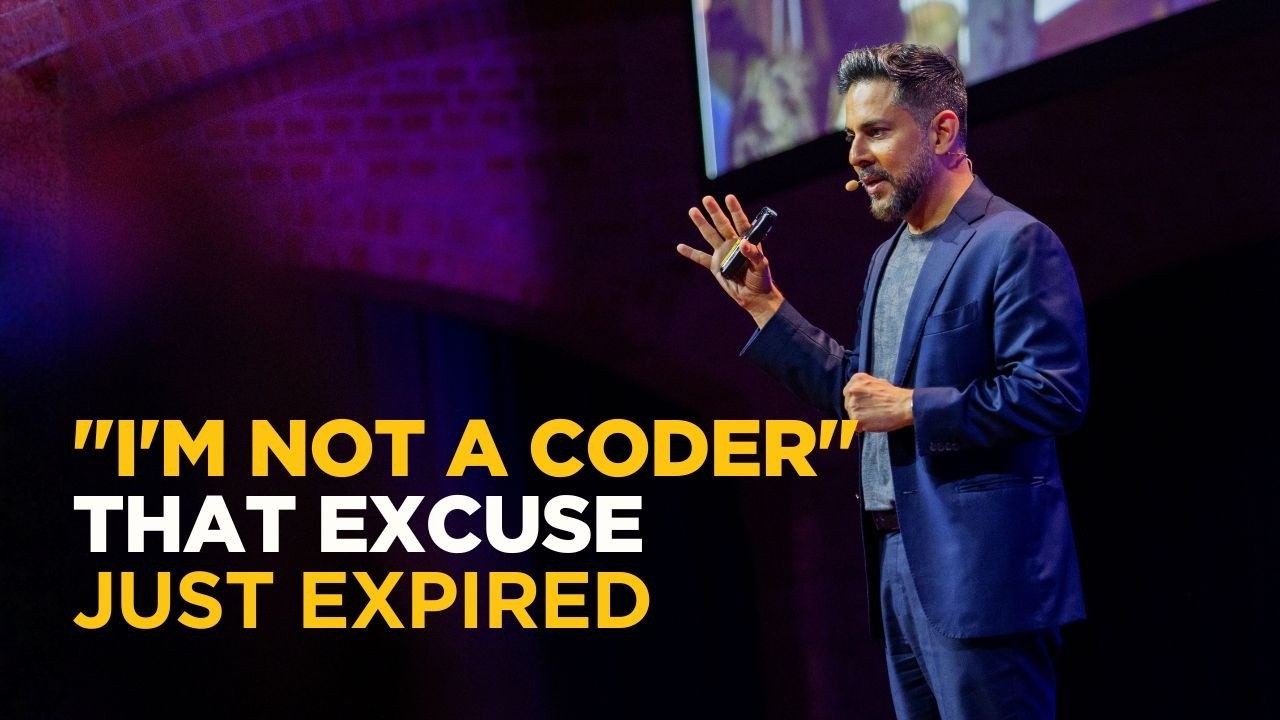
Vishen Lakhiani explains that technology development costs have plummeted—by 97%—and speed has increased 50‑fold, turning $100,000 projects into $3,000 builds. He uses this shift to launch the “backward staircase” exercise, urging founders to picture their companies 3, 6, or 7 years ahead by focusing only on the WHAT (the desired outcome) and the WHY (the purpose), deliberately setting aside the HOW. He argues the myth that founders must know the implementation stifles progress, citing Mindvalley’s Story of Lucy (built before Anthropic Opus 4.6 existed) and spiritual teachings from Esther Hicks and Rumi that stress intention‑first thinking. The core message: a clear vision and purpose will attract the right talent, money, customers, and technology, allowing the HOW to reveal itself.
Chapters
there's a mental block in your head that says, I'm not a coder, you are stuck in 2025. That's how fast the world is changing. It's like someone in 1925 stuck in the mindset of 1899. We're seeing 25 years of technological change every 12 months. But in February this year, the cost of tech coding dropped 97%. 97%. What cost $100,000 to build, we were able to build for $3,000. But not only were we able to build for $3,000, the speed of building went up 50x. This is where you are right now. So, okay, what I want you to do is this exercise. I want you to start now thinking about what your company looks like 3 years out, 6 years out. You already did 10 years out. That was what we did in the first exercise. Now we gotta break it down. What does it look out at year 3? What does it look at at year 6, okay, or year 7? We're gonna do that exercise. Now, this is how I want you to do the exercise. I want you to assume that you have to what? Grow. You have the why. Okay? This is called the backward staircase. I want you to assume you have the what and you have the why. You know what you wanna build. You know the imagine the world if. You know why you wanna do it. We'll go deeper in the why in a moment, but you don't know the how. And I want you to know, not knowing the how is okay. That's the great myth. So many founders tie their hands behind their own back because they fall for this. BS idea. I must know the how. When we created the Story of Lucy at Mindvalley, we did not know the how. We did not know how to build the technology because Anthropic Opus 4.6 did not exist. Cost of development was so expensive. The hows often reveal themselves. If you go into spiritual philosophy, Esther Hicks in her book, The Law of Attraction, said, focus on the what. Focus on the why, skip the how. If you know the what and why, the how will reveal itself. Or the Rumi said, when you start walking on the way, the way reveals itself. Okay? So first, I need you to accept this reality. Your imagine-if scenario, forget the how. When you think about year 3, year 6, Only think about the what and the why. What are you doing? Why are you doing it? If you don't know the why, you won't have the fire in your belly to wake up every morning. The what, that's gonna be the fuel that pulled you out. Imagine the how solves itself. Imagine the right people. Imagine the right talent. Imagine the right money. Imagine the right customers come. We're only gonna focus on the what and the why.