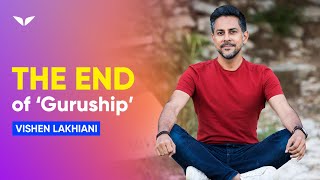
Vishen Lakhiani argues against following a single guru. Instead, he says to learn from multiple teachers, compare their ideas, and build your own path. He estimates even the best teachers are wrong 10-20% of the time.
Chapters
Do you follow a particular guru? Is there one incredible teacher and personal growth that you really resonate with and you follow over and over again? It turns out that most people in the world tend to stick to one teacher. They tend to stick to one religion. But what if that isn't the optimal way to really grow in the world? Right now, I want to speak to you about what I believe is the end of guru shit. I put this background here to make the idea simpler. So many people follow a guru. The guru's in the center. The students are around the guru. You are one of the students. You are right over here around the guru. And your attention is focused on everything this particular guru says. But in our world right now, things are getting so much more complex. There's so much more information. I don't believe any one person is always right. I would say even myself, I'm probably wrong at a certain percentage of times. Probably 10%, maybe 15, 20%. And so you put yourself at. At risk when you follow one person. Don't follow that one teacher who claims to know everything. Instead, what we are trying to do and what I'm trying to do with Mindvalley is change the model. The guru is no longer in the center. You are in the center. You are over here. And the gurus are the different teachers. They might be Shapali Sabari. They might be Jim Kwik. They might be John and Missy Butcher. They might be me or Robin Sharma or Professor Sri Kumar Rao. The gurus are around you, and you can decide that you want to face this guru. And then at a certain point, you may think, okay, I've had enough of that teacher. I want to move to this teacher. Or at a certain point, you might say, you know what? I don't resonate with this teacher. I want to try this teacher. Now, some people believe that that's wrong because you never really go deep. You get conflicting information. But that's not true. If you put the right approach to learning from multiple teachers, you become what I call an integrator. You learn to integrate knowledge from different teachers and create your own roadmap, your own reality, your own vision for how you want your life to evolve. Now that integration process is key. You learn that you can learn from multiple teachers. If you pick up any of my books like the Code of the Extraordinary Mind and the Buddha and the Badass, you will notice that in each book, I'm mentioning sometimes 30, 40, 50 different teachers integrating their knowledge. That process of integration is something I call consciousness engineering. Let me repeat that consciousness engineering, and it has to do with looking at every guru, understanding their beliefs about the world, understanding their systems for living, the practices that they espouse, taking both, integrating them with other teachers and then integrating them into yourself. If you find this idea of consciousness engineering interesting, if, like me, you believe we need to bring an end to the idea of guruship and put yourself in the center and put the teachers around you so you get the best, most well rounded exposure to wisdom, new ideas and practices, then join me in my upcoming masterclass. The link is in my.