❌ CUT LOSSES EARLY!!!! ❌
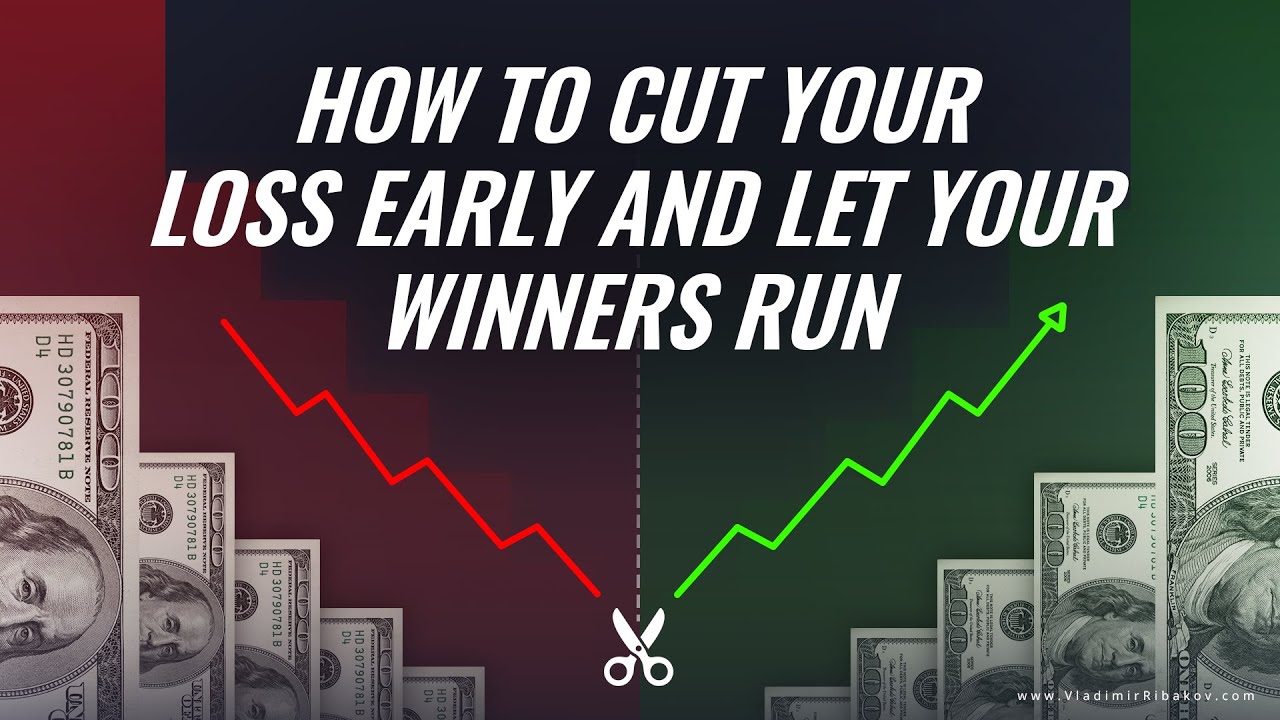
Vladimir Ribakov shows why cutting losses early is essential to trading profitability. He walks through two real trades, USD/CAD and GBP/CHF, demonstrating how deviations from expected price patterns signal when to exit. Disciplined loss-cutting improves overall returns even without more winning trades.
Chapters
Hello traders, how are you? Vladimir here from Traders Academy Club, and in this video I want to cover a subject that most of the traders know it is critical and important, and yet they don't put enough attention, enough dedication, enough— they're not, they're not willing enough to learn that and to master that. And I want to talk about The trading management. What is trading management? Why is it so important? And how you can actually trade— manage your trade, not trade better, manage your trade better. When to cut a winner, when to cut a loss. That's exactly the things I want to talk about in this video. But before we dig deeper, if you are new to this channel, so first of all, welcome to our great community, and I would like to invite you to subscribe to this channel. Just please follow the subscribe button below this video and remember to enable the notifications so you know when there is new content available for you. Also, I would like to invite you to join our trading club, the Traders Academy Club, where you can be exposed on daily basis to all the trading ideas we cover for our members. You can also follow some of our work in the free Telegram channel. Both links could be found below this video in the description or in the pinned comment inside the comment section. So to present the importance of the management, I want to take trades directly from the trading report that the members of Traders Academy Club are exposed to. This is how our trading report looks like, and one of the trades here would be the pound franc, where according to the analysis I expect a bullish continuation. And another one would be dollar CAD, where also we got a setup where, where it's supposed to be a bullish continuation. One of them turned and finished a winner, one of them turned to be a loser, a loss. And I want to show you how basically you manage these positions and when to cut a winner and when to cut a loss. Okay, but before that, let's talk about the importance of that. Now, as you know, the trading— different trading strategies offer different management of entries and also management— and also the— sorry, different ways of entries and also different ways of management. Now, what is best? Is it just set and forget, right? Like you enter, you put a stop loss, you put a take profit, and that's all? Or should you be there and manage? Now, there are a lot of books on the subject, a lot of webinars on the subject. I'm not going to try and convince you which is the best because it anyway would not be a complete truth from my point of view. What do I mean by that? Every trader would have something he will feel more comfortable with, and this comfort should be presented both by the acceptance, okay, so you understand what you are doing and you accept it, and the second, of course, performance. If it doesn't perform well but you understand it, it doesn't make sense to use it, and the vice versa. If it performs well but you have no idea what you are doing, it doesn't make sense to continue and do that because later or sooner It will turn around. So it has to be somewhere in the middle. You need to understand what you are doing and the logic behind every single step, but on the other side, it has to be profitable. My point of view personally is if I trust the chart— the chart is the price, right? If I trust what I see on the chart to bring me in a trade, then I also supposed to follow and rely on the chart to take me out. Out of the trade. So the way I personally believe, and again, I'm not going to convince you what's better or worse because for a different trader, different approaches could work better or worse. But from my point of view, I tend to belong to the category of traders where management is critical. So if I see signs to enter a trade, I will be in a trade as long as there are no signs to get out of a trade. Okay, so that's exactly why I want to explain that, and this also would give you a tip or a suggestion where you also could improve your cutting earlier. Okay, now you probably heard the subject of cut your losses early, let your winners run. Now, in theory, it looks fantastic, right? When you approach to a trade, it's like, oh, Okay, so this one is a little plus, I let it run, and this one's a little minus, I'll cut it. But in reality, it goes exactly the opposite. We have a hard time as traders to accept a loss. Most traders really find any possible reason to convince themselves it will be fine eventually, right? You see it, you enter a trade, but then it develops against you. There will always be some sort of support line or indicator or trend line or whatever, some Fibonacci level, etc. Etc., that will help you to convince yourself that this trade is still legit and you will still end up in a winner. But while in reality the market already gives you the signs that no, it's not like that. Okay, so as soon— the sooner you accept that, as soon as you understand that the market gives you actually signs many times, of course not always, some, some moves are random, right? But most of the times the market gives you the chance to Make a decision before it turns to be completely against you or anything give you any such signs. It gives you really an opportunity to cut, and I want to explain this logic. Okay, now again, I'm not claiming that what I show you here this is the only way to manage. No, this is how I personally deal with my trades, and I want to talk about these two trades: dollar CAD. And the pound franc. Okay, they are both from the report, as I said, that we have in Traders Academy Club. And these techniques, it's exactly what I teach in Traders Academy Club. I invite you to join us, join our family, and explore, learn all these techniques as they happen real time in our daily live meetings and our trading reports. So the first trade, let's talk about the dollar CAD. Okay, the way I found it. Okay, long story short, I just give you a brief idea what and why am I— I was expecting to trade a bullish view here. So the idea is actually very simple. I found this multi-timeframe analysis. I saw a massive bullish divergence. I expect a correction and I expect it to happen from here, maybe a bit lower, but at that point as the divergence is in play, I expect to look for buy opportunities. So I went to the lower time frame. The lower time frame, I spot the 3 higher highs, higher lows, which from my point of view, this is a bullish trend, uh, um, sign. And I said, okay, so if that's in play, this is a great one to start looking for the buys. Then we got an ABCD correction. So far so good. Bullish divergence at the end. My view was ABCD is broken, it's great to go. So the ABCD eventually was broken and we actually started to make higher highs. Technically speaking, this is an amazing sign. What I expect to happen is the price to continue and make higher highs, higher lows. Why? Because if the trend is really about to turn bullish, the buyers should be in control. How are the buyers in control when they manage to make higher highs, higher lows? This is the first place where it starts to be suspicious. Okay, we have a low, we have a high, then another low, another high, and look what happens inside here. Right here we break the sequence. What's supposed to be the higher highs, higher lows becomes to be a salad, a big mess. Okay. Anything but not higher highs, higher lows. So at the moment you are in and wherever you protect, if you protect slightly below this low somewhere here, or if you go with a more swing opportunity, wherever you locate your stop loss, here is the first time when you pay attention. Okay, something fishy is going on. And at the moment it becomes a mess. You see, no sequence of higher highs, higher lows. Instead, it makes lower highs, lower lows. And the official low here is broken, this is the place that I say, I say to myself, okay, I cut. And it doesn't matter if it's a small profit, it doesn't matter if it's a small loss. What does matter, that it's not a full loss. And I know many traders are underestimating it, but I want to give you a brief understanding why it is critical. So I go for a whiteboard for a second and I make it very simple Okay, imagine you trade with a very, very basic stuff. You are risking 1%, okay, in order to gain 1%. Or you can aim for 2%, doesn't, doesn't matter right now because I just want you to understand the logic. Okay, +1, +1, +1, -1, -1. Okay, so looking at that scenario, you are break-even, correct? There is nothing you can make money with, and that's what the market gave you. Assuming you are following the strategy properly, etc., etc. But that's what the market—that's how the market moves. So you can't make more entries because that's what the market gave you. But what you can do is manage your positions better, like I showed you with the dollar CAD. I saw the signs are not with me. I see the higher highs, higher lows not following. I see the bullish momentum is not there. Why would I? Convince myself that it will be fine. Maybe it will, but most chances it will not. Why? Because that's what the market tells me. The buyers are not there. If the buyers are there, then we do see higher highs, higher lows. Well, according to my techniques. Okay, again, maybe you follow different techniques and different logic, but this is my logic and I want to explain this logic. And yes, you can apply the same understanding to your trading. So what's next in that case? We can control the losses. How do we control losses? By cutting earlier. And here is what I want to present to you. Okay, let's go whiteboard again. Instead of— let's make it plus and minus, right? So the pluses are still 1%, but the losses you cut earlier, so it's not 1% anymore, it's -0.8% because you cut earlier. The next time you cut earlier, it would be minus 0.5%. The next time somewhere like 0.7%. Of course, this is just example numbers, right? But eventually what happens here is you are plus 0.7% profit, right? 3%, and that's 1, 3, 2. Yeah, no, 1, 3, 2, plus 1%, right? Or This is— I saved 0.2, I saved 0.5, and I want 3 more. So that's 1 point. Let me just make it the math here. Yeah, so we saved 1%, right? Excuse me if I make— so instead of -1%, we cut earlier, and at the end of the day, we saved 1%. Okay, +1% just by cutting earlier. I hope I didn't make a mistake on the math. Anyway, the final number is less important. What's important here is you understand the logic behind it. So look what happened. I am +1%, not by making more winners, but by controlling my losses. And the way I do that is by listening to the market. So I jumped in at that time. It looks super good, but in reality, the market didn't agree with me. Now, I want you to understand one thing. If you are in a trade and the market doesn't follow your lines, because at that moment, whatever the line you would draw looks impressive, right? And that's how you would want the market to follow. But if it doesn't follow that, that not the market is wrong, the analysis is wrong. And the sooner you accept it, The faster you cut it, the better your opportunity. So my first tip is focus on saving more, cutting more losses early year. How? By understanding what you expect from the price to do. If you are in a buy, you expect highs and lows to gain the momentum. If they don't, this is your first understanding something fishy is happening. And instead, if you get lower highs, lower lows, Get out. It doesn't matter if you manage to save 0.1% of your trade or 0.5% of your trade. Okay, what important is you are following the mark, the price to bring you in a trade, and you follow the price to take you out of the trade. You are loyal to the price and your techniques. Next one I want to talk about is the pound franc. As I explained before, we got an analysis from our Traders Academy Club, um, live, uh, live meeting. And we got, uh, the bullish analysis here, and we got a bullish hidden divergence in this place. And that's the moment I expect to see the rallies taking place. I was looking for the higher highs, higher lows to gain some momentum here. And when I go to the 1-hour chart, this is exactly what I was waiting for— higher highs, higher lows. At the moment we are going above the last high, that's the moment where from my point of view the bullish hidden divergence is validating its entry. Of course, it's one of the techniques and there are different techniques to follow as well that could allow you to enter a bit later or differently. Again, I invite you to join us in Traders Academy Club and to learn all these techniques. Okay, so wherever you put your your stop loss is below the recent low or with some supportive area, whatever. Again, it that's not the real case. That's not what really really matters here. What matters here is staying loyal to when the price shows signs against. And I was waiting for this high to be broken or basically until more importantly until the bearish divergence completes. Why? Because bearish divergence is the first indication. That something is happening. And I don't know, maybe this high would still be broken or maybe not. It doesn't matter to me anymore because the market gave me the opposite sign. I follow and I have to stay loyal. And it doesn't matter if I draw some impressive line like, like goes to the sky and find a reason to convince myself why a 1,000 move is coming, 1,000 pips move is coming, right? It doesn't matter. What matters is you follow the market, you follow what it tells you, and you're loyal to that in a winner, and you're loyal to that in a loss. Okay, that's why I wanted to present you these 2 trades, uh, and both are from the list. Of course, it's always easy to go and talk about only winners and etc., etc., etc. That's not the idea, and I want you also to know You have to manage not only the winners, you have to manage also the losses. Because when the market gives you 2 trades to trade based on your techniques, you cannot trade more. So you have to find a way to make more out of what the market gives you. And because the move that the market gives is limited, the way to make more is control the loss. And you control the loss by staying loyal to your techniques And mainly to understand that if you are looking for the buys and there is no momentum and the market fails to make the higher highs, higher lows, there is no reason you stay inside. And the sooner you accept it, the sooner you cut, the more you save, and at the end of the day, eventually more profits would remain in your pocket. So I hope you find this explanation helpful and useful. And it gives you some idea and understanding what management is about. And the main important thing, remember, if you are relying on the charts to bring you in a trade, rely on the charts to take you out of the trade. And most traders don't do that. As naive it sounds, as obvious it sounds, most traders, they enter a trade without having any clue what they expect. Or mainly how to get out. They just enter, okay? And this is by itself, it doesn't make any sense, right? But now you understand the logic behind it. Every single entry, if you rely on the chart to take you in, rely on the chart to take you out. And the way to do that is first of all understand what do you expect to see, okay? So if you find this video useful and helpful, please hit the like button. I need your help and I need your support here. That's how YouTube algorithms work, as you know. It needs the likes. Please leave your feedback and your comment in the comment section. Let me know what do you think about it. If you have any other management tips for other traders and other viewers in this video, please share your views in the comments as well. Feel free to share this video with anybody who you want because this is free video and ideally it reaches Enough ears and eyes for traders to understand, okay, every single step has to have its logic. And basically, I want you to understand why the under— the most underestimated maybe subject here is the management. Most traders simply ignore it. They understand they should manage, they understand the importance of risk management, but that's where it ends, okay? The difference between that and applying what you understand, it's skies and earth. So, again, I hope this video makes sense and you got some idea on better management. And once again, I invite you to join our family, Traders Academy Club, and to enjoy from all our trading techniques, our trading reports, and our live market meetings. Live trading market meetings, and the links to join are below this video in the description or in the pinned comments inside the pinned comment section. Thanks for your time watching this video. I hope again you found it useful, helpful, educational, and I'll see you soon with more content and with more trading tips.
More from Vladimir




Stop Buying USDJPY: The Critical Resistance You Need To See #forex #tradingstrategy #shorts