Vladimir Ribakov explains how to confirm a favorable risk-reward ratio before entering a reversal trade: your stop-loss distance must be smaller than your target distance. He shows a real example with a 760-point stop and over 1,000-point target, and discusses when to enter immediately versus waiting for a retrace to improve your odds.
Chapters
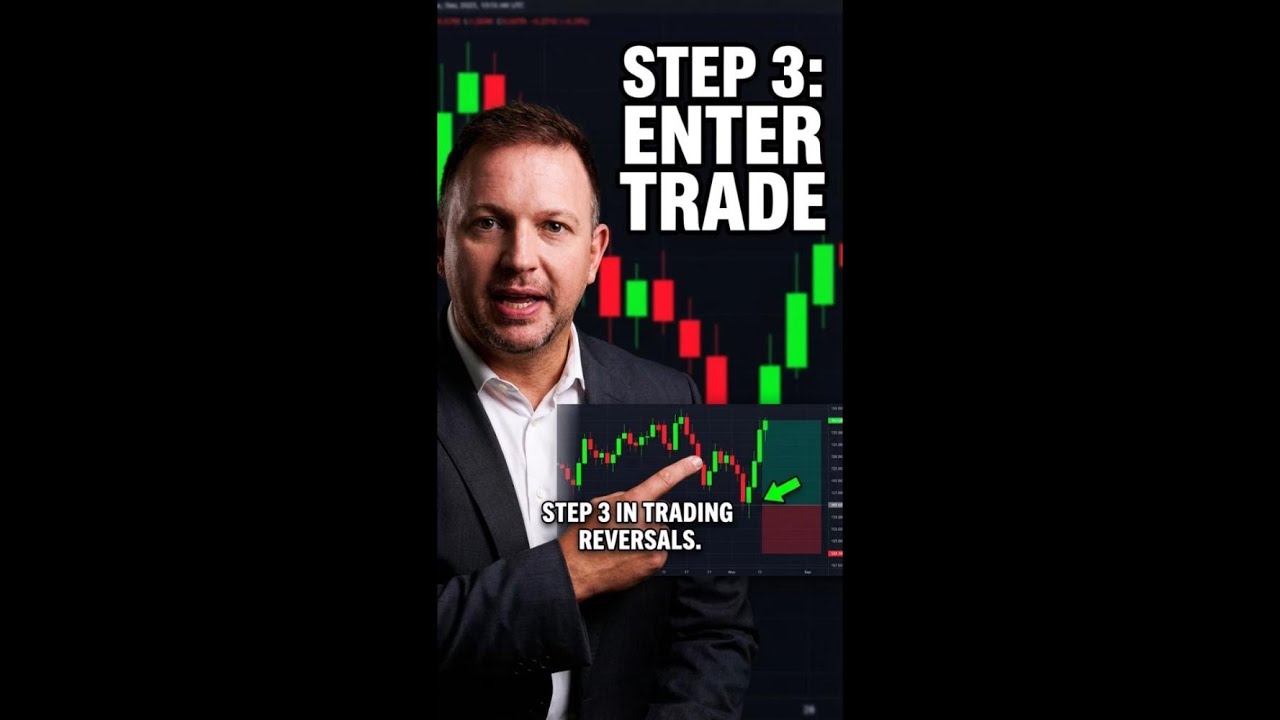
So principle number 3, after you found all the confirmation for 1 and 2, make sure the numbers work for you. Which means once you find the conditions of higher fake highs that turn to be lower lows and you look to enter the trade, make sure that from your entry to the, the risk you take From entry to stop loss is smaller than the take profit or the reward ratio, which is the distance between the entry to the take profit. In our case, in our example here, that once again I want to show you, the one that we executed here in Home Trader Club. So in that case, what we want to follow is if this is our entry sell and this is our stop loss, Our target should be bigger. So if the stop loss is about 760 points and the target is more than 1,000 points, numbers are positive, work for us. That's a legit trade. And for those who have the time to look for possible retraces, and here I want to, to say very clearly, not always the retraces will happen. Sometimes the market crush one way and you might miss when it happens. That's why I personally love to attack the breakout if the risk-reward is already good when it happens. If not, then of course retraces make sense. But if the risk is good by the breakout, I'm in. So what do you want to follow for alternative when you have this structure of fake highs, price flips and makes lower lows, and then retraces, this high acts as a supply. When the price comes nearby and starts to reject from candles that make higher highs, higher lows, to candles that make lower highs, lower lows, that's your trigger that something happens. In our case, low, high, low, high, lower low, boom! This zone comes for the retest, and look What happens next? Look at these bars breaking the structure of rising candles to declining candles, to lower highs, lower lows. And that's once happens the trigger. Of course, when you have the time to, uh, you know, watch out for that, you could improve the risk-reward ratio because now your risk is going to be smaller now. You now protect the peak, right? And the reward, of course, could be bigger. So that's how you could improve risk-reward ratio.