Self Love: Missing Piece to Solving Mental Health Crisis
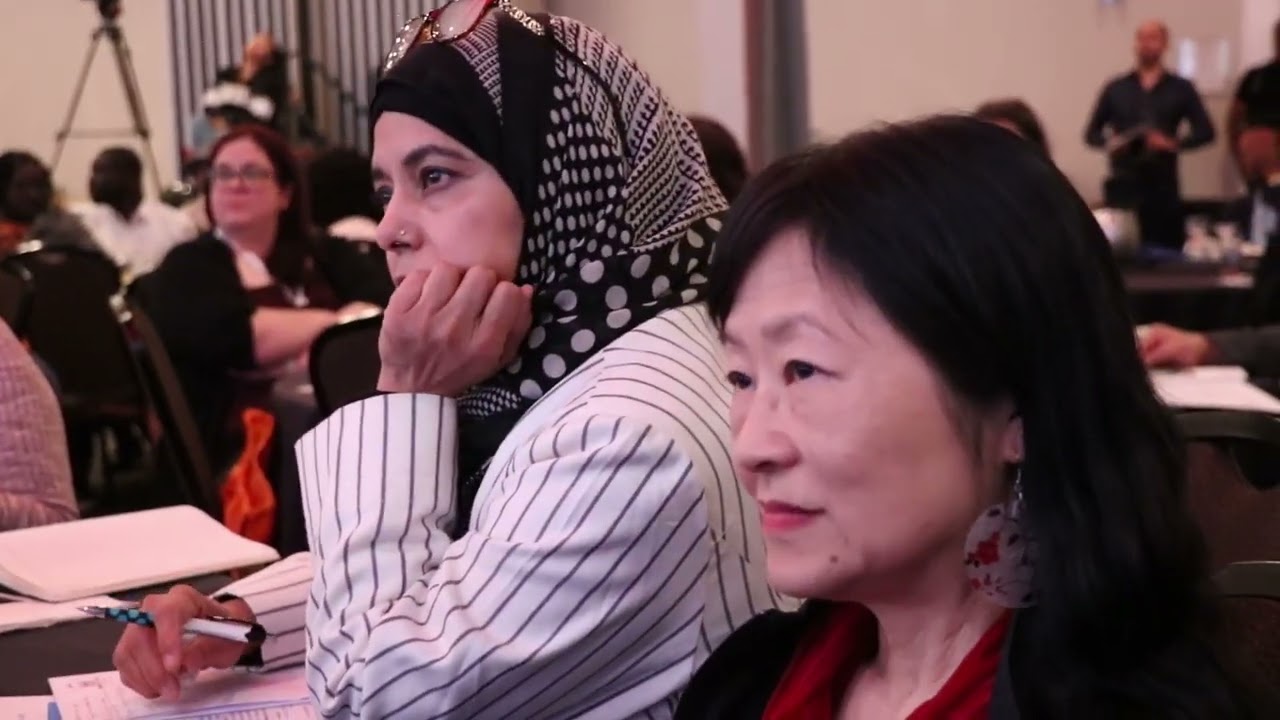
Attorney Wani Iris Manly argues that lack of self-love drives the mental health crisis and teaches a daily affirmation practice to rewire thought patterns. She shares stories from an elevator in Miami and a spiritual retreat, citing research linking self-love to reduced anxiety, depression, and loneliness.
Chapters
So up next, we do have another presentation, and I'm going to introduce— the presentation today will be on self-love, the missing piece to solving the mental health crisis. And I'd like to introduce our next speaker. Wani Iris Manly is the founder of the U.S. law firm W. Manly, P.A., where inspiration meets law, a Paris-based— the house of inspirational business. A TEDx Award-winning speaker, attorney, and best-selling author, Wani is passionate about helping entrepreneurs and organizations positively impact and change the world with their products and services. Best known for her daredevil move from Paris to Miami purely on following the signs that she received daily for a year without knowing anyone in France, one word of French, or without a plan, Wani clearly shows that if you're going to live life, Why not live it daringly and with an adventure? Wani's philosophy for success, for success in life and in business, is quite simple. You are under no obligation to be the same person you were 5 minutes ago. In other words, change, evolve, innovate. Always strive to become the best version of you. And how you do this is through change. Please provide a warm welcome to have Wani Iris Manly Iris Manly to the stage. Thank you.
Thank you.
Thank you, Wani Iris Manly.
Thank you. Good morning. It's my first time in Edmonton. Everybody here is so nice. I'm coming from Paris, so we all know what the reputation of French have with friendliness, so it's just nice to be here. Thank you for having me. I want everybody to please do me a favor and for everybody to please close your eyes. Close your eyes and take a deep breath. And I want you to settle in. Take another deep breath. And another. And be here in the room. And now I want you to repeat the words to yourself, "I love you." I love you. I love you. I love you. Keep repeating these words to yourself, silently to yourself, and I want you to notice how you feel. Notice how you feel in your body. Notice how you feel in your mind. Notice how you feel in your heart. And then notice how you feel in your energy field. And I want you to open your eyes. How do you feel? What if self-love is a missing piece of to solving the mental health crisis. When we think of the global mental health crisis we find ourselves in today, there is very little conversation talking about self-love as a possible solution to solving this issue, this state of disease. And I find that to be quite shocking because even though there's a large body of psychological research that shows that self-love has a very strong impact on our mental health and on our emotional state, both in terms of decreased anxiety, depression, anger, loneliness, and sadness. Yet, what we don't know yet is actually how to love ourselves, and this is no fault of our own. In fact, when it comes to self-love, we've been programmed to believe that self-love is selfish. We've been told that self-love is self-indulgent, when it could not be the furthest from the truth. And the lack thereof, it's actually making us sick, both literally and mentally. What we've also been programmed to believe about love is that love is something that is actually outside of us, that it's something that we get from other people, first from our parents, then from other family members, from our caregivers, our siblings, our teachers, our friends, and then from our relationships and marriages, not knowing that this paradigm of love actually sets us up for all sorts of problems later on in life. It creates lack of self-confidence, it creates low self-esteem, codependency, stress, mental health crisis, midlife crisis, divorce, and even suicides, all of which has increased disproportionately in the last 3 years. You see, from the moment we were born, not only are we conditioned that love is actually outside of us, but that we're actually here to give love to other people in order for us to receive love, making love to be performative, making it to be conditional. This makes us feel incomplete, inadequate, not whole, unworthy, shining a constant light on our not enoughness, making us to feel disempowered, and then we wonder why we have a mental health crisis on our hands. And then when we get to a place in life where life actually humbles us, and we have a thing such as a global pandemic that has actually placed our mental health at center stage, and we can find things like some of us, like the personal development route, or self-awareness teachings, and we realize that we don't actually love ourselves, and that our lack of self-love is actually the source of most of our problems in our lives. We must then begin this journey to actually start loving ourselves, and this is a completely foreign concept to many people. In fact, most of us are completely detached and unaware. We don't even know where to begin. All the while, this fundamental need, this deep human need and desire for love, is the driving force for everything in our lives. We're not talking about vanity here. We're talking about a sense of self. We're talking about cherishing yourself. We're talking about cultivating a relationship with yourself that creates a state of well-being and not dis-ease. You know, the first time I was actually made aware that I didn't love myself actually happened in Miami. And I was in an elevator with a good friend of mine named Linda, and there was a gentleman in the elevator with us, and he began to speak with me, and according to Linda, He began to flirt with me, only I didn't notice. According to Linda, she says, "I was completely clueless." And so the guy got out of the elevator. Linda turned to me and she said, "Why don't you love yourself?" Caught by surprise, I go, "What do you mean? Of course I love myself." I said, "When people tell me that I'm beautiful, I see what they see, I feel it. I'm a lawyer. Of course I do, right?" My friend Linda, though, she knew better. She could see that I wasn't quite yet ready for that level of truth, but she let it go. But that day, she actually planted a seed within me, just like I'm up here planting this seed for you. Let me ask you a question. Let me see a show of hands in the room here. When you were growing up, how many of you ever heard from your parents to love yourself? Okay. How many heard from your parents, by a show of hands, to love other people? To love your mother, to love your father, to love your brothers, your sister, to love thy neighbor as? Right? We all know that verse, right? As you can see, way more hands are actually up the second question I asked, right? Why is that? Because that's the universal program we've all been conditioned to, that is to love other people and not to actually love ourselves. And then, life— we go along in life and we actually meet those rare individuals who actually do love themselves, those individuals who actually place themselves above everybody else, who actually has a very high value, a high sense of self. And what do we do? We call them names. We call them— arrogant, we call them, we say they're full of themselves, right? And if we're actually, we don't even like them, right? And if we're actually honest, most of us actually hate them, right? We're jealous of them, right? And I mean, sometimes we even call them a narcissist, right? Not knowing that these individuals actually have the right idea all along, and we're the ones that's been duped. We're the ones, because of our lack of self-love and believing in lack and seeing ourselves as less than, are the ones that is the cause of our own mental anguish, our own pain and suffering, our own sense of feeling lack and not enough. Yet in a very changed world of a global pandemic that has placed our mental health in all hands on deck crisis mode while we're the loneliest we've ever have been, despite all the technology we actually have, we're the most disconnected, we're the happiest— we're the unhappiest we've ever have been, excuse me, We are the most depressed, the most— we're most unhappy, we're addicted to psychotics, we're addicted to many prescription drugs, like, just to cope with life. We're at a point right now where the inner work for the individual has to take center stage. The inner work is just as important as the outer work. It is as important as our high performance. In fact, I would say even more. In fact, it is what's determining for it. Loving ourselves today individually is no longer a nice-to-have, it's a must-have, it is a must-do. Why is that? Because we're at a point right now where it's a matter of life and death, literally. You know, the first time someone actually said to me, or I heard the command— I never heard it from my parents at all. The first time I heard someone say to me the command for me to love myself actually happened well into adulthood, In 2009, when I was living in Miami, and I was in a spiritual retreat with a very well-known— I'm sorry, a very good-looking British teacher who was actually raised to be England's next prime minister after Tony Blair. He went to the prestigious Eton College, as Prince Harry and Prince William. And I was in a room with a bunch of people, and he said, "Love yourself." And I just sat there, just perplexed, not knowing what to do, and so, I began to repeat myself the same words of affirmation of "I love you" that I had all of you saying when I walked onto the stage today. And as I began to actually say it, I felt nothing. I began to say, "I love you, I love you, I love you," and it didn't resonate with me, right? Did it make me feel centered? I felt something in my body, like probably most of you did, but did it resonate with me actually feeling that I love this being standing before you today? No, at first. It wasn't until I got into the why. That is, why is it so important for me, for you, for us to love ourselves? What's the big deal? And of course, what does it have to do with our mental health and mental well-being? And what I found was quite profound. Number one, I found that loving ourselves is actually a big freaking deal, and it has everything to do with our mental health. You see, the most important relationship you will ever have is the relationship you actually have with yourself. Whether you're married, whether you've got 1 kid, 7 kids, 17 kids to take care of, you will always be with you until your very last breath. And wherever you go, there you are. You take your best friend with you, and that is your mind. You will never ever be able to escape your own mind. No matter how many vacations you go on, no matter how many beautiful beaches you actually go to, it doesn't matter. You will always be with you. You always take your mind with you, and you always take your state of well-being or your state of dis-ease. And as if this isn't profound enough, loving yourself deeply matters because every relationship you will ever have for the rest of your life is an exact mirror reflection of how much or how little you are actually loving yourself, which means the quality of your relationships that you are attracting, that you have in your life, is a reflection of how little or how much you actually love yourself. And what is life all about? It's about relationships, starting with the relationship you actually have with yourself. Number 2: Loving yourself also significantly is a central key component of healthy psychological functioning influencing self-esteem, motivation, self-determination, how we lead ourselves and in the workplace. In fact, some of the evidence-based benefits of actually loving yourself includes but are not limited to: number one, being happy, which is why we're all here, being positive, thinking positive thoughts, having more self-acceptance for oneself, feeling less defeated, having higher self-esteem, more motivation, more determined, having a growth mindset, having an increased self-awareness, being more emotionally intelligent, which is very good for leadership, having less stress, less anxiety, having an attitude of gratitude, being optimistic— all of these and so much more directly linked to our mental health. Third, what I also found was that loving yourself significantly matters because the amount of loving which you actually have with yourself is the point of attraction of what you're attracting in life and what you're not getting in life. And when you're going through life where you're feeling like you're not getting what you want, what are you feeling? You're feeling frustrated, right? You're feeling angry, you're feeling sad, you're not feeling like you're good enough. You're feeling self-defeated. Sometimes you're feeling like you're without hope. You definitely are not feeling like, as if to say, you're a winner in life. In fact, it's quite the opposite. You feel like a loser. You feel like an utter failure. And if that continues long enough, what the studies actually show is what? It leads to suicides. Understand this: loving yourself will yield the most incredible and the most amazing things in your life. Why is this? It's because you're emanating the most powerful vibration there is, and that is actually love. And it's actually the most healing and powerful healing element as well too. Once you really begin to see how critical, how crucial loving yourself actually is, and how so important it is to your mental health, the question then turns down to, "Well, how do I love myself?" And the answer is quite simple. You start with telling yourself you love yourself by affirming yourself every single day because, number one, we're not programmed to believe that or to be doing that, right? By affirming and reaffirming to yourself that you love yourself again and again until it begins to feel true for you, until it becomes ingrained in you, embodied in you, and it becomes second nature. Let the words "I love you" be the most familiar words your mind hears every day, overriding all of your "I can't," "It's too hard," "I'm not smart enough," "I'm not good enough," "I'm not thin enough," "I'm not water enough," or whatever the crap your mind is actually telling yourself that's creating a war zone, that's creating a mental dis-ease in your mind, and you're not feeling good enough. It's very, very important because, and I know it sounds like, huh, I mean, this is really gonna work, right? But it's like going to the gym, right? You go to the gym like one time to get a nice body or to lose weight, it's a repetitive thing, right? And so you have to keep doing it again and again. I know it sounds quite simple because, you know, we're all very, very smart people in here, right? And because as human beings, we're always looking for the most sophisticated answer and complex answer to anything, right? And we're always overlooking what's right under our noses, ignoring what's right in front of us, the most simplest answer to everything. But our words have immense power, so much power that our words have the capacity, and it does, affect the human psyche. It transcends human consciousness. That is how powerful your words are, and that is how powerful you are. When you begin to utter these words to yourself on a daily basis with devotion and intention, you begin to change your entire body's entire molecular structure. Your entire mental construct changes. Every single cell in your body actually hears you and begins to actually react to that. What then begins to happen is your whole life on the outside begins to change and to mirror your high vibrational state of actual love. Whatever you were— what's ailing you inside begins to actually heal that within you. And if you're actually sitting there in your seats right now, and you're probably maybe— I don't know if you are, you might be actually skeptical about all of this— I would like to introduce you to the work of the late Japanese scientist Dr. Masaru Emoto. Anybody have ever heard of him before? The water experiment? Great. What Dr. Emoto did was that he actually did a water experiment to where he placed words of affirmation, words of love, words of positivity, and also too with music, with sound, right? Where he played classical music, and he watched the water crystals that was actually being formed when these positive words were actually being said. Versus words of evil, and then words of negativity, and then also too playing heavy music, and he noticed in how the water water crystals being formed with these types of messages were actually quite ugly. As you can see, we have eternal peace. Look at the crystals at the top. And right there on the far left, you have love and gratitude. Look how beautiful that crystal is. Then you have, if you can't see in the back, it says, you disgust me. You notice how the crystals begin to form, right? Words of evil. And then thank you on the far right, right? Thank you, look at how beautiful those crystals are, right? Look what wisdom produce, what truth produce. Eternal, angel, I love you, peace, you fool, you make me sick, evil, polluted water before prayer, polluted water, after prayer. Now, imagine if these types of crystals can be formed with just water, with words of affirmations being said over water. Imagine what they would actually do to you, whose body is actually made up of over 70% water. Imagine the possibilities, what that would actually do to your mental state, right? The people around you, imagine what you could be creating. Imagine like your performance at work, Imagine the ripple effect that would actually have in the world. Make no mistake, self-love is absolutely critical if we're going to get very serious about solving the mental health crisis that we have on our hands. Otherwise, we're going to continue to just be having— putting a band-aid on the actual problem. We're going to continue to have beautiful conferences like this one, after conferences is giving it lip service. Mental health is going to continue to dominate the airwaves, all the while, we're going to lose ourselves, lose our loved ones, and then also to lose our humanity. Love is the most powerful force there is. It is the most potent and strongest medicine. So say the words "I love you" to yourself with great meaning and intention, and say it often. Again, let the words "I love you" be the most familiar words your mind hears every single day, so you're no longer walking around here feeling defeated, feeling empty inside, feeling that you're not enough, and you only hear when you're in a relationship from your spouse, or you're getting approval from your team leader, from your boss at work. As you start this practice, I want you to be patient with yourself. Listen, you're not going to love yourself in one day. You spent an entire life being self-critical about yourself, right? So in the beginning, like it was for me, it felt very, very untrue. It would very feel very much fake, right? Because You're used to beating yourself up, you're used to criticizing yourself, you're used to telling yourself you're not good enough, you're used to having to outdo and how to outprove and outperform yourself, which is why we actually have, or one of the reasons why we actually have a mental health crisis in the first place, right? So be patient with yourself. And if the words "I love you" may be too far of a stretch for you, then you can just start with, "You know what? I'm willing to love myself. I am willing to love myself more than I did yesterday, today, more than I did yesterday." I did yesterday, I did today. I am willing to love myself the most I ever have, or just plainly, I am willing. That's it. Your body, your mind will actually begin to respond to you and actually begin to give you the feedback that's actually been looking for, and it'll begin to actually heal with yourself. What's more, be intentional about feeling the emotions of love and feeling that love every day from within you. Let the feeling of love also be the dominant feeling, the dominant emotion that you feel every single day. All this is actually generated from within you. The feeling of love, the feeling of self-acceptance, which is actually another synonym for actually self-love, is 100% within you. You are the actual source of all of that. We're all working here, right? All of the love, all of the approval we're all looking to get from other people, from looking from getting off our jobs, from all of our mountains of actual degrees, it's all within us. And at the end of the day, it's actually our self-love, it's actually our self-respect we actually are looking for. You know, when you begin to really begin this practice with yourself, it doesn't take very long, what you will find is that it's all within you. You begin to feel it, your body begins to feel better, you begin to, you know, everything in your life will actually begin to change, and you actually find yourself falling in love with yourself. Not, again, we're not talking about We're not talking about— we're talking about, again, cultivating a beautiful relationship within your own self. You'll begin to discover one of the greatest poets of our time, Oscar Wilde, said and gifted to us what I personally believe is a doorway to actually solving this mental health crisis, and that is, "To love oneself is the beginning of a lifelong romance." Thank you.
Thank you so much, Wani Iris Manly.
Those were— gosh, my pleasure.
You got me today. Those words spoke so much to me. Like, my mom is down here, and I think that— I think about just how yesterday even went for me and just how much those words spoke deeply to me. So thank you so much. I'm trying to not cry on stage, but thank you so much for those words. And I really think that you did plant the seed in many people today. And I think about, you know, myself. I love planting. I have a little garden. I have all those flowers that are growing in my living room. And I think about how the care that I take of my plants, right? You know, I water them. I make sure that they're in the right sunlight. I make sure, you know, maybe I'll add a little extra fertilizer, and I'll position them in a different way. And, you know, maybe the soil gets a little bit dirty, or I see things coming up and I'll weed them. I think that's the same principles that we need to take for ourselves. You know, if we're planting that seed, we need to take that and do the same thing for ourselves, whether it's making sure we have exercise, energy, sleep, light, beauty, respecting ourselves. And then even, you know, maybe it's about boundary setting. Maybe sometimes those weeds come up in ourselves that we need to deweed them, we need to get them out. We need to show ourselves that self-love. So thank you, Wani Iris Manly, so much for that message today. It resonated with me, and I'm sure it resonated with many people out in the crowd today. So thank you so much!
My pleasure! Thank you, thank you, thank you!
More from Wani

Dream. Lead. Succeed. A Dffierent Conversation About Manifesting Your Dreams, Leadership and Success

Wani speaking at #Oxford on the Mental Health Crisis in the Digital Age and Unprecedented #Change.

Uncovering the Unknown A Deep Dive into the Transformative Journey of Self Love By Wani Iris Manly


Wani Iris Manly, Esq | Eminent Speaker | Global Research Conf. 2023 | King’s College, Cambridge, UK

GRC 2023 Networking Dinner Global Research Conferences 2023 King’s College, Cambridge, UK

Lisa Charles on my award winning keynote on entrepreneurship at the Paris RISE WISE WIN Conference.

Natalie Clayton on my award winning keynote on entrepreneurship @ the Paris RISE WISE WIN Conference