Stop Solving Problems So Fast! (And What to Do Instead)
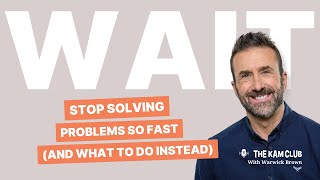
Warwick Brown (host) explains the "expert trap": when a confident, experienced practitioner jumps to solutions too quickly in client meetings, undermining trust and connection. He argues for active listening, asking more questions than giving answers, adopting a beginner's mindset, pausing before prescribing fixes, and prioritizing empathy and collaboration. The video includes personal examples, quick tactical shifts to break the habit, and calls-to-action to Cam Club resources (playbook, quiz).
Chapters
Picture it. You're in a client meeting. You have heard this problem a hundred times before. And before the client even finishes explaining what's going on, your brain is already racing. You're already thinking, oh, yeah, I've done this before. Oh, yeah, this is how I know. This is how I fix it. So you jump in with the answer and crickets. The client's face blank, in fact, maybe even annoyed, maybe even a little defensive. You woke up thinking, what just happened? Why was that? What was that reaction about? Well, my friend, you might be caught in the expert trap. So today we're going to unpack why being the smartest person in the room doesn't always work in your favor and how to flip the script before it starts holding you back. Hey, cam fam. It's your favorite cam coach, Warwick Brown. And today's episode might sting a little because we're talking about that sneaky little voice in your head that says, I got this. I already know. Because sometimes that voice is what's stopping your growth and quietly undermining the trust that you've worked so hard to build. And so, as geek out managers, we want to help our customers. We want to help our clients grow. We want to solve problems. That's what we do. It's in our DNA. But not so fast. Let's dig into this expert trap. What it is, how to spot it, and what to do about it before it sort of torpedoes your client relationships. So let's be honest. We have all done it. I am majorly guilty of this myself. I've experienced this more times than I could count. I know the problem. I mean, I'm experienced. I've been in this game a long time. I'm sure you could say the same about yourself. I've seen it all. I've done it all before. Very few things surprise me these days after 25 years in the game. So I just jumped straight into solution mode. I am in fix it mode. I think I know exactly what's going on. I'm confident, I'm efficient, and maybe I'm missing the point. The expert trap is what happens when your deep knowledge is starts getting in the way of deep relationships. And it's sneaky because it feels like you're being helpful. Right? You are smart. You do know a lot. But that's not always what clients want. Sometimes they just want to feel heard. You know, they want to be sure that you understand. They want to vent. They want to get clarity. They want insights. Maybe they're always looking for advice, let alone Solutions. So the problem, you know, with being an expert is that you might be skipping the steps that your client needs to get them along for the ride. Right? They want to be listened to, they want to be understood. They want to know that they can trust you and have confidence and that you're empathetic. You know, you have to meet them where they are. You can't jump into solution mode if they're still struggling with the problem or if they're still angry over the issue, or if they are still, you know, confused, whatever it might be. You've got to make sure they're ready to hear the solution before you jump into it. I've said it already. I've done this so many times. I've come in guns blazing, solutions in hand. Sometimes I've turned up to a meeting already, planned the whole thing out from start to finish, but I've missed the nuance. I'm sure clients have said to me, you know, said about me behind my back, like, listen, I know he's smart, but does he even actually get us? Like, he just doesn't listen. Right, that, right there, that is the cost of the expert trap. So let's flip this for a second. Like, imagine you were the client. Somebody walks in, doesn't ask a lot of questions and starts talking about solutions. We could do this, we could do that, we could do this. Do you feel seen? Do you feel heard? Do you feel respected? Probably not. Overconfidence, even when it's earned, is a turn off. And it can certainly chip away at trust. Because, you know, trust, it's not built on being right, it's built on collaboration, it's built on curiosity, it's built on empathy. And even though something sounds like something you've done before, there's always a, a little twist or a little something, a kernel that makes it unique to that individual or that customer. So, sure, you may already have big, big ideas about where to start. But don't set sail before you fully understood everything. And you've gotten all the information you need from the customer and you've listened to everything. Because clients don't just want somebody who knows a lot. They want someone who cares. They want somebody that knows enough and cares enough to ask first and fix later. Simple. So the real secret weapon here is active listening. Maybe it's a buzzword, maybe you're thinking, I know how to listen, I've got two ears. But before you roll your eyes and skip ahead, I know you've heard it before, but are you actually doing it? Believe Me, I've sat in meetings and not heard half the things people have said. I've drifted off. I've already been thinking about what's coming up next. I haven't really focused. So the secret here is shut up, pause, ask something like, what's your biggest challenge you're facing right now? And do nothing. No jumping in, just listen. No solutions. Just listen. And the silence the clients will fill. You don't have to fill that space. They will. Honestly. You'll learn more In 30 seconds of silence than in five minutes of, you know, yammering. It's a skill and something that I've taken a long time to learn. I'm still learning. I'm always learning at it. Because my go to is I'll tell you what I know and even internally, right? I used to be somebody that would always pitch in. I would always jump in with my 5 cents, even if it was something that had nothing to do with me. I've learned over time, just listen. Speak when it makes sense for you to speak, when it impacts you, when you have something genuine to share that can make a difference. I don't have to chime in every single time. In the Camp Club, in the playbook, I have the. I've actually got a playbook actually on how to improve your active listening with some YouTube videos and with some tips and tricks and some checklists. So if you're a member of the camp club, go and check that out in the playbook. And if you're not a member of the camp club, what are you waiting for? The Cam Club is the world's most amazing community of key account managers. Inside, I have training, coaching with me one to one coaching with me every Tuesday, Wednesday, I offer slots available to the Camp Club members. Workshops, templates, playbooks, you name it, it's there and it's growing. There's always something new happening inside the camp Club. So check out@thecamclub.com. Now, another piece of advice I'd give you is to think like a newbie. Because though you know who never falls into a trap, the expert trap newbies, because they don't pretend to know everything. They ask questions, they're curious, they bring those fresh eyes, they bring that, that fresh perspective. And sometimes that's the perspective that's exactly what's needed. I've seen this play out so many times. Sometimes, you know, either you're an older person who's been in the industry for ages and you just think, these kids can't teach me anything wrong. Absolutely wrong. I've been there myself, learned fabulous ideas from people in my team. To be able to reframe the way I approach problems, or to brainstorm ideas, or just to improve my work routines or habits, or introduce me to new technology or apps that have made me more successful and productive. Whatever it is, you know, reach out, right? They don't know the client history. They don't know all the baggage. They might have some different ways of looking at things. It works, I tell you. Experience is powerful, yes, but don't let it blind you to new ideas. Ask yourself, what would I ask if I was new to this? Meeting this client for the first time, encountering this situation for the first time versus your default of, you know, I've got this, I've done it a thousand times before. Interesting idea, huh? Let me know what you think now. If you want to break the habit of this know it all expert trap, try these quick shifts. You can move from I know to let's explore that together or tell me more. Ask more questions than you answer. Very easy. Keep those clients talking. Prioritize connection over correction. You don't have to tell people they're wrong. You don't have to tell people that, you know, this is a better way forward. Certainly not on the spot. A lot of times these days, what I do is I will listen, I will confirm, I will recap. I may bounce a couple of ideas around, depending on what's happened, but generally I will say, okay, based on what I've understood. Here's where I think of the next steps. I'm going to send you this. I'm going to go away and talk to a few people about that and I will reconvene with you in a meeting next week about everything that's come together. The old me would have been on the spot saying, this is what we're going to do, this is how we can do it, blah, blah, blah, blah. And the problem with that is what you tend to do is confuse the client because you're offering multiple solutions. You haven't had a chance on the spot to filter your ideas in a way that's curated to offer a client, you know, two options instead of the kitchen sink. So the idea of giving yourself more time to say, look, I'm not sure, but, you know, let's explore that together. Tell me more about the problem. Tell me more about what you're looking to achieve. That sounds interesting. Great. Question, question, question. Let me come back to you and I'll come up with a few, few ways I think we can move forward with this to get you the results you're looking for. Brilliant. And just stay curious about everything. Your job, your profession, your industry, your clients, the people that you work with. That is going to go a very long way to avoiding the expert trap. And look, I promise you, clients will respect your expertise more when it's paired with humility and a genuine desire to understand them. Now look, being great at what you do is awesome. That's what clients want. They want expertise, they want advice. They want to be confident that their account managers can do what they say they will do and deliver. But don't confuse being the expert with being the whole solution. Expertise should enhance your relationships, not replace them. The smartest person in the room isn't the one with the answer. It's the one who makes everyone else feel smart, too. So here's my question to you as we wrap things up. Are you relying too much on your expertise and not enough on your ability to connect? You might be crushing the technical side, but, you know, missing the human one. And that's where the relationships are built, right? That's where the trust lives. If you want to know for sure, if you're stuck in that expert trap, take the Expert Trap quiz over at the Cam Club website. It's a member only resource designed to help you spot blind spots and course correct before they cost you. So if you're wondering, is this me? Well, the quiz will tell you. All right, well, listen, thanks for hanging out with me today. Until next time, stay curious, keep learning, and as always, keep making an impact. I'm going to catch you in the next episode. Real soon. Bye for now.
More from Warwick



🔥 The Most UNDERRATED QBR Skill (Game Changer!) #business #customersuccess #meetings #clients

Sales Skills Are Transferable—9 Growth Industries in 2025 (And How to Break In)

Ready to level up your productivity game? 🔥 Check out this tool I use to simplify my work.
Can you tell the difference? Replaced my Logitech C920 webcam with a Logitech Brio 4K #tech