
A Marketing Plan
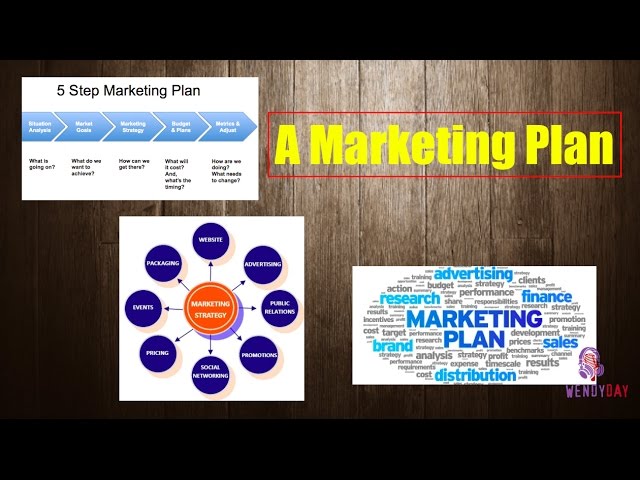
Wendy Day breaks down how to write a marketing plan for musicians: define your image and target audience, find where those fans hang out, then build a four-part strategy covering promotions, advertising, social media, and physical tools. Budget each element, set a geographic radius, assign who does what, and track results.
Chapters
Hi guys, welcome back. Um, today we're going to talk about marketing plans. Um, you already know how important it is to put a plan together. So today we're going to talk about marketing plans, and as we go forward, we're going to talk a lot about marketing. Because marketing is what's going to make you, um, stand out from all of the other artists and let people know, um, who you are and what you do. Marketing is what brings people into your fold, and without marketing, people won't know who you are, they won't know that you exist, and you won't be able to build a fan base. So today we're going to talk about putting your marketing plan together, um, and you need to do this on paper or on a tablet or your smartphone, somewhere in writing, because you're going to have to go back and price everything out once you put this plan together. But this plan is basically a roadmap that's going to tell you how to get from point A to point B. Now, it's not a business plan. This is not what you use to go and, find investors, although investors are going to want to know what your marketing plan is as part of your business plan. A marketing plan is basically an outline that you're going to put together, a detailed outline that you're going to put together to use as a roadmap in order to spread the word about you and your music. So, um, you're first going to want to cover who you are, and this is something that you need to figure out if you haven't already, you know, what's image. Are you a street rapper? Are you a more pop artist? Um, as a singer, are you more of a type of music that people play for lovemaking, or are you a singer that espouses what's going on in the world? Or are you a singer that makes people want to shake their booties at a club? Um, you need to figure out what your lane is and what your image is to fit within that lane. Um, and, and what I mean by that is if you're a street rapper, you're probably not going to don a dress the way that Young Thug did. Um, it just doesn't fit your— the image that your market will have for an artist of your type, right? And remember, your goal in this is to spread as much word of mouth about yourself as you can. Your marketing is what's going to get people talking about you to spread that word. Okay, um, and then once you figure out who you are and what your lane is, you're going to want to figure out who is your potential fan. Now, for an established artist, this is pretty easy because they just have to look out into the audience and they're going to be able to figure out who the fan is. But until you've got an audience, you're going to need to figure out who is your potential audience. And the way that you do this is to either look at artists that are similar to you, like, are you more like J. Cole or are you more like Yo Gotti? You're gonna look at their audience and figure out the— whoever is making music similar to your music, you're gonna look at their fan base and figure out, you know, who is their audience. And in figuring out their audience, you're gonna have a pretty decent idea of who your audience is. And then the last thing you're gonna want to figure out is how will you reach them? Once you know who your, your audience is, where do they hang out? What do they like to do? Are they in school? Do they have jobs? Are they men or are they women? If they're online, what social media do they use? Are they more likely to be on Snapchat or Facebook? Do they watch videos? Do they hate videos? Do they go to the barbershop and the beauty shop once a week? You know, who— what is their lifestyle? What kind of car do they drive? What type of job would they have if they have a job? Once you can figure out where your potential audience is, you're gonna be able to figure out how to reach them. Because if they're people that go to the club every night, then you know that you need to be in the club every night. You know, that's where you're gonna do the bulk of your marketing. If they're students, you know that 90% of their time is going to be spent on that college campus, and you're going to want to reach them on the college campus. This is why it's important to know who your fans are. Okay, so once you figure out who they are and where you're going to reach them, this is where you put the plan together, and you list all of this information in your plan because once you start to write it down, it all sort of comes together and makes sense. At least to you it will. Um, and then once you figure out everything that you want to do, then you're going to break it down into 4 different areas. You're going to break it down into promotions, advertising, social media, and tools— the tools that you need in order to blitz all of those different areas. For example, with promotions, you're going to want to do street promotions, you're going to want to do radio promotions if you have a song that has radio potential. If you have a song that has radio potential. Most artists do not, but if you have one, then you're going to include radio promotion. Club promotion, if you have a song that is a shake-your-ass club type of song. If you're going to sell CDs, you're going to want to do some retail store promotion. Most of the artists that I deal with don't do that. However, they don't press up CDs anymore, they just go digital. So, um, that's not something that's going to affect most of you that are watching this. Um, internet promotions— how are you going to promote online? Social media marketing— how are you going to promote on social media? Obviously, just sending out your music and adding people does not work. So you have to figure out a way to engage them and market to them. Maybe you're going to use influencer marketing, meaning you're going to go to an artist that's bigger than you and have them post your music so that their fans become aware of who you are. Under promotions, you're also going to have publicity. You know, you're going to want blog and magazine and media mentions. Sometimes a publicist, if you— if your publicist is in the same area where you are, they will get you invited to different events so that you can see and be seen at different events. And then the last item of promotion that you're going to want to price out is a promotional tour, and that's going to get you into different marketplaces places in order to, um, see, touch, and feel your fan base, right? And if you've been watching these videos along, um, as I've been posting them, then you already know that you're going to choose like a 5 to 7 hour driving radius outside of your area. So here's your area, your target market is going to be a 5 to 7 hour driving radius around that market. And the reason we do that is because it gives you an area that's large enough to build a fan base so that you can monetize your music, meaning you can get paid shows, you can get people to pay for, um, streaming and downloading music instead of just giving it away for free on all the mixtape sites. And it's an area that physically you can work. You can drive 5 hours in each direction and, and work that area efficiently. You can do that. You need a budget. That's what the business plan was for. But you can do that. Under advertising, you're gonna figure out, are you gonna do magazine ads? You gonna do billboards? You gonna do cable TV? Are you gonna do radio ads, Facebook and Google ads? You know, this is something that you need to decide if it's right for you. For my clients, we only do Facebook and Google ads. We do not do billboards or cable ads or magazine ads. We just don't find them effective for any of the artists that I have worked to date. But if you're Beyoncé or Rihanna or Drake or an artist that is very mainstream, all of that, all of those advertising sources are going to be important to you. You're going to utilize them. The third area, social media. You're going to want to figure out what are the best social media sites for you to be on. You're going to want to figure out how to engage people, and you're going to want to figure out how to build your following without buying follows, because buying follows, we all know, doesn't work. Um, so, you know, you want to be on YouTube, SoundCloud, Facebook, Twitter, uh, Instagram, Snapchat. You know, what other ones are important to you? Do you have songs that young people, like kids, will dance to? If so, you need to be on Thriller and Musical.ly. You've got to be where your fan base is, and you've got to be bringing— you've got to be engaging and reaching people on that platform, but you also want to bring people from that platform into your other mix, into your, you know, to your website, into your other media. And what I mean by that is if you're on Musical.ly and some kid does an amazing dance to one of your songs, you're going to want to capture that and put that on your Instagram, your Facebook, your Twitter, so that you share that with your other platforms. And hopefully at some point you want to get those Musical.ly artists— if they're on Instagram and Twitter, you want to get them following you on your other platforms. And you certainly want to bring them into your website where you've got your links to all of your music, you've got your videos, so that if somebody really likes one song, maybe they'll discover other songs that you have that they like, and maybe they'll become a fan, right? And we've already discussed in a video prior to this the different types of fans and fan bases, the rabid fans, etc. So you can see this is all sort of starting to come together for you, right? In a minute, you'll be able to go back and watch the videos in the areas where you're weakest and pump them up and get a little bit stronger. And then the last area you're going to cover in your marketing plan is for the tools. And tools are the things that you need in order to market and promote yourself. So in order to, um, place Facebook and Google ads, you're going to need an ad. That would be a tool. In order to go out on promo tour, you're going to need music to hand out, you're going to need posters, um, both to hang and to sign. Um, so toasters, right? So posters and CDs would be tools. Right? So you're gonna list all of the different things that you need in your section for tools. Like, you know, if you need videos, if you need behind-the-scenes footage— and you do, everybody does— if you need snippet CDs or mix CDs or, you know, your full-length album pressed up in CDs. Do you need t-shirts? Do you need to wrap a vehicle? Do you need posters? Do you need flyers? Do you need postcards? You absolutely need posters and postcards. Especially if you're going to be at high schools and colleges signing autographs, because you want to be able to sign large posters and even smaller posters that would fit like in a, in a locker at a high school. If you're performing at clubs, you definitely want to go and hang posters around the club the night that you're performing so that people will know that you're actually there and performing. So there's certain things that you're going to put on your list. I've had artists where we've given away MP3 sticks to DJs so that they would have the music on hand. A lot of DJs don't have CD drives on their laptops anymore, so everything is MP3, and the best way to do that is to have a memory stick. And we make sure that whatever memory stick we give out has that feeling for the artist. And what I mean by that is, um, for example, with Trouble, we gave out little Uzis, um, and little 9mm guns because that fits his image. Um, make sure that the logo for your artist is on whatever you're giving out. Um, the, the, the DJs and whoever you give them to will definitely use the memory sticks for other stuff. They're not just going to use them for your artist, and that's the goal. You want them to always be looking at your artist name and the logo on that memory stick. But, um, we have found them extremely effective for giving out music. Um, I've seen artists give out, um, memory sticks that look like credit cards, and it has a little flap that flips out and you plug it into your laptop. But they're able to— on the, on the face of that plastic card, they're able to put their album cover and information about themselves, links to their website and their social media. And all of that is important. Remember, what you're trying to do is you're trying to get people to talk about you in a good way, not a bad way, but in a good way. Um, so once you have figured out exactly all of the things that you're going to do in order to market and promote yourself, Um, make sure that you price everything out. So figure out how many CDs you're going to need for the target area that you've chosen. And that target area, if your budget is limited, make it smaller. If your budget is bigger, make it larger. You know, with a good-sized budget, you can hit an entire region. For Trouble, we reach the entire Southeast region. We reach, um, Northern Florida, Georgia, Alabama, We just expanded into Mississippi, but originally that wasn't part of our plan. We did North Carolina, South Carolina, of course Georgia because he's based in Atlanta, and we have expanded out to Mississippi, Louisiana, up into Kentucky, into Virginia, and we've gone down. I don't think we've quite expanded into Central Florida yet, but that's— it's coming. So you expand outwards from wherever you start, and you do this based on your budget and your income. So once you have this plan put together, it gives you an opportunity to see exactly what you're going to do on paper, and then you can go through— I do it in, in bullet form, so I list all of the different things that I'm going to do, and then I put like a little sentence after that explains kind of what it is. And I do that so that it's crystal clear, because you don't want to just say increase social media. It's just too vague. So you're gonna want to have a little descriptor following that blurb of what you're gonna do. And then the way that I write it, I keep everything in, in— so I don't just put it in one paragraph form, I keep each idea separate. And the reason that I do that is I figure out who on my team is gonna handle each thing. So if I'm not working alone, and in a lot of cases you are, you're doing this all on your own, on yourself, um, that gives you the opportunity to check things off as you complete them. But for me, I always have a team with the projects that I work— remember, we all have budgets, so I work with artists that have funding already in place. So we put together a team for the artist, and then there's more people that are involved in helping to catapult the success. And by putting these items in a format where we can just put somebody's name next to it, it allows me as the quarterback or the coach of the project to see who's gonna do what step. And then it also gives me the opportunity to follow up with each person to find out if they've completed it, when they completed it, how it's completed. If they ordered product, when is the product coming in? It allows me to be more effective in my quarterbacking and my coaching Um, there are artists that have had smaller budgets where we've had to do it all ourselves, and it's just myself and my staff and the artist doing it all, and that's fine too. It, it's just you use whatever it is that you have to your advantage. So this was about part of putting together a marketing plan. Again, make sure you do it in writing. Um, don't share it with the world. You don't want the world to know what you're doing and when you're doing it, and more importantly, you don't want to put your plan out there so that 1,000 other rappers jack it and start fulfilling your plan for themselves, because then the competition is going to be incredible out there. And then the last thing I want to say about a marketing plan is once you implement it, make sure you have your timing correct. The, the, the biggest area where I see artists fail is their timing is off, and there's a video that I've posted about that, so I'm not going to go into detail about that right here. But if you haven't seen that, you're gonna want to go through and find the video that I posted, I guess it was sometime maybe a month ago or 2 months ago, about timing, because that's really, really, really important in, in this whole process. And then make sure that you're following, you know, have some sense of accountability, like watch what you're doing and seeing what's working for you and what's not. And if something isn't working for you, um, don't continue doing it. If it's not working, there's a problem, and you want to find out whether the problem is the music or you're not reaching the proper market. If you're, you know, if you're advertising snow cones to people that live in Alaska, that might not be as productive as if you're advertising hot coffee to somebody that lives in a cold climate, right? Or snowshoes to somebody who lives in a cold climate. So make sure you're offering a product that your fans want, right? Um, and then the last thing I'm going to tell you is that you're going to have to outwork everybody. And I realize I'm saying this to a bunch of people, but those of you who succeed are going to be the ones that work the hardest and the ones that have the music that your fans like the most. That doesn't mean the best music. We all know a lot of artists out here that are making shit music and they're winning, but they've got a fan base that embraces that music and they've done a phenomenal job of reaching those fans. And that's what you have to do, and outwork everybody. Okay guys, put your marketing plan in writing and, um, get to it. Make it like a to-do list and just knock stuff out and get it done. Okay, bye, talk to you soon.
More from Wendy







How Much Is Your Music REALLY Worth? | Jeff Ponchick x Wendy Day | No Standing Zone Ep. 19

Managing expectations is a major key to making it in this business... easier said than done!

I had a great conversation with @SamuelRiddle on the most recent episode of No Standing Zone..

Building Empires: How Sam Riddle Navigated from College Radio to Managing Megan Thee Stallion
