
Building Icons! The Art of Management | No Standing Zone Ep.5
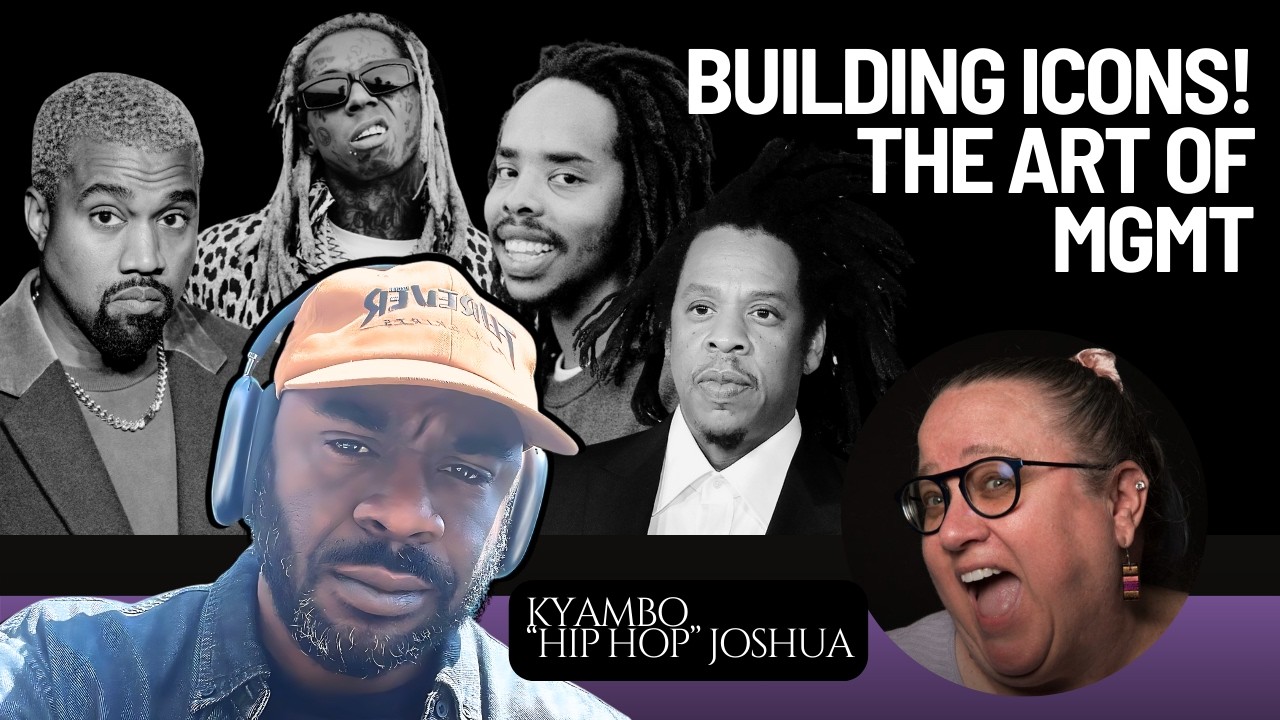
In this episode of No Standing Zone, Wendy Day interviews hip‑hop veteran Kiambo "Hip‑Hop" Joshua about his journey from a high‑school nickname given by Dame Dash to a career in A&R, management and label building. They recount early experiences scouting Jay‑Z, Kanye West, Lil Wayne and other legends, describing the hands‑on work of credit‑research, beat‑selection, mastering and artist development. The conversation shifts to what makes a great artist both creatively—balancing originality with adaptability—and business‑wise—having a clear long‑term vision, leveraging early deals and professional maturity. They compare indie versus major label routes, noting the fragmentation of today’s market, the rise of digital platforms (TikTok, SoundCloud) and new tech tools (Notion, AI‑assisted email, white‑label distribution). Joshua explains his management philosophy: building a trusted team, putting artists first, avoiding profit‑first decisions, and scaling carefully. He shares his current venture, Seneca Village Recordings, and his desire to teach, podcast and create artist‑friendly label models that blend old‑school discipline with modern technology. The later segment highlights the tension between short‑term hit‑driven mindsets—labels focused on quarterly reports—and the need for long‑term vision as the industry expands (approximately 40% growth), underscoring the importance of sustainable artist development. Personal anecdotes about family in the music business and work‑life balance round out the discussion.
Chapters
Hip hop!
Hey Wendy, how are you, man?
It's good to see you. It's been a long-ass time.
Yeah, I agree, I agree.
The last time I saw you was at Harvard. You came and you spoke. That was amazing. You, you killed it.
Yeah, that was, that was a great experience, just being up in the area, being around the kids and stuff. I love that.
Yes, me too. I just, for me, that's the most rewarding thing that I get to do. It's my favorite thing that I get to do.
I agree. Me too. Yeah, someone new and helping them through.
Yeah, just letting them know, like, like, it's all gonna be okay. Yeah, definitely.
Yeah, because that's, that's what's really needed a lot of times. A lot of times it's like those figures or, you know, executives or managers that was just reinsurance, because I think that confidence is big, because artists will get, you know, they get to a zone where it's hard to come back because they might have took too long, they might have, you know, wasn't confident, stuff changed around them, you know. So having that reinsurance is always, always great.
It is good. And I think that sometimes what the next generation doesn't realize, because they, they read, they read our bios and they know who we worked with, but they forget that when we started with them, they weren't famous yet. Like, they were just regular people like them, you know.
Yeah.
And then they look at us like, oh my God, you worked with this person, you worked with that person. It's like, yeah, but they were nobody, you know. Like, that's my boy.
Yeah, yeah, nice. It's definitely way different, I think, dealing with somebody with that dynamic, like starting with them and seeing it grow. Being at a Jay show where it was like 15 people there, I remember one time we just walked straight through the crowd.
He was wearing a Hawaiian shirt.
Yeah, he got on stage, performed, they left. And, you know, with the same energy, the same performance and stuff. And seeing the big— the first real big show, it was like a lot of energy, like, wow, this might be something, you know, seeing those moments. All the way through for people like him and Kanye and other artists and stuff is definitely the reason why I feel I do it.
Exactly. So, um, I really kind of just like started in without introducing you or anything, so I'm going to let you introduce yourself. Tell us who you are.
Okay, um, where should I start? At the beginning, I guess.
Um, let's start at the beginning.
Yep. My real name is Kiambo, Kiambo Joshua. But, um, basically I ain't gonna say professionally, but yeah, I guess you could say professionally known as hip-hop.
Yep, you're a brand.
Yep. Yeah, so that, that, that came about through basically through Dame Dash. Dame Dash gave me that name.
I didn't know that.
Yep, he gave me that name when I was still in high school and before I started working at Rockefeller. I used to be around him through Cam'ron and a couple other rappers who I knew growing up as a kid. And through that, I always had something new, something off the radio. I was always asking him questions. So he kind of noticed my insight for hip-hop and he was like, "I'ma call you Hip-Hop." And my first name was Too. He was adamant on getting me a nickname first of all. So he was like, I'm gonna get you a nickname, you know, so much because he didn't want to say Kiombo all the time. Yeah, nickname, you gotta get you a nickname. It's already a KJ, it's already this. He was, he was scratching off names and stuff.
Funny, he had a list.
Yeah, he was like, hip-hop, hip-hop, because you hip-hop, you hip-hop, you everything hip-hop, hip-hop stuff. So it's like, I was already that when he said it. But it made me embrace it even more. So it was kind of like, I didn't want to not know nothing about hip-hop. I didn't want nobody, you know, I didn't want KRS-One coming up checking me. I didn't want, you know, I didn't want, you know, people to feel a way. So I wanted to respect it in that way. And I think that's the way I kind of carried everything from that point on. It was always like a certain level of just being hip-hop, you know.
Yes.
You know, the culture and all of that. So the name was just like, not to say obvious, but it was like, you know, just for who I was. Yeah.
Yeah. And why the 78? What, what's the, what's the key to the 78?
Oh, that's exactly when I was born.
Wow, I just felt really old. Yeah.
Wow, I was born in '78, and it's definitely other meanings as I started to get deeper into hip-hop and when it started. Obviously it wasn't that day, but that's one of the last years of its original format before '79. Then the music came, and then being born in Harlem where I was, it was like right in the middle of it, like things was happening technically when I was born and stuff. Like, I was conceived—
it was happening around you?
Yeah, I was born 9 months after the New York blackout. So, oh wow. So if it wasn't for the blackout, I wouldn't be born because my mother—
that's amazing—
she lived in the Virgin Islands and that— she worked for Pan Am and that stopped her from going back. And then when she finally went back, she realized she was pregnant. And then she, um, moved back.
That's amazing.
Moved back to New York, and that's when she had, had me in New York.
Very cool.
Yeah, so, so that's significant, being there for that point, the timeline. It just felt like almost like a calling, basically. It just felt like I was supposed to do this. And, you know, just based on who my brother was, where I was born, who my friends was, like, all of these things just felt organic. I didn't try real hard. I didn't like call a bunch of labels and try to really do it. I wasn't studying no A&R. I remember when Dame asked me— when Dame told me, because I started doing radio first, like I remember college radio with Ray Ray. I started doing that first, and then the A&R stuff came because he knew I knew all the information. He knew I knew about it, right? Music and stuff like that. So he mentioned it to me, but I didn't know what it was really. And, and only thing he said was like, A&R, like Clark Kent and Dante Ross. He just throw them names out there. He said like Clark Kent and Dante Ross. And I'm like, just like them. Yeah, I heard those names before, so I didn't really— I didn't know them personally. I knew Clark because he, you know, he came by a couple times, but at that point he was kind of like out of A&R, more producing and DJing and stuff again.
Yeah.
So yeah, it wasn't like a, a clear path. And I remember when I switched to it, it might not have been more than a couple days, and then, then I got a call from you to, to be on, um, to come to the Kumo panel. Yeah, come to Chicago for the panel. And that was like, I just started handling A&R duties at that time, so it was like I didn't know that.
I actually called you because you were the radio, radio guy. Yeah, at Rockefeller.
Yeah, I just switched over because me and D was both radio guys at the time. So in the directory, I remember I was as a— and I was as a college radio in the directory, like, you know, in those things. But then right after that, I was switching to A&R, and I was like, oh, I could meet these producers, I can meet Traxtor and No I.D. and stuff, because at that point I didn't have like a large, um, Rolodex at the time, you know, right? So it wasn't like I was just starting. I knew like, I really knew one producer and that was Buckwild, and that was it. And I just knew that.
Great producer to know though. Yeah, sure, he and Lord Finesse were awesome. They were, they were like very early on, on my, on my meet list too. I met both of them pretty early.
That's how I— that's kind of like my real— well, I fell in love with hip-hop. Same with like Lord Finesse. That's like the first tape I bought with my money.
Like, okay, that's so cool.
I'm going to 125th Street and, you know, and I'm asking the guy, what should I buy? And he gave me an option. He's like, hey, you could get this Candyman or you can get this Lord Finesse.
Lord Finesse.
I was like, the Black album with these two guys, this one right here, this guy like he playing Twister. He had like dots and stuff. It was like, yeah, I was like, let me get this one right here, it just feels more thing. And I feel like that was my, that was my sample. Yeah. And from that point on, I just knew people. I was in the proximity of a lot of those guys. So exactly, listening to Buckwild as a DJ, as a DJ. And somebody, I know Buckwild, that's my cousin. And I'm like, oh yeah, I want to meet him. And next thing you know, I meet him and I'm going to his house and And he's just cool. He's just a cool motherfucker. Yeah, he was that way from back then. Like, always was a collector of stuff. One of the first person I seen with like shelves of records and VCR tapes and sneakers, you know, just the whole thing. He always been like that, that guy and stuff.
The whole lifestyle.
Introduction. Yep. Yeah. So between that and then— and I met Alchemist around that time, a little after. And from there on, it kind of— the Chicago thing really threw me in their game because it was like, it was an album away. We was in between albums. I think Reasonable Doubt might have just came out, was about to come out. So that was already done. My only A&R duties on that was gathering information. I was doing admin before I knew what it was. So I started off as an admin just by default. Just by—
Yeah, the hardest job actually.
Yeah, just looking at— I remember going through credits and using process of elimination to find out what was the— what was the— what was their publishing company. I was like, okay, he produced that. His name comes up 3 times. Every time he's on the record, it says this. So I think that's him.
That must be him. Exactly. That's so funny.
So it was like that type of stuff. So then I get the information, like, okay, here's Carl Kidd, here's this guy information, here's Premier information. This is how it reads. So I did that, and then, you know, the sequencing, the mastering, the whole, you know, putting the records behind each other and seeing how, you know, you know, all of that was like up to me on Reasonable Doubt. But everything else, I didn't have nothing. I was just around for like a couple sessions, but but I did all of the, the dirty work, I guess you could say, the end work where it's like real— because I never had to do that again, which is, which is interesting because, um, because after that Lenny and G started working with me and they became— they started doing that part of it.
They started doing that part. Yeah, yeah.
Because I was in from day one now as a picking beats, finding producers. So I was doing more of that, and then they will come in and do basically what I did for the other album. Take all the records, go to mastering, and, you know, make sure we got the finished version and stuff.
Yeah, and that's really important. Like, the paperwork is important, the mixing and mastering is important.
Yep. And just learning it at that time, in that process—
in that process, what are you most passionate about? Um, do you still like making records?
Yeah, yeah, definitely do, definitely do. Um, it went away, came back, you know, it took some—
interesting.
Yeah, because I think that— I think it's, it's the newer artists, it's helping them find their sound, helping them develop what they're trying to do, accomplish what they might have in their mind. So I usually like artists who have something they want to do, right? I could get on board with them. Right.
It was like, perfect it.
Yeah, Wayne was like, I want to be the greatest MC, and I'm like, okay, a little more direction please. Yeah, but I, I get it. I, I see where his— what's his bar and what he wanna— was important to him basically, right? So now I know, okay, cool, we need to prove— you need to prove yourself on a couple fronts. You need to rap with other rappers, you need to get on other kind of beats, we need to do all these things. That he embraced. And, you know, I'm sure he's happy with the outcome, you know. He, you know, I mean, it's just that he's in the conversation. Yeah, he's in the conversation, and that's all you can ask, you know, because I don't think it's nothing definitive. And from where he was before that to where it was, like, when I met him, he was like right around Go DJ. It was like right around the first Carter and stuff. And that's when you really started to hear him more as a rapper As a rapper.
Yeah.
That could potentially do that. So at that time, I knew the history he had and I knew what I could do, and I felt it was perfect for each other because he hasn't worked with other producers. He haven't spread out to New York, to other areas beyond the South, and that's where I was best at. So it was like I was doing things. He, he didn't have too much connections cuz he was in the Cash Money world for most of his life.
Correct.
It wasn't like he, you know, he had a few artist relationships, and that was like maybe like Nelly and Juels. That was like, you know, that he really embraced, and they, you know, they did something for him because he's a real genuine person, like, as far as, you know, where everything comes from. So it's just him maybe not knowing things and not being in circles because of the way he was brought up. But one And that was me. I was the opposite. I had to go out there and meet everybody and find my own.
Yeah, you were a producer. Yeah.
And stuff like that. So it was like, and I, at that point, I already went through a lot of the Jay records, so I had all the connections. I had all the people I worked with who he considered to be the greatest. So it was like, hey, I guess I know, I guess I have some tips for you that you could use and stuff like that. So, so I like that part of it where I could see that working with TI early, working with Wayne during that point, obviously the Ye and Jay and all the artists on Rockefeller. It was just helping them develop their sound, the name, the first couple albums, and getting them to the point where it could just— it could just be maintenances, you know what I mean? It could just be like fixing what it is and not— yeah, just tweaking what it is and doing a better version of what we created, hopefully, you know what I mean? And really taking it to the next level. So that's kind of like— that part has always been the part to me, like, early album. Like, I can't do albums late. I can't like rescue an album. It's like, from early day one, like, okay, cool, what are we trying to accomplish? And really getting that going and then delivering on that is what's I love that. Yeah, 'cause at a major label, there's no, no what you call it, no real direction in that way, you know? It's just like, hey, just make, make a record, you know?
So, and just bring it to us. Yeah.
Yeah.
So what makes a great artist? And I'm gonna ask you this twofold, like on the creative side and then on the business side. What makes a great artist creatively?
Um, I think it's, it's that fine line of filling the void but also being adaptable, relatable, you know what I mean? To where you don't like— it's a void there, but it's— you're not too different, you know? It's something, you know, you're doing something that's— because like, if you look at hip-hop, there's, there's not many roles, they're not many characters. It's like, okay, you could be from a certain city and that could be you. You could be that guy from Pittsburgh that rap about weed because somebody from LA already raps about weed, somebody from Texas already raps about weed, somebody from DC, you know what I mean? So it's like you could be— you got to have something that's, you know, familiar but also new to where it's like, okay, I have a new point of view, but I'm still dressed like this guy. I'm still in this, you know, I'm still in this point of view, but I might just be, um, I might be— I'm still in this sort of category but a little different, like not from that place, or a little younger version of it. Kind of like where people will look at Young Jeezy when he came out. He was a, a whole new version of something, you know what I'm saying, that we didn't see before. And I think that's important because then you could start to write your own story. Because now it's like, okay, you created a character that hasn't been done before. But the other way is just versions of versions, and somebody that can make good songs and fit into different lanes at different times, and they could be creative. And that's— there's nothing wrong with that, you know, that they, they probably will be around longer than a lot of the other people because of their ability to adapt But I like the ones that people are kind of trying to adapt to, the ones that, because they found theyself, or they, you know, they have this one unique thing that makes them stand out. Now you see a bunch of other people trying to find that lane and trying to do that and stuff like that. So it's really just trying to find what makes them unique but the same, to where you can have a entry, you know, because you can't— you know, you want to be able to get in. Like, say with Kanye, he had an entry level with backpack rappers, with being a producer. A producer rapper was a thing that had a stigma that kind of put you into the underground, put you into backpack world. And what he did was that he embraced that early, but what he had different about them was he still was ambitious as a commercial artist. He still had commercial aspirations that didn't go nowhere. So it wasn't like, okay, I produce and I want to be credible, so I don't mind working with Mos Def and Talib and these people and making good beats in this world, because that's always gonna, you know, that's always gonna be a good part of my resume. But I know where I'm trying to go. I'm not trying to stay here. So he had a bigger picture. He knew what he wanted to do on that front. So it was like, it was really— we used to compare it to like, uh, or I did, was like a hip-hop Tupac, or a good version of, you know what I'm saying? Like the other type of side of it where it's coming from a hip-hop place but not a street place. You know what I'm saying? It wasn't— hip-hop wasn't even really the thing because he's not like a hip-hop head sort of person. He's just like, he's just not street. So the fact that he's not street, it was a delayed lyrical—
like, he, he embraced lyrics. He was always surrounded by guys like Rhymefest, you know what I mean? Like, he respected the culture, he respected the lyrical prowess.
Yes. Yep.
But he was also very commercial, which back then, you know, I'm kind of trying to put this in context, because today, like, rap is pop, right? It's, it's very commercial. But back then, when you went commercial, you were like sort of stigmatized by the underground, like, oh, you're a sellout, like, you're commercial. And he never was stigmatized. Like, he made it cool to be commercial and mainstream and pop before anybody.
100%. Yeah, because— and that was the, the dynamic we was fighting against. But it made—
yeah.
It was wide open because I remember when, when he figured it out, it was like, it was, it was around a Tupac situation. It was the Tupac documentary, and we was watching The Resurrection, the MTV one, the one that, uh, you know, the one that he did all the vocals for. We went to see it together in the movie theater, and I remember when he left, he said, I figured it out, I could just be myself.
Who knew?
And then the next day, the next day he came to the studio and he was like, yeah, I'm gonna do myself, college dropout, you know what I'm saying? And he had the whole plan of that, of like, I'm gonna embrace being a college dropout, I'm gonna embrace being this person who do this and still like this, but still a little bit. Because if he didn't he would have kind of took, um, how you say it, he would have took a template that was already there, probably something closer to what underground rappers was.
Yes.
And he might have had a ceiling with that. And that's what made it hard for us to get a deal in the first place, because they looked at him as that. They looked at him like, okay, this is like Professor, this is like Diamond D, this is like, you know, those type of guys. And they wasn't looking at it like, okay, who he really was and his ambition and those things wasn't really accounted for at that time. But, but being around him, it was like— and seeing the songs he was making, it was like, okay, these is just good songs. Like, songwriting— on a songwriting level, that's where the Tupac comparison came from. It wasn't a lyrical thing, it was a witty thing, it was a connective thing, emotional thing that I thought was harder to do than anything, to connect emotionally, you know. And he was doing that with like demo records like Hey Mama and Jesus Walks and stuff, was connecting emotionally. And I was like, shucks, I know artists who, who would die for those records right now to be a part of, not just their single, part of the catalog. Just anywhere, put these in my catalog. And that's where it was kind of like, okay, this could be something. And, and, you know, and it was, it was a lane for it because I knew people will embrace that. It's like, who's not going to embrace these big broad topics like their mother and, and Jesus and, you know, and things that, you know, yeah, it was just so broad and where he was coming from, and he knew it because he wasn't a part of these smaller niches. He wasn't a drug dealer, he wasn't in a hip-hop group, he wasn't from New York, he wasn't ATL, you know, for the South, he wasn't like in these different things. He was a, he was a soloist. He was always a, right, uh, you know, a soul, you know, soul individual and stuff. So that's really, um, yeah, so that's kind of like in a nutshell what I look for is just that dynamic of being able to stand out but not too much where it's like, you know, who is this guy? And it's just like, you know, it is kind of like it's not even compatible, or people don't even understand what you're trying to do, you know what I mean? It got to be some kind of reference point for what you're doing.
He was also fighting a prejudice because back then we all thought that producers couldn't rap. Remember, if you were one or the other, like if you were a producer that rapped, the entire industry would kind of look the other way. It's like nobody wanted to give you a chance, and he was really the one that proved, oh yeah, watch me.
Yeah, because I guess me being an A&R, I kind of looked at it from the other side of having to find all of these beats for this rapper that's great, and then I got this guy who could really just do everything on his own, to be honest, you know what I'm saying? He might need a few people to help him lyrically and stuff like that, but that's kind of like a good thing that Twista said recently about You gotta fear a rapper who could rap but still get people to help him, you know what I'm saying? It's a level of where he want to go, right? Beyond the ego, because the ego will stop you from doing that.
Yes.
And he, as much as that seemed like the main thing about him is the ego, but when it comes to the creation of something, the art always come first. Like, he will put his all— he spent all his money on the art. He will give everybody writer's credit. Like, nobody never say bad things about him creatively from working with him, you know what I mean? Even the people that wrote songs for him, they all living good lives because they was, you know, they was taken care of publishing-wise. They was taken care of as much as you could with the samples and as many writers there is. But I remember one time he just split it with everybody that was in the room when the song was being made.
Oh, that's awesome. And that's rare. That's rare.
Yeah, he was like, you know, everybody was giving information. He was like, whoever was there, just put everybody on it, you know what I'm saying? He just couldn't go through that or just saying give it all to me, you know what I'm saying? He just was like, what most people do, what most people would do, they'll just be like, yeah, most people won't won't even budge. They would just be like, okay, cool, you're right, I only did a little bit, you know what I'm saying? They wouldn't even expect nothing, to be honest.
Yeah, true, true.
Yeah.
What makes a great artist on the business side?
Okay, now we go from Kanye to Jay.
I love you so much. Exactly. Yeah.
Um, Yeah, because from day one it always was a balance with Jay with the business and what it was. And, um, and just looking at— I think the difference is, is looking at the whole thing versus looking at this song or this album, you know what I'm saying? Like, I think to be good business-wise as an artist you have to have a whole idea of what you're trying to accomplish, you know what I mean, financially, to where it's like— because the early deals you make, what you— the leverage you're trying to grow, all of these things is going to matter. But if you creatively, you know, if that's your bar, the business is not going to matter. It might take care of itself, probably, but it's not going to be the thing. It's not going to be like, okay, let's do another video, let's you know, let's do this album over, let's scratch this album and do another album. Like, those things ain't gonna come from somebody going the business route. They're gonna position— it's gonna be more positioning, leveraging. This is the right time to come out, this is the right single to put out, you know what I mean? Like, these things which you still have to balance that because you can't be as direct, you know what I'm saying, with these things because then people will get You know, you want to keep some mystique and keep them on their toes and keep them into you as an artist still. You can't just go straight into being a full-on businessman, you know what I'm saying? But it's just being a creator who's like well aware of the business point. And I think when it comes to, you know, you have to be around it a little more or have, you know, those people who've been around it that could really see where you're going. Because it's— I think it's nearly impossible for artists to like solo engineer the business, you know. Not to say correctly, because you could— somebody could just have certain beliefs that just fit good with business. They could just be like, hey, I only want to do a deal like this, you know what I mean? Like, say for instance, like, um, DaBaby, for instance, he just have ways that he goes about everything. And that works in business in certain ways, you know what I'm saying? It works for him, for the same—
it works for him.
Yeah, it works for him. And it's not like he's constantly trying to reinvent himself or reading or doing these things to be a better business person. It's like, nope, this works, I'm gonna keep it this way, I'm gonna keep doing it.
Yeah, exactly.
And then there's other people like Jay who would see, let's do something with the phone, let's do something with the Super Bowl, let's move around, let's find a different way to, to put a record out. Let's tour with everyone. Tour with Mary. Let's tour with my wife. Let's talk, you know what I'm saying? He's not gonna just be like, I'm just gonna go out there every year and show people I'm doing the same thing and do the same thing. It's like, nope, I gotta do this now. I gotta move the bar. I gotta do this because he's thinking of the big picture in legacy, which I think goes into the business because you're protecting your brand. You're, you know, people want to work with you because you, you know, I mean, you're just, you're professional. And to me, I feel like there's nobody more professional than Jay. I don't think there's an artist that you could say, you know what I'm saying, it's not like probably Eminem. Like, him and Eminem, beyond being talented, their professionalism is a lot of why they are as big and as rich as they are. Because they could be talented and care about being creative, you know, and just care about whatever that is, and not show up on time, fall into other things, you know, and really—
not treat it like a business.
Exactly. Build a bad name on touring and stuff like that. When I started with Wayne, we had to build all that back up. We had to build up the touring thing back up. We had to build this back, you know, things like that. And then You know, it would still be things he just not even thinking of doing, you know what I'm saying? It's just not even on his radar. But you know, with Jay and certain people who treat it as a business better, or are better artists as, as, um, as a business, to, um, answer your question, I think they have a real— there's a professional maturity that I think comes with it that, um, sometimes goes against hip-hop. You know, as far as, right, creatively, like, you have to be in the, in the sort of position of these guys to be that respected. So when they step away and being like, okay, I'm not, I'm not trying to keep up with this guy with cars, I'm not trying to buy a bigger house than Ross, I'm not, you know what I'm saying, I'm not trying to do these things. But best believe if you see my house is bigger than, you know, it's bigger than everybody else's and stuff like that. So he's thinking about it. In that way. Like, you know, how do I build the right type of business that makes sense for me with the way— because he's, you know, he's his own entity. He's not like, yeah, signed to anybody. When he come out, he's coming out like a movie. Like, yes, do a deal with a production company. Who's— who should I go— who's going to distribute this film? And I mean, he's a, you know, a director like Quentin Tarantino. Like, when he come out, he come out, and that's what he want to do, and nobody's going to question anything on the project. In the splits and everything and all of that stuff is going to be heavily in his faith, you know what I mean, from day one.
And done right.
Yeah. And, and, you know, and that was that time when it was a decision to make where I could do it on my own and get way more. Like, when they really tried to do it early, even though they had to do it out of necessity because a lot of people wasn't just throwing money at them But that always was the way Jay was into. He just come from that background. And 50 Cent is another guy you can look at as a good business person. And yes, in music. And I think—
and they're both hustlers. Yeah.
And professional. To be like— and I, I always say that too, you're right, because it's like, it's a certain level of Jeezy, um, it's a certain level of what they dealt with in the streets, you know what I'm saying? And this being like such a like you had two hands behind your back and now you got both your hands, you know what I'm saying? It's like such a level of thing, like, I'm not gonna mess this up. I'm not— like, I know what it— how hard it is.
Exactly. There's an appreciation.
Exactly. But when you're turning the album and they give you a lot of money every time you turn in the album, that's where you're— that's where your whole thing gonna kind of come from, you know what I mean? That's where your whole reward and and everything is going to come from. But if you— if your reward comes from being on time, turning in the album under budget, because you're going to be able to keep the rest of the money, because you're going to be able to recoup— people was thinking about recoup— we don't recoup. They want to spend more money on videos. They're like, no, let's keep the video here, let's do the album in my house, let's do this. You know, they starting to think of things in that way. Yeah, they have a real vision for what they want to do, whether it's Tyler whether it's a lot of other people, like, they have— it's a grand vision. And I think, like, having that is important to be a good artist on the business side, is to, like, have a, you know, an idea where you're trying to go so you can at least start making the right decisions. Because if you're just out here album to album, that album didn't do good, so now you're just reacting, you know, you're just reacting. Okay, I gotta make a better album. I know they need more, they need this, they need more that, they need more this. And now you're just They do what they want to do. Yeah. Yep.
Instead of building it, you're chasing it.
Exactly. Yeah.
Yeah.
Yeah.
It's proactive. You want to be proactive instead of reactive. I love that.
Yeah.
So what is the— you've, you've managed like the best of the best, right? So what is the key to building a successful career as a manager? You just kind of talked about what it, what it takes to build a successful career as an artist. So as a manager, What does it take?
It takes, um, G. Roberson. Now it takes partners, partners for sure. It takes a team.
Yeah, I think that, uh, she's amazing. Yeah, you picked a great one.
Yep, it takes a team. It takes knowing your weaknesses and bringing in people that have, you know, strengths in your weaknesses, like, you know, where they can feel the void and you have a compatible and stuff like that. Whether it's just— because at first we would just do, you know, we would never be at the same place. We would just be like covering as much ground as possible. And then it was like, okay, I do the A to J, you go K to Z, whatever, you know what I'm saying? And then, you know, it was like that type of thing. And then later on it became separate because I want to constantly do the new stuff. I want to constantly work with new artists. And the fact that we built up a few artists to the bigger scale, that's what he kind of became accustomed to, right? Dealing with the superstars. And I'm kind of like, I like the new, I like building. Yeah, exactly. So I'm working with younger guys, I'm working with Griselda, Earl Sweatshirts, and, you know, just younger people with stuff like that. And Action, you know, just being around these kids, that's the energy I like.
And same.
And he's dealing with superstars, people who I couldn't even be around 2 days in a row just because of, right, you know, just the energy is just too much for me. And the aggressiveness of, you know, their careers is just, you know, it's just, it's also a different mindset.
Like, when you're building somebody from scratch, it's like you're making the phone calls. When somebody's a superstar, it's like you're receiving the phone calls. You're, you're not building You're not necessarily building what comes next. You're just taking the best opportunity that's presented. And for me, that's not fun anymore.
Yeah, it's not. Yep. Yeah. So that's never been my thing. But I think that if you're going to have successful artists, that's part going to come. So you got to have some people ready for that. You got to have the right team, assistants. You could do a lot of things nowadays. Nowadays, I think it's more manageable with so much tools. You have. Because even as I dabble in certain things or look and think about how would I do it, I was like, that— I would have all these tools, these Notions and this Disco, all these different things that's easy to just like easier make communication easier. Here's the templates, here's the ideas, like really giving them information. Because if you think about a label, rarely do you speak to your CEO and really like, hey, this is what you do, you know, nobody do no onboarding in the music industry. It's just like we just start, you know. So we wing it, we wing it, you know what I'm saying. You might go to the studio, they just want a session, they want a PO to get a session. Can I go to studio? Can I go to studio? And that's that. But now, like, for instance, the credits, they'll be done day one. It wouldn't be no— it'll be right in, right, you know. I'll be everything. Oh, we using these songs? Take this, here you go, here's those songs. Drag 'em over there, you know, stuff like that where, you know, then it was more manual. You have to wait for stuff to happen, retract things. What studio we did that at? Okay, good. You know what I'm saying? So it was like, um, it was forensic.
You had to chase, you had to chase the information.
100%. Yep. So now I look at it where, um, you, you could do things on your own as well because if you able to use tools and figure these things out and do that type.
Yeah.
You know what I mean? That could also help you in your weak spots, you know, like you could be, yeah, you know, not good with communication and you can have an AI email thing, you know, replying back to people. You can have, you know what I'm saying? So it's like I've been really into that lately, just seeing how these things, I don't even think they really even touched the music industry yet, to be honest. Like a lot of the tools that's in other areas that's making their work easier, it's like And haven't even touched us, you know, we just starting to get into it. Like, cause I use Notion and I never seen no template. I seen one person create a template for it that was focused on music. And I was like, that's crazy. Like, as easy as this thing is like the perfect thing for it. Like you could be having songs, you could build your whole world, your whole world, artist profile. Here's all the information. Here's all the metadata. Here's the audio, you know? So I feel like those things. It's easier if, you know, just through technology. But to, um, yeah, to answer the question on the management thing, I think it definitely comes with the team and really, um, yeah, growing, growing with it. Like, because I think it's, it's definitely a, a ceiling, I feel. Because at that, you know, once you get past a certain amount of artists, you're a management company, and then you're trying to sell other management companies. You're scaling, you're just trying to get, just get, you know, just get overhead. I mean, not overhead, but you're just trying to get the bottom line bigger to that point. And it's like, hey, let's get this label, let's get that person. And that never made sense to me.
Me either. It's like growing a business instead of growing a career, like for artists. All of a sudden you're building like Maverick, which you were part of.
Yeah, yeah, actually that's when I kind of left, I think around that time, because it was like If I'm worth 20, you worth 20, and we sell it for 40, what's the big deal? We saw the— we both got 20. We both got what we was worth. So, you know, everybody get what they worth no matter what. So it's like, why are we bundling this up to make you look better, to make it look better on the press? Oh, they sold this company for a billion dollars, and oh, we got the $20 million we was worth when we came in. But exactly, to me, and that's just extra pressure, extra 'Oh, this guy's rich now, this guy is this,' you know. So I'd rather be doing it more boutique, have a certain, you know, amount of artists, because there's only so many artists that could be broken. Let's just keep it, you know what I'm saying, for real.
Yeah.
And to really have rosters in the double digits, you know, unless you're going into different genres and stuff like that, to me it's just— I don't see how they could be receiving you know, the right attention, right? Yeah. So I think just that balance of having the right amount of people on your team that could really, um, you know, fulfill the job, because it could go— who knows, it could be tomorrow, it could just take off. So you want to be right. And then when that happened, you know, you know, then that's when the sharks come and the bigger companies. And yes, and then you almost got to give in to it at certain points because it's like, hey, they're gonna just take this guy from me if I don't Exactly. Deal with this guy, these companies, this booker and stuff like that. So, um, yeah, so I think that's why having things in order early, being prepared for that is important. That's what we always did. We always kind of went at an artist with an idea of who would be their point person. Do we have that person in-house or do we got to find that person? Stuff like that versus, um, just, oh, this is a great artist, new name, let's go, let's do it, let's do it, let's do it. And then who's gonna do it? Who's gonna handle it? Who's gonna be the day-to-day? I'm doing this, right? I can't do that too, you know what I'm saying? Then it becomes that type of thing. But it just made so much sense that you couldn't turn it away. You couldn't say no, we don't want to manage Future. Like, we met Future real early, but it wasn't the right time. We didn't have the attention, we didn't have the you know, the city infrastructure at that time. Yep, exactly. So, you know, but for him it was— it makes sense somewhere else, you know what I mean?
And it worked, and it worked for him. You know what I loved about you guys, and, and I'm saying this as an outsider looking in, but I always felt like you made decisions that were best for your clients. You didn't make decisions based on how much money you could make. And I think that's really what has made you such a great manager.
Yeah, yeah, that's definitely— I agree with you there. It was— yeah, I think that comes from, um, yeah, because I think you need that level of— like, me and G is like real— we're the same. We like real humble people. We don't need a lot. I don't drive a car. He barely— you know, I mean, he barely uses a cell phone, you know what I'm saying? So it's like we still have certain quirks about us, and we kind of was you know, just picked and really humbled to be in the position we was in. So when it came to it, it was always the artist first. That was always the thing. Like, it was never like, hey, we gotta get this, because it was always— we always felt we would get ours, you know. I mean, we felt that we would come and stuff like that. So let's just—
yeah, and it did, it did come.
It did, 100%, because it was like, I'd rather have no blemishes on my record as far as anybody who say I did something to them, or I did this, I did that. Because I feel like I'd rather just do a good deal all the way through rather than do something dirty and they find out after the first album, and then they gone. And now, you know, and you did all the work for nothing. But I was just being greedy as well. So if I was just like— if I'd have just kept what I, you know, which still would have been enough money. That's why I never understood certain artists, certain labels who was making that big of a split.
Same.
Have an issue with paying artists. I was like, this don't make no sense.
Like, this doesn't make any sense.
Production deal. And we would say, you know, we were still being fair to where, you know, everybody say you never signed a production deal, but that's the only leverage we had at the time. But we outlived it, and we— yes, all the way to now.
Yes.
So it was like, so now that production deal, years later, makes a lot of sense just to get that 2, 3, 4 points, whatever, just come in, you know, every quarter or whatever, versus me— we doing the deal with him that would have made him want to get out of it as soon as he had an opportunity.
Exactly.
With his loyalty, us being fair, it just kept us on board for it. 8 albums, and that's amazing. Unheard of, you know. I mean, usually managers don't last 8 albums and stuff like that. Like, and I think that also became somewhat of a, of a good formula for other managers and people to utilize down the line, because when we started, it was just probably Lighty. Like, Chris Lighty was like the only— the main people that we looked at as, uh, with Violators and the management team and other people building a company in that way. Because it wasn't like, you know, I mean, of course Rush, that's how, you know, they started that way with Lior and them. But in that recent time, I guess that's what Chris kind of picked up where they left off that.
He did.
And that's where I feel like we kind of picked up, not so where he left off that, but in a way, you know what I mean, because of the timing of it. And also just learning from him and stuff, how to build that team. Because, because you're gonna have to grow in that way. Unless you just— if you find the one or two, you could just set— you can settle back, you know. You don't need to do too much if you manage, you know, Travis Scott or The Weeknd or somebody like that, you know. But then you still probably gonna get so much coming at you that it's gonna be hard to turn down anything.
Yeah, especially if, if you're passionate about an artist and you see somebody that you want to build from scratch, it's, it's hard to say no because, you know, it's— know what, you know what you can bring, but you also know how it feels to build something from scratch.
Yes, exactly. Yep, 100%.
I get that.
You got some pull, you know, you know, you know, you could use some leverage, you know, you got some people to get on the phone.
Exactly.
Why not use it?
Why not? Um, as you know, I've always been fond of the indie space, and you've been amazing at working the major route. Today, looking at all the— that artists have in front of them, do you like indie versus major? Do you have any feelings about that, or do you feel that each situation is different?
I was major by default, I feel, um, because he started indie with Rockefeller and with that approach.
And, um, and it was hard back then, in fairness. Yeah, it was hard.
Yeah, because I tried to do indie a couple times and it was tough. I wanted to do distribution. I wanted to create a distribution company from when I left Atlantic. That was my goal. That's why I moved to Atlanta. I moved to Atlanta, got a warehouse in Metropolitan, started doing stuff. Um, and I got real close with, um, Robert Gilliam from, um, Southwest Distributors. Yeah, Southwest Wholesale. Because this is back then, so it was like everything was changing. So I'm talking to him about plants and trucks and stuff like that, and, you know, and like, what is it is to create something? Because I'm thinking, you know, Selecto and what he do, I want to be in that world. And, and I'm, you know, I'm going about it And then I ended up telling Rick Rubin about it. I told Rick Rubin, hey, I want to create an all hip-hop distribution. He's like, I wanted Def Jam to be all hip-hop and da da da. And we talking and stuff like that. And he's about to go to Columbia and nobody knew this. And he was like, yo, I'm about to take a job at a record label. I was like, for real? He was like, yeah, I'm going to go over there and I want you to come with me and head to Urban and you could do that over here. So I'm like, so that kind of took me off of it because I went to work with him and then I didn't have it all ready to go.
I get it.
And then it didn't last. So the next thing you know, I'm kind of back at square one. And then I partners with Fat Beats back then.
Mm-hmm.
So I partner with Fat Beats, like, okay, let me go and partner with them early. So when I get to another company, I got something. I got this distribution company. This is what I wanna do. I wanna start this way. And you know, I'm gonna have some things that trinkle up to y'all. You know, that's what I'm telling. And nobody's getting it, nobody understand. They just keep going back, who's the first artist? Who you want to start with? Who you want to do this? I was like, it's a distribution company. It's like, there's a bunch of stuff. There's this person, you know, everybody that's kind of big now, like Rock Marciano, this person and that, you know, like stuff that Empire and those guys kind of eventually took off with.
So they built that lane beautifully.
Beautifully. Yeah.
Yes, beautifully.
Because that's always the sweet spot. That's always the sweet spot, from Priority to Asylum to Koch to— like, that's where, you know, not to say the majority of hip-hop, but the majority of hip-hop that's really relevant in the streets that people are really into. Obviously it grows, but if you look about like Priority when because that's the type of deals you got to be able to do for these type of people. Correct. Dames, D, Rough Riders, you know, these people who have that leverage, this leverage in the streets.
They got this, you know, they have leverage, they get better deals, and they have money in the game. They're putting up their own money.
Yeah. And that was the— like, that was some of the best times.
Yes, that was my world. That's where I lived. That was 100% my world.
That's where I came up in, and I felt it made sense. They wasn't bothering them, and these guys had enough, like, respect. The respect level was there for all of these guys. Like, it was— yes, it was like until they had to basically do something to doubt their respect, you know what I'm saying? But right, it was here where they're going to get the deal they want, they're going to fight extra. The album that might not sound like the album this label want to put out they're not gonna even second-guess it. That's what— that's how you— this is how it sounds, here you go, let's go. This is what you want, let's go. You know, say nobody's like, you're gonna use this one producer the whole album? Nobody's saying that to me.
It's just like proving that it works.
You're proving that it works. And I think that, that time it made sense on both fronts. The artist had a little bit of structure, you know what I mean? Because it was just enough structure with Death Row and Cash Money, the studios was there, the people. So when a younger artist come into that world, they, you know, they in line. They on tour opening it up for a year, features on records, then the album, you know. It's like that sort of rite of passage now to where— yeah, they get there right away. It's like— and then now you can't tell them nothing, right? The manager can't tell them nothing. Everybody from that point on—
but they can't sustain it.
They can't sustain it. No. Yep, right. Everybody at that point, unless they smart, like, you know, you have to be like, like probably like Ross. He's right. Ross is probably the only person who really probably post that era came out of that and was able to like, you know, sustain a career. But he always had that mentality. He learned from those guys. He's seen what to do. He wasn't like that removed from it, you know, right? Up under Ted Lucas and—
Yes, he was coachable too.
Tony Draper. Yeah, 100%. Yeah. So he knew what music side he needed to do. He knew, okay, I need to go to Def Jam and I know what that is and I know how to, you know, say he built my own company over here at Warner. Yeah, Warner. And I don't work with these people because they, they need, they need me more than Def Jam need me. So he knew that he had that idea, right? Okay, I need— I tried with my friends, let me take it up a step. And go after some guys that people already like, like Wale and Meek, versus the, you know, the first step of an artist label of just putting your friends on, you know what I'm saying? Then it's the next step of, let me, let me sign somebody else.
That's, that's good, you know.
Exactly. Yep, you get into that point. Yep, it's being a charity.
So can that work in 2024? Like, can today's music— would this work this business model still work in 2024?
Um, I think it, I think it could. I think the person will have to be aggressive as a, as a label going into the world, you know what I mean? Like kind of like with Alamo, or like Tom Moskowitz was doing, or certain labels where they like, they're going after things. They're not just, you know, trying to, um, but it's within a world. It's like, okay, this SoundCloud place or this world or that, you know, like finding these things because it's not a regional thing no more.
No, it's not, it's not that.
It's more digital.
It's TikTok, it's SoundCloud, it's—
exactly. Yeah, so a lot of the labels is kind of like tech-focused, so they're getting a lot of information, or maybe they just got enough money to just take a lot of early chances and stuff. And they be labels I never heard of. And I'm like, wow, he's on this label. They have 20 artists, they have 10 artists, 15 artists. And it's all over the place of that to where I think that could use structure like the other guys from the past. Like, you know what I mean? Like a lot of them, that balance would be good to have that artist structure mixed with this technology.
I agree. I think it takes both.
For the art, for the labels. There's so much leverage, so much information, so much stuff you could do. Now as your own distributor, as you— with just certain type of deals, because everybody's doing these DIY deals as just the artist. But if, if it was an indie label that had a certain culture that they could utilize along with technology, I think it would really flourish. I think so.
Yeah, I think so too. I think it needs to be like even more artist-friendly than you or I are, because I think that, that I think the music business today, like, this generation is just tired of the bullshit. They're tired of hearing the stories of artists getting robbed. So they're like, nah, it ain't happening. Yeah, I'm gonna go do what I want. I don't need a major deal. I'm gonna go do what I want.
Yeah. And then that only goes so far. You're going to go so far with that as well because they doing what they want, but they only know so much. They're not really bringing the right help. So it's like It's all these companies that's brands, white label tech, you know, some, some is tech service, some is money, some is, some is, um, up and up, some is just scams, you know, but they're all pirated scams.
Yes.
Yeah. So I feel like that aspect of it, like too many selling those dreams, like having hundreds, hundreds of thousands of subscribers. It's just crazy to me to think that people was dealing with that many artists on their platforms and stuff like that, and they're telling all of them they gonna service them. Everybody's gonna get on the playlist, you know what I'm saying?
Everybody's gonna get on. Like, that's real.
Yeah, exactly. So it's like, so to me, to go back where it is a seal and we do have only 12 artists that we are servicing, but we got these technology and we doing it on that level, I think an indie label would be able to be bigger now. It wouldn't have that, it wouldn't have that ceiling that they used to have back in the days, you know, where it was like, like to communicate, like that dynamic we spoke of earlier, we still had to almost A&R. It was still a level of, hey, let's come listen to Beanie Sigel, you know what I'm saying? Or, hey, right, you know, we want to sign Kanye, which I think there's like, oh, you could do it if it's on, if it don't come over this, if it's under that, cool, we don't have to worry about it. You know, but if we wanted more money, then it had been, let's have a showcase for all the staff at Def Jam. Let's book a, you know, let's book a SIR or something like that to just to show people that we should be spending some money on this. But when it's the, um, when you're doing it this way, you don't have to go to them the money because you're getting money every month. Your pipeline is different. You're not just being fed the budgets and stuff like that. You have to figure out a way to be you know, be a real business and not a, uh, kind of like an exaggerated A&R where you got a budget and you can do things with your budget, but it's not a business. It's not like Rap-A-Lot or something like that, you know what I'm saying? Like, that's a, that's a business. That's his— he got his masters, he has things, he makes money every year, he spends money every year.
He's got catalogs.
Catalog. So it's like when I spoke to him about music back then, it was a whole nother thing. And it made sense to me because even with Rockefeller, I think we stayed more in the A&R—
you did—
joint venture. You did. Because we always had to go there for something. We always had to do, you know, by the label. Yeah, yep. And I think that was—
do what you wanted. I mean, you could because you had power and leverage, but you didn't have ownership.
Yeah, and then even that had to go through their pipeline with their artists. So, you know, so it wasn't enough room for everything to really get us, you know, they'll sign it and it still won't come out because they know we won't have an opportunity to put it out. Like, they know that. They're like, okay, let's sign it. We don't want to hear you. Here's the advance.
Exactly.
When we open the budget, yeah, figure out the budget later. Yeah, so yeah, so I think the, um Yeah, I think it definitely could work now because of— I think the technology and everything falls in that way. But I think that the mindset of everybody is either DIY or Blockbuster, this, you know, and that's, that's not happening no more. It's like, no, I don't even think we're gonna get those, you know, like we used to. It just, it's just not recent.
We can't advertise to everybody anymore. It's all niche now. It's— there's no way to reach everybody. It would be too expensive.
It's broken into too many pieces. We could never put it back together again.
Exactly. I call it fragmented. It's my favorite.
100%. I like to say that as well too.
It's definitely like too fragmented.
Yeah, because, you know, we could get— you get on one thing, like something as small as Rap City, that was going to every city at the same time.
Millions of people. Millions of people.
Like, you know, hearing this record, hearing this artist every day, seeing this person.
So those, you know, you can get your repetition in.
That's where the household names come from. Now you don't have household names no more. No, people, as people see Yeet number one, like they say, who's Yeet?
Exactly.
It's like you're hearing these things, like people can number one. It's like, to where I don't think— I feel like Travis Scott is probably the last one.
Yep. Or NBA YoungBoy.
Yeah, agreed.
Like, is it?
Yeah, for sure. To where, like, it penetrates outside of it. To where Travis penetrates outside of it, where it's like you see him walking down the street and All-Star Game with this guy, NBA players get happy to see him and stuff. Yeah, Youngboy is like that too, but he just don't go outside. You just don't really, you know, you don't bathe, you know, so you don't get a chance to really embrace it and show the way he could look like and stuff. Because if he did that, I'm sure, boo, it will be— it would have been next level. But exactly, it shows you what he's doing from like— to be that big and not really even come outside is incredible. And it shows you where we at now, you know what I'm saying?
So you don't have to—
yo, we need you, we need you on the promo tour, we need you to get this, you know what I'm saying? We need you to create your own mystique, your own storyline, your own everything at this point now.
Exactly. He's just doing it all from like the confines of his home because he's on home confinement. Yeah. So he's doing the best he can.
And, and it's showing that, you know, that it could work in that way because, you know, everybody always look at it like, oh, you got to be here, you got to do this. Like, label would just want to run you around. Oh, BET Awards, you got to be at this place, you got to do that, you're gonna get on Flex, you gotta be here, you gotta do the, you know, on the Radar, you gotta get on the porch, you gotta get it. So all these things you got to do, and he's just like Nah, it's the same people. These are the same people. It's like, it's like, it's not— no, we don't have different platform. Like, you get on late night television, okay, that's different, you know what I mean? But everything else is like, it's the same people. It's just like, you know, maybe a little smaller niche of that. But if you got the whole hip-hop as a household name, is, you know, you checked all the boxes. You reached, you know, you reached that that pinnacle, that household name, because it's like you can't take it away. You can't take— right, you can't take Nelly away. You can't take— right, that's what the verses was about, these guys with household names still coming outside, you know.
Exactly.
Yep. And that kind of goes back to the early thing we spoke about of what I'm into is like really them becoming household names. I always remember that, like with with T.I. and Jay and being with them so early, you know, to where it was like nobody knows he is. We just walking down the street, he dropped me off in my house, he's at my son's baby shower, like, he just baby shower and stuff. So it's like he's just doing regular stuff, coming to my game, you know what I'm saying, and stuff like that. So to the point where it was like, oh, we can't do that no more. Okay, kid, we can't do this. We gotta, we gotta— oh, it's a bodyguard now. Okay, too. Okay, cool.
Yeah. Yeah, exactly.
It's like, you ain't driving no more. Okay, cool. So it was like, you see, to go through from the levels and— yeah, from being unheard on a mixtape to being a billionaire, it's like, it's, you know, saying to like— I went with him to Stretch Armstrong when he went up to Stretch Armstrong to— in Barbito, when he went there to College Radio. I went to College Radio. Because I was the guy who was doing college radio at the time. So it was like, hey guys and stuff. And that was like a dream for me just to go into Stretch and Barbeeto because I listened to them so much.
Me too.
But that's the stage of where, you know, we coming from. We coming from the point where we like a step above talent shows and a step above, you know what I'm saying, of that era of—
exactly—
artists, like, right, you know, because that's what local radio is. And mix show and battle the beats and stuff like that. Like, we was fighting, you know. I was writing The Source magazine telling them they should cover Jay-Z. I was writing letters like editorial from, from my office.
Yeah. Hey, why don't you try to write another one?
Yeah, just trying to write another one. Hey, have you ever heard of Jay-Z? I don't think he's just like literally writing letters to them telling them they should put him in a magazine.
Check him out. That's so funny.
What are y'all doing? You know, to him being on the COVID you know what I mean? Being on the— to being probably on as many covers as anybody.
Anybody. Exactly. Yeah. So how do you, how do you balance work and family life?
That's a good question.
It's hard. And, and I'm somebody who's never— I've never conquered that. Like, I've, I've, I've never made it past 7 years in a relationship. I never had kids. I can't do it. I can't seem to balance work and life. I just want to work, like work is life.
Yeah, and I love it. Yeah, I'm the same way. I don't think I really conquered that yet. And the good thing, I guess, is my family is all in the music industry, just about. So I got a big brother in the music industry, I got my brother Shalique, he's in the music industry. Um, my little brother Maul from Rory and Maul Podcast, he's in the music industry. He's—
that's awesome.
And my son is in the music industry. His mother Erica is in the music industry. Yeah, so it's like, so the understanding is there. Yeah, everybody have understanding. My grandfather was in the music industry, you know, so he was, uh—
oh, I didn't know that. What did he do?
He was a singer. He was in a group called the Harptones. He was a doo-wop singer and stuff.
Yeah. And who's your older brother? Your older brother was in the music industry too.
Biggs. Biggs.
I love him.
Yep. Yeah, Biggs, my older brother. Yeah. So yeah, so everybody's kind of been around it, seen it from an early stage, and that kind of keeps us in close proximities. So, um, so a lot of people out— my family outside of that circle, it's become a lot more difficult and stuff. But, um, but for me, I never really fully engulf myself in the music industry. I like to say there's always parts of it I'm not involved in as far as extracurricular awards, certain things. So I'm kind of always— it don't usually take up all of my time like that.
Gotcha.
I'm more studio stuff that I have to be, so I kind of became more more, um, how you say, just with more intention, like, you know, as far as the things that I'm involved in or even showing up to. So I don't really— right, a lot of stuff. So, so it's always cool for me. I'm not like super busy, and even when I do management stuff and things of that nature, I always have a team or partners and stuff like that. So it's never— I never try to be that person. I never want to be like that last, the first call to fold, or the person that's like, gotta, gotta call the middle of the night to do this or do that. So I always try to make sure I get them assistant, get a point person, have somebody else that could deal with that type of stuff as well.
Yeah, yeah.
So yeah, so I kind of, yeah, I think that's the best way is just having like a good enough team that could deal with things to where when you're not Everything don't have to be you. You don't have to like, right, touch everything. If you had a session, everything goes wrong, you know. So it was like that type of thing where at first with Jay, I just never wanted to leave him. It was just like I was with him every day, and it was just a thing of it was just me and him. And so much things had to happen in the studio at that time that she— I had to kind of deal with that, deal with the engineer, deal with the assistant, or the food, you know what I mean, do these different things that nowadays is just Uber Eats and somebody just go pull up, you know, studios is simpler now. It's just like, okay, cool.
Way simpler.
Engineers just pull up, somebody got, you know, you good, you there? Okay, cool. You know, maybe they need to get in, somebody let 'em in and they good. And that's, so it's just a lot of simpler on that front where you don't have to be with them as much. You got to make sure they doing what they doing, you checking in, it's not just going off the rails, you know, you, you still, you know, keeping a certain level of communication because nobody really want to be told what to do all the time. So it's a level of stepping in, keeping your, you know, your, um, your distance, but also being close enough to, you know, let them know you still care about this, you know, you're not just Oh, I'm, you know, sign them and you never show up. And then it's just like, you know, you have this party, they only show you at— they only see you at the parties, you know what I'm saying? Stuff like that. You show up for the pictures and stuff like that. So yeah, I might not show up for the pictures, but I'll be out.
I'm the same way. Yeah, I'm not going to the award shows. I'm not showing up for the parties. Record release party, good. Let me know how it goes.
Yeah, yep. I'm like NBA Old Boy. You know.
That's funny. That's really funny. So what do you want to be remembered for?
Hmm, it's a good question. I don't think I've— I don't think I've done that yet. I think like what I want to be remembered for is like things that I want to do moving forward, um, as far as A lot of things we spoke about, I think I have like a lot of information, a lot of things, um, help people with that I haven't yet really done yet, whether it's writing or podcasting or books. I don't know what platform, teaching. So I want to do something more in that vein because I'm not like as into like, okay, chasing and finding the next person or doing that, you know, that's not what I'm into. So stuff that I want to definitely still want to conquer on the label side with the conversation we had of it feeling like it's still a, a window there. It's still a— it's still something missing there, I think, for hip-hop labels, for like what used to be delivered, what could be delivered now. And I think that's the area that I want to get into, but with more of an artist-friendly approach where it's like, hey, you know, because you have the ability to do that, you have the ability to give artist-friendly deals now because of the deals you're getting from distributors, the deals you're getting, you know, you can set up your own digital distribution with a white label service in no time.
Yep.
You know, so it's so much things you could do now that I'm seeing that I'm want to kind of connect the dots and start to bring people towards. And it's kind of like similar to, I guess it's more into like a, um, more towards like what you do in a way, kind of like balancing out the two where it's like, okay, let me start to share some of this stuff and that from the past, but also this new things I'm getting into and these new tools that I feel need to be utilized on the AI side, on the 3D side, on the, you know, a lot of these things. Tech side is so advanced and I think for artists, it's if they understood it and they knew how to like set up a cool little system. It's like they could almost be doing things on their own. It's so, you know, yeah. So that, so that part of it I want to explore more and learn more, but also start to bring that back to people. So I feel like it's just a, you know, full circle of starting independent, working with a new label, and just everything that I learned throughout that I feel is valuable now because You know, those guys that we mentioned executive-wise is people that I studied close, was a part of most of them, or even just admired from afar. But right, those things is not like exclusive to any of those guys. It's just things that they did. It's just actions was took and stuff was done. You know, it don't have to be done the same way. It's not like— but the, the core of what it was to where you could see what made Death Row work without the bullshit, without the extra stuff, without being Death Row. But you also could see the discipline and the structure that, that was needed for that, you know, to have that, having your own studio and the consistency of recording.
Because you have that same work ethic. Yeah, your work ethic.
Producers have it being in-house, being like really taking that approach that he was taking It worked all the time. Like, that's why I'm just— because I was like, they got Dre and this person, and they got Beats by the Pound, and they got Manny, and they got Swiss and Grease, and we got— and I'm just running around trying to find everybody. I remember calling Death Row trying to get a beat from Daz. Yeah, like the, the front, like the, the number. Yeah, yeah, I think they were running a scam on me.
Oh shit.
Yeah, because they were just like, oh yeah, that's like $90,000. And the guy at the front desk told me $90,000.
That's so funny.
Like, I got that, I got a price.
I didn't think it was you. They absolutely did not really think that was you calling.
Yeah, because they were like, who? And they were like, okay, cool. Yeah, you know, Dash charged $90,000. I was like, damn, I was just like trying to test the waters, you know what I'm saying?
Okay, you know, expand out.
Yeah, I think I reached— I asked for him and not, not Dre, you know what I mean? Like, exactly, I should have kept going, you know. That's why he ended up That's why I end up working with him right after that too, which is—
I love that.
Yeah, he's a good dude.
I like him, I like Butta, I like all the guys that, that came up under Dre. I think they're so talented.
Mel. Yeah, yeah. No, but yeah, definitely I wanna, yeah, just get more into that part of it. I feel like I wanna start sharing stuff, start teaching and figuring out ways to, um, give back.
Yep.
Yeah, so I want that to be what I'm known for and what I can help do for hip-hop on that front, you know?
Yeah, I love that.
Yep, I love that. That's where I'm at.
So you did something, um, really cool that I want to thank you for publicly.
I—
in my, in my career, like, I've done some really cool shit, and I've helped build a lot of superstars, and getting credit was always difficult. I don't know why. Maybe it's because I wasn't vocal and stood up and said, I did this, or I did that. But I was, I was going through it. I was actually going through it over Eminem and Interscope because they just didn't give me any credit for that whatsoever. And I was, I was crushed, you know, and I opened Billboard magazine. I was reading an article, you know, an interview with you actually. And you said that, yeah, I found Kanye because Wendy Day from Rap Coalition brought me out to Chicago and that's where I met him. And I had no idea. And when I read that, I was so touched. And I'm like, damn, this is like such a small thing. And you were like, you're like, I love her for that. And I just want to say that, you know, that's what she brought to the table. And I'm like, man, it's such a small, like tiny piece of your pie. And you had no problem saying that. I'm like, man, I love him for that. So thank you. Thank you.
It was influential, man. And it also just the stuff you did after. And the stuff you did. I always was reading your stuff, like I used to follow the page and sometimes download it and copy and paste it and stuff because it wasn't nothing like that out there. It wasn't nobody giving that type of information, nobody was giving information at all. So it was like, I was, I was like thirsty for that. And that, you know, and then that was during the time when I was trying to do the independent stuff as well. So I was like, that was my lane, that was my world. Stuff. Yeah, still doing it.
Yep.
Now that's beautiful. Yeah, yep.
My whole goal is to just help artists make money with their music. That's all I do all day.
I'm the same way. I feel the same way.
Awesome.
Yeah, just give them that, like, to get, like, to release them handcuffs, like, to create a—
yeah, just show them how. That's all they need. If you teach them how to fish, they can feed themselves for life. Yeah. And their family and their children's children's children's children. I'm preaching to the choir. Is there anything that I didn't ask you that I should have? Is there anything you want to talk about that I should have brought up?
Um, no, I think you covered it most. Everything else that's coming is kind of like still somewhat new, um, but definitely gonna be—
Is there anything that you're doing that you want to plug? Because I would love for you to have the opportunity to— obviously I'm gonna put all your socials so that people can follow you.
Gotcha. Yeah, now I'm doing, um, yeah, I have a new company I started, Seneca Village, Seneca Village Recordings, SVR. So, um, that's kind of like my boutique label. I'm starting to produce more, so I'm making music now.
That's exciting.
A nice little team of stuff, so Yeah, that's gonna kind of be like me fully unfiltered doing the stuff I like to do with the people I like. I love it.
So I love it.
I feel like that's a part of the technology allowing me to do that now, to where it's like I could go in and have like a vision of how I want my label to be, what I want to go after, the type of music, and, you know, and be, and be able to do deals with people That makes sense, you know. Yes, because, because being the label part, always the reason why I didn't do it before was a lot just because of the deal's structure of what I had to do to make money, to make money, and what I had to, you know, it just always felt like somebody's gonna get, um, somebody gonna get, um, effed in the end. I don't want to, like, it just feels that way, like just the structure of me having to get money from a third party to give to this person to be a part of, to maybe get wiped out the picture sooner or later and stuff. And, you know, and then I will almost have to like— so that's why when people do deals in a way, I understand it sometimes as far as certain labels when they protecting theyself, when they're kind of like, like early on because sometimes early on it's like the expectations is not there. But if you take it there and then you don't fix it and you keep it the way it was, then that's a problem, you know what I'm saying? Like, I can understand somebody like Baby doing a deal like he did out the gate because he was spending all the money, he was doing—
renegotiate.
Exactly. But now that we here, let's start doing this now and stuff like that. So I think I could start with good stuff now. You can start with, with straight up deals now. You can make money yourself and they can make— and everybody could—
everybody from it.
And I think that's, you know, that's where, um, that kind of got me back into it. I just felt like, okay, this is as a place for me now where I could do the music I want to do and not have to like work with one artist every now and then consulting for them or co-managing. Like, I worked with Westside Gunn and Benny the Butcher.
I love Benny.
Recently with, um, my partner Chase Infinite, he's like been doing most of the stuff. He's— we've been working together because we do— we're like in the same dynamic of me and G, but our taste is more aligned in the, in the new artist method, you know. So we both feel that way about new artists. Like, when he was working with ASAP Rocky, I was with him from that point, you know. So it was like always a— yeah, from there. So it's like those artists I was around early, but I just wasn't in a position to sign them right away, or my management team was kind of like thinking established artists when I was thinking—
you were thinking new artists?
Yes, it didn't make sense because it didn't make sense for them neither. So it was like And I noticed that when I went to major labels, it didn't make sense to them neither. When I'm going there talking to artists about Doom and different new artists, and they like, who, why, they only sold this much, you know? I'm like, this much? They was like, right, we still don't want to do it. It was like albums that had big upsides and it just didn't make sense to them. They're like, no, I don't know. Yeah, I can't—
not everybody has long-term vision. A lot of people just have short-term vision. Yeah, they just want to make hit the quick lick.
That's what the labels is for. That's, that's their job. That's what they, that's what they said. That's, you know, they got quarterly reports, they got over, they got board investors, they've got investors, you know. So I don't blame them, you know. Yeah, like once you get into that, you play that game, that's what it is. You got to know the game you're playing. But the music industry is bigger than that. So yes, it is getting bigger and bigger and bigger. Yes, it is. Remember, used to be like real small, used to be like a little thing.
Remember? Yes. Now it's like a chunk.
It's almost like a—
yep, it's like 40%.
Yeah, it's like growing, growing.
That's real.
So I love seeing that, you know.
Me too.
Happy.
Thank you so much for talking to me today.
Thank you.
This made me so happy.
Yeah, no, this was great, great. We finally got a chance to kick it.
I love it.
More from Wendy







How Much Is Your Music REALLY Worth? | Jeff Ponchick x Wendy Day | No Standing Zone Ep. 19

Managing expectations is a major key to making it in this business... easier said than done!

I had a great conversation with @SamuelRiddle on the most recent episode of No Standing Zone..

Building Empires: How Sam Riddle Navigated from College Radio to Managing Megan Thee Stallion
