
Career Built On TV & Film Placements | Wendy Day Interviews Mr Robotic
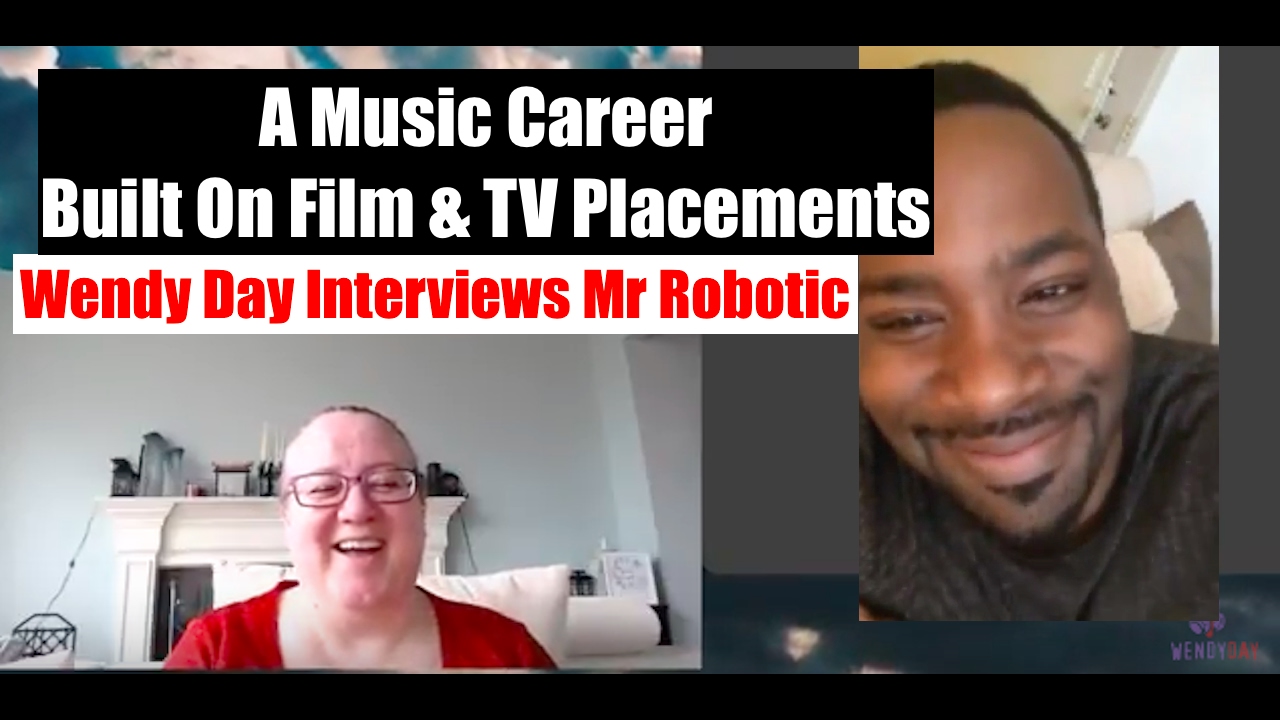
In this interview Wendy Day talks with independent artist Mr. Robotic (formerly known as Bullet) about his unconventional path from Chicago battle‑rap roots to electronic dance music and how he built a sustainable career through TV, film and commercial sync placements. Mr. Robotic recounts his early hustle on MySpace, his first live bookings, the pivotal release of “Watch the Club Go” that hit #1 on Beatport, and his first sync placements (e.g., “Hit the Dance Floor” on a CW pilot, “Earth Girls” on Jersey Shore). He explains the mechanics of sync licensing – upfront sync fees, royalty structures, publishing splits, and the difference between music supervisors and placement agents. He shares concrete strategies for finding placements: attending conferences, leveraging LinkedIn, cultivating relationships with music dealers, supervisors, and ASCAP contacts, and positioning himself as an affordable, quick‑to‑close option for low‑budget productions. The conversation also covers how placement income funds touring, streaming, and helps him negotiate equity‑based label deals, and his philosophy of self‑management versus traditional managers. Throughout, Mr. Robotic emphasizes hustle, networking, and treating placements as a core revenue stream rather than a side‑gig.
Chapters
Mr. Robotik, how are you?
Amazing, how are you?
I'm good, thank you.
Perfect.
My connection was so shitty upstairs that I had to move downstairs, so now you guys have seen like almost all of my house. This is really kind of funny. But we do what we gotta do to make it happen.
Mm-hmm.
So Mr. Robotik, how did you get started in the music industry?
So I've been doing it, I'm not sure if people remember, so I had a whole different name. A long time ago when I was just doing hip-hop and rap or whatever. And I started with this guy named, uh, Ad2. He's— I'm not sure if he's still signing Knifewonderer. He might be. But we went to high school together and we used to go to events all the time. And it's a thing in Chicago. I'm in Chicago when, um, you know, back when Kanye was first— like, when Kanye was like really making noise and like produced for Twista and, you know, Overnight Celebrity and all those records. It was this thing called Chicago writing sessions. And almost every Chicago artist or whatever back then, um, will always just go to those. I used to go to those events like every, um, Saturday. Um, my whole philosophy at that time was, I'm going to get on that stage, you know, stuff like that. So I just kept building and building. Um, and when I got to Columbia College, I didn't think I was ever going to get into college. Like, my GPA sucked. Um, I sucked in high school. I didn't care, you know what I'm saying? So, um, and I remember like I used to, when I was going to church, um, they'll take us on these little college tours and my— I was like, I'm not getting in. The GPA is like 3.0, something GPA. And I just started making some very bad decisions after that. And then my mom told me about Columbia College, um, Chicago.
Um, I love Columbia College, it's an awesome place.
That's cool. Um, changed my life. And so I ended up going there. And prior to BMS Robotic, my name used to be Bullet, and I was a battle rapper. And, um, I used to battle rap on 126th, uh, 127th and Ashland at a barbershop called B&B Barbershop. So everybody kind of knew me from there, being a rapper. Then I took that over to Columbia, would start battle rapping there, and that's how I kind of built my name there. Um, and then I met this guy by the name of Slaade, who's a producer. And the reason I brought up writing sessions was a lot of people I met at Columbia, we knew each other from writing sessions too. We was like, oh yeah, you're, you know, and we'll go to the event during college too because they still had, you know, writing sessions then. So y'all kind of clicked up and, you know, had a crew or whatever. And then my producer Spot and this guy by the name of Jamel and a few other people, they kind of made me go cold turkey from battle rap. Made you go cold turkey? Like when you're battle rapping, the same cadences you use And battle rap, it comes off on a record. So they kind of make, you know, go cold turkey from that just to teach me how to songwrite and make records. So the first—
very different songwriting and battle rapping. Are they very different? Are they two different skills?
Like, when you battle rap, I feel like it's more so like how aggressive can you be, how, you know, Jay. And with songs, it's just like, you know, you got to have melodies and you know, the lyrics got to make sense, you know, it has to reach a certain audience. And at this time, I was very influenced by 50 Cent and how he would make records. So the first record we had was a song called Pancake Niggas, which is weird. Um, and then we got a front, and this is when MySpace was— MySpace was popping at the time. So I had I Ain't Got a Front, and then, um, we did a record called Shut It Down. So when I had Shut It Down people start booking me on MySpace. Like, literally, this is like when I was—
they would book you on MySpace?
Yeah, literally, they would literally just book me. And my first show was like $1,500.
Nice, like MySpace hookup. That's nice.
So no, actually, that's my second show. My first show was in Nebraska, Lincoln, Nebraska, at a place called The Alley, um, and it was like $600. And then my second, $1,500, in Appleton, Wisconsin. And from that point on, I was like, I gotta figure out how to do this. Forever. Like, like, how could I— I'm not getting no regular job, right? Right. So that's kind of how it happened. And my whole thing was like, you know, Chicago is a very cliquish city, you know. Like, I'm a person that tries to figure out how to do it on my own, um, you know. So I used to always focus on, you know, how do I get out, how do I perform outside of the city, because it gives more of an impact. It's, you know, perception is reality. So it's like, if you're you're an artist here, you go perform out the country, at that point you could technically say you're an international artist, right? You know, performing out the country. So that's always been my thing, like, okay, I don't have to perform Chicago, I can go perform here and then perform here, here, and here. And then when I come back to Chicago, it makes more sense to kind of book me, right? Because you performing everywhere else, and I am from Chicago, so you look stupid if you don't book me, right? Yes. Kind of my whole philosophy.
So at this point you were still a rapper? Yeah, you're still Bullet?
Yeah, I was still him. Um, and I think I put out a record called Back to the Lyrics, um, and that got me like in the Source magazine and different things like that. Um, at the time I still— but what happens is the group called the Cool Kids, uh, Chuck English and Mikey Rocks, and when they, they went to my school— well, Chuck went to the Art Institute up the street, and then Mikey went to my school. He's down the floor below me in my dorm room. And when they came in, that's when I really saw like what was going on. So I was like, if they're going to do the '80s shit, maybe I can go do the futuristic shit. You know? But this is still My Name Is Bullet. So I think I probably seen the screenshot. MySpace at the time was like Bullet was like in futuristic letters and I had like this huge planet, stars and everything.
So— So you always kind of had that vibe, like that futuristic vibe.
Yes, exactly. Exactly, exactly. So Earth Girls, that was kind of my first song, like doing the futuristic stuff or whatever, um, and they were playing it on the radio out here, um, and then I'll play it at parties and stuff like that. But I did it like— I have to like salute the Cool Kids because that— they're the reason I probably do what I do, um, and I saw them doing it and I just saw the moves they're making. Like, like, I remember when they created the Cool Kids and maybe took 6 months for them to get on And I was like, I've been doing all this shit for years. It's like they literally blew the fuck up in like 6 months to a year maybe. So I did the futuristic stuff, but then at the same time Kid Cudi was coming out.
Okay.
When Lil Wayne is calling himself a Martian and all that. And I was like, I've been doing that. At that time I was already doing it, but obviously I'm not Lil Wayne and I'm not Kid Cudi. Kid Cudi has, you know, Plain Pat, you know, Kanye behind him, so you can't but at the same time I'm on the same blogs as them at that time, you know what I'm saying? So it was just like, if you notice, I'm like, I'm doing this shit, same shit he's doing pretty much, but I obviously don't have that backing that they did. But I just kept with it. And then, um, what happened, um, Bullet, blah blah blah, I went to— yeah, I was trying to figure out how to get on the radio after that.
So as every artist does.
Yeah, yeah, like I was just trying to figure out radio at that point. And, um, I reached out back in MySpace again. I reached out to every mix show DJ that was on our, on our pop radio station, top 40 radio station called B96. And, um, I reached out to every DJ or whatever, um, and then one of them hit me back. The manager of a DJ hit me back, and then I sent him a song I had called Mr.— no, prior to that I had a song called Mr. Robotic. So my name was still Bullet, but I had Mr.
Robot. Oh, so it came from the name of a song, your name?
Huh?
Your name came from the song, from the name of a song.
My name literally came from that song, literally. I remember DJ Z was like, yo, this is a hit, or whatever. So, you know, you promote me a lot, um, and I was like, it charted on DJ Booth or whatever, and that was a song I was trying to get on radio. So I reached out to all the mix show DJs, um, and the manager, they had me backing manager, this guy named DJ Bam Bam, and and like he's really known in the house EDM scene or whatever. So I sent the song to Bam Bam. He's like, yo, this is dope, but this is kind of too soft for the records that I play, but your vocals are dope. So he sent me like 3 or 4 different beats.
Um, oh wow.
Yeah, so he sent me 3 beats. He's like, yo, can you put a rap on these? He paid me, he paid me for that. Um, and that's— I did the verse and that's what became the song called Watch the Club Go. But The beat was very different than the beat— the beat that came out, very different than the one I rapped over. So next thing I know, he's like, yeah, I'm about to put out Watch the Club Go. And, um, I was like, okay, I'm about to make a name change. My name— I'm not going to be Bullet, can you put Mr. Robotic? So he's like, yeah, perfect. DJ Bam Bam featuring Mr. Robotic, Watch the Club Go. When I tell you that song is what made me who I am, you know what I'm saying? Like, literally, that song came out And I didn't understand, 'cause I wasn't in the dance music scene at the time, but I didn't know, heck, I didn't understand what Beatport was or none of these things. So that song charted on number 1 on Beatport, they're playing it at all these festivals. And then back for the radio stuff—
What year was this? Robotica, what year was this?
This was either 2010 or 2011. Okay. So the crazy thing about the radio stuff, it was a guy that was trying to charge me $2,500 to play me on a mix show. And I'm not sure if he thought— I'm like, do you know who I am? I'm not stupid. Like, I'm not getting paid to be on a mix show, so why would I pay you to play, you know? So just crazy. I was like, no, fuck you. And then 3 months later, you know what I'm saying, I'm on the radio, you know, without him. Yeah, fucking ridiculous. So, um, the song was playing on radio. I just remember being in a, a, a truck with my friends and we're going clubbing, and all of a sudden there was somebody trying to manage me um, at the time. And, um, we're all in the car, they're randomly— I'm like, oh shit, that's my song, that's me, like, you know what I'm saying? So that was just very interesting. Um, so because that song was doing so well, the B96 radio station started supporting me and they let me perform on— there's a thing called Summer Bash where they have all the, uh, like the huge artists come perform, the Flo Rida, whatever. So they let me perform for Pre-Bash, which is the stage before you get into the, uh actual arena or whatever. So they, you know, they're supporting me there. And I know perception is reality, so I knew that performing for one or two large crowds is better than performing at 10 or 20 open mics. That was like, that was my whole philosophy, because even if you don't get paid to perform for a very large audience, nobody knows you didn't get paid, right? You know what I'm saying? So I, you know, film it then I'll use that same footage to get me booked somewhere else for a— so that's, you know, so that's literally what I was doing that whole time. Um, so when I'm on the radio at the— at that time— oh, so then this is when the TV placements start coming in too. So prior, when my name was still Bullet, um, I had— I was still making the same music I make now, just had a different name. So I had a song called Hit the Dance Floor, um, and it got in some pilot show on the CW um, and I made like $500. That was $1,000.
Did you purposely place that, or was that a happy accident?
That was an accident. I went through a company. Well, initially, my whole placement story is back to the Cool Kids. I saw them in Entourage, so I was like, oh shit, that sounds— I didn't know you got paid for that. And I was like, oh shit, that's cool. I know this song. Oh, and they're in the fucking— this too? This is crazy. And then my friend randomly hit me up and said he knew the vice president of a company called Music Dealers. So I remember Music Dealers. That's how I reached out to John, who was the VP at the time. He was like, yeah, we talk about you all the time in the office. Like, Chicago's number one hustle. Like, that's great.
Yeah, you are number one.
You know, sign up, you know, we'll try to get you placed. So hit the dance floor, placed like in 3 weeks. And I was like, cool. And me and my whole family watched it or whatever. It's a big deal to me at that time. It is a big deal. Yeah, you know, so it's like $500. Um, and then right after that, my friend from Atlanta, his name's Chuck, I think he used to messing around with Convict, um, he plugged me with a guy named Brandon who worked at MTV for placement. Um, so I gave Brandon all my stuff and then he placed me in Jersey Shore, right? And Jersey Shore was like the number one— that was big then.
Yeah, Jersey Shore was huge.
Oh, remember the Earth Girls song? I did that in 2008. I got that Earth Girls placement in 2010 or 2011.
So you were able to play songs that were somewhat older in your catalog in these shows and get paid for them?
Exactly. So Earth Girls got played, but my name is Mr. Robotic at the time, which is why I think it worked. So I got the Watch the Club Go record at the same time. Who's this? Sorry, uh, and, and, uh, um, sorry, somebody was talking. Um, was about to say, um, so my name is Mr. Robotic at the time, so I have Watch the Club Go, and then the Earth Girls song comes on Journey Shore. Bottom of the screen. So it's Mr. Robotic, Earth Girls. All of a sudden I get all these tweets like, oh my God, what's this song, Mr. Robotic, blah blah blah. And at the time Spotify wasn't around, so my whole business mind was, how do I get people to buy this record? Oh, I'm just going to put it on YouTube before it comes out, and then they can only stream it on YouTube. And if they really want the record, they'll go buy it. Go buy it. Yeah, yeah, that works. So when I say I sold like 6,000 singles that weekend, I sold 6,000 singles that weekend off a song I did 3 years ago prior. Wow.
So you've really made a living doing this. You've made a living placing your music in TV.
And the crazy thing with the placements was the main reason I did it was I got tired of messing with publicists at that time because it's just like, you know, you're paying money or whatever. It's just like I had the hip-hop club, so when I was doing the hip-hop stuff, they were getting me like on 2 Dope Boyz, Nightride, and you know, the magazines and stuff. But when I switched over to Mr. Robotic it was like they didn't really have those connections, right? Basically nothing at that point. So I was like, how do I keep my name out there without paying this, but I get money from it? And that's when the placement came in, because, hey, my name was popping up on the screen, and then, you know, and I'm getting sales from that, and I'm building my YouTube channel and my following, you know, on there, because those people that watch TV buy records. But also, if I wanted to go pitch to like a billboard.com or a different publication, I can say, hey, my name— I was just on this TV show, or I was just— because one thing I noticed, sure, yeah, exactly, like people don't really realize the people that's doing the music for a lot of these TV shows or films or commercials. So that was kind of my niche, you know, because I feel like in pop— with hip-hop is more outlets, like you got all these blogs, all these websites and stuff like that. With pop like you either on or you're not. So it was like, how do I get myself out there? I'm not a singer, so I can't fucking do covers on YouTube, you know, right? Like, so what, I can't just sit here and rap on a microphone on some pop beats on YouTube and people just like, oh shit, there we go. So it was just like TV, film placements, like that's going to be my niche. And whenever I have a placement, I'm going to fucking promote it because that's what people The people that do the shit for TV, film, or get it, but they don't promote that shit. My ass, I'll fucking do some cover art, I'll put that shit on Spotify, I'll put that shit on iTunes, like, come go buy the song you just heard in this TV show, right? That was kind of branding everything and just doing that and building my name as Mr. Robotic in order to book shows, you know, TV, film placements and whatever else. And that's kind of how I, you know, made a lot of this stuff happen.
Right. When you get— when you get paid from your placements, do you just get paid once or do you get paid every time the episode—
so it depends on the kind of license. So let's say if you're on a cable show like MTV or whatever, those are royalties, so you don't get paid anything up front. Most of— sometimes you do, but most times you don't because they do like they're doing you a favor. Honestly, a contract would say a dollar, like you'll get paid a dollar, you don't even really get that dollar. Um, and then you'll— but you'll get paid because they rerun those things so much. I'm still getting paid from Jersey Shore. That was right, you know what I'm saying? So that happens. But when you're like really building, building, building, and let's say you get a commercial, I mean, they pay you $70,000. No, you can get like $70,000 from a commercial or $40,000 from a commercial or $5,000 from a TV show, you know, $3,000. That's the master fee. But sometimes they don't rerun that much. So what I, you know, for me, it's like try to nail those uh, commercials or movie trailers because they really pay so much up front, but they also rerun so much because it's a commercial spot. And so you get so much, so many royalties from there. Sometimes the royalties is more than the upfront money. Oh wow, okay. Up front from a commercial, but you might make $80,000 to $100,000 altogether. Gotcha. Without signing a deal or any of that, you know.
Do you have to give up your publishing to do this, or do you get to keep your publishing? Publishing.
Say that again. It depends on what kind of deal. So if you have a publishing— like, what I do for myself is what a publishing company would do. Exactly. Um, a publisher or whatever. Sometimes if you place it yourself, you don't have to do anything, but if you're going through somebody, they might take like 25% of the publishing, whatever. But that's still better than, you know, that's still good because you still own the writer's share. You know, too. So you own 75% of that record. They only take 25%, plus you got the upfront fee. So, you know, still works out.
I'm not, I'm not a big fan of people giving up their publishing, but I, I totally understand why you would say that. Like, I understand why you would do that deal because you're thinking is it's better to have 75% of something than 25% of nothing.
And that's an individual decision. Either. So it just kind of depends. Like, I'm not a fan of like people— I mean, if they got you the placement, they deserve something, you know. I look at it like that.
Like, well, how do they get paid if they're not taking part of your publishing? How do they get paid when they place you in a TV show or a commercial?
Oh, if it's— if you're going through a music supervisor, they don't take anything. Music supervisors are hired. If you're going through actual person that gets placements and, uh, things like that, the typical non-exclusive deal is 50/50. So they'll get 50% of the master a sync fee, and then I'll take— sometimes I'll take 50% of the publishing or whatever, like half and half.
Gotcha. You mean 50% of the publishing money, not 50% of the ownership, right?
Right, exactly. So they take 50%. So if you got me— let's say I got you a placement, the typical deal would be like the placement is $5,000, I would get $2,500, you get $2,500, and then we'll split 25% sync, 25% on the publishing. You know, so you own 75%, I own 25% of that one placement.
Do you own it forever or just for that placement? Just that placement.
So usually they'll title it like Coca-Cola Robotic One or something like that.
Gotcha, gotcha. Okay, now how do you, how do you find, how do you find placements?
Um, so initially I, I went to music dealers at first, um, and they were, you know, placing me too. But for me, I'm like, I'm a hustler. Yeah, you sure are. I'm not— I understand why somebody would get 50%, but you're not just getting 50% because you fucking know somebody, right? I'm about to find out who the fuck you know, right? And I'm with them direct. Keep all the money, you know. So my whole thing was not put all my eggs in one basket. So what I would do is go to music dealers. If there is a film TV conference, I will go there. I think we actually met at one in Chicago. Yes, we did. So all those music supervisors there, you know, get their contacts, whatever. And then I was also just really building my resume because I had the guy at MTV too. Right. You know, so I'm getting placements through him, not just music dealers. And then my friend MJ at the time, who my friend used to work at ASCAP, she met him at the ASCAP office. He was getting me placements too. So I have music dealers, MJ, this guy getting me these placements. So I'm not just signed to one person at all. So as I got 3 people really building my stuff at that point, I have a resume. I'll go on LinkedIn and look for music supervisors. Smart. Hey, I'm Mr. Robotic. I was on this, I was on this, I was on this. This is my genre of music. I kind of pitched myself as a less expensive Black Eyed Peas, Flo Rida, Pitbull. Because if they're getting $500,000, even if they just paid me $15,000, $20,000, that's still a shitload of money. It is, you know. Yeah, that was been my whole niche on how to really, you know, get myself in that whole placement world. Because, you know, because they always need music and sometimes they can't afford, you know, the Flo Ridas or whatever, the budget just doesn't call for it. But they can afford my ass, so I'm gonna take it.
Hey, and it's funny because, you know, you and Deborah Manus Gardner are the first people I wanted to interview, um, especially you because you are the people that are watching this video right now. Like, you're not Flo Rida, you're not Pitbull, and so many people think that if you aren't a famous artist that you can't get placements. And, and I always tell them that it's easier when you're not signed to a label and you're not known, because then you're affordable and it's easy to clear.
Exactly.
When somebody decides to use a song and they call you and they say, okay, we want to use this song in this, let's say, television show, how long does it take from when they tell you that to when you sign the contract? How fast is the process?
Well, it depends. Like, sometimes— so for example, I just got something for Netflix I think it's like $5,000 or something, but it won't air until like March or April, you know what I'm saying?
No, I don't mean how long does it air. I mean from when the person who places you into the, into the TV show or the movie, how long does it take until they close the deal? Not, not to when it airs, but when like the paperwork—
I mean, it depends. Like, use it. So first they'll send a request, hey, we want to use this on, you know, this is what it's paying out, $5,000 or whatever. And then once they figure out they're going to use it, which is most likely closer to the air date.
Gotcha.
So then that's when you kind of just sign the, um, you know, the license, the paperwork.
But you know ahead of time that they're going to use it, right?
I know ahead of time, you know, that they might— and then they'll go through that little procedure, like making sure this is still the song that they want. This, it goes in, you get a check. Got it. So, but sometimes, you know, it could be they need something for next week, you know what I'm saying? And, you know, you close the deal right there, right? So just all depends on their needs, right?
Um, I went to the ASCAP seminar a couple years ago and there were just a lot of music supervisors and a lot of music placement people. It was Hollywood, so that's why. But the one thing that everybody kept stressing was that one of the things that they look for in an artist is somebody that can close the deal quickly because if they go to Warner Brothers or Def Jam, you know, it's a 3-week process just to get a yes or no. And the great thing about you is they can just, they can just call you and say, hey, what was this song?
That's why I get so many. I'm a one-stop shop. Like, you know, even with my producers, it's like, you got to sign them, like, not signing, but you got to understand like it all has to go through me for this to work, right? And you're paid, but it just has to go like it just has— I can't do the whole— because if you— if my producer— if I have a producer that works a job or something like that and I need to close something right away, I can't sit here and fucking wait for you to go on break and exactly call you back. Yeah, you know what I'm saying? So it's just like, understand, this has to go through me. This is how much it is, this is how much you're going to get paid, this is how much the publishing is going to be. And we have to do it. If they don't, don't understand that, I can't work with you, right? You know what I'm saying? Because like you said, it's— I have to be a one-stop shop in order for it to work.
Exactly. And this is your whole lane. Like, this has been your focus now for a couple years, like that.
And just the dance music scene, like I told you before, it's because I can't do the whole typical YouTube playing acoustic covers. So this is the reason I have to do it this way. And then it also funds my career to do what I do, to get me to where Right, you know, still on Flo Rida or Pitbull status. I mean, it just keeps me afloat.
And do you want that? Do you want to be—
do you want to be okay?
And this is such a great way to fund what you're doing. Like, everything— I've known you for a couple years now, and I'm amazed at—
at—
first of all, I'm amazed by your hustle. Like, good for you, because so many artists just don't get off their asses and and find opportunities, you know, and you always have ever since I've known you. Is there some sort of a directory that comes out that lists different opportunities, or do you really have to go out and just find them?
I just find them. Like, honestly, the whole LinkedIn thing was such a free jewel for people because most people don't know to do that. Right. I feel like go there and just use the supervisors, hit them up, just say, hey, this is the kind of music I make. If you need anything, feel free. Or just find whatever your favorite TV show is, look in the credits, find a music supervisor in the credits, right?
And look them up. Do the research.
Yeah, do it. You gotta research it. That's really the key. And usually that music supervisor is on like 10 other shows, so.
Right. And when you reach out to them, is it hard to get a response because they don't know who you are?
Yeah, that's true. So that's why I'm saying like, you know, a little heck I used to do is sometimes I don't go to the conferences, but I'll look up every single person that's going to be on the panel. I got you. And it was over before the panel starts. I'll be like, hey, look forward to meeting you at this conference, blah blah blah. And then when a panel— even though I won't go to the conference, I'll hit them up a week later like, it was so amazing meeting you, here's, you know, my stuff, you know what I'm saying? Thanks for taking the time to meet me at this conference I didn't go to. Because they don't know. Yeah, they don't know, they don't remember. They got so many people coming up to them, they don't know. But exactly, you know, so that's what I do. That's my little hack of what I used to do back in the day, right?
The great thing is you don't have to do that anymore because now you can actually go to the conferences and that's fine.
I manage by some top people, so it's a little easier for me to just focus on recording that albums and singles and shit and blowing those up. So Right. Yeah, about that no more.
Exactly. Um, Robotic, what is the difference between somebody who does music placements and a music supervisor?
Okay, music supervisor is the person that actually works on the— works at the film, you know, on the film or the TV show. Oh, okay, they're the ones that actually place the music, supervise the music, like they're the They're the ones that the person who's trying to get you the placement, they send the music to the music supervisor.
Oh, so the person who does the music placements is like a middleman.
Yeah, exactly. Like the music dealers, like the music libraries, Taxi.com and all those places. Gotcha. Place your music with the music supervisor.
And do you, do you, do you utilize placement people as well, or do you go right to the supervisors?
By now, they're the music placement people, and one of them happened to be a music supervisor too. So, so I'm kind of in there already. But prior, like I was saying earlier, I was using music dealers, using MJ, and Brandon was like a music supervisor as well. So it was like these, you know, they just have great relationships. So it's just dealing with the person that has the relationships so you can cut through the hundred thousands of other songs or whatever. Like, I'm surprised I have over 150 of these things. I don't know how the hell I have that, but you have 150 places? Yeah, 50 places. Yeah, yeah, it's nuts. I have no idea how, but I do.
That's impressive. Over how long of a period of time?
I've been doing that since 2011.
So in 6 years?
Yeah, 150.
Wow, that's so impressive.
Personal music publishing the other day, and they were just like 98% of people don't even have a place, you know what I'm saying? So I'm like, real, like, shit, that's like, you know, because I don't look at it, it's just for me it's just the norm now. For me, it's just like, okay, cool, $5,000 today, whatever, I can use that to fund my album or pay my publicist or whatever. But I do now, I kind of realize like that is kind of a big deal. But for me, it's a really good deal. I, I think in 10-year terms, I think like, okay, I'm only making $5,000, it's like you can make $70,000 or $100,000 for a song, you know what I'm saying? Like, right, so until like, until I get that final, you know, that $50,000 or $100,000, that's not even final, that's still on the low end. But when I get that, then I'll feel a little more like, okay, I did something.
Wow. There are people watching this right now that are just, I promise you, they're going to be amazed, you know, excited. Your hustle's just— it's really impressive, the fact that you not only got up and do it, but that you continue 6 years later to still do it and still make new music.
And well, yeah, it's a very specific goal, because if record labels are only doing 360 deals, I need to come in a building saying, do it. I've already made, you know, $500,000 or $1 million. I made this from streaming, I made this I made this from touring. So instead of them giving me the typical record deal, it'll be more so like, we're going to give you an investment for equity in your company. So my thing is making sure that, that my equity is worth fucking something, you know what I'm saying?
Exactly, that you have leverage.
Worth $5 million to $10 million before I walk in the building. And the only way I can do that is picking the 3 biggest revenue streams, which is streaming, placement, and touring.
Exactly.
You know what I'm saying? So that's the reason I'm doing it, which is why I stuck with it so long, even if I was only getting paid $1,000. Or my philosophy, even if I just got paid $1,000 for a song, it would take fucking 1,100 people to buy that song on iTunes for me to make the same check.
Exactly.
So that's how I look at it.
Exactly. You have such an amazing story. I'm so impressed. Mr. Robotik, thank you so much. Is there anything that I've left out that I should tell these guys?
Um, I don't think so. I don't know, is it?
I think, I think I asked everything.
Okay.
Do you have a manager that helps you do what you do?
I do. I've been doing this myself since the beginning. Yeah, because what happens is the manager would ask me for advice. Why the fuck I'm giving you 50?
Why am I giving you a percentage exactly?
What, what? So that's offered management, uh, you know, but I do want to manage like a Scooter Braun or something. I feel like he'll take me to where I personally want to go. But, um, you know, I manage myself pretty much. Like, you know, I've learned the ins and outs, and I think sometimes that kind of prohibits me from getting like just a regular manager sometimes because they know they can't fuck me, right? Because I know it's been— I know this business like the back of my hand. So it was just like, they might say some stupid shit and I'm just like Bro, no, you know, like, that doesn't even sound right. Yeah, it's like, turn people off from me anyway. But if it's like one of those power managers, I think that's more of a benefit that they don't really got to school me on anything. It's just like, he knows what he's talking about, he knows what to do, so let's just make this happen. Exactly.
And a power manager wants an artist that's knowledgeable because it's so time-consuming to educate people.
Exactly.
Cool. Well, thank you for sharing your knowledge with us today. You really rock for this.
I'm so proud of you. Anytime, man. You're my best friend.
Mr. Robotik is my text buddy. We text back and forth about the industry all the time.
All the time.
Beautiful. Well, thank you for your time today. I appreciate you, and I will talk to you soon.
All right, perfect.
Thanks, Robotik.
You too.
Bye, sweetie. Okay, I think, I think we're recording.
Okay.
More from Wendy







How Much Is Your Music REALLY Worth? | Jeff Ponchick x Wendy Day | No Standing Zone Ep. 19

Managing expectations is a major key to making it in this business... easier said than done!

I had a great conversation with @SamuelRiddle on the most recent episode of No Standing Zone..

Building Empires: How Sam Riddle Navigated from College Radio to Managing Megan Thee Stallion
