
Do I have to clear samples? Music Rights explained! | No Standing Zone Ep.4
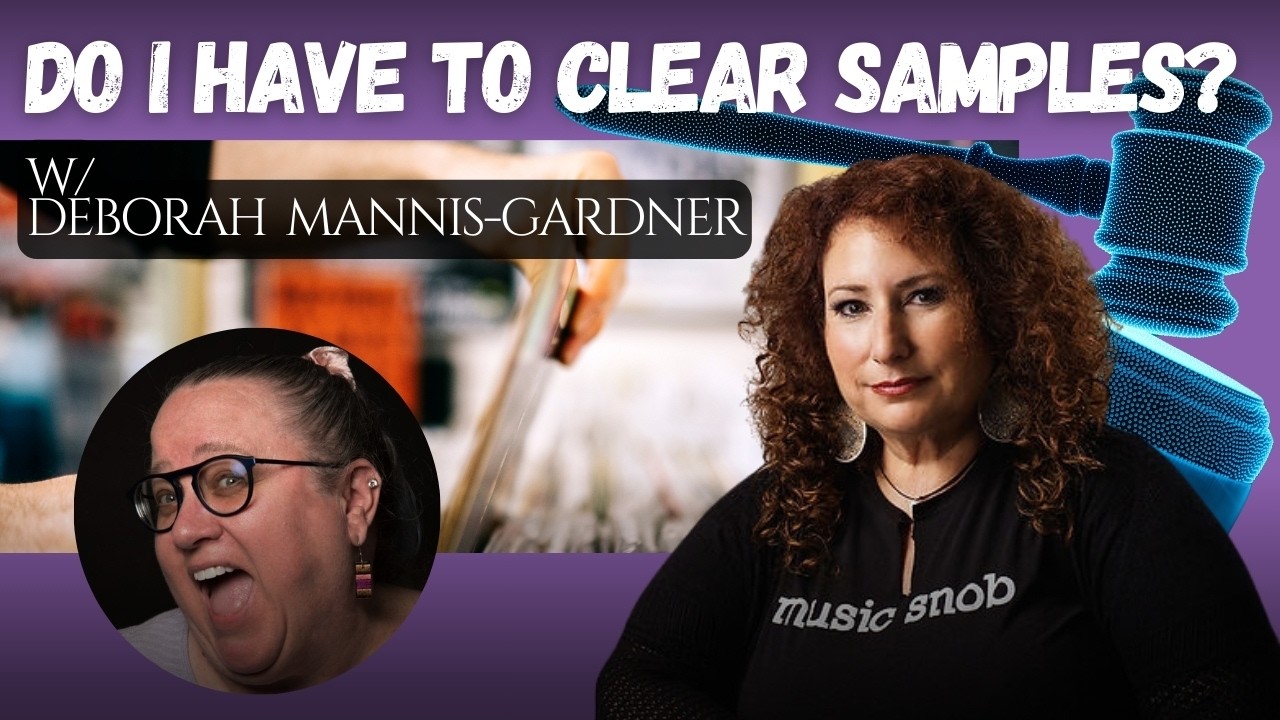
Deborah Manus Gardner, founder of DMG, explains how sample clearance works: you need permission from both the song's publisher and the master recording owner. She walks through her two-stage process, shares stories from Kendrick Lamar and Beyoncé projects, and stresses that paying for samples matters even if you're not making money.
Chapters
So today I get to interview one of my favorite people in life. This is the person that I have known the longest in the music business, and her name is Deborah Manus Gardner, and she's so friggin badass. Hi, Deborah. I love you.
I love you too. We're just like fanzining over each other.
I know, and I always do because I'm just, I'm so proud of you. Like, You just amaze me. You're so great at your job and you're such an amazing human being and you just care. Like, how many years have you been in the music industry? 35? Since 1990, when you were obviously 5 years old, because you're still young.
Yeah, I was 5. I was 5.
Me too, me too.
So that's what— that's when I, you know, I was doing other stuff. I was like doing, you know, music videos, you know, and that kind of stuff prior, but I really entered my first job in 1990 at Diamond Time.
Right. You were at a major label first. Didn't I meet you at RCA?
That was my second job. So I was at Diamond Time from 1990 to '93. Then we met in '93 at RCA Records. And then, um, was it '94? Might have been '94.
I think it was '93 because I started in '92 and I met you right away. You were the first person I really met.
Right. So, well, I might have been at Diamond Time when we first met. We were doing these roundtables in New York City.
I do remember. I remember you at Diamond Time. I just thought Diamond Time was after RCA.
No, I was at Diamond Time. And then at the time, Skip Miller was A&R, God bless his soul. And Joe Galanti had come over to be president of RCA Records. Carol Fenelon was head of business and legal, and they brought me on board. Because they just signed Wu-Tang Clan and LaVert and SWV, and samples were becoming an issue. And so they decided to bring me in-house to handle everything. Um, didn't I know you at Diamond Time?
It was on— it was on Lafayette Street. I knew you at Diamond Time.
Yeah, yeah. And so, um, it's very political. Really didn't like it, but I wanted to learn how a record company worked.
And that's the best way to do it, jump into the fire.
I did. I didn't have a computer for the first 2 weeks. I used to hang out in the file room, and that's where I actually got my hands on reading the Elvis Presley agreement. I read— oh yeah, I read David Bowie's agreement. I, you know, I sat there and I just read agreements with recording artists to get a taste on all that stuff. And I got there about 18 months, and I got promoted like 3 times while I was there. I was there for about 18 months, and then Joe left. And what was Bob's name? Bob came over to be president. I said, hey, no disrespect, but I'm gonna leave. But I don't know, I'm out. But I'll handle all your sample clearances as DMG clearances, and you know, it's going to be a savings for you because you're not going to pay a salary, you don't need to pay my health insurance, there's, you know, no overhead cost. I offered them a discount rate, and then I went to every label. I went to RCA, I went to Arista, I went to Epic, I went to Columbia, and I did every label. And I knew I needed to make a certain amount of money because I just bought my first house with my husband at that time, and I'm like, sink or swim. We're either going to be able to pay our mortgage or I'm going to go pump gas. It is what it is. And we were successful. And we—
I love that.
Yeah.
What year was that? When did you start DMG?
DMG opened up its doors on January 1st, 1996. I had clients lined up in 1995 waiting for the open doors. I was supposed to work through the end of the year, but that was the year of New York's huge snowstorm. Back in the days when we used to get like 5 feet of snow in New York. Mhm. And so I wasn't even able to go into my job at RCA Records at the end, and that's when clients started coming to me. We opened our doors, got incorporated, and we were busy the moment our doors opened.
From day one?
From day one, yeah.
Yes. What made you move from New York to Delaware?
That was all 9/11. So my son, who I got at birth— he's adopted But because— oh, that's right. And so, and so is my fiancé. And so, um, the courts shut down, if you, if you remember, during 9/11.
So I, I do remember.
So the adoption—
everything shut down, by the way.
The adoption process was held, you know, was, was, you know, put on hold until the world became better. And then as soon as the adoption was finalized, um, you know, my husband at the time wanted to go back to Delaware. He just didn't want to be in New York anymore. And so that's where we originally grew up. And the way I had structured DMG was a company, um, I never wanted to be overhead for, for rent. I always wanted to be working out of my home. And even the staff I end up hiring, everyone's sort of working out of their homes. And so moving to Delaware was not a big deal. And everyone was concerned, like How are you going to do meetings? How are you going to be able to see people in New York? I'm like, you don't see me anyway. Do you really need to see me or do you want me to be at my desk getting the deals done? And that's where I think we've been so successful at DMG is we've never asked to be in the spotlight. We want to be behind the scenes, get the deals done, work at our desks and make things happen.
Yes.
Now, and now we're big. Now we're—
You're huge.
We're having our first company retreat. We have 15 people at DMG plus the 3 interns.
Oh, that's awesome. I didn't realize it was that big. I knew it was big because you kind of clear everybody's albums, and we're going to get into that because I, I want everybody that, that's listening to this to understand the importance of clearing samples, especially in light of what happened with Sony suing the young rapper that they couldn't get a hold of. Um, and we'll get into that in a second, but I love that you left New York and, and went to Delaware. I was personally sad because I didn't get to see you as much, and I was selfishly, you know, uh, devastated that you left New York. But I, I love that because it taught me that I could leave New York. And I left New York not long after you did, just because I wanted to live like an adult. I realized that New York is really expensive, and I was living like a college student in my 40s. And I didn't want to do that anymore. I wanted to, you know, have a lifestyle. I was living in a loft with 5 EDM DJs. I'm not exaggerating. And while it was great and it was fun and it was cool and it was funky, um, it wasn't conducive to, to great mental health and being an adult. You know, I, I've lived like I was 20 up into my 40s. And I moved to Memphis first, as you remember, and then I moved to Atlanta. But I got to do things like buy my first house. I was in my 50s.. But I got to buy my first house and do things that other adults do in their 20s.
Yeah, I remember living in a loft in New York City also. I went through that phase.
Yes, it was the bomb.
Yeah, I was in a loft on Lafayette Street between Grand and Broome. It was industrial space and we pretended to be a company called Flush and we We said we painted toilet seats and like the— on our door was a painted toilet seat. And there was just a bunch of us, just crazy kids, you know, living in a 2,000-square-foot loft.
Yeah, I love that you named it Flush. That's really funny, by the way.
We were, we were crazy back then. But now, you know, the way, the way things are set up, like before, you know, the pandemic, every one of my employees works out of their home. So we've got people in London, Florida, New Orleans, New Orleans, Asheville, North Carolina, Colorado, Pennsylvania, Delaware, Maryland. So we're everywhere. And now I launched a second company in October, my publishing company. And those people, you know, we've got someone in Sweden, England, you know, the same thing. So that's just, you know, I really thought the pandemic was going to teach the world you don't need to pay the overhead costs and you don't need to ride an employee's butt. To get work. I think everyone worked even harder during the pandemic, but yes, people are going back to their offices.
Yes, yes, people are, are very much back in their offices now. And, and it's funny because my company just went remote. I've got an employee in New York, one in West Virginia. Um, my employee that was here in my office with me on two days ago moved to South Carolina to take care of a family member that's, that's elderly and a little sickly. And it didn't cross my mind. Like, it, it just makes sense. It just makes sense.
It does, you know. And, you know, obviously there are jobs where you need to be in person, and there's individuals that need to be around people, and I understand and respect that, you know. And so we make it clear, even with our interns— our interns don't come in. Our interns— wow, you know. So we have interns in New York, Pennsylvania, we've had interns in California, we've had interns every place.
That's awesome. And they're still learning, they're still able to, to gain the knowledge That's beautiful, because that's really what matters. It's why we're here today.
Yeah, it's all— it is— it's all about knowledge and sharing knowledge. Yes, I think I get really mad at people in the industry that still aren't sharing. Like, there's a private Facebook group I belong to in the world of synchronization and stuff, and when someone's like, hey, I'm looking for so-and-so, can you help me? And someone's like, sure, I'll DM you the answer. I was like, why would you DM them the answer? Why wouldn't you Show it to them. And so like someone asked for the splits for Pass the Cabosier Part 2. It's got like 16 writers, you know. And so I took a picture of my chart of every writer, their split, their publisher, their PRO, and their split, took a picture of it and posted it and said, that's so helpful. This is how you share information.
This is how you not only share information, but now somebody is going to be doing splits with like 8, 10, 12, 14 people. They're going to remember that's there. They're going to be able to go back and say, okay, how did they do it? Like, they're going to be able to learn, like, and apply. Because learning is great, but learning and applying is, is where it's at.
Exactly, exactly. And so there's, there's a lack of— in the music industry especially, there's a lack of communication, there's a lack of sharing.
Yes, yes.
So that, that's one of the things, that's why I'm doing this, and I want to continue these conversations. We need to get back out there and educate again. And it's not these music conferences because they're too expensive for the average person to attend. We need to start doing stuff remote. We have the ability to give you the 101 on how to do a sample clearance and what it entails. You know, we answer every email that is sent to us, even that goes to our website. It comes to me where I explain not only our fees, but what standard sample fees are, what turnaround time is, what this involves. So people know I'm going to bill someone my fees and it's not a lot of money. $700 stage 1, $700 stage 2, not a lot of money. No, but if they don't understand the additional fees, it feels I'm stealing their money. I want, you know, or if I knew something's going to get denied, I'll tell someone it's going to get denied. Yes, pay me that money. I know it's going to get denied. Yes, honestly.
Exactly. Do you have a, um, do you have a space on your website of, of artists that are like you cannot sample them? Like, I think Anita Baker, you can't sample. The Beatles, used to not be sampleable. Is there a place to learn?
See, you said used to, and so I would never post something because you never know how someone's going to change.
Got it.
You know, Beyoncé used a Beatles master when she did The Blackbird. Um, Drake has used a Beatles composition, but it was re-recorded by someone else. So there are instances where it can get cleared and it can happen. You know, I cleared the, the Beatles for Josh Fox. He has a relationship with Yoko and he has a relationship with Ringo, and, um, and it was for one of his environmental anti-fracking films. We didn't have a lot of money, and the Beatles were fabulous, or the individuals, to accommodate so we could use it in opening and closing credits because it was like an impact. Amazing.
Yes.
I don't do that, but I will warn people like, hey, this isn't going to clear. 99% of the time they deny.
Yes.
You know, Anita Baker is 100% denial, you know. And then you have people like, well, so-and-so used it. I'm like, yeah, but did they clear it?
Right. And that's really the number one question that I have for you because that's what people ask me the most. Deborah Manus Gardner, can I sample a song and if I'm not charging or making any money, can I just use it and not clear it?
And the answer is no, because you might not be making money, but you've sampled it for a reason to show off your skill. So in essence, you're advertising who you are and what you are. And so it does have a deemed value.
So they're benefiting from it.
Exactly.
I get asked that so many times, and here I am like 32 years later saying, really, we're still asking that basic question?
So save this clip and put it on your website.
I'm going to, I'm going to, because it's the number one thing that drives me freaking nuts is somebody saying, but I, but I'm putting it out there for free, I'm not making any money. It's like, anywhere that you put it, it's not free. You're stealing something from somebody and saying that you're using it for free, but you're not. You have no ownership and you're just taking it, right? If I steal your car to deliver free food to the homeless, I'm still stealing your car.
But that's like, remember when I used to talk about sampling, is what is the difference between stealing a piece of bubble gum and stealing a fur coat? It's both theft. It just has a different value.
Correct.
And so I don't like, you know, I always try to remind people, you don't expect your cup of coffee for free. People buy bottled water. Why should a sample be free?
Correct. Correct. So can we start? Will you explain what sample clearance is? And what needs to be cleared when somebody wants to use somebody else's music or voice?
So there's two parts to it. There's the publishing side and there's the master side. And so I remember back in the day we used to call it a replay. Now we use the word interpolation. I don't even know who came up with the word interpolation. I keep thinking Ian Allen.
Somebody who was good at spelling, apparently.
I remember Ian Allen was using that. Ian's been in this business since the beginning. He was at Jive Records as an intern, and now he's got the best ears in the business. And I'm like, interpolation? Who came up with this word? So an interpolation is that you either have resung or replayed elements of a composition, and therefore you only need to secure consent and a quote for those publishing rights.
So you don't have to clear the master side when it gets replayed?
If it's replayed or resung. If you lifted the original recording from the master, wherever you've lifted something from, there's two sides. You need to clear the publishing, but you also need to clear the master.
Got it.
So we jump ahead to the year 2024, and masters have so many different new meanings now because of the internet. So people aren't just sampling recordings, people are sampling dialogue from films or TV.
Sounds.
Sounds. People are sampling people speaking on Instagram or TikTok. And so people in the likeness of their voice. So you need to clear that as well. So it's It's become all these different new levels of stuff. So it's not just Bowman 1 and 2. I have a client that just sampled from the soundboard from a Broadway show.
Wow.
And I didn't think about that.
And I had, I had conversations with my team like, how do you clear that?
Well, we found out who owns the rights to the show. Got it. And then we need to talk to the master.
Technically.
Technically. However, does the theater who had the board who recorded it have any rights to that? It's kind of like when you record— if you sample someone doing an interview, okay, and then that interview appears on YouTube and that's where you lifted it from, you're getting permission from the person's voice, the likeness. Let's say it's an interview of James Baldwin, okay? And so you'd have to get it from the estate, but then you'd also have to find out Who owns the production of that interview? Because they own the master rights of the recording. All these different levels. Technology has just made it very different. Usually people dug through the crates and you'd have vinyl and that's where we would get our information.
And it was so easy because all the information was in the liner notes.
Right. And now people dig through the crates on the internet. So it's a whole other world of clearances. Intricate. It's fun. It's a challenge. And then the other thing that's happening is fractionalized publishing, where you can have one song written by one writer, but you can have 4 publishers. And I'm dealing with that with a Rod Temperton song where Warner Chappell used to have 100%. Now they have 87.5%. No, they have 85%. And the other 15%, we know part of it's with Anthem, part of it's with Universal, and we can't find 4%. And we're like, what happened to it? We're like, can you reach out to Mr. Kemper's widow? Well, she doesn't know who sold off that 4%. People have the rights to sell stuff. Once you sell it, if you sell something to someone else, they can do whatever the hell they want with it. So someone's going to get 4%. So it's, uh, it's getting intricate. Um, I love the challenge. Um, I'm not going to stop. So, so back to sample clearances. So you as a producer or artist, what have you, you have lifted or interpolated someone else's property, intellectual property, someone else's copyright, and you've incorporated it into your song. You come to DMG and you say, okay, now I need to get permission. And our job as a clearance company is to evaluate what was actually used, make sure people are forthright. Sometimes people say it was replayed and we go, really? Really?
Because it sounds exact. I hear the crackle from the vinyl.
I sped it up, it still sounds like the original, or I chopped it and flipped it. You're like, really?
Yeah, I could tell what it is.
Yeah. So first we evaluate what the use is, then we see how many copyright holders are involved, and then we advise people immediately what kind of fees we're looking at. So for example, in 2024, most publishers charge a non-recoupable fee of $2,500 each, each. Back in the day, we used to come up with a dollar amount, everyone would get their prorated share. Now everyone wants their own dollar amount. And so if you've got 4 publishers and they each want that $2,500, there's $10,000 to start off with on the pub side. And then the publishers are going to ask to own a piece of the new copyright if they approve the use. On the master side, the labels cannot own a piece of the new recording. Most recording artists have a contract with the label and you have to deliver that master without anyone else owning that master. So the labels usually get a recoupable advance against a percentage of PPD.
What's PPD?
It's price per dealership, which is almost irrelevant since there's limited numbers of vinyl and CDs, but people still do do that, but it could be affected on the downloads. But then you have to come up with a different value for streaming because streaming has a different value. And so that is a percentage of usually artist net receipts for that additional value. The equation is usually a multiple of 5. For example, if the sampled master holder says, I want 2% of PPD for those digital downloads or for the hard configurations, the percentage for streaming would be 2 times 5 or 10% of artist net receipts. Universal came up with that equation and everyone pretty much follows suit. There was one label that has decided— and that's Sony— and they like to do a percentage of gross across the board. And so if their quote is 2% of gross, that just gets applied right across everything.
So, and their recording contracts were always that as well. Everybody else would quote, um, for the artist, you know, back in the '90s, they would quote on the retail selling price and— excuse me, on the wholesale selling price. And Sony always quoted on the retail selling price. They always had to be different. Looks like they still are.
They are. So that's, you know, that's the— you know, and sometimes people think, once you have a quote, you're done. And I have to remind my clients, and that's why I do everything in what we call Stage 1 and Stage 2. Stage 1 is a certain fee. We research the copyright, we send out the letters of request, and we negotiate a quote or make sure that we get a response from them. And that's stage 1. That's not the end.
No.
Stage 2 is you need to make sure that— the paperwork. The paperwork. The copyright holder has to get paid. You need to deliver splits. You need to request a license on the master side. And so we even have it in our boilerplate emails to remind people, just because you have a quote doesn't mean you can release it until we confirm the deal.
Correct.
They can come after you. You don't have to wait for signed paperwork or contracts because that takes time. But there is a paper trail that we do at DMG. We send emails confirming the deal saying, my client has accepted this quote. Please stand by for further information. Then the next step is our client's ready to pay. Please send us an invoice and a W-9. Or if it's, you know, through Uniport, we help get them set up. And then the last part is as a publisher, we make sure they get all the new writers, publishers, splits, and on the master side, licensing information to get a contract. So it's not glamorous what we do.
It, it's not, but it's so important. And what I love about you guys— well, there's many things that I love about you, but there's two things that, that I just want to point out here, if you don't mind me like singing your praises. One is because you've been doing this for so long, you know what's fair and acceptable. So when we're getting a quote from a publisher or a master rights holder, I already know that you've beat them up a little bit because you know, okay, you know what, you gave me a price of this the last time we talked, or this person over here is only charging this but you're charging that. It, it, it, it varies too much. It doesn't make sense. So I love that about you. And then the second thing, um, aside from the fact that you already know what's fair and acceptable, is you guys are so on point in following the paper trail through that I know that all the i's have been dotted and the t's have been crossed. So in, in, in the instance of this paperwork, it's so incredibly important, but for me it's like the last thing I want to do because I'm dealing with the marketing side, I'm dealing with the making of the money side, I'm dealing with the creatives, I'm dealing with so many things that I could easily overlook somebody not sending back a signed contract, and then 2 years from now, all of a sudden I'm getting served in a lawsuit because they say I never cleared the sample. And you guys have handled all that paperwork for me, so it's like, not true. I know it was done because these guys did it, and they're professional, and this is all they do.
And we don't stop, even after we've been paid for stage 2 and a year has passed, we still chase people to make projects. I mean, it's, it just I have a whole department that does that. And exactly, we did a deal with Ignite, is where we keep everything in the clouds. So I'm actually able to go back. It was kind of funny, I'm an advisor for Snoop, and, you know, he got all of his rights back, and I'm able— and someone was saying to me, you know, back in 1994, people didn't do buyouts. This was before I opened my company, but I still had scans of stuff. And I went, here's a document proving that Rhino did do buyout deals in 1994. And They're like, well, it wasn't for all media worldwide in perpetuity. I'm like, here again, here it is. So, um, and it's great that we have the ability to do that. That— and I have—
it's amazing.
I have every email that's ever gone in and out of DMG since 1996. A lot of it has been—
I love that.
Um, when the servers couldn't handle as much, like, I didn't use Microsoft or any of those because they couldn't handle the amount of the volume. Yeah, the volume.
Yeah, I love that. I love that. I too have kept every email, sadly, even the printed ones. So my basement is 71 boxes of paperwork from the '90s, but I'm not willing to let it go because, you know, it's the business plan for Tupac. It's a copy of Eminem's first recording agreement, and it's in there somewhere. I don't exactly know where it is. It's letters from Tupac from prison. There's no way I'm getting rid of any of those papers.
No, but they should all be scanned. Um, we just spent money for a catalog that we possibly will be acquiring from a family estate, and the first thing we did is we spent the money and we had absolutely everything scanned. We hired an outside company to handle everything, but that's something so smart, especially some of that stuff might go into a museum, you know. Yes, got it.
So I have a lot of museum pieces. Mm-hmm. Yeah, I just didn't know it back then because you live life, you don't realize until, you know, the future how important someone, someone becomes.
Yeah, I remember, you know, the stuff I had for Biggie, I actually sent back to the family, all the stuff that I had.
I love you for that. Yeah, I love you for that. That's awesome. What is the best part of your job? What's your favorite part?
Um, I like, I like working on unique projects, but I think it's the challenge of everything, the, um, the end results, you know. Um, it's kind of interesting, everyone always says, well, you know, they always say, what's your favorite thing you ever worked on? I'm like, you know, I've worked on 100,000 songs at least. Yeah, one of my favorites used to be Pimp a Butterfly. It was just working with Kendrick on that album with all the different producers, just incredible. But then I did Hamilton and that was pretty darn amazing.
Wow, that's cool.
And then recently I did Beyoncé's country album and I actually reached out to him and I said, this was as great as the Hamilton project because I felt as though what she accomplished on that album crossed over to so many different people, color, age, background, and that's what Hamilton did. Hamilton opened up Broadway and theater to a group of people that would have never— Agreed. —gone to see a show.
Ever gone to see a show.
And then I just saw an interview that Miss Vice President did where she talks about, Vice President Harris, where she talks about Beyoncé just saying that, you know, I'm gonna be me and I'm gonna be who I am and I hope that you'll listen and be proud of me. And part of this.
I love that. And obviously the fans have, because it's— I think it's still at number one. Yeah, it's, it's, it's done really well. My favorite, um, Deborah story, and I'm not going to mention names because I don't know if you do or not, but I remember— I want to say it was either the day before the Grammys or two days before the Grammys. Do you know what story I'm about to tell?
DJ Khaled one? Okay, you do.
You, you won't mention names, so let me let you tell the story because that's my favorite story. Because you did it. You delivered it.
Well, the thing is, I was drinking shots of tequila. I love this story. When Cowan reached out to me about this urgent clearance, and I'm checking, I'm like, you know, and I always drop everything for certain clients. And I'm looking at them like, ah, no problem, we got this. And then it was a song that had an uncleared Dionne Warwick sample in it. And this was on a Friday night, and the Grammys was on Sunday. And fortunately I knew, and he wanted to drop it at the Grammys, right? At the Grammys. And we got it cleared in time for it to be dropped at the Grammys.
Yeah, wasn't it like minutes before? It was like, it was like, it was like, you, you did it!
You're like, yes! Callie challenges me though. Like, we got a Michael Jackson cleared on, on his last single that he did. Michael Jackson vocals. Yeah, on a single. So Wow. My clients like to challenge me. And when you have that end result, it's like, this is awesome. This is great. Drake sometimes gives me stuff the night before he's releasing. Sometimes he gives me a couple of weeks. But they're so nice. Sometimes you just read all this fighting, which I think some of it is performance on social media and everything like that. Agreed. As a matter of fact, just like Drake's team, that's the binging sound there. Texting me an emergency right now, and I'm like, I'm ignoring you.
But, um, I'm sorry, I'm talking to Wendy Day.
Um, but I think what makes it really special is the teams that we work with, like Drake's team and Khaled's team and Beyoncé's team. And I know there's this personification of who they are and this, that, and the other. I only work with people that are kind, and my clients are kind. I love that. And they are just really big names, but they are really nice people and nice teams. And you know what? If you've got a team of people that are really kind, I'm pretty sure that person is kind. You know, when people are angry or nasty, the person they work for is usually not kind to them. And so when people are like, well, how do you know Beyoncé is nice? Because I've never talked to her. I've been doing her clearances since her first solo album, you know, me and Eric Weissman, you know, but, uh, but how else could you assume she's not kind if everyone that you talk to in her team is kind and respectful. Like, when I got engaged and happy, I got messages from them like, congratulations. Like, yes, you know, it just— yes. So it says that, that's how— that's, that's what— that's how I know that these people must be good people, because of the way their people are treated. And that's how I treat my staff, my team, you know. You treat people with respect and kindness, and it's gonna—
if you love your team and you treat them like family, they will return the love, and they will act like family, not in a bad family way. Exactly. So you did just get, um, engaged. First of all, congratulations. You got engaged in—
was it Paris? I got engaged in Iceland. I think I was planning to do it in Paris, but we, we had a couple of bumps. So when we got to the airport, we're in New York, and we go through security, and I handed him his wallet and his phone, and then we went to go get some, um, Icelandic currency. And I'm like, hey babe, you got a $5 on you? And he's like, oh, I can't find my wallet. I'm like, oh my God, we got pickpocketed already? And he's like, well, I'm gonna go back to security. I said, well, let me check your backpack. Now, my fiancé has never raised his voice at me in 5 years, and at the airport he says— he calls me Buttercup, that's my nickname— he goes, BC, do not go in the backpack! And I was like, whoa, this is gonna be a really bad trip. So we get to Iceland, the volcano had just erupted, so parts of Iceland doesn't have heat, doesn't have hot water, you know, the whole nine yards. We're doing our thing in Iceland, we're out on this truck in the middle of the night trying to look for the Northern Lights. I'm like, I'm sitting on the truck, I'm not gonna go out there in the freezing cold to look for Northern Lights, right? Okay, we get back to the hotel, again no heat. No hot water. And he's like, babe, if I give you something, will you hold on to it forever? And I said, if this is weed, no, I'm not going to carry weed into Paris. He's like, no. And he opens up this beautiful— it's a black diamond ring. And he's like, no. And he shows me the ring. I said, are you asking me to marry you? He's like, yes, BC, will you marry me? And I was like, absolutely. And the ring was in The backpack. The backpack.
Yeah, that's why I didn't want you to go through it. He didn't want to propose at Newark fucking Airport. Good for him. Good for him. Exactly. It is so hard to have a relationship in the music industry. Like, I realized last year, and, and shame on me for taking this long to notice, that the longest relationship I've ever had is 7 years. And that's really sad. I've had a longer relationship with you than I've had with a man. Right? And I realized this is a problem, so I dropped myself into therapy so that I could learn to build relationships. And I learned a whole lot about myself that I won't bore you guys with, but like about feeling emotions, which I never did. You know, for me it was happy, sad, and angry, and that was it. That's all I knew. And I thought I was feeling them all. I thought like I was normal. But how difficult is it to have a relationship in the music industry? Well, It is difficult.
So I was married for 19 years, but unfortunately my son's father had substance problems. And unfortunately, as my clients know, he ended up taking his life, which was just really a hard situation. And then I went into a very abusive relationship who I think used me because I was in the industry. So you do, you get worried. And so I met Drew outside the music industry, but he knew who I was. And, and he's— he respects who I am because I know I'm an alpha. I know that, you know, and I'm a Virgo. And, um, and a lot of men are intimidated by powerful, smart, and strong women. And I think that is really the hardest part in this industry, is being—
and they type women— because for me, and I live in the South, so men want women that are a little bit submissive. And I can be submissive, but I'm not I'm not a submissive woman. I'm an A-type, you know. I get shit done.
Exactly. So, um, and so I'm really lucky with Drew. In, in 5 and a half years, we've only had 2 arguments because we respect each other and we talk to each other and we, you know, we, we support each other. And he doesn't eat my bullshit either, you know. Um, I, I'm just really fortunate to have someone like this, but it's, it's not being a woman in the industry anyway, you know, when you're, when you're tough or you're stern, you're, you're a fucking bitch. But if— am I allowed to curse on your podcast? Yes, of course.
Who are you asking? Have you met me?
Fuck. Yeah, you know, I just speaking at the University of Ohio and I was like really careful not to like use profanity while I was on, on a panel.
Um, I wish I could do that.
Yeah, it's, it's It's a skill.
Yeah, I can't even do it in grade school. It's like, really, Wendy? But go ahead.
So it's hard. It's really hard being a woman. You know, there's so many women who don't have children either because it's hard to even have a child right here. It's like, you know, you have to have one or the other. And people always say, you know, I look up to you, Deborah, because you were able to do it all. And it wasn't easy. Yeah. You know, and again, like, my son was adopted because I couldn't have a biological child, but I had him at birth. I had a bouncy seat on my desk next to me while I'm doing deals. Um, but, and then I created ground rules for my clients. Like, I leave the office at dinner because dinner is where we sit down and we communicate. How was your day? I will come back to work after dinner and I will keep working until 9, 10, 11 o'clock at night. But dinner, when, when Curtis lived at home, was dinner. And so I created those boundaries. Absolutely. And my clients have all respected that.
They've all respected that. And you've raised such an amazing kid, like Curtis. And I say kid, he's an adult now, but Curtis is such a kind and genuine and authentic human being. Like, you raised an amazing, amazing human being.
I really— I thank you. I did. And, and, you know, doesn't he want to go in the music industry? And I said no. He loves— he got turned on to music going down those YouTube rabbit holes, you know, finding the Yoshida Brothers, then doing a cover of the music from Nightmare Before Christmas because he was a Danny Elfman fan. Because, you know, I raised my son in that macabre kind of, you know, he used to grab all the bones around the house and put it in his bed when he would take naps, you know. But he got a degree in environmental science with a minor in education. He's working at educational camp. And he's the bug man where, you know, like in Harry Potter where Slughorn walks around with test tubes. Yeah, that is Curtis. And he'll like sweep up a bug and he'll show the kids so they can draw it or ask questions. That's awesome. Yeah, so he's gonna help save the planet.
I love it. Good for you. And I gotta tell you, nobody collects skeletons like you do. Your, your Instagram, first of all, I love it around Halloween because that's when it really comes out. But you're like an all-year skeleton person.
We are, we are. We have skeletons around our fire pit in the backyard, and we have a pond in our backyard with a life-size skeleton mermaid. Um, we've got, you know, they're classy. And then we've got skeleton art throughout the house. But I love it. Now it's very chic and hip that people do that, so, um, it is a long time.
Yeah, you've been doing it forever. Forever.
Yeah, I have been doing it forever. I mean, when I was married the first time, I was married on Halloween. So— oh, where—
you know that? Oh wow.
Okay, because once you have kids, you can't go trick-or-treating. You can't celebrate your anniversary on the same day. So I always tell young people, all right, think about it before you do it. Maybe get married on Day of the Dead instead of Halloween.
Yeah, that's a good point, because then you don't get to celebrate. Kids always come first. Yes. So is, is there anything, um, that you have read or anything you do that is maybe not music related that has really helped you in life? And I'm talking more about like life stuff now, more so than music industry, because we never, we never talk about like how we build ourselves to be better humans, and that totally affects our jobs. So how do you chill out, or what do you do to become a better Deborah?
That's a great question, because here we are, you know, I'm 59 now, and I'm just learning. I'm just learning now how to be a better Deborah and how to— that's 61. I'm just learning. Yeah. And so I'm still not even there to give advice on that. Got it. You know, because I still find myself— I'm always checking emails. Um, I'm always, you know, on my computer or my phone looking at stuff. But I think now that I have this partner in my life who's kind of pulled me away from always being engrossed in that— like, when we went to Europe for 10 days, I didn't bring a laptop. Oh, good for you! First time, first time ever doing something.
Your bag must have felt so light.
So I had to make room for all the cheese we were getting instead. But, um, I think for myself though, I mean, like gardening and, and like, I— it's not flowers, I'm really into vegetable gardening, um, more than flower gardening.
I didn't know that. I didn't know this about you. Oh, I love this.
So like last— so two, two Halloweens ago we had a lot of pumpkins and I guess animals ate them and then pooped all over, you know, we have a lot of foxes and stuff in our, in our area, and I guess wherever they ate it and pooped it, we ended up having pumpkins growing the front of the house, the side of the house, overtook my garden, like all over the place. Um, and so that brought me a lot of joy. Um, we were really careful the animals didn't get— Pumpkin poop brought you a lot of joy?
I love this. Yeah.
So, um, yeah, we're actually working on getting our gardens ready for, for this, this season, um, to eat what we, we plan and to share it and Also, we really like to cook, and so we spend a lot of time in the kitchen. You know, Passover is coming up next week, and we've done tons of cooking for Passover. So we're really, you know, I'm overweight, but I still love food, and I'm just, you know, always going to enjoy good food. It's, it's always— it's my thing. We, you know, when we were in Europe, we specifically chose restaurants to go to that we knew were either Michelin star or what have you, or really Good dining.
I chose restaurants before I chose hotels.
Guilty. I stay at the same hotel. Like, if I go to a hotel and I really like it, that's the hotel I go back to. You stay there?
Yeah. I try to move around. I try to— and I do this in New York now. I haven't lived in New York for, God, 20 years, which, which causes me pain because it still feels like home to me. But as, as a, um, as a former resident and a tourist now— oh, that cause me pain. Um, I stay in a different neighborhood, so I do the same thing. Paris is my favorite city. I go once a year, and Le Marais is my favorite neighborhood, so I'll always spend 1 or 2 days there just because I love it so much. But I try to stay in a different neighborhood each time just so I, I experience a different vibe.
I'll have to get the name of your hotel because we— I've been staying at the same one in Paris, up in Marmont, near Sacré-Cœur, in that, in that part. Because I love that area.
Um, and I like that area too, but it's so far from what I want to do. I stayed at a place called the— the Six is probably my favorite hotel in Le Marais, and it's, it's quaint and it's affordable.
See, yeah, because we actually— we've discovered new stuff this time. Like, we found the Salvador Dalí Museum. Isn't that awesome? It— had no idea there was one in Paris. So we really enjoyed that. Um, and then Amsterdam, it's the Pulitzer, which I knew was a very expensive hotel, but at the end of a trip on your 10th day, you really want something nice. Yes. But you're right, New York, I always stay at different hotels.
I do. I move around because I just want— there's so many different neighborhoods and I just want a different vibe. There's neighborhoods like when I lived there, and I was— I lived there for 20-some-odd years. I would not go to, to, to, um, 42nd Street, like that whole area, Times Square. And now that's my favorite neighborhood. As a tourist, I love being in Times Square. I love the hustle and the bustle. But when I lived there, it was like, oh my God, I can't walk down the street, I have to go around. Oh my God, it sucks, it's crowded. But now I love it. I love staying in, in the Times Square area. And you can stay anywhere in that area and get a different vibe. Like, you can stay on the north side and get a vibe, you know, it's more like 57th Street area. Or, or down in the Upper 30s, that's a different vibe. Like, it's still Times Square, but it's all a different vibe.
I like the old Jewish section, you know, down by, you know, what is it called, the Seven Daughters and Katz and that area down there. Yeah. But when I lived in New York— Orchard Street. I love it down there. But, you know, back when I lived in New York, I never went above 14th Street. I always said, oh, I'll get a nosebleed. So the only place I went above 14th Street is when Limelight was open and I would go to Communion.
21st Street, yeah. Or is it 19th? Yeah, exactly. So I totally get that. Exactly. You should, um, definitely check out Le Marais in Paris the next time you go. It's the, it's the Jewish area, it's the Jewish neighborhood, and the history is so rich, and it's just, it's really wonderful. It's just a wonderful area. Um, if you forget where it is, just go to the Picasso Museum, and from there you're in the— you'll, you'll see the Jewish Heritage Museum. It's amazing.
I'll hit you up. I might be there in October, so I'll definitely—
oh, good. Yeah, good, good. So is there, is there anything that I should ask you that I haven't asked you? I know I kept it really basic today to, um, to sample clearance, but I don't want to overwhelm people. I didn't want to go into a big explanation of publishing because I wanted people to get all the way through this video and hear us talk about life, because I think that life is important. It's important to have a relationship. It's important to have a life. It's important to have kids if you want them.
Exactly. You have— you know, I always tell people, you have to be happy. You have to be happy with the job that you have, and if you're not, you need to find something else, because most of your waking time is at your job.
Yes.
Think about that. And if it's toxic because of the other people or because of your boss, you need to address that or you need to go someplace else. And I think that— usually go someplace else.
It's hard to fix toxic. Exactly.
And I also try to remind people, whatever your career is today doesn't mean it's going to be your career tomorrow. Correct. My specialty, you're right, is sample clearances. That was my love. But that also led into the foray of me working on video games. I handle all of Grand Theft Um, you know, we did grand rights, like I did Hamilton.
And music supervising for film, you, you, you've won awards for that.
Exactly. We did The Defiant Ones, and I just finished a film called, um, Kiss the Future, which actually deals with the war in Sarajevo. We worked on it last year. We've been paused in it because of the strikes. It went to movie theaters in February. It launches, um, on Paramount in May, and we felt it was so important because we were dealing with the Ukraine. And so we thought the film would actually help with what's going on with the Ukraine. And now we're jumping ahead and now we've got Gaza. So you have this continuation of these wars going on and we're not learning. You know, in Sarajevo, it wasn't until NATO got involved and bombed for 4 days after the huge genocide that it ended. Okay, so is NATO getting— gonna get involved with Ukraine? Is NATO getting— gonna go get involved in Gaza? I don't know. So that's a pretty important film that I worked on as a music supervisor. I'm also very actively involved in new technology and having these controversial conversations about my thoughts on AI, which I know angers people. For me, AI is like an interpolation. I know it's artificial intelligence grabbing stuff from other places, but that's intellectual property. And why shouldn't that original person or creator get compensation from where it's getting grabbed. And I was like, well, the technology isn't there. How are they going to be able to keep track of it? I'm like, well, there's metadata. There's got to be ways that if you are creating a system to grab stuff, why can't it be coded so you know where it's coming from? And if you're going to use the argument it's fair use, which was the argument that they were trying to use with the New York Times, well then every interpolation should be fair use. Which is not— I don't— I'm not saying I agree with that, but if you're going to use that fair use argument for AI, then you have to use fair use interpolation. Everything else. Yeah, everything else. So I'm a little bit controversial when it comes to AI. I always see people kind of go, whoa, where are you coming from? But you know how protective I am about sample clearances and interpolations and people's rights. Exactly. And I love sampling and I love interpolations, and I think it is a huge skill to be able to incorporate a bass line from one song and to flip it and to alter it and put it in a new song and have a whole different— isn't that amazing?
Revival and life and art. Exactly, exactly. I love sampling. I'm, I'm a huge fan of sampling, but I'm also very artist-centric, and I believe that people should get paid for their contributions to a new, to a new song, a new art form, whatever that is. Have you noticed an increase in sampling? Because I have.
I'm always busy. Um, yeah, there's still a huge amount. It's funny, Common called me the other day and we were just talking about some stuff that— because he's one of my staff, is working on my— on another project, and he's like, hey, I just wanted to say hi and thank you. I'm like, Common, do you realize I've been working with you since your very first album? And he's like, wow. Yeah, since his very first album when Derek Dudley was his manager. I remember Derek, right? And like, I just did Mary J. Blige, and I said I worked on her first album. You know, there's that lawsuit going on with Mary J. Blige from Aaron Fuchs. Well, I don't have the paperwork because that was back when I was at Diamond Time and it was like 1992, but Aaron Fuchs used to do all media buyouts, and I think he probably got paid $10,000, and now he's suing Mary. And no one's come to me. I don't have the paperwork because I was at Diamond Time, but I remember we used to do buyout deals with Aaron for Impeach the President. Those were all buyout deals.
Wow.
Wow. Yeah, so I mean, I was there in the beginning with all of that stuff.
Yes, yes. De La Soul. And you kind of worked with De La— oh gosh, I'm so glad you mentioned that because that was such a big deal. You, um, you worked on, on, on this last— on, on clearing the old stuff, did you not?
Yeah, I was, uh, I was brought in by Reservoir and by the guys to get everything cleared without penalties. And, and that's, that's another big thing that we do at DMG is, you know, we've done it for, for Bobby, for Logic, we've done it for Big K.R.I.T., we've done it for Lil Wayne, we've done it for Nicki Minaj, we've done it for De La Soul, we've done it for, you know, Young Thug, where we try to say, don't— you can't get blood from a stone, and stop beating people up when they did these mixtapes that were on the internet. It was just like mixtapes that came out of the trunk of a car. Let's move forward and do a proper deal. And everyone, I'd say 99% of people have been phenomenal in doing that. That's awesome. And now they're seeing their money from the proper licensing and the streaming. There was no malicious intent back in the early '90s.
No, we just didn't know any better.
We didn't know any better. And we did handshakes or we did buyouts and no one's We weren't a digital age, so people did not save contracts. You know, I had contracts at DMG for all of their Loud Records stuff that Sony asked me to give back to them. And I'm like, I don't have the bandwidth to scan everything. And I sent them all the boxes. Wow. I don't know where they are now. They're gone. Mobb Deep, Raekwon, Wu-Tang Clan. Wow. It's all, I don't know where it is. Yeah, so the record companies also are to be blamed for not keeping all these documents, and it goes back to you having that stuff in the basement. Um, you know, a lot of times we see— we think deals weren't done and they were done. We did buyout deals. I remember clearing, uh, James Brown for Me Find Me for $500 for the hey hey. I remember that stuff specifically. I'm helping Tony Dofack clean up a situation with What's the 411. And I was actually able to pull up the original deals that were done. Wow. Samples. Yeah.
So memories. That's amazing. And I'm sure you've noticed the, um, incredible increase in value in publishing ownership. Cause you mentioned that you started a publishing company. So yeah.
And I don't necessarily agree with these, you know, 12 times or 15 times the value. So what we started, what I started in October, was something I had brought to hundreds of people and they all said no. Sorry about the dog. Which was taking care of people who have been sampled because sometimes people think that $2,500 fee, that's it, and they don't think to register the songs. So what we've done— I am so sorry for the dog.
He's doing what he's supposed to do.
There you go. So we created this company called Are You Organized? AO. And it's really to help people who aren't organized, people who have been sampled, or estates, children who have— oh, received these copyrights because their mother or father has passed away, but they're not in the music industry and they really don't know how to register, take care of this stuff. And so what we're doing is we're helping people make sure that their stuff is registered. We're not owning anything. We are straight administration or invitation only. Um, and, and people have to, have to have something that at least has a value of $10,000 to make it worth our time. Of course. Um, but we're, you know, we had our first quarter royalty statements. We actually sent them out like a month early. We sent them all out yesterday. It was kind of nice that people were receiving double, triple, quadruple what they initially got when they were doing stuff on their own. And didn't realize about. That's so awesome. And we, you know, we have self-publishing worldwide. And, and so I'm trying to help people to make sure that owning copyright is like owning a Picasso. You wouldn't throw it away. You just can't hold it in your hand, but it has a value. So we're— exactly, we actually created a whole education segment at AO where we're educating our clients, our writers, our estate, so they know what to do with stuff. That's brilliant.
And it's especially brilliant to be transparent in an industry where everything is hidden. It's almost like people want companies to exist in chaos and, and disarray because then they don't really have to pay anybody. It's unlike any industry I've ever seen in my life.
I always, you know, I remember my dad was doing my— his bookkeeping for me, and I said, Dad, this is music industry. You go and you buy a house, you go to contract, you pay for it, then you decide to renegotiate the deal. That's an art— that's an artist. That's a deal. That's a music industry deal. You do a deal, you sign a contract, and then you renegotiate.
Exactly. And I'm, I'm going to be even a little more negative. You pay a mortgage for 30 years, but you never get to own the house, right? That's a record deal.
That's exactly what it is. Although that's changing now. I mean, there's some attorneys out there fabulous that are helping people get their rights back. One of the investors for AO is specifically doing that, helping artists get their rights back and paying the money for them and then doing a 50-50 split till they recoup kind of situation. So there are good people out there that are especially in the hip-hop and rap community here. I'm gonna make this statement. I'm gonna do it on your podcast because I want people to hear it, which is it was hip-hop and rap music that changed the whole structure of publishing. Producers prior to hip-hop never got publishing or writer credit. Think about it. Who produced the Beatles? Who produced the Rolling Stones? Right, that's true. They never got writer or publishing credit. Enter hip-hop and rap, where producers— how do they earn their revenue? By getting writer's credit and a piece of publishing. But they also make the music.
They also really like touch the levers and make— in most cases, not all cases.
Jimmy Iovine was a producer and he never got writer's credit. Yeah, like, okay, so they, they did make the music, they were actually involved in that stuff and never got any credit or compensation in that respect. They would get points on the master side as a producer, but they didn't get it on the—
they weren't getting ownership. Interesting. I never thought about that before. You're right.
And so now you jump ahead 2024, and it's not just hip-hop and rap. It is rock. It is country. It is absolutely everything.
So it really did change everything, in my opinion.
That's awesome. And I'm gonna stand on that soapbox and I'm gonna shout it, you know, people should be more grateful for hip-hop and rap. I'm rooting for the— you know, when the Grammys— I watched the pre-Grammy show on YouTube on my TV of all the hip-hop and rap stuff prior to the broadcast. We're still not there for broadcast.
Isn't that crazy? 50 years in.
Yeah, it's still a thing. And as a clearance agent, I don't have the right to vote. I'm a member of NARIS, but I don't have voting rights because I didn't do anything creative.
Right. Same.
Didn't do anything creative. And then I was talking to a client and I said, can you imagine if— date back to 1990. If my fee was 1% publishing of every deal I did, I would be so rich I'd own an island.
You'd own an island. I did Eminem's deal and Cash Money's deal. Imagine if I had 1% of Em and all the artists on Cash Money. Yeah. Or Young Money.
Crazy, right? We'd be rich.
Yeah. I'm glad I didn't though. I don't, I don't, I have no regrets.
Right. But look at Marshall. I mean, Joel got it instead. So he doesn't even get— he doesn't control all of his stuff. Joe Martin controls it. Yes. Which is sad. Yeah. Yeah.
I'll say, I'll say this about, about him. Um, first of all, he's an amazing human being. He's one of the only artists that ever thanked me for, for what I, what I, what I, what I— the, the small role that I played early in his career. But he was signed to the Bass Brothers when I met him. And I found a clause in the contract where I thought we could break it. Um, Paul Rosenberg said no, and he's an attorney, so he would know better than me. But I, I saw a weak spot and I said, we could go for this. Do you want to try it? And he said no. He said, they deserve what they've gotten. I'm not happy with the deal that I did with them, but they brought value and I signed it. So I'm going to, I'm going to stay true to my word. And I respected that. And it taught me to do the same thing, you know. If I agree to something, I'm gonna stick to it, even if I learned down the road that I got got. I'm, I'm still going to stick to what I agreed to because I didn't do the research before I signed the agreement, and I, I didn't read it thoroughly, perhaps, or whatever, you know. And I, I respect him for that.
They're a great team also. I really enjoy You know, I never talked to Marshall directly, and back in the day he used to be next to the phone but not on the phone. I love every one of his team, from his attorneys to management to everyone that I deal with. Again, it comes down to the good people thing. Exactly. He must be a good person because everyone I deal with are so kind. And so what he personifies, what people think he is versus how he talks and treats people. That's who he is in my eyes. Yeah, that's how I, I, I look at people.
I think that's everything. I think, I think how you treat people is— especially how you treat people when they can't benefit you or no one's looking— that's really, that really tells you who a person is. Exactly. Well, this was great. I'm so thankful that you allowed me to be, um, part of your life today. I love you so, so, so much. And we've had a lot of death in the world lately, and I don't tell you enough how amazing you are, but you inspire me constantly. You're such a badass, and I'm so happy for you and Drew. There's no words.
Well, you'll be at the wedding, so you'll get to celebrate.
And I don't go to weddings, but I'm coming to yours. Oh, you don't come, you'll really regret that. This I know. This I know. I'll be there. Awesome. Well, thank you so much for doing this. Is there anything that you want to talk about that I've left out?
I, you know, we could spend hours and hours, and I'll come back next year and do it again. Yeah, please. That's going on because our lives are always evolving, and that's— yes, it's exciting. You know, sometimes people say that they're bored with the music industry or they're bored with this or bored bored with that. Well, go, go down a different rabbit hole and you're not—
3 minutes, it'll change. Honestly, wait 5 months and it will change. It changes now in every 5 months. I'm noticing new shit, and, and that's what I love about it because I'm a knowledge junkie. If this stayed the same, I would have been in tech. I would be doing something else. You know, there's people to save everywhere.
Absolutely. I love it. Well, thank you. Thank you, my love.
I appreciate you so much. There's also an old interview with you and I on my YouTube channel that I invite people to go check out where we We went really deep on sample clearance and publishing. I kept it a little bit light today because I didn't want all of your eyes to glaze over because sample clearance can be in the weeds. It can be a little bit thick, but you are the best at it. And thank you. Thank you.
More from Wendy







How Much Is Your Music REALLY Worth? | Jeff Ponchick x Wendy Day | No Standing Zone Ep. 19

Managing expectations is a major key to making it in this business... easier said than done!

I had a great conversation with @SamuelRiddle on the most recent episode of No Standing Zone..

Building Empires: How Sam Riddle Navigated from College Radio to Managing Megan Thee Stallion
