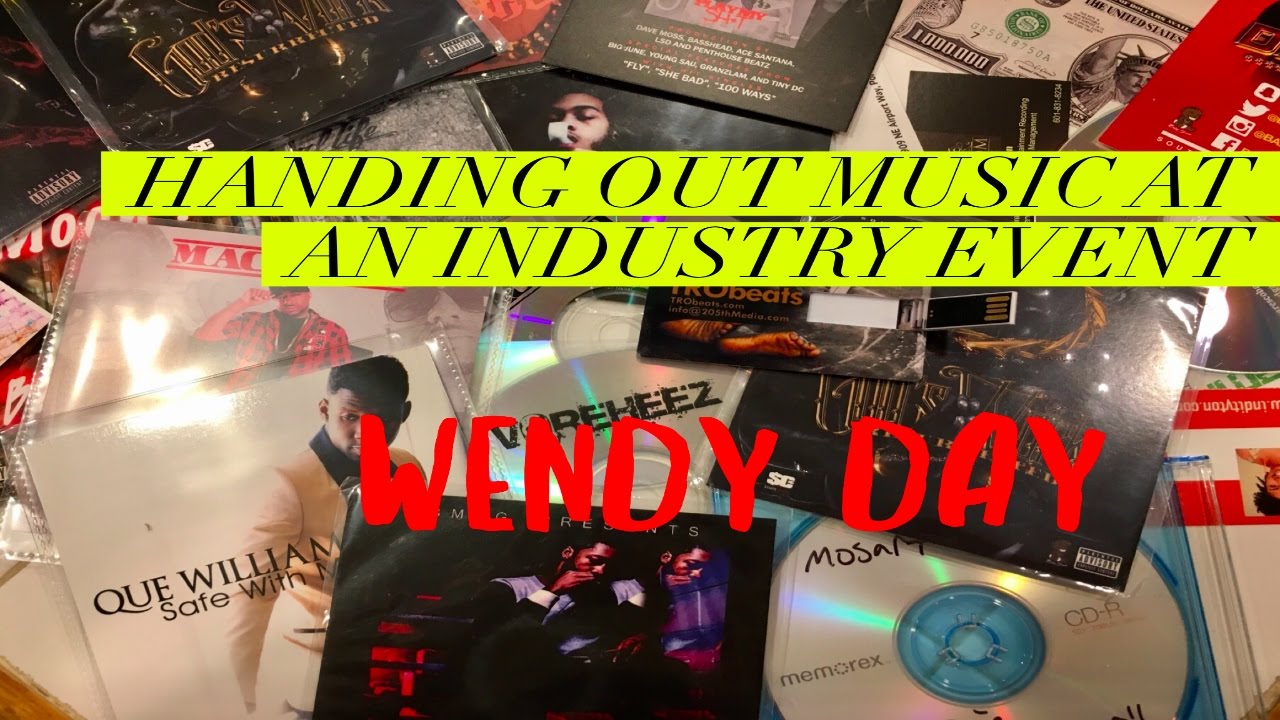
In this solo vlog recorded right after the A3C Festival, music industry veteran Wendy Day advises independent artists on how to effectively distribute their music. She argues that handing out CDs or download cards to industry insiders is less valuable than giving them to potential fans, because labels look at the whole package—streaming numbers, social media presence, live show history—rather than just the music itself. Wendy critiques low‑budget promo items, such as Sharpie‑written CDs, and stresses the importance of professional printing, clear contact information, and a unique artist name. She showcases examples of well‑designed inserts that include phone numbers, email, booking contacts, and social‑media handles, and highlights an innovative USB‑style business‑card format (Tro Beats) that lets listeners plug directly into a laptop. Throughout, she emphasizes professionalism, accessibility, and adapting to the declining relevance of CDs.
Chapters
Hi guys, thanks for joining me again. This is Wendy Day, and, um, I'm just coming right off of the A3C Festival event, which is a hip-hop conference for those of you, um, that don't know. And I received a ton of CDs and business cards at this event which is always a wonderful thing. Um, I'm not somebody who appreciates receiving music only because there's never a time where I listen to music and then sign somebody. I don't work for a record label, it's not what I do. Um, I often take the music from artists because it means so much to them. When I didn't get a lot of music, I used to listen to all of it now I get too much music to listen to, and rather than play favorites and listen to some and not others, I just don't listen to any except, you know, unless it's my client. Um, but I did receive a bunch of CDs, and I know you guys are, are forever going to be giving out music download cards, CDs. I think an artist should give them to potential fans instead of people that work in the music industry. If somebody's going to sign you to a record label they're probably not going to sign you based on the sound of your music. They're going to want to see the whole package. They're going to want to take a look at your streaming numbers. They're going to want to see if you're doing shows outside of your own city. Are you getting paid for those shows? How many views, legitimate views, are you getting on your YouTube videos? What is your Instagram following like? What's your Facebook following? What's your Twitter following? What's your Snapchat following? How many fans do you have? And you don't build fans by giving out your music at music industry conferences to people like me, to people inside the industry. We're not fans. We do this for a living. I mean, I'm a fan, but you're not going to hand me music and I become a fan of yours. I do this for a living. So, um, all that to say, if you're going to give out music to people, um, let me be a little bit helpful. Full right now with some examples that I got over this past week. Um, this is a CD that was given to me by an artist at A3C. Um, for some reason he handwrote in Sharpie on the CD, and this is not to blow up this artist because I certainly don't want to cause anybody any embarrassment, but with how cheap it is to print directly onto a CD And even to have stuff printed, you can have 5,000 inserts printed, and this is an insert, right? You can have 5,000 inserts printed for $150. So if you're going to do this for a living and you want to be professional, you're going to have to come off as professional, and just writing in Sharpie is not the move. Um, shout out to the gentleman who gave this to me and allowed me to use it as an example. Um, I appreciate you and I hope this helps you in terms of stepping your game up. I certainly don't mean to call you out or embarrass you. Um, some people print directly onto the CD because they don't want to spend the money to have an insert printed. That's fine. Make sure that your phone number or your email is on here somewhere. You want it so that people can contact you. It is here, um, on the gentleman that used the Sharpie. He did not include his contact information, so even if I got really excited, I'd have to go in and Google him, and his name is spelled Q-U-E, which is the same as an artist signed to Atlantic Records, so it's gonna be a little hard for me to find this guy who's named Q. And that's another thing, when you're choosing your name, even if it's your own name and you've had it forever, make sure there's not already somebody out there who is rapping or singing performing under that name. And ditto in the past. You need to not only look to see if somebody's an artist today, you need to make sure that there was never an artist using that name. Okay, um, so basically this is what your, uh, promo item should look like. It should be a printed CD, it should have an insert, and, um, again, you want to have the contact information Um, Mac Fetti doesn't have his contact information on the physical CD, and you definitely want to, even if you have it on the insert, because most people that still listen to CDs— and there aren't many people anymore— but most people that still listen to see— and by the way, in the South we listen to CDs, so those of you in New York, don't diss them for this. Um, we listen to CDs in the South. But anyway, um, most people will take the CD out, they'll either burn it to their laptop to listen to it, or they will put it into their car if they still have a car that has a CD player. It'll get separated from this. This will end up somewhere in the trash most likely. And now if the person really likes you, they can't get a hold of you because your name and your phone number, et cetera, are not on there. Um, here's an example of somebody who did. They have all their contact information on here. They've got the booking information, they've got their email, they've got their Twitter handle, they've got Instagram, and then they've also got a pretty cool-looking insert here. So this is what you want to do. You want to make sure that every important piece of information is on your CD in case it gets separated from the insert and the sleeve. That way folks can still find you. Um, here's another example of one that I got that got it right. This is an artist, and all of his contact information is also in the CD. So this was just a little quick blurb, um, only because I'm right off of, um, A3C, and I got so much music. The ones that really stand out, however, are these. This is a gentleman who is a beatmaker, Tro Beats, and what he did was he pressed up these things that look lovely like business cards but it's got the, um, stick so that I can put it right into my laptop and I can listen to his beats. He even sectioned them for the different types of beats that he has, so he's got different genres of sounds on here. And the great thing about this is I can put it into a pocket, I can drop it in my purse, I can hand it to somebody. It's really convenient. And at the end of the day, it just pops right into my computer, my laptop, and I can access the information. And this is great because CDs are becoming obsolete. They're not obsolete yet, but they're becoming obsolete. Okay guys, thanks for joining me. Um, hope that if you're gonna give out CDs and music and download cards, that you make sure all of your information is on there, you make sure that it's professional, the sound of the music is awesome. And that's it. This is Wendy Day. Thanks for joining me. Peace.