
Healing Through Hip-Hop: The Power of Lyrics and Self-Expression | No Standing Zone Ep. 12
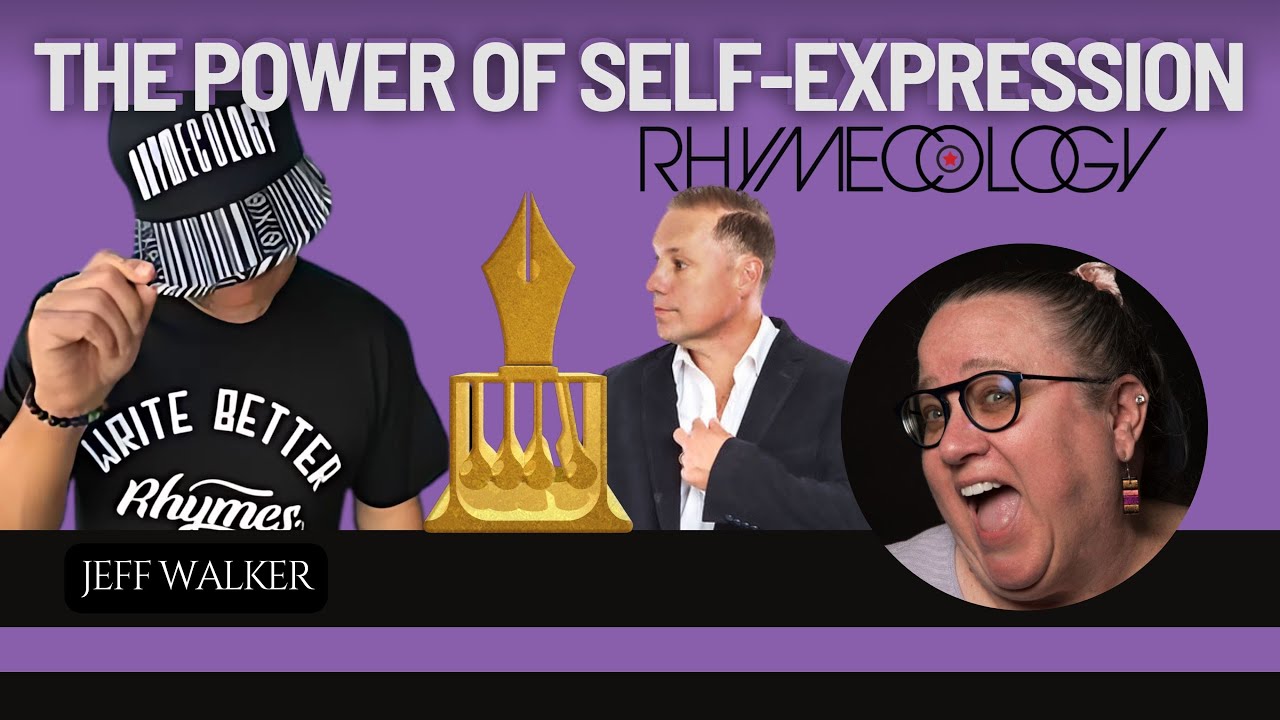
In this hour‑long interview for No Standing Zone, Wendy Day talks with Jeff Walker, creator of RhymeCology and co‑founder of the online hip‑hop school Pendulum Inc. They explore how hip‑hop lyrics can serve as a therapeutic practice, using metaphors like Masaru Emoto’s water‑crystal study to illustrate how words shape our bodies (we are 76% water). Jeff describes his personal journey from a nomadic childhood to becoming a lyricist and transformational rhyme coach, detailing his anger‑management toolbox (visualization, journaling, songwriting) and his use of self‑hypnosis and NLP for mental‑health work. The conversation dives into the structure of Jeff’s book Breaking Through with Bars, which guides artists through a formative‑years exercise (ages 7‑12) to relive and rewrite wounding memories into verses. They compare past and present hip‑hop— noting technical advances in rhyme schemes but a perceived loss of raw emotion and community—and discuss how Pendulum Inc. creates accountability, mentorship from legends, and a supportive tribe for adult learners. Jeff also shares his daily list‑making system for balancing family, coaching, and creative work, emphasizing small spiritual, physical, and creative rituals. The interview ends with mutual appreciation for each other's dedication to lyricism and mental‑health advocacy.
Chapters
As you know, I've been on a journey for the past year and a half, and you are without a doubt one of the most well-adjusted people that I know. You're enlightened, you're sharp, you're intelligent, you're caring, you're everything that all of us should be in hip-hop.
And thank you, thank you very much.
Um, I have that same shirt.
You do. I do. You do. You know, I had to break it out because this is actually how we met. You know, you're— we all know you're a legend in this game here. And I had made this shirt, the Write Better Rhymes shirt. Somehow DJ Premier somehow like followed me. We started talking, this and that. And one day I'm like, let me just send you a shirt. And I sent him the shirt. And I'm driving around Compton going to see clients and I hear, you know, his radio show live from headquarters. And then I hear his co-host go, "What's that shirt you're wearing?" He's like, "Oh, Write Better Rhymes, Rhymeology. This guy's a hip-hop therapist and he does sports rhymes and this and that." And then I did what, you know, I used to never do. I went that extra step and I texted him and I said, hey, any chance you can take a picture in that shirt? He did, sent me the picture back.
I love it.
Then I did the extra step, which I would have never done before, and I was like, any chance you posted it? And he did. And then I had a good day of shirt sales, and one of the people who reached out was Wendy Day. And that is how we first connected.
I love that. I love that.
Yeah. Wow, my drink is even matching my shirt. Crazy. All right.
I love that. I love that you've got the whole Dodgers thing going on.
Yeah, that's probably, probably unconscious decisions.
But yes, I love the shirt. When I was doing the cheat code, and we're still doing it, we're just on hiatus. But when I was doing the podcast, I always wore cool shirts. My co-hosts always wore shirts that our fan base sent in to them to wear. And I always wore shirts that had some sort of meaning to them. I always wanted some sort of phrase that highlighted how I think. I don't talk a lot about myself, so I wanted to let the shirt do the talking. And it started a lot of conversation, even with my co-hosts. And I just feel, you know, I'm a fan of lyrics, and I just have to show it sometimes.
I think we're on the same page with that. I've chose to never wear a shirt with skull across skulls and, you know, curse words on it, or just like, I just feel like it's like, it's like a extension of our skin and our soul. And like, it is the things that you're putting on your body is, you know, you're projecting that out to the world. Like, this is something who I am. So, um, that's so real. So yeah, I'm, I'm on the same page with that. And I decided, you know, long ago that I, you know, will You know, if it's going to have any wording on it, any phraseology on it, it's got to be something uplifting, something preferably uplifting within hip-hop. Um, yeah, yeah, because, you know, we need that.
We do need that. And I'm looking for— I'm over here on my phone looking for a name because we're just going to get right into like the whole woo-woo side of this. I didn't mean to, but we're gonna. Um, there was a doctor— I hope I pronounce this right— Masaru Emoto. And he did a water study, and I'm sure you're familiar with it, where he spoke to water. Mm-hmm. He spoke to water, and then he froze it and put it under a microscope. So the, the water that had encouraging and nurturing words, um, froze into these beautiful patterns, these snowflakes that were gorgeous, and crystal patterns, and clear and light, and just beautiful.
Same water sample. Same water sample from the same place. The same sample that was talked to in, you know, in negative terms, and it was dark, it was, it was murky.
Yeah, they were twisted and they, and the shapes were not, um, they, they were, they were not symmetrical. They, they almost looked like abused water in a way. And, um, you know, I saw a study recently that somebody did. They played the water music and then froze it. So music that, you know, by Beethoven and certain frequencies was just as beautiful as the nurtured water. And then water like Metallica and some, uh, street rap, uh, trap rap was sort of twisted like the dark, murky, angry, uh, frozen study, um, like after— I forget his name that fast— Emoto had, had done.
Um, well, more importantly, Wendy, what are we, 70, 76% water? Yeah, something like that. I forget that number, but so think about— that's a great study, but when you can, you know, extrapolate that idea and put it into your own body— think about it— we are 76% water. What are we telling ourselves every day when we look in the mirror? Yes, what are those words that we're telling ourselves? And when you— if that— if those few words did that to the water in that sample, what have we been telling us ourselves for 20, 30, 40 years? Imagine how that's—
Yes, and the words touching us. If the words could— if you put water in a bottle and you put positive words on it and that water freezes into beautiful shapes, and then you have water that has ugly words written on the bottle and that freezes into ugly shapes, that means even just the words touching our body make sense. And, and that's what I thought of when you talked about having only positive words on your body. I think that's— I hadn't thought about it like that. Yeah, I used to have a, I used to have a t-shirt. Um, in fact, I really need to, to print some because I don't, I don't remember where I got it. I think it was in, I think it was in Arizona, Santa Fe, like someplace new agey., and it, it, the inside of the shirt just had positive words printed all over it, like in a mishmash, and then it was plain black on the outside, so nobody could tell that my, my shirt had any words, but that's what was touching my body, and that was what was touching the 76% of water that I'm made up out of.
Well, every, every, every place at one time was new agey. We've just let ourselves ruin the new ageyness of those places. And now there's only a few remaining. And by the way, the first movie that I— that there was a movie that came out in 2000, let's see, 2000, maybe 2002. It's called What the Bleep Do We Know? And that was the first place I saw that Dr. Emoto study. And that was a very new age movie at the time. And then followed up by The Secret. And so they're at As we came into the new millennium, there was some movies that were kind of trying to, you know, let us know how powerful our thoughts were and the law of attraction and, and yeah, you know, you steer where you stare and all these things. And so, uh, you know, it's funny that, yeah, I mean, I guess it was 20-something-five years ago or whatever, but they— those are still powerful movies for people who are looking to, you know, maybe understand the power of of thought and literally some of the science behind it. So What the Bleep Do We Know? was one of them, and then The Secret was another, which was of course based off Napoleon Hill's, uh, Think and Grow Rich, which is the law of attraction and etc., etc.
Exactly.
Really powerful stuff too, you know. It's life-changing if you can, you know, work through it in the correct manner.
Agreed. I'm, I'm a big fan of the brain, so So I do a whole lot of, um, different studies about the brain. I've learned how— I've learned how— I've learned self-hypnosis, which has been really helpful for me. Neuro-linguistic programming has been really helpful for me. So I've done like a lot of different things to really, um, psych myself up in a positive way and change my thoughts, change how I speak to myself, change how I process information. Change how I stay at peace with myself. You know, one of the things that I've noticed about you is you're always so calm and even-keeled. How do you handle anger? Because I know you get angry. Do you get angry? You must, you're human.
Yeah. Um, I have a— well, before the anger seeps in, you have a choice on how like you, you can, you can sense maybe it's coming, right?
Yeah.
Who can't, they go to, they see red quickly.
Yeah.
So the first thing is to recognize that it's coming. Um, the other, another thing is, is there's ways, there's different ways that you can handle it. And so for me personally, like just this morning, um, this morning before I went to the gym, I sat in the car for 10 minutes. I turned on my meditation playlist. And I was feeling frustrated about, you know, some political stuff or whatever it was. And I just, you know, went into what I visualized going into a safe place, visualized, you know, what I wanted to see. And I put the, the, I put the objects of my anger kind of in front of me. Mentally, let them have it, you know, verbally, physically, whatever. But it was all up here because, you know, that if you can, you know, get through the emotion in that way, you're not going to walk into the gym or the Starbucks or the whatever, you know, start blasting this stuff that, that, you know, most of us walk around with these boulders on our shoulders, right? And, and that's normal. But you can at least knock them off for like a little bit of time by, you know, either, you know, a guided visualization or grabbing a journal and being like, you know, you know, fuck you, and you know, whatever, like, get it out, let it all out in that way. So you're not carrying it into, you know, you know, your existence outside of that. And so, so I like to do that. I like to sometimes if it gets overwhelming, I you know, break out a journal, or, you know, break out a song. Like, I do it, of course, in song often. Um, like, during 2020, I was, I was really having a really frustrated with a lot of different things. And I, I was walking around so angry and so heavy. And, you know, I just started writing and I wrote 80 bars or whatever and just— wow— put it into a song, um, that I had to change the name of because it was dangerous to put things out at that time, uh, as far as my artist name. But I did it, and after I did it, I was just like, okay, I've expressed that, and I was, I was able to kind of move on, um. You know, not completely, but it was enough so that I didn't walk around like shooting out these lasers of anger, which at that time— and so that doesn't happen often to me, but that was a good example of how I handled it. And so journaling, song, meditation, that's my main ways.
I love that.
Yeah.
I love that. Thank you for sharing that. I think we should tell everybody who you are now that we've already like talked for an hour and a half.
My name is Jeff Walker. I created RhymeCology. RhymeCology helps people express, discover, and recreate their stories through hip-hop lyrics and culture.
You've written a couple books too.
I have. I just realized you have—
do you have RhymeCology there?
Because I just realized we might talk about it. Uh, oh yeah, let's— background— the blur, the blur, the blur is the blur is The blur is too much.
The blur is real.
The blur is real. But yeah, you've got the Breaking Through with Bars over there, which—
This is your second book.
Yeah, Breaking Through, yeah, somehow.
Are you freaking kidding me?
There you go, Breaking Through with Bars: Express, Discover, Recreate Your Story Through Hip-Hop Lyrics. What is so cool about that book, Miss Wendy Day, is that I wrote two books previous to that.
Oh, there's two?
Yeah, one was I wrote as a guide for mental health therapists, mental health workers who worked with youth and might not have been able to connect with them. So it was written more towards, you know, the few people who work with youth but still liked hip-hop and wanted to connect. So it was a bit of a smaller target audience. Yeah. And then the other book was The Art of Hip-Hop Lyrics, which, you know, breaks— breaking down the basics of rhyming and hip-hop, different song structure, song concepts, literally how to write multi-syllabic rhymes, you know, stuff like that. And so I had those two And then the Breaking Through with Bars, which just came out, is a book that really is— it's gonna— it's more— you— it's more tactile for people because you can do the exercises in the book. So the book is inspired by RhymeCology sessions, which I do as a one-on-one transformational rhyme coach, as well as at my school called Pendulum Inc. So Pendulum Inc is, uh, we're the premier online, uh, hip-hop lyric writing school, but also we have a branch of mental health. And so that's the branch that I run. And so every week I'm doing a session for our students where we're breaking down the bars of a legendary artist, but then at the same time, at the end, I'm giving my students a chance to break through with bars, literally write about the, you know, the deeper topics that we might not always talk about, the ones that we're scared to write about, right, that we need to write about, right. So all of that greatness is in— it's been put into that book so that you can, you know, pick and choose your exercises that, you know, might resonate best with— with best with you. And I, you know, you'll, you'll have a breakthrough or two if you go through those exercises.
Absolutely. I'm actually gonna, I'm gonna share one later if you don't mind, because I'm gonna go down that, that path and I want to actually do one of them with you if you're, if you're cool with that, because I think that, I think that's going to be very helpful for anybody that's, that's watching this. But can I come back a second? And I want to ask you how you got into the music industry. And then I want to talk about Pendulum Inc. if you don't mind, because I love, I'm so surprised I'm not wearing the, the t-shirt. I love, love, love, love Pendulum Ink.
There's a lot to love in the ink. Agreed. So how did I get into it? That's really a story. I guess that's really a story of perseverance because I shouldn't have been in it. I probably should have, you know, moved in Orange County and worked as a, you know, salesman or a banker. You know, I did that. Just, that's just what a lot of people I know did. But I never, I never had an inkling that I wanted to or could do that. So it's been quite the journey. Um, you know, I just fell, fell in love with, you know, hip-hop with, you know, '88, '89, '90, you know, Gang Starr, NWA, the, the, some of those early. I'm like, I was like, what is this? Because it resonated with me because I was a kid who moved every 2 years to a different school and not only a different school, different country, not even different city, a different country. I lived from age 1 until 12, I lived in 5 countries. So I never could get settled, right? I was 2 years, I got these friends, here you go, let's move again, let's move again. And while it seems glamorous as a kid, all you feel is I'm being uprooted, feel lost and alone. Yeah. And then, um, you know, my parents split up. I was 12, 11, 12. And, you know, within a couple years, you know, that's when Straight Outta Compton came out and Easy Does It. I'm like, okay, this is— I'm resonating with this. Not because Were we cursing on? Were we allowed to curse? Yeah.
Fuck yeah.
Yeah, look, not because— I didn't say fuck the police because I had problems with the police. I said fuck the police because I was angry that I kept moving and I couldn't— like, I had anger, right? And so David Lee Roth or Whitesnake or like, yeah, they were cool, but they didn't resonate with what was going on inside of here. Right? When someone said, "Fuck the police," you know, Rancid with authority, where a majority— like, I like, "Oh, I said it with authority, like, that feels good," you know what I mean? And so it just still feels good, still does, right? And so anyway, so that's how I started. Like, I just— it started to kind of resonate with the riskiness and the feeling, the feeling and the energy of it first. And then, you know, I was living in the Bay Area, so it was a lot of like Bay Area rap. And then I moved to— I lived in France for a year, and someone brought a, you know, mixtape to school on the Walkman, and I heard Fast Life, Nas and Cool G rap. And I had always kind of written short stories, and I was starting to write, you know, the simple— some simple bars. But then when I heard Nas and Cool G do Fast Life and like, portray us, rock like Amadeus, you know, I was like, my brain was like trying to follow where the rhymes were. I'm like, wait a minute, hold on, he rhymed here, he rhymed here. And I, that day, I fell in love with the art of rhyme, like just the actual art of it. And I wrote down every word. Hey yo, I got guns from Italy, smoke trees considered perfectly. Like, how many syllables? I'm like, so all these things are like going off as I'm listening to that song. And then, uh, you know, AZ, Sugarhill, you know, I want a villa in Costa Rica so I can smoke my reefer, enjoy how life's supposed to treat you. I'm like, smoke my reefer, that's forced. How's it like? He's mad, he's matching these things perfectly.
Perfectly.
Even like at that time, '95, I started getting into the art of rhyming. Now everyone's talking about multis and all the da-da-da. In '95, I started studying that, right? And from then on, I started writing more, started studying more, writing more, started performing, moved to LA, started hitting open mics, doing hip-hop poetry, slam poetry, all with hip-hop, all hip-hop references and whatnot. I became known as the hip-hop poet out here. And then, you know, started to write and record more and more. And then just by continually doing it and doing it with respect, you know, doing it with love for the culture, for love for the population, you know, working in Compton and Long Beach, you know, doing that. And then I just fall into the right situations. I would meet someone here and there in LA and have a conversation with will.i.am about something, something, something, kick him a rhyme, and then I'm all of a sudden I'm ghostwriting on a Black Eyed Peas track. What?
Yeah. And he's—
that's because it's 20 or 20 years already in. Like, you can't just jump into a studio unless you've, you know, paid some dues, right? And no, you can't.
And he's super lyrical. So imagine how lyrical you must be if a lyrical motherfucker brings you in to write.
Yeah, he— yeah, I mean, he— beginning— in the beginning, matching bar for bar, huh?
It means you could match him bar for bar, or maybe, maybe even excel. But I won't, I won't.
Oh, but it was, it was fun.
Hip-hop's too competitive. I don't want to go there.
But no, look, when they started, you know, they were super lyrical, and then he decided he could make more change by doing— he made a correct decision to be more correct., you know, mainstream. And it worked, and I'm thankful to help more people and this and that.
Absolutely. And he's such a treasure. I'm so thankful. I'm so glad they did that, you know, because he's changing the world. You've seen the Mercedes-Benz sound machine that he has, right?
It's incredible. Uh, yeah, well, he's a— I, I first saw his Tesla, um, yeah, Tesla on the lot was crazy. That was the first time I had seen something like that. And I had written some copy for— he was making some headphones, and I'd written some copy for headphones. And it was a long story short, it would, you know, you rec— it was when you put in the time in the right way, you will get recognized, right? And so he was surrounded by all tech people. And then I come in writing, you know, writing some copy that hip-hop, right? And but still, you know, intelligent enough to say, okay, I can put this on my box of headphones. So yeah, so it's crazy. Yeah, he got respect for me and he asked him in the studio, hey Jay, what rhymes with this? And that's where 20 years of studying rhyme pays off, right? Like, yeah, you can't just walk in. So Things like that started to occur. And I went to go see an Elzay show by myself, drank a 40 outside of the spot on my own, solo, right, as an adult, married adult, just went solo, drank a 40, walked in. And then I see Master Ace is sitting there watching the show. I'm like, nobody's talking to this dude. I'm like, dude, who are these people? They don't know. Let me go talk to Master Ace. Happened to have that book, The Art of Hip Hop Lyrics, in the bag that I told you about. I'm like, "I just wrote a chapter on you, Master Ace in the Mirror," which goes back to the Emoto thing about what we do looking in the mirror. But, and so then, you know, he wasn't with anyone and talking to one of my favorite lyricists of all time who, you know, changed my life with Long Hot Summer and Disposable Arts, two of my favorite albums, 2001, 2004. And I just kept talking to him and I would just keep referencing his songs like, He's like, "Jay, most people, they can't do that." I'm like, "Ah, it's a bit of a sickness." You know, stayed friends for a while, and now I got a track with him on this album I'm gonna put out whenever I put it out. And, you know, it's—
and he's such a nice human being. Like, of all the people for you to bump into, I'm thankful it was him and not somebody that, you know, was kind of attitudey.
Yeah, I mean, you could tell by his rhymes, you know, in this ice cold world, you better get your coats. I'm a husband, a father, and a football coach. Like he says, I'm a husband, I'm a father, I'm a football coach. Like people out there trying to brag, people out there trying to put on fake lives and fake personas. And he's like, I've got him, little kids in football. Yes. No.
Yes. He caught a, um, he caught a gopher in his backyard. And instead of killing it, he, he humanely drove like 30 miles from his house and, and let it go. And he did this live on Instagram, which made it like super funny because, you know, here's Master Ace like getting rid of a gopher. And he realized that it was really angry and it had like chewed up the, the cage that he had it in and he wanted to let it go. And he realized that he couldn't film and let it go at the same time because it would probably tear up his hand. It was really angry. So he— some guy was walking by and he said, hey, could you hold my phone and film this while I let this, this, this gopher go? It was, it was just, it was pure comedy.
Yeah. Well, I think you don't expect like one of your heroes to do, certainly. But I just, I just think that's the thing that's a great lesson for everyone is trends are going to come and go, right? Um, yeah. And Master Ace was on the symphony in 1988. 1988. And then he did his Car Rides in the early '90s. Then he did Disposable Arts in 2001. And, and then following season in 2000— I mean, 2018, he had one of the best albums with Marco Polo, the Brooklyn album. And that's 2018. His first shit was 1988. So while trends come and go, like someone who's self-deprecating a little bit got humility, humble. Yeah. Um, you know, but it's still a killer with the pen. Like, I just— it feels to me like that's the kind of person, you know, who keeps— has that longevity. Because, you know, mumble rap or this or that, whatever it is, like, it's great for the moment, but like, where— how am I connecting emotionally to you? And the way I think Ace has done it, especially in his comeback, like, is Um, the fans that we could— like, I bought his new album Richmond Hill. I didn't even listen to it. I bought it on vinyl, and I'm like, I don't care, I'm supporting this human being. Um, anyways, I, I just think there really is something to that as far as the longevity of an artist and how we as fans can connect to them. He's a good example.
He's an awesome example. Yeah, he's an awesome example. So what is your favorite part of all of this, of all of the things you do? Because you're— you do so many different things, right? You teach, you rap, you're the therapist, you perform. Do you perform?
I have not been out performing much. Ironically, I think I'm going to on Friday.
Good.
I'm teaching at Taxi Road Rally, which is a singer-songwriter music conference in LA.
Good.
Probably I'm gonna be teaching a class there, and I'll probably kick a piece at least there. But no, I'm not really out performing very much. But I paid my dues, like I said, I won battles on Crenshaw that not one of my friends saw. I've been out there doing it all alone, just for a long time. Spoken word, and then recording and battle, different poetry slams and talent competitions and all that stuff. And stuff. And so I feel good about that, um, because that was never my big goal. I'm not like a— I just don't love getting out and performing, but I love teaching. I love my— I love having one-on-one sessions. Um, so like, I work with people. I'm a transformational rhyme coach. So like, even before our call, I was working with someone, and you know, we're going through the therapeutic side of things, and we're going through the mindfulness and, and all this stuff. But, and then we— and then the second half of it, we're working on his concept, on his concept project. And it's like, you know, we're crafting a concept that has to do with the individual. So all that we talk about in the, like, mental health therapeutic side, it's, it's gonna be put back into rhyme for this project. So we're not just rapping to be rapping. We're rapping about, you know, what happened when you were 5 at this place and what happened when you were 12 and then di di di di. And so it's this concept of growth of, 'cause we all have a wounding that we go through usually some age 7 to 12-ish. There's some big wounding that usually happens. And, you know, how we work through that. And so you're going to see that, you're going to feel that in these projects. So everyone I work with one-on-one, we do this, we do the talks, we do, we do the exercises, but then it's all going to be coming back into, in the form of, you know, lyricism. Um, and so when you do that, then people are going to be listening and they're going to be like, oh shit, I went through that too. And so it's just like such a win-win Um, and so while I can help people with rapping, rapping, and help people, you know, crafting crazy bars and triple entendres and, and all that good stuff there, this is the most powerful thing when you work one-on-one and then it spews back into the ether and, and this, you know, concept EP that is therapy on wax, and then other people can gain from. So I think that's my favorite thing. And, you know, and that all ties into Pendulum Inc. That ties into my coaching, because a lot of the students from Pendulum, they do work with me one-on-one. So it's all like this big rhymecology tree. And so what's the favorite? Really, it's just everything that's in that tree, because it's, you know, I guess it's a dream come true that all those things all wrap around the rhymecology tree and there's just different branches of it. I don't need to have another tree down the block where I go, you know, to the, to the office and sit behind it, you know, crunch the numbers and then come back. Now it's all in this tree. So that is really what is the best.
I love that. I love that. I was gonna go down the Pendulum Inc. road, but ironically, you just talked about the Rhymecology exercise that I wanted to do with you.
What are we looking at? What page are we—
82. Turn your hymnal to page 82. And you're talking about formative years, which is 7 to 12. And you're asking the artist to think of a profound moment that affected them deeply, that changed them. And if you can pinpoint it, you're asking them to take a moment to feel it, which is really important. A lot of the different workbooks that, that I've been utilizing, they kind of get me out of my heart and into my head, which defeats the purpose. One of the reasons that I started therapy a year and a half ago was because I had 3 emotions. I had happy, sad, and angry. And sad really just made me angry. So I really had happy and angry. I didn't like being sad, it made me feel uncomfortable. And I learned that there's way more. So I've learned now, I'm still not 100% there. And I'm, you know, fighting 60 years of squashing stuff down, right? But I'm getting there. And this was, you know, in this book, this is what really spoke to me. So after they feel it, you have them relive it, and you have them think about how it changed them and their beliefs, and then write about it. Write about that day and include descriptive details and feelings. And if you can't pinpoint a wounding, feel free to write about any strong memory you have of childhood. But I think everybody has a memory of wounding. It's just a matter of, are they vulnerable enough to let it come out, you know, all these years later?
And sometimes you don't know I mean, the wounding, the wounding, the scarring, it, it's, um, you know, kind of a psychological term that they, that they, they use. So, but you might not know that it's a wounding, but often something— it could have been 5. I put 7 to 12, but it could, could be even be as early as 5-ish, 5 to 13 maybe. Like, there's something that happens that changes the way we perceive the world, right?
Yes.
And so to be able to pinpoint it is important. And you might not, you might not know that you are living— you're not— you're projecting, you know, for all these decades, you're projecting these thoughts, feelings, emotions, decisions, behaviors into the world because of this thing that happened when you were there. Like, hold on, like, I— wait a minute, someone touched me there then, and I wonder why I'm so angry now. Like, no, that wasn't— like, so go back. You— so the reason why I say relive this is because something like that happens, you go back and you gotta give your, your, uh, child— you got to give your inner child that power back because That inner child is always going to be alive in us. If that inner child is wounded, if that inner child has been scarred, like, that's just gonna— like, it becomes like a part of us and we just put like a Band-Aid over that scar. But we gotta take the Band-Aid off. We gotta go in there, look around a little bit, say, no, wait, hold on, that shit wasn't right. Give me that voice back. Give me that power back.
And then, you know, we can sew it up a little nicer rather than it just continually bleeding and love it and love the scar, love the scar for being part of us and love our inner self for handling it as best we could at the time.
And the loving of it probably, yeah, it comes after, after the pin healing, the recognizing, and then realizing like, all right, let's say, you know, something happened that you know, made you real— have to be really tough and project this toughness. And maybe you got a job as, you know, exuding that toughness later in life. Maybe you gotta— and so that's where you're like, hey, you know, I'm glad I was able to cut off and this and then be tough because that got me this job at this security or whatever the thing is, right? And so that's where you can be like, oh, that's because I told myself at 10, no one else is ever going to hurt me again. Exactly. That's where you can go in and say, hey, you know what? Thank you.
Exactly.
But that takes a little bit, you know, that's pinpointing, that's coming to a few realizations. And I think the getting to the stage of loving it and being appreciative for it is that's a, you know, that's a few sessions down the line.
Right.
But yeah, but yeah, for sure.
For, for, for me, it was I had to earn love. And I didn't realize that that was abnormal, because that's how I grew up. So I just, I always had to be the good daughter, I had to be get good grades, I had to excel in everything that I did, because that's how I got attention and love. And as much as that sucked, and as difficult as that was, I'm hugely thankful for it, because I earned hip hops, love. It made me who I am today.
Gave you the work ethic.
It did. Well, it's why I'm successful.
Yeah.
You know, I loved hip hop. And, you know, still, I joke and I say, you know, the music industry is, is like having a man that doesn't love you back, or a woman that doesn't love you back. It's loving somebody that doesn't love you back. But the reality is, like, everything I've done has been to earn the love of hip hop. You know, and once I realized that, it was like, wow, I'm really thankful for that. As much as that sucked, and as much as that has negatively impacted my relationship with men my entire life, it really made me who I am today. And I've really changed some lives in hip-hop. And I'm, and I'm, I don't regret that at all. Like, I'm super excited.
Wow. Right. So So what we, we want to just be born and just loved, just unconditionally. And yes, you got bad grades, it's okay, Daddy loves you, right? That's, that's what, that's what we want. But well, that's not always what we need. And so in a way, you got what you needed in order to create this Wendy Day powerhouse and then, then from the Powerhouse, you were able to help so many people. And that's what kind of started, because you were like, I have to be successful in order to get this affection.
And yes, I have to bring something to the table in order for people to accept me. So I just kept bringing, bringing, bringing, bringing, bringing, and helping as many people as I still do it. I still do it, but now I recognize it and accept it. And I'm doing it not to gain love and affection. I'm doing it to gain my own happiness and my own fulfillment, which is different.
Instead of doing it to gain love and affection, you're doing it out of love and affection.
Correct, correct, correct. Codependent no more.
That is about a well-balanced place to be. Yeah, so there you go.
There, I'm getting there, I'm getting there.
Lesson of how our wounding can be used.
Yes.
You know, some— yes. Yeah.
So if I were an artist, would you have me now channel those feelings that I had in that emotion into music?
Yeah, well, let's say we were doing— say we were doing that exercise, I would— we would— first, we would be listing all kinds of things. Like, you know, we go to a specific memory, maybe there was a day you came home with an 88%. And, you know, Dad said, you know, you should have got a 98%. And that was the day you said, no matter what I do, I'm not going to be good enough.
Right?
Then I would focus on that day. What were you wearing? What?
Oh, wow.
What shoelaces? What What shoes did you wear when you see your feet walking into the kitchen with your 88? Where was your dad standing? What, you know, turn, like what was—
Do people remember that?
A lot of times when it's a big event like that, you remember more than you think. And look, to be honest though, you might not remember the exact, you know, shoes you were wearing. But at that time of you being 8, you might remember, oh, I had the Pro Keds when I was 8. And, you know, it might not be that day, kind of like, you know what, I used to wear the jean shorts.
Got it.
I was 8. And so, you know, you can, you can probably extrapolate together. Yeah.
Yeah. I could probably remember what room I was in if that were the situation.
Something like that, right?
I had different situations, but I could remember like where I was You know, what was the smell?
What was the smell when you walked in and you're like, oh yeah, okay, all right, someone's drinking, or, you know, but like, you'll— there's some— or, you know, whatever candle that you'll, you'll get. So my— anyway, my whole point is, is we, we'd be listing out all this stuff. We'd be listing, and then from there, you know what I mean, like, from there we can start to craft bars from there. You know what I mean? You know, walk in, you know, smell the scent of the candle, you know, but I could tell this is one of those days my dad's emotions he couldn't handle. Because he saw the 88 and all I could see was the crazy hate coming from, you know what I mean? Like, and so we take all the, take the little memories and then we can turn those into bars, which then turn into verses, which then turn into a song, which then turns into a story, which goes into your concept EP, which you will eventually grow from. Because then later in the EP, we're going to be talking about how you bring back that 88 on track 5. Oh man, when they gave me that deal, all I could see was Dad saying, the 88's not good enough. You know what I mean? The 88 wasn't good enough. So I threw it back. Said, no, I need that '98 label. Something like that.
Something. Yeah, I love that. Are the lyricists of this generation as good, whatever that means, as the lyricists from when you were coming up?
Two things. The rhyme schemes, the rhyme patterns, the creativity of rhyming itself is much better now. As far as, you know, people like Pendulum Inc., people like, you know, the, the, the just MCs as a whole, you know, have elevated. Like, you know, we, we watched Jordan, then we had Kobe. Now, now a lot of people can do reverse layups, right? But someone did it first.
Rakim becomes the norm, doesn't it? It becomes like like the stuff when I was coming up, like Raskaz was always my favorite rapper, and the stuff that he would say and the words he would put together would make me go, oh shit. But that becomes the norm, and then this generation kind of starts there and builds on top of that.
And that— and so that's my— that's my num— my number one thing is yes, in that way, the technical is better. It doesn't mean it's better though, because it's missing a lot, in my opinion. It's missing the— it's missing the emotion from what start— from how this thing started. It's missing, um, desperation almost. It's missing— it's, it's, it's missing freedom. It's missing freedom because in '88, say in '88, you had Too Short dropping, but you also had Big Daddy Kane dropping. You know what I mean? You also had Public Enemy dropping. All three of those, they're completely different.
Completely.
1990, you got Tribe Called Quest over here. You know what I mean? You got Mack Dre over here. You got Scarface over here.
You got Naughty by Nature.
There was nothing different. You have De La Soul, any of them. De La Soul, 2 Live Crew in '89. Like, yeah, all— there was so much freedom, um, to be yourself, right? And so even the incredible lyricists of today, for like, they— to me, they just like, there's only so many times you can tell me how great you are and with even if you're putting out a great triple entendre, like it's been done, right? It's been done, it's been done, it's been done. So to me, I find a lot of, a lot, the pens are tighter, the pens are tighter for sure. Because when I, you know, like I said before, when I started studying Fast Life, like not many people were writing like that. Now a lot of people can write like Fast Life.
Right.
And Cool G Rap. Like, they've taken the forefathers' style and they're good at it, but it's just missing to me, to me as an individual, it's missing some of the feeling, right? Remember back in the day that you'd do a 16-track CD and like you would always have like that, like, you know, that song that talked about, you know, what you went through like that made people feel good. Like, you always had to put one of those on there, right? Big pun, you know, he did. Everyone kind of like had— you had one of those. And now it's just like, no, let's just keep talking about how tight we are. Um, oh God, I love Griselda. I love, I love the way Benny rhymes. I love the way Conway rhymes. I'm like, okay, give me, give me a little more, like, give me a little more feeling, personal storytelling, like like uplift me a little bit because your pen is so good, right? So I think that's my answer. Like, I think that the pen— the pen game is better than ever technically, but I think that storytelling and, you know, personal, personal stories and emotion— like Sage Francis' personal journals, he had that album, like that was just literally a personally, just his journaling, right? It was amazing in that way. Sorry, my brain goes— just, I hear this and I go over there. I—
right, I get it. But I totally get it.
Anyway, I, I do think that that is one thing that's missing, and that's why I try to put in like so many exercises in here in this book, just to like bring that up, right? Like, because in the big picture, like, you know, I know you're You know, you're hip-hop, the business side of it, and you want to get fans and followers, you got to tell a story that they're going to resonate with. And how do you do that? Usually love, loss. You know, love and loss, really, those are, those are two major things. And, uh, for some reason people don't write about that as much anymore because we're not as vulnerable as people, I think, as we used to be.
I think that I've noticed it just with friendships and even in loving relationships, like in dating. It's— there's a lot more avoidant behavior in the world than there was 20 years ago. You know, people are more detached than they used to be. So I think that life— lyrics mirror life, and I think as people become less vulnerable and less open, it just affects— and not everybody. I mean, you know, like, I'm loving Domani, I'm loving Lady London. Like, I'm re— there's really some great shit, you know what I mean? But you're right, it's, it's very, it's very oversaturated. And when when, when we were coming up, and I came up, um, before you, I started listening to rap in 1980. I don't think you were born yet, but the reality is that it wasn't about making money. It was about doing something that you were really in awe of and doing something because you were part of a culture, and this is your way of giving it giving back to a culture. And I know it changed long before 2005, but that's when I noticed it. I noticed it when Jeezy came out. And by the way, I'm a huge Jeezy fan. Raskaz and Jeezy are my favorite rappers, right? Very two very different artists. But I noticed when in the era when Jeezy came out, it was about hitting a lick. It was about It was the new dope game. It was, oh, I'm going to be a rapper because I want to make money. It wasn't, I am a rapper because I want to be as dope as Craig G, or I want to battle Hieroglyphics, or, you know, whatever. You know what I mean? It was about— it became financial. It became a job instead of an art form. And I might have noticed it because I'm on the business side, not the creative side.
Yeah, uh, there— yeah, the change. Yeah, for me, for me, the change, like '90— yeah, like kind of like '99-ish, like we kind of like got into the No Limit era, the bling bling kind of era. Like, that's when, like, I'm like— even '98 was an incredible year for hip-hop, like just Capital Punishment, like Lauren Hill. I mean, there was Kill a Priest. There are so many incredible albums in '98, Equemena. Yeah, like, but I feel like for me, kind of like, kind of like '99-ish, I was like, oh, so they— because Ruckus, you know, Ruckus, like, you know, like 2000, 2001, Mos, Talib, and then like that was coming out, but that was kind of coming out— the backpack rap to me was kind of coming out as a, um, pushback to the, the, the, the Hype Williams type videos.
And that it was, it was, you know what I mean?
And so like already there, there was like, they were pushing that, but the back type stuff was still, it was there, but it was like, this was being pushed now while in like, you know, if you go to like '95, like you can have the Loonies, I Got 5 On It, out at the same time as like a Fat Joe track, at the same time as an AZ track, at the same time as a Too Short song. Like it kind of all lived. But I think it's like around like '99 after like the big videos and the Puff shit and all that stuff. Like it kind of like, it was kind of like, oh, this is how. And I think we've kind of had a hard, we never really recovered because now the kids are rapping like that. So, so in my humble opinion, it feels like, you know, the, you know, when Pete Rock's like making a beat, like he's making a beat because he grew up, you know, listening to like Hathaway in the house or Roberta Flack or whatever, like. And so like there was soul in the house. Yes, there was. Like, and, you know, the, the expression of Marvin Gaye and all that was expression of the city. And so they grew grew up, that's how the beats they made, right? And I'm not a producer, I'm a lyricist, but it feels like the energy was that. And so like, if you're 15 now, like, you know, your parents grew up listening to Biggie on the boat, you know? And like, so like, there's like, we're like a generation like away from maybe that soul-like feeling. And so like, we're, that's why, a lot of younger MCs are maybe not rapping with as much soul and feeling. And of course, this is a generalization, I realize that, but I'm trying to talk in the big, big picture overall. There's tons of exceptions everywhere. But you know what I mean? I just think, I feel like we're a little bit away from that feeling of community, of desperation, maybe creating community, then music coming out of it. Because now it's just like, your topics, topics are different. So that's kind of—
maybe that's, maybe that's why we don't have traditional R&B anymore.
Facts.
You, you kind of made that point just now. That's— that would explain why the soul and the neo-soul is just— it's sort of all gone underground. Yeah, it's a really interesting topic.
Yeah, yeah. Then, you know, get, get someone like Dart Adams on here and he'll probably break it down even better. But that's at least the tip of the iceberg, I think, um, because it, yeah, it feels, feels different in that way. And, um, yeah, so where were we?
Was it, um I want to, I want to, I want to come back to Pendulum Inc. because I'd really love to talk about that. You, you know, my personal love for what you guys are doing. I'm probably the biggest Pendulum Inc. fan that's not affiliated with Pendulum Inc. I think it's an amazing, amazing concept. Could you talk a little bit about how it started and what you guys do?
Pendulum Inc. To put it succinctly, we're, we're, we're the premier online hip-hop school for lyricism, business, and mental health. Mm-hmm. So our founder is Mickey Faxx and co-founder is Chilla Jones. Chilla Jones is, you know, one of the greatest battle rappers to ever step on the stage. Held two belts at one time, which I don't think since. Uh, Mickey Faxx is— if you don't know Mickey Faxx, as far as he's probably one of the greatest pens who's ever been around hip-hop. Yeah, he's not a quote mainstream rapper, but that's just because he loves the art of rhyming and the art of lyricism so much that He will never sell out that part of it to, you know, gain, you know, what others may. And his— I was studying Mickey Fax for, in fact, this conference I'm going to on Friday. I used to teach Mickey Fax's lines there because I had never heard someone who could flip words the way he had, with double and triple meanings and all that stuff. Wow, right about him. And listen to his classic tape, Mouse. Anyway, so I had, I had got a master's degree. I got a master's degree, yeah, and everything I did was hip-hop based for my master's degree. I wrote a— I was supposed to write a 5-page paper on the evolution of rhyme, and I wrote a 25-page paper on And I had to—
You wrote a book.
Yeah, and like, it was easy because it's my favorite thing. And so—
Yeah.
So somehow Mickey Fax found this online. And I think he tweeted me, DM'd me, somehow he's like, yo, this is Mickey Fax. Like, I love what you're doing for the culture. No one's talking about lyricism in that way. Let's get on the phone. And I was like, this ain't Mickey Fax. I'm like, there's no way. But then we got on the phone. And, you know, we just shared this love for lyricism. That, you know, of course, you know, Chilla Jones did too. And so, um, you know, it started— started— we're ending our third— ending our third year now. So started full 3 years ago, um, and we teach people how to become better rappers, how to write better rhymes, how to express themselves through hip-hop lyricism in a mental health way. We've got classes on business, which I believe taught at, of course. And every month we bring in a legendary guest, like, and I mean legendary guest. Our first one was Inspectah Deck, like Method Man, you know what I mean? Sky Zoo, Raskass, Master Ace, you know what I mean? Like Bun B. We ever— we got every— everyone, everyone. Um, Bahamadia, DMC, Lord Finesse, Big Daddy Kane. All the— they've all come through, um, and every month for the last 3 years they've taught, you know, and you get to be in the room. You get to be on a Zoom call with these guys asking these questions. We had Kambada last month who was just a lyricist, lyricist. Uh, we got Lloyd Banks coming up this month. Nice. You know what I mean? And so like, you're in the room, you get to talk to them, answer questions, get— you get to hear about their writing process. And then the other days of the week you're learning from Mickey Fax and Chilla Jones and my guy, Official Rap Seminar, Rob Nice, and myself. And you know, you're in a community, you're just in a community of people who think like us, right? They're mainly adults. This is not, you know, our youngest students, I think 20 22, something like that, catch 22, 23. And then we, you know, go on to the mid-40s, probably, like, you know, it's a big— people who look— because there's a generation who, you know, we're just the hip-hop generation. And so, but it's great because you're in this community, and you're just— you now all of a sudden have people who think like you. 'Cause you know most of us, most MCs, like, you walk around thinking, does anybody know what Kendrick said on that thing? Does he know? Like, now you're in a community, not just like YouTube pages. Like, you're in a school and you're connecting with others. You're connecting with legends. You're building with people who are making beats. Like, and it's just like, there's really nothing like it. There's really nothing like it because you're learning, It is a school, but at the same time, like, it's straight hip-hop, straight hip-hop. And the friendships that I've seen built, the friendships that I've made in the last 3 years, life-changing. So that's, yeah, that's what Pendulum Inc. is. We're going into our 4th year. We're gonna have graduation in New York City in February. I believe Q-Tip is going to be our commencement speaker.
Outstanding.
Wendy Day was at our first graduation, which Bun B spoke.
Bun B. It was amazing.
Yeah, that was amazing to have you there. And it was great to see people recognizing you because they're like, Bun is cool, but I want to talk to Wendy.
Yes.
Anyway, so that's what we do. We put people together, we put rhymes together, we put lives together. It's a good tagline.
Um, that down.
I know it's true. When I talk like this, I, I would kind of channel shit. I don't even remember it.
Yeah, you should write it down because you'll forget and then you'll be pissed off and I won't remember. You'll call me like, do you remember what I said in the interview?
No. Um, so yeah, so that's what we do. And, um, yeah, we're kind of We're kind of— we're turning a new page here in this fourth year. Um, it's gonna be a little less like— we had tests and midterms— like, it's gonna be a little more just kind of like a gym, like show up to the classes you want. And so, you know, if that's your style, you want to do that, like, pull up, right? It's— we— it used to be real structured, like you're in this advanced class or you're in this one. We're going to be opening up into this next year, like you can come to the advanced class even if you're a beginner. And so it's going to be a little more a little more free-flowing. And, um, uh, yeah, so it's, it's, it's gonna be pretty dope. It's gonna be pretty dope.
I love that. I love it. I think everybody should do it. I think it's incredible, not only from the lyrical side of it but from the tribe side of it. So it's, it's, it's like-minded people all not feeling like weirdos because they're having discussions with other people that understand the value of the discussion, the beauty of this discussion. You know, it's funny, I was, um, I'm trying to think of how to say this because I don't want to embarrass anybody. Um, I was managing a Grammy Award-winning producer who wanted to be a rapper. And he wasn't great at rapping, to be honest. And I thought that he could be great because I saw that— I saw the potential, just because I've been doing this for so long. And I suggested that he attend Pendulum Inc., and I got fired over it. Oh, and I've never been so proud or so happy to be found in my life.
Wow. Yeah, I remember that situation. Um, I didn't know that there was that aftermath of it, but look at you saying, I know a few things, I know some people who know a few things, and I think you are great, but you could become greater if you—
Great. Yes.
You know, you're already great at what you do, but this one—
Amazing.
Yeah. That's, that's called just like making a call, standing by it.
And then, you know, what, what an interesting way that they responded, like, yeah, you know, one of the things that I've learned on my journey is to ask for help. And I've always sucked at asking for help. And I learned how valuable coaching and asking people who are good at something like how they do it, or how they did it, or how they got to where they are, because you can save so much time from where you don't have to bang your head. Like, we've all banged our head coming up, and now there's people that came up before this generation where they can say, hey, how did you do it, and how did you avoid banging your head? And I'm like you, I'm so like forthcoming with information. I'm happy to tell you how not to bang your head. So when I see an opportunity to get that information, I'm, I'm super excited by it. But then there was also part of me that was amazed by the bravado of somebody saying, I don't need help, I can rap great, I don't need your help, and you know what, fuck you, in a nice way. Because that's what I— in the '90s, that's what it was when I was coming up. It was like, I don't need no stinking help rapping, I don't need no stinking ghostwriter. It's like, yeah, you do. Everybody has a ghostwriter. There's 9 people on every hit song.
I get— I get— and I— yeah, I get that. I, um, like, so when we first started, we had some MCs who were, were very, very nice. Um, and they reached out to me because I had known them through the Insta— what do they call the Instagram, Instagram, right? Like, there's the whole great lyricists in the Instagram world, and they kind of reached out and they were like, I'm pretty, I'm pretty good. I'm like, yeah, you, you are. Like, should we do this? I'm like, so we gave them like a nice little discount, like, just give it a try, right? And these couple MCs I'm thinking of, they went from nice to nicer, right? We put the ER on the nice. And like, they— like, it's unbelievable how great they are because they already had the techniques. But there's so many different things that we teach, from breath control to cadence to— and like, it's— I get it. Like, some people are like, look, you can't teach rap. I get that. But we actually— I can go—
but you actually do. And it's accountability. It's accountability. It puts you in room at a certain time in a certain place where you can sharpen your sword against other people that are also sharpening their swords. It's heaven.
And it's— and it's like they're competing, but it's so much— that's the other thing about the school, like, they want to be the best. There's a student of the month every month, right? Um, and the student of the month gets to rap for whichever legend pulls up. I mean, I mean, we had a student rap for Corey Gunz who lived in India, and all of a sudden they made a video together.
I love it.
Uh, anyway, so, so the point is, is that there's competition, but there's so much respect. And shockingly, after 3 years, like, they're just— people don't get out of pocket because we love the culture so much, we love the art form so much. Like, and, and to be learning from extreme lyricists like Mickey and Chilla. And now we've got even some of our students who, you know, were the top of the class, they teach. Show Raka, like, he's one of those guys that was already nice, worked, worked. He said that Mickey Fax opened up more doors for him than anyone in 20 years of hip-hop in 2 years.
Wow. Wow.
He opens the Rolodex. He jumps on your song, jumps in a video with them, like, you know what I mean? He— so that's— we don't— there's no gatekeeping. And so, um, good day. Anyway, so that, that's kind of like the energy, the vibe of this school. And if you think you can't learn, all right, whatever, that's fine. But you being part of the community is— you can't even put a price on it because there's so few people who they're, you know, extreme lyricists with 20 notebooks filled with rhymes. And right behind me, I got a shelf filled with 25, 30 notebooks. And most of our students at the school have similar. There's not many people like us that do that. And then, you know, to learn from people like that, like, it's a special experience. It's how school should have been, you know, fun.
It is how school should have been. Fun. So I have, I have one more question for you, and you've been so incredibly generous with your time. Thank you. I realize that we're over an hour now, but I could talk to you all fucking day.
We're just getting started.
I love this. Thank you. Um, I'd like to talk more about the mental health side, just because aside from the fact that it's your lane and you're great at it, um, I ask everybody that I interview about this because when I was coming up, nobody ever talked about that, and I never learned like how to balance my life, or how to feel, or how to, you know, critically think, you know. So I would love to ask you, I know you have a wife and two kids, and I love your Instagram because I feel like I know them, yet I don't, but I feel like I do. How do you balance your life? You've stressed a couple times throughout this interview how you do things alone. So I hear you that you're doing shit alone. But how do you balance? How do you balance it all?
The balance of life, the lefts and the rights. Yeah, uh, reminding me of my song, one of my first songs I made. Um, uh, balance of life, the depths and the heights, the lefts and the rights. So there's a lot of balance that has to go into this because you can get completely sucked into whichever way you're steering, right? And I can completely get overwhelmed by trying to help my kids get to sports and get to school and study for tests. And like, that can literally be all I do. If I— that was gonna be all I do, literally. And I'm very grateful, you know, I have a great relationship with my wife, Julie Moon, um, and we balance—
amazing.
Yeah, we balance each other out. Um, Um, and so for me, I literally just make lists, Wendy. Like, I just make lists, you know what I mean? Like, like every day I'm like, like today, you know, I was like, okay, kids from 7 to 8, gym from 8 to 9, client from 10 to 10:30, Wendy Day from 12:30 to 1:30, you know what I mean? I literally, for me, I have to make lists and I literally have to prioritize. And then I'm like, okay, I got to make that one sheet for the conference on Friday. All right, that's the one thing I haven't done yet today. It's right here on the list. Um, so for me, I just make a list every day, and I make sure there's something spiritual in there, whether it's, uh, deep breathing, meditation, even just reading a book. Something that's, you know, out of the rat race a little bit, that just brings you back into here. Something spiritual, something physical. Um, you know, 10 push-ups if you can't get to the gym or whatever. Uh, something spiritual, something, uh, physical, and then something creative. You know, even if you write a couplet, you write 2 bars, go in, you know, got the mic, mic standing up over here. All right, let me, let me give that verse a take. One of those, if you do those 3 things, even if it's a tiny little micro thing, if you do, do one of those things a day, then I can allow myself to get drowned in the kids' schedules and the kids' homework and all that. Because you know what? I wrote that nice quatrain. Ooh, I wrote that nice quatrain. I sent it I sent it to Mickey Fax, who said, yep, it's dope. You know, whatever it is, you know what I mean? Like, yeah, so like, you— it might take literally 3 minutes to, you know, you might do 15 push-ups, you might, you might read one chapter, and you might, uh, you know, draw, draw, draw something, or write in a journal, or write some bars, or, you know, record a verse. But those things that's a small part of the day. But if you do those things for you, then the rest of it, to me, I'm grateful that I have that life where I'm able to do those things for myself. So then I can give to others easier.
I love that.
If you just 100%— and you know this, because you're a giver— if you are only giving, giving, giving, it gets draining. So you've got to have those moments each day where you just—
where you replenish.
This is the Wendy Day moment. This is the Jeff Lerner moment. You know what I mean? Yeah. Yeah. And it can be really short too, but energetically it's important. I think that's how I balance it.
I love that.
Yeah. In fact, I know that's how I balance it.
I love that. That was super helpful. Do you like being a dad?
Yeah, that's— yeah, yeah, that's the best for, for me. It's, uh, I'm all about it.
Yeah, it shows on your Instagram.
I'm all about it. Yeah, and then, yeah, I don't— yeah, I see, you know, a lot of— I, I do put that on there, and, uh, I'm glad you do. Yeah, okay, because, yeah, you know, a lot of people are like just straight professional, straight this and that. I'm like, that's not who you are. You get my day is like 5% kids, and then 25, maybe 25% anything else. So I should put some of it on there.
Yeah, I love that. And I get to follow them. Like, I remember when they, when they graduated from school, I think it was May or June. And you were so proud, like I could see it in you. And then that made me proud. I was so happy for you. It gives me little pieces of your life that I don't get because I'm not in the same city as you.
Right. And I love that afternoon in the middle of June. And it came, the aroma of Boone. Yeah, that was a big day. That was a big—
was— it was awesome.
So yeah, no, yeah, that's, that's good to hear. That's good to hear. I appreciate that. And I'm looking forward to the next chapter where I'm in your inner circle.
That's— come on, can't wait to have you. So I'm gonna end this here, and then if you want to chat about Inner Circle, we can do it. I've gone over by 15 minutes, so if you don't have time, we'll set up another one. But let me end this. Thank you so much for, for coming on here. This is for No Standing Zone, my new podcast, and I appreciate you so much.
Thank you very much for having me. You are a Not only a legend, but you're a light in this lane of lyricism.
Oh, thank you. That means the world to me because lyrics really fucking matter to me.
We need you. We need you.
I'm not going anywhere. Taking care of my health now, so you're stuck with me. Oh.
More from Wendy







How Much Is Your Music REALLY Worth? | Jeff Ponchick x Wendy Day | No Standing Zone Ep. 19

Managing expectations is a major key to making it in this business... easier said than done!

I had a great conversation with @SamuelRiddle on the most recent episode of No Standing Zone..

Building Empires: How Sam Riddle Navigated from College Radio to Managing Megan Thee Stallion
