
How To Get A Record Deal | Wendy Day
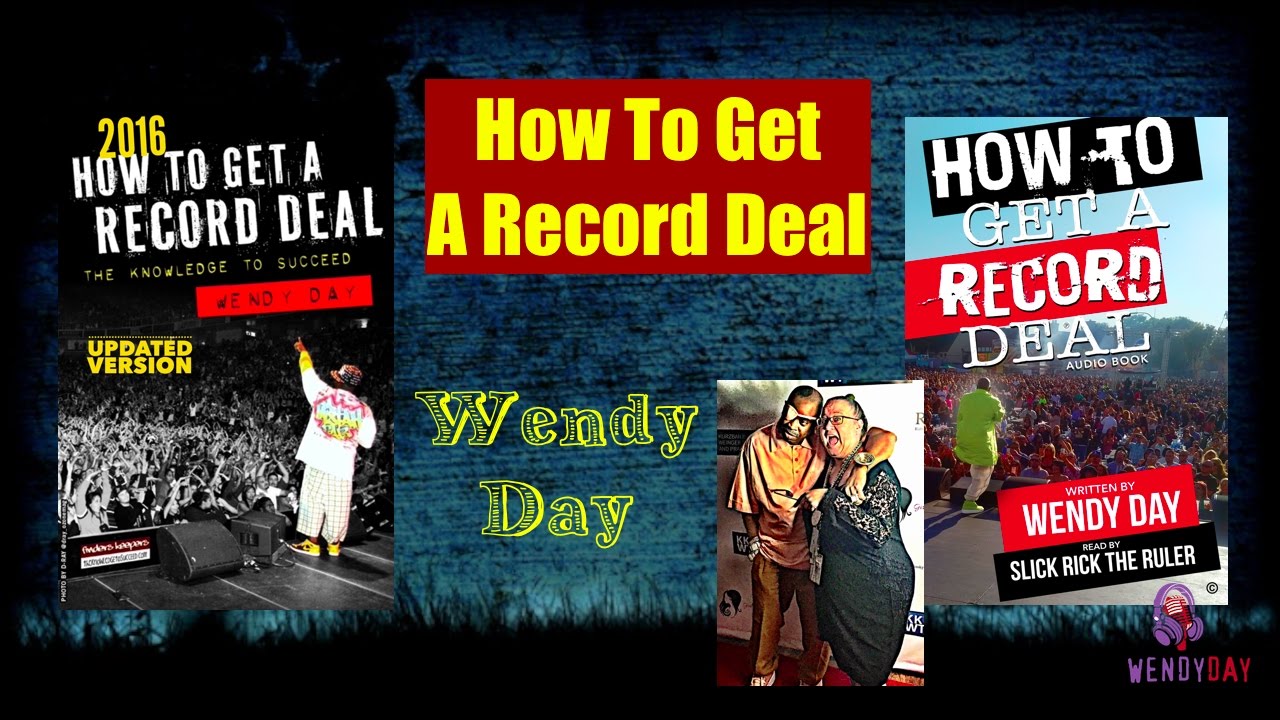
Wendy Day breaks down how independent artists land record deals: build a monetizable fan base, track your metrics on Mediabase and social media, research which labels fit your sound, and verify you're talking to real people. Radio still matters, and existing revenue gives you negotiating power.
Chapters
Hi guys, how are you? So today let's talk about record deals and how to get a record deal, how to attract a label. Um, I know that most of you aren't looking for record deals, and I have to admit to you that I'm not a big fan of artists assigning to major labels anymore. I just don't see a need for it. But there are quite a few of you out there who either don't have the entrepreneurial skills or you don't have the ability to find an investor, so you're going to need to find a record deal if, um, you're not willing to take any other path. Um, the best thing you can do to attract a label is to show them that you're a viable source for them. And that doesn't mean talent. I mean, you need talent, you need excessive talent in order to, um, succeed in today's marketplace. But really what you need is a fan base. You need to show the labels that if they sign you, that you're a good risk, that you're going to be able to build a fan base of followers that will purchase your music, stream your music, come to live shows, pay money to come to live shows, buy your t-shirts and merchandise. Um, after all, this is a business. The music industry is a business. You're not making music just because you love to make music. I mean, many artists are, and those of you who don't care about making money with your music should probably go get a job and just make money because you enjoy— make music just because you enjoy it, and then give it to your friends and family and put it online for anybody that would enjoy having it. But if you're looking to earn a living or make money from music, then you're absolutely going to have to have a budget of some sort in order to get people to notice your music. You can't just throw it out there and hope that they'll find it, or hope that it's so great that they'll share it with their friends and family. You actually need to spend some time working your music. And again, if you're not entrepreneurial, or if you don't have somebody on your team that's actually great at that, then you have no choice but to get a record deal. And again, to attract attention You're going to want to show a label that you're a viable asset for them. And the way that you do that is you build as much of a buzz as you can around your music. You're also going to want to spend a little time learning about what labels exist, who they are, what they're good at, what they're not good at. Every label is different out here. There are no two that are the same. So the areas where an Epic would excel may be different than an area where Interscope or Atlantic would excel. It's worth it to spend a little bit of time getting to know what types of artists each label is good at. You're gonna have to do a little bit deeper research and find out, okay, who have they signed that hasn't done well? Who have they signed that has never come out? Who have they signed that never had a viable career, and why is that? What went wrong? Where was the— where was the disconnect? And you want to know that because you don't want this to happen to you. Whenever a label signs an artist, they're usually pretty excited about that artist. You know, I've heard about the tax write-offs, but I, I just— I don't think that that's real. I think what happens is when an artist signs to a label, either the person that signed them to that label has moved on to another label or another job, and there's no one left at the label to champion that artist, or that artist was found a little bit difficult to work with, or they didn't have the right team behind them to help propel, um, the artist to success. Very often, even when you're signed to a label you've gotta have something going on for yourself so that they can just step in and kind of push you up over the hump. You know, a lot of labels aren't great at sparking a buzz. They're better at taking a buzz that's already in play and building the artist to the next level. So again, you want to have some leverage going into the deal. You want to have some sort renown about your music. And what the labels do is, you know, they look at social media, they look at Mediabase, which is the way to track radio. They call into different areas to DJs and to people in the industry that live in different cities, and they find out, you know, who's hot in your area, what's poppin' in your area. They look at what's trending on Twitter and what's trending on Facebook. They get a feel for what's happening in different marketplaces. You know, I've, I've yet to see a label that, that, um, just signs an artist because they received music in an email or took a meeting and really liked the music. I've just— I've never seen that happen. I've seen a lot of people online talking about, hey, I can get your demo in front of the right people at, you know, such and such label, or for $5,000 I can get you a meeting with the head of A&R at Universal or Warner Brothers or Interscope or Cash Money or wherever. And to me, that's just a tremendous waste of money. I've never seen a record deal come from that. You know, we all have relationships with people that work at the record labels, and if it were just about our relationship with them, then record deals would be plentiful, and they're not. You know, labels only have so many slots for artists that they can sign and work and put out in any given year. So all that to say, you want to put yourself into position where you stand out and you've got such a great buzz both in real life and online that the record labels will come and take a look at you. You know, one of the, the big myths that I've heard is when somebody says, oh, it's our city's turn to get on. There is no turn. The labels don't back and say, you know, okay, this year we're gonna look at Louisville, Macon, Georgia, and Killeen, Texas. It doesn't work that way. They look to see what artists are making noise out there, and if there's an artist in an area like a Dallas or a Houston— you know, Atlanta is a hotbed for artists— if there's an area where there's a lot of opportunity, you know, the A&R guys might get on the plane and head down and take a look and see, okay, what is it in this area that that's creating so many artists with a buzz? You know, what's going on in this area? And they may look for the cause of that or the, the root of that. And, and hopefully that's you and your team that are just doing the right thing and making it happen for yourself. Um, coming back to the all labels are not created equal, um, make sure you put in that time to figure out which labels would be best for your type of music. If you're a more pop artist, then you want a label that offers larger budgets and that has a really grade-A radio team. Radio is still viable in today's marketplace. It's decreasing, but it's not decreasing as quickly or in the way that you would think it would be decreasing. You know, with the advent of the internet, we thought that people would stop tuning into the radio and they would find other ways to, you know, have background noise. And the reality is, when you look at the statistics, radio is declining but not very quickly. It's still very viable. You know, you can get your song on the radio, especially for a label that has the connections and the budget. They can get a song on the radio and reach millions and millions of millions of people all within, you know, a few days. So it's a very well-respected way for major labels to gain traction on a song. So if you're an artist that has a song that's viable at radio, then you may want to sign to a label that actually has a great radio department. If you were a street artist and you weren't somebody that was apt to get a lot of radio play, it doesn't make sense for you to sign to a label that tells you they want to put a radio budget behind you. It just, it won't work. It, it, it's been proven that it doesn't work. So, um, really do the research and understand the difference between the different labels. Understand the different types of deals. There's a video here that talks about 360 deals and what they entail. It talks about distribution deals. It talks about— I have another video about indie versus major so you can understand the difference. Also, I wrote a book about how to get a record deal, so, you know, you can take a look at that book and it gives you an idea of the strengths and weaknesses of different labels. It talks about how to get noticed by a label. It talks about the different types of deals and what to look for for in the contracts. And I don't mean this to be a commercial for my book, that's certainly not my intention, but the information is out there. So whether you get it from me or from somebody else, just make sure that the source is legitimate and that the people telling you how to get a deal have really gotten deals and recently gotten deals for artists. You know, make sure that, um, that they're legitimate. There's a lot of scamming going on this area. And just to point out one other thing, I've noticed that there are folks who are trolling SoundCloud and ReverbNation, and they'll go in and they'll tell you that they work at a record label, only their email address is a gmail.com email address, right? But they'll tell you that they work for Universal, or they work for Cash Money, or they work for Def Jam, and they're interested in your music, and and they want to engage you in a discussion. The problem is they're not legit. They're not really working for a label. They're just trolling on the internet either as a way to make money for themselves or a way to find better songs for the artists that they're really working with. So just be a little bit wary. If somebody reaches out to you, they will reach out to you from their corporate record label address. So it'll be you know, their name at umusic.com, um, or their name at atlanticrecordings.com. So guys, if you want a record deal, they still exist in 2017. Um, you don't necessarily need to have one to succeed, but they do exist. And if you do the proper research and you have the right team to help you, you can negotiate a great deal. If you've got leverage, you can really negotiate a great deal. You know, if, if you're in a position where you're already making, you know, tens of thousands of dollars a month in show money, and you're already streaming and selling music, and you're selling merchandise, then when a label comes to you, they're going to have to come to you with a lot more money than you're already making, because you, you've shown that you can do this without them. So they're going to come correct, and you're going to be a priority at that label. So just some stuff for you to think about if you're looking for a record deal. And, um, as you know, I wish you all the best and tune in soon. Bye!
More from Wendy







How Much Is Your Music REALLY Worth? | Jeff Ponchick x Wendy Day | No Standing Zone Ep. 19

Managing expectations is a major key to making it in this business... easier said than done!

I had a great conversation with @SamuelRiddle on the most recent episode of No Standing Zone..

Building Empires: How Sam Riddle Navigated from College Radio to Managing Megan Thee Stallion
