
Mastering Music Management: Relationships, Data, and Building Global Stars | No Standing Zone Ep.10
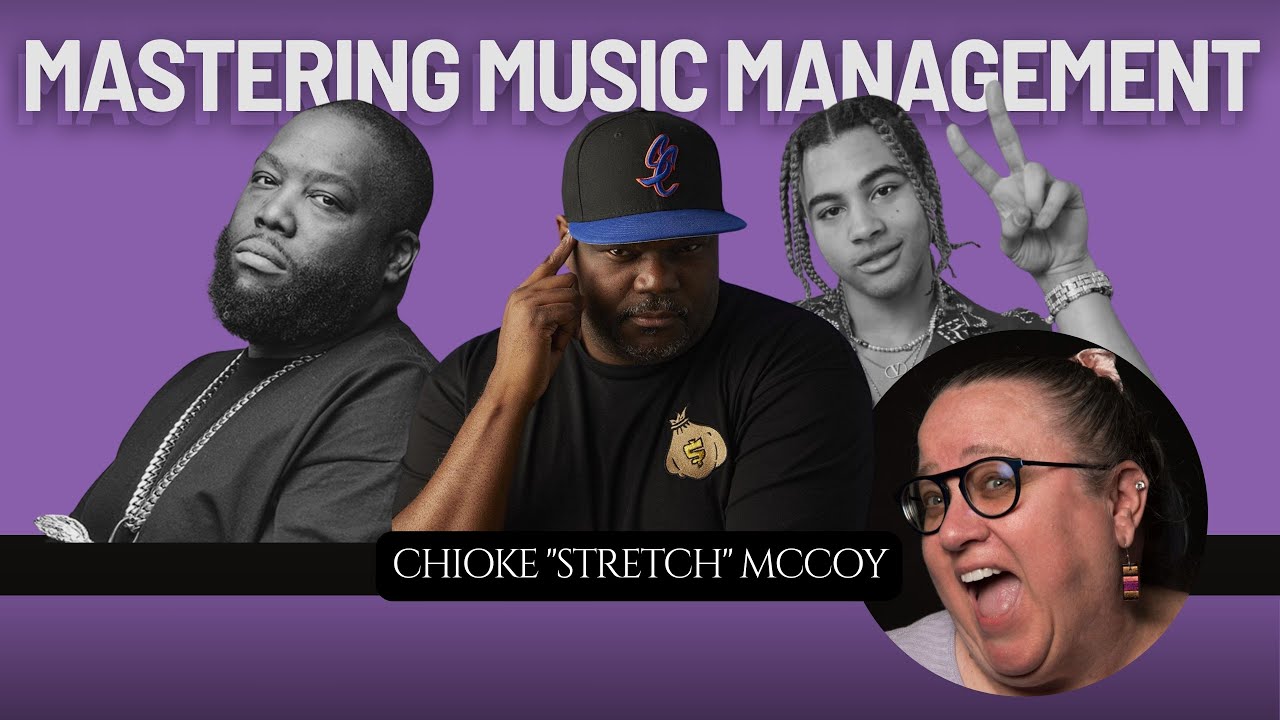
Chioke "Stretch" McCoy, a Bay Area artist manager, breaks down what managers actually do: coordinate lawyers, agents, and labels to execute an artist's vision. He stresses data ownership, touring globally, and physical products like Tyler and Travis Scott do, plus the myth that independence means going solo without a team.
Chapters
Oh my God, I haven't seen you in so long.
It has been too long.
Stretch, how are you?
I'm great, almost incredible.
You are incredible. You've always been incredible. I'm gonna, I'm gonna just jump in because I'm gonna ask you to introduce yourself, but I'm gonna do a little, a little preface and say that, um, first of all, I love you. Second of all, I've known you for so long. You've always been a manager, you've always been a great manager. Manager, and you've never killed anybody. And as a manager, when I used to— and I hate managing— when I used to manage, it made me want to kill people.
So, um, I've had my moments, but I'm not going to jail.
Exactly. So who are you, sir, and what do you do?
Uh, I am Chiokay Stretch McCoy, uh, commonly known as Seaside Stretch, from Seaside, California. Yay!
I've been to Seaside.
Wonderful place, man. I like to call it the most beautiful place in the world.
It is beautiful. Um, and it's funny because I went to a dispensary there, but I don't smoke weed, but it's really a beautiful place. And then I hung out with some Crips. It was really kind of a cool—
that's the juxtaposition of, uh, Seaside for you.
There we go. It was a beautiful, beautiful place.
And I must say, it is— it has shaped me for who I am today, for the for the— a lot of great reasons and a lot of reasons that I had to overcome, but I couldn't ask for a better place to grow up and just the experience in life.
Oh, that's awesome. That's really awesome. Not a lot of people can say that. A lot of people, you know, feel some kind of way about their, their, their growing up. I, I'm the same as you. Like, I, I love my life and I love the way I grew up. It made me who I am today.
I mean, at the time I probably would have thought differently, but understood the thing that I could say about Seaside that was great for me was just the diversity of the place. So I got to learn to deal with a lot of different people. And the one thing that I've, that I've took for granted early on was just the schooling system taught me great English, you know what I'm saying? Being able to speak and communicate, especially in hip-hop, when you get into those boardrooms, has helped me in a lot of ways, you know what I'm saying? A lot in a lot of different places. And like I said, just the diversity from you know, from like my high school was the ESL school. So English as a Second Language. So everybody who didn't speak English as their first language in the area had to go there. So you meet so many different cultures and it was just so diverse in itself that those are things I didn't appreciate until I moved on and seeing why it was hard for other people in other regions to break in other places because they didn't have a concept of what didn't work outside of what their, you know, their place is.
So I noticed how agricultural that area is surrounding Seaside. And then I also noticed It's really this incredible dichotomy between hood and natural beauty. So it's the ocean. I mean, seaside, it literally is seaside. And then it's also a little bit hood at the same time. It reminded me of who I am. Yeah.
I mean, the history of it is there was a military base that was there. So it was one of the first places where a lot of Black people settled in the West Coast and in the '70s. '80s and even the late '60s, it was a, um, it was a predominantly Black city where, you know, Black mayor, Black city council, and all those things. It was pretty pivotal in the civil rights movements back in the day. Then the, the base left in '94. That's when it got a little ugly. So, you know, there was always a street element that was there just because of, you know, it was, it was— the area is known for, like you said, agricultural and for just for tourism. So there's a lot of hotels and things there. So Seaside was a place where a lot of people that worked at the hotels lived because it used to be East Monterey because Monterey is East Monterey and they wanted to actually separate it because of all the Black people there. So let's just call it Seaside. So wow, it was, it was like I said, it was a great place because of diversity. There was, there was a lot of from Vietnamese to Korean to to Mexican, to El Salvadorian, to Indian. It was a very, very just diverse place. So things that I didn't understand and appreciate because it was predominantly Black, but, you know, white people were definitely the minority. But in my mind, I didn't understand that a lot of people didn't grow up with all these other cultures and, you know, just these other things.
So that is a gift. And it's something that I look for in my own life now, like when I chose the neighborhood where I bought my house, and I didn't buy my house till I was in my 50s.. But I needed all the food groups represented, you know, I'm a New Yorker. So when I came to Atlanta, I needed diversity. I can't live with all anything. Yes, I need, I need to look around and be like, oh, this is cool.
I like this.
So how did you get into management?
Actually, I got into management. So around '98, '98, '99. A friend of mine's brother was into music and he wanted to start rapping. And like everybody back in that time, we wanted to start a label. So we started a record label. So we started a label and, you know, at the time we were selling completely out the trunk, like completely independent. And so to try to get more awareness on the artists, I started booking shows. So I started booking artists from from the Bay Area and LA and places to do shows in the seaside area to give a life for the artists that I was representing.
Smart.
Yeah. Then from there, I— that's when I met Mac Dre in '99. And then in the whole Thizz thing, then I came on board just because we had built a relationship from— I met him on a plane, but then I was booking him for shows and we just kind of got real close. And there was a couple of things that he felt that he needed help with as far as just organization and getting things together. So that's when I came along. And started working with this. And the first person I actually managed was Mr. Fab, because as you know, through the Fab situation, Fab was, was, was through this to us. But when all the labels started coming and people started talking to him, it was like, well, look, he's bigger than the situation we have, let's just let him do his own situation. So he did a label deal for Forever After Bread, and I just moved over to management. So Fab was actually the first artist that I ever managed.
That's awesome. That's where I met you. You had called me and said, hey, come, come to California.
It was— I think I got about— thinking back at that time, it was— to, to know what I know now and to, to the things that we thought we knew, it's literally— it's funny and amazing at the same time. It really is.
Okay, can I share a secret with you? When I came out there, I actually came out there for, um, J Diggs. His, his mom, I think, flew me out, if I remember correctly, because wanted me to help with this. I had just done the Cash Money deal, and they were kind of hoping they, they would do a Cash Money deal. But of everybody I met, you and Gary Archer stood out the most. And your business sense really attracted me because I'm like, this guy really gets it. I, at that point in time, I knew you were a manager. I, I knew that you had your artist at Atlantic. I knew it was going to be a tough road. For you, just because I— some of the things that you were kind enough to share with me. And I'm like, this guy's gonna make it. It doesn't matter whether Atlantic is behind Fab or not. Like, this guy is sharp as fuck, and whatever he does, he's gonna nail. And it's amazing to me that I could see that, and I love that I saw that. I always knew that you would, and you're gonna just keep growing.
It's who you are, and I appreciate that a lot. And it was, it was great experience to because I understand the things that you did and the people who you worked with and knowing the game. Because luckily for me, throughout this time, I, I was able to get a mentor who had taught me a lot about the game, which was, uh, the late great Chip Hooper, who was one of the biggest agents in the booking agency at the time. He had, he had Phish, Aerosmith, Dave Matthews Band.
Wow.
And I just met him on a fluke at the gym in Monterey by Seaside playing basketball. His son was playing We built a relationship. He had no idea what I did. I had no idea what he did. By his office one day, it's literally right— it's across the street from my high school— was the old— it was literally the old jail. So the history of Monterey was the first capital of California, so there's just a lot of history there. So the jail is like really— it's like a— it's like a big deal because it's still standing and they converted into an office. It was Monterey Peninsula— that Monterey Peninsula Artists, which ended up going into Paradigm, which is now Wasserman. So I go to meet him and then we just build a great relationship. So I'm going to his house for Thanksgiving for all these big dinners and I'm going with him to meetings with all of these big people from— this is back when it was Clear Channel to every booking agent to, you know what I'm saying, every buyer. And I learned a lot just from him and just from, you know, my previous experience in the streets. You know what I'm saying? I had a pretty good business acumen as well. So very much so being able to, you know, get somebody to show me a side that especially at the time, because in hip-hop, this is the late '90s, early 2000s, touring was not important to us. It was, it was, it was not at all. And not only did I learn a lot from them, but that's how Fab was able to get the deal we were because he had put me in connection with the right attorneys. At the time it was Jennifer Justice who, who moved on to be with, um, with Jay and all of them. But that's, that's when they had one of the biggest firms. She was a part of one of the biggest firms that was out there. So it immediately made people take what we had to do seriously because there was a proper representation. Because as you know, I think that that's the biggest thing that a lot of these young artists don't understand is like, you may have the greatest artists in the world. You may have the so-called best team in the world. But to, for somebody to give you millions of dollars for you to be responsible for, there's going to have to be some adults in the room that they know and that they trust. And that's the thing that I think that a lot of artists are missing is the right attorney. Because that, you can have a big attorney, you can have a good attorney, but you need the right attorney. The one that's there for you. The one that understands that because sometimes there's, there's two sides to every deal. And if they're doing more business with the bigger side, guess what? You might be a sacrifice to it. But yeah, I think that the one thing that I learned from this was to always just try to get as much information as I can, and just learn as much as I can from any and everybody that I could.
Yeah, your thirst for knowledge is incredible. You also have great relationships. How important are relationships in this business?
Oh, they're huge. I mean, early on, a lot of the relationships literally came from just from the streets. So I might have a relationship with somebody from, from who knows somebody else. And that I think also got me, got me real far. And also I think the thing that got me real far is being from Seaside, which is in Northern California, but we have Crips, you know what I'm saying? But spending a lot of time in the Bay Area, which is no Crips and Bloods, I think I was one of the few people that understood the whole dynamic in California from the south to the north and have relationships from all, you know, all sides of California. To be able to, you know, just because you build a relationship just off of who— just of what you know and who the person is before, then that relationship maintains from business and things that you do. So early on it helped a lot. And then just treating everything the same way I treat life is like, when you come from the streets, one thing you can't do is you can't rob people. You don't want to be known as a liar. You don't— you don't want to do the same rules that could get you killed are the same rules that I look at that can get my career killed. And I just keep to heart and make sure that I treat people the way I want to be treated as well.
I love that. I love that. I'm from that school of thought as well, so I appreciate that.
A lot of these people, they've been punched in the mouth. I'll say that all the time. So they don't understand, but should.
Exactly. I, you know, I, I think one of the great things about the music industry is that our, or I should say the, the hip-hop side of the music industry, is that we follow the streets enough that it makes it interesting, but we don't follow it enough where there's consequence. I always wish there was more consequence in the music business. You know, I, I didn't necessarily mind Suge Knight.
Exactly. And like I said, I do— it's no different than any deal. There's a lot of bad deals out there, but That's because people aren't. And at this point, this is not 1994. This isn't 1984. This is 2024. There is no way you cannot get the information you need at this point. So at this point, if you're doing bad deals or doing stuff that is not beneficial for you, there's nobody blaming you because you can literally look this up. We couldn't back then.
No, we couldn't. We had to know somebody and make a call. But today you can, you can Google search it. For the most part, and just go deep enough.
So what does it mean? I said my favorite place, YouTube University.
YouTube University. I have a degree from that. I think I have a doctorate from there.
Yeah, I'm sure I have a doctorate, a master's, uh, undergraduate.
You have them all. You have them all. Absolutely. What does a manager do all day, every day? Like, what what is your job description?
There's two ways. I, I, one, I would say glorified babysitting. The other I would say is you're basically like the general manager to a team. So you're the one making sure that all the parts are going together. You know what I mean? You don't want to interact with everything representing for the team and for the artist. You know what I mean? So I would say it's more than a coach because you're also in charge of, of the hiring, not the actual hiring, but you're also a part of the process. Of who has to be hired, and you interact with those people every day, from the attorney to the booking agent to the label to the business managers to everybody. So it's your job, I feel, is to kind of be the glue and to help get the vision for the artist out and make sure that, that their businesses is, is aligned with what their musical vision is.
Got it. Is it their vision or your vision or a combined vision that, that you're following?
It depends on the artist. Some people, it's been 100% their vision, which is always the best and also the easiest, because when the artist knows exactly what they want, then it makes it really simple to try to attain those goals. And sometimes, especially with younger artists, it might be, it might be a combination to try to help them get there. And then with some artists, they just like, look, I just like to make music, or I just want to make money. So it, it can be my vision. But, you know, the, what I see works best is when it's usually the artist's vision and you're able to just add what you need to make sure that it works.
I love that. It's also more authentic that way because it's coming from within them and it's what they want. It's easier to do to achieve what you want. They can't blame you when it don't go right, and they can't blame you when it— when it— exactly, that's real. Although they're going to anyway. Yeah, but so when did you start the management company, and do you manage multiple artists? Are you Do you like— tell me how you do that.
Yeah, so we started in formally in 2011 because I was managing, started with Mr. Fab, then moved on to like, it's like Fab, Roach gigs, then it was Urk the Jerk, then it was, um, who else was in between there? There was a few artists in between there, then the kind of breakout was Krayshawn in 2011, and that's when I, I, I didn't move from the Bay Area. I came down to LA and I never left. So from there we started the management company. And like right now the roster is like Killer Mike, who's been with us since 2011 basically, because my partner Will, we, uh, he had had a label, SMC Recordings, which was a pretty big label in the Bay Area that had distribution through Universal. While I was doing the Thizz thing, we had came together to do a couple projects, and then I started consulting with them. And then when things started kind of moving, he just came down to LA with me and we started Active Management. So Killer Mike was like one of the artists that was with us when we were releasing his projects back in the Grind Time official days and all of that. So then, like, he's been with us— like, we have 24 Karat Golden, um, P-Lo, LaKaylie 47, Slim Jimmy of Rae Sremmurd. You know, get me in trouble. I'm just going to stop there before I start.
Yes, stop there. So what do you look for in an artist to manage? Look, what's an ideal client for you?
Somebody that is first and foremost ready to work. I can't work harder than you. That's what cannot happen. I cannot work harder than you. I cannot want it more than you. Somebody that wants to work and somebody just has a passion for what they're doing. You know what I mean? Because a lot of times there's things that, that I've worked with that people probably didn't understand because it just didn't quite make sense until it made sense. But it made sense to that artist and it was genuine to them. Because the one thing that I've seen that usually happens when it's really authentic and somebody's just having fun with it, that's when it works the best.
Yes. Authenticity is king, especially right now. It's, it's so oversaturated. From the artist's perspective, what should they look for in a manager?
Somebody that's gonna work as hard as them, somebody that understands their vision, somebody that adds value. I tell artists all the time, sometimes you don't have anything to manage. You know what I'm saying? Sometimes people have a manager just to have a manager. You have to have things to manage, but also that manager has to add value. They can't just be picking up the phone or answering the email. They have to be doing stuff to help create business for you, to straighten the business that you have, figure out some other opportunities, and just, you know, be like I said, overall be an asset. And to help with whatever your flaws are. There's a lot of artists I know that just don't like, they don't like to speak. And they don't— they might be the best businessman, business mind in the world, but they like to, they like to stay in the back of that because they don't want to mess with anything that they're doing artistically. That's where I come in. And there's other artists who want to be like, nah, they need to know that I know my business. So even if they, if there's things they don't quite know, we're going to position it like, nah, he knew everything, you know.
Right. It makes perfect sense. When is the perfect time for an artist to choose management? I know you're going to say when, when there's something to manage, but what does that mean for a new artist?
When there's things that you and the people around you can no longer handle yourself. When there's—
okay, that's a great answer. That was easy. I've never seen somebody answer that question so easily. It's also the number one question I get asked is when, when is it time to bring on a manager? And I always say when there's something to manage, and it's the worst answer ever because what does that really mean? But I love how you answered that. Thank you. Um, in terms of the music industry in 2024, how do you, how do you help your artists to stand out from all of the other artists that are out there?
I think, you know, the, the, when we talked about just the authenticity, the authenticity, and to understand in today's time, this is, it's always been a marathon, but now it's a real marathon because Everybody has their 15 minutes of fame. This song might go viral, this clip might go viral, but what lasts is people that make that emotional connection to the, to the actual fans and they have a reason to want to come back. Like this song or this moment represents their high school, their college, their wedding, whatever that moment is, to have that emotional connection and just to have the brand affinity. You, I don't think you can just be an artist anymore and just be out there. I think you have to have something that's going to make people recognize and understand, this is why I like this person, this is what I'm getting from them. And I think gone are the days of just the Swiss Army knife artists where people want things that are real specific. There will always be outliers that, that do everything, but I think people are more hyper-focused on certain stuff. So if I'm listening to this lyrical rap, I want to listen to the best lyrical rapper. I don't want to listen to the, the lyrical rapper that can also do this and do that. I just want the best of whatever that is.
That's probably the second most, most popular question that I get asked, because every artist says, I can do it all. And if you don't focus, you're just, you're spraying like a shotgun instead of being a sniper.
Yeah. And there's, there's a reason why in California people like In-N-Out over McDonald's. There's a reason why people like Chick-fil-A over McDonald's, because if you want a chicken sandwich, they're going to do it right. If you want a burger, In-N-Out's going to do it right. McDonald's gonna give you a chicken sandwich, a burger, a salad, and all these things. There's nothing wrong with that. But at the same time, is— are you going to get the best version of it?
No, all you're going to really want is the fries. How important is storytelling, telling the story of the artist?
I think it's, it's vital. I think that one of the big mistakes I see It's a trend that's been happening lately is the mysterious artist. And I think that that worked for a time because of how the internet worked and being able to galvanize people off of— there's only— there was only so many blogs and so many outlets. So yeah, that aura of mystery worked before, but I think now it's— I think those times are gone, you know what I'm saying? Just because people will move on. There's other things that will take their attention span because Nowadays you have somebody for literally, you got like 3 or 4 seconds to capture them and then they're moving on.
Right.
And even if you have them, you might have them for 30 seconds to a minute, then they're gone. You have to get them to stay. You have to get them to also want to come back.
Right. What skill sets today do you think are important for artists to develop besides just recording music?
Um, I think that the skill sets that have always been important, touring, being somebody that engages with their fans on and offline. I think the most important thing that hip-hop has done, it's done a disservice to itself, is as things have come back around, physical is back in play, touring, and actually people meeting these fans are back in play. But we're not doing it. We're still rushing to put an album out a week after it's done while Taylor Swift and Billie Eilish will load up to, you know what I'm saying, to make sure their physical is in place. So if you look at the streaming numbers, nobody's beating hip-hop in streaming numbers. But they're providing something that, that, that we're not, and that is physical. People are buying CDs and buying vinyl because they just want a piece of that, that souvenir. It's not because they're going to buy it to listen to it, but it's another format of media that they really love from the artist that is their favorite. We're not providing that. And then we're just sitting there wondering what the disconnect is, because everything is online. They're giving you something real. There's a real experience. There's a, there's a real feeling. There's all of this IRL while we're just online, right?
Um, we've been using, um, Evenbiz for our clients lately, and it's been, it's been great because it— and this is not, certainly not a commercial for them, but it's given access to fans. It gives them the music a couple weeks before they can get it on the DSPs, and it's souvenir-like. Yeah, you know, they get the experience, they get the, the souvenir, they get the music early. And it's been incredible. You know, I watched what LaRussell did with Hit-Boy and it was amazing.
Yes, that's one of my favorite human beings in the world.
Me too. Me too. You need to manage him.
We tried that. And I love LaRussell to death. But I know he's one of those few people that I think honestly don't need a manager. Okay, I think himself, he— well, it's not himself. He has a great team around him, and that, that's what makes him so great, is that because he's built a great foundation and a great team. But he's one of the few artists that he, he understands what he's doing. Yes, he understands his contracts, he understands his touring, he understands his merchandise, he understands all of that. So he asked me, he really needs is— because even if you— even if he has a manager He's still going to read through that whole contract. Yeah, the highlights. He wants to know exactly what he's doing, as he should. So what Russell needs is exactly what he has— the right people that believe and trust in him. Because like, but he is— but believe me, he is an anomaly. They are not— don't think—
agreed—
a lot of these people don't need managers. You are not LaRussell.
Exactly, exactly, exactly. And the great thing about LaRussell is he has reached out to all of us in the industry that can help him. And we all mentor him. I know you do. I know I do. I know Brent Byers, Byers' manager, interacts with him. I know J.R. McKee interacts with him. There's so many people in the industry that mentor him, and he's not afraid to ask questions.
And I love it. I learn from him every day.
Me too.
Every day I learn from him. Like, early on when I first met him, I was actually trying to sign him for the label that I have. And after the first probably hour or two of conversation, I'm like, you know what?
This ain't gonna happen. It doesn't, it's not necessary.
It was like, you, you can do, you're more important to do what you, what you, what you're trying to do without signing somebody because you're gonna show things that can happen that people are just afraid of. We're like, when you're in industry for so long, you're just trained to think a certain way. So, oh, you can't do that. You shouldn't do that. Why would you do that? Don't try that, don't try this. And the thing that I love about him is there is no limitations, you know what I'm saying, at all.
He wants to try it all, and I love it, including every distributor that exists on the planet.
Yes. And the thing is, what's great about him too is as, as he goes, he grows and learns and understands. Because I think when he first came in, he took a lot of things personal about how the industry works and how how people may offer deals and how deals are structured or whatever. And I would always explain to him, like, look, things aren't always just the surface level as you've seen. A lot of these people you're talking to, they just have a job, you know what I'm saying? They, as much as they want to be your friend, they still have a job. And he didn't understand before, it's just a P&L line. So you can't take none of this personal.
He took it all personal.
Yes, he's gotten it now. He understands. He's not tripping. You know what I'm saying? He understands.
Yeah, he's grown a lot. I've known him, I guess, about 2 years now, and he's grown a lot in those 2 years. I'm so proud of him, and he's a good guy. So how do you, how do you, how do you balance your life? Or do you balance your life is probably what I should ask. Are you a workaholic, or do you have a life? How do you—
I for sure have a life. The thing is, is like, this is when you come from a real place and do real things, you understand. Like, somebody always say this: the industry is fake, but the money's real. And that, that's all it comes down to. There's very few relationships that are real, and I understand, and I cherish, and I value those, like yourself. But I'm also not the person that's going to be on the scene or going to the fake parties and doing all this stuff unless it makes sense for what my business is, you know what I mean? And I understand why other people do. And they may have fun, they may have a great time, but I just value doing other things. That's, that's really what it comes down to. Like, I do this because I love music, you know what I'm saying? But at the same time, I'm, I'm not gonna run myself in the dirt. I can't be— I don't see myself wanting to retire no time soon or nothing like that. But I also don't want to see— I'm not the type of person that believes you sleep when you die. No, you sleep when you have time. The most important things in life is love, food, water, air, and sleep. So if it's not those things, I really can't put it in front of it. But like I said, I love what I do, you know what I'm saying? I love the people I work with, and I'm always going to give it my all, but I'm not going to die for this shit, right?
Right.
Killing themselves and don't even realize it.
Yeah, yeah. It took me, it took me a long time to learn that lesson because I just was always working until I, I burned out. And then it was like, oh shit, maybe I need to, to chill out and have a little more balance. But I had to teach myself balance at that point. It's a hard lesson. For me, it was, it was a hard lesson.
They say the streets are undefeated, the industry is undefeated.
So that's real, that's real. Is there, um, is there anything that you've learned maybe in the past 6 months or so that you could share that might help an artist move further with their career independently?
100%. The— I know people hear this and it's really, it's, it's kind of like intimidating to understand, but gathering, controlling, and learning your data. Because one thing that nobody talks about is these companies have made a lot of money selling your data. So when even— you don't have to be independent. When you're on a label, they don't have to control your website. You know what I'm saying? You could give them access to a splash page when they need to do things. The terms that when you negotiate that, your data is so important because what people don't realize is there's going to be a life after this music and there's going to be highs and lows of this. But when you have the information for the people that have tapped into you, when there is these opportunities like Coca-Cola come or Nike comes, you can say, hey, not only do I want to do this deal, but also I can give you data that can help you with the marketing on how we do this. So, and you can learn more about yourself on where you do shows, what color shirts you like, the affinity for what the people, your fans are. We're in a time where we have access to so much information when we didn't. I come from where we were literally selling CDs out of our car trunk. Pressing them up and going to a store, selling them CDs. And I have to hear from them. There's no real-time data. Hey, how many people bought it? Well, we bought 200, we sold 160. Okay, that's good. Like, I had to physically go there and literally get a piece of— a sheet of paper to realize what's happening. I literally had to press up some music and hand it out to test it to see if people liked it. And then I would decide, okay, people like this, We can sell these. We have so much information that we're spoiled and we're not using it and they are using it because the one thing that we're losing independently is we're catching up with what was happening and not looking at what's on, what's moving forward. I've always prided myself on trying to be an early adapter on all technology. Every, every place that I've been, we've, we've, we've actually benefited from technology. The music business is run by technology and it was the moment that people realize that they'll change from the history of it, from the, this, from the 45-inch single to the full LP. Like, people didn't do albums until there was a place for you to absolutely listen to a whole album, and that's when the LP was there. That's when you had this whole wave in the '70s where people were making these experimental, these full bodies of work. Then you had the 8-track. Oh wait, now I can skip to go to every third song. Then you had the CD. What the CD did was it made it where, oh, I can only go to the song I want to. And yeah, there was a lot more money that was made, but people don't realize that's when it became more single-oriented. So when you get to streaming, you have to understand everything changes. AI is going to change the way that we do business. But the whole point is, is like, we can't just, we can't just be happy with what's happening today. And we also can't ignore what happened in the past. Because like I said, every artist, I'm gonna tell you this from day one, sell physical. I don't care if you sell 3 CDs, if you sell 4 pieces of vinyl. It is going to change what you do. You can look at the numbers. When we look at these numbers every week, we'll say Taylor Swift sold 2 million albums, but you didn't realize she sold 1.5 million pieces of physical albums. She streamed the same amount as any other hip-hop artist. But like, I just seen the biggest streaming female album of all times on Spotify's history. Is Olivia Rodrigo's. It's not Taylor Swift's, you know what I'm saying? It's Olivia Rodrigo's. But when we look at these numbers, we don't look at the physical. The only rapper I see that's doing it and that is winning and killing it is— well, two and a half. One for sure that's doing it the best and is probably the best example of how you should want to run your business is Tyler, The Creator. The second one is Travis Scott, which, you know, he does a pretty decent pretty good job of that as well, but he's also gotten into them, into selling product. So that's what I would say, man. Make sure that you control your data, get somebody to analyze your data, gather all your data, know your audience, cater to your audience.
I love that you said that. Um, is there a way for a new artist to understand who their audience is when they're relatively new and they don't have a lot of streaming data yet?
Yeah, there's, there's many different platforms and different— the one that I am a very big fan of is called Audigent. And the reason why it's so good is like, you have to know your data and you have to know this information because you're going to have to, you're going to have to, you're going to have to do some sort of advertisement, whether it's for your concert, whether it's for your merchandise, and you want to know exactly who you're selling to. So you can get your data from— if you're selling merchandise, you can look and see, okay, the majority of my fans are from this particular area code and they're females, you know what I'm saying? You gather, you, you gather information. You give people incentives to give you information, like give me your email, I'll give you a discount code, you know what I mean? And don't bother people just to bother them. Don't send them— don't send the email that you wouldn't want to get, right? Don't send a text that you wouldn't want to get. Don't do any of that. Only send stuff that you would want from your favorite artist, and that makes sense.
That's great advice. Yeah, I'm not a fan of spam, so I love it.
No, not at all. Like, it makes sense. Like, hey, new tour is announced, buy your ticket here. Makes sense. Hey, you know what I'm saying? New— what, what I'm a fan of is newsletters, you know what I'm saying? You do quarterly newsletters where you're giving them information, and you're also— because you can't only sell stuff, you need to also be giving them stuff. And give away things. Give away merchandise you're not selling. Everybody has guest lists on their concerts. Give away a couple tickets to fans who probably can't afford to go. Do whatever you can to engage these people so they can be the one to spread the word for you. The biggest artists in the world aren't only ones speaking for them. They're big because other people are speaking for them every day.
I love that. You started out early in your career in touring and shows. Is there a way for an artist today to set up their own tour if they don't have a huge fan base?
Yes, there's, there's a lot of information. There's a site called Pollstar, and Pollstar also has a yearly— it's a little— it's a book that has every venue in America.
Oh wow.
And it— and it's also by, by size. So you can say, hey man, I'm good for 150 tickets in these markets. You can literally go through that book and find out who, what venue it is. It'll have the information for the buyer, all of these things, and then you can call them to try to set up your own tour. But because there's, there's just so much information and there's so many ways to figure it out, I just think that the first thing you have to do is say, what am I trying to accomplish? I want to do a tour. What's the aspects of tour? I have to have, I have to have venues. How do I get the venues? I got to find the buyers. You, you go back enough, you're going to find all the information you need yourself to figure out how you can do this. Or, you know who did it? Who did an incredible thing? And we were just talking about LaRussell. He made the people come to him. He built the venue in his backyard, the pergola. Yes. Yep.
And he did pay, pay what you want.
Yeah.
And then what you want for the merch so that he had another way to make money.
And like I said, there is no excuses in 2024. Either want it or you don't.
Yeah, I think that's really what it comes down to, because even the clients that I have that don't really put in the work, they just don't really want it. They, they just want to record and make music, and that's not the job anymore. It's not enough.
Not at all.
You know, you got to be great at social media, you got to be great at moving around, you got to be great at telling stories, you got to be great at researching so that you know what to do. It's just a different world.
Completely different world with a lot shorter attention span.
With a lot shorter, absolutely. And too much music to choose from.
Mm-hmm.
I love that. So I want to say to you, congratulations on your artist Grammy. How did that feel?
It was vindication, I would say. There's a lot of stories that I won't tell of us pitching that album to people who just didn't believe. Why, I don't know. To me, it seemed like a layup. It seemed like it was destined to do it, but, you know, and it was just so great for Mike because of how long it took for that album to come out, just in general, from working on solo stuff to all the success around the Jewels, which put that on the back burner. And it was— and, and if you listen to that, it's for Atlanta. Like, he did such a great job of representing Atlanta from a grown man perspective, not just what's happening today if you're 18.
Absolutely. He, he reached, he reached his fans' market beautifully. Like, he nailed it.
Yes. And he shows you can, you can age in hip-hop and still contribute.
I didn't used to think that, Stretch, but he has made me a believer. He's made me a believer. Um, Conway Benny the Butcher, like, there's a couple people that, that have made me a believer because My experience coming up was the older artists, when they put out new albums, nobody cared.
Yeah. Why? Because they were making content for a younger audience.
Correct. And that doesn't work. They need to reach their market.
Yes.
Absolutely.
It's no different than if you look at rock or any other form or any other genre of music. There's a lot of artists that age and they, they do a great job focusing on their core. And then every once in a while they catch something that crosses over. Yeah, just celebrate. And I think that that's just how it needs to be looked at, is like hip-hop is still only 50 years old, so none of these artists are— it's not like anybody has done this twice, you know what I'm saying?
Right, right, right. That's real. Is there anything that I haven't asked you that I should have?
Um, I don't think so. Cool.
I love that. So my market is up-and-coming artists and up-and-coming people in the music industry that might want to be management. That's really, that's really what I want to convey. And the great thing about this series, especially this episode, is that it's stuff that people can take notes and, and go do tomorrow and start making more money in their career if they apply exactly what you've said. And I thank you for that because that's— it's rare that people are that forthcoming in that giving with knowledge.
And I think stuff like this is so important because we have, we just have like a lack of infrastructure where there is a way for young managers, young executives, young people that's, that's not just a rapper or producer to come up and to learn the game. And that there's a lot of misconceptions of You know, as somebody who's done it independent on so many different levels, the misconception of independence— independence doesn't mean you're doing it by yourself. That just means you're not being financially backed by a major label. The greatest independents still have the same amount of staff. The reason why people sign to a record label is because they don't want to hire 30 people when their album comes out, which makes sense. And I think that, you know, the, the biggest problem we have is it's either this or that, but not understanding how you can have both, you know what I mean? You don't have, you don't have to have a major record label behind you to have 5 really good people working with you. You don't need 300. You might only need 5. You might only need 2. But I think that, you know, we just need to, as artists, understand like you need to build a team. A team only means more than one person. So as long as it's not you just to fill in the holes that you have and to get to where you want to get to.. And I think, I think that that's the most important because in hip-hop there is this, like, I always say this, you can't be a boss without employees. Everybody wants to make the money, but they don't want to pay the people to help them get there. Or when they do get the money, they forget about the people that help them get there. And I think that's the biggest problem in hip-hop. And it starts from the beginning and educating people right now. There is no, there's no billionaire that did it by theirself. There is no Fortune 500 company that was started and finished with 4 people. It takes— if you just want something that's very small for yourself, that's a very easy business to do. But if you really want to be the biggest artist in the world, you're going to have to have a team that covers the whole world. And that doesn't— and we're showing and seeing you don't have to have a major label to do that, but you do have to have major people to help you.
I love that. Can we still have superstars? I'm worried that we're so fractured and it's so hard to reach a large enough market to build a superstar? Is that possible today?
100%. The problem I think is people have to change their way of thinking. So, like, I managed 24K Golden and he had a song that was literally the biggest song in the world. Unfortunately, it was during COVID So, yeah, we never— unfortunately, it was during COVID Well, no, the good thing is, is it's 2024 and he's just now getting to markets where the song was number one, actually touching. Oh wow.
Okay, so you're saying like to be able to back it up.
Exactly. So I think that what— and a person who taught me this and said this a long time ago, and it makes sense now, is Mike Karen. Was— we were just talking about an artist, and he was like, you know, I think that the way you have to look at this is you have to, you have to, you have to approach every moment as fast as you can. You can't just You can't make a song, have a hit, then you spend the next, you know what I'm saying, year while that song is at its peak doing shows just trying to make all the money. You might have to skip that first round and then let everybody know who you are. Then you can come back and get the money. So I think that what happens is, is like, it's a whole world out there and you can get to it now. You just have to go. But what's happening is, is people aren't going to all these places because they think that it's covered by the internet. The people that actually go to these places, they do great. They do incredible. So if you— if I'm Tommy Richmond and I have this song going crazy, you're going to physically see me in all these markets. I'm going to— if he signs whatever label, wherever they have an office, I'm going to go meet that staff and I'm going to— I'm going to be great to them because they're going to work hard for me. I'm going to meet the fans. You just have to go and do the work because to be a global star, you got to cover the globe and people aren't willing to do that. They want— The time frame has changed. So before, when you had all these huge stars, they put an album out, they working for 2 years, they're getting to these other markets at month 13, you know what I'm saying? They blew up in the US, they did everything in the US, then they go to, uh, then it's usually the Europe, then Australia, then probably Asia, then they go back to, to Latin America. Nowadays it's like all this shit is happening immediately, so you got to be able You got to be able to move and you got to be able to do all those things. So I think it's very, very possible. It's just going to take the right team and the right people to capitalize on the moment and actually be willing to put in the work. Because a problem that I see now is you can be a— you could be an artist and your first song you put up, next thing you know, you're making life-changing money. So you feel like you made it. You feel like you don't have to do nothing. Like, why I gotta do that? They gotta pay me for that. No, you still haven't realized it. Like, you're just, you're just building because this can be gone just as fast as you got it, as fast as it came.
Yep.
Yeah. So I think now 100% there's going to be, there's going to be bigger global stars just because of from people being able to translate the, the lyrics, people being able to see everybody, people having more access to all of these people. Yes. And Taylor Swift is, is an example of that.
She is a great example of that.
She's bigger than anything we've— like, I've seen Michael Jackson. I know how big it was as far as the reaction, but financially, I don't know if they have the same impact because she changed—
she changed economies. There were articles in Forbes magazine about the cities where she was touring and the amount of money that, that, that city was boosted because she was in town.
Yes. And what people don't realize about Michael Jackson is The reason why it was so big is people forget that when, when Thriller came out, he never did a Thriller tour. He did a tour with the Jacksons because he was doing something for his, for his dad and his brothers. Then he had the Pepsi thing. So it's like there was rarity to it at the same time. And it was, it was a shorter span than people can actually realize. When you're looking at Taylor Swift, this is how many years of dominating and just still growing and growing.
Yeah, I love that. I love that. And I love that— I love that 24 Hour Golden is actually moving around instead of just being online and able to really build his career and see, touch, feel people. Because I think that— I think building a career in music is like running for political office. You need to be able to touch the people, and people need to be able to see who you are and hear your story and feel you. You know, feel the vibe. I think that really matters and that doesn't really happen through a screen.
And another thing I want a lot of these, these, um, young artists and managers to understand is there's more DSPs than just Apple Music and Spotify. The reason why I say that is, like I said, Golden didn't go to China until 2023. A week before we go to China, the label happened to find over a billion streams in China. Wow, over a billion, over a billion just in China because it's a whole different platform that we don't have access to.
Yes, they're not—
so I'm saying that to say, like, look into everything you're doing and understand each market is different. It's a global economy, it's a global music industry, and as great as these platforms that you can look at the stats are, like, if people don't realize, in France Deezer is the biggest DSP.. They're not worried about Deezer, you know, they have, they don't care. So in, in Japan, physical CDs is the biggest way to sell music. People don't understand that. So just understand, like, it's a global place. Look at your Spotify for Artists and understand, oh, I got traction at these places, but also look into the other DSPs. Understand your business, understand where money is made, understand where money should be spent, understand where your fan base is.
I love that. If an artist starts to blow up overseas first, should they go there or should they bring it back into the US, or does it matter?
100%. It's like if a fire starts over there, if you want it to spread, you go put gas on it. Don't wait for it to get to you. Put the gas on it and show its way home. You know what I mean? And the reason why is like, it's still global numbers. If I have a song that's doing great in Australia and I can run it up in Australia, then I can go talk to the US playlisters and say, Hey, this is— hey, look, it's no different than people have to look at in hip-hop. Look at— if you've been in this long enough, look at this the same way you used to look at radio. You may start in Augusta to get to Atlanta, you may start in Mobile to get to— so you may start in Kazakhstan. It doesn't matter where you start, you still know where you're trying to get to, and you just have to provide the information now to show people why they should play And that's another thing. Don't think people are just gonna, just gonna playlist or book you or do whatever. You have to provide people with that information because they just don't know. You can have 10 million streams on a song and a person may not ever know.
Not know.
Because in their algorithm it's never even exposed.
Right. Right. I love that. And again, that's where relationships come in because when you're ready to share it with the right person, you need to have access to that person. And if your relationship is there, when you've got the story free to tell, you can tell it.
That's another thing I want to say too. A lot of people don't realize is that like, or your algorithm is not the real world. That's just what your, what your service, because they know you like. So a lot of times people may think something that they're seeing on a daily basis is the biggest thing in the world, but no, most people think that, you know, you want to see, right?
Right. Most people think that. They think whatever they're looking at, everybody is, and it's, it's not. What I see every day is way different than what you see every day, I promise.
100%.
This was awesome. Thank you so much for doing this. There are no words for how valuable this is and how much I appreciate it.
Thank you for having me, and thank you for doing everything you've done to allow me to be able to do this. The things that you've done, the people that you have helped, the people that— the people that you have helped even after people have done you wrong, it's much appreciated, it's much needed, and I've learned a lot of life lessons from you. And appreciate you.
And thank you, that means it all. That's a million dollars for me because I'm not driven by money, I'm driven by that. Thank you.
No, thank you.
Thank you.
More from Wendy







How Much Is Your Music REALLY Worth? | Jeff Ponchick x Wendy Day | No Standing Zone Ep. 19

Managing expectations is a major key to making it in this business... easier said than done!

I had a great conversation with @SamuelRiddle on the most recent episode of No Standing Zone..

Building Empires: How Sam Riddle Navigated from College Radio to Managing Megan Thee Stallion
