
Music Tech Insider: Benji Stein on PlaylistSupply and Booking-Agent.io | NSZ Ep.17
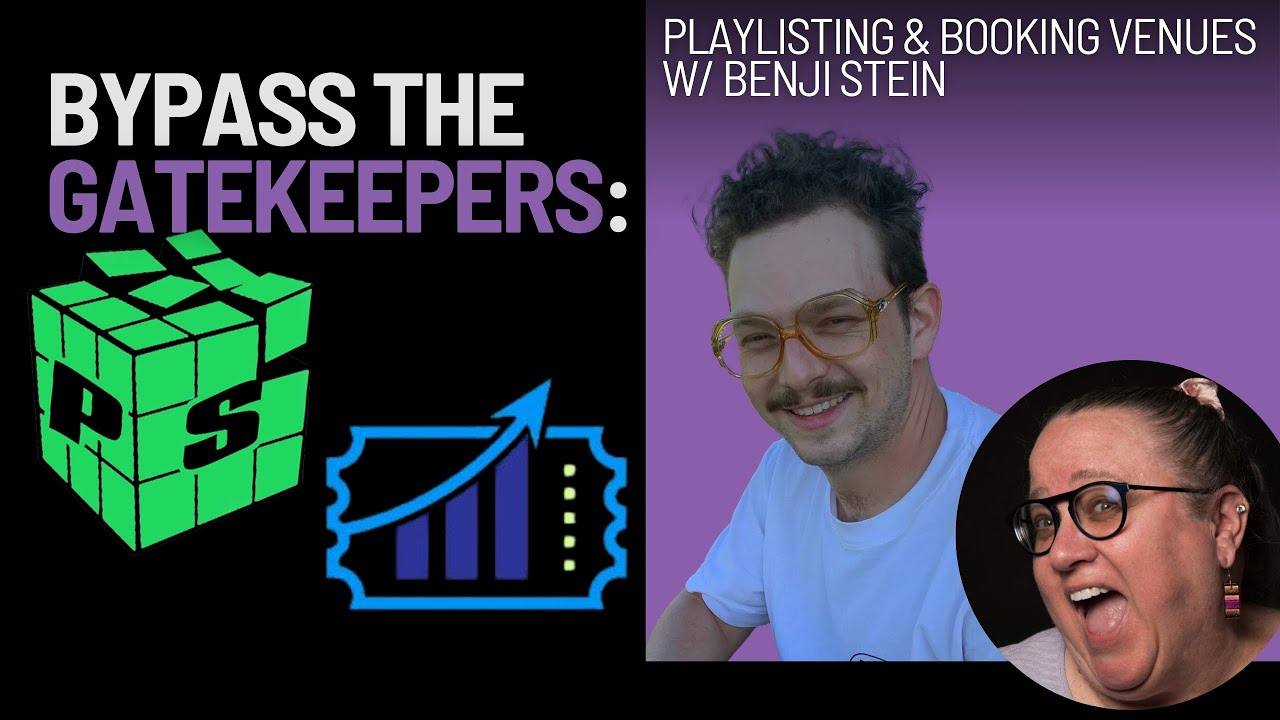
Benji Stein built Playlist Supply and BookingAgent.io to solve problems he hit as an artist manager: fake streams and the gatekeeping of venue contacts. Playlist Supply is a searchable database of real playlists with curator info. BookingAgent.io maps venues and buyer contacts so artists can book without agents.
Chapters
Benji Stein, how are you?
I'm doing great. Thank you so much for having me on and the opportunity.
I am so happy that you're here. I loved, I loved meeting you. I love what you're doing. Can you introduce yourself and talk a little bit about both of your platforms?
Yes, absolutely. So, um, you know, my name is Benji. I'm, you know, someone that kind of came from the music side of things and branched my way into more of the tech side of things. Just, you know, as a consequence of, you know, as a consequence of fixing problems that I had personally as a manager that I had on the music side. And, you know, realizing that that tech and that, you know, those tools needed to be available to everyone. And so I don't know how deep I should go, but I'm happy to jump right into kind of the origin story of both of our tools and a little bit more about myself.
And I would love that if you don't mind. I would love for you to do that.
Not at all. And so, yeah, I was formerly more of an artist manager. I did a few different stints at record labels, at management companies, and I spent up until about 4 or 5 years ago all of my time doing artist management, various hip-hop clients, a few indie rock clients. I had a roster that was all over the place. And yeah, this kind of started as something back in college. I'd been a drummer my entire life and I still have a kit. I don't play it enough, but I never had the chops to really pursue, you know, making music as my own kind of, as my own thing. But I had some friends that were very talented and I believed in them. And, you know, a lot of managers have this kind of story. You know, it starts in high school or in college. They just help out a few friends with some marketing or they help out a few friends with some pitching emails or, you know, doing some organization. And I had a couple friends and I kind of took on that role of helping them with their social media and helping them with some graphic design and some branding. Before I knew it, I was kind of an artist manager. And I found that that was actually a skill set that some, lots of labels or management companies or other artists were looking for. And I kind of learned a bit more of the ropes about the contracting and how to negotiate a deal. And I kind of learned everything from the ground up. And during COVID in particular, a lot of people were pushing more towards digital marketing.. And me with my roster, we had all of our live shows and live bookings canceled. And so we were also kind of curious on a way to go harder on digital marketing and playlisting. It's just as important as ever. But back then playlisting was something that everyone was very curious about. Everyone was very interested in. They saw the numbers it could drive and they saw how pivotal could be to boosting an artist algorithm on Spotify. And so everyone was trying to decipher how to do this playlisting and I had a couple labels that, you know, they had a— I had a couple artists with label budgets, with label services teams that were handling a lot of the marketing. And I would kind of follow up on the playlisting that they were doing, and there was no attribution, there was no data on the back end. It was very much like they would just pass along, you know, X amount of dollars to a third-party company that would handle playlisting, and they would just guarantee X amount of streams. And, you know, me looking at the Spotify for Artists and the data I had on the artist side, I would often see like very weird patterns, very weird cities, things that just looked inorganic. And I considered how much was being spent in this direction. And I thought to myself, there's gotta be a better way to do this. And I had a really close friend of mine who's now my co-founder, Ioannis. He was running one of a very prestigious booking agency out in Europe. Mostly working with techno and electronic artists, a genre where playlisting is pivotal. And, you know, he also had a lot of management clients who were also, you know, just as a consequence of doing the booking for them, they also ended up, you know, working out management relationships. And he had a similar problem, and we kind of put our heads together and we got creative, and we were like, you know what, what if we try do some of this playlisting ourselves? And It started out just with our individual teams kind of doing the manual research, digging through Spotify, looking for relevant playlists, trying to find the contact of the curators who own them, and building out like a spreadsheet. And from this spreadsheet, we would try to build relationships with these curators and kind of develop people that we could depend on when a new release was coming out. They could add that song to their playlist, the same week that it released and help build up some of that steam and some of that hype and get that algorithmic hype going as well. And so we had really great results, and we were like, what if we take this one step further and we try and automate the hunting process? And that's what we did. It started out just as a tool that was on our computers. I gave it out to a whole bunch of kind of, you know, music industry professionals and friends of mine that were working at labels, mostly to get feedback and see, you know, if this was effective outside of just our bubbles. And it was. The overwhelming feedback we got was, this is really revolutionary. It's crazy this wasn't done before. And you guys should make this available online to any artist or any manager who wants to use it. And, you know, that was 4 years ago now. And, you know, Playlist Supply is like a thriving platform where anyone can kind of go on and, you know, deeply search playlists, the data about playlists. And, you know, since that initial kind of goal of just allowing artists to aggregate all of the playlists and their curator contact information, we've now tacked on a lot of other goals. You know, the environment's changed, and so we've built in features for, you know, checking a playlist's health and making sure it's not botted. We've added features for analyzing the follower chart history so you can see if there's weird spikes in following that's something that I would, as a manager, would only see on the backend at the end of the campaign. And it was already too late at that point.
It's too late.
Yeah. Exactly. So now you can kind of do that ahead of time. You can go into Playlist Supply and have like a comprehensive all-in-one playlisting tool that gives you everything you need as an artist to kind of have the power in your hands and do the work yourself and build your own campaign instead of depending on these third parties that Oftentimes they charge a lot, they require a big budget just as a minimum or to get started. And because of that, they're incentivized to deliver streams and deliver results, which oftentimes leads to, you know, you're paying this large amount of money and you can also almost be assured that in order for them to make sure you're happy, they're gonna use bots or fake streams. And so Playlist Supply takes a different angle. It's a tool that allows you to run your own campaign, do your own research, make sure you're reaching out to organic playlists. We've got another really cool feature that just targets discovered on playlists. So you type in an artist, you're like Blade or any artist, you know, that's one that I've been listening to a lot recently. You're gonna get all of the playlists that show up on the front of their profile. And those are playlists that have, you know, been indicated by Spotify's algorithm to have more discovery, to be more organic. And yeah, that's kind of the arc and how Playlist Supply came to be. And it was really just, you know, first a problem that I had and that my team had and we wanted to fix. And yeah, BookingAgent.io is, sorry, go ahead.
I was, let me just stay on Playlist for a minute and then we'll go to the booking platform if that's okay with you. One of the great things that I found about it was that I could research the artists that were similar in sound to the artists that I work with. So kind of their competition, although it's not really competition, right? Because there's enough people to listen to all music. But it was really helpful, especially for some of the smaller artists, to be able to go in and find the playlist that they were on and then go and— and I love how you taught me to figure out, you know, to go into the dashboard and figure it out, figure out like which ones are the more legitimate playlists. So that then we could go and target those people directly for our artists. I already knew they played similar type music because I'm looking at the competition, but I also was able to go in and see, okay, are these botted? Because we don't do bots at my company. We want it— we want— we don't want to fuck up the algorithm. We want to keep it as, um, organic and real and authentic as possible because we're really trying to build careers. We're trying to put our artists out on tour to make money, and we're trying to sell merch. So it's more than just streaming for us. We don't care about the vanity metrics, the numbers. So I love that I'm able to do that with your, with your site. It's incredible.
Awesome. Yeah, thank you. And yeah, you're spot on. The similar artist thing, I'm glad you mentioned that. So when you, when you log into the tool, you're gonna get the option to search for, you know, playlists. And, and there's a few different parameters. You can search just for playlists that have an email contact. You can search just for playlists that have an Instagram or social media contact. You can search just for playlists that show up on the discovered on, but we also have that similar artist button, which you're talking about, which allows you to type in one artist and it's gonna search for 5 to 10 similar artists based on the one you put in. And that's one of the strongest tools for independent artists to kind of do a little bit of a brand analysis and kind of, you gotta look at the people that came before you, people that are currently in the position you wanna be in, people that have taken the trajectory that you're looking to take, and you have to analyze, okay, you know, what worked for them marketing strategy-wise? Where did they do their first show? Maybe that's a place that would fit my music. And, you know, there's, you know, a lot of artists get pigeonholed into thinking like they're 100% unique and it's what they're doing is different from everyone else. But if you can find one or two case studies or role models or people that you can kind of base what your understanding is, that market research is crucial, and it is the same for playlisting too. If you see a rising artist that's in a similar genre to you in a certain playlist, that's a sign that you can be confident that curator might be interested in you too. And so yeah, that similar artist search is really, really cool.
It was also helpful. I took it a step further because I found it to be accurate. So what I did was in comparing the other artists, then I went and found their social media accounts. I went and looked at their Instagram and their TikTok specifically, and I went in to see like what reels are working best for that artist so that we could make similar—
so smart—
content. So it was really— and the only other place that I've seen this, I've seen it on Tidal where they recommend similar artists, but it's not— for me it's not accurate, um, because I work with really new artists, so I didn't find it to be accurate at all. And then of course Spotify does it when you've got enough traction, they'll tell you artists that are similar, but I also don't find their algorithm to be accurate in that respect. I find that they spit back artists that are either using the same companies that we're using for marketing. There's always something in common, but it's not the sound of the music or the fans. It's usually algorithmically, whatever we're doing in terms of marketing that brings up similar artists and they end up not being similar at all. Yours is, is more accurate so that I can kind of go down the rabbit hole. And then at some point, if my clients want to do collabs with other artists, these are artists that are at about the same level or a little bit above them, and we can go in and build relationships with those artists, which is really helpful too.
Exactly.
So you've got a tool that does way more than you thought that it did.
Yeah, I know, it's super true. I— it's funny how often I'll talk to someone who maybe uses the tool in an unconventional way Like with Playlist Supply, you know, there's a whole spectrum. Artists sometimes want to sign up and just, you know, manually reach out one at a time. Other artists, we have an export feature and they want to log in and export 100 playlists and mass outreach or build it into an email automation software so they can automate follow-up.
They can automate it. Mm-hmm.
They want to get real intricate with it. I've had A&Rs who will come in and they'll look up, you know, playlists in trending cities or playlists surrounding a new trending artist and they'll look at the playlist and they'll see, okay, um, you know, this artist that everyone's, uh, you know, there's like a, there's like a label signing war over is in these playlists. Let's see who else is in these playlists because this curator's taste might be tuned in.
That's the whole point.
What's rising. Exactly.
Oh, that's brilliant. I never thought about that. I love that.
Yeah, it's, it's like a data tool. And so you gotta approach it from, from that kind of sense. Um, and so there's, there's a lot of different use cases. There's a lot of ways to, to use it outside the box and Yeah, I, you know, the similar artist search is really powerful. And, you know, I really encourage artists who are using it to try and think of outside the box things. Like if you go in there and you just type in a genre search, especially in certain genres, it's very saturated. People might have reached out to all those top, you know, top following playlists. I also encourage people, you know, reach out to smaller playlists that maybe you found with a similar artist search. They might not have the biggest following,. But that doesn't matter algorithmically. If you get added to 5, you know, third-party playlists in your first week, regardless of the followers that those playlists have, that's going to boost your algorithm, make it more likely that you get pushed into a Discover Weekly, and, you know, kind of increase the likelihood of that snowball effect. And so, yeah, super on point.
I love that. I love that. That's brilliant. Can you talk about the booking platform?
Yeah, absolutely. So BookingAgent.io is our, is our latest tool. It's a very similar philosophy. It's another data-driven tool. This time it's a little bit enhanced with AI, but it's basically a search engine for venues and talent buyer contact information. It's like, you know, we, we tried to take— we were, we were, we had a similar problem. You know, this was my co-founder on the booking side, a problem he encountered a lot in a situation where, you know, kind of on the, on the boutique booking agency side, and me as a manager as well, there's a category of artists who, you know, they've already done their diligence doing digital marketing. Maybe they, you know, did Playlist Supply, did their digital marketing, got playlisted. They've got their first, you know, core fans, and they're ready to book that first show. But because they don't have any past show or touring history, no booking agent is willing to take a risk on them. And, you know, in the industry nowadays is very dependent on metrics, on, you know, Instagram following and how many monthly listeners you have. And there might be someone who is ready to start gigging, but just because they don't have the metrics all summed up, some— a booking agent might not be ready to take a risk on them. And so this tool is basically built to make it so that any artist, any manager can kind of book their own show, book their own tour, It's basically a map interface and you type in an artist similar to your client, similar to the music you make. It's based on similar artists. We also just added last week a new feature that lets you search by genre and by city, which is really cool. That was something a lot of people requested, but you search by genre, by city, by similar artists, and it's gonna populate the map with all of the venues from, you know, say you look for an artist, you're gonna get all the past tour history and all the future tour history. Say you look by city or genre, you're gonna get all of the venues that accommodate that particular genre in that city. And you click on each one individually and it's gonna show you the contact information of the talent buyer, the capacity of the venue, the last show that was there, the social media information of the venue, you know, other people who might be working at the venue that could be assets, the marketing director, the production coordinator. So, you know, that kind of Rolodex of venue contacts that a lot of these agencies and booking agents kind of, that was their value, that was what they would gatekeep, you know, things like Polestar or Indie on the Move would charge like pretty big amounts of money for you to get a directory similar. And oftentimes it wouldn't be updated. Now you have a real-time search engine, BookingAgent.io, which lets you find venues in real time and find the current talent buyer in real time. And so, you know, we're— this is for a different category of artists who are ready to book a show, who might be a little bit more established. But it's just another problem that a lot of artists, a lot of managers, a lot of smaller agents had that, you know, now instead of digging through LinkedIn, digging through, you know, different websites and trying to find that specific person who's the right contact, you can look at it on a map, you can plan based on the region, you can have routing a little bit more informatively planned. And you can basically, you know, plan your own tour or book your own first show just, just by going on to BookingAgent.io, running a few searches, and doing a little bit of outreach.
For hip-hop, it's so valuable for us because until an artist gets to the point where they're getting about $10 grand a show, booking agents have no interest. Like, they don't even return calls, to be honest with you. So the artist has to book, their team has to book, their own early shows, you know, and even if they're doing free shows, it gives access to the people that are making the buying decisions for talent, which is incredible. I went in and tested it using— I'm sorry to interrupt you.
No, go ahead. I was just agreeing.
I went in and, and tested it. I used Joyner Lucas, um, who's not my client, um, just to see exactly like where he's at in terms of his career. I worked with him back in 2011, and it's just really cool to see where he's grown. And then I went and put in Eric Bellinger, who's actually out on tour right now. And it was super accurate in terms of the shows that, that Eric is doing in the routing. Like, I was able to compare it because I work with his manager. I was able to go in and compare her spreadsheet to, to, to where he was performing, and it lined up in terms of like the marketing people and the, and the, and the and the, the booker, you know, the actual person at the, at the club, at the venue. And it was just really incredible. And it shows it on a map. So if I'm booking a tour for an artist, or even if I have an opening act that I want to pitch to another artist, I can see the area, the target market. So, okay, I can see exactly where he's performing in the Southeast. So then I can reach out for a series of 6 shows and say, hey, I'm working with this young R&B artist who's not at your level yet, but we'd like to do the shows that you have in these 6 different cities. And I look like a superstar because it's already researched for me, the venues and the cities where they're performing. And it makes it so much easier for me to pitch like an Eric Bellinger manager to say, hey, can we open in these 5 or 6 cities for you?
Exactly. No, that, that, that use case is perfect. That's exactly the intention. And yeah, there's a couple other cool little features that are in there that lets you, you know, you can save venues to project files. So say, you know, you're working with Eric, or you're working with one client, you can kind of save all the venues that you're looking at to a project file, also export them to a spreadsheet, so now you have your own spreadsheet.
You have everything.
Exactly, and so yeah, it's definitely, it's actually crazy to think that there wasn't something like this that existed beforehand, and it's, yeah, we're trying to just kind of, revolutionize with, you know, making this data a little bit more accessible, democratizing it a little bit. And, you know, even, even if you're making $10K per show, if you're bringing on a booking agent, they might want 15%, which is, you know, as an indie artist, depending on your approach, maybe that's something you and your team would rather do yourselves and take a little bit of that cost away. And of course, at the right level and for the right people, booking agents are endlessly valuable. But it's people, it's very underrated how easy it is to kind of book your own shows, book your own tours, reach out for opening spots, you know, collaborate with other groups who might be at the same venue. And yeah, it's, this tool is just made to make things a little bit more accessible and, you know, make finding talent buyers at the right venues very, very easy.
I love it. I love it. So I'm going to take a step back and ask you about your start in management because I know that that is where you began. Began. When, when you were managing artists, what was the most difficult part of your job?
Hmm, that's a good question. You know, I think it's, I think what the most difficult part of management is, is just the, the being able to adapt. You have to be very adaptable. You have to be very flexible. There's new problems that arise all the time that might not be something you faced before, especially if you're working with a client in kind of a new space or a new genre or who's reaching new heights. You might be, you know, dealing with, you know, different capacities. And, you know, it's— I would say the most difficult thing is kind of having to take on a new role almost every day depending on what problems come up, on what stuff needs to get addressed. And yeah, it kind of forces you to, you know, while there is— there's— you want to develop a routine typically with, with any kind of work where you kind of feel comfortable going in knowing what to expect. Management is very much something where you're often dealing with the unexpected and you're forced to think on your feet. And so that's something that, you know, I think was very difficult but also forced me to be more creative, to think more critically, and, you know, just, just be a little bit more open and, and to a solution oriented mindset and a growth mindset. Just with the accessibility of the, of the internet and with technologies these days, you know, both of these, of the tools, Playlist Supply and BookingAgent.io, they came from a space of where I had a problem and I was like, you know what, instead of just like leaving this up to the labels or leaving this up to a marketing agency, I'm gonna just do some research and I'm gonna try to figure it out. And that's very much like a thing you have to be comfortable doing as a manager. You can't just, you know, let things slide. Sometimes it requires digging into a rabbit hole, doing a ton of research, you know, making a few phone calls and, and figuring out, okay, what are my options here, as opposed to like just accepting what might be a default option, right?
Do you still manage?
I have a couple clients, more like developing kind of, kind of situations. I've almost completely pivoted though into, uh, into the music tech space. Just with seeing how many people I can impact with Playlist Supply and with BookingAgent.io, I felt like with management, it's gotten more and more difficult in management especially to kind of, you know, to kind of make a big impact. It's also very difficult for— unless you're managing artists that are like really, really superstars— for it to be affordable. You have to have like a whole roster of clients and Yeah, I just found in the music tech space, I talk to artists every day now, and I sometimes feel like I'm managing 1,000 people instead of just like 5 because I'm always talking. Exactly. I'm always talking to artists. Yeah, I'm always giving advice. And I found that with Playlist Supply and with BookingAgent.io, I'm just able to make a greater impact and many more artists kind of careers. And that was like, that was kind of my goal when I started out. I was just trying to make an impact in a few artists' careers. They might have just been my friends, but I've no— I've, you know, I've seen that indie artists in general are kind of an underserved market and underrepresented. They're very much the people that, you know, until, until one— until you have that hit single, nobody thinks about you. And there's a lot of, there's a lot of accessibility and stuff needed to get those artists to the place where they can have that you know, that hit single or, you know, that breakthrough moment.
I love that. I would like to shift a little bit, if you don't mind, and get a little personal. When I was coming up, nobody ever talked about like how to balance life, and I became like the most vicious workaholic ever. So if you don't mind, I'd love to ask you, like, how do you balance your life? Or do you balance your life? Do you find you're able to to have a personal life with a work life?
Yeah, absolutely. I, I think balance is like extremely important. I definitely feel like I am able to have a personal life and a work life. And I think it really comes down to having, you know, to figuring out what the healthy boundaries are for yourself and making sure that you kind of stick to them to some capacity. Of course, in management, in business, in any extent, there's going to be times where, you know, you have to pick up the phone even if it's the weekend, even if it's the middle of the night. And, you know, those situations are unavoidable, but you have to factor in on the day-to-day, on the vast majority of days when there aren't those kind of phone calls, aren't emergency situations, you know, how— to what extent are you giving it your all? And then to what extent are you recharging? And so, you know, I, I, um, Strategies for me that work, I like to, I work out every morning. That's something that just like helps me feel like, you know, that that's my time before I check my emails, before I check anything. I prioritize myself in that hour or two in the morning where I'm able to, you know, hit the gym, take a walk, get my steps in, whatever it is. And that, you know, I can feel it on days when I, when I don't make it, when maybe something emergency comes up or there's a lot of extra work to get done. I feel it during the day when I don't have that kind of personal time to, you know, even if it's music, you know, even if I'm blasting some nu metal in my headphones and I'm, you know, having a really intense workout, there's still an element of self-reflection that goes on there. And it's kind of like a time of mental peace. And that makes the hecticness all that more bearable. And yeah, I I think just as much as it's a challenge for people to be like, okay, I'm gonna work this extra long amount of hours, I'm gonna work this tour, I'm gonna work this campaign, whatever it is, you know, maybe you're about to jump onto a, you know, a 14-hour stint of work, and that will be challenging. You also have to challenge yourself in the other direction and challenge yourself, okay, you know, maybe I had a really hardcore week, this weekend I'm gonna not sign up for anything and I'm gonna make sure that I have time to, you know, breathe, maybe prioritize some, some, you know, self-care, some stuff like that. And so yeah, it's— balance is important. And you know, if you really want to, if you really want to work at, at your highest capacity, it's essential. Like, you're gonna have to figure out things that work for you, otherwise you're just gonna burn out and then everyone loses.
Yes, exactly, exactly. Um, balance is so key, and I'm still not 100% there yet, but I'm a lot better than I, than I've ever been. Me neither. To take vacations, but I've learned to actually vacation on vacations. What a concept! Because for the first 10 or 15 years of my career, I would go on vacation because I heard that's what you're supposed to do, but then I would be working from a swimming pool in Florida, or I'd be in Costa Rica making phone calls and not paying attention to like the beauty and nature that's around me. You know, I had to learn to be very present with and mindful of wherever I am. And that was, for me, that was a game changer.
Exactly. Yeah. That, that mindfulness and that being present, you know, it's, uh, it's, I feel like it's one thing to do that at work, but it's a whole different skill to learn to do that outside of work. And it's, it's definitely crucial. And I find that sometimes after, you know, after, you know, taking some dedicated time off, that's often when you might have like the best breakthrough ideas or you have— Yes! You come back to— when you come back to, you know, when you come back to your work situation or you come back to whatever you were planning or working on, sometimes that break gave you the capacity to then push forward even more so. And so, yeah, it's a— You got to think of it all as like an all working together kind of thing.
It does. It does. Not only do you get to recharge, but when you can empty your mind of all the millions of thoughts and voices going on in there and you're just someplace relaxing, sometimes you get your best ideas like, oh, there's a solution for that. Why didn't I think of this? And it just comes to you.
Exactly. And you might not have thought of it just because you had some, some compounding pressure. Exactly.
So much going on. I love that. Are there any books or courses that you've taken over your career, whether it's work-related or personal, that have really helped you?
Hmm. I'm someone that's— I'm like, I'm constantly— I don't have any, like, specific ones that come to mind. I would say beyond any books and courses, what's helped me the most is my team. I'm someone who, like, I like to, to, to I do a ton of internet research. I like to look at— I have a ton of books on my desk, and I'm someone who just might open it up and like read like one paragraph and then put it down and switch to a different book. Or, you know, I'm like, I'm constantly trying to digest information and culture from as many sources as possible and just like factor that into my daily consumption as a way to stay relevant and to stay learning and stay creative. And yeah, I think my team is probably the most imperative thing. I have a co-founder, Yanis, the guy who I was describing earlier who ran a booking agency. And it's having a team, you know, it's a— it allows you to always have additional feedback, additional perspective, allow a sounding board for ideas, for thoughts, concerns. You know, even in balance, having a team allows you to, you know, sometimes allow someone else to take the lead role, which allows you to take a back step and maybe recalibrate. And yeah, it's admirable to want to do everything as a solo manager or as a solo entrepreneur, but having the right team in place, it's difficult, of course. There's aspects of training new people and figuring out interpersonal stuff, but having the right team is the most crucial. And every day I pull up to the office and my co-founder, he's got a new magazine or a new article to share with me. It goes back and forth. And so more than me, you know, thinking of a particular book or thinking of a particular, you know, thing that, that has, has, you know, brought me, you know, informed me, it's the people that kind of inform me and push me in a direction or give me something new to read or check out. And so, yeah, I love that.
That's awesome. It's also an element of community, so you're never alone.
Exactly, exactly. And that makes, you know, that makes— that can make big problems and more you know, hectic situations all the more manageable when you have, you know, 2, 3, 4 different minds on it as opposed to just your own and feeling all that pressure.
I love that. I love that. You and I spoke briefly about traveling. Are there places that you really enjoy traveling to? Do you have like favorite cities or favorite vacation spots?
I, you know, I haven't done enough traveling. I definitely need to do some more. I visited Japan at like a year or so ago, and that was probably— Wow. Super cool. One of the coolest places I visited. It's not necessarily my favorite because I've only been there once, but I enjoyed everything about it from the food to the culture to the music scene to the fashion scene. I don't know. I honestly, my go-to for like a vacation or for travel It's just somewhere with nature. My fiancée and I love to go on a hike on the weekend. We're in LA, we're hitting Fryman Canyon, Angeles National Forest all the time. We like to go to San Francisco and to Ojai. Those are probably the two places I've like visited the most on a repeat. But that's— it's not too much, it's not too far to travel to those places. I love California in general. There's so much amazing nature here. I do a lot of you know, more local trips. My mom's from Chicago and I love visiting her out there and I love Chicago. Chicago's got such a deep history as a city and I love that. I love places that have deep history and deep cultural significance and so I find myself attracted to those kind of places.
And they have architecture that's world-class. Like the restaurants, the shopping, if you enjoy shopping, is amazing in Chicago, but the architecture is, oh my God, beautiful.
Oh yeah, I love all the cast iron facades and I love architecture too, so when I go there and I'm looking at like, you know, the old, you know, the old, I'm blanking on the name, but like the Tiffany Tower and they have the Tiffany Dome and they've got that, I'm totally blanking on the name now, but there's one of the first malls that was ever in the US is in one of those buildings. I'm totally I'm totally blanking on it now.
That's interesting. Wow.
I'm, I'm, I'm, I feel, I feel bad I'm blanking on the name, but it's, uh, I think they eventually became Macy's or something. Uh, but yeah, all the architecture out there is incredible.
I've— incredible.
I love, I, I, I love everywhere, right?
I love finding new places and just seeing like how other people live and what they do and what their culture is. It's, it's It's been a lot of fun for me. And that's a reason— that's a recent passion because I didn't really— I traveled when I was young a little bit, but I didn't really start traveling until 4 or 5 years ago when I realized that I kind of had no life. All I did was work. So I started going to Europe, to Africa. I haven't been to Asia yet. I'm going to Thailand in November. I'm pretty excited about that.
That's going to be incredible.
Yeah, super excited. I keep trying to get to China, and every time, every time I, I put a trip on the books, somebody passes away. Like, first it was my father passed away and I couldn't go, then it was my grandmother, then it was my mother. I, I feel like every time I plan a trip to like Beijing or Shanghai, somebody dies. So I, I'm like, okay, I'll go to Thailand instead.
Yeah, no, that— yeah, that's, that's That's unfortunate, but I've heard amazing things. I have a friend of mine who works more in the fashion side of things, and he spends a lot of time in China just because the manufacturing has become so, you know, their manufacturing has become so imperative to the whole US and global fashion world. And he's always raving about it. He says how incredible it is. And yeah, I, you know, Thailand's also a place that's on my bucket list. And yeah, I Traveling, like you said, it can be a passion in itself. Just going, exploring, and yeah, I think it's important to explore and culture yourself, learn about as much as possible, and all of that informs your work too, you know what I mean? It all comes around full circle, so it's productive in some ways in a work sense too.
It is. And I think we're really lucky that we live during a time, an era where if we want to become digital nomads, we can. You know, I certainly, when I started my company, I couldn't have gone overseas for 3 weeks. I could not have left my company for 3 weeks. I physically couldn't have done it, but I wouldn't have wanted to either. But now I can, you know, like, like you said, I'm very dependent on my team. My team is amazing and they can hold it down while I move around, but how amazing that we can keep in touch conveniently. And if we want to be in Paris and get some work done, we can, or where—
yeah, no, that's a blessing. And that's, that's, that's how you want to build it out, I feel like.
Yes. Do I remember that you were born and raised on the, on the West Coast?
Yes, I'm born and raised in Los Angeles, in the Valley. I'm a Valley boy through and through, and I'm still here.
That's amazing.
I ever make it out.
I love that. That's really cool. I, I know a lot of people that are on the West Coast, but not a lot of people from the West Coast. And I live in Atlanta, it's the same here. There's so few people that I interact with on a daily basis that are from here. Most people are transplanted from somewhere else. So I always get excited when I meet people that live where they're from. It's like, oh wow, that's a cool concept.
Yeah, no, I, I grew up in, in Van Nuys, Sherman Oaks area, and It's actually really interesting as I kind of grew up and kind of ventured deeper into the music industry side of things. It's very funny how you might be driving down Ventura and there's like a whole bunch of ambiguous buildings, but then you come there 10 years later as a music manager and now you're walking into Dr. Dre's studio and it's like a place that looked like some ambiguous building and it's like, oh no, actually like Prince recorded here and this studio has been around for like your entire, like for longer than you've been around.
But you didn't know that, you didn't know it was there.
Yeah, exactly. LA's a place where it's, uh, it's, it might not, you know, it doesn't always appear so from, from walking on the sidewalk, but there's a lot of history and there's a lot of culture and there's a lot of, especially in, in, in the valley around Hollywood and around entertainment. And, you know, I, um, I'm currently in Studio City area and we're, we're right by Laurel Canyon. And just Laurel Canyon as like a street and like a boulevard going over the mountain has such a significant history in music, all the different artists that have lived there and all the different houses that were converted into studios for iconic albums. And it's, yeah, there's a lot of context I would have never guessed that I didn't realize until I got a bit older. But, you know, it's a very interesting city. There's something really cool and beautiful about it. At the same time, it's, it's like a dystopic nightmare, right? But, uh, I love it. There's so— it's such a blending pot of culture and food and music and people. And there's, there's— I haven't traveled everywhere, but there's very few places like it from the other places that I've seen.
I agree, I agree. And every, every neighborhood is different. Um, I, I love, I love the whole Sherman Oaks vibe when I, when I come there. My favorite French restaurant happens to be on Ventura Boulevard, so I'm there all the time when I'm, when I'm on that most. Um, but I love Manhattan Beach. I love that whole vibe, that whole, you know, south of the airport feel.
Exactly, exactly.
There's Koreatown. Like, there's so many distinctive areas that are just different from everywhere else.
100%. It's, um, it's—
and I'm glad you survived the fires.
Yes. No, me too. I, um, yeah, absolute tragedy. And it's, uh, yeah, it's I grew up going to some of those iconic places in Malibu that are gone now. I grew up going to Real Inn, and there's some of those restaurants. And I had a really close friend of mine who grew up in the Palisades, and I spent a lot of time hanging out there, hanging out at Pali High, hanging out in that kind of little outdoor, you know, mall area with the Gelsons and stuff in the Palisades. And yeah, absolute catastrophe. Yeah. Yeah, it's, it's still, you know, I feel like the city's morale is kind of at an all-time low, but I've seen a lot of really cool mutual aid, a lot of restaurants coming together, a lot of people coming together.
People, yes.
It's a city where everyone's in their car and it's very spread out, and so it's hard to get a sense of community unless you like had a community that you started with here or grew up here with or something. And, you know, after the fires and during the fires there was a bigger sense of community than I think I've ever felt, you know, outside of like maybe like my friend group or something like that. And that was really interesting and really cool to see. And yeah, I'm—
it's—
well, it's— yeah, I— it's, it's hard to even fathom the amount, the, the, the— how big of a catastrophe that was. And I really hope that there's some ways that it can be built, you know, built better and more infrastructure in the future to prevent that stuff.
Agreed. It, it can and it will have to be, but it's going to take a really long time to rebuild.
Exactly, exactly.
Yeah, but I saw the best in humanity come out during— yeah, I mean, that was kind of reassuring. I was, I was in New York during 9/11, so I, I saw it there too, you know. I, I saw the worst and the best that come out at the same time. There was the price gouging and all the bullshit that goes along with it. Yeah, but I saw so many people step up and help other people, especially in the entertainment communities, music. Like, people really came together. It was amazing.
Yeah, no, I, I totally agree.
And yeah, seeing the Music Cares movement and, and the organization and all the spreadsheets— like, I'm sure you saw the same ones I saw.
Exactly.
People that need help, okay, great, let's just pick somebody and step in and help them.
Exactly. That stuff was all really inspiring and Wow. It's, you know, I feel like in entertainment and especially in a city like LA, it's very easy for people to feel or to be very isolationist kind of and separated and everyone to feel like they're in their own lane. But yeah, in the weeks after that, it was the sense of community and, you know, people just checking in with each other. And yeah, I know a lot of, you know, a lot of people on the music side of things that were just like looking for ways to be there. And that was really inspiring.
Extremely. Like, the best in humanity came out.
You're totally right. Yeah, exactly.
It was incredible. Yeah. Is there anything that I didn't ask you that I should have?
Um, I can't think of anything off the top. Um, yeah, I feel like I really enjoyed your questions, and I, I, um, thank you. I wasn't sure how personal it would get, but I like, I like getting a little bit personal. I'm someone that I'm always down for a conversation. I'm always down. I like being transparent. And yeah, I really enjoyed it.
I love that. Thank you so much. I noticed that when, when you and I first spoke, when we first met, I realized like how open and forthcoming you are. And I'm like, man, he's going to be an amazing interview. And you didn't disappoint.
Awesome. Thank you so much.
Really enjoyed spending time with you.
Awesome. And yeah, if anyone who's listening or any, any of your, your viewers or fans want to try Playlist Supply or want to try BookingAgent.io, our team is super accessible. If you reach out to us on Instagram or on any of the social media platforms via DM, you know, it's probably going to be me responding. If not, it's going to be someone from my team, and we're super down to, you know, set up a call, show you how it works, dig in a little bit deeper, develop some strategies, you know, that might work specifically for you. And yeah, I'm— my goal is to empower artists with data and make these tools as accessible as possible. So I'm here if anyone wants to reach out, anyone wants to try either Playlist Supply or BookingAgent.io.
I love that. I'm going to put the links down below too, so that folks can find very easily all your socials and the websites, both of them.
Perfect. Thank you.
Thank you again for doing this.
Absolutely. I appreciate the opportunity.
More from Wendy







How Much Is Your Music REALLY Worth? | Jeff Ponchick x Wendy Day | No Standing Zone Ep. 19

Managing expectations is a major key to making it in this business... easier said than done!

I had a great conversation with @SamuelRiddle on the most recent episode of No Standing Zone..

Building Empires: How Sam Riddle Navigated from College Radio to Managing Megan Thee Stallion
